Early Embryonic Development
 Call Kai
 Learn
Learn Practice Test
 Spaced Repetition
 Match
Match Flashcards
 Knowt Play
1/72

There's no tags or description
Looks like no tags are added yet.
Name | Mastery | Learn | Test | Matching | Spaced | Call with Kai | Chat |
|---|
No analytics yet
Send a link to your students to track their progress
73 Terms
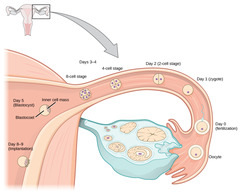
What is the first step in the process of generating a human embryo?
- Fertilization
Fertilization
- Haploid Mature Spermatozoon (1N, 1C) + Haploid Ovum (1N, 1C) = Diploid Zygote (2N, 2C)
Where does fertilization occur?
- Fallopian tubes
What is one of the first things to occur within the zygote?
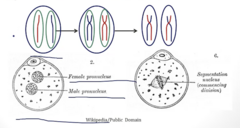
1. Initially, the maternal/paternal DNA are separated in cellular structures called a "pronucleus", starts as (2N 2C)
2. DNA synthesis occurs, sister chromatids are synthesized → becomes 2N 4C
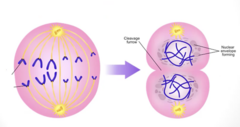
3. Zygote divides into two cells, each are 2N 2C
Zona Pellucida
- A thick, transpartent coating rich in glycoproteins that surrounds an oocyte.
Process by which the zygote divides
- Cleavage
When does the 2 cell stage occur?
- 1-2 days after fertilization
Cleavage
- Repeated mitotic divisions of the zygote
What happens to zygote after the 2 cell stage?
- Forms a Morula
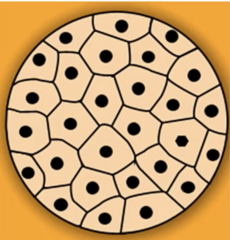
Morula
- A solid ball of cells that makes up an embryo; in humans, this stage occurs within four days of fertilization.
What occurs after Morulation?
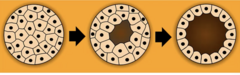
- Blasulation: Formation of a blastula from a morula
What is the difference between a blastula and a morula?
- Morula: Solid ball of cells
- Blastula: A hollow ball, containing a fluid cavity called a blastocoel
Blastocyst
- A Human Blastula
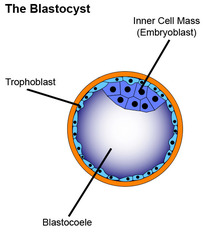
Trophoblast
- Outer cells of the blastocyst that secrete enzymes that allow implantation
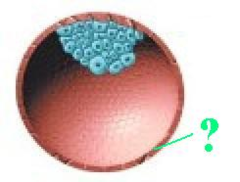
Trophoblast: Characteristics
- Polarized: One side is different from the other
- Secretes the watery fluid found inside the blastocoel (cavity of blastocyst)
Inner Cell Mass
- The mass of cells in the blastocyst that ultimately give rise to all tissues of the body
- Also called Embryoblast
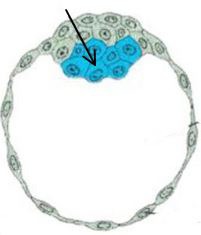
Are Embryonic Stem Cells derived from the Trophoblast or Inner Cell Mass?
- Inner Cell Mass
Blastocyst implants in the uterus on what day? What happens after implantation?
- Days 6-10
- The placenta begins to grow
What does the placenta secrete after implantation?
β-hCG
β-hCG
- Helps the body detect the pregnancy
How does the blastocyst attach to the uterine wall?
- With the inner cell mass (embryo blast) facing uterine wall
Trophoblast differentiates into what?
- Cytotrophoblast and syncytiotrophoblast
Syncytiotrophoblast
- Invades endometrium
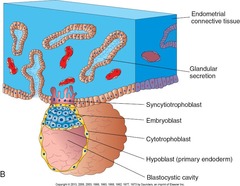
Cytotrophoblast
- Produces digestive enzymes that aid in implantation
What does the Blastula undergo after implantation?
- Gastrulation → Forms Gastrula
Gatrulation
- Blastula is converted into a 3 layered structure called a gastrula
3 Layers of the Gastrula
- Ectoderm
- Mesoderm
- Endoderm
From the Epiblast
How does Gatrulation occur?
1. The inner cell mast of blastula forms a bilaminar disc
2. Bilaminar disc contains 2 cell layers separated by basement membrane
What are the layers of the Bilaminar Disc?
- Epiblast
- Hypoblast
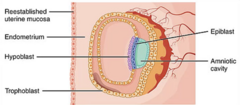
Epiblast
- Develops into the embryo
- Amniotic cavity forms inside
Hypoblast
- Forms the yolk sac, which produces the embryo's first blood cells
- Helps form umbilical vessel
What indicates the start of gastrulation?
- Primitive streak
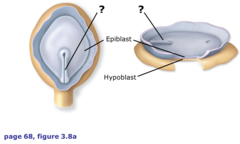
Primitive Streak
- Formed by invagination of epiblast cells
3 Germ layers
- Ectoderm, mesoderm, endoderm
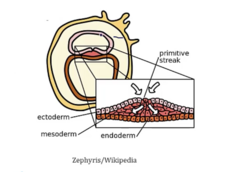
Ectoderm
- Outermost germ layer, forms:
- Hair
- Nails
- Skin
- Nervous system
Mesoderm
- Middle germ layer, forms:
- Muscles
- Bones
- Lungs (epithelial layers)
- Circulatory System
Endoderm
- Inner germ layer, forms:
- Digestive system
- Liver
- Pancreas
- Inner layers of lungs
The formation of the Grastrula results in what?
- The formation of 3 germ layers: ectoderm, mesoderm, endoderm
In general, what does the ectoderm form?
- Leads to the development of the outer surface of the body
- Exception: Nervous System
Why does the Nervous System derive from the Ectoderm?
1. The Notochord (from the mesoderm) influences via signals the ectoderm to transform into two little bumps called the neural crest + a stretch of ectoderm called the neural plate
2. Notochord further stimulates the neural plate to fold → neural fold → neural tube
3. Neural tube + neural crests will go on to develop the entire nervous system
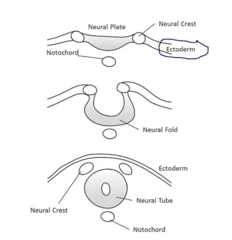
The CNS mostly arises from what?
- The Neural Tube
Structures that arise from the Neural Tube
- CNS neurons, oligodendrocytes, astrocytes
- Retina
- Spinal cord
The PNS arises from what?
- Neural Crest
Structures that arise from the Neural Crest
- Cranial nerves
- Dorsal root ganglia
- Autonomic ganglia
- Schwann cells
- Meninges
Microglia: What are they, What do they derive from?
- What: Phagocytes in the brain
- Derived from: Mesoderm
Major Structure that derives from the Endoderm
- GI epithelium and its derivatives (liver, gallbladder, pancreas)
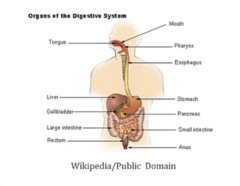
What is also derived from the Endoderm?
- Alveoli, epithelium of trachea/bronchi
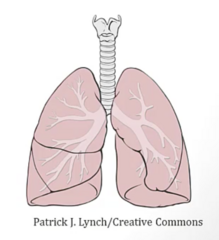
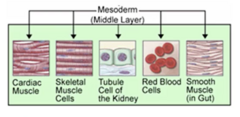
Structures derived from Mesoderm
- Muscle, Bone, Connective Tissue
- Cardiovascular structures
- Kidneys
- Lymphatics and blood
Mesenchyme: What is it? Its composition?
- Embryonic connective tissue mostly derived from mesoderm
- Composition: Cells are surrounded by proteins and fluid
What does the Mesenchyme give rise to?
- Bones
- Cartilage
- Lymphatic and circulatory system
Sarcomas
- Tumors of Mesenchymal origin
- Mesenchyme derived from mesoderm → cancers are associated with bones, cartilage, or some type of CT
Teratogens
- Agents, such as chemicals and viruses, that can reach the embryo or fetus during prenatal development and cause harm
When is the fetus most susceptible to Teratogens? What do they disrupt?
- During embryonic period (1st 8 weeks)
- Disrupts organ development during this period
Embryonic Period
- The period from 2 to 8 weeks after fertilization, during which the major organs (organogenesis) and structures of the organism develop
What follows the Embryonic Period?
- Fetal period: Most adult structure is established, organs/structures continue to grow
When does the fetal heart begin beating?
- Week 4
When do limbs form? when does the baby begin to move?
- Limbs start forming ~ week 4
- Baby starts moving ~ week 8
What happens during week 10?
- Prior to week 10, genitalia look similar bt/ males/females- genitalia is differentiated at this point
SRY Gene
- Sex determining region of the Y chromosome, if present, penis develops starting week 10
- If no SRY gene → clitoris development
When can sex of the fetus be identified?
- 15-20 weeks
Morphogenesis
- The process by which an organism takes shape and the differentiated cells occupy their appropriate locations.
Types of Errors in Morphogenesis
- Intrinsic: Failure of embryo to develop (problem within the embryo itself)
- Extrinsic: External force impacts normal development
Intrinsic Errors
- Abnormal genes → Agenesis, Aplasia, Hypoplasia, Malformation
Extrinsic Errors
- Embryo is developing normally but some external force inside the womb causes the baby to develop abnormally → disruption/deformation
Agenesis
- Missing organ caused by missing embryonic tissue
Aplasia
- Missing organ due to growth failure of embryonic tissue
Thymic Aplasia
- The thymus fails to develop so T cells don't mature and aren't functional
Hypoplasia
- The incomplete development of an organ or tissue usually due to a deficiency in the number of cells
Malformation
- Abnormal development of structure:
- Neural tube defects
- Cleft lip/palate
- Congenital heart defects
Disruption
- Normal tissue growth is arrested due to external force
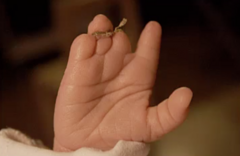
Amniotic Band Syndrome
- Fetal structures are entrapped by fibrous bands in utero, often involving limbs/digits
- Babies born with short fingers and toes
Deformation
- External force leading to abnormal growth (not arrest) → deforms or misshapes structure
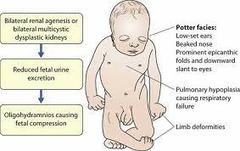
Potter's Syndrome
Amniotic fluid = fetal urine
- Severe renal malfunction → ↓ Amniotic fluid → Fetus exposed to absent or ↓ amniotic fluid → loss of cushioning to external forces → fetal compression