Palestinian Mandate and the Birth of Israel
 Call Kai
 Learn
Learn Practice Test
 Spaced Repetition
 Match
Match Flashcards
 Knowt Play
1/51

There's no tags or description
Looks like no tags are added yet.
Name | Mastery | Learn | Test | Matching | Spaced | Call with Kai | Chat |
|---|
No analytics yet
Send a link to your students to track their progress
52 Terms
Zionism
A movement founded in in 1880's in Russia to promote the establishment of a Jewish homeland.
Lovers of Zion
Refers to a variety of organizations which began in 1881 in response to the Anti-Jewish pogroms in the Russian Empire and were officially constituted as a group at a conference led by Leon Pinsker in 1884.
Theodor Herzl
Austrian journalist and Zionist; formed World Zionist Organization in 1897; promoted the formation of a Jewish nation. Author of The Jewish State, whose popularity added rocket fuel to the Zionist movement.
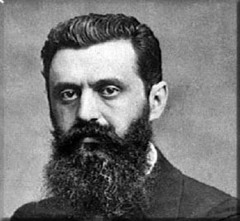
The Balfour Declaration
Statement issued by Britain's Foreign Secretary Arthur Balfour in 1917 favoring the establishment of a Jewish national homeland in Palestine.
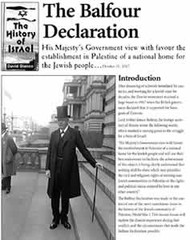
Chaim Weizmann
Instrumental spokesman for the World Zionist Organization in London who lobbied for Jewish interests from the Balfour Declaration through WWII. First President of Israel.
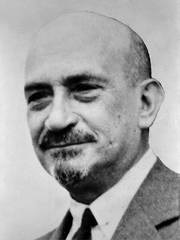
San Remo Conference
This was an international meeting of the post-World War I Allied Supreme Council, held at Villa Devachan in Italy in April of 1920. Resolutions passed at this conference determined the allocation of Class "A" League of Nations mandates for administration of the former Ottoman-ruled lands of the Middle East.
Sir Herbert Samuel
First British commander in Palestine mandate. A Jew/Zionist. Created the Constitution of 1922; Christians, Jews, and Muslims all elect a certain percentage of leaders, which definitely failed. 85 % were Arabs, 15% Jews. Arab nominees refused to serve any constitutional government that did not annul the Balfour Declaration.
The Arab Executive
Created by the Palestinian Arab Congress in 1920. The British refused to accept it as properly elected and only occasionally acknowledged its legitimacy.
Musa Kazim al-Husayni
Former mayor of Jerusalem who organized the Palestinian Arab Congress, which became the Arab Executive in 1920. When al-Husayni died in 1934, the Arab Executive ceased to exist.
Hajj Amin al-Husayni
Mufti of Jerusalem and leader responsible for regulating Islamic affairs in Palestine after 1921 with the creation of the Supreme Muslim Council. A pragmatic politician who opposed the Balfour Declaration, organized anti-Zionist demonstrations, but worked with the British and urged restraint until 1936.
Nashashibis and al-Husaynis
Two prominent Palestinian families the British played against each other to increase factionalism.
Palestine Zionist Executive
Founded in 1921 but reorganized as the Jewish Agency in 1929, this became the quasi government of the Jewish community in Palestine. The council had 300 elected representatives. Treated by the mandate government as legitimate.
Histadrut
Founded in 1920 to promote Jewish trade unionism; name for the Federation of Jewish Labor Party (also known simply as the "labor party"); it was significant in that it became a leading force in the ideology and politics of the Yishuv (and later, Israel); it's goal was to create an economically self-sufficient Jewish community, and did so by creating jobs and founding companies
Haganah
Zionist military force engaged created by the Histadrut in 1920 in response to Arab riots that year. Evolved into an underground reserve army, which the British disproved of but did not attempt to disband. Responsible for violent resistance to British presence in Palestine in the 1940s.
Yishuv
The term referring to the body of Jewish residents in Palestine before the establishment of the State of Israel.
Mapai Party
Major political party in Israel from 1930 - 1977; it represented socialist and egalitarian ideals, and advocated the message that Zionism and the interests of labor were identical; Ben-Gurion led this party
Jabotinsky and Revisionist Zionism
A faction of Zionism lead by Vladimir Jabotinsky calling for the immigration of 50,000 Jews/year and historic Palestine also included Trans-Jordan, which should also be part of large scale Jewish settlement. The Irgun, a separate military force from the Haganah, was created by this movement.
Aliyah
The waves of immigration of Jews from the diaspora to the Holy Land.
Jewish National Fund
A fund that was founded in 1901 to buy and develop land in Ottoman Palestine (later Israel) for Jewish settlement.
The Wailing Wall Disturbances
Refers to a series of demonstrations and riots in late August 1929 when a long-running dispute between Muslims and Jews over access to the Western Wall in Jerusalem escalated into violence.
Passfield White Paper
A White Paper that was issued in 1930 and suggested the Jews' immigration to Palestine should be limited to due Palestine's economic absorptive capacity. It also acknowledged Britain's dual role to set aside state lands for the settlement of landless Arab peasants.
The Black Letter
An Arab nickname for the repudiation of the Passfield White Paper by British politicians in 1931.
General Strike of 1936
Following a bus robbery which killed a Jewish passenger, which the Haganah retaliated for by killing two Arab farmers. Local Arab resistance committees declared a general strike in the midst of mass demonstrations and mob attacks against each other. The strike was to continue until the UK restricted Jewish immigration.
After failed mediation and the deaths of 1,000 Arabs and 80 Jews, the Arab Higher Committee terminated the strike. It had revealed the depth of Palestinian Arab resentment, but solved nothing.
The Peel Commission
An investigative commission in 1937 which states the mandate was untenable and recommended partition of the mandate into Arab and Jewish states but that the UK would continue to hold authority in a corridor from Jerusalem to the Mediterranean and in other scattered areas.
The Great Revolt
Spontaneous violence resumed after the Peel Commission in 1937. The British disbanded the Arab Higher Committee, arresting or deporting its members. There were an estimated 5,000 rebels, but they enjoyed wide popular support with the rural population. Government services ground to a halt and portions of Jerusalem fell under rebel control.
Britain responded with 20,000 troops, but order was not restored until March 1939. 3,000 Arabs, 2,000 Jews, and 600 British were killed, and the Palestinian economy was in chaos.
The McDonald White Paper
1939: No partition, with creation of self-governing institutions and shared authority over 10 years. Limited Jewish immigration to 75,000 over five years; subsequent immigration would require Arab approval. Purchase of land would be limited in some parts of Palestine and forbidden in others.
Biltmore Program
A set of resolutions adopted by US Zionists in 1942 calling for open immigration to Palestine and the establishment of a Jewish state.
Churchill White Paper
Jews had the right to immigrate but must not exceed "the economic capacity of the country at the time to absorb them".
White Paper on Partition
1937: Recommended Partition
Lehi
A small, dissident military unit that was generally less effective than the Haganah or Irgun, but capable of violence. For example, they carried out the 1944 assassination of Lord Moyne, the British minister of state for the Middle East.

David Ben-Gurion
Israeli statesman (born in Poland) and active Zionist who organized resistance against the British after World War II. First Prime Minister of Israel.

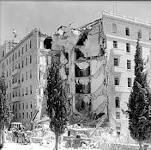
King David Hotel Bombing
The Irgun blew up a wing of this hospital in 1946.
Ernest Bevin
UK Foreign Secretary who recognized the UK had lost control in Palestine and referred it to the UN in 1947.
UNSCOP
Untied Nations Special Committee on Palestine recommended Palestine be divided into a Jewish state and an Arab state in 1947 in a vote of 8-3 (opposed by Palestinians, reluctantly accepted by Zionists)
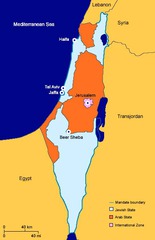
Minority Report, UNSCOP
The three dissenting votes called for Palestine to be a federalist state rather than partitioned.
British Refusal to Implement Partition Plan
In September 1947, prior to the General Assembly's vote, Britain announced the Palestinian Mandate would be terminated on May 15, 1948. In the ensuing chaotic months an estimated 400,000 Palestinians fled.
Dayr Yassin Massacre
The Irgun massacred 250 civilians in this village.
The First Arab Israeli War
On May 15th, 1948 units from the armies of Egypt, Lebanon, Syria, Transjordan, and Iraq invaded Israel. Fighting lasted until December 1948 with the defeat of Arab forces, numerous cease fires, the enlargement of Israeli territory, and the collapse of the UN proposal for a Palestinian State.
Myth of defenseless Israel
The combined Arab forces numbered around 21,500 while the Haganah and affiliated units fielded 30,000. Generally, Israeli forces were better trained and equipped.
# of Palestinian Refugees
700,000
Plan D
Intended to take control of the Jewish state by destroying empty Palestinian villages during first Arab-Israeli war. Allegedly forced people out of their villages. Meant so that people would have no where to return to.
# of Palestinians remaining in Israel by 1949
160,000
Annexation of the West Bank
In 1950 King Abdullah of Transjordan officially annexed the West Bank and granted all Palestinians citizenship.
Resolution 181
UN vote to create Israel 33-13 and 10 abstentions (one being the UK). Both the US and Soviet Union voted in favor.
The Meaning of the Disaster
Constantine Zurayq's commentary on the Arab defeat in the First Arab Israeli War.
Irgun
A Jewish militia group that organized attacks on Palestinians and the British during its mandate
King Abdullah
King of Jordan who occupied the West Bank in 1948 and annexed it in 1950.
Exodus
The Jewish people escaped slavery in Egypt in 1313 BC and fled to the Holy Land.
First Diaspora
597-538 BC. Babylon conquered the Assyrian Empire and forced an estimated 25% of the Jewish population to move to Babylon (modern day Iraq).
Cyrus's Edict
Cyrus the Great allowed Jewish refugees to return to the Holy Land.
The Second Diaspora
Roman conquest, occupation, crushing of rebellion, and prohibition of Judaism from 63 BC-395 AD.
The Haskala
The Jewish Enlightenment, called for integration into western, secular culture in the 18th century, which failed--especially in Eastern Europe and Russia.