Business REPORT EXPECTED QUESTIONS THAT I DONT KNOW
 Call Kai
 Learn
Learn Practice Test
 Spaced Repetition
 Match
Match Flashcards
 Knowt Play
1/28

There's no tags or description
Looks like no tags are added yet.
Name | Mastery | Learn | Test | Matching | Spaced | Call with Kai | Chat |
|---|
No analytics yet
Send a link to your students to track their progress
29 Terms
Human Resource Management (4)
Acquisition
Training/ Development
Maintenance
Separtion
Acquisition definiton + 3 subtopic (plann, recru, sele)
Hiring new employees
PLANNING, RECRUITING, SELECTION
Planning (meaning and 2 types of job analysis)
Identitfy staffing needs, such as a job analysis
JOB DESCRITIPION
JOB SPECIFICAION
Recruiting
Attracting people to apply for the posiiton
internal and external recruitment
Selection
Selecting suitable candiates
Training and Devleopment
Improving employees skills and abilities, allowing them to feel valued and respected in the business.
Benefits employees as for career advancements and greater security
Maintence (meaning , monet and non mon befnef
Motivating employees to stay within the business
Monetary benefits
Higher wages/salary
Bonuses
Commission
Non monetary benefigs
Recognition and praise
Career development and training
Job security
Seperation (involountat or volountary)
Employyes leaving the business
2 challenges faced by owners in ESTABLISHEMNT STAGE
Lack of customers
High expenses
2 challenges GROWTH STAGE IN DEPTH
High costs when expanding
Maintaining product quaility
1. Complex management (3)
As the business grows, the number of employees, departments and operations increases.
Communication between management and employees can become more difficult.
The business may experience slower decision-making due to a larger organisational structure
Poor coordination can lead to inefficiencies, mistakes and increased costs
High costs when expanding
The business may need to employ and train additional workers, increasing wage expenses.
Increased production can also lead to higher raw material, transport and storage costs.
These expenses can place pressure on the business's cash flow.
Strategies to help business during challenges in growth stage
Use technology – Implement technology and automation to increase efficiency, reduce costs and help manage larger operations.
Factoring - to improve cash flow
Outsourcing: business practice where a company hires an external person or third-party company to handle tasks, services, or operations instead of doing them in-house
2 challenges maturity stage
Market saturation – most customers already have the product
Strong competition from other businesses
Disucss why employees resist chance
Inertia
Fear of loss of job
Cultural incompatibility
Inertia
Employees may resist change due to inertia, as they are comfortable with existing practices and routines and may be unwilling to make the effort required to adapt to new ways of working.
Fear of Job Loss
Employees may resist change because they are uncomfortable adapting to a new workplace culture, including new people, management styles, values and ways of working.
Cultural incompability
Employees may resist change because they are uncomfortable adapting to a new workplace culture, including new people, management styles, values and ways of working.
Strategies to manage change effectively (3)
Change agents
Effective communication
Positive leadership
Change agents
A person or group of people who act as catalysts to help manage the change process
These people should help initiate, faciliate and stimiulate the change effort
Effective communication
Managers must be able to communicate with stakeholders and must be open communication to ensure understanding
Positive leadership
Positive leadership helps employees feel supported and motivated during change, reducing resistance and making it easier for the business to implement the change.
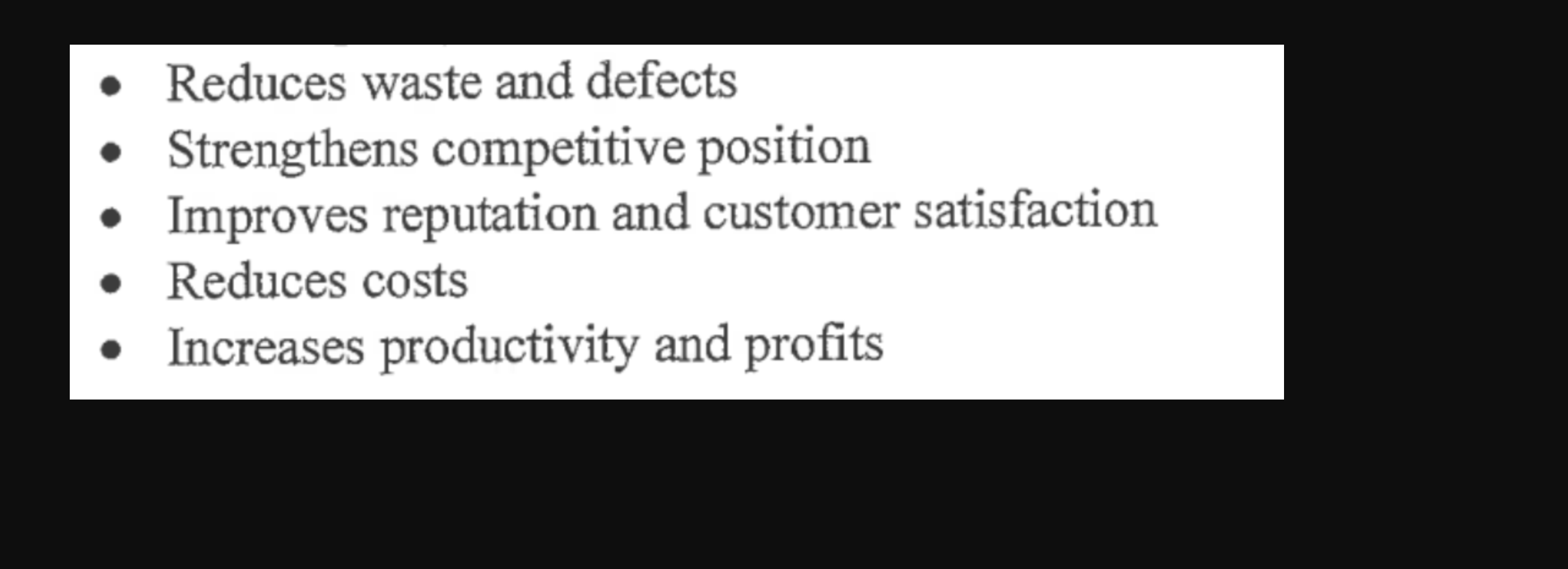
Benefits of Quality Management
3 advantages of debt finance
No loss of ownership – The owner keeps full control of the business.
Easier planning
Interest is tax-deductible – Interest payments can reduce taxable income.
2 disadvnatges debt finance
Interest costs – Increases the overall cost of borrowing.
Financial risk – High levels of debt can cause cash-flow problems and potentially lead to insolvency if repayments cannot be made.
2 forecasting techniques that can assist business achieving financial objectives
Cash flow forecasting – Predicts future cash inflows and outflows, helping the business ensure it has enough cash to meet expenses and avoid cash-flow problems.
Sales forecasting – Estimates future sales revenue, helping the business set realistic financial targets and plan its spending and production.
2 strategues to improve net profit
