2.4 Inflation
 Call Kai
 Learn
Learn Practice Test
 Spaced Repetition
 Match
Match Flashcards
 Knowt Play
1/20

There's no tags or description
Looks like no tags are added yet.
Name | Mastery | Learn | Test | Matching | Spaced | Call with Kai | Chat |
|---|
No analytics yet
Send a link to your students to track their progress
21 Terms
Consumer price index (CPI)
A measure of the price level in the economy based on the prices of a collection of products designed to reflect the consumption basket of the average consumer
Deflation
A decline in the general price level in an economy signified by an annual inflation rate below 0% negative
Disinflation
A fall in the rate of inflation. Prices are still rising but at a slower rate.
Hyper-inflation
A period of very high rates of inflation (30%+) usually leading to a loss of confidence in an economy’s currency
Inflation rate
The annual rate of change of the average price of goods and services
Unit labour costs
Reflects total labour costs, including social security and employers’ pension contributions, and including the costs of self-employed labour, incurred in the production of a unit of economic output
Retail prices index (RPI)
Measures the average level of prices relative to a previous base year
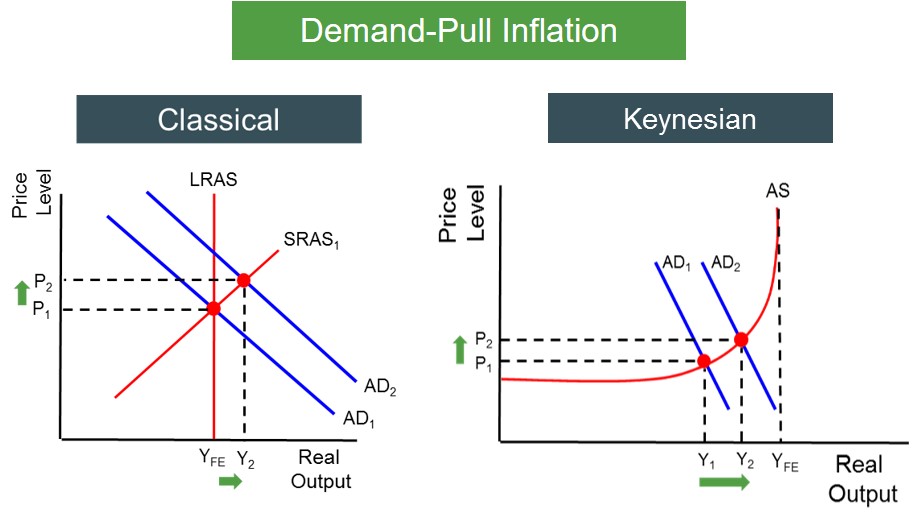
Demand pull inflation
Caused by an increase in AD
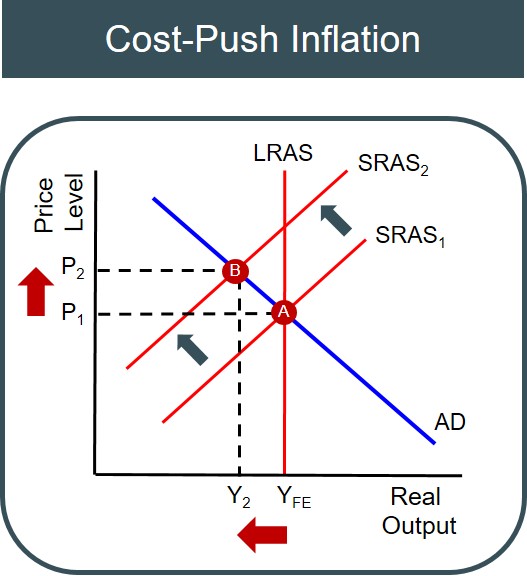
Cost push inflation
Caused by rising costs of inputs to production
Inflation target
2% (with 1 or -1 % leeway)
Monetary policy committee (MPC)
Sets monetary policy interest rates so that inflationary pressures are controlled and the inflation target is reached
Limitations of the CPI as a measure of inflation
Not fully representative as it will be inaccurate for the non-typical household
Spending patterns differ between households; single people will definitely spend differently than people with children
It doesn’t consider the changing quality of goods and services; although prices may rise, this is often accompanied by improvements in quality or performance
It is slow to respond to new products; despite being changed every year, only a few items get added or removed
RPI vs CPI
The retail price index is used for adjusting pensions and other benefits. It includes housing costs like mortgages and council tax, which makes its value higher than the CPI.
Same principles as the CPI but uses a different basket of goods/services to measure inflation and the average is calculated in a different way
Causes of demand pull inflation
Excess aggregate demand
Credit boom
Economy close to full capacity (inelastic AS)
Causes of cost push inflation
Rising wage costs
Increasing raw material and component costs from domestic and overseas suppliers
Rising import costs due to a falling exchange rate
Deflation curve
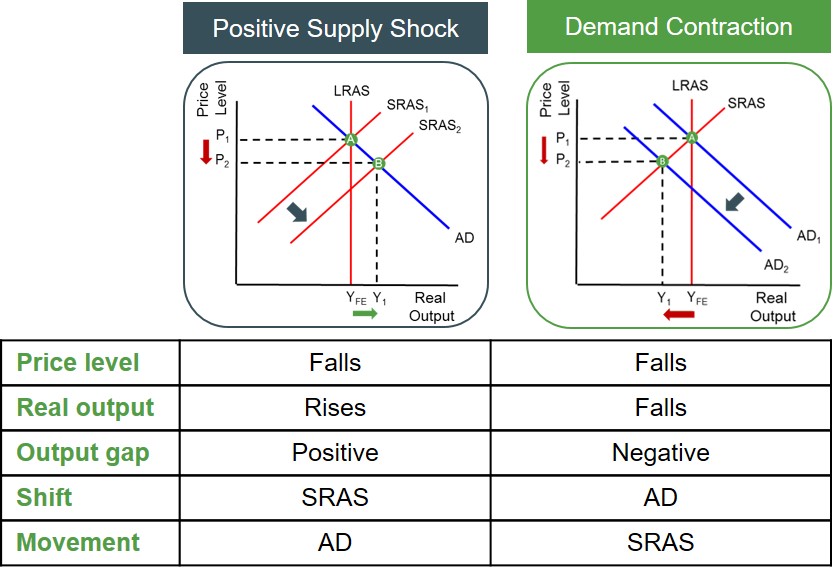
Demand side causes of deflation
Big fall in AD causing a persistent recession/depression
Large negative output gap - high level of spare capacity
Supply side causes of deflation
Improved productivity
Technological advances
Significant fall in wage rates
High exchange rate causing import prices to fall
Economic consequences of high inflation
Inequality: affects low income families the most
Falling real income: if wage rises lag behind price increases each year
Negative real interest rates: If the interest on savings is lower than inflation
Cost of borrowing: High inflation may also lead to higher interest rates for businesses and consumers with debts
Risks of wage inflation: This leads to rising labour costs and lower profits
Business competitiveness: A high relative rate of inflation can reduce competitiveness which will lower demand for a country’s exports
Business uncertainty: High and volatile inflation is not good for confidence as businesses cannot be sure what their costs or prices are likely to be so there will be a fall in capital investment
Consequences of deflation
Holding back on spending: Consumers may postpone demand if they expect prices to fall in the future
Debts increase: The real value of debt rises with deflation and higher real debts can be a drag on consumer confidence
The real cost of borrowing increases: Real interest rates will rise if nominal rates of interest do not fall in line with prices.
Lower profit margins: Lower prices can mean reduced revenues and profits for businesses - this can lead to higher unemployment as firms seek to reduce their costs by shedding labour.
Confidence and saving: Falling asset prices such as price deflation in the housing market hit personal sector wealth and confidence
Income distribution: Deflation leads to a redistribution of income from debtors to creditors
Policies to control inflation
Fiscal policy: A tightening fiscal policy would include less spending on public and merit goods or welfare payments or raising direct taxes
Monetary policy: A ‘tightening of monetary policy’ via higher interest rates or a reversal of quantitative easing or tougher controls on bank lending
Higher interest rates may cause the exchange rate to appreciate
Bringing cheaper imported goods and services
Supply side policies to increase productivity, competition and innovation
Direct controls: Public sector pay controls e.g. Limiting pay rises for NHS workers, Capping or other regulation of prices of utilities such as water bills