Marine Biology: Classification, Ecosystems, and Organisms
 Studied by 0 people
 Call Kai
 Learn
Learn Practice Test
 Spaced Repetition
 Match
Match Flashcards
 Knowt Play
1/49

There's no tags or description
Looks like no tags are added yet.
Name | Mastery | Learn | Test | Matching | Spaced |
|---|
No study sessions yet.
50 Terms
Kingdom
The largest classification group of organisms.
Phylum
A classification level below kingdom that groups organisms by major body plans.
Class
A subdivision of a phylum.
Order
A subdivision of a class.
Family
A subdivision of an order.
Genus
A group of closely related species.
Species
The most specific classification; organisms that can reproduce with one another.
Homo sapiens
The scientific (genus and species) name for humans.
Metaphytes
Multicellular plants.
Metazoan
Multicellular animals.
Protists
Mostly single-celled organisms with a nucleus.
Bacteria
Single-celled organisms without a nucleus.
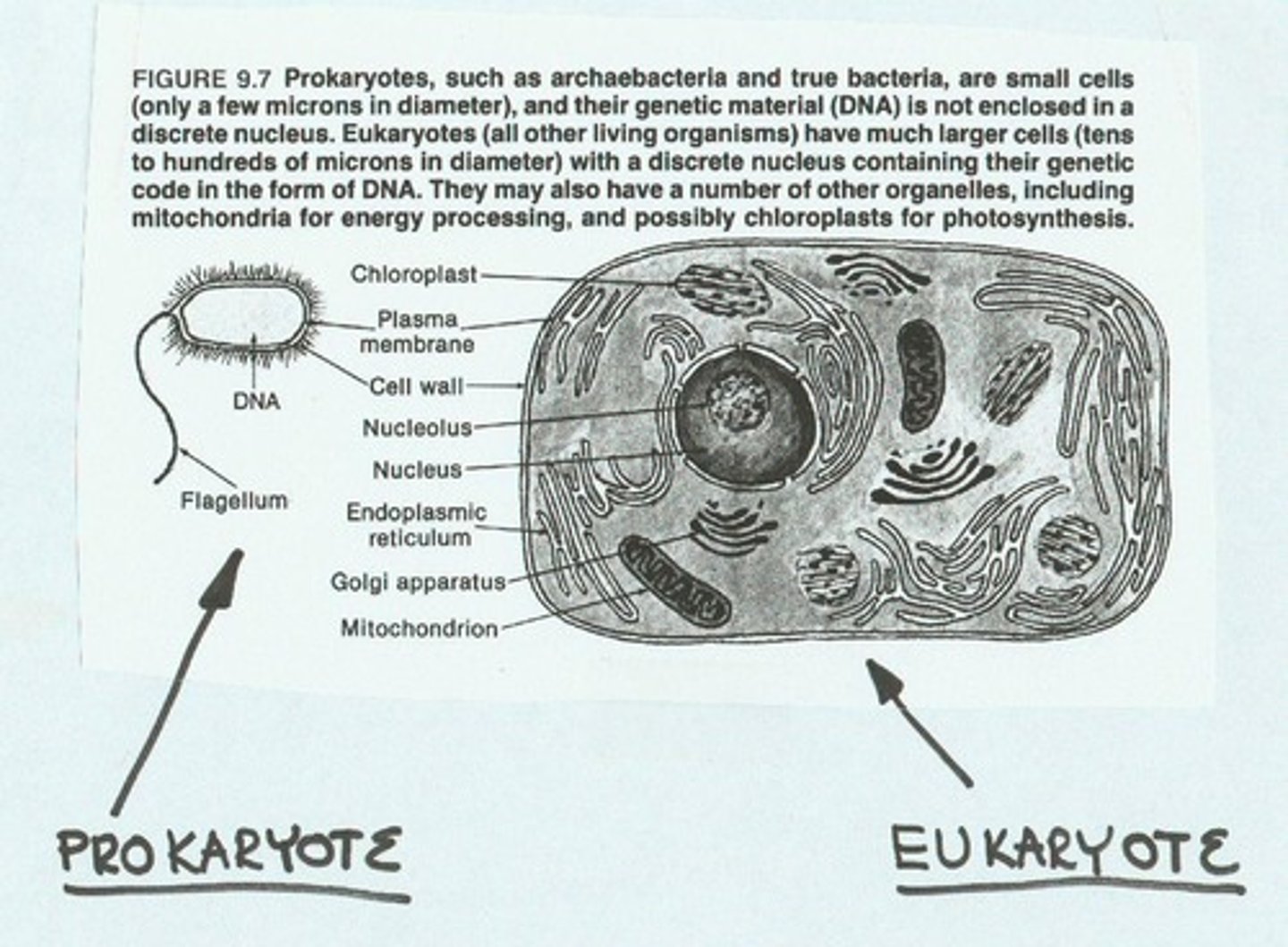
Invertebrate
An animal without a backbone.
Coral
Marine invertebrates that form reefs and have symbiotic algae. (Phylum Cnidaria)
Jellyfish
Free-floating marine invertebrates with stinging cells.
Sea anemone
Sessile marine invertebrates related to corals.
Sponge
Simple aquatic animals that filter feed.
Algae
Photosynthetic organisms found in aquatic environments.
Snail
A mollusk with a single shell.
Clam
A bivalve mollusk with two shells.
Octopus
A soft-bodied mollusk with eight arms. (Phylum Mollusca)
Squid
A fast-swimming mollusk with tentacles. (Phylum Mollusca)
Crab
A crustacean with a hard exoskeleton.
Copepod
Small crustaceans that are a major part of zooplankton.
Barnacle
A crustacean that attaches permanently to surfaces.
Starfish
Marine echinoderms with radial symmetry. (Phylum Arthropoda)
Sea urchin
Spiny echinoderms that graze on algae. Phylum Arthropoda
Shark
Cartilaginous fish and marine predators.
Ray
Flattened cartilaginous fish related to sharks.
Phytoplankton
Microscopic photosynthetic organisms that form the base of marine food webs.
Zooplankton
Small drifting animals that feed on phytoplankton.
Diatom
A type of phytoplankton with silica shells.
Kelp
Large brown algae forming underwater forests.
Trophic level
A feeding position in a food chain or food web.
Biosphere
All ecosystems and living organisms on Earth.
Ecosystem
A community of organisms and their physical and chemical environment.
Environment
The physical, chemical, and biological conditions in which organisms live.
Community
All populations of different species living together.
Population
All individuals of a single species in an area.
Plankton
Drifting organisms unable to swim against currents.
Nekton
Actively swimming organisms (e.g., fish, squid).
Benthos
Organisms that live on or in the seafloor.
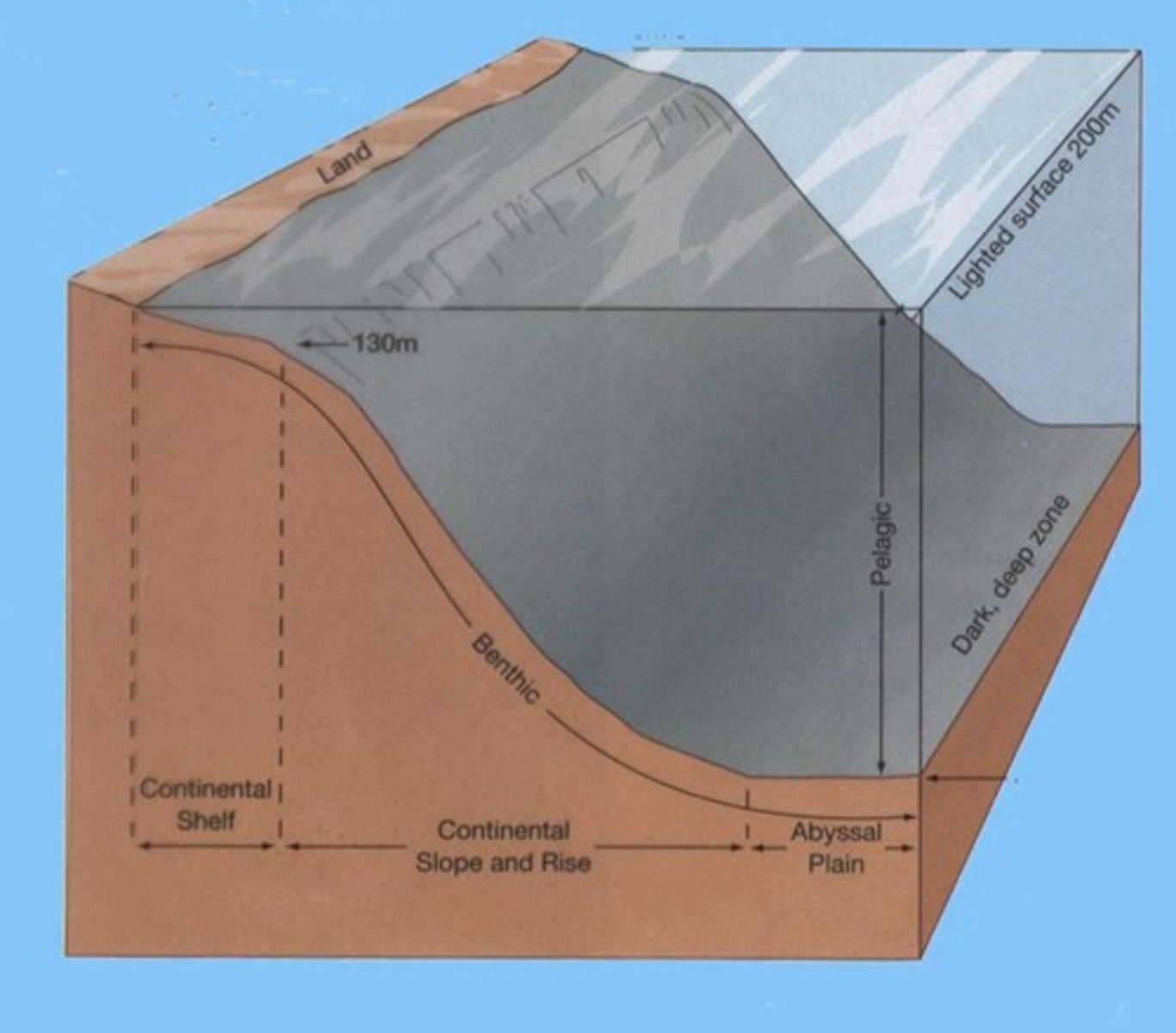
Benthic
Referring to the bottom environment of oceans or lakes.
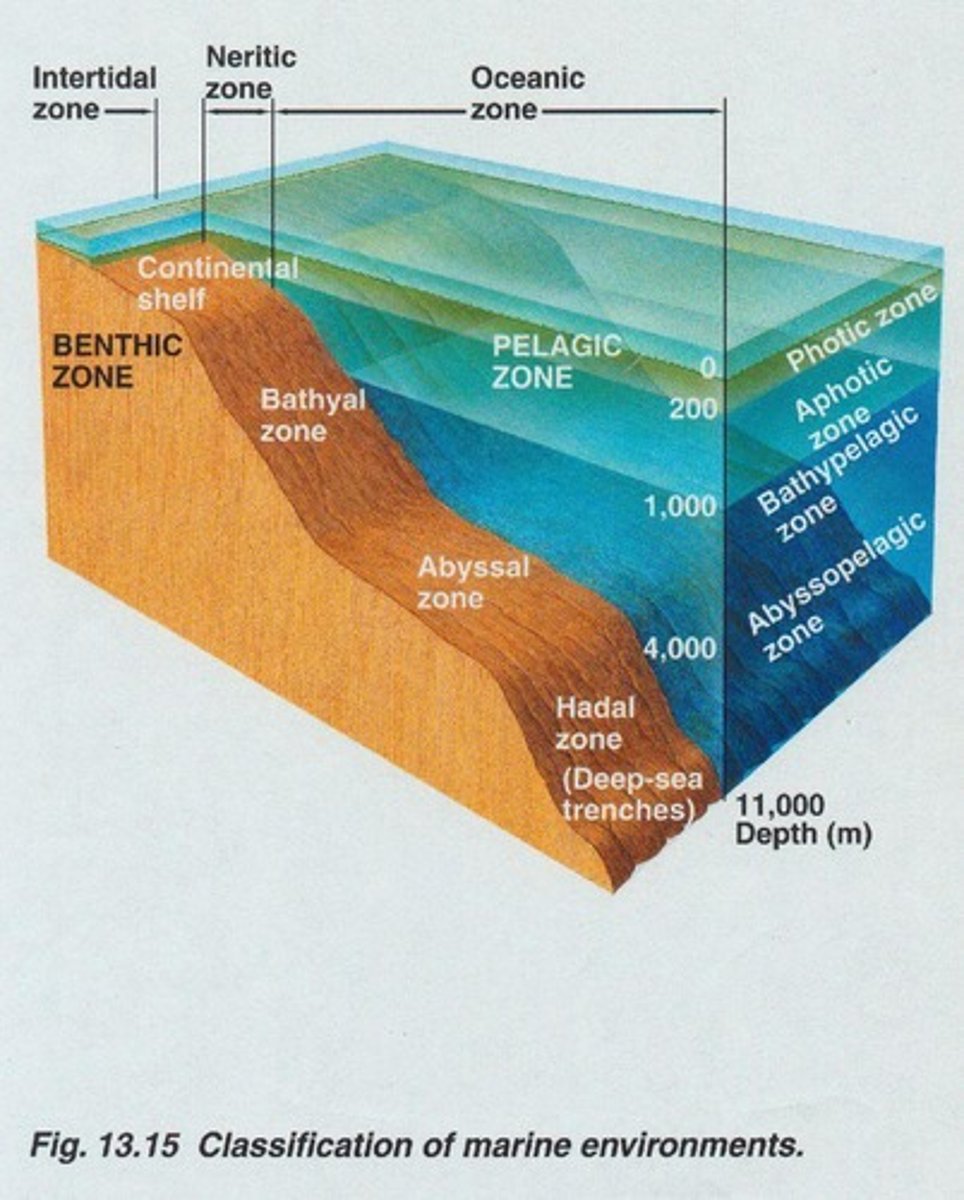
Littoral
The intertidal or wave-affected zone near shore.
Neritic
Shallow ocean water over the continental shelf.
Pelagic
Open ocean waters beyond the continental shelf.
Photic
Water zones that receive some light.
Aphotic
Water zone with no light.
Bathyl
Ocean depths between 200 and 2000 meters
Abyssal
Ocean depths greater than 2000 meters.