Speech Sound Errors/Disorders
 Call Kai
 Learn
Learn Practice Test
 Spaced Repetition
 Match
Match Flashcards
 Knowt Play
1/22

There's no tags or description
Looks like no tags are added yet.
Name | Mastery | Learn | Test | Matching | Spaced | Call with Kai | Chat |
|---|
No analytics yet
Send a link to your students to track their progress
23 Terms
Consonant Chart
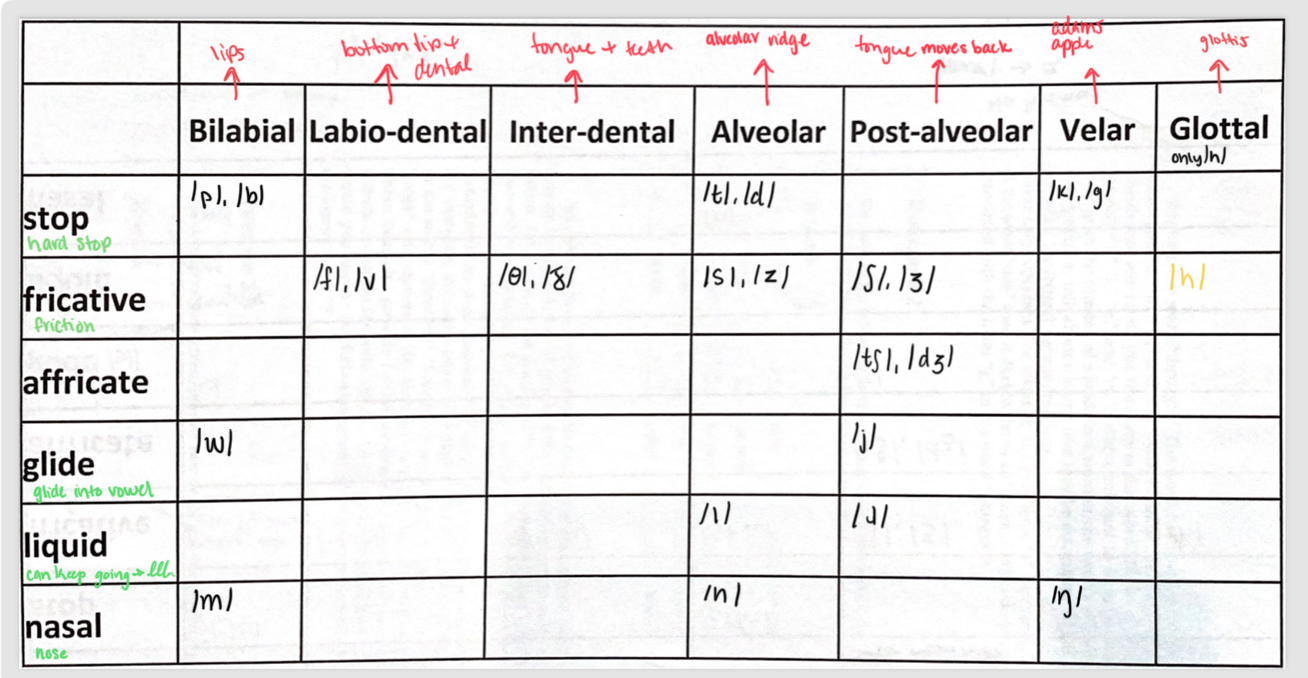
Articulation Disorders Characteristics:
phonetic errors
inability to produce sound
problems w/ motor processes
ability to contrast sounds
relatively few speech errors in connected speech
typically not influenced by other language domains
Phonological Disorders Characteristics:
phonemic errors
ability to produce sound
problem with phonological level (i.e., phonemes) of language systems
inability to contrast sounds
many errors in connected speech
influenced by other language domains
Syllable Structure Processes
These processes affect the way syllables are produced; simplified usually in a CV pattern.
Consonant-Vowel (CV) is ear;iest developing speech pattern
Patterns Include:
Weak Syllable deletion
Final Consonant Deletion
Reduplication
Cluster Reduction
Weak Syllable Deletion Examples:
banana → “nana”
pancake →”pan”
potato → “tato”
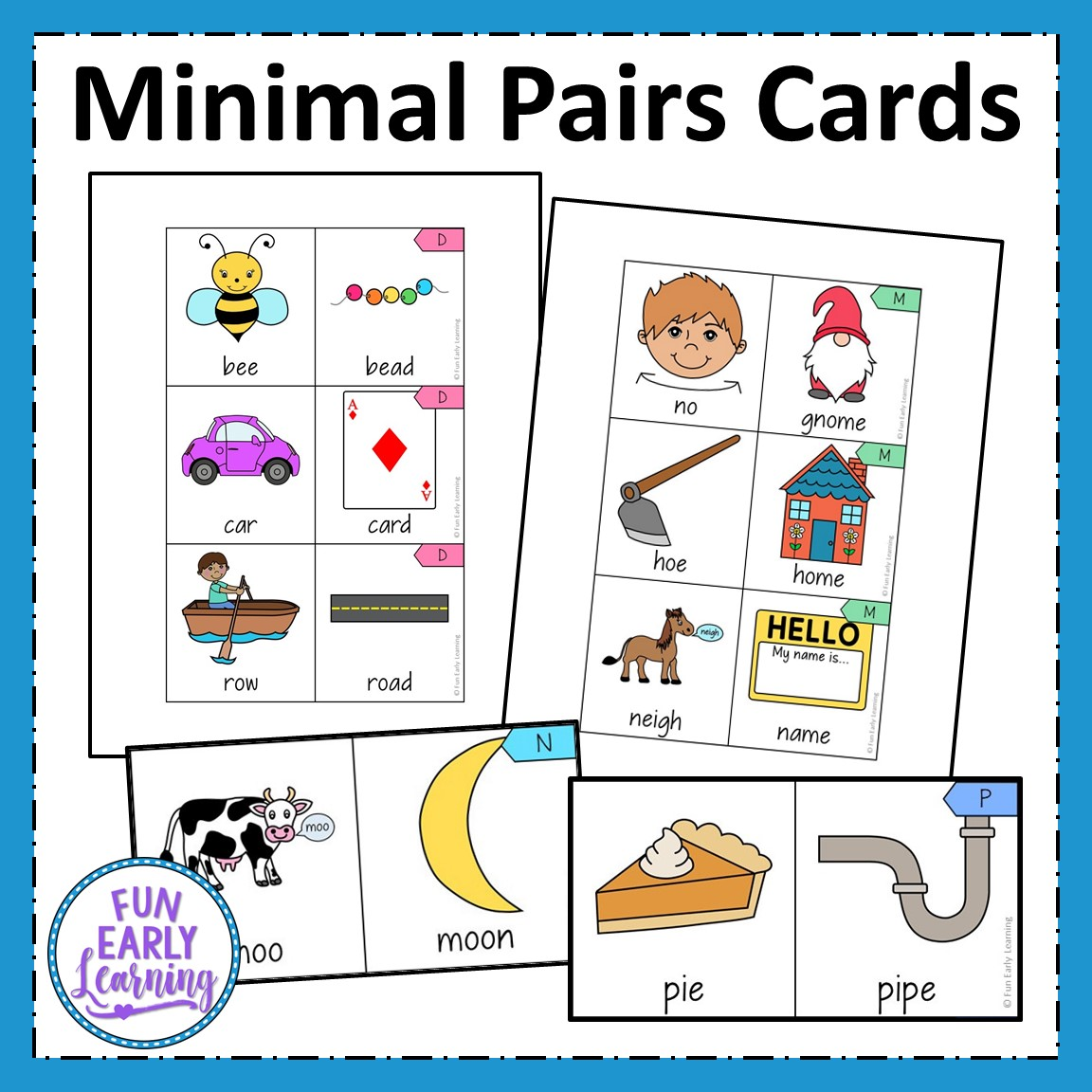
Final Consonant Deletion Examples:
book → “boo”
start → “sta”
name → “na”
Reduplication Examples:
mommy → “mama”
water → “wawa”
bottle → “boo-boo”
Cluster Reduction Examples
tree → “tee”
stop → “top”
blue → “boo”
friend → “fren”
Substitution Processes
Phonemes are substituted with phonemes from another class.
Patterns Included:
Stopping
fronting
deaffrication
gliding
vocalization
idiosyncratic substitution
Stopping:
Child substitutes a friccative/affricate for a stop.
fricative: (/f/, /v/, /s/, /z/, /sh/, /zh/, /th/) or affricates: (/ch/, /j))
to
stops: (/p/, /b/, /t/, /d/, /k/, /g/)
Examples:
pass → “pat”
vacuum → “bacuum”
shoe → “too”
Fronting:
A chid replaces a sound form the back of the mouth to the front (alveolar sounds).
Velar Fronting: replacing velar sounds (/k,g/) with alveolar sounds like (/t,d/).
Palatal Fronting: replacing palatal sounds (/ʃ/ like "sh", /ʒ/ like "zh") with alveolar sounds (/s,z/).
can also be for any consonants with alveolar sounds
Examples:
castle → “tassle”
karen → “daren”
shoe → “sue”
Deaffrication:
Replacing an affricate sound with a fricative or a stop consonant.
Affricate to fricative: cheese → “sheese”
Affricate to stop: jump → “dump”
Gliding:
Replacing a liquid with a glide.
/r,l/ → /w,j/
Examples:
ring → “wing”
red → “wed”
yellow → “yewow”
light → “yight”
Vocalization (aka Vowelization)
Replacing a syllable or liquid consonant with a vowel.
Examples:
teacher → “teachau”
tiger → “tigu”
seal → “see-uh”
Idiosyncratic Substitutions
Atypical non-developmental phonological errors where a child replaces a consonant with a random sound.
no rhyme or reason
Assimilatory Processes
Phoneme are altered due to the phonetic environment
labial assimilation
alveolar assimilation
velar assimilation
prevocalic voicing
devoicing
Progressive Assimilation
early sound changed due to later sound

Regressive Assimilation
later sound changed due to earlier sound

Labial Assimilation
When non-labial consonant changes into a labial consonant because it is influenced by another labial consonant.
Example:
time → “mime”
table → “bable”
pen → “peb”
Alveolar Assimilation:
A non-alveolar consonant changes into a alveolar consonant because it influenced by another alveolar consonant.
Examples:
tape → “tate”
soup → “tout” or “toup”
door → “dod”
stop → “stot”
Velar Assimilation
A non-velar sound changes into a velar sound because of a neighboring velar consonant.
bike → “kike”
dog → “gog”
tack → “kack”
Prevocalic Voicing:
Voiceless consonant becomes voiced.
pad → “bad”
good → “kood”
Devoicing
Voiced consonant becomes voiceless.
beat → “peat”
cab → “cap”
breeze → “brees”