dysrythmias - NSR, SB, ST, SVT
 Call Kai
 Learn
Learn Practice Test
 Spaced Repetition
 Match
Match Flashcards
 Knowt Play
1/45

There's no tags or description
Looks like no tags are added yet.
Name | Mastery | Learn | Test | Matching | Spaced | Call with Kai | Chat |
|---|
No analytics yet
Send a link to your students to track their progress
46 Terms
name the term: ability to initiate an impulse spontaneously
automaticity
name the term: ability for heart to feel completely stimulated
excitability
name the term: ability to transmit an impulse
conductivity
name the term: ability to respond to mechanism and contract
contractility
where is the primary firing mechanism/where the electrical impulse begins
SA node
depolarization is when there is what two things
impulse and contraction
repolarization is when what occurs
relaxation
during a sinus rhythm P wave what is happening
the SA node is firing
right before the QRS segment what occurs
impulse delayed at AV node
during the QRS complex what is occurring
electricity hits the ventricles/heart beat
what causes the T wave
the ventricles relaxing
what if the formula for calculating the HR
QRS complexes in 6 seconds x 10
the autonomic nervous system controls what two things
sympathetic and parasympathetic nervous system
when you hear parasympathetic system you should think
low and slow
when you hear sympathetic nervous system you should think
fight or flight
pupils expand
fast and shallow breaths
heart pumps faster
gut inactive
these are signals of what kind of system reaction
sympathetic
pupils shrink
slow, deep breaths
heart slows
gut active
these are signs of what kind of system reaction
parasympathetic
the PNS does what to the rate of the SA node and how
decreases > slows impulse conduction of AV node
the SNS does what to the rate of the SA node and how
increases > increases impulse conduction at AV node and heart contractility
if the nurse sees an artifact on an EKG what is the first thing she should do
check the leads
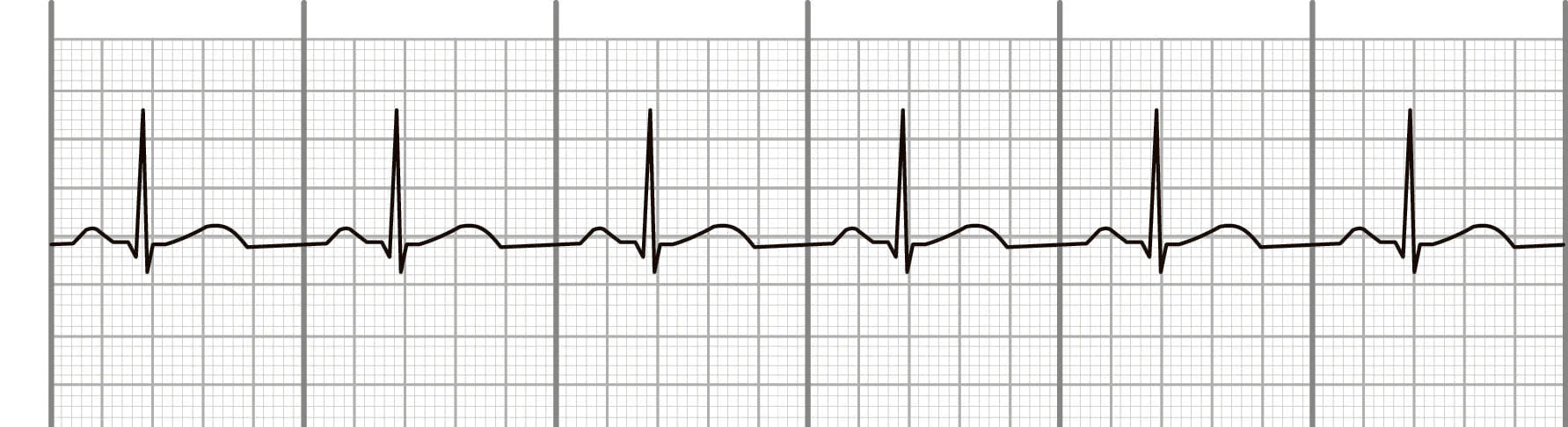
name the heart rhythm
normal sinus
what is the patho behind sinus bradycardia
the SA node is too slow
bad perfusion
cool limbs/skin
sweaty
SOB
chest pain
confused/disoriented
hypotension
syncope or dizziness
these are all S/S of what kind of heart rhythm
sinus bradycardia
symptomatic bradycardia is when the HR is _______ and inadequate for the patient’s condition
<60bpm
if a patient has bradycardia but has no symptoms (and is not an athlete) is it an emergency; what should the nurse do
no - just monitor
what daily activity can cause a person to “vagal down” which can cause bradycardia
bearing down
what is the number one treatment for bradycardia
atropine
besides atropine, what are two other options to treat bradycardia
pacemaker and stop offending drugs
the patient has sinus bradycardia and is symptomatic - besides symptoms and VS what should the nurse include
if the P wave is normal or inverted
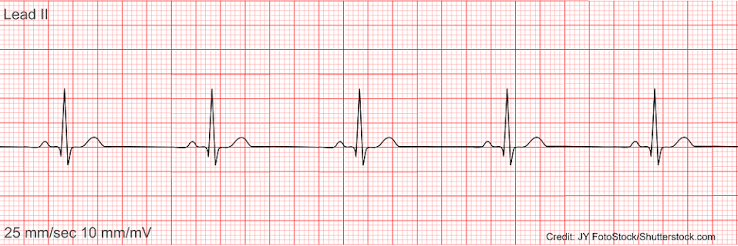
what heart rhythm is this
sinus bradycardia
dizziness
dyspnea
hypotension
angina in patients with CAD
these are all manifestations of what heart rhythm
sinus tachycardia
treatment for sinus tachycardia is guided by
the cause
what are the two least intrusive interventions the nurse can have the patient do for sinus bradycardia
bear down and breath into a straw
what medication class can be given to help with sinus tachycardia
beta blockers
what is a nursing intervention that can help with sinus tachycardia if the patient already has an IV
give fluids
when there is a dysrhythmia what decreases
cardiac output
hypotension
dyspnea
angina
HR 150-220 bpm
anxiety
SOB
these are all manifestations of what kind of heart rhythym
SVT
what are commonn causes of SVT
stress, stimulants, dehydration
what is the first thing the nurse can do as the least invasive intervention for SVT
vagal stimulation
what is the first line of medication for SVT
IV adenosine
what does IV adenosine do to treat SVT
restarts the firing mechanism
what is the second line of medications to treat SVT
beta blockers
what is the third line of medications to treat SVT
ca channel blockers
is adenosine given fast or slow
fast
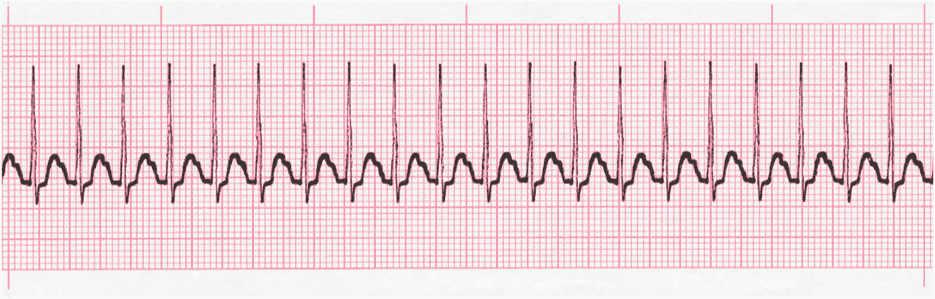
what heart rhythym is this
SVT