3.3.8 Aldehydes & ketones
 Call Kai
 Learn
Learn Practice Test
 Spaced Repetition
 Match
Match Flashcards
 Knowt Play
1/32

There's no tags or description
Looks like no tags are added yet.
Name | Mastery | Learn | Test | Matching | Spaced | Call with Kai | Chat |
|---|
No analytics yet
Send a link to your students to track their progress
33 Terms
What is a carbonyl group?
C=O

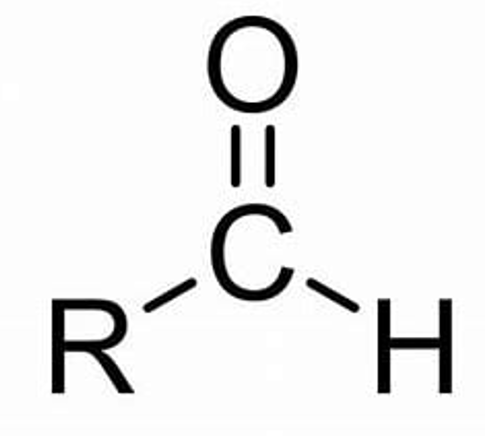
What is the functional group & general formula for an aldehyde?
RCHO (C double bonded to O, single bond to H & R)
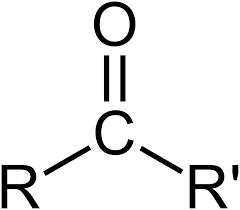
What is the functional group for a ketone?
RCOR’ (C double bonded to O)
How do you name aldehydes?
-al suffix (C=O is on the end of a chain)
How do you name ketones?
-one suffix (designate number for which carbon C=O is on)
What kind of intermolecular forces do molecules with the carbonyl group have & why?
Permanent dipole-dipole forces, due to the polar C=O bond (C is δ+ & O is δ⁻)
Are molecules with a carbonyl group soluble in water & what influences solubility?
Yes, they form hydrogen bonds between water molecules & the oxygen of C=O
As the carbon chain length increases, solubility decreases
Which bond in carbonyl compounds is usually involved in reactions & why?
C=O, due to the polarity of the bond (large difference in electronegativity between carbon & oxygen)
What is the strongest bond in carbonyl compounds?
C=O
Draw & outline a mechanism for the nucleophilic addition of HCN to a carbonyl compound
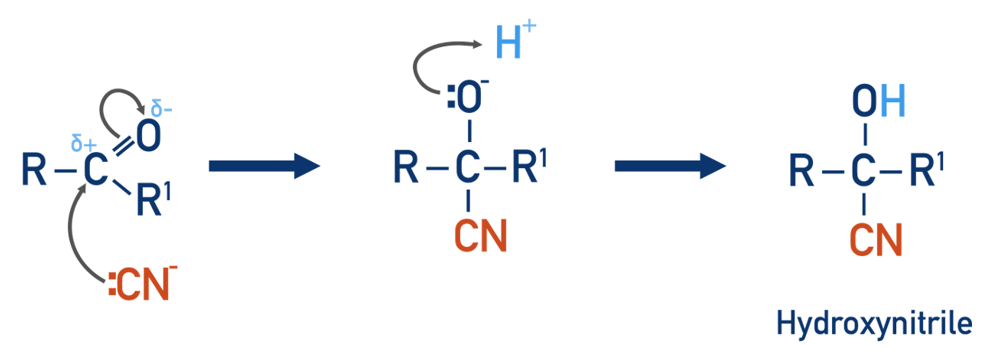
Why is the addition of HCN important?
It increases the carbon chain length by one carbon atom, which is useful as it forms a nitrile that can be further converted into carboxylic acids or amines
Will the product of HCN added to a carbonyl compound have optical isomers & why?
Yes:
in the aldehyde/ketone, the carbonyl compound is planar, so the :CN⁻ can attack from either above or below, forming two enantiomers
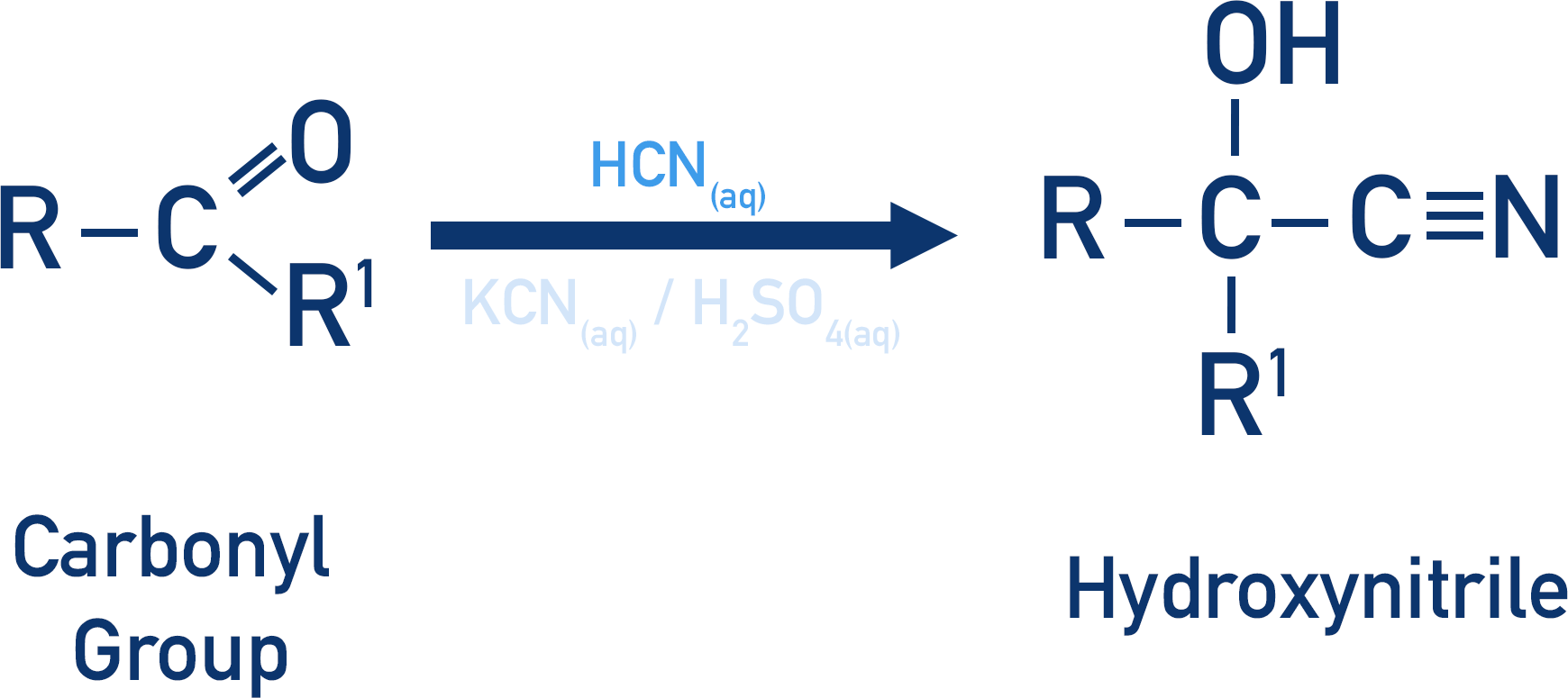
What is the name of the product when HCN is added to a carbonyl compound?
Hydroxynitriles (contain OH & CN groups)
What is Fehling’s solution & what colour is it?
Copper complex ions (blue)
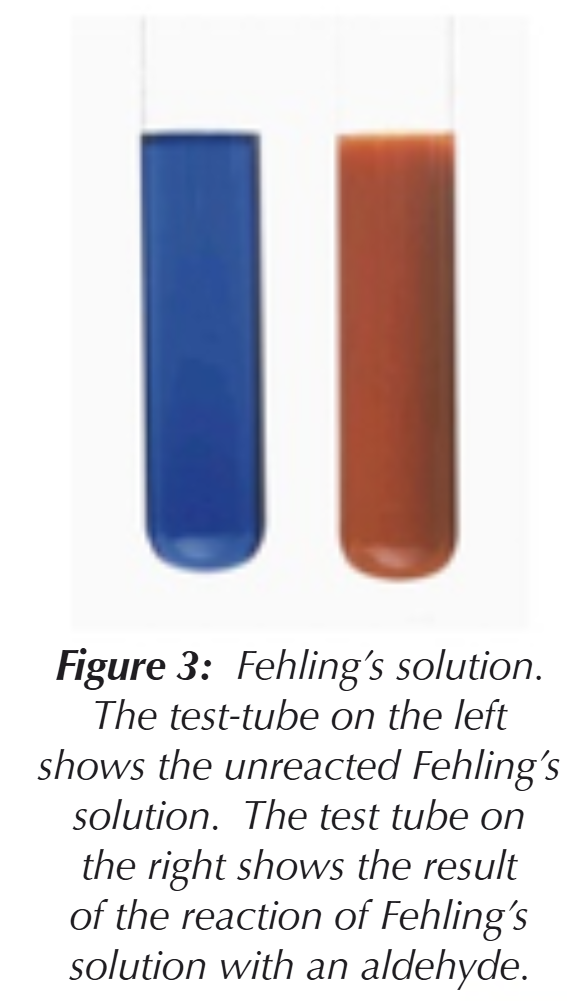
What happens when an aldehyde is warmed with Fehling’s solution?
Reduced to Cu+ ions
There is a colour change from a blue solution to a brick red precipitate
What happens when a ketone is added to Fehling’s solution?
No reaction (Fehling’s solution remains a blue solution)

What is Tollens’ reagent?
Silver complex ions (colourless solution)
What happens when an aldehyde is warmed with Tollens’ reagent?
Silver mirror forms, as Ag+ is reduced to Ag(s)

What happens when a ketone is added to Tollens’ reagent?
No reaction (Tollens’ reagent remains colourless)

What is another oxidising agent for alcohols/aldehydes & what is the colour change?
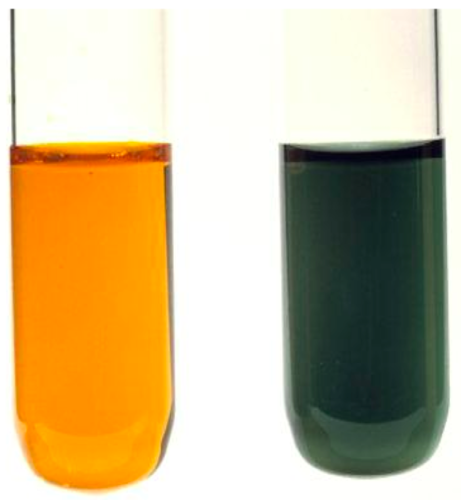
Acidified potassium dichromate (K2Cr2O7)
Colour change from orange to green
What alcohols can be oxidised to by acidified potassium dichromate?
Primary (1°) alcohols → aldehydes (distillation) → carboxylic acids
or primary (1°) alcohols can be oxidised straight to carboxylic acids under reflux
Secondary (2°) alcohols → ketones
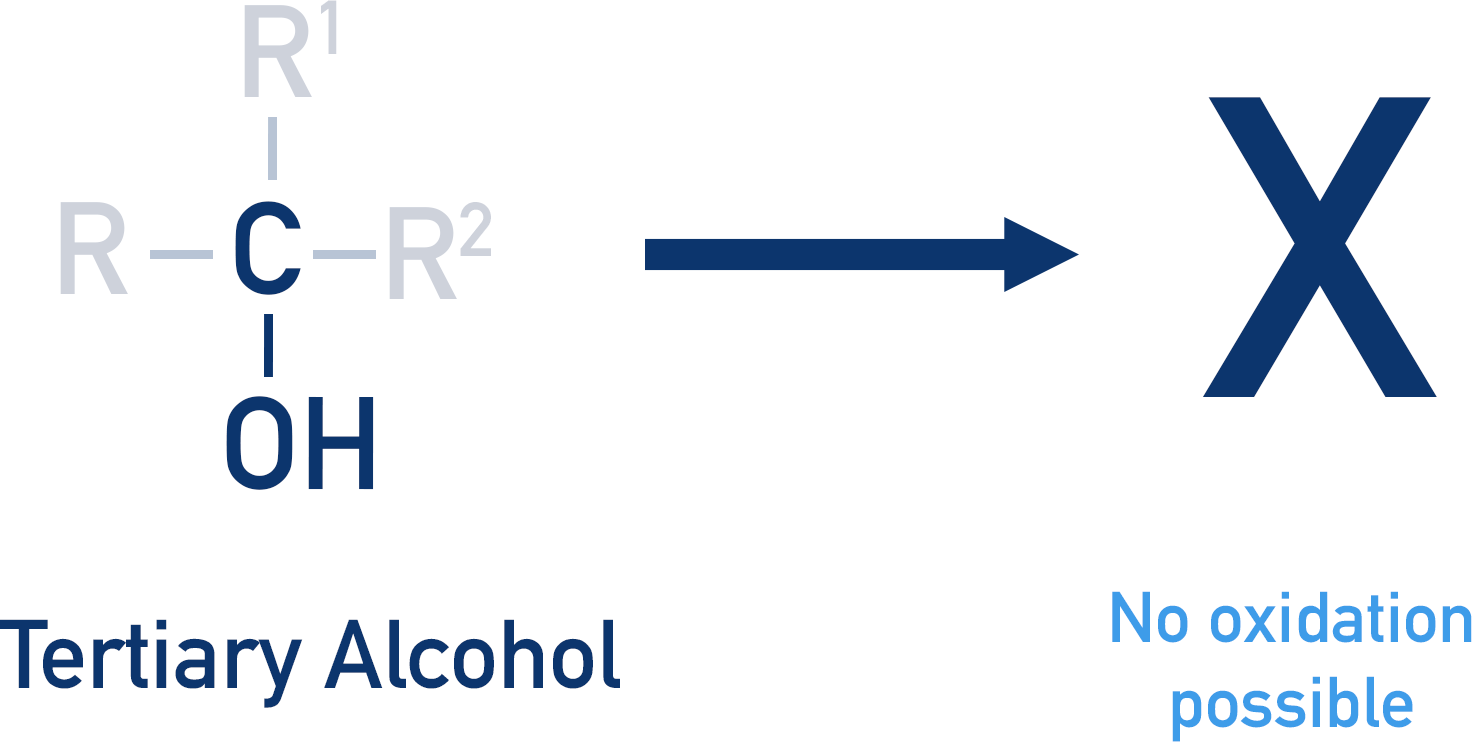
Why can’t tertiary (3°) alcohols be oxidised by acidified potassium dichromate?
The oxidation of alcohols requires the removal of a hydrogen atom from the carbon bonded to the –OH group
Tertiary alcohols don’t have a hydrogen atom on that carbon, as it is bonded to 3 alkyl groups instead
Without this hydrogen, a carbonyl (C=O) group cannot form, so oxidation cannot proceed under these conditions
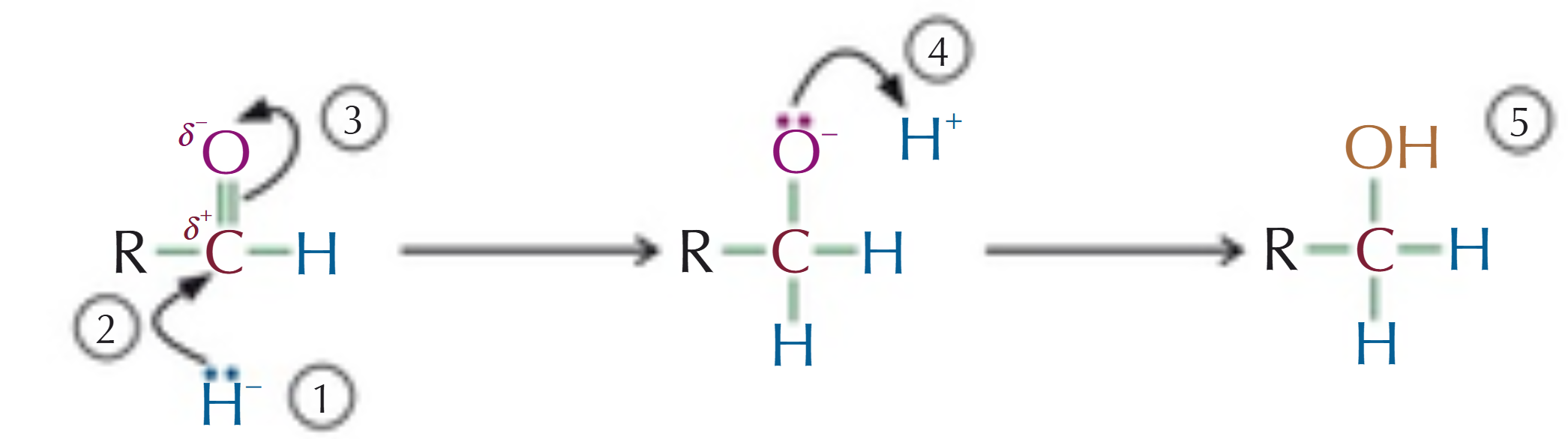
What is a reducing agent for aldehydes/ketones & what ions does this release in solution?
Sodium borohydride in aqueous solution (NaBH4)
Releases a hydride ion, which acts as a nucleophile (H-)
What is a nucleophile?
An electron-pair donor
What can aldehydes & ketones be reduced to?
Aldehydes: reduced to primary alcohols
Ketones: reduced to secondary alcohols
Draw & name the mechanism for the reduction of an aldehyde
Nucleophilic addition
What are the hazards of using potassium cyanide (KCN) ?
KCN is an irritant & can be very dangerous if inhaled or ingested
KCN forms hydrogen cyanide (toxic gas) when reacted with moisture
How can you reduce the risk associated with potassium cyanide (KCN) ?
Wear a lab coat to prevent clothing contamination
Wear safety goggles at all times
Use a fume cupboard to prevent exposure to toxic fumes
Wear gloves while handling
Write 2 equations for the reduction of pentan-2-one & 3-methylbutanal
Pentan-2-one:
CH3CH3COCH2CH3 + 2[H] → CH3CH2CH(OH)CH2CH3
3-methylbutanal:
CH3CH(CH3)CH2CHO + 2[H] → CH3CH(CH3)CH2CH2OH
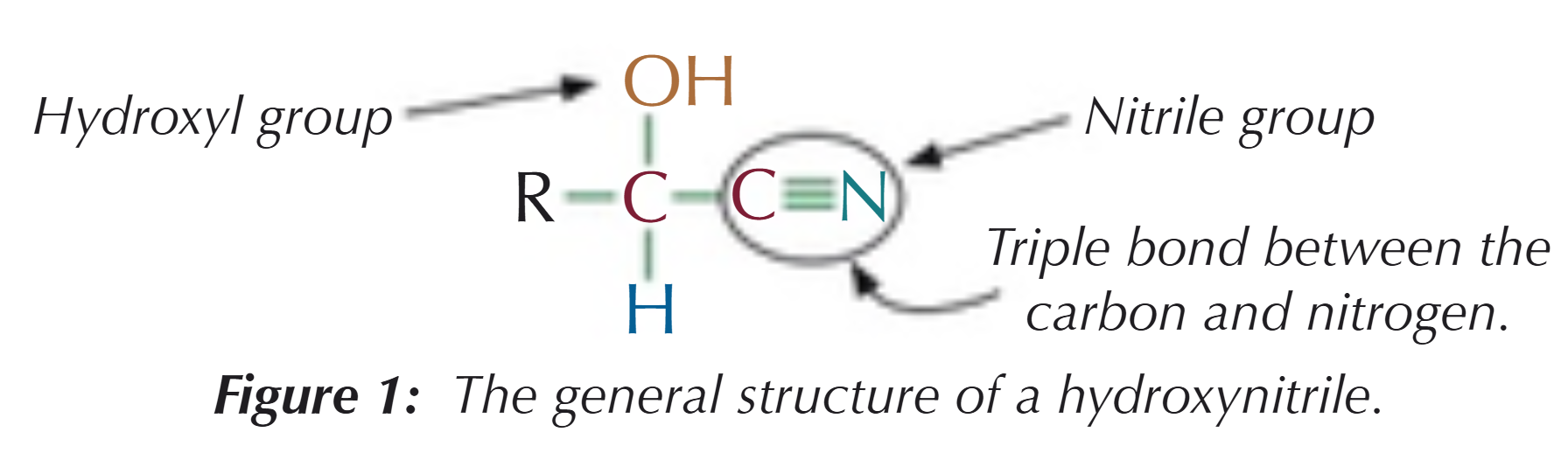
What are the functional groups of hydroxynitriles?
Hydroxyl group (OH) & a nitrile group (CN)

Name this molecule
2-hydroxy-3-methylbutanenitrile
How are hydroxynitriles produced?
Nucleophilic addition reaction: reacting aldehydes/ketones with KCN & a HCl catalyst

What is the overall reaction for when aldehydes & ketones react with KCN to make hydroxynitriles?
