ARCH 412 Final Exam (Monuments and Vocab)
 Studied by 0 people
 Call with Kai
 Learn
Learn Practice Test
 Spaced Repetition
 Match
Match Flashcards
 Knowt Play
1/84

There's no tags or description
Looks like no tags are added yet.
Name | Mastery | Learn | Test | Matching | Spaced | Call with Kai |
|---|
No study sessions yet.
85 Terms
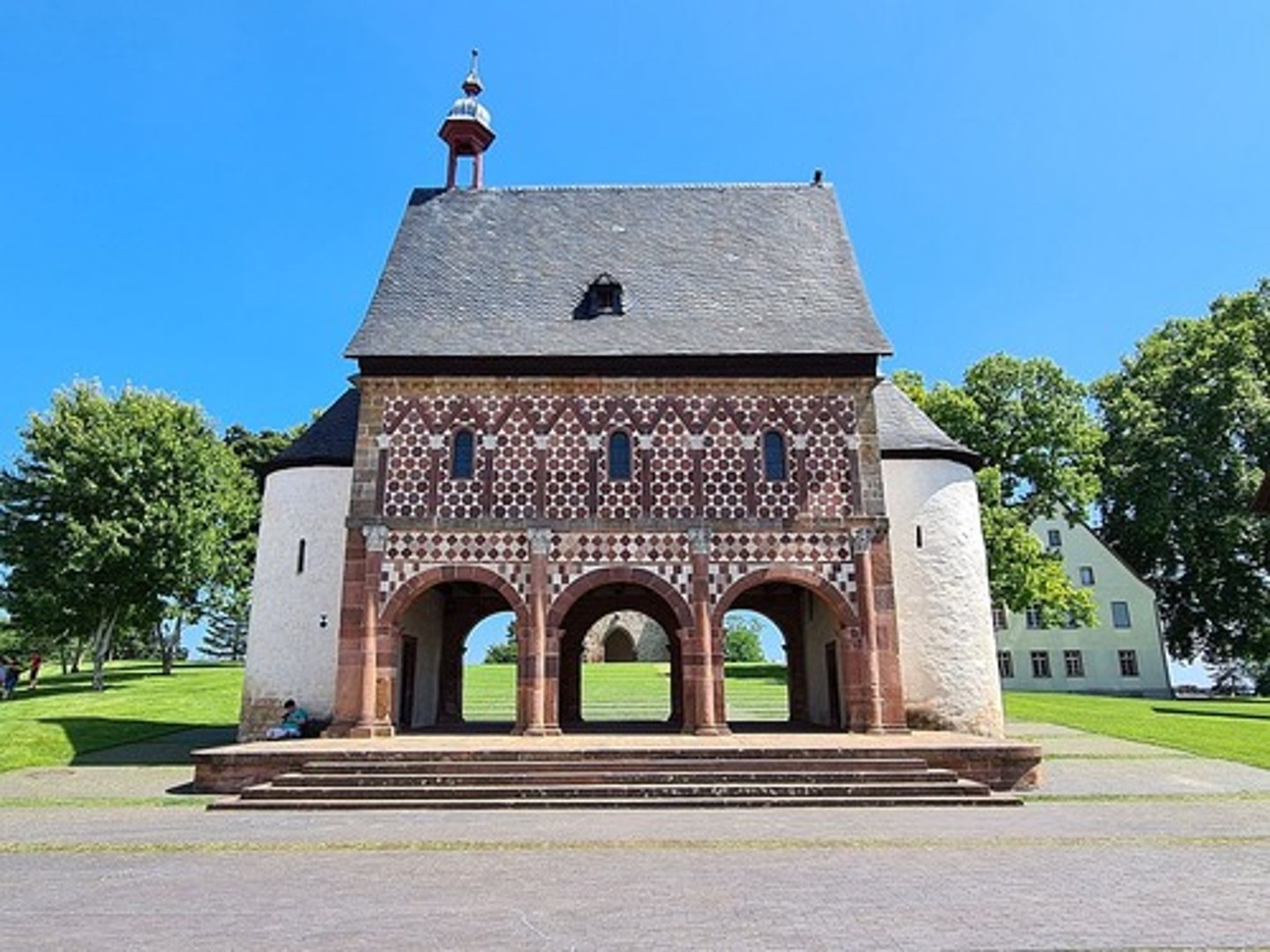
Torhalle, Carolingian
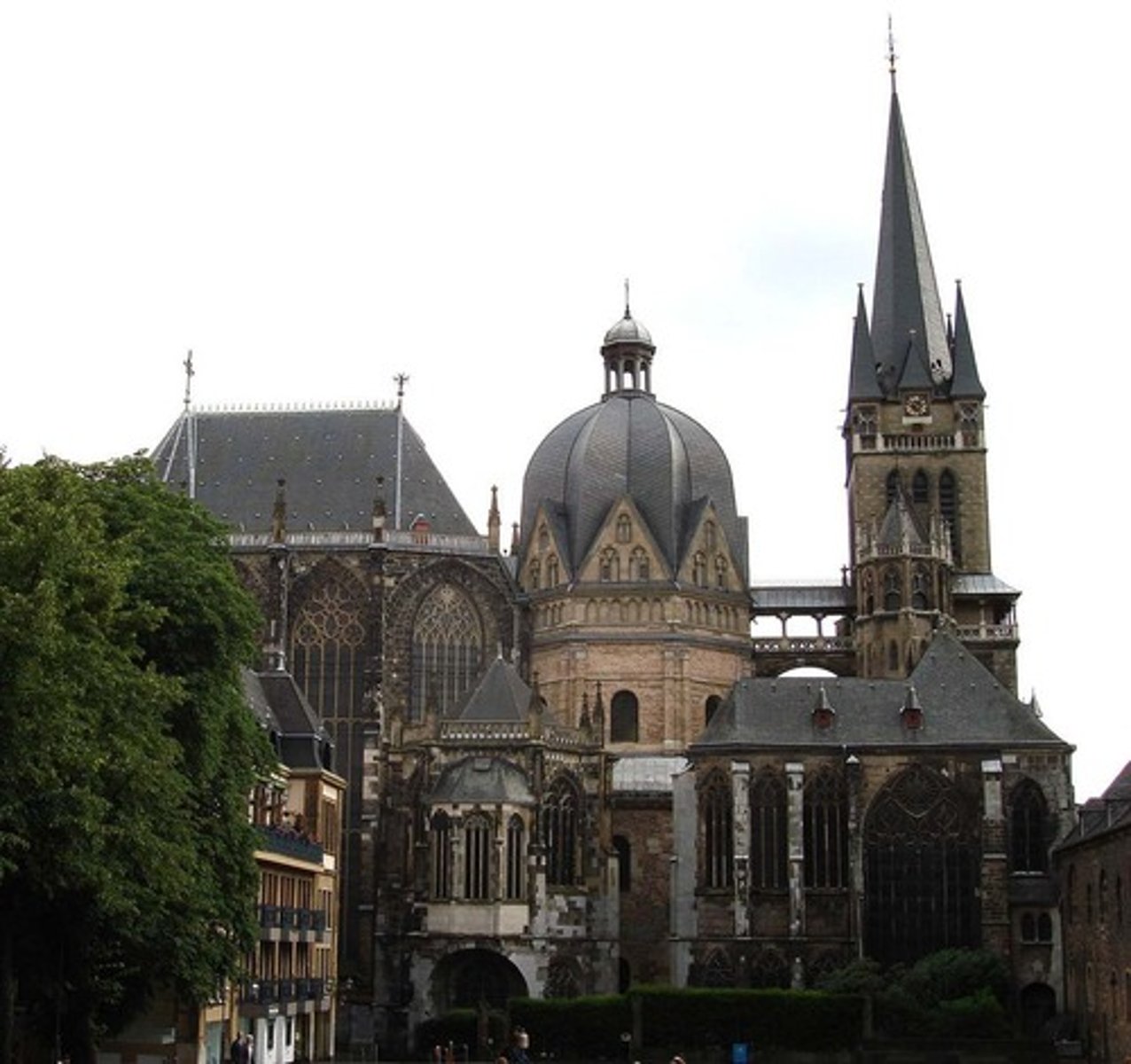
Palatine Chapel at Aachen, Carolingian
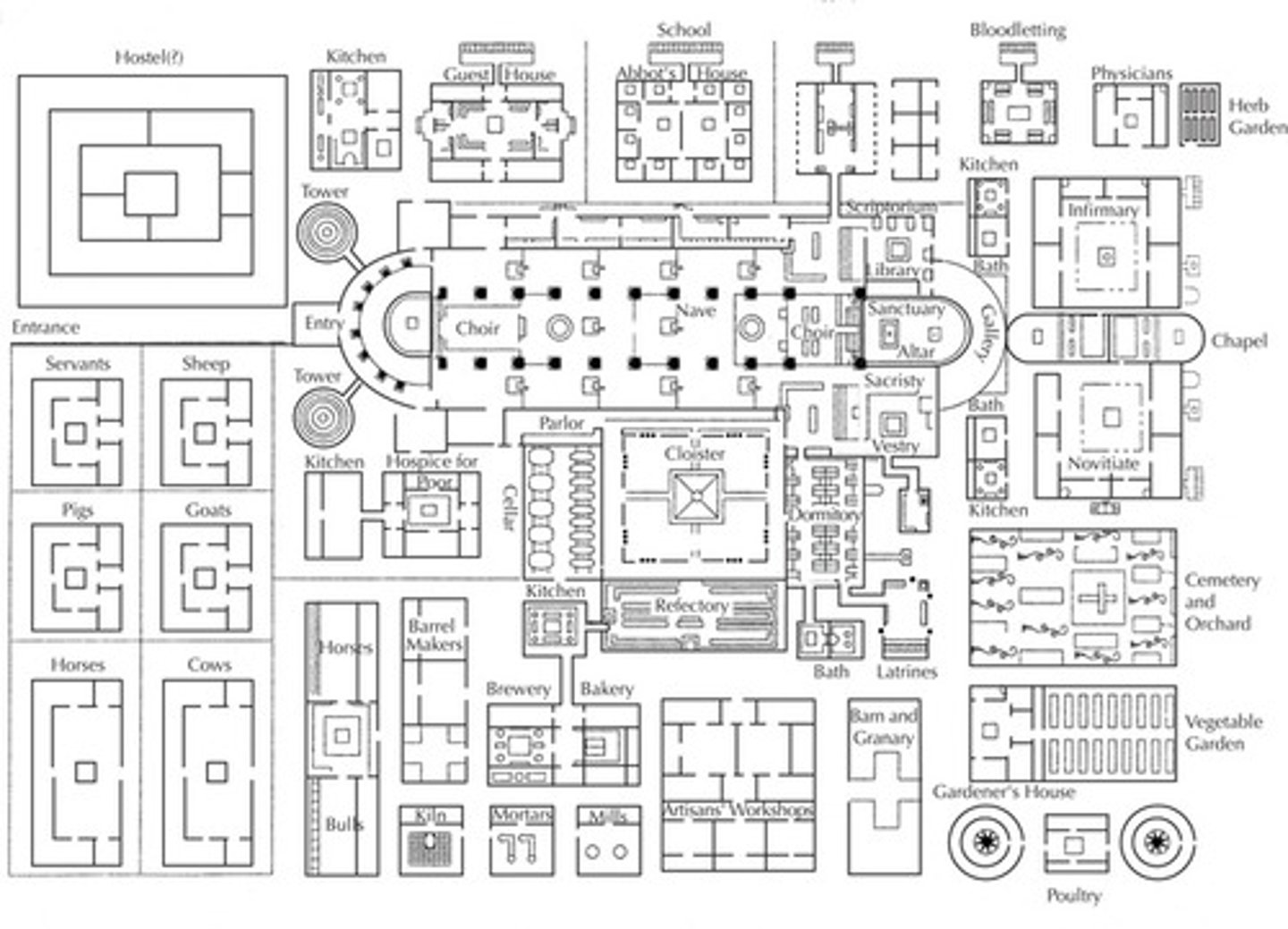
Plan of an Ideal Monastery, Carolingian
Skellig Michael, Carolingian
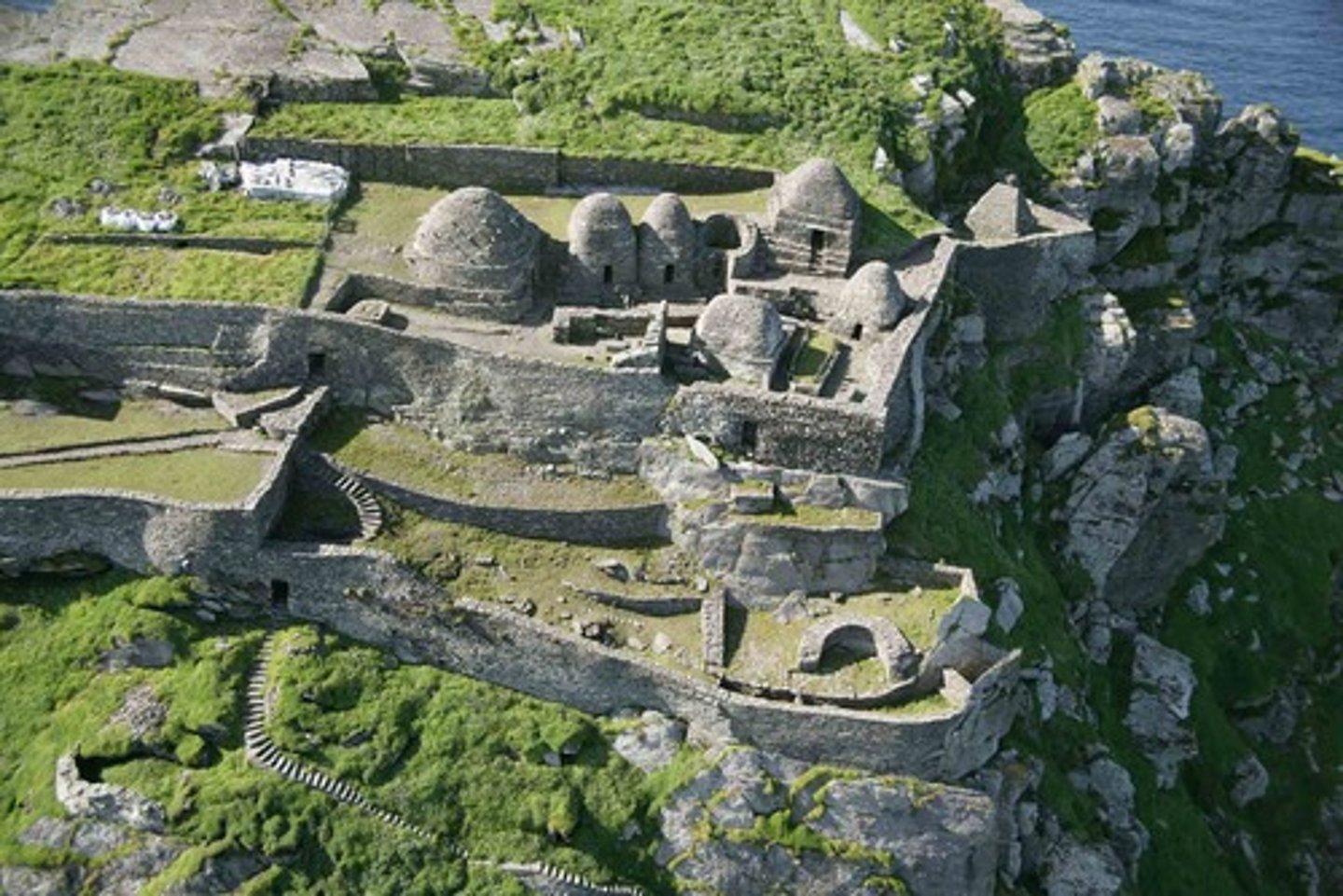
Fontenay Abbey, Cistercian Romanesque
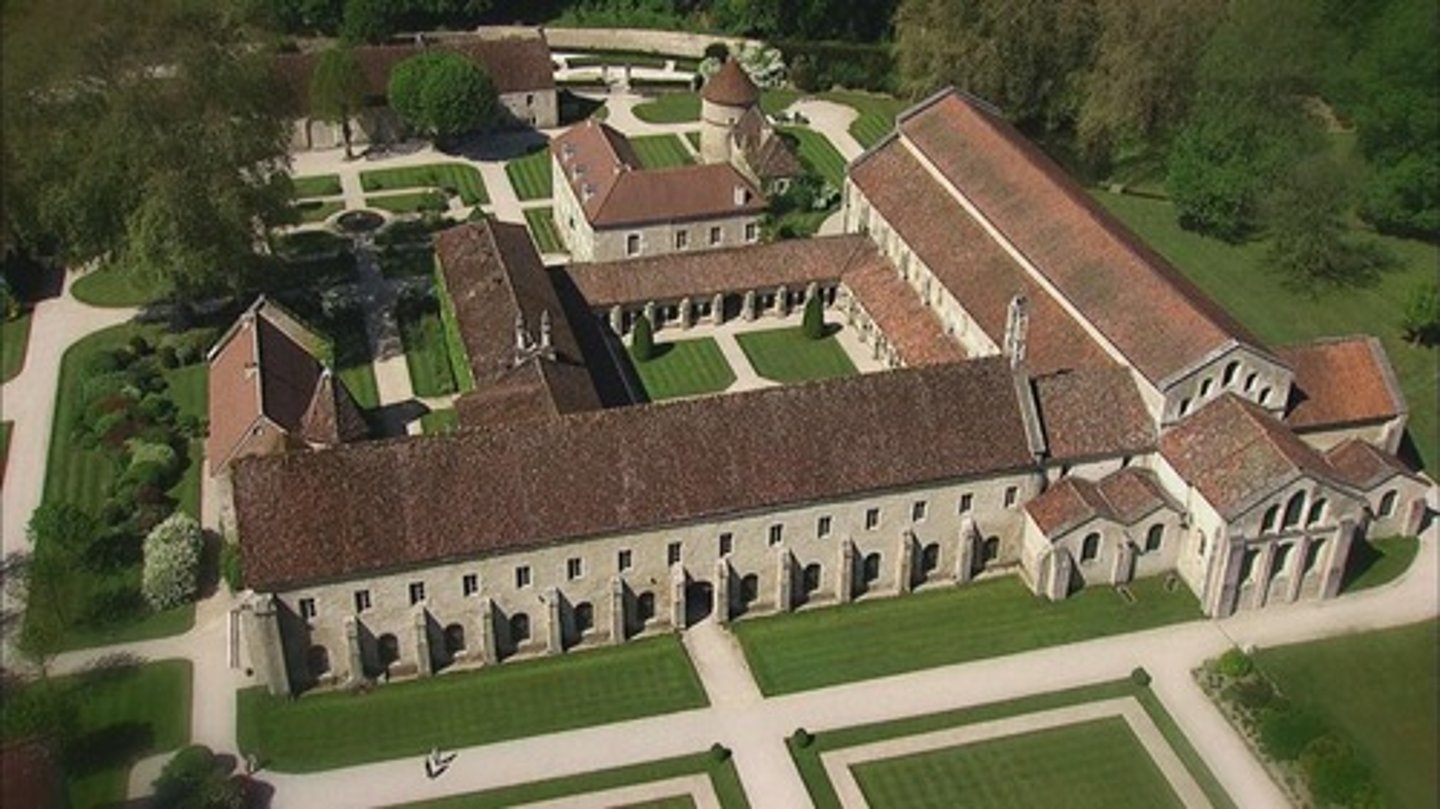
Cluny Monastery Phase III, Cluniac Romanesque
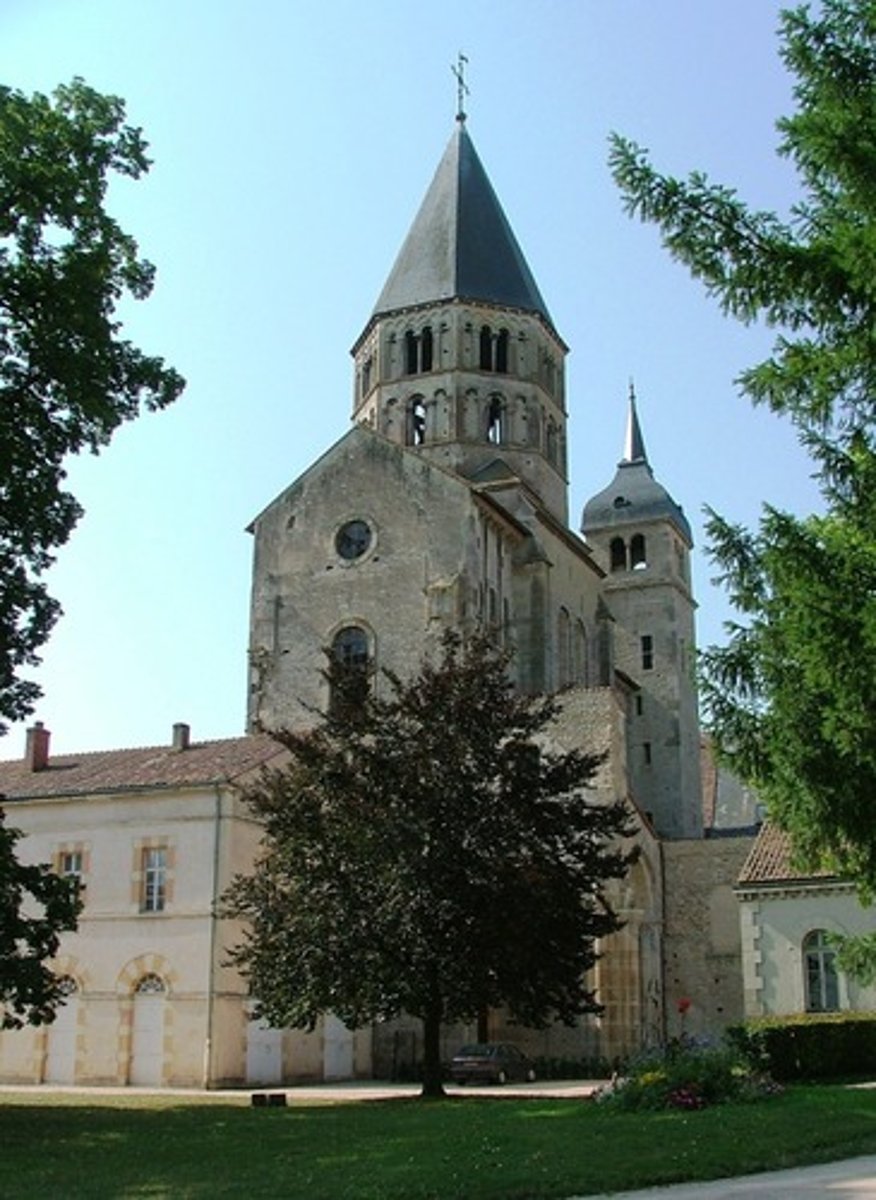
Notre Dame, Cluniac Romanesque
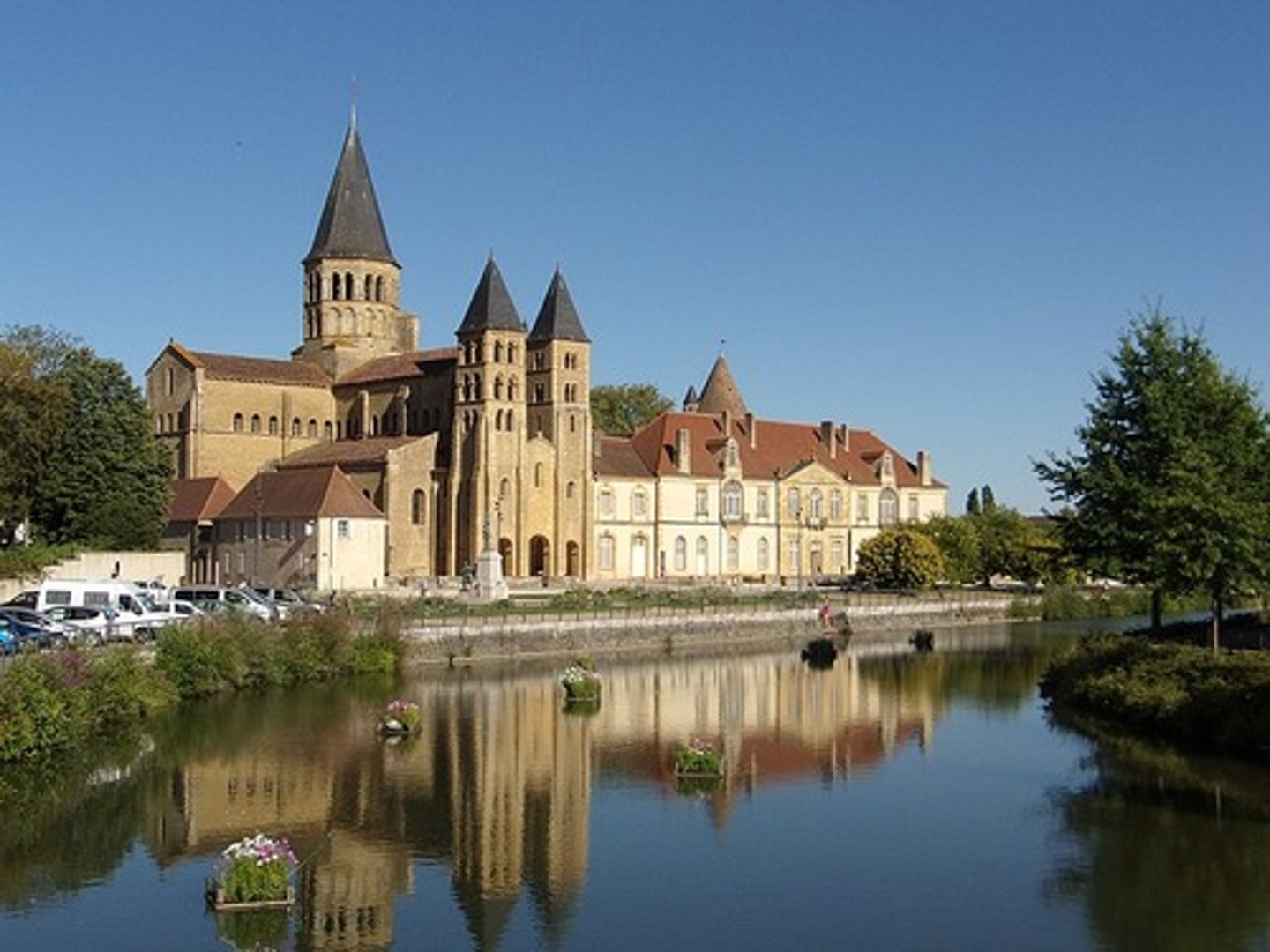
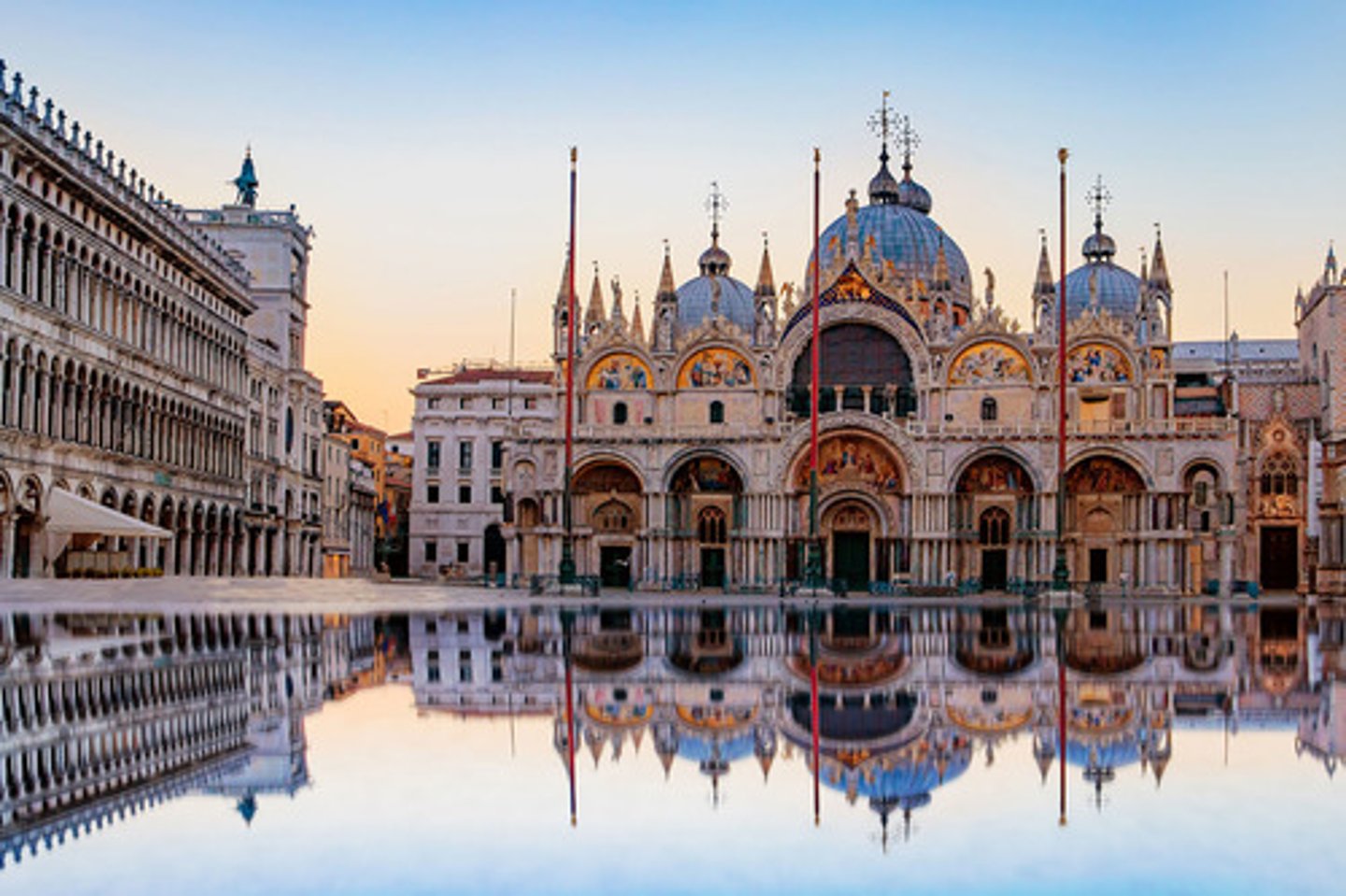
San Marco, Venetian Romanesque
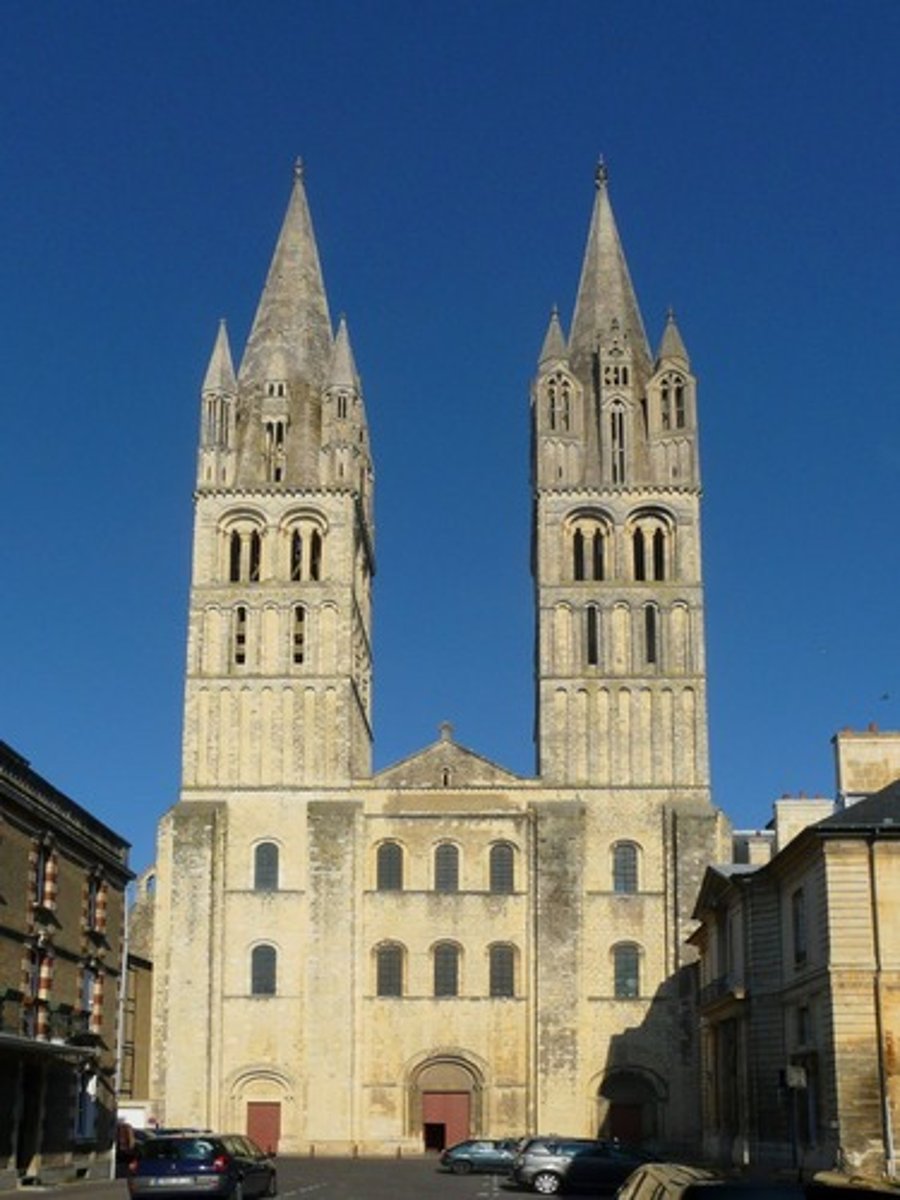
St. Etienne, Norman Romanesque
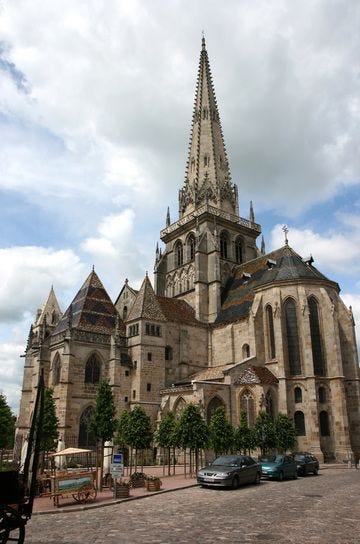
Cathedral of St. Lazare, Cluniac Romanesque
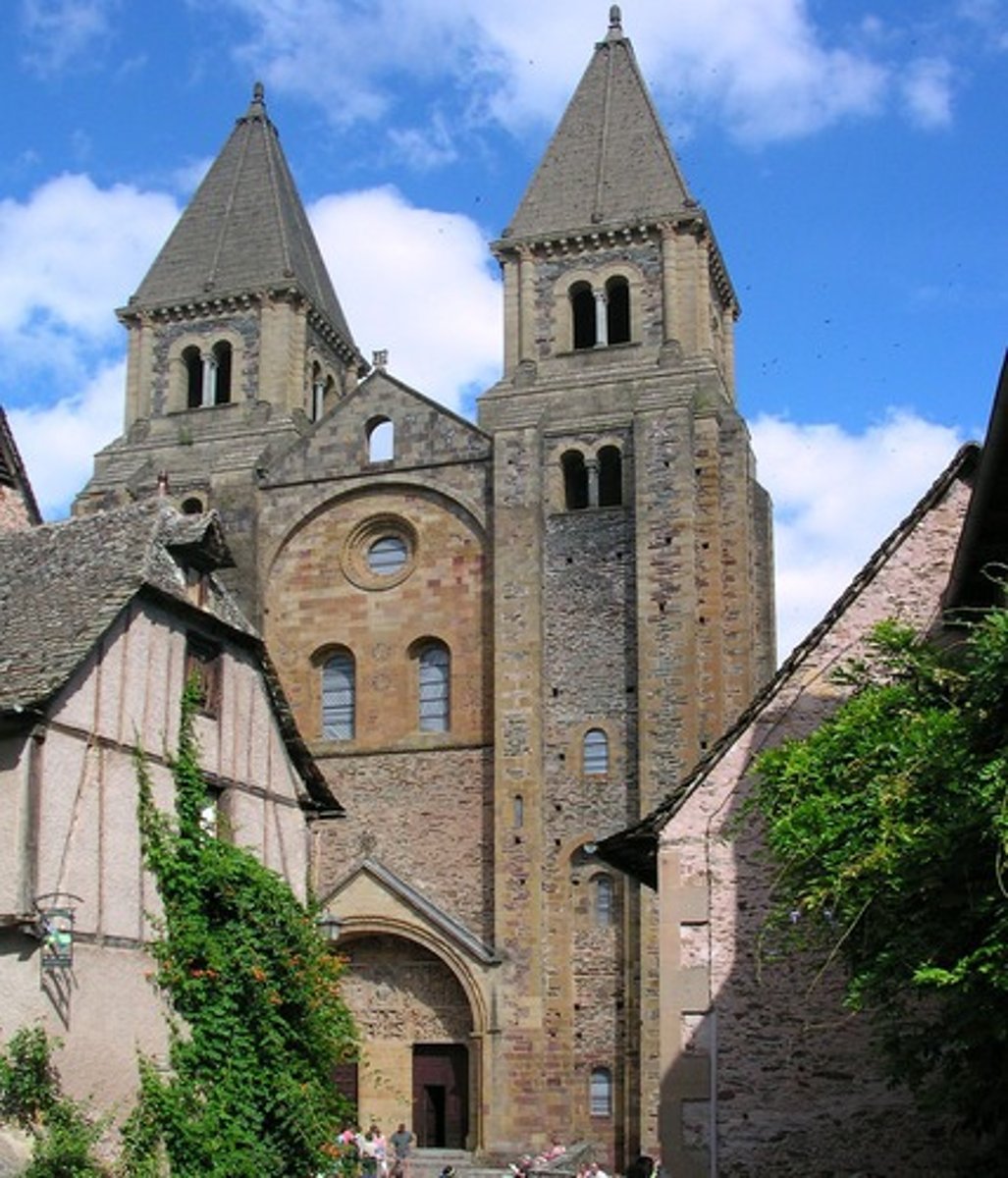
Sainte Foy, Cluniac Romanesque
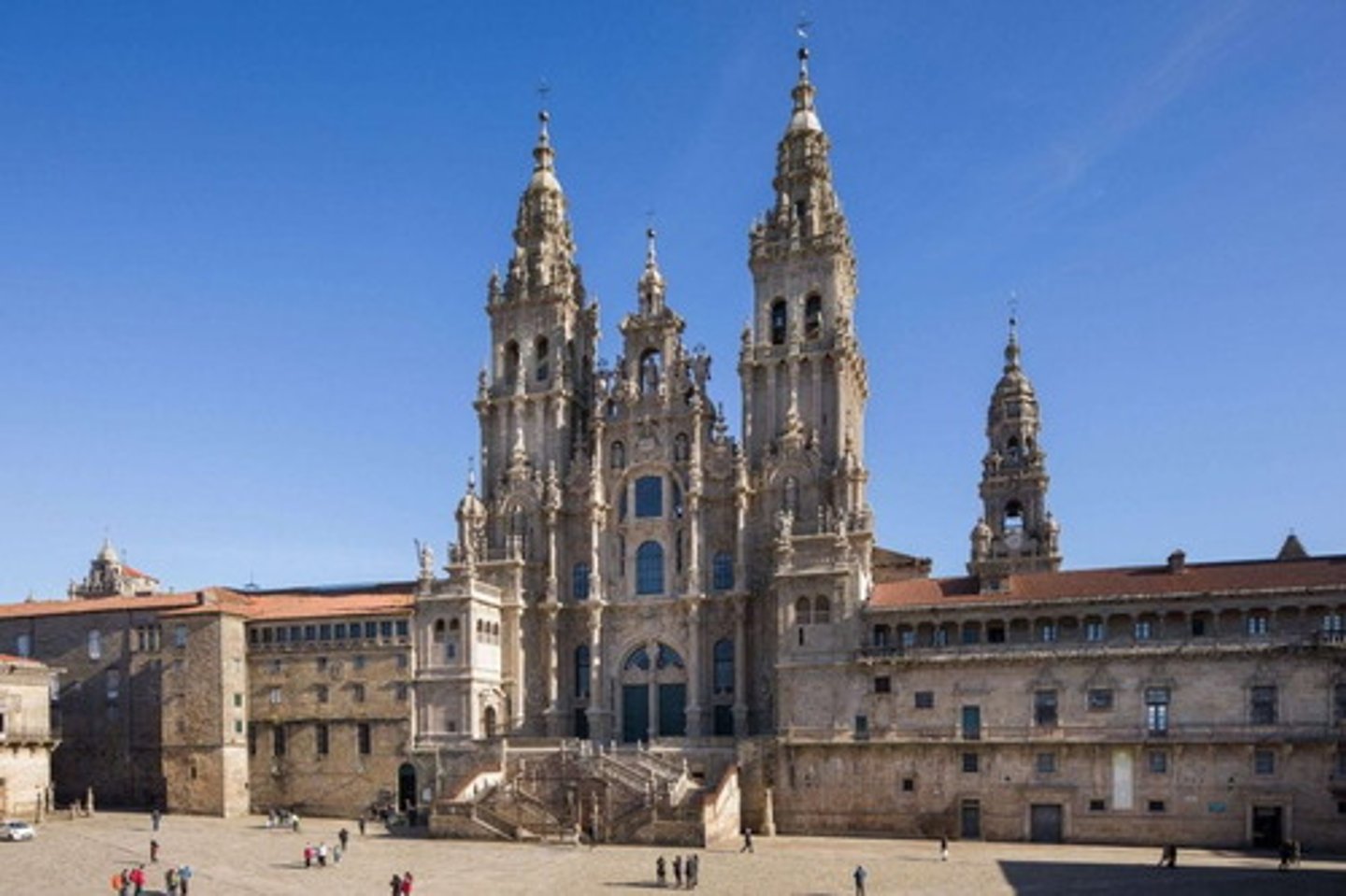
Santiago (Saint James) de Compostela, Romanesque & Pilgrimage
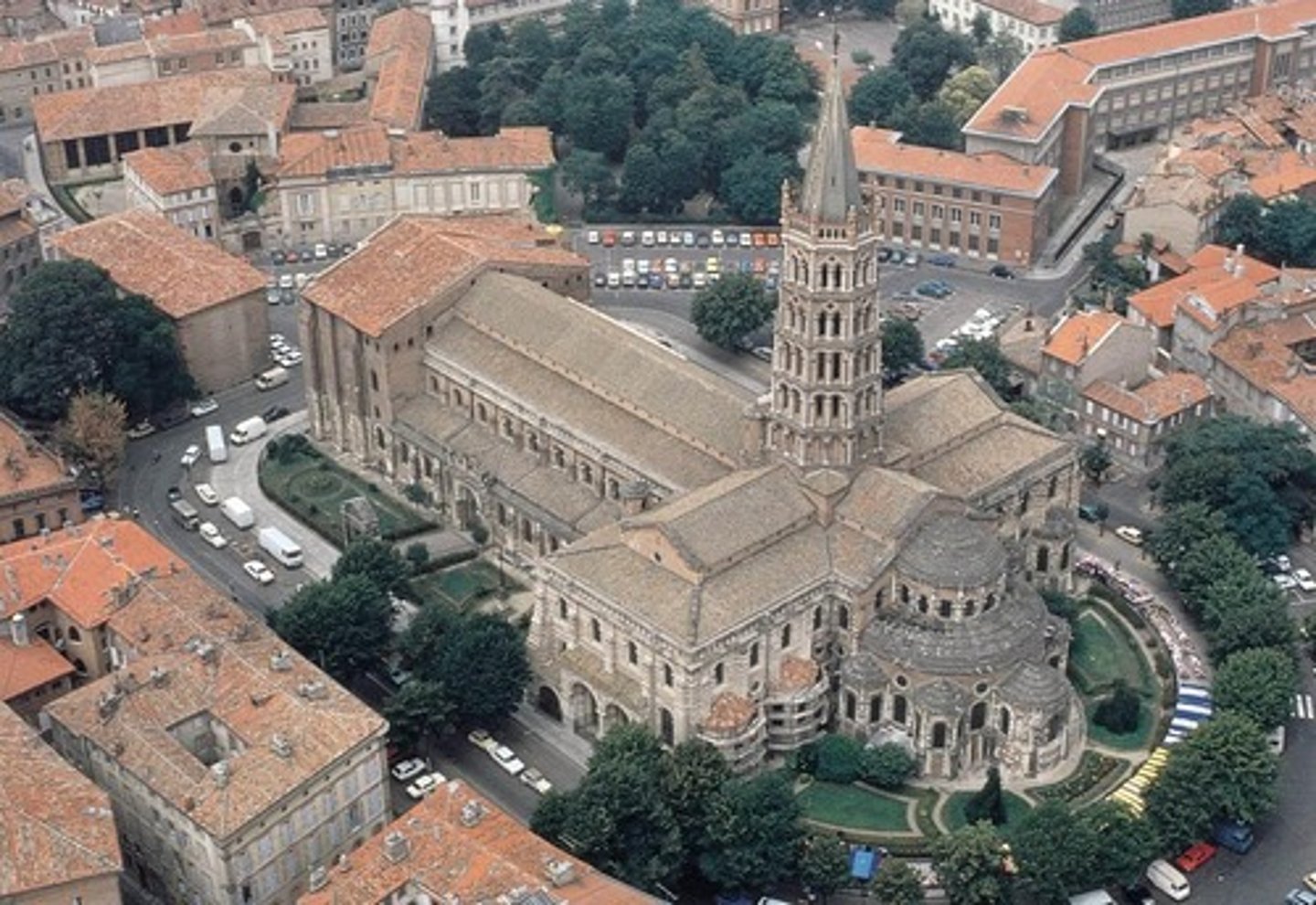
St. Sernin, Romanesque & Pilgrimage
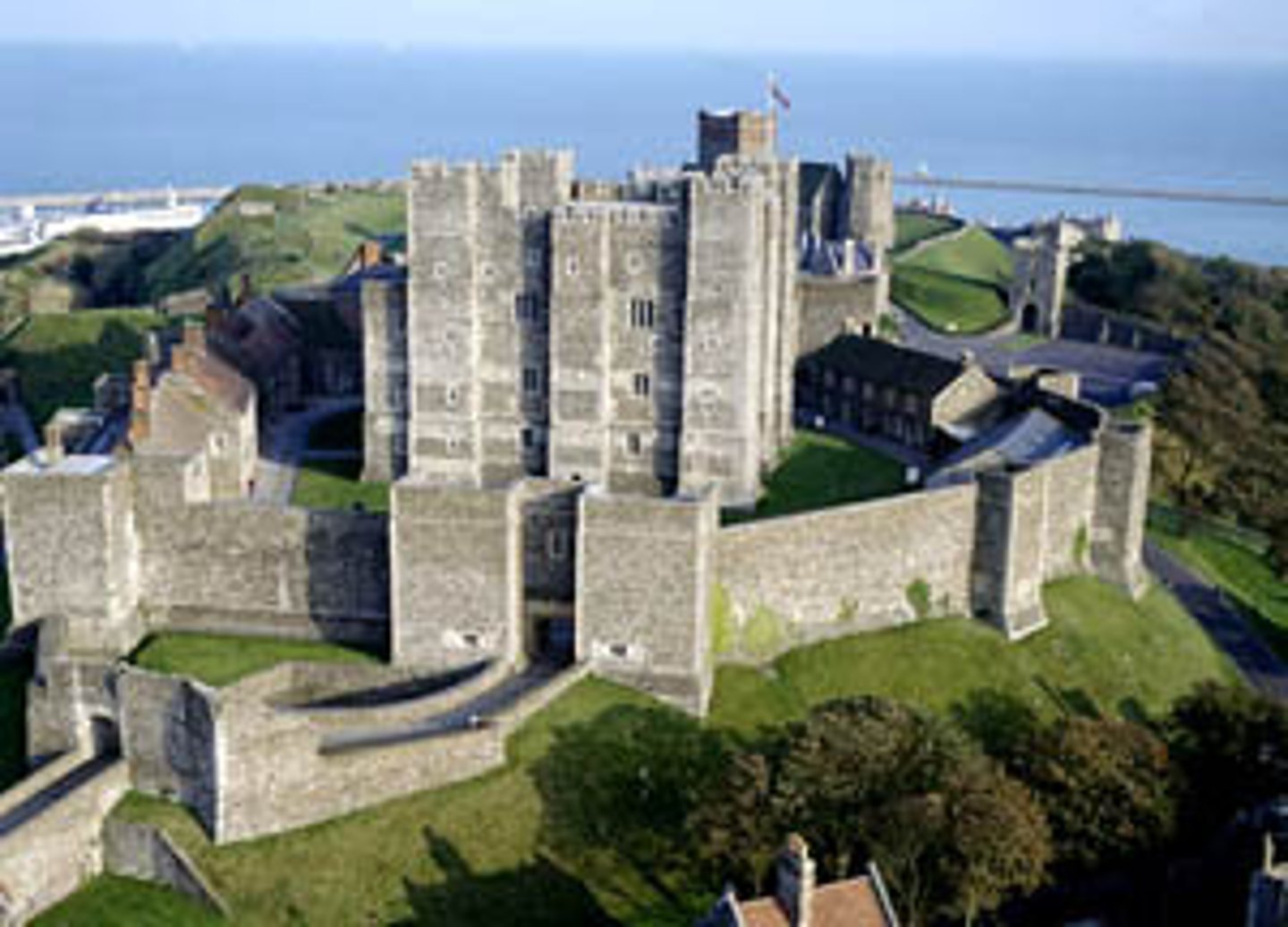
Dover Castle, Anglo-Norman Romanesque
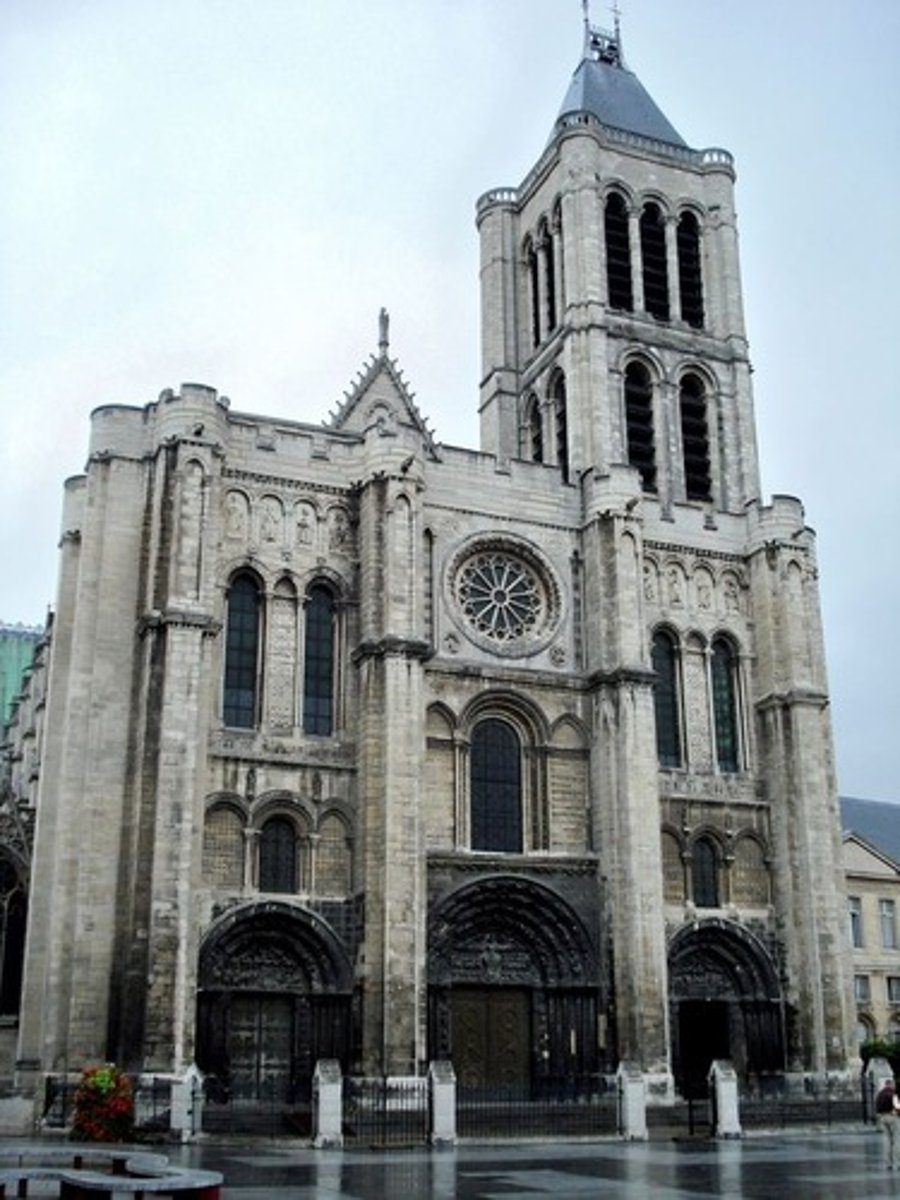
Saint Denis, Early Gothic
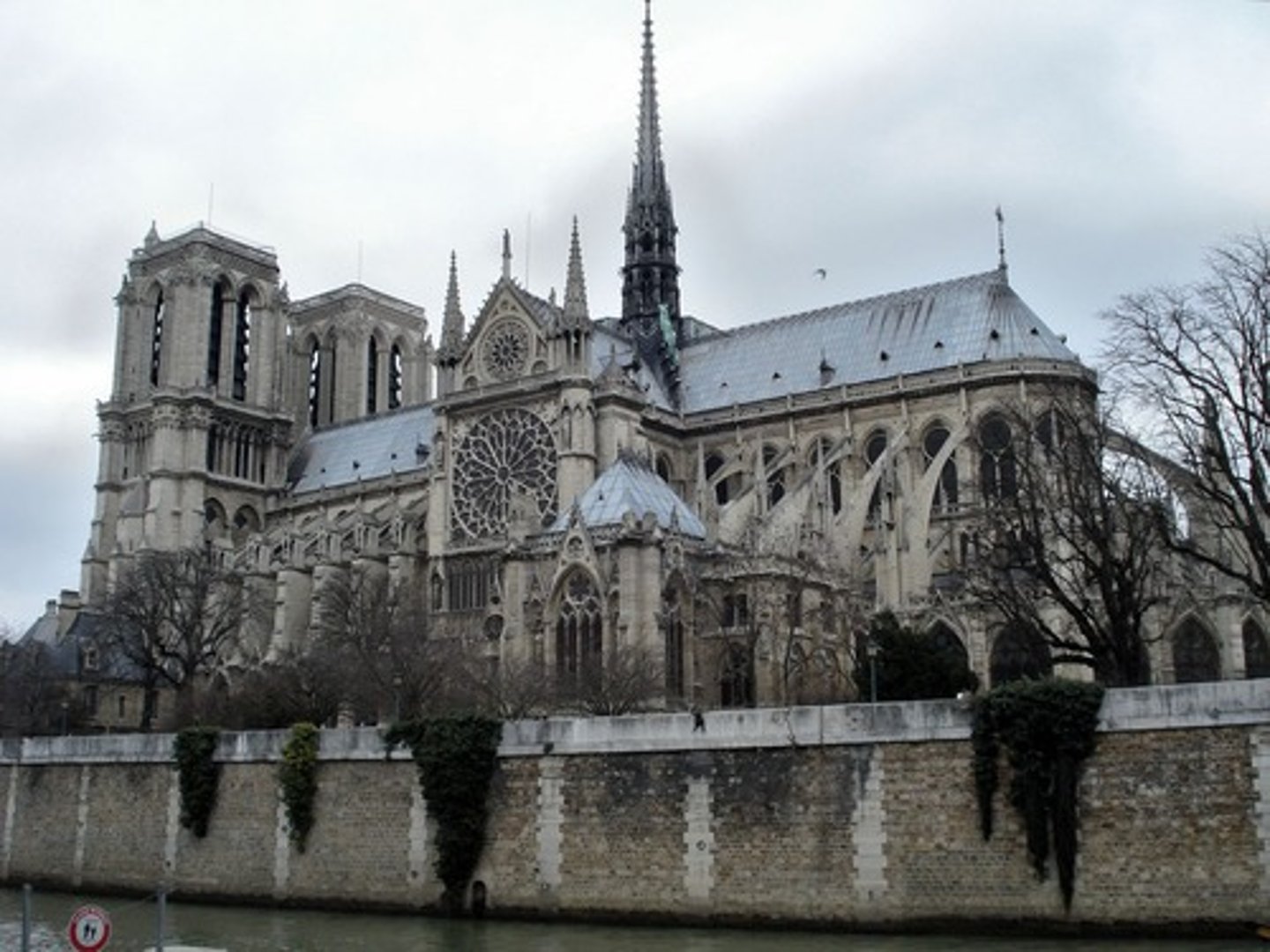
Notre Dame.Early-High Gothic
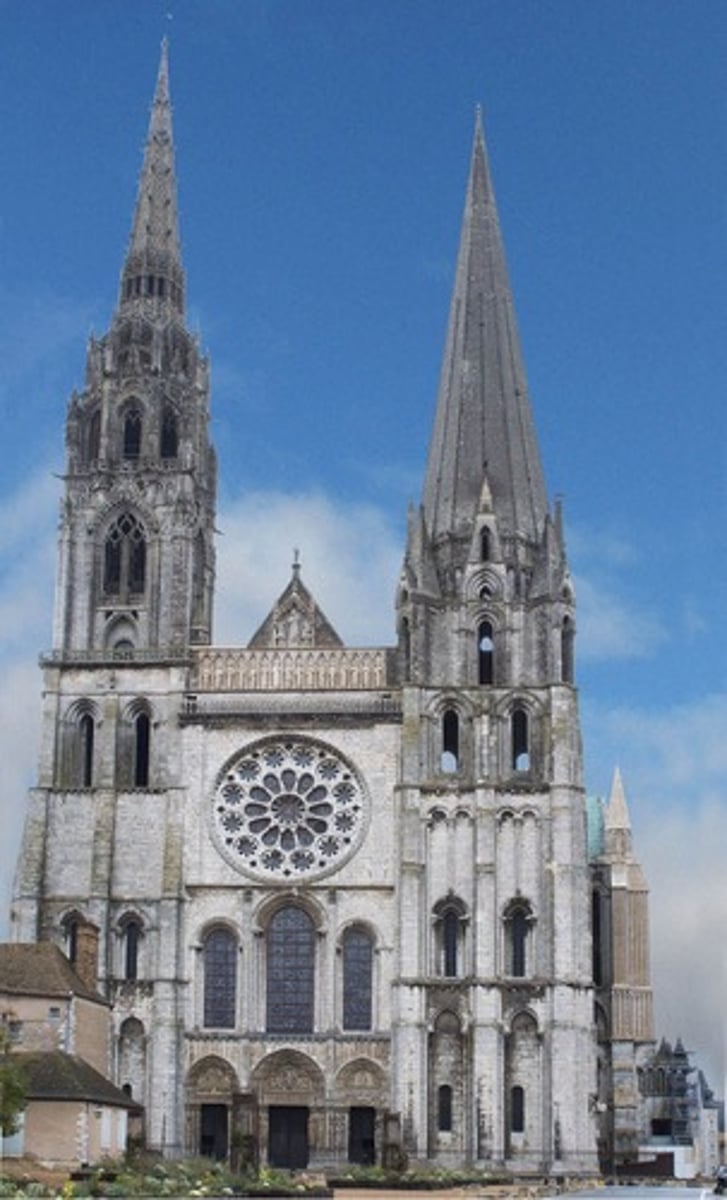
Chartres Cathedral, High Gothic
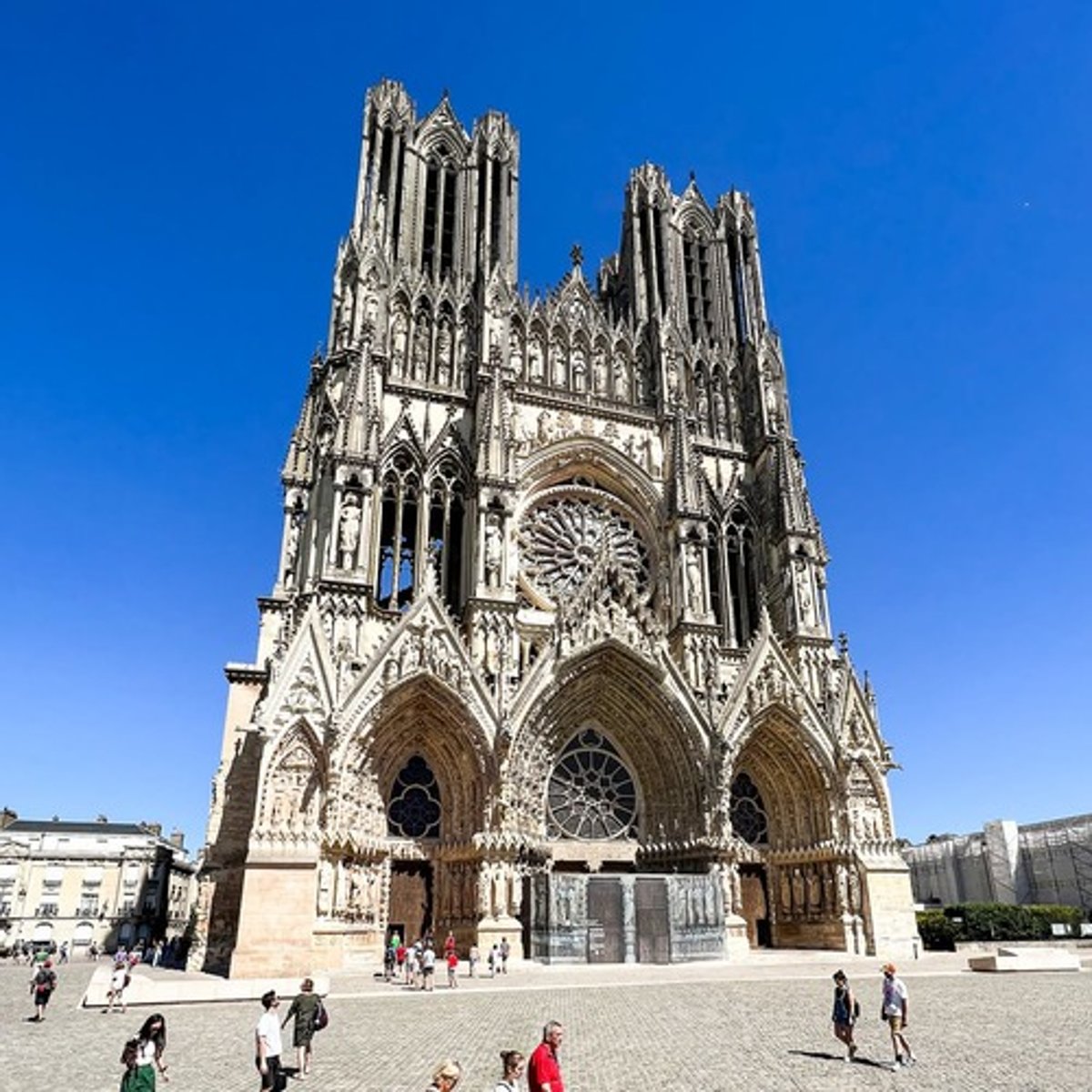
Reims Cathedral, High Gothic
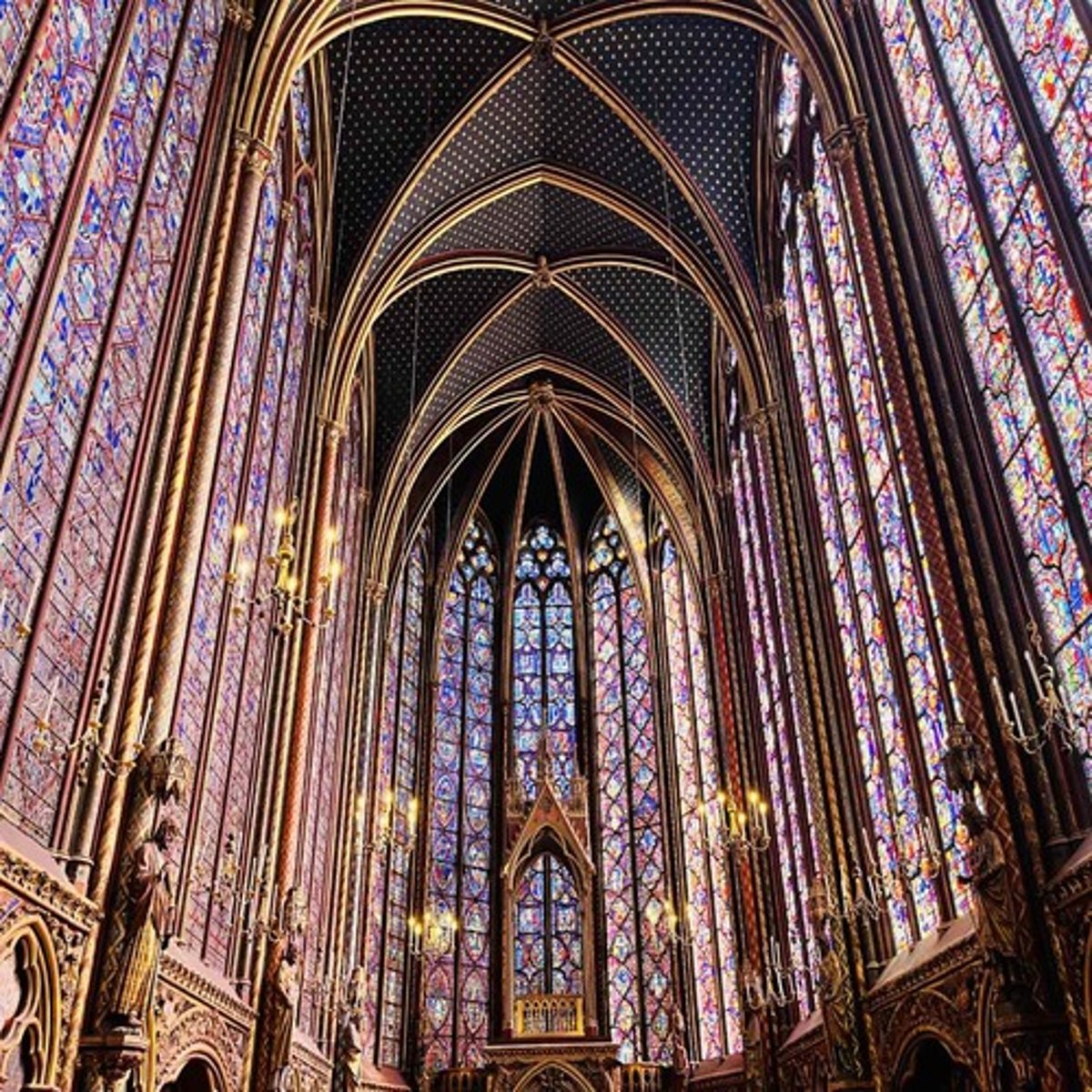
The Sainte-Chapelle, Late Gothic (Rayyonant style)
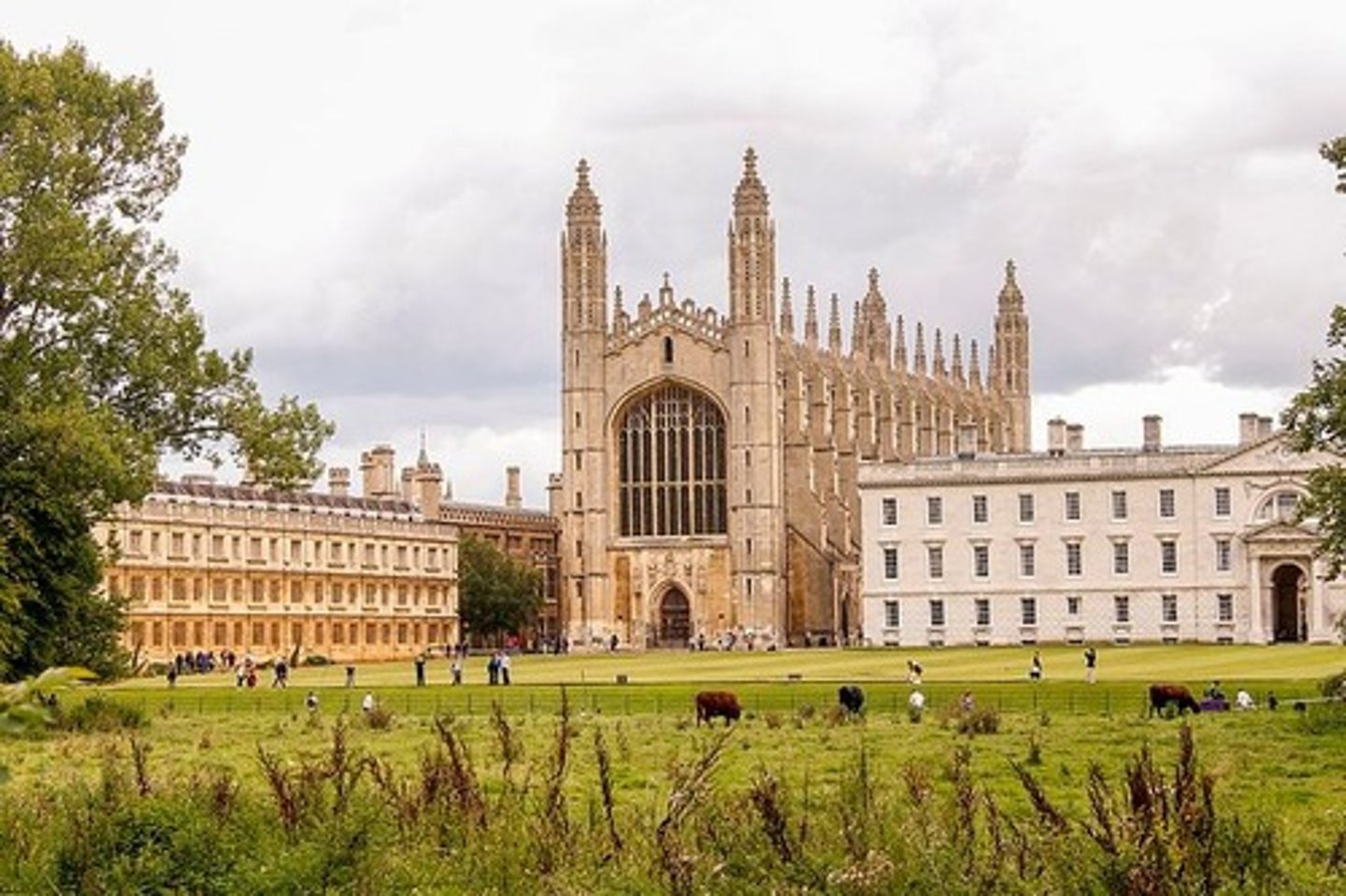
King's College Chapel, English Perpendicular Gothic
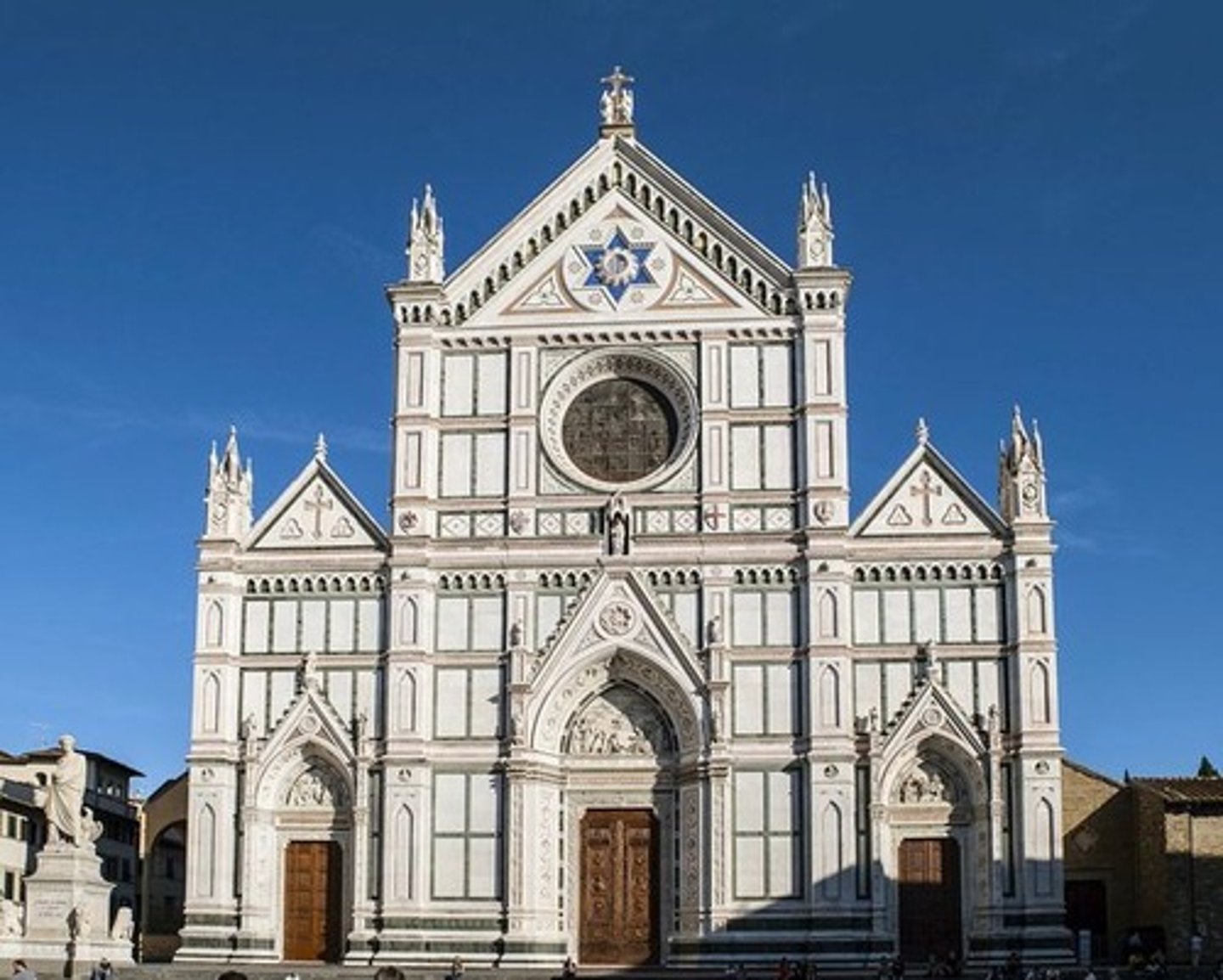
Santa Croce, Tuscan Gothic
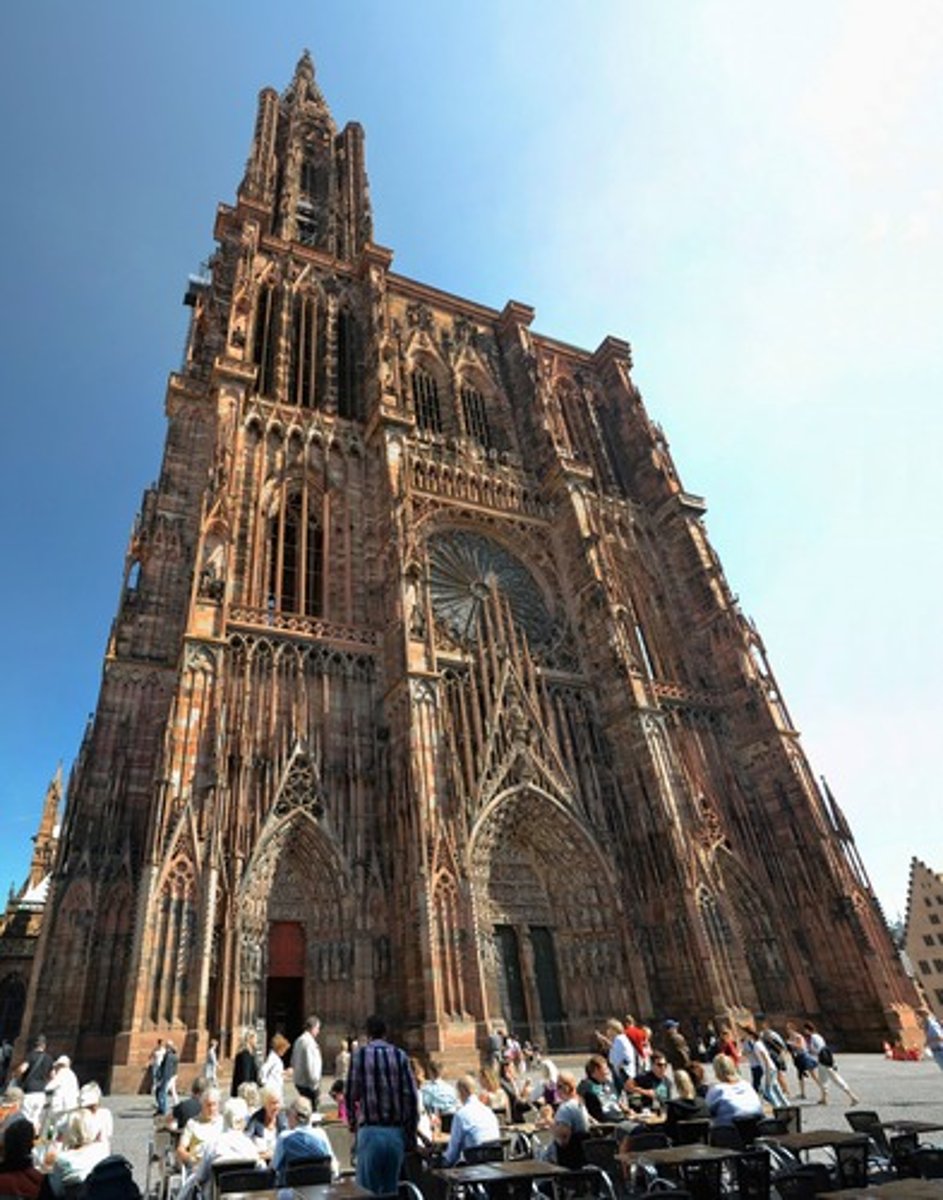
Strasbourg Cathedral, Late Gothic
trompe l'oeil
a painting or design intended to create the illusion of a three-dimensional object
Westwerk
monumental western entry block with two towers at either side of a center portion
Cloister
a quadrilateral, portico-lined courtyard at the center of a monastery
Bay
a repeated unit of structure (comprised of four vertical supports and their vault/roof)
Eremitic monasticism
solitary monasticism, as a hermit (or anchoress)
Cenobitic monasticism
monasticism in which monks live together as a community, often at adistance from other, secular communities
Order
a monastic practice that follows a particular set of rules and regulations. All orders were part of the western European, Latin church and owed allegiance to the Pope, but each orders' particular regulations might differ somewhat
Benedictine monasticism
follows the Regula, or Rule, of St. Benedict, of the 5th century: guide, in 73 short chapters, for communal monastic life based on an equal balance of the "active life" and the "contemplative life": equal parts work and prayer/meditation. Most common order of medieval monasticism; it is still practiced today
Mother house/daughter house
relationship between a founding monastic church and its newer off-shoot
Abbot/Abbess
leader of a male/female communal monastic community
Opus Dei
communal worship (for all of the members of the monastery); divided into seven hours ('offices') of prayer throughout the day and night
Claustrum or Cloister
Enclosed four-sided space at the center of a monastery, composed of a subdivided garden or courtyard and surrounding porticoes; can also mean the monastery as a whole, as a separated and closed space of religious life
Chapter House or Capitulum
place of meeting of the whole monastic community; usually a rectangular or square vaulted space with benches around the perimeter of the room for seating
Cluniac
the order affiliated with Cluny Monastery; a reform branch of the Benedictine Order; believes in prayer as labor (they hired lay brothers - workers - to do manual labor)
Cistercian
a later reform order founded in 1098 at Cïteaux (Latin medieval name: Cistercium).They followed a strict interpretation of the Benedictine Rule, reintroducing manual labor andmaking asceticism a key aspect of their monastic practice. Bernard of Clairvaux was one of their main intellectual leaders, under whose guidance the order grew exponentially in numbers and power
Translation
the ritual movement/rehousing of the relics of a saint from one church location to another
Compound pier
vertical supports made of a core pier or column with attached colonnettes around it
Crossing (tower)
the area where the nave and the transept meet and its vaulting
Springing
the point at which an arch begins (where it begins to curve away from its vertical support)
Groin vault
a masonry vault of two intersecting, perpendicular barrel vaults; this creates joints (or "groins" at the points of intersection
Ribbed barrel vault
a barrel vault with a supplementary support band at each bay
Radiating chapel (aka 'apsidiol')
small apse-like projection off an ambulatory or transept
Tympanum
the space enclosed by a lintel and an arch over a doorway
Maestas Domini
Latin, "Christ in Majesty". Iconography of Christ seated on a throne, usually centered in the architectural frame and larger than other figures (hierarchical scale)
Last Judgment
the judgment of souls at the end of the world, part of Christian/New Testament belief
Camino de Santiago
"the Way of St. James," is a network of pilgrims' routes leading to the shrine of the apostle Saint James the Great in the cathedral of Santiago de Compostela in northwestern Spain
Relic
a body part of a saint or holy object (usually a tiny fragment of such); secondary relics are those that were in contact with a holy body (such as the Shroud of Turin)
Reliquary
the container for a holy relic, often very highly decorated with gold and gemstones;can take a human form (often related to the body part the relic came from) or a more functionalobject, like a casket/box or a cross form
Motte-and-bailey
A defensive system comprising the motte, a mound of earth, with a wooden tower on top, placed within the bailey, a walled courtyard (also called the ward)
Keep
A freestanding defense tower in a castle complex (after the twelfth century, often enclosed by fortifications/walls, becoming the strongest element within the castle; later yet, keeps are mostly residential and could be fairly luxurious).
Enceinte
French term for inner protective line, consisting of towers/bastions and curtain walls, surrounding a keep (often there are two lines of defensive fortifications in twelfth century and later castles)
Rib vault
structural bands of masonry that form the "skeleton"/frame of the building
Pointed arch
transfers force and thrust more efficiently through the center of the arch's voussoirs (individual stones), creating a stronger arch
Flying buttress
transfers lateral thrust (sideways) from the clerestory springing point to the external buttress pier of a Gothic cathedral
Gothic Architecture Development over Time
1) Overall, the cathedrals get taller over time
2) the interior nave wall switches from earlier four-part elevation to a later three-part elevation (the gallery is excised); this streamlines the wall, emphasizing its verticality
3) the proportions of the interior nave wall become more equalized between the ground arcade and the upper-level clerestory
Chevet
rounded, hemispherical east end of a Gothic church (includes the ambulatory (with any radiating chapels, apse and choir)
Pseudo-Dionysius
an ancient Greek philosopher who believed that radiant light was a physical manifestation of God. Through centuries, this Pseudo-Dionysius Dionysius is the Greek version of 'Denis') became conflated with the martyrial saint of the monastery of St. Denis, and thus Suger believed that he was adapting the patron saint's idea of divine luminosity in the building of his new church.
Anagogy
interpretation of a word, passage, or text (as of Scripture or poetry) that leads beyond the literal, allegorical, and moral senses to a spiritual or mystical sense
Triforium
small zone above the gallery (or sometimes replacing it) in a Gothic elevation. Often has blind arcades, or an open arcade screening a small passageway.
Webbing
the "skin" of a ribbed vault; the solid covering of the vault above the structural ribs
Six-part/Four-part vault
vaults broken into six or four compartments by the transverse anddiagonal supporting ribs. Six-part vaults are earlier, four-part vault were the result of greater experimentation and confidence in the Gothic vaulting structural system.
Jamb statues/figures
statues that are carved into the columns of the door jambs (verticals connected to the facets of the archivolt)
Rose window
circular window with mullions or tracery radiating in a form suggestive of aflower/rose
Mullion
individual, vertical dividers between glass plates in a window (still used today); canbe stone, wood, aluminum, etc.
Lancet
tall, narrow window with an acutely pointed head
Tracery
stone dividers (as a whole) in windows, often in elaborate patterns
Plate tracery
window forms are punched into the stone wall, retaining the majority thickness of the wall
Bar tracery
thinner bar mullions between the stained-glass pieces allowing for greater areas of glass within the rose window
English Perpendicular
perpendicular Gothic period (or simply Perpendicular) characterized by an emphasis on rectilinear lines with strong points of crossing; begins c. 1350 (and goes until the mid-sixteenth century) and grows out of the English Decorated style
Ridge Rib
long, longitudinal rib running the length of several bays (if not the whole church) along the apex of the vault line
Tierceron
rib projections that extend from the side arches to some point along the ridge rib, not necessarily joining the rib from the side arch opposite
Lierne
small ribs connecting tiercerons or ridge ribs (these make up the bulk of the net-like patterns of English Gothic vaulting
Fan Vaulting
type of vault consisting of a set of concave ribs spreading out from a central point like the ribs of an opened umbrella, used especially in the English Perpendicular style
Hammer-beam roof
Short, horizontal beams projecting inward into the top of interior walls, attached to the foot of principal rafters in a roof and generally supporting arched roof braces
Mendicant Orders
monastic orders that engaged with teaching and outreach to the secular population; usually located within town centers for this outreach. Franciscans and Dominicans are part of the Mendicant Orders.
Three Combined Structural elements creating "Gothic" architecture
Rib vault
Pointed arch
Flying buttress
Historiated capital
Capital with narrative carved on its faces (they tell a story)
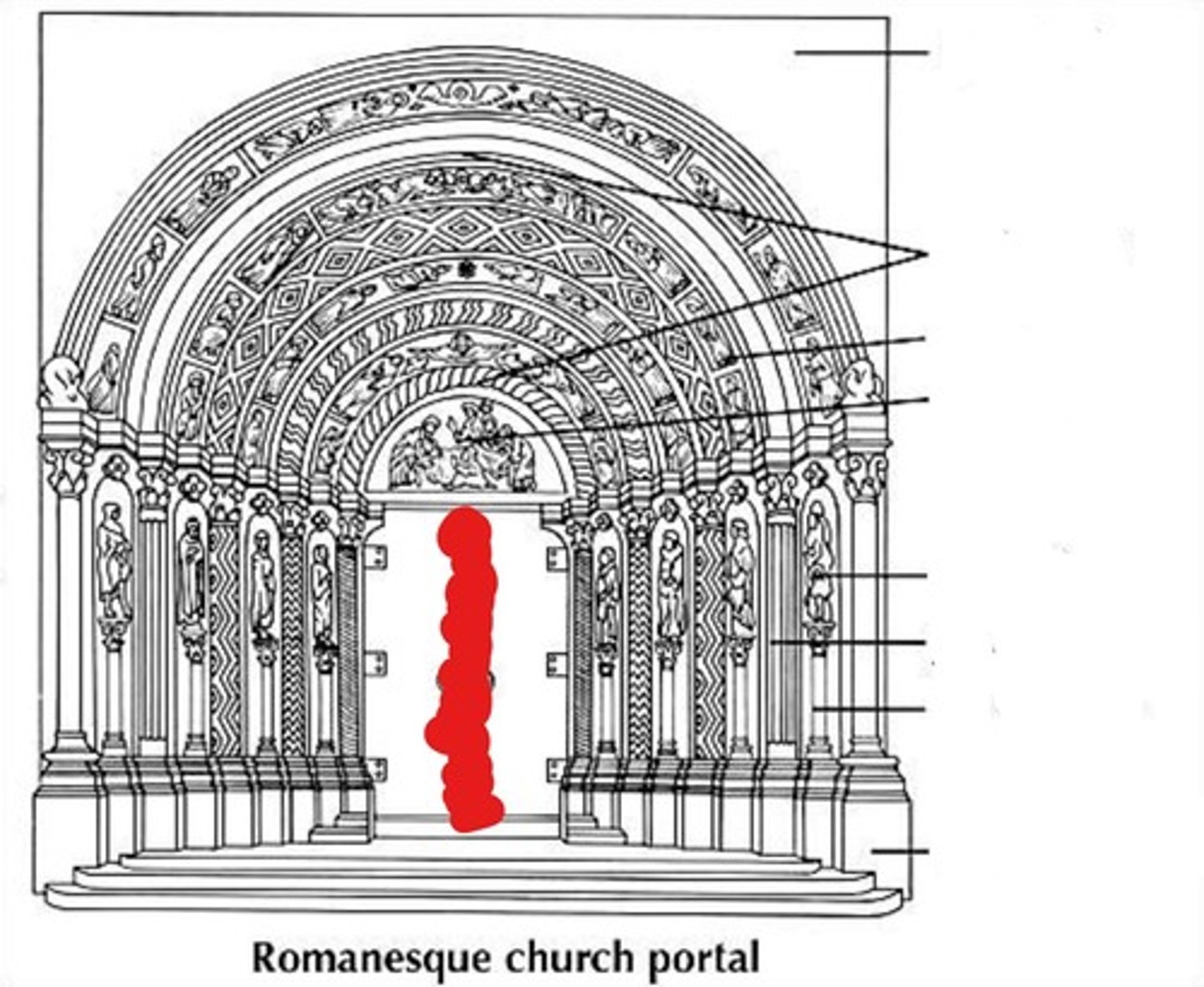
Diagram of the Romanesque portal: Archivolt, Voussoir, Lintel, Jamb, Trumeau
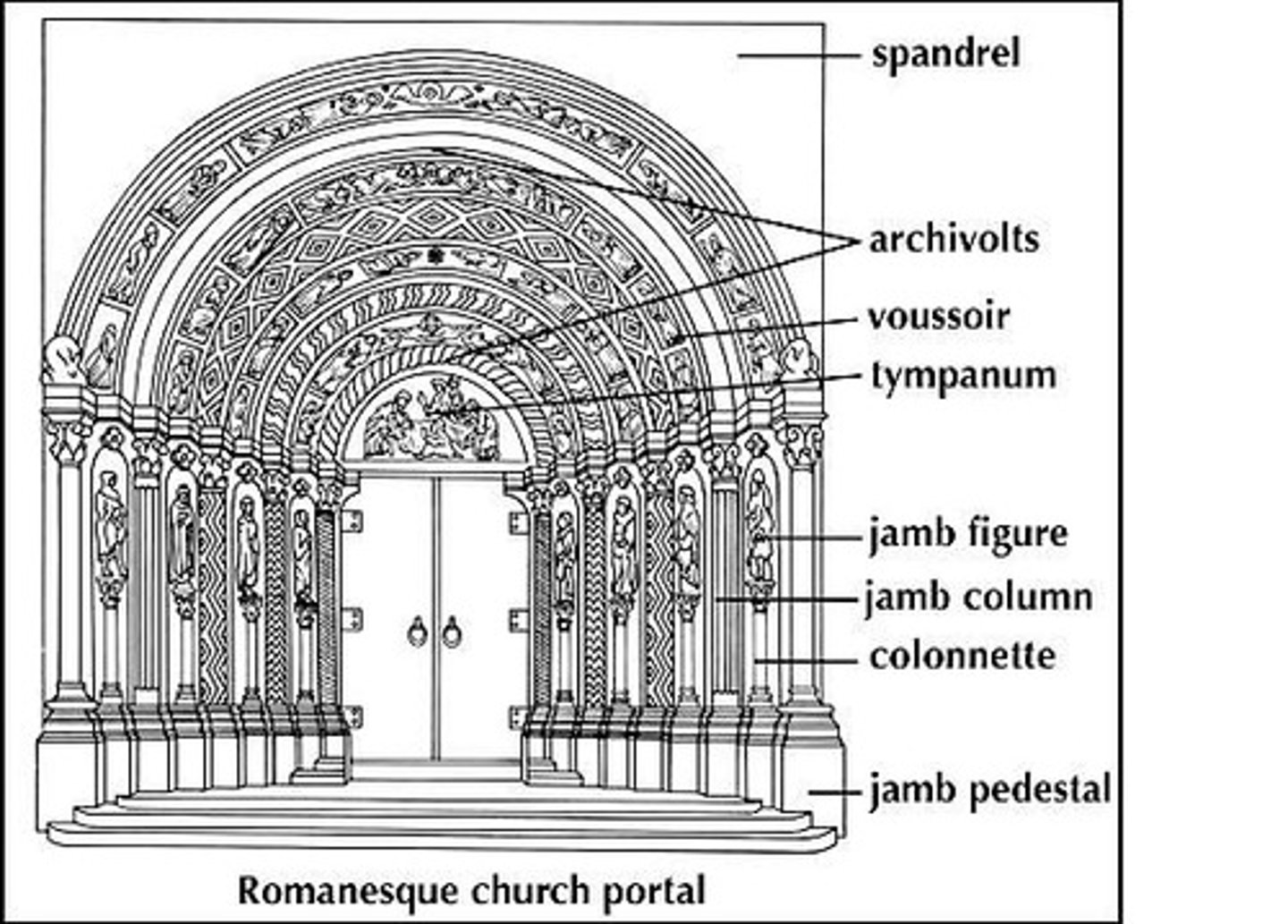
Archivolt
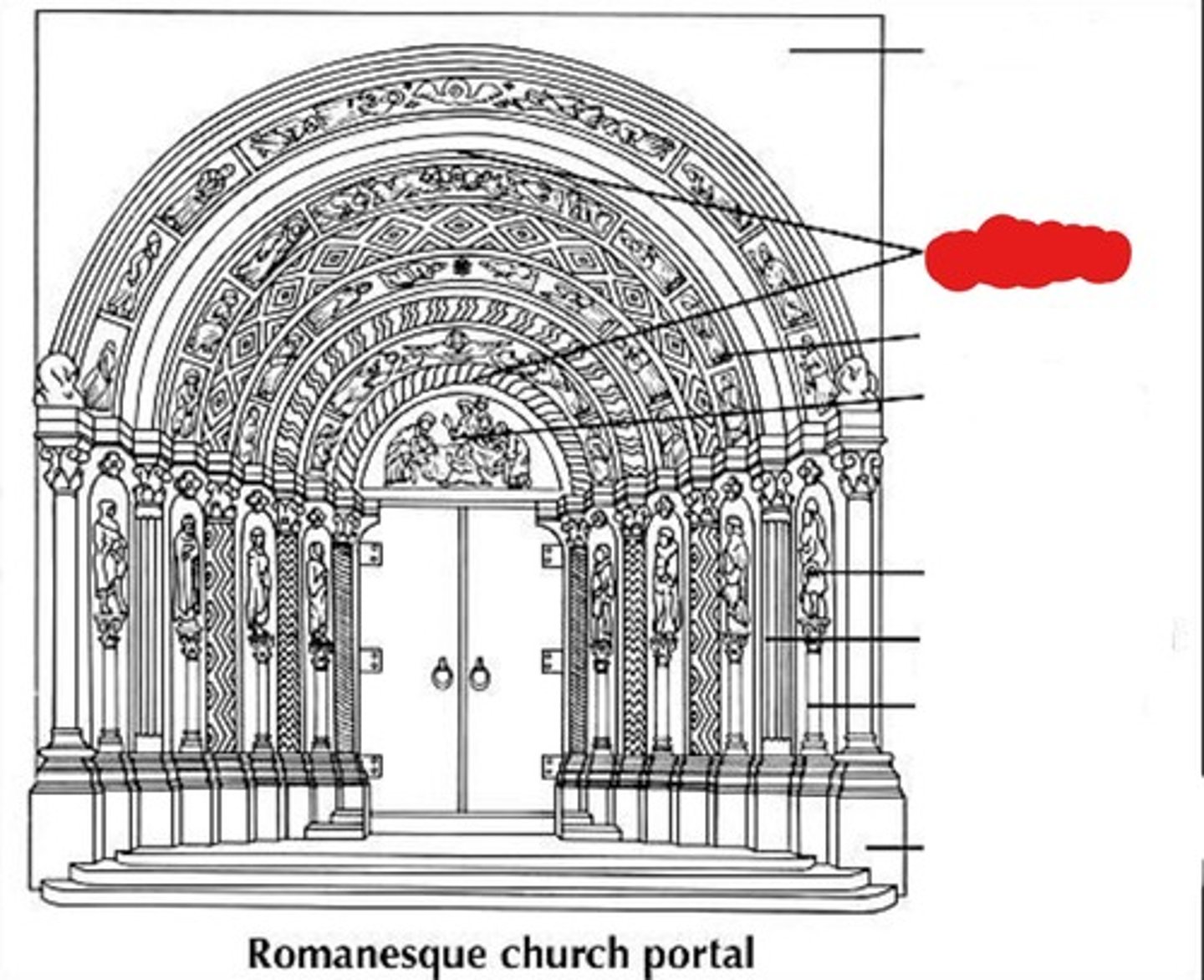
Voussoir
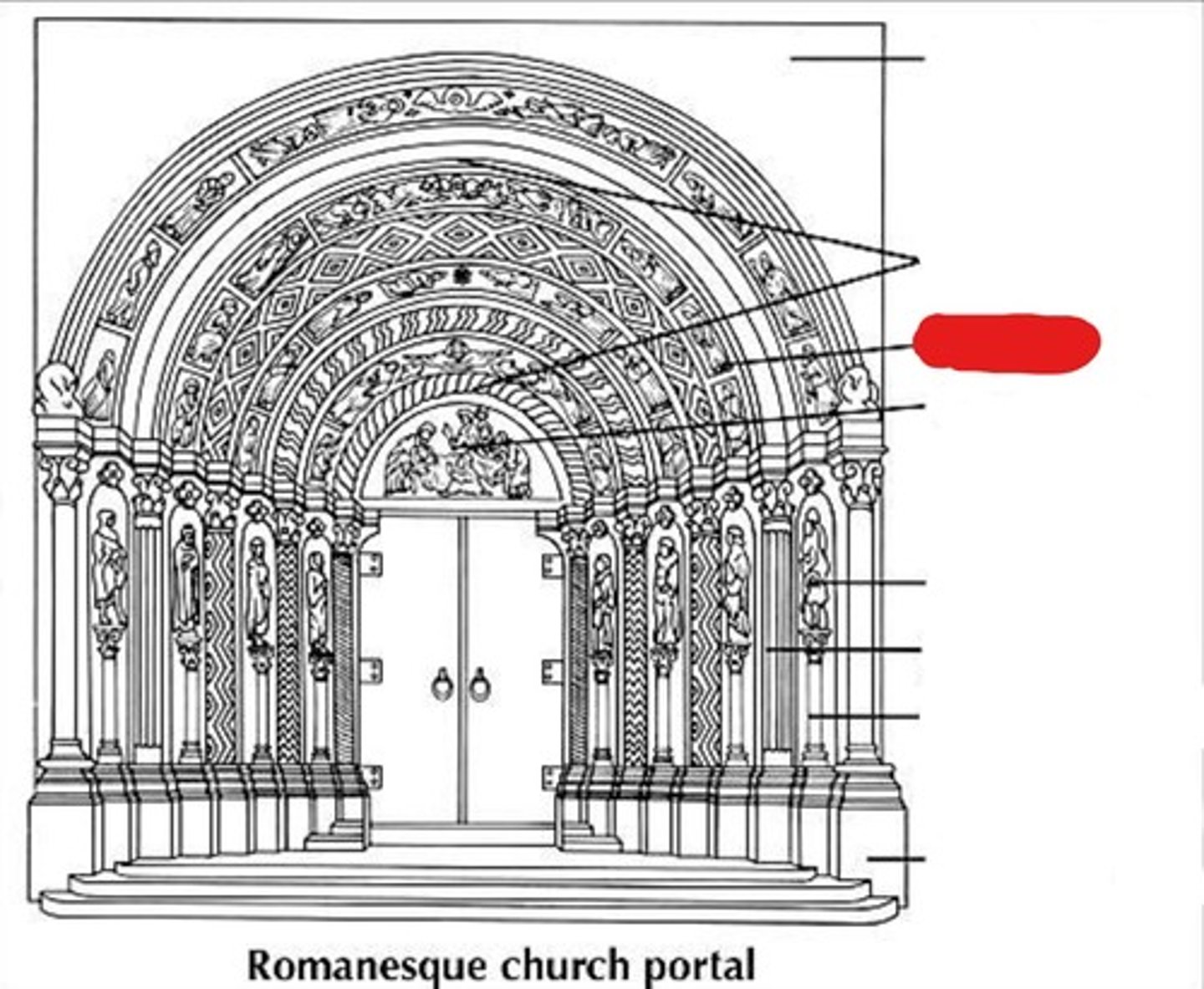
Lintel
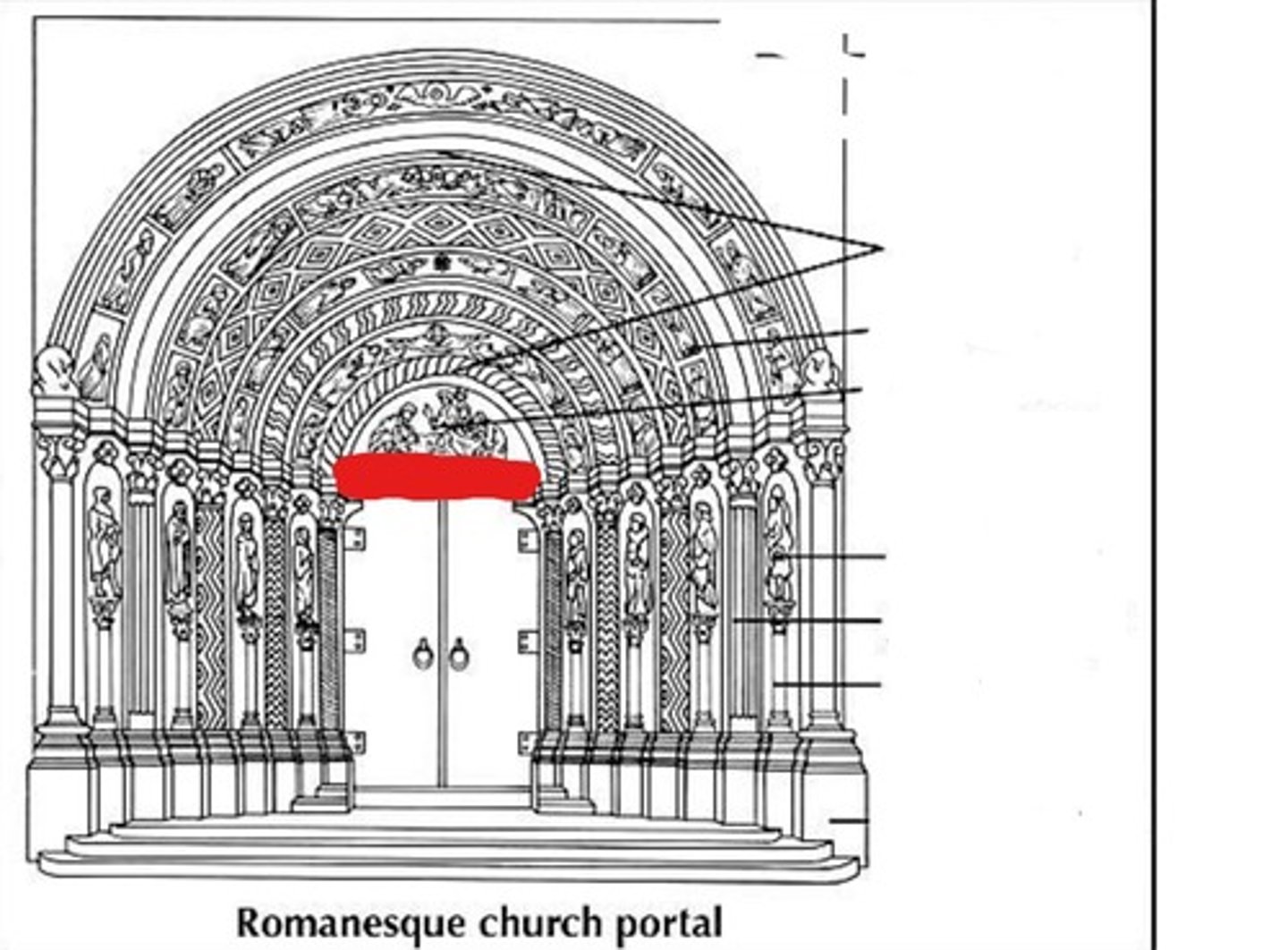
Jamb
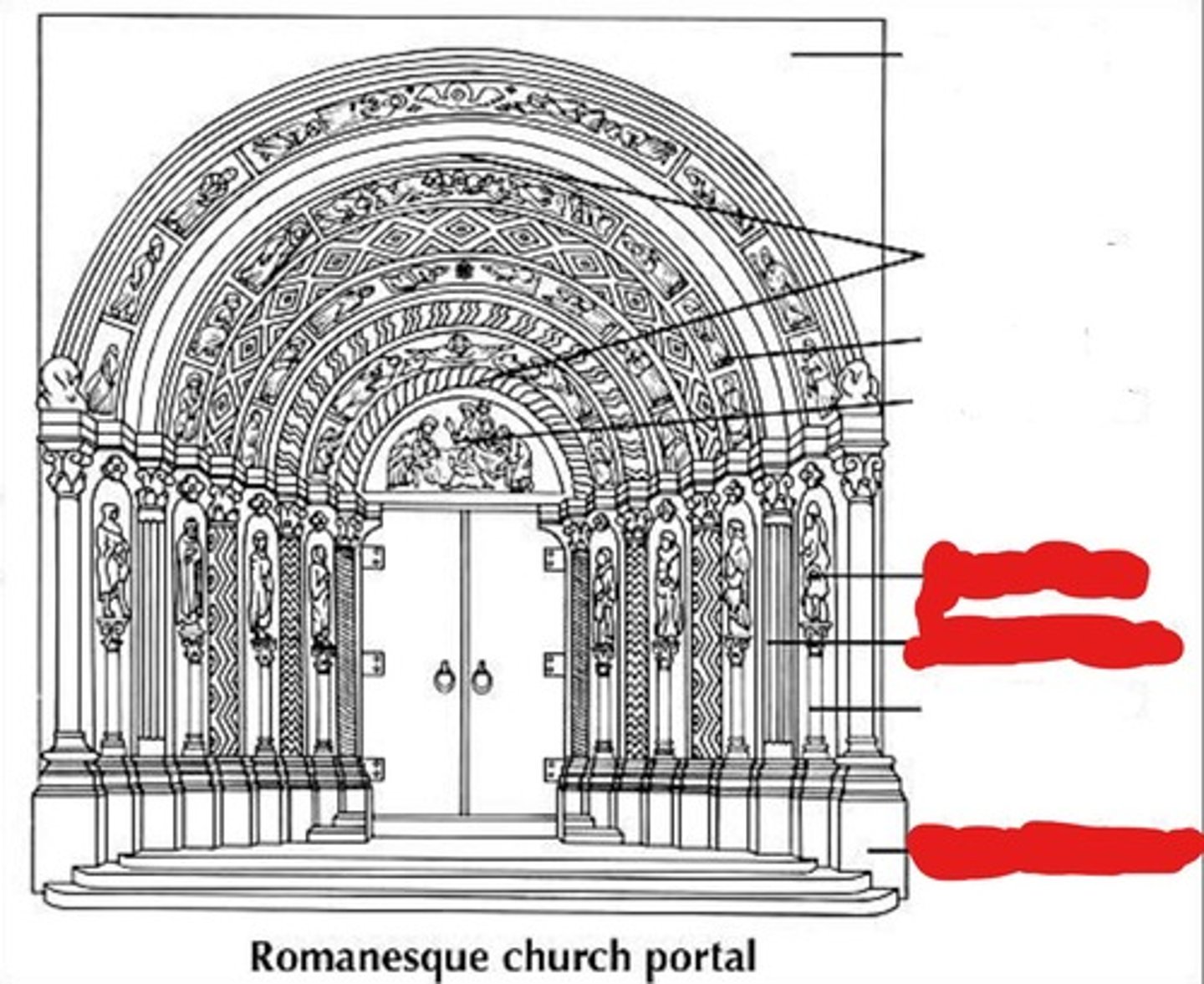
Trumeau