Unit 1 AP Bio: Responses to the Environment
 Call Kai
 Learn
Learn Practice Test
 Spaced Repetition
 Match
Match Flashcards
 Knowt Play
1/30

There's no tags or description
Looks like no tags are added yet.
Name | Mastery | Learn | Test | Matching | Spaced | Call with Kai | Chat |
|---|
No analytics yet
Send a link to your students to track their progress
31 Terms
visual cues
sense of sight ( mating dance, camouflage)
auditory cues
audible sounds (meow, growl) , some use it for sight (echolocation)
physical cues
movement or touch (tickling)
chemical cues
specialized receptors allow them to sense chemical signals (smell, pheromones)
phototropic/light cues
stimuli from light sources that trigger movement or directional growth (plants using phototropism)
circadian rhythm
phototropic cue, cycle of rest/activity
tropism
plants response to environmental stimuli/cue
phototropism
growth in response to light (plants only)
photoperiodism
blooming in response to light (seasons)
gravitropism/geotropism
growth in response to gravity
hydrotropism
growth in response to water
behavior
response from nervous system to stimuli in environment
innate behavior
inherited , automatic, and consistent instincts
learned behavior
changes with experience and environment. the ability to learn is inherited, but the behavior develops during an animal’s lifetime
behaviors can establish __, help find__, and increase reproductive __
dominance/territory, food, and success
what does natural selection favor?
innate and learned behaviors that increase survival and reproductive success
what increases individual fitness and survival of the population
cooperative behaviors
ecology
study of interactions between biotic and abiotic factors in environment
population
all members of one species living and occupying the same area
ecological niche
position a species occupies in its ecosystem, interaction and roles
biological fitness
ability to survive and pass genes to offspring
how does living in populations provide protection
hunting/grazing tg and alerting each other to threats
r-selected reproducing
many offspring, less parental care, less energy, most die, fewer survivors, short life span

k-selected
few but larger offspring, cared for by parents, significant energy, most survive, many survivors, long lifespan
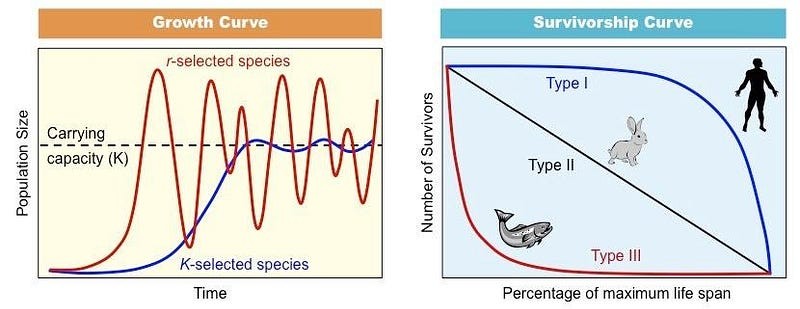
growth curves
show how quickly population is growing
what does r selected have in its graph
a bunch of oscillations

characteristics of r selected species in growth
reach carrying capacity quickly, extreme population boom and bust cycles
k selected characteristics in growth
grow slowly, level out near carrying capacity
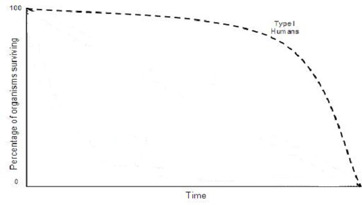
type 1 survivorship curve
k selected for sure
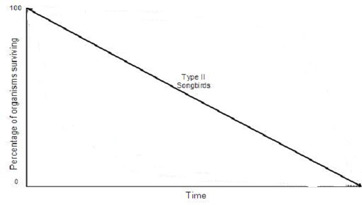
type 2 survivorship curve
intermediate, a straight line down
type 3 survivorship curve
r selected
