11 The Diversity of Bacteria and Archaea
 Call Kai
 Learn
Learn Practice Test
 Spaced Repetition
 Match
Match Flashcards
 Knowt Play
1/24

There's no tags or description
Looks like no tags are added yet.
Name | Mastery | Learn | Test | Matching | Spaced | Call with Kai | Chat |
|---|
No analytics yet
Send a link to your students to track their progress
25 Terms
6,000
Prokaryotes (Eukarya, Bacteria) are the most diverse in terms of shape, metabolism, habitats
Out of a million species estimated to exist, only [__] are identified → 950 genera
most not isolated
metagenomics and new molecular techniques aid in discovery and characterization » can make predictions from genes
metabolic diversity
Ability to use different substances as carbon and energy sources
Allows microbes to live in diverse environments
single
Members of the domain Bacteria and Archaea BOTH:
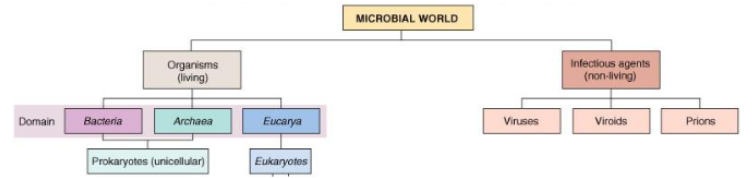
are [__]-celled organisms
lack membranes and membrane-bound organelles
rigid cell walls
peptidoglycan in Bacteria
pseudopeptidoglycan in Archaea
have similar shapes
move by means of flagellum
multiply by binary fission
however, Archaea differ in how they can survive in extreme environments (w/ exception of Methanogens)
chemolithotroph
Organism that harvests energy by oxidizing inorganic chemicals. eg. H2
Anaerobic [__]s, such as methanogens, utilize inorganic compounds like H2 for energy but don’t have oxygen as final electron acceptor (uses CO2 instead)
methanogens
Archaea that are anaerobic chemolithotrophs » generate methane from H2 (oxidizes it) and CO2 (electron acceptor) from environment.

The exception to Archaea thriving in extreme environments
Extreme Halophiles
Prokaryotes, primarily Archaea, whose members thrive in highly salty environments

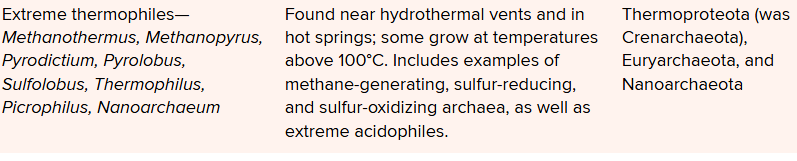
Extreme Thermophiles
Prokaryotes, typically Archaea, who thrive in high temperature environments (typically boiling)
Bacteria
Members of this domain are commonly responsible for human infections
nutrients
Microbes can be found in every type of habitat that supports every life.
i.e., microbes can exist so long as they have the required [__] for growth and can withstand the environmental conditions
extreme environments
terrestrial environments (soil, air)
water evaporated in the air has microbes in them
aquatic environments (open sea, lakes, streams, ponds, marshes and wetlands, hot springs, arctic ice sheets)
in addition to microbes living in humans, they can also be associated with insects, plants and animals
Thermus aquaticus
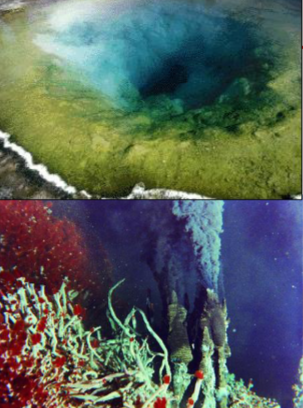
Extreme hot environments include:
boiling pools
hot springs
hydrothermal vents → can be 120C (250F)
worms associated with these vents have bacteria in their folds
eg. Taq polymerase found here in [__]
![<p><u>Extreme </u><strong><u>hot</u></strong><u> environments include:</u></p><ul><li><p><mark data-color="#f4eeee" style="background-color: rgb(244, 238, 238); color: inherit;">boiling pools</mark></p></li><li><p><mark data-color="#f4eeee" style="background-color: rgb(244, 238, 238); color: inherit;">hot springs</mark></p></li><li><p><mark data-color="#f4eeee" style="background-color: rgb(244, 238, 238); color: inherit;">hydrothermal vents → can be 120C (250F)</mark></p><ul><li><p>worms associated with these vents have bacteria in their folds</p></li><li><p><u><mark data-color="#f4eeee" style="background-color: rgb(244, 238, 238); color: inherit;">eg.</mark></u><mark data-color="#f4eeee" style="background-color: rgb(244, 238, 238); color: inherit;"> Taq polymerase found here in [__]</mark></p></li></ul></li></ul><img src="https://assets.knowt.com/user-attachments/7babde4a-57ea-4d8d-bbf4-5eb84d2ab44d.png" data-width="25%" data-align="center"><p></p>](https://assets.knowt.com/user-attachments/7606f93c-f6a9-4063-a7f4-65c215a96e4e.png)
red bacteria
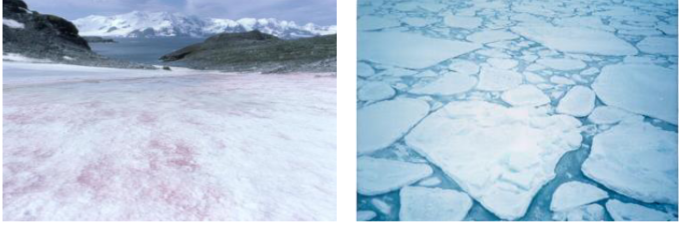
Extreme cold environments include:
glaciers and snow fields
can find [__] here » photosynthetic and produces red pigment
Antarctic ice sheets → 12C (10F)
Halobacterium
Extreme high salt environments include:
Great Salt lake, Dead Sea, soda lakes
where extreme halophiles reside (mostly in 5-32% salt)
bacteria, algae, protozoa typically require 9% salt conc.
Owens lake (Sierra Nevada)
reddish color due to the salt-loving bacteria [___]
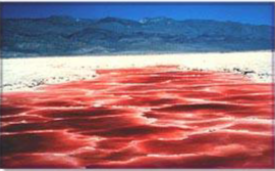
![<p><u>Extreme high </u><strong><u>salt</u></strong><u> environments include:</u></p><ul><li><p><mark data-color="#f4eeee" style="background-color: rgb(244, 238, 238); color: inherit;">Great Salt lake, Dead Sea, soda lakes</mark></p><ul><li><p>where extreme halophiles reside (mostly in 5-32% salt)</p></li><li><p>bacteria, algae, protozoa typically require 9% salt conc.</p></li></ul></li></ul><ul><li><p><mark data-color="#f4eeee" style="background-color: rgb(244, 238, 238); color: inherit;">Owens lake (Sierra Nevada)</mark></p><ul><li><p>reddish color due to the <mark data-color="yellow" style="background-color: yellow; color: inherit;">salt-loving bacteria [___]</mark></p></li></ul></li></ul><img src="https://assets.knowt.com/user-attachments/b83ff2fb-0173-4e99-8606-85509792007c.png" data-width="50%" data-align="center"><p></p>](https://assets.knowt.com/user-attachments/c9b66d45-3816-4e7d-98e1-b40dbcca70b3.png)
Anoxic extremophiles
Extreme highly basic (alkaline, hypersaline) environments include:
Mono Lake in California
has [__]: extremophiles that can live without O2
![<p><u>Extreme highly basic </u><strong><u>(alkaline, hypersaline)</u></strong><u> environments include:</u></p><ul><li><p><mark data-color="#f4eeee" style="background-color: rgb(244, 238, 238); color: inherit;">Mono Lake in California</mark></p><ul><li><p>has <mark data-color="yellow" style="background-color: yellow; color: inherit;">[__]: extremophiles that can live without O<sub>2</sub></mark></p></li></ul></li></ul><p></p>](https://assets.knowt.com/user-attachments/6ea57380-da3d-4aa0-b0d7-7aae478813ad.png)
Sulfolobus
[___] is a bacteria that thrives in sulfuric-rich, acidic hot springs and soils
uses sulfur as energy → oxidize sulfur to sulfuric acid
requires pH between 1-6
grow above 50C to 85C
![<p><mark data-color="yellow" style="background-color: yellow; color: inherit;">[___] is a bacteria that thrives in sulfuric-rich, acidic hot springs and soils</mark></p><ul><li><p>uses sulfur as energy → oxidize sulfur to sulfuric acid</p></li><li><p>requires pH between 1-6</p></li><li><p>grow above 50C to 85C</p></li></ul><p></p>](https://assets.knowt.com/user-attachments/e0ffbcd1-0f57-4040-a6a5-cf7faa0aa4a4.png)
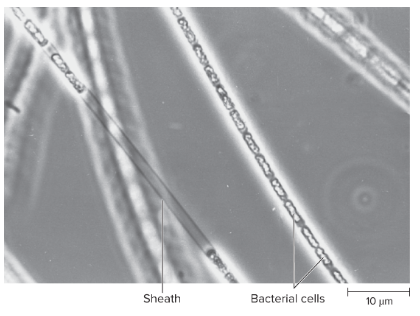
Sheathed bacteria
Bacteria residing in aquatic environments lack steady supply of nutrients.
Mediates this by forming chains of cells within a tube → multiple bacteria in structure of sheath
sheaths protect and help bacteria attach to solid objects
sheath enables them to share nutrients within tube
Gram-negative bacteria
eg. Sphaerotilus, Leptothrix
Look like filamentous and long strings of cells
Prosthecate bacteria
Bacteria residing in aquatic environments lack steady supply of nutrients.
Mediates this by having extensions that provide increased SA for nutrient absorption; some extensions also allow attachment
eg. Caulobacter
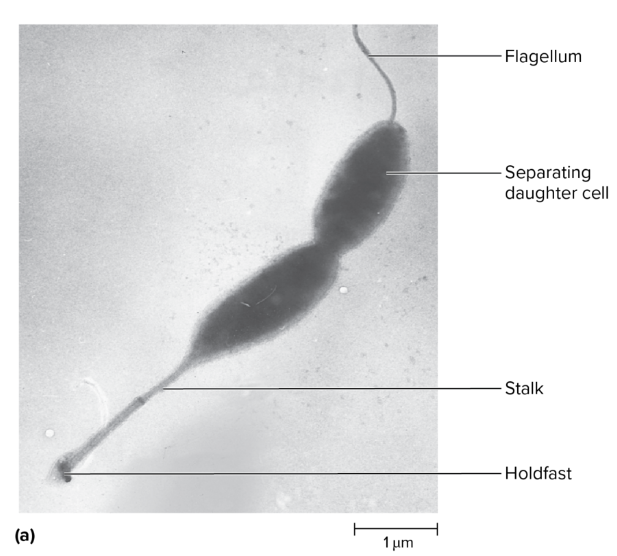
Caulobacter
Bacteria of this genus are Prosthecate bacteria;
during replication:
flagellum → sported by daughter cell; uses it to swim away from parent cell
when the daughter cell finds its own location, it:
loses its flagella
sprouts a stalk → long extension that has the holdfast structure
holdfast » enables them to stick to surfaces. specifically one with nutrients → utilizes such nutrients for for reproduction as well
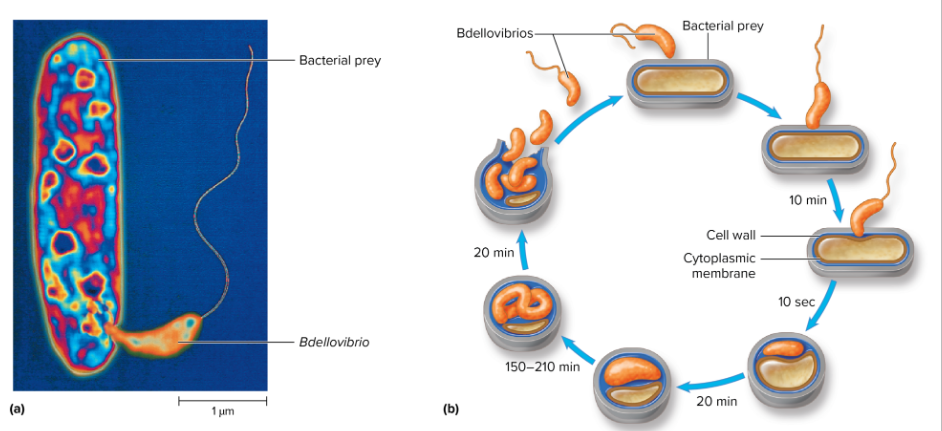
Bdellovibrio
Bacteria residing in aquatic environment that is a highly motile Gram-negative curved rod
Preys on other bacteria, such as E. coli and other Gram-negatives
» attaches to bacteria and get through outer membrane
→ flagellum propels them toward prey (spinning motion) and enzymes enables them to creates holes in their cell wall
» get into periplasmic space → feed on bacteria
» grow and reproduce inside host
» lyse cell with progenies
Staphylococcal
Animal bodies provide a variety of ecological habitats for bacteria
The skin is one of them
» typically dry; inhospitable to many microbes
» [___] species → significant component of skin flora
eg. [__] epidermidis most common organism; some carry S. aureus
Bifidobacterium
Animal bodies provide a variety of ecological habitats for bacteria
The Mucous membranes (Respiratory, genitourinary, intestinal tracks) are one of them
» Bacteriodes → found in mouth, GI, and genital tracts→ most abundant bacteria in the gut and genital tract
» [__] → found in GI tract and can cause infections, but provide beneficial early exposure/immunity to babies who are breastfed
Bioluminescent bacteria
Bacteria that have symbiotic relationships (mutualistic symbiosis) with:
certain fish and squid (helps with camouflage and confuse predators and prey)
other animals for food and protection
eg. Photobacterium, Vibrio
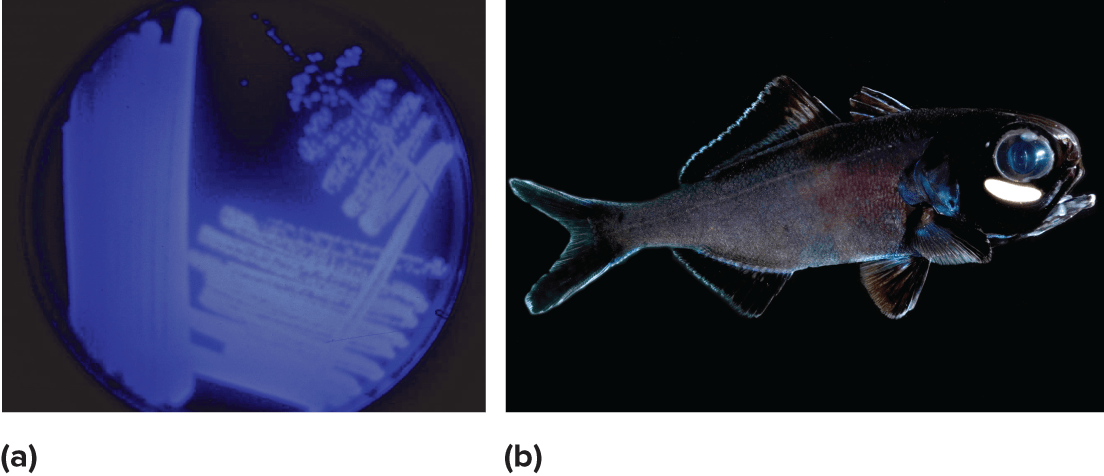
a. [___] b. flashlight fish that contains [__] under its eye
Mutualistic symbiosis
Good symbiotic relationship; benefits both the animal and bacteria
eg. flashlight fish provides protection for bacteria and gets all the food they want form the fish
fish gets light from the bacteria to see and hunt for food
aphids
These organisms live in association with fungi and bacteria:
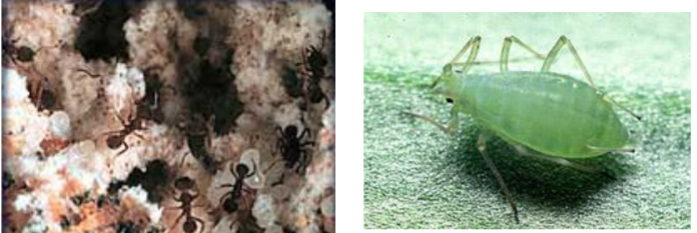
» Ants lives in association with fungi → cultivates fungal garden to grow on substrate
the fungi will breakdown this substrate to a form that the ants can use as a source of food
» [__] live In association with bacteria → in the gut of this [__], bacteria exist
bacteria synthesizes sap (their only source of food) into essential nutrients they need
Agrobacterium
Bacteria that associate with plants.
Produces plant tumors to gain nutrients, which are often fatal to the plant → due to their Ti (tumor-inducing) plasmid
[__] therefore is a plant pathogen
![<p>Bacteria that associate with plants.</p><p><mark data-color="yellow" style="background-color: yellow; color: inherit;">Produces plant tumors to gain nutrients, which are often fatal to the plant</mark> → due to their <strong>Ti </strong>(tumor-inducing) <strong>plasmid</strong></p><p>[__] therefore is a <strong>plant pathogen</strong></p>](https://assets.knowt.com/user-attachments/36136f0a-3895-487a-9107-556edb86b8de.png)
Rhizobium
Bacteria that associate with plants.
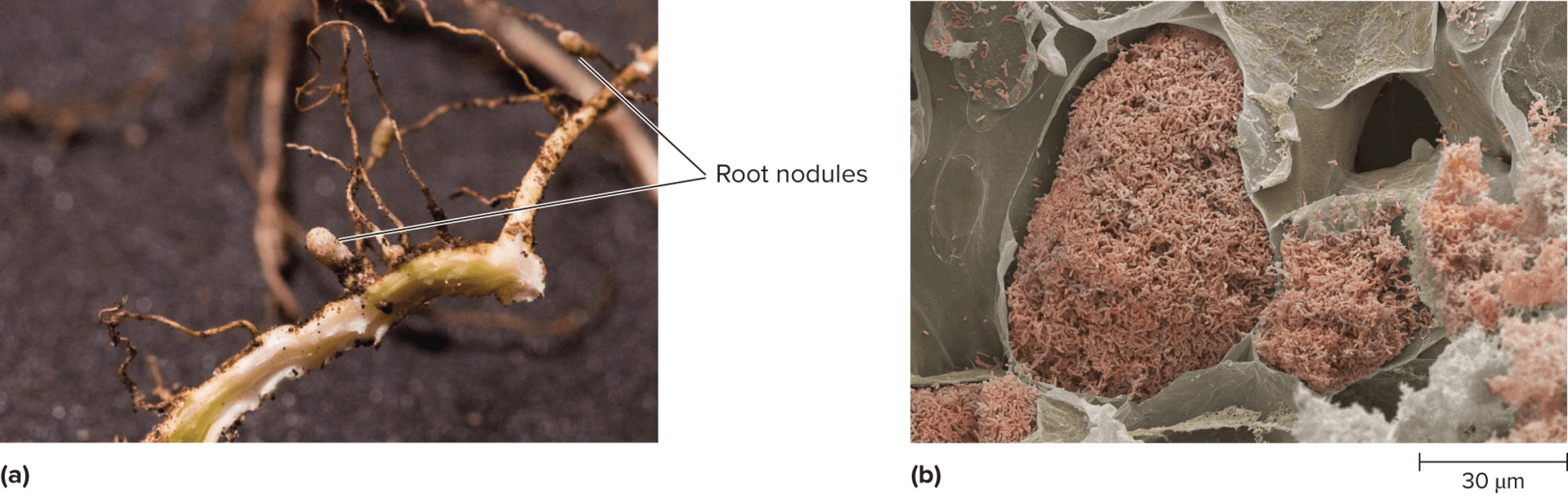
Has a mutually beneficial relationship with legumes → fixes nitrogen to be used as a nutrient source for plant
initiates formation of root nodules on plant roots
Plants grow faster when they are infected by [__]