Midterm 1
 Call Kai
 Learn
Learn Practice Test
 Spaced Repetition
 Match
Match Flashcards
 Knowt Play
1/57

There's no tags or description
Looks like no tags are added yet.
Name | Mastery | Learn | Test | Matching | Spaced | Call with Kai | Chat |
|---|
No analytics yet
Send a link to your students to track their progress
58 Terms
matter
something that has mass and takes up space
periodic trends - reactivity
increases top to bottom for metals
increases bottom to top for nonmetals

periodic trends - mass
increases left to right and top to bottom

periodic trends - radius
increases right to left and top to bottom

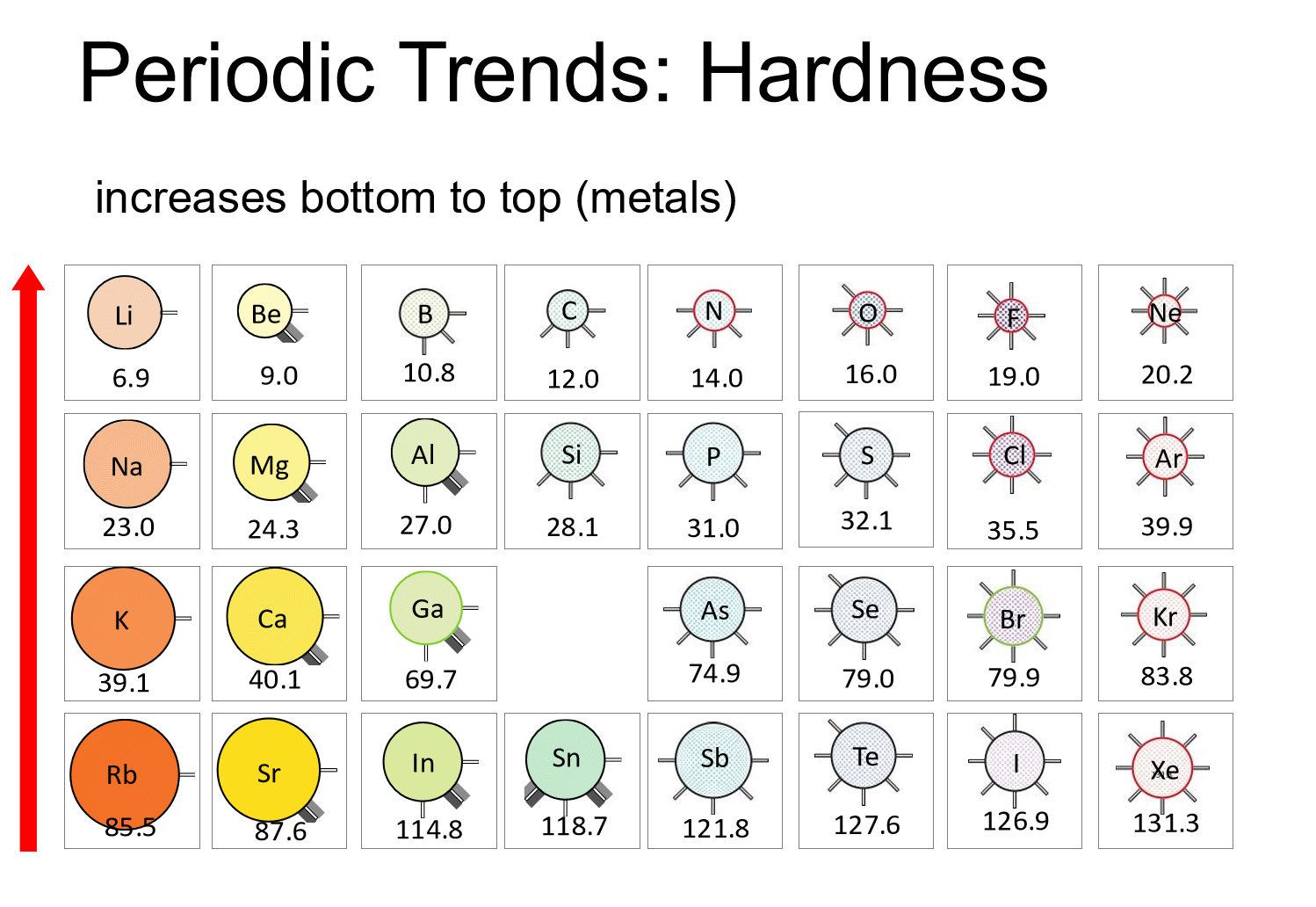
periodic trends - hardness
increases bottom to top (metals)
What does every element have a unique # of?
protons
isotopes
unique # of neutrons
(ex: There’s 3He, 4He, 5He, they all have the same # of protons but diff # of neutrons)
average atomic mass =
weighted avg of isotope masses
ions
unequal # of protons & electrons
cation
# protons > # electrons
+ charge overall
anion
# protons < # electrons
- charge overall
periodic trends - shells
# of shells increases as you go down & stays the same across

How many e- does 1st shell hold
2
How many e- does 2nd shell hold
8
How many e- does the 3rd hold
18 but 8 max
coloumbs law
F = k (q1 q2) / r²
F = force
q1 q2 = charges
r² = distance between charges
what do opposite charges do?
they attract
bigger charges = stronger/weaker force
bigger distance = stronger/weaker force
= stronger force
= weaker force
Zeff
Total Protons - Core Electrons
Greater Zeff means what
Stronger attraction
Periodic trends - valence e-
increases left to right same down a column

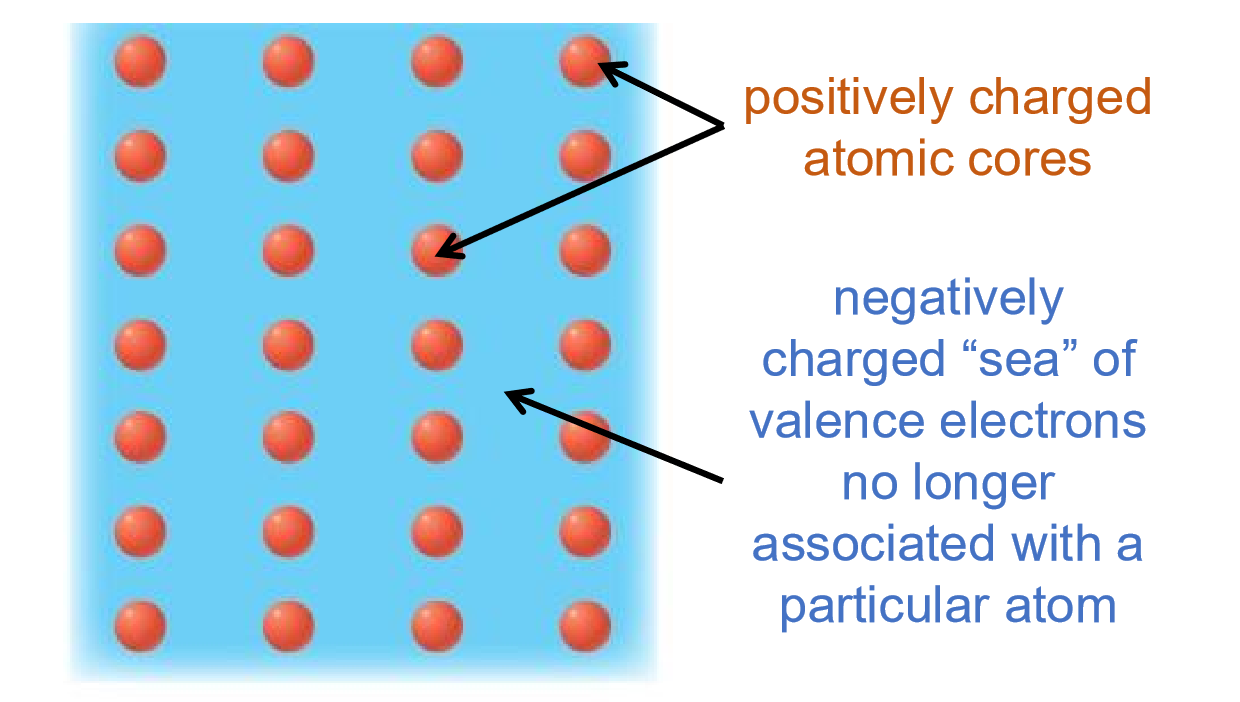
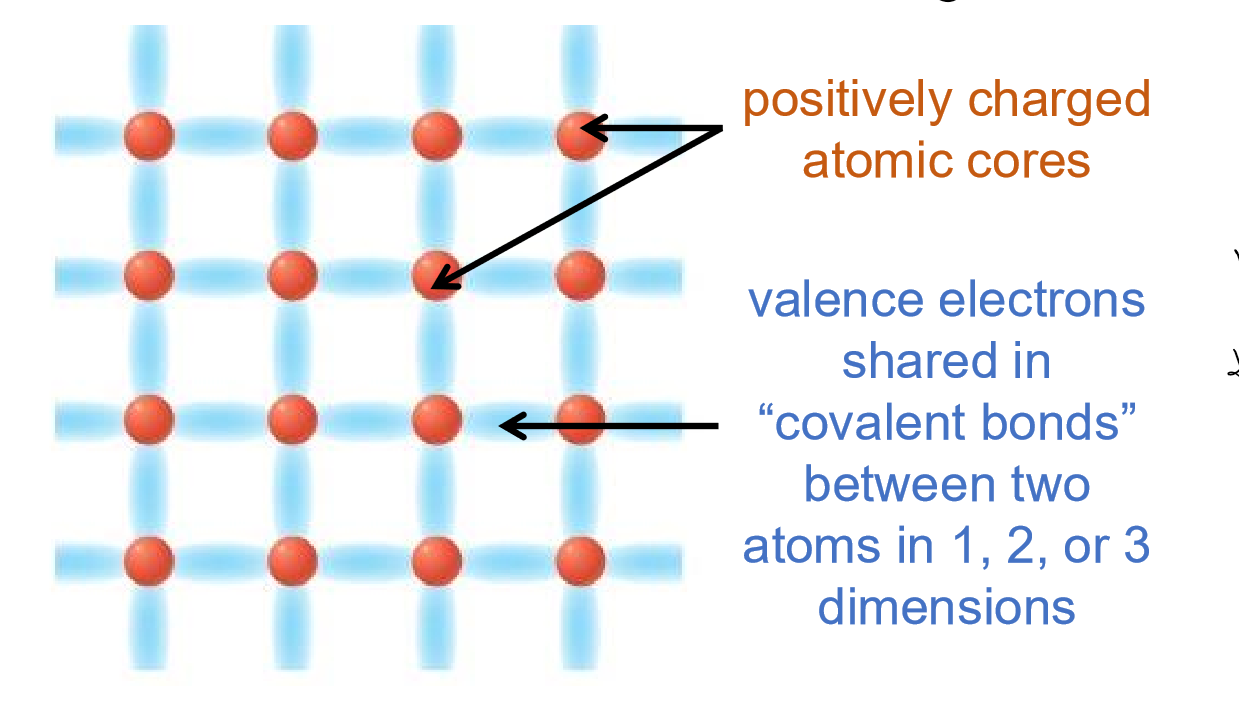
metallic bonding
between metals
sea of electrons
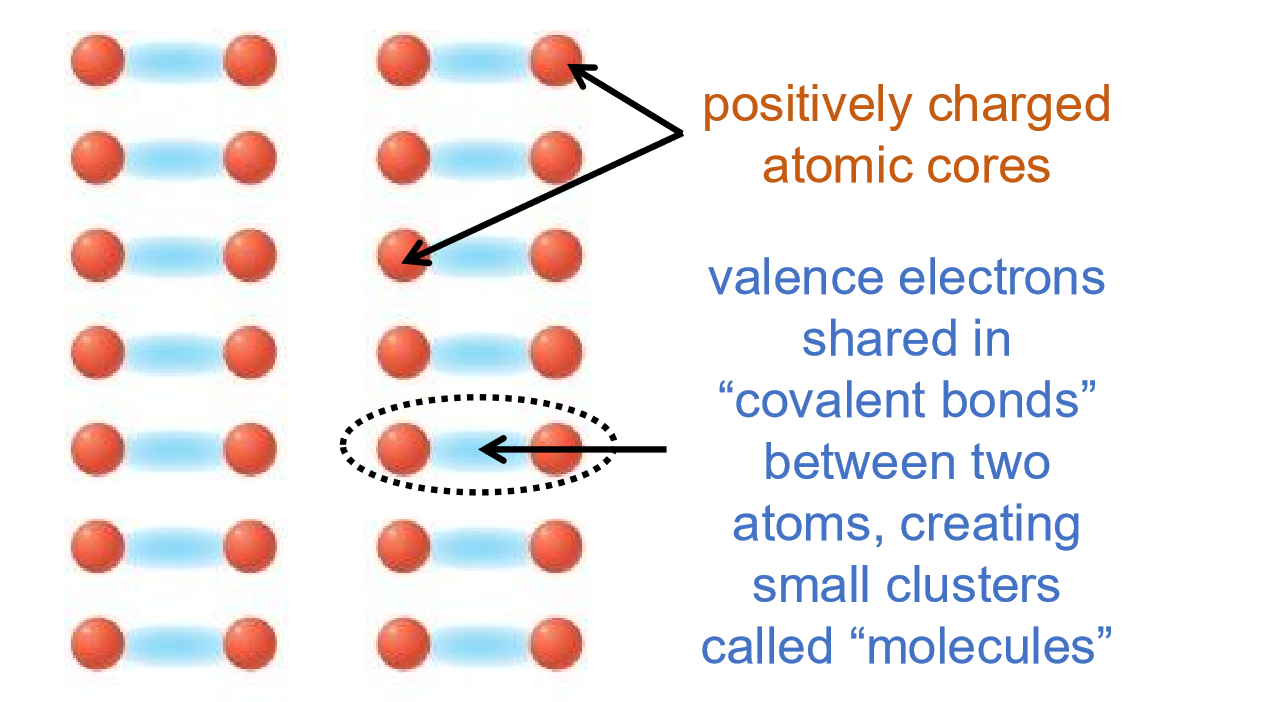
molecular covalent bonding
nonmetals
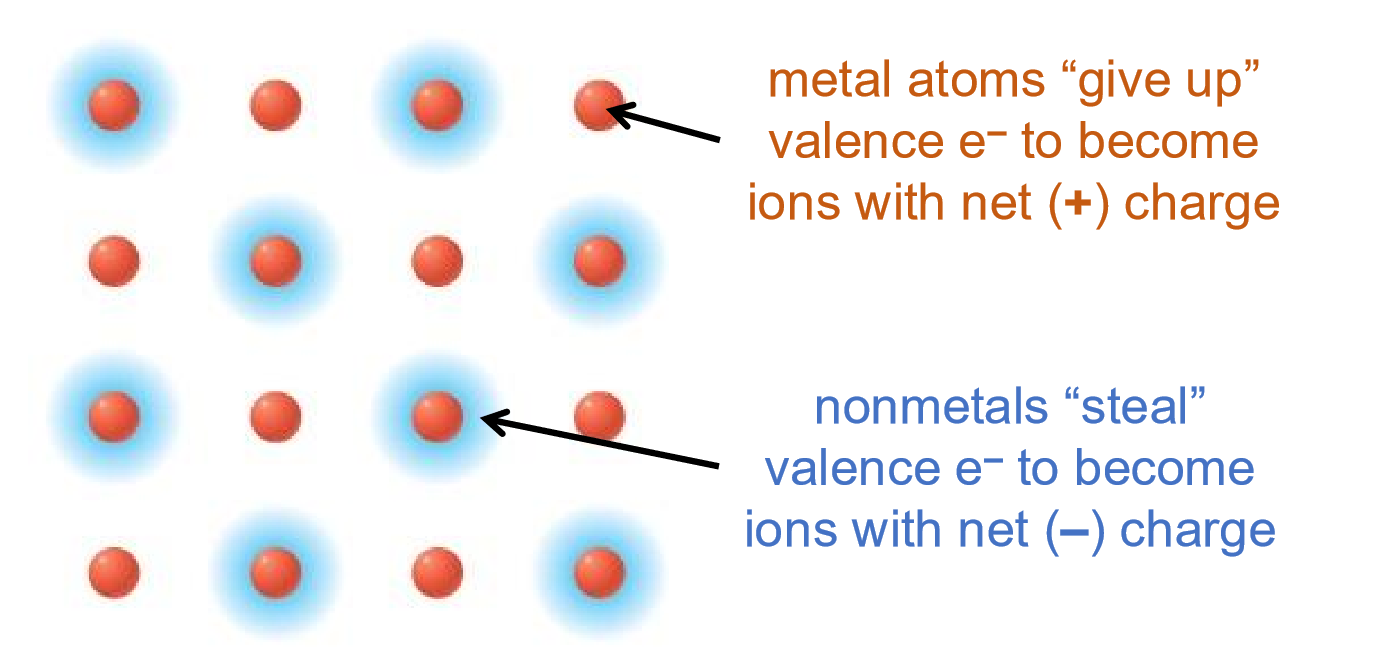
ionic bonding
metal + nonmetal
extended covalent bonding
nonmetals
solubility of metallic
doesn’t dissolve
solubility of molecular covalent
many dissolve
solubility of ionic
many dissolve
solubility of extended covalent
does not dissolve
conductivity of metallic
conducts dry
conductivity of molecular covalent
does not conduct
conductivity of extended covalent
does not conduct
conductivity of ionic
solution conducts (so when it’s dissolved in water)
metallic “hardness”
bendable, malleable
molecular covalent “hardness”
gasses, liquids, or soft solids
ionic “hardness”
hard, but brittle
extended covalent “hardness”
rigid, difficult to break
isomers
same molecular formula, different structural formula
have different skeleton connectivity
resonance structures
same atom locations, different e- locations
have SAME skeleton connectivity differ by bp or 1p e- placements
rigid container
volume doesn’t change
flexible container
volume does change
KE =
3/2 RT or ½ mV²
Flexible Containers will change V until…
Poutside = Pinside
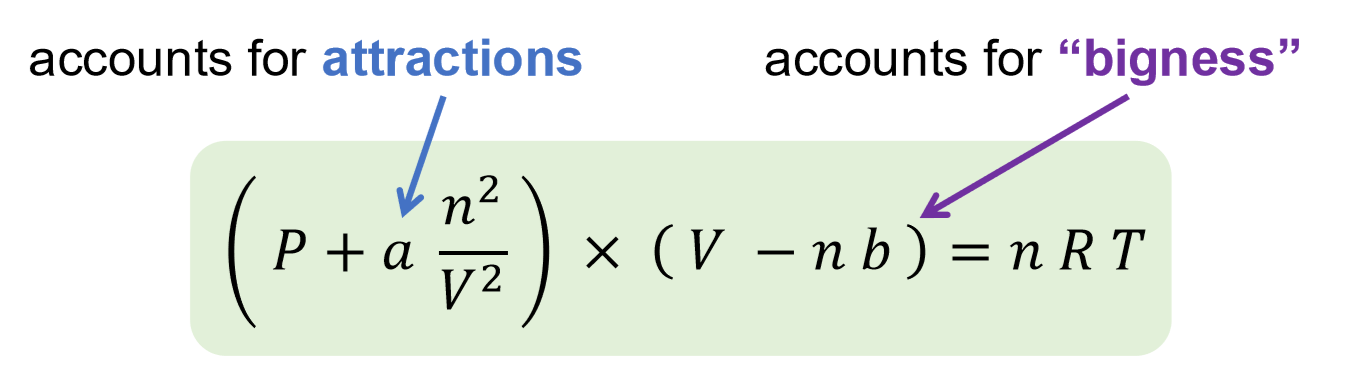
Real Gas Law
a = attractions
b = bigness
Formal Charge
# of valence e when alone - # nonbonding e - # bonds
VSEPR - 2 Domains Electron Geometry
Linear
180*
VSEPR - 3 Domains Electron Geometry
Trigonal Planar
120*
VSEPR - 3 Domains Molecular Geometry
3 bond pairs 0 lone pairs
Trigonal Planar
VSEPR - 3 Domains Molecular Geometry
2 bond pairs 1 lone pairs
Bent
VSEPR - 3 Domains Electron Geometry
Tetrahedral
109.5*
VSEPR - 4 Domains Molecular Geometry
4 bond pairs 0 lone pairs
Tetrahedral
VSEPR - 4 Domains Molecular Geometry
3 bond pairs 1 lone pairs
Trigonal Pyramid
VSEPR - 4 Domains Molecular Geometry
2 bond pairs 2 lone pairs
Bent
Nonpolar Covalent
equal sharing

Polar covalent
unequal sharing

Ionic
Electron transferred

which property causes elements to vary in how strongly they pull on electrons
electronegativity
electronegativity
intrinsic ability of an atom to attract a bonding pair of e towards itself