Energy Concepts
 Call Kai
 Learn
Learn Practice Test
 Spaced Repetition
 Match
Match Flashcards
 Knowt Play
1/9

There's no tags or description
Looks like no tags are added yet.
Name | Mastery | Learn | Test | Matching | Spaced | Call with Kai | Chat |
|---|
No analytics yet
Send a link to your students to track their progress
10 Terms
energy
utilization of chemical energy
nutritional usage, head produced upon oxidation
1st Law: Conservation of Energy
energy cannot be created or destroyed
energy input must = energy output ± change in body energy
retained energy (RE) = GE - FE - UE - GPD - HP
gaseous products of digestion
heat produced
2nd Law: Entropy of the universe always increases
no transformation of energy is 100% efficient and the inefficiencies are lost as heat
energy from nutrients
carbohydrates: 3.7-4.3 kcal/g
fats: 6.5-9.9 kcal/g
proteins: 4.0-8.3 kcal/g
can also be derived from breakdown of body tissues
energy balance
difference between intake and expenditure
positive - intake>expenditure (growth, overfeeding)
negative - intake<expenditure
maintenance - intake=expenditure
bomb calorimeter (adiabatic)
measures the complete transduction of chemical energy to heat
describes a feed ingredient’s gross energy
GE kcal/g
carbs - 4.15
protein - 5.65
fat - 9.4
does not tell of bio availability
transformation of energy (flow of energy through the body)
Gross energy (GE) - max energy
Digestible energy (DE) = GE - GEfeces (energy lost in feces)
Metabolizable energy (ME) = DE - GEurine - GEgas
Net energy = ME - Hi (heat loss)
determine ME
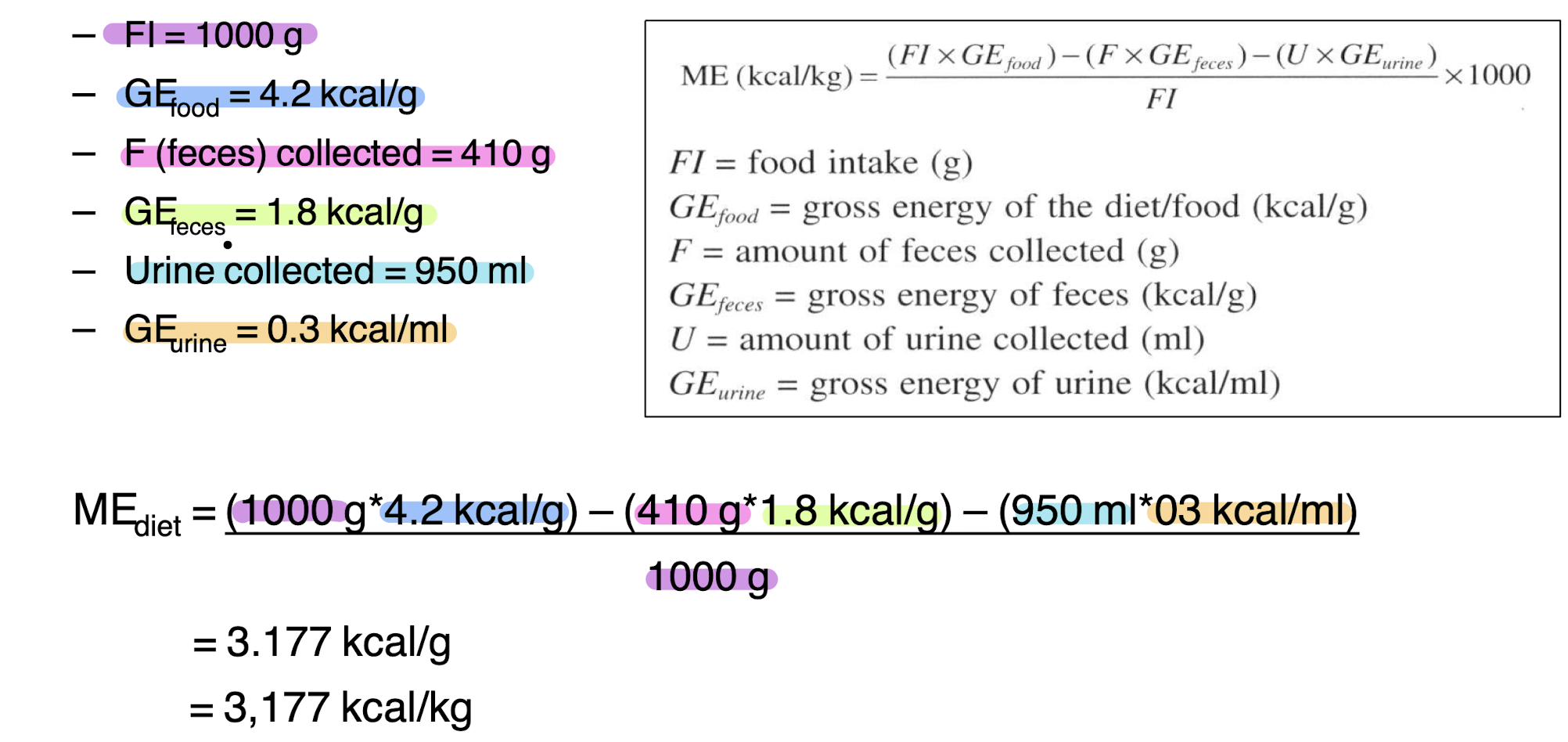
Calculate ME from factors
most common, makes assumptions about GE and nutrient digestibility


Practicle equations for predicting diet ME: Atwater
modified equation for pet foods reflects lower digestibility
provides estimate/starting point
