Fundamentals of Anatomy & Physiology: Levels, Homeostasis, and Organ Systems
 Call Kai
 Learn
Learn Practice Test
 Spaced Repetition
 Match
Match Flashcards
 Knowt Play
1/50

There's no tags or description
Looks like no tags are added yet.
Name | Mastery | Learn | Test | Matching | Spaced | Call with Kai | Chat |
|---|
No analytics yet
Send a link to your students to track their progress
51 Terms
What does anatomy describe?
The structures of the body, including what they are made of, where they are located, and associated structures.
What is physiology the study of?
The functions of anatomical (body) structures and how they work individually and together (cooperative)
What is gross anatomy?
The examination of large, visible structures in the body.
What is surface anatomy?
The study of exterior features of the body.
What is regional anatomy?
The study of specific body areas.
What does systemic anatomy focus on?
Organ systems in the body.
What is clinical anatomy?
The study of anatomical features relevant to medical specialties.
ex: pathological anatomy (anatomical features that change during illness),
radiographic anatomy (anatomical structures seen using
specialized imaging techniques), and surgical anatomy
(anatomical landmarks important in surgery).
What does developmental anatomy include?
The study of the body from conception to adulthood, including embryology.
What is cytology?
The study of cells.
What does histology study?
The study of tissues.
What is cell physiology?
The study of functions of cells.
What is organ physiology?
The study of functions of specific organs.
Define systemic physiology.
The study of functions of organ systems.
What is pathological physiology?
The study of effects of diseases on organs or systems.
How are anatomy and physiology related?
They are inseparable; function reflects structure and structure dictates function.
What are signs in a medical context?
Objective indicators of a condition, such as a fever.
What are symptoms in a medical context?
Subjective feelings reported by the patient, such as tiredness.
What is the first step in the scientific method for diagnosis?
Evaluating observations.
What is the chemical level of organization and its purpose?
The level that includes atoms and molecules.
The arrangement of atoms and molecules at
the chemical level creates the protein filaments and organelles at the cellular level that give individual cardiac muscle cells the ability to contract.
What is the cellular level of organization?
The level that includes cells, the smallest living units in the body.
Define tissue level.
A group of cells working together.
These cells are linked, forming cardiac muscle tissue. The structure of the
tissue ensures that the contractions are coordinated, producing a powerful heartbeat.
What is an organ?
A structure made of two or more tissues working together.
What is an organ system?
A group of interacting organs.
How many organ systems do humans have?
11 organ systems.
What is the organism level of organization?
An individual life form.
ex: a human body
What are the major organs of the integumentary system?
Skin, hair, nails, and associated glands.
What is the primary function of the cardiovascular system?
Distributes blood cells, water, and dissolved materials including nutrients and waste.
What is the function of the respiratory system?
Delivers air to alveoli for gas exchange.
What is homeostasis?
The maintenance of a relatively stable internal environment despite continuous outside changes.
What does dynamic equilibrium refer to in physiological systems?
A state where physiological systems have a range of values and are always adjusting to changing conditions.
What happens when the body is diseased in terms of homeostasis?
The body is out of balance, and organ systems work outside the normal range causing malfunction.
What are the two control mechanisms regulating homeostasis?
Auto-regulation (intrinsic) and Extrinsic regulation.
What is auto-regulation?
An automatic response in a cell, tissue, or organ to an environmental change.
What is extrinsic regulation?
Responses controlled by the nervous and endocrine systems.
What is negative feedback?
A mechanism where the response of the effector negates the stimulus, bringing the body back into homeostasis.
or
A process where the body responds to a change by reversing it and returning the body to a normal, balanced state

What is positive feedback?
A mechanism where the initial stimulus produces a response that amplifies the original change in conditions, moving the body away from homeostasis.
What is an example of a positive feedback loop?
Blood clotting, where chemicals released accelerate the clotting process until the bleeding stops.

What are the three components of a homeostatic regulatory mechanism?
Receptor, Control Center, and Effector.
What role does the receptor play in homeostasis?
It receives the stimulus.
What is the function of the control center in homeostasis?
It processes the signal and sends instructions.
What does the effector do in a homeostatic mechanism?
It carries out the instructions to restore homeostasis.
How does the body regulate temperature through negative feedback?
When body temperature rises, blood vessels dilate and sweating increases to cool the body.
What happens when body temperature drops below normal?
Blood vessels constrict, and shivering occurs to generate heat.
Why is positive feedback unsuitable for regulating body temperature?
It amplifies changes rather than maintaining a stable range, which is necessary for temperature regulation.
What is an example of a physiological system that affects homeostasis?
The thermoregulatory system, which maintains body temperature.
What is the normal range for human body temperature?
Typically between 36.7ºC and 37.2ºC.
How do physiological systems work together to maintain homeostasis?
They integrate and respond to changes to maintain a state of equilibrium.
What is the significance of having physiological values listed as ranges?
Ranges account for natural variability in body functions rather than fixed averages.
What is the role of the hypothalamus in temperature regulation?
It acts as the control center that triggers responses to maintain body temperature.
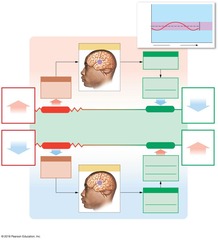
What is an example of a stimulus that can disturb homeostasis?
Increased room temperature or body temperature above normal levels.
What is the outcome of failure in homeostatic regulation?
It can result in disease or dysfunction in the body.