AP Bio 1.1, 1.2
 Call Kai
 Learn
Learn Practice Test
 Spaced Repetition
 Match
Match Flashcards
 Knowt Play
1/54

There's no tags or description
Looks like no tags are added yet.
Name | Mastery | Learn | Test | Matching | Spaced | Call with Kai | Chat |
|---|
No analytics yet
Send a link to your students to track their progress
55 Terms
Adhesion
The attractive force between water molecules and other polar substances, allowing water to stick to different surfaces.
Cohesion
The attractive force between water molecules that causes them to stick together, resulting from hydrogen bonding.
Evaporative cooling
The process by which the evaporation of water removes heat from an organism or environment.
Heat of vaporization
The energy required to convert a liquid to a gas, enabling water to remove heat from organisms through evaporative cooling.
Homeostasis
The maintenance of stable internal environmental conditions in an organism despite external and internal changes.
Hydrogen bonds
Weak attractive forces between a hydrogen atom bonded to an electronegative atom and another electronegative atom, occurring between or within biological molecules. it creates cohesion, adhesion and surface tension.
Polar covalent bonds
Chemical bonds between atoms where electrons are unequally shared, resulting in partial positive and negative charges.
Polarity
The unequal distribution of electrical charge in a molecule, resulting in one end being partially positive and the other partially negative.
Specific heat capacity
The amount of energy required to raise the temperature of a substance by one degree, allowing water to resist rapid temperature changes. ex: water needs a large amount of heat energy to raise its temperature, and it releases much heat when cooling down.
Surface tension
The property of water that allows its surface to resist breaking, resulting from hydrogen bonding between adjacent water molecules.
Hydrophillic
Substances that attract and dissolve in water (water‑loving). Usually polar / charged. eg salt
Hydrophobic
Substances that repel and do not dissolve in water (water‑fearing). Usually non‑polar. eg oil
“like attract like”
Polar substances attract polar substances, while non polar attracts non polar only; polar and non polar don’t attract each other. for ex: oil(nonpolar) and water(polar).
transpiration
The loss of water vapour from plant leaves through stomata.
aqueous
Describing a substance dissolved in water.
Expansion upon freezing
The unusual property of water where it increases in volume (expands) when it freezes from liquid water into solid ice.
Versatile solvent
Water is called a versatile solvent because it can dissolve a wide range of different substances.
Properties of water
Cohesion Behavior: Cohesion, Adhesion, transpiration
Moderation of temperature: Thermal energy (heat), temperature, High specific heat, evaporative cooling.
Expansion upon freezing: insulation by ice
Water = Solvent of life: Solution, Solvent, Solute.
pH < 7
Acidic
pH = 7
Neutral
pH > 7
Basic (alkaline)
Growth
Increase in size, mass, or cell number of an organism over time.
Nutrition
Obtaining and processing food molecules for energy and building materials.
Respiration
Chemical process releasing energy from organic molecules; produces ATP for cell work.
Solvent
Substance that dissolves other substances (water = universal/versatile solvent).
Reproduction
Process producing new individuals, passing genetic material to offspring (sexual / asexual).
Regulation (Homeostasis)
Maintaining stable internal conditions despite changes in the external environment.
Excretion
Removal of metabolic waste products produced inside cells.
Synthesis
Building larger complex molecules from smaller simpler subunits (anabolism).
Transport
Movement of substances (nutrients, wastes, gases) inside an organism or cell.
Organic compound
Compounds that contain carbon‑hydrogen (C‑H) bonds, usually associated with living things.
Hydrocarbons
Molecules made only of carbon and hydrogen. Non‑polar, hydrophobic.
Tetravalent
Carbon property: carbon has 4 valence electrons, can form 4 covalent bonds with other atoms.
Isomers
Molecules with the same molecular formula but different structural arrangements → different properties.
Structural isomers
Same chemical formula; atoms bonded together in different order / different covalent skeleton.
Cis‑trans isomers (geometric isomers)
Differ in arrangement around a carbon‑carbon double bond. cis: similar groups on same side of double bond; trans: similar groups on opposite sides.
Enantiomers
Mirror‑image isomers; cannot be superimposed (chiral carbon required). Often one form is biologically active.
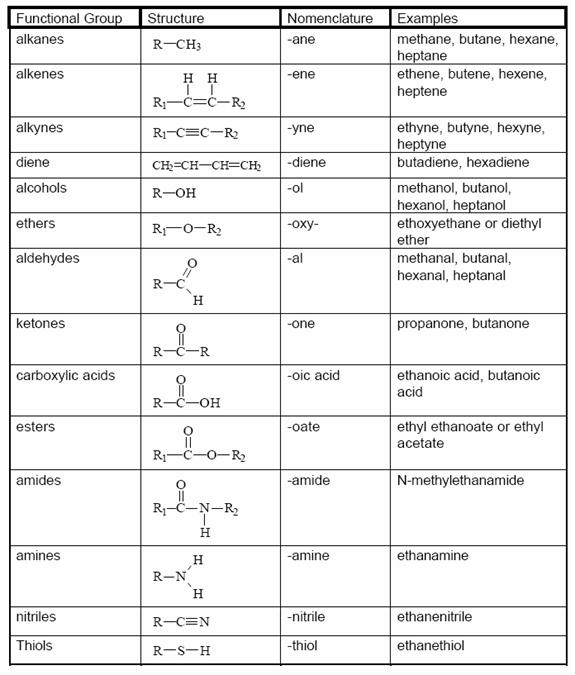
Functional group
Specific groups of atoms attached to carbon skeleton; determine chemical properties / reactivity of organic molecules (e.g., ‑OH, ‑COOH, ‑NH₂, ‑PO₄).
Carbohydrates
Organic molecules: C, H, O (H:O = 2:1). Use: energy, structure. Monomer = monosaccharide.
Proteins
Made of C, H, O, N (sometimes S). Monomer = amino acid. Wide functions: enzymes, structure, transport, defence.
Lipids
Mostly C, H, small O. Hydrophobic / non‑polar. Includes fats, phospholipids, steroids. Energy storage, membranes, hormones.
Nucleic acids
C, H, O, N, P. Monomer = nucleotide. DNA & RNA; store & transfer genetic information.
Carbon (C)
Backbone of all organic molecules; tetravalent, builds diverse skeletons.
Hydrogen (H)
Forms bonds with carbon; involved in hydrogen bonding.
Oxygen (O)
Found in carbohydrates, proteins, lipids, nucleic acids; creates polar groups.
Nitrogen (N)
Present in proteins (amino‑NH₂) and nucleic‑acid bases.
Phosphorus (P)
Found in nucleic acids, ATP, phospholipids.
The four main organic molecules
Carbohydrates, lipids, proteins, nucleic acids.
Acid
A substance that donates/releases H⁺ ions when dissolved in water. Increases hydrogen ion concentration ([H^+]); pH < 7.
Base
A substance that releases OH⁻ ions (or accepts H⁺ ions) in water. Increases hydroxide ion concentration ([OH^−]); reduces ([H^+]); pH > 7.
H⁺ ions (hydrogen ions)
Positively charged hydrogen ions; the concentration of H⁺ determines pH. More H⁺ → more acidic, lower pH.
OH⁻ ions (hydroxide ions)
Negatively charged hydroxide ions. More OH⁻ → more basic (alkaline), higher pH.
Universal solvent
Another name for water, which dissolves a wide variety of ionic and polar substances due to its polarity.
Xylen
ascular plant tissue that transports water and dissolved minerals upward from roots to leaves, also gives structural support to the plantThe Univer...
Solution
A homogeneous (uniform) mixture of two or more substances. One substance dissolves into another.