Carbohydrates
 Call Kai
 Learn
Learn Practice Test
 Spaced Repetition
 Match
Match Flashcards
 Knowt Play
1/3

Earn XP
Description and Tags
Name | Mastery | Learn | Test | Matching | Spaced | Call with Kai | Chat |
|---|
No analytics yet
Send a link to your students to track their progress
4 Terms

Carbohydrates
Primary energy source of body, mostly obtained from plants.
→ Photosynthesis: 6CO2 +6H2O → C6H12O6 + 6O2Basic empirical formula is CH2O in a 1:2:1 ratio.
They can exist singly or as a polymer with 2 or more monomers.
“—ose” = a type of sugar.
→ Ex: glucose, ribose, lactose, amylose, etc.They are polar molecules → They CAN dissolve in water → They are hydrophilic (water-loving).
Fats are non-polar molecules → They CANNOT dissolve in water → They hydrophobic (water-fearing).
Monosaccharide
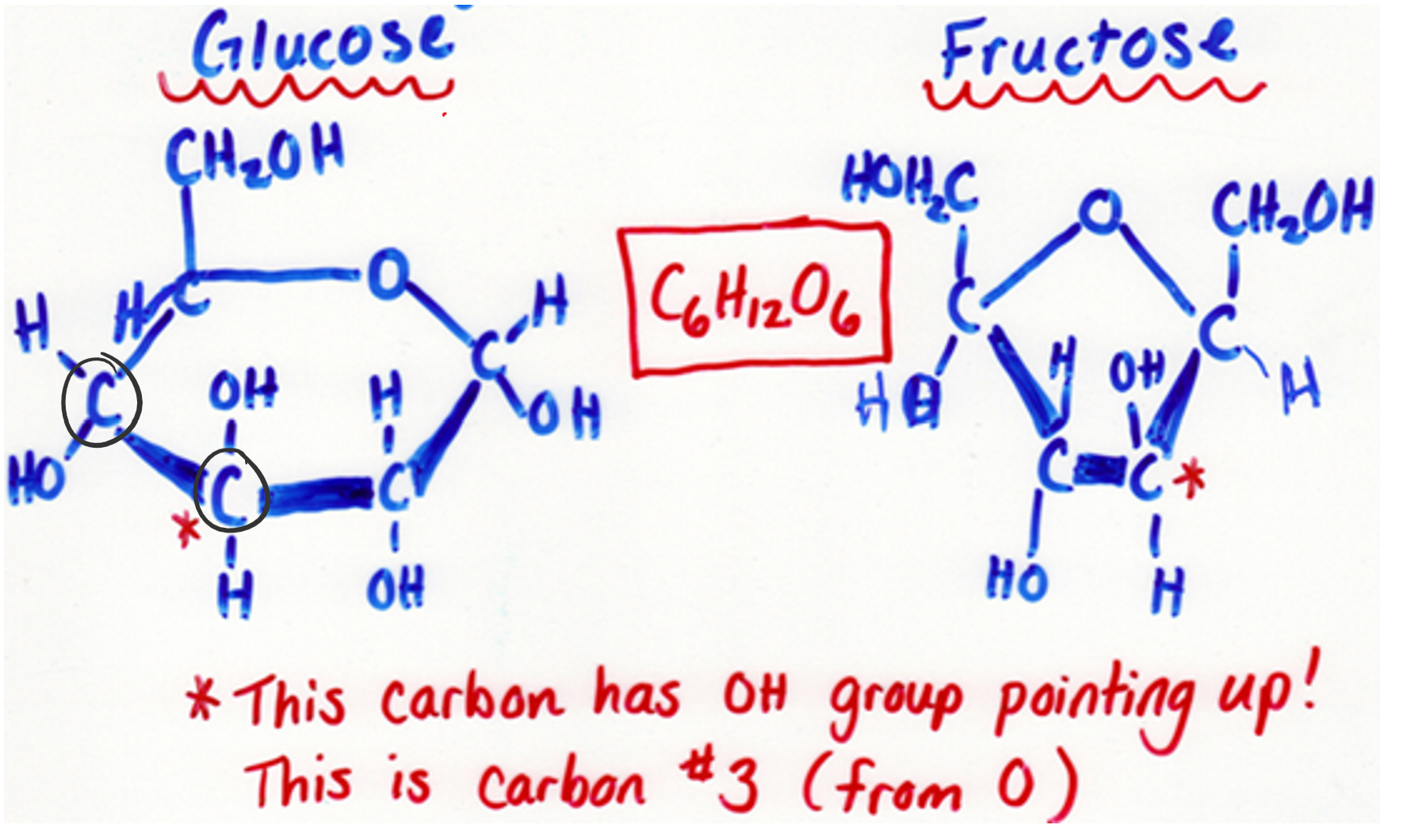
Sugars formed of a single monomer.
Most biologically important have ring structures.
Isomers: molecules with the same formula but different spatial arrangements (shapes)
Have different chemical properties because they have different functional groups.
Ex: Fructose tastes much sweeter than glucose even though they have the same chemical formula.
Disaccharides
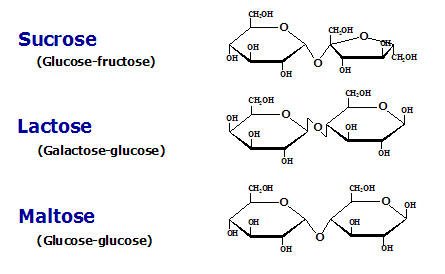
2 monosaccharides bonded together:
sucrose = glucose + fructose
maltose = glucose + glucose
lactose = glucose + galactose
Dehydration synthesis: a chemical reaction which results in a polymer being formed as a water molecule is removed.
Polysaccharides
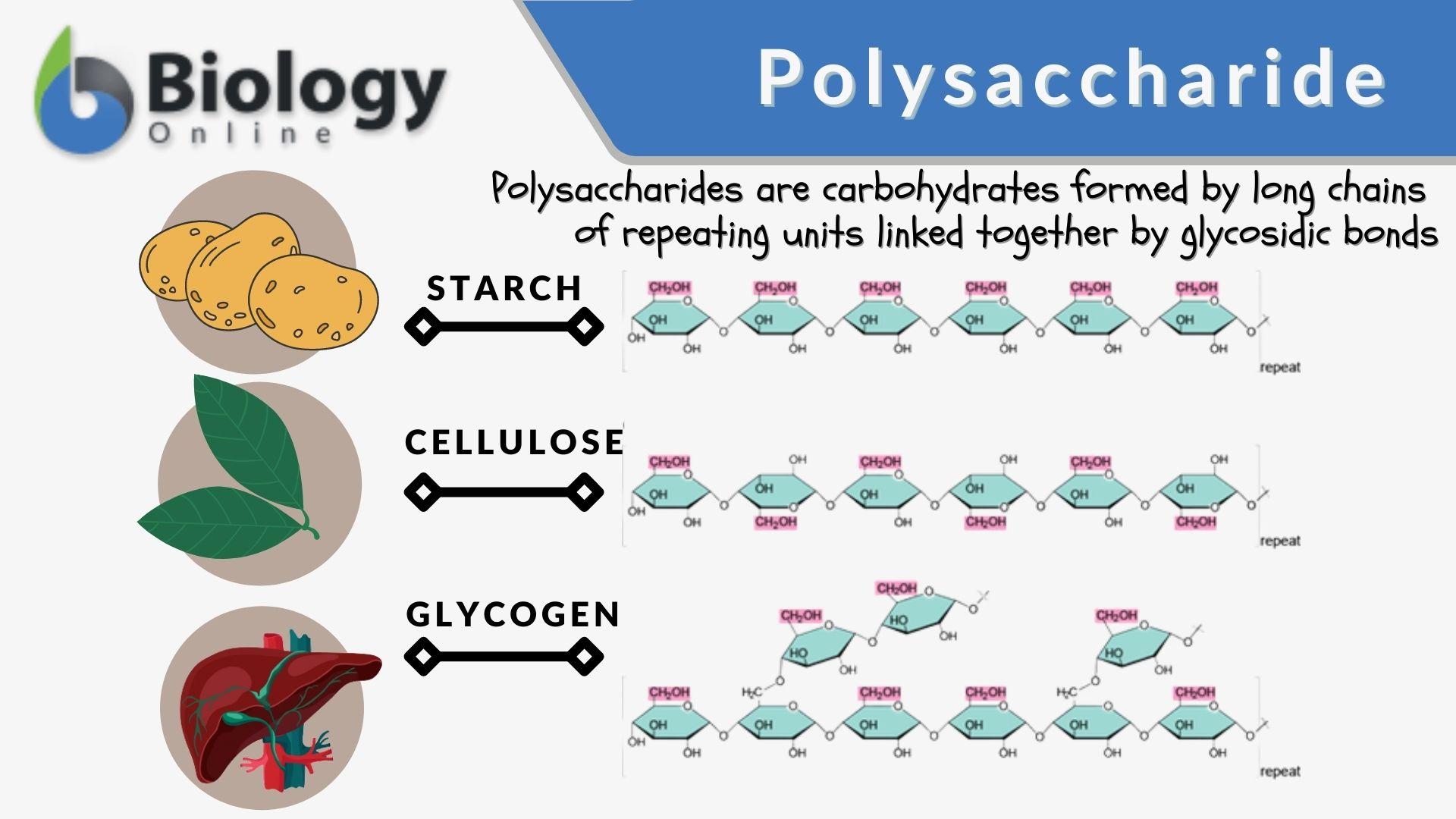
Many monosaccharide units.
Starch: produced by plants, composed of 1000’s glucose bonded together.
→ Ex: G - G - G - G - G - G x 1000Glycogen: produced by animals cells to store glucose (function)
Stored in liver and muscle cells as reserve energy for blood sugar drops (homeostasis mechanism).
Has a more branched structure than starch, but all glucose are still “right side up”.
Cellulose (aka fibre): a major component of plant cell walls
Chains of glucose but every 2nd one is “upside down”
Humans are unable to break this type of bond so it passes through body undigested (“corn poo”)
Cellulose tends to form in layers to form “sheets” of cellulose due to H-bonding between layers.