Assessing Mental Status Including Risk for Substance Use
 Call Kai
 Learn
Learn Practice Test
 Spaced Repetition
 Match
Match Flashcards
 Knowt Play
1/28

Earn XP
Description and Tags
Chapter 6
Name | Mastery | Learn | Test | Matching | Spaced | Call with Kai | Chat |
|---|
No analytics yet
Send a link to your students to track their progress
29 Terms
What does mental health status refer to?
a clients level of cognitive and emotional functioning
A ___ mental status is needed for clear thinking, appropriate responses, and effective functioning in daily activities.
healthy
Define mental disorders
conditions characterized by cognitive and emotional disturbances, abnormal behaviors, and impaired functioning
What books provide detailed info on mental disorders?
DSM-TR and ICD
What are some components that contribute to mental disorders?
environment, psychological, genetic, chemical, social, or other factors
Is the following statement true or false?
LGBTQ+ youth are at increased risk for substance use, depression, anxiety, suicidal ideation, and suicide attempts.
true
What doe nurses look for in mental health assessments? (4)
Assessing mental status
Screening for substance use
Assessing suicide risk
Identifying mental health disorders and needed interventions
What factors influence mental health? (8)
biophysical factors
history of mental health disorder, traumatic brain injury, chronic medical condition
changes in neurological system
economic and social factors
lifestyle considerations
exposire to violence
psychological factors
poor decision making/self control
low developmental level/self esteem
spritual factors
cultural factors
The ___ syndrome manifests in behavioral, cognitive, and physiologic phenomena after repeated substance use.
dependence
What can substance use lead to? (5)
Strong desire to take the drug
Difficulty controlling substance use
Continued use despite harmful consequences
Avoidance of responsibilities
Withdrawal symptoms when use is reduced or stopped
Estimated ___ cases of Alzheimer disease worldwide.
50 million
Is the following statement true or false?
White individuals are nearly twice as likely to develop Alzheimer's disease than African American individuals.
false
it is actually the other way around, African Americans are twice as likely to develop Alzheimer’s
Is the following statement true or false?
Hispanic individuals are nearly twice as likely to develop Alzheimer's disease.
true
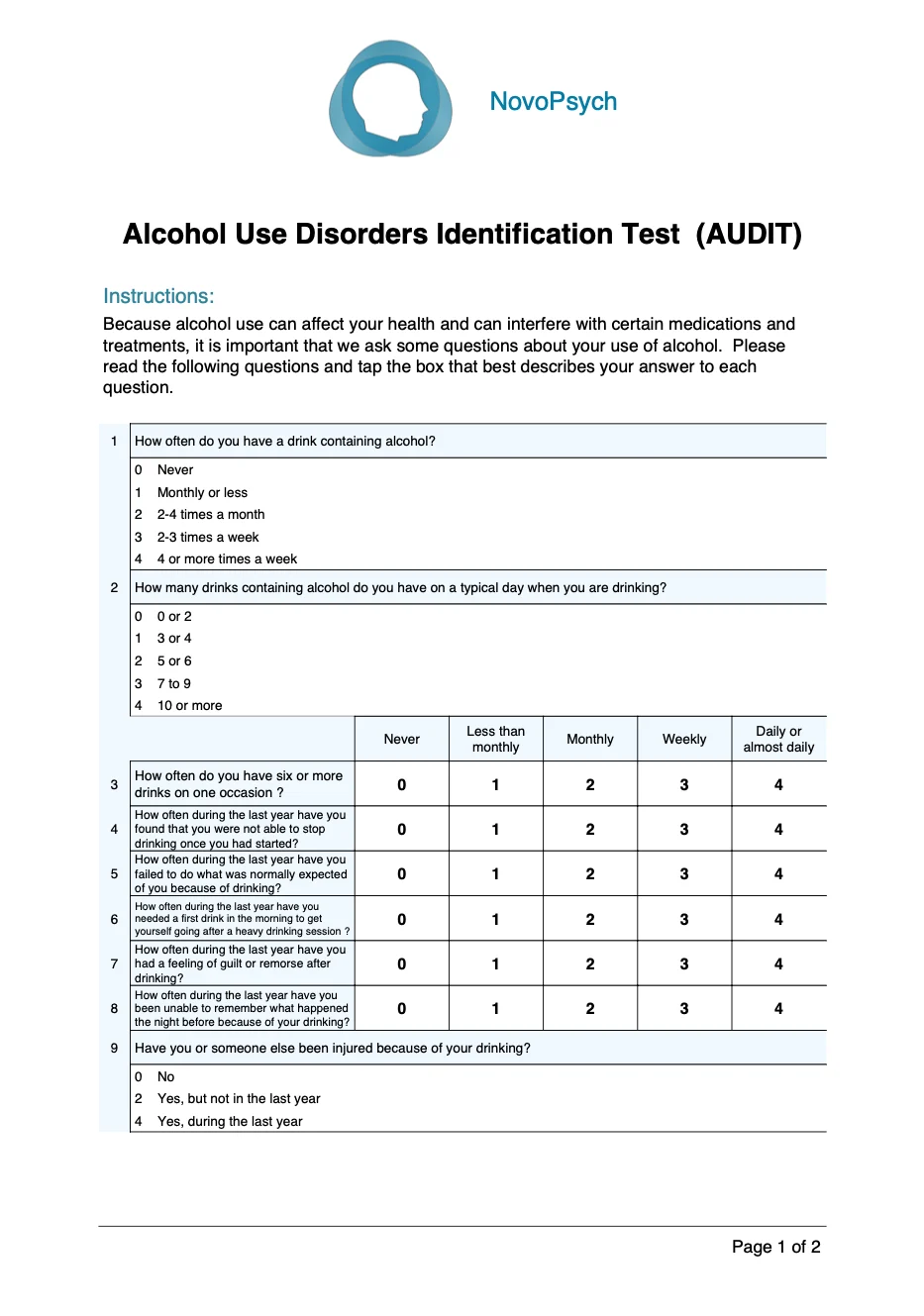
How does the AUDIT (interview version) work?
stands for Alcohol Use Disorders Identification Test
begin by asking about use of alcoholic beverages during the past year
code answers in terms of standard drinks
How does the Quick Inventory of Depressive Symptomatology assessment tool work?
self report
checkmark one response to each item that is most appropriate to how you have been feeling over the past 7 days
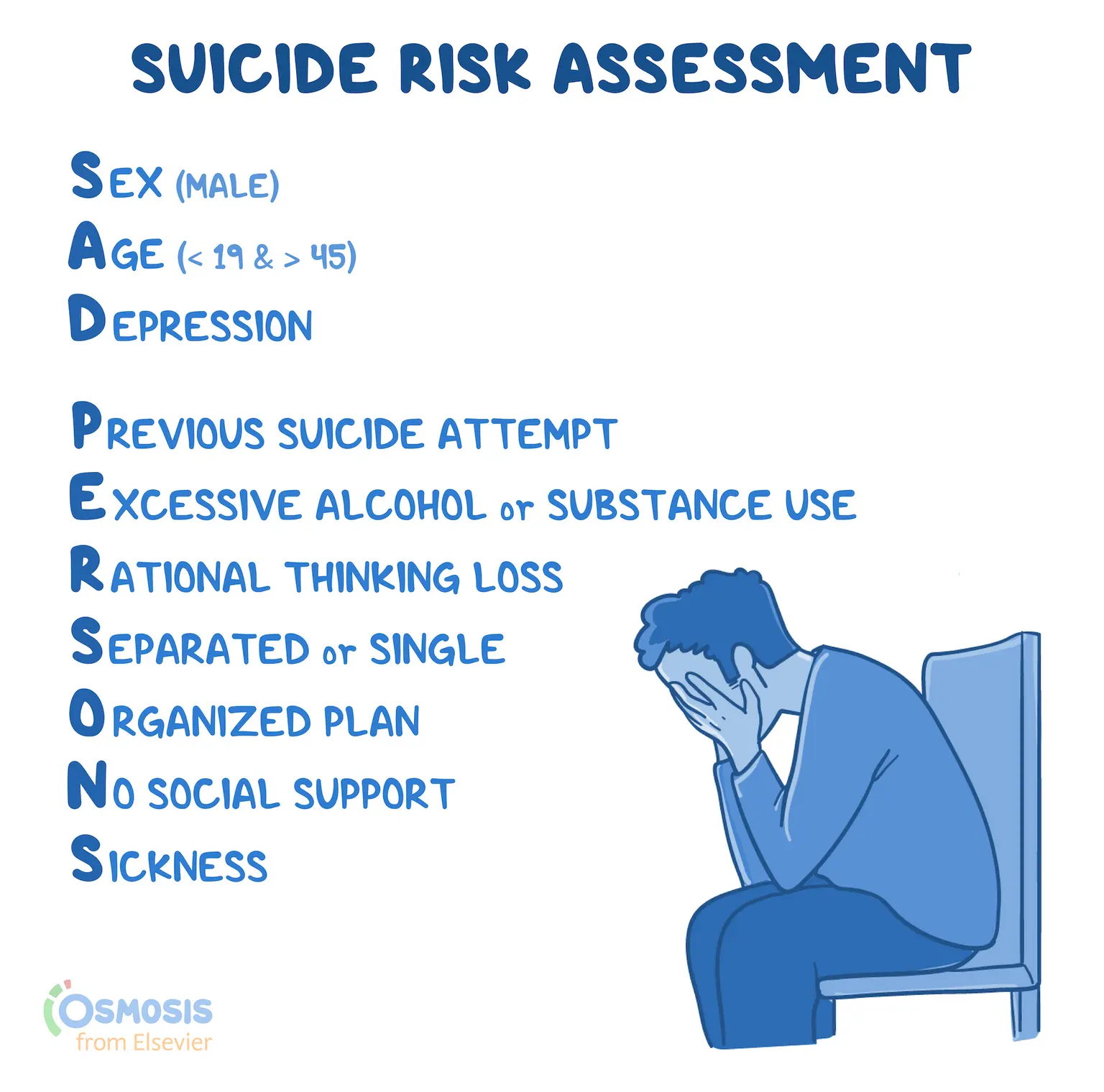
How does the modified SAD PERSONS suicide risk assessment work?
used to assess likelihood of a suicide attempt
consider risk factors within the context of clinical presentation
List the points to look for during a comprehensive mental status examination. (14)
general appearance
level of consciousness
posture
gait
body movements
dress
grooming
hygiene
facial depressions
behavior and affect
speech
mood, feeling, expressions
thought processes and perceptions
cognitive abilities
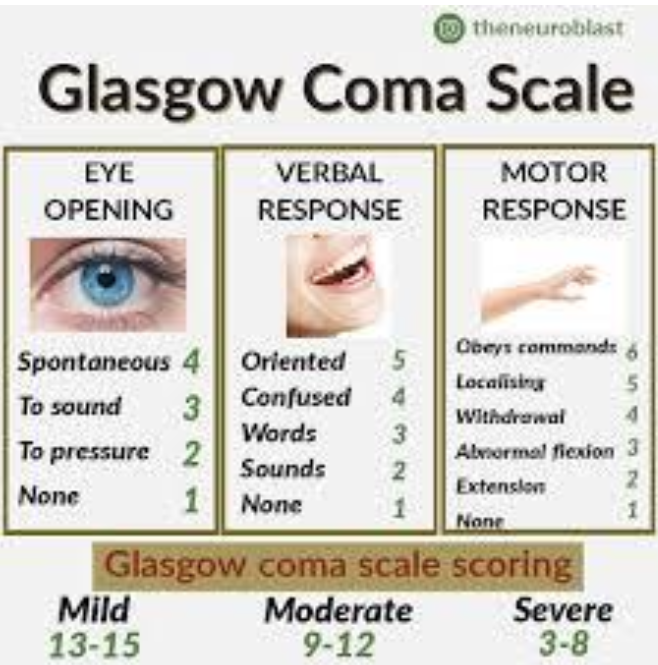
What is the Glasgow Coma Scale used for?
rating response to stimuli
indicating levels of consciousness and need for emergency attention
Define and list some examples of collaborative problems
differ from client concerns as they cannot be prevented by nursing interventions
but physiologic complications of medical condition can be detected and monitored by nurse
some can be obtained with a general impression
stroke
increased intracranial pressure
seizures
meningitis
depression
What are some abnormal findings during a mental health assessment?
lethargy
obtunded
stupor
coma
Define lethargy
client opens eyes, answers questions, and falls back asleep
Define obtunded
client opens eyes to loud voice, responds slowly with confusion, and seems unaware of environment
Define stupor
client awakens to vigorous shake or painful stimuli but returns to unresponsive sleep
What are some sources of speech problems?
dysphonia
cerebellar dysarthria
dysarthria
aphasia
wernicke aphasia
broca aphasia
Define dysphonia
voice volume disorder caused by laryngeal disorder or impairment of cranial nerve X
Define cerebellar dysarthria
irregular uncoordinated speech caused by multiple sclerosis
Define dysarthria
defect in muscular control of speech related to lesions of nervous system, parkinson disease, or cerebellar disease
Define aphasia
rapid speech that lacks meaning caused by a lesion in posterior superior temporal lobe
Compare Wernicke aphasia to Broca aphasia
Wernicke aphasia
rapid speech that lacks meaning
caused by lesion in posterior superior temproal lobe
Broca aphasia
slowed speech with difficult articulation but clear meaning
caused by lesion in posterior inferior frontal lobe