Engineered Wood Flooring Types, Advantages, and Construction Systems
 Call Kai
 Learn
Learn Practice Test
 Spaced Repetition
 Match
Match Flashcards
 Knowt Play
1/77

There's no tags or description
Looks like no tags are added yet.
Name | Mastery | Learn | Test | Matching | Spaced | Call with Kai | Chat |
|---|
No analytics yet
Send a link to your students to track their progress
78 Terms
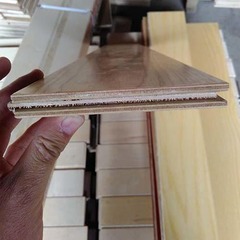
What is engineered wood flooring?
A material featuring multi-ply or three-ply construction for enhanced structural stability, comprised of layers of natural wood.

What are the two main types of engineered wood flooring?
Multi-ply engineered wood and three-ply engineered wood.

What is the advantage of multi-ply engineered wood?
It closely resembles solid wood and prevents over-expansion while providing strength and stability.
What is a key feature of three-ply engineered wood?
It provides enhanced resistance to cupping and over-expansion, but is less supportive on larger joist spans.
What is High-Density Fiberboard (HDF) Core Engineered Flooring?
A type of flooring that uses HDF as the core material, offering enhanced strength, stability, and moisture resistance.
List two advantages of engineered wood flooring.
Enhanced durability and less maintenance requirements.
What is a disadvantage of engineered wood flooring?
It is susceptible to fading from sunlight exposure.
What are some common issues with engineered wood flooring?
Dents and scratches from pets or furniture, poor moisture resistance, and presence of toxic chemicals.
What is engineered wood also known as?
Mass timber, composite wood, man-made wood, or manufactured board.
Why might engineered wood be preferred over solid wood?
It can be designed for specific performance requirements and is available in various sizes and thicknesses.
What is glued laminated timber (glulam)?
An engineered wood product that has greater strength and stiffness than comparable dimensional lumber.
What is a disadvantage of the adhesives used in some engineered wood products?
They may release toxic compounds like formaldehyde and VOCs.
What are some types of structural composite lumber (SCL)?
Laminated veneer lumber (LVL), parallel strand lumber (PSL), and oriented strand lumber (OSL).
What is the primary benefit of structural composite lumber?
It is solid, predictable, and uniform, virtually free from warping and splitting.
What is the typical application for structural composite lumber?
Used for rafters, headers, beams, joists, studs, columns, and I-joist flange material.
What is the main construction method for structural composite lumber?
Layering dried and graded wood veneers or strands with moisture-resistant adhesive.
What is the impact of engineered wood on wood utilization?
It makes more efficient use of wood, allowing for the use of small pieces or underutilized species.
What is one of the main concerns when cutting engineered wood products?
Exposure to toxic compounds from the adhesives used in some products.
What is the moisture resistance of engineered wood products?
Some products are designed with waterproof adhesives for outdoor use, while others may not be suitable for high moisture environments.
What is the relationship between engineered wood and energy consumption?
Engineered wood requires more primary energy for manufacture than solid lumber.
What is the effect of humidity on some engineered wood products?
They may be weaker and more prone to warping compared to solid woods.
What is the significance of the grain direction in structural composite lumber?
The grain of each layer runs primarily in the same direction, enhancing strength and stability.
What are the maintenance requirements for engineered wood flooring?
Regular cleaning is required to maintain its appearance and durability.
What is the cost comparison between engineered wood flooring and vinyl plank flooring?
Engineered wood flooring is generally more expensive than vinyl plank flooring.
What is a common issue with the core construction of cheaper engineered wood products?
They may use poor-quality core materials like OSB, which can affect durability.
What is the primary benefit of engineered wood products in construction?
They maximize the natural strength and stiffness characteristics of wood.
What are typical applications of Structural Composite Lumber (SCL)?
Rafters, headers, beams, joists, studs, columns, and I-joist flange material.
What is the thickness range for SCL?
3/4" to 3-1/2" thick.
What is Glue Laminated Lumber (glulam)?
A structural engineered wood product made by bonding layers of dimensioned lumber with moisture-resistant adhesives.
What are the benefits of using Glue Laminated Lumber?
It allows for larger and longer structural members than sawing a normal log.
What types of shapes can Glue Laminated Lumber be manufactured into?
Horizontal beams, vertical columns, and curved, arched shapes.
What must engineered wood products like SCL meet?
Physical (dimension) and mechanical property (strength) tests.
What is the significance of retaining strength in engineered wood?
It ensures structural integrity after being in service and exposed to conditions.
What are common uses for large cross-section dimension members?
Floor or roof beams, headers over doors and windows, rimboard, and studs in wall framing.
What is Machine Stress-rated Lumber (MSR)?
Softwood dimension lumber whose strength is predicted by mechanical means rather than visual indicators.
What is the grading system for MSR lumber based on?
The relationship between stiffness and bending strength, assigned 'f-E' values.
What does the 'f' value in MSR grading indicate?
The predicted strength in pounds per square inch (psi).
What does the 'E' value in MSR grading indicate?
The average stiffness measured in millions of pounds per square inch (106 psi).
What is Laminated Veneer Lumber (LVL)?
A structural composite lumber product made by bonding thin wood veneers together with the grain parallel to the long direction.
What are common applications for LVL?
Headers, beams, hip and valley rafters, scaffold planking, and flange material.
What is Parallel Strand Lumber (PSL)?
Lumber made from veneers clipped into long strands, bonded together to form structural sections.
What is the length-to-thickness ratio of strands in PSL?
Approximately 300.
What is Laminated Strand Lumber (LSL)?
Lumber made from flaked wood strands with a length-to-thickness ratio of about 150.
What is the primary use of PSL?
Beam and header applications where high bending strength is needed.
What is a key characteristic of glulam in terms of shape?
It can be manufactured into a variety of cross-sections and curved shapes.
What is a common property requirement for engineered wood products?
They must maintain strength and structural integrity under normal conditions of use.
What does the term 'laminated' refer to in engineered wood products?
The process of bonding layers of wood together to create a composite material.
What is the primary advantage of using engineered wood products like LVL and PSL?
They provide high strength and stability for structural applications.
How are MSR lumber grades identified?
By evaluated properties rather than visual indicators, placed on the stamp.
What is the typical use of MSR lumber?
For engineered applications where low variability in strength and stiffness is crucial.
What is the significance of moisture-resistant adhesives in glulam?
They ensure durability and performance in various environmental conditions.
What is the typical cross-section size range for glulam beams?
Available in a wide range of section sizes to suit different applications.
What type of load do glulam beams primarily support?
Predominantly bending loads.
What applications is Laminated Strand Lumber (LSL) used for?
LSL is used in various applications including studs and millwork components.
What is Oriented Strand Lumber (OSL)?
A type of engineered wood made from flaked wood strands with a length-to-thickness ratio of approximately 75, combined with adhesive and pressed into a mat.
What applications is Oriented Strand Lumber (OSL) used for?
OSL is used in various applications including studs and millwork components.
What is Medium Density Fiberboard (MDF)?
An engineered wood product formed by breaking down softwood into wood fibers, combining it with wax and resin, and forming panels under high temperature and pressure.
How does the density of MDF compare to particle board and high-density fiberboard?
MDF typically has a density of 600-800 kg/m3, while particle board ranges from 160-450 kg/m3 and high-density fiberboard ranges from 500-1450 kg/m3.
What are some advantages of using MDF?
Advantages include being less expensive than many natural woods, isotropic properties (no grain), and consistent strength and size.
What are some disadvantages of using MDF?
Disadvantages include being heavier, swelling and breaking when waterlogged, warping if not sealed, and containing urea-formaldehyde which may cause irritation.
What is the typical color for moisture-resistant MDF?
Moisture-resistant MDF is typically green.
What is the typical color for fire-retardant MDF?
Fire-retardant MDF is typically red.
What is the Uni Span Floor System?
A flooring system made up of a 75mm prestressed concrete slab that can span up to 8m when combined with an in-situ structural topping.
What are the benefits of the Uni Span Floor System?
It reduces inter-story noise and vibration, is simple to construct, and provides a solid slab.
What is the Interspan Floor Slab?
A flooring system consisting of 200mm wide precast prestressed concrete ribs spaced at 900mm centers with timber infills and a 75mm in situ concrete topping.
What is the Tilt-Up Wall System?
A construction method using precast concrete walls created by assembling forms and pouring large slabs called panels, which are raised and positioned with a crane.
What are T Beams and L Beams?
Reinforced concrete floor systems placed monolithically with supporting beams that form cross sections in T and L shapes.
What is a Channel Beam?
A form of composite construction system utilizing a C channel, often combined with reinforced concrete or metal decking.
What are the common sizes for sawn timber?
Length: up to 5.4m, Width: 25-75mm, Depth: up to 250mm.
What is the common size range for Glulam?
Common size range is 60 to 250mm wide, with lengths up to 20m and depths from 50-300mm.
What are the applications of Laminated Veneer Lumber (LVL)?
Used for beams, columns, post and beam structures, and stressed skin panels.
What is the typical depth range for I-joists?
Depth: 200mm up to 2500mm.
What is the typical size for Oriented Strand Board (OSB)?
Typically available in sheets of 1220mm x 2440mm and thickness ranges from 9 to 25mm.
What is the purpose of using composite construction systems?
To combine different materials for enhanced structural performance and efficiency.
What is the significance of the manufacturing process in engineered wood products?
The manufacturing process determines the properties, applications, and performance characteristics of the engineered wood products.
What is the role of adhesives in engineered wood products?
Adhesives are used to bond wood strands or fibers together, enhancing structural integrity and performance.
How does the production of MDF compare to traditional plywood?
MDF is made from separated fibers rather than wood veneers, making it denser and suitable for different applications.
What are the typical applications for massive or cross-laminated timber (CLT)?
Used for floor slabs, roofs, beams, columns, load-bearing walls, and shear walls.