Wk 1-2 - Atoms, Molecules, Water, Solutions
 Call Kai
 Learn
Learn Practice Test
 Spaced Repetition
 Match
Match Flashcards
 Knowt Play
1/34

There's no tags or description
Looks like no tags are added yet.
Name | Mastery | Learn | Test | Matching | Spaced | Call with Kai | Chat |
|---|
No analytics yet
Send a link to your students to track their progress
35 Terms
Matter
It makes up the physical world.
Element
A pure substance of matter that has distinct physical and chemical properties.
Atom
Smallest unit of an element that retains the element's distinctive properties.
Nucleus
Dense core of atoms.
Protons
Positively charged particles.
Neutrons
Neutrally charged particles.
Electrons
Negatively charged particles orbiting the nucleus.
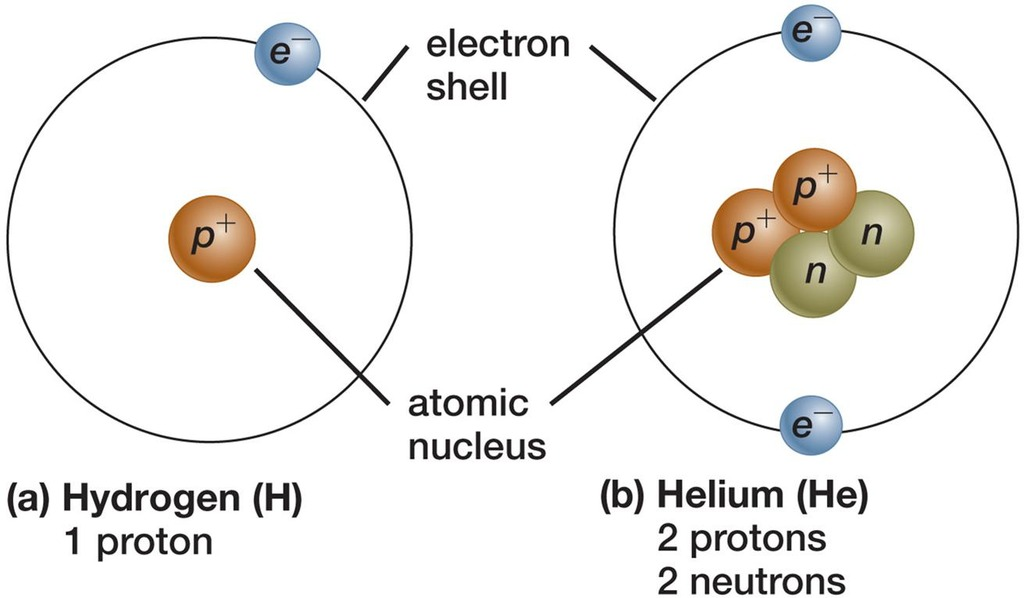
Ion
An atom that has an electrical charge (+ or -).
Atomic Number
The number of protons in an atom.
Atomic Mass Number
The total number of protons and neutrons contained in the nucleus.
Isotope
Atoms of an element that have the same number of protons, but different numbers of neutrons.
Atomic Mass Unit
A measurement of mass of subatomic particles.
Molecule
Atoms linked together.
Chemical Reaction
Process of linking atoms or molecules together or tearing them apart.
Chemical Bond
Attractive forces that hold atoms together.
Ionic Bond
A bond where atoms are held together by opposite electrical charges.

Covalent Bond
A strong bond where two atoms share electrons.
Nonpolar
No charge on any part of the molecule.
Polar
A bond where one atom exerts a stronger attraction on the electrons than does the other, forming slight partial charges.
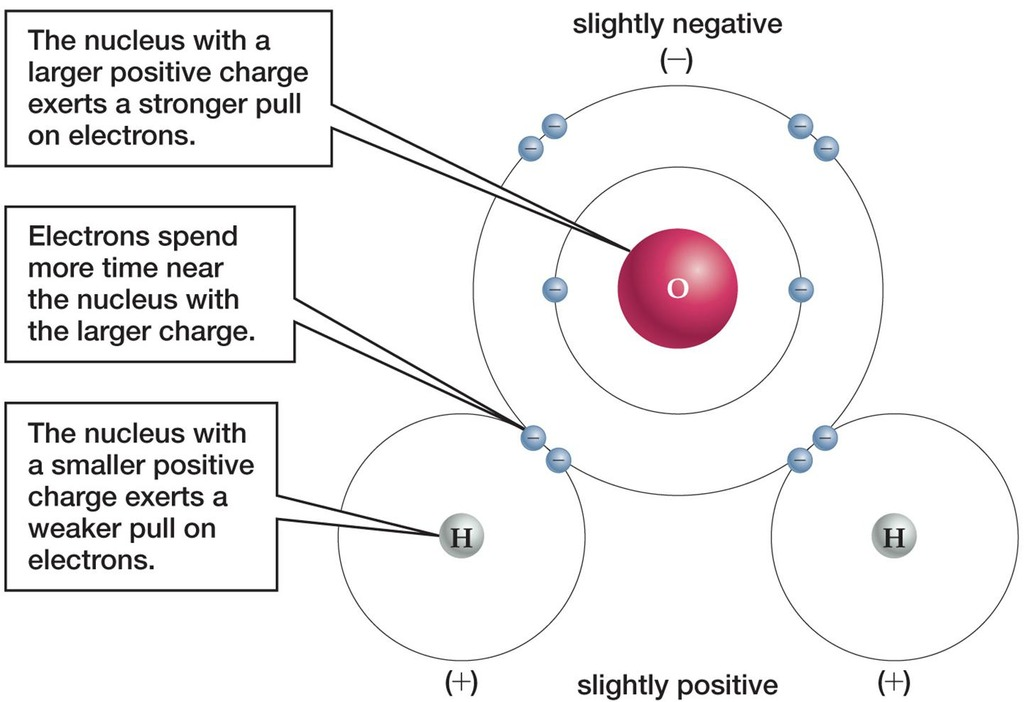
Hydrogen Bond
An electrical attraction that occurs between two polar molecules.

Cohesion
The tendency of water molecules to stick together.
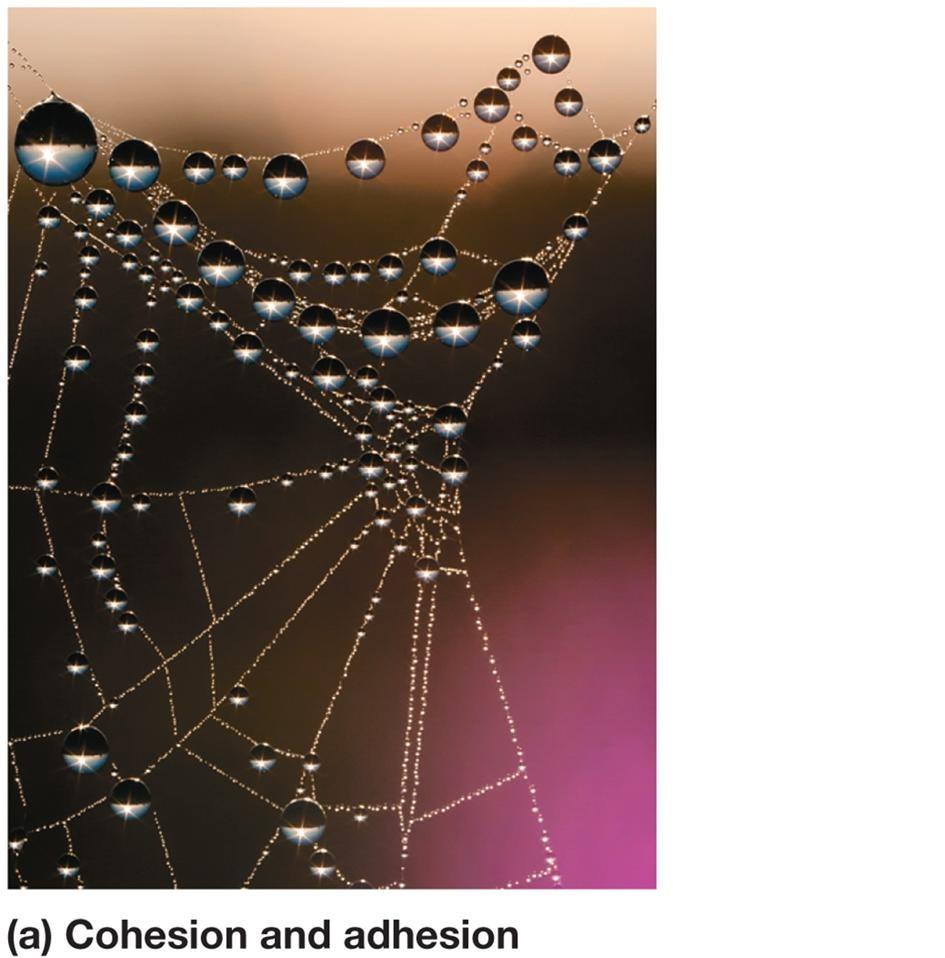
Surface Tension
Tendency of a water surface not to break.

Adhesion
The tendency of water molecules to cling to other substances.
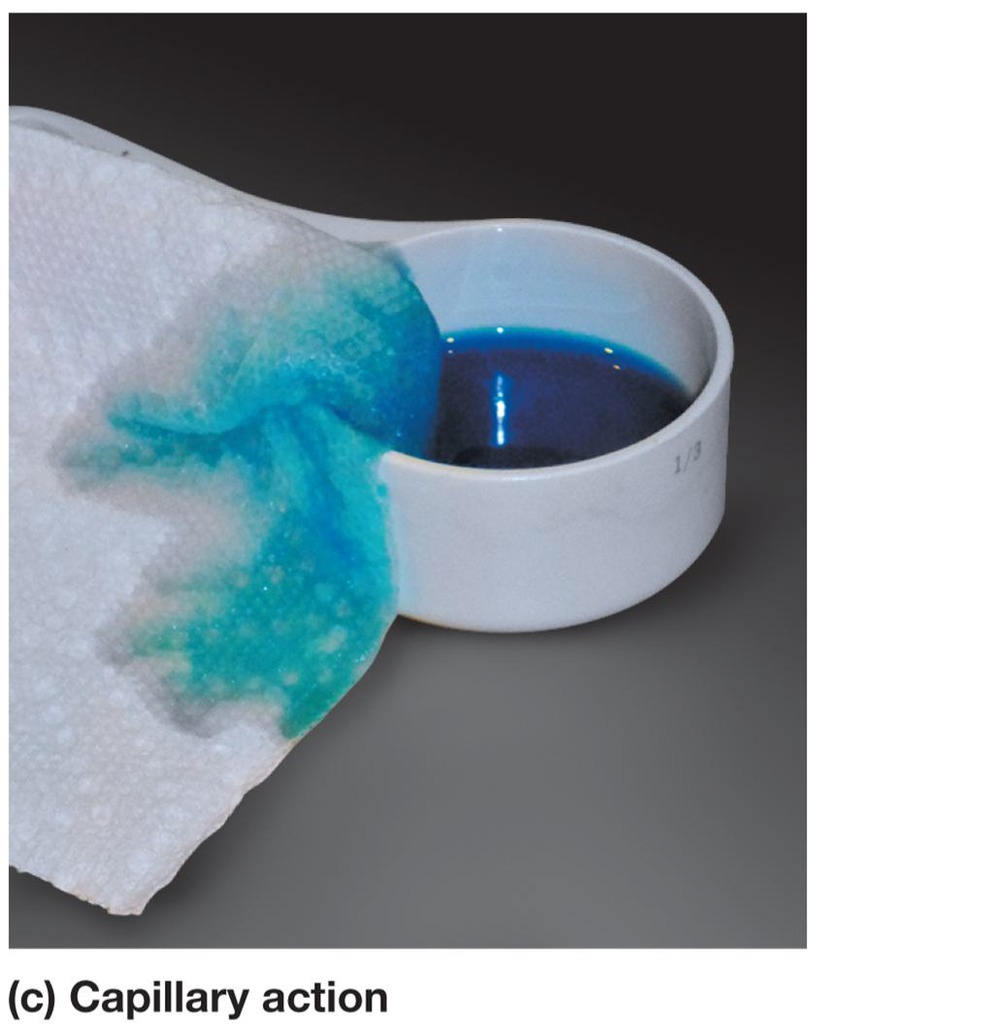
Capillary Action
The movement of water within the spaces of a porous material due to the forces of adhesion, cohesion, and surface tension.
Solvent
A substance that completely surrounds and disperses (dissolves) the atoms or molecules of another substance.

Solute
Any substance that can be dissolved by a solvent.
Solution
A fluid where a solute is dissolved in a solvent.
Hydrophilic
Molecules (ions and polar molecules) that are attracted to and dissolved in water.
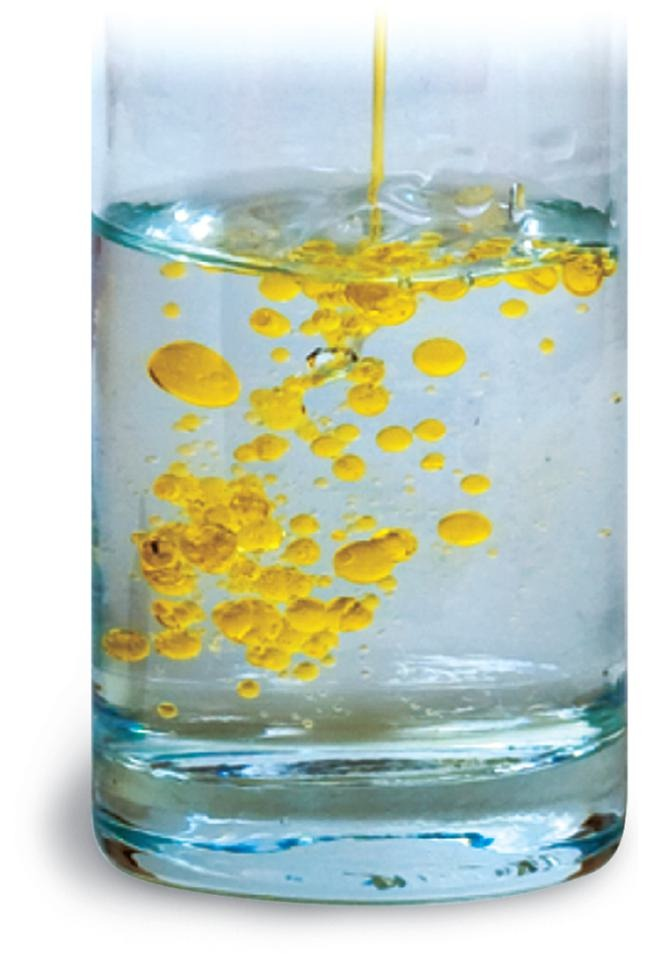
Hydrophobic
Larger non-polar molecules (fats, oils) that do not dissolve in water.
Specific Heat
Amount of energy needed to raise one gram of water 1 degree Celsius.
Heat of Vaporization
Amount of energy needed to cause a substance to evaporate.
Neutral pH
Pure water has equal concentrations of H+ and OH- ions (pH = 7).

Acid
The concentration of H+ ions exceeds that of the OH- ions (pH < 7).

Base
The concentration of OH- ions exceeds that of the H+ ions (pH > 7).
Buffer
A molecule that tends to maintain a solution at nearly constant pH.