CHM2045 Test #1
 Call Kai
 Learn
Learn Practice Test
 Spaced Repetition
 Match
Match Flashcards
 Knowt Play
1/294

There's no tags or description
Looks like no tags are added yet.
Name | Mastery | Learn | Test | Matching | Spaced | Call with Kai | Chat |
|---|
No analytics yet
Send a link to your students to track their progress
295 Terms
Matter
Anything that occupies space and has mass
-Consists of atoms and molecules in motion (kinetic energy)
Dimensional Analysis
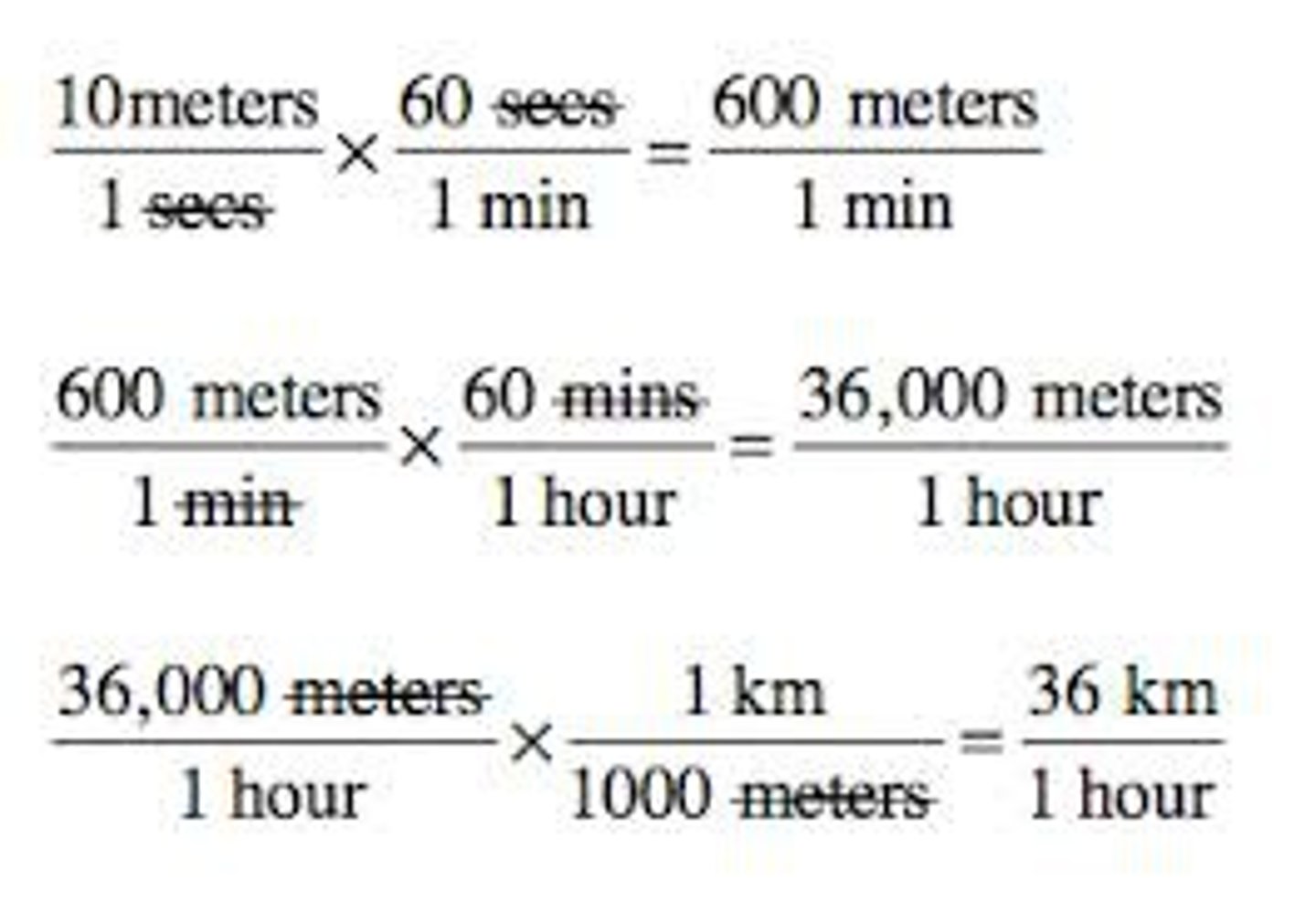
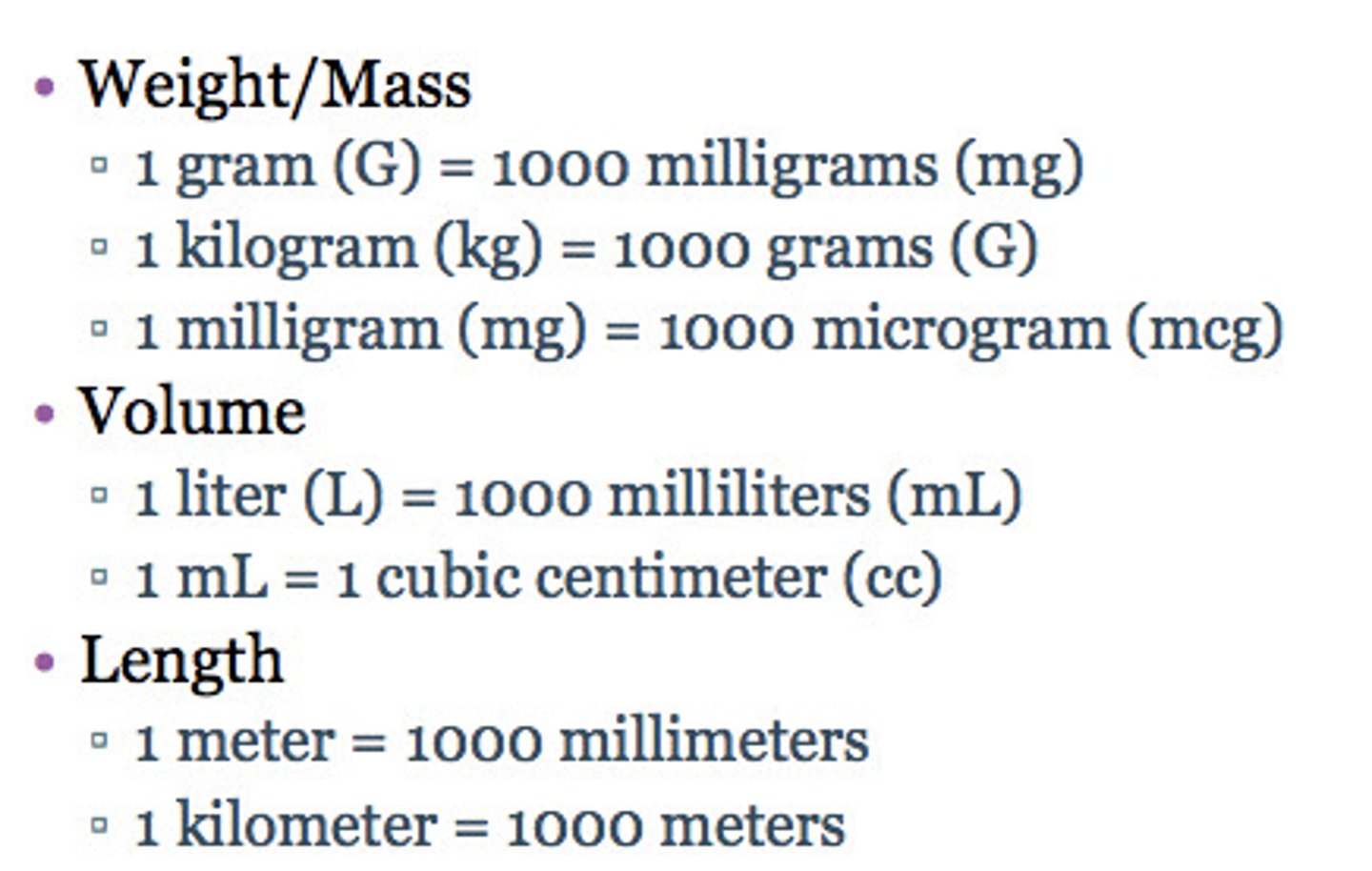
Metric Conversions
Physical Properties
A characteristic of a pure substance that can be observed without changing it into another substance.
Atom
The smallest particle of an element that retains the characteristic chemical properties of that element.
True or False
Increasing temperature corresponds to faster and faster motions of atoms and molecule
True
-In part of kinetic energy of substances
Mass
Measure of the quantity of matter that an object contains
Many experiments are conducted at 298 K. What is the temperature in Celsius?
273.15 + C = K
273.15 + C = 298K
C = 298K - 273.15
C = 24.85
How many miles are covered in a 15km race?
(1 mile= 5280 ft, 12 in= 1 foot, 1 inch = 2.54 cm)
15km = 1000 m/ 1 km 100 cm/ 1 m 1 in/ 2.54 cm 1 ft/ 12 in = 49,212.6 ft 1 mile/5280 ft = 9.3
Matter can be classified by its physical state(s)....
-Gas
-Liquid
-Solid
Matter can be classified by its composition....
-Element
-Compound
-Mixture
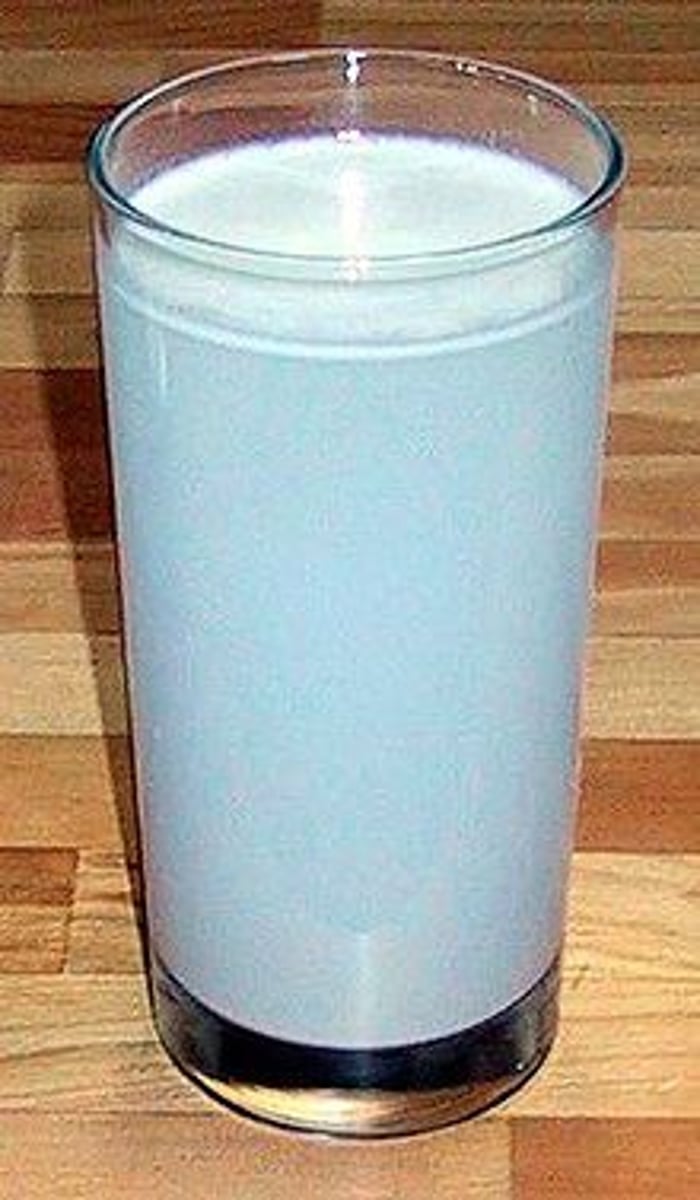
Homogeneous Mixture
A mixture that is so evenly mixed that you can't see all of the different parts. (Uniform composition)
-Ex. Air, kool-aid
Elements
-Consists of only one type of atom
-They cannot be decomposed or further simplified by ordinary means
-Often be distinguished by their color and their state at room temperature
-EX: Sodium, Helium
Heterogeneous Mixture
A mixture that is not uniform in composition; components are not evenly distributed throughout the mixture
-Can be separated by filtration
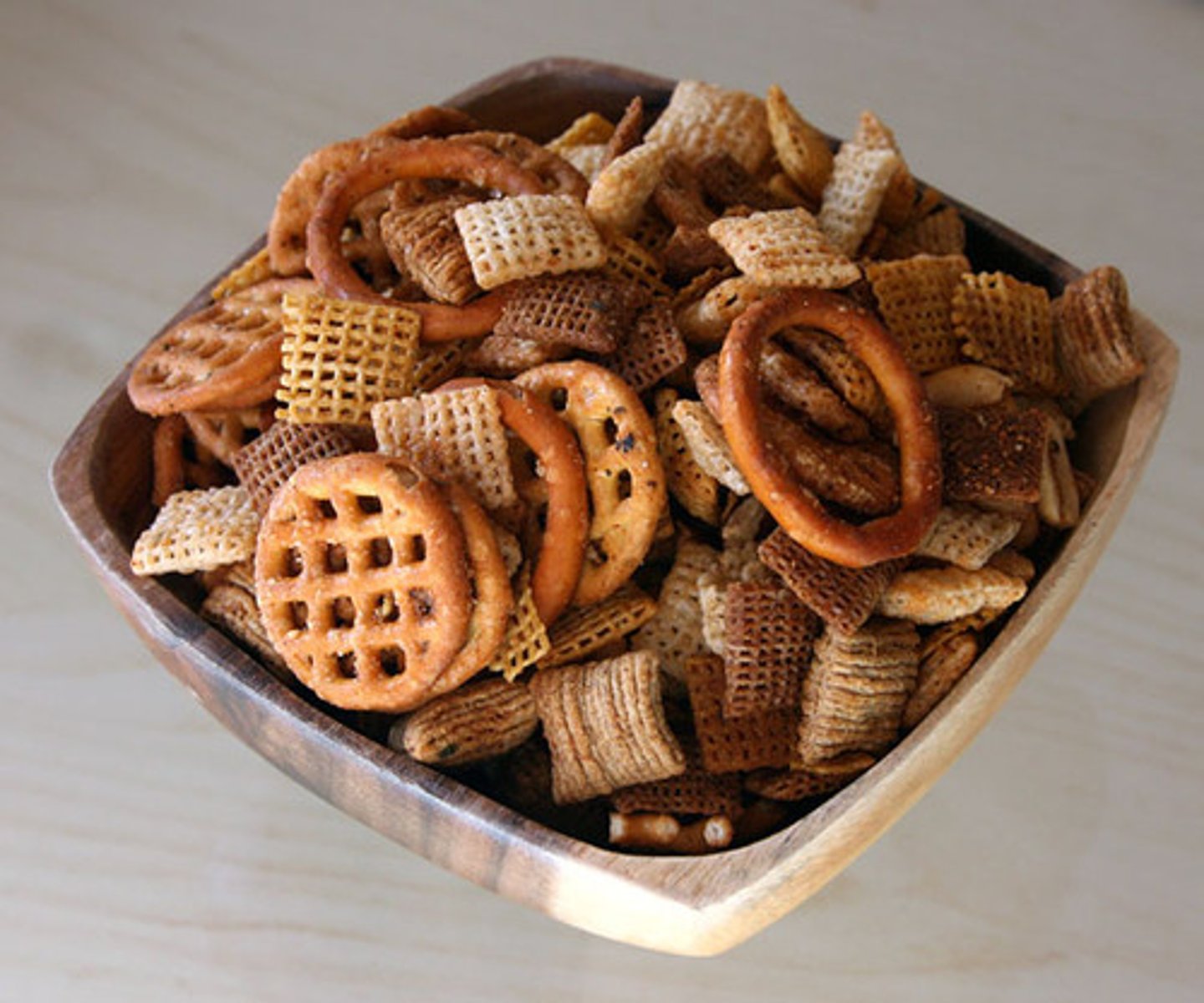
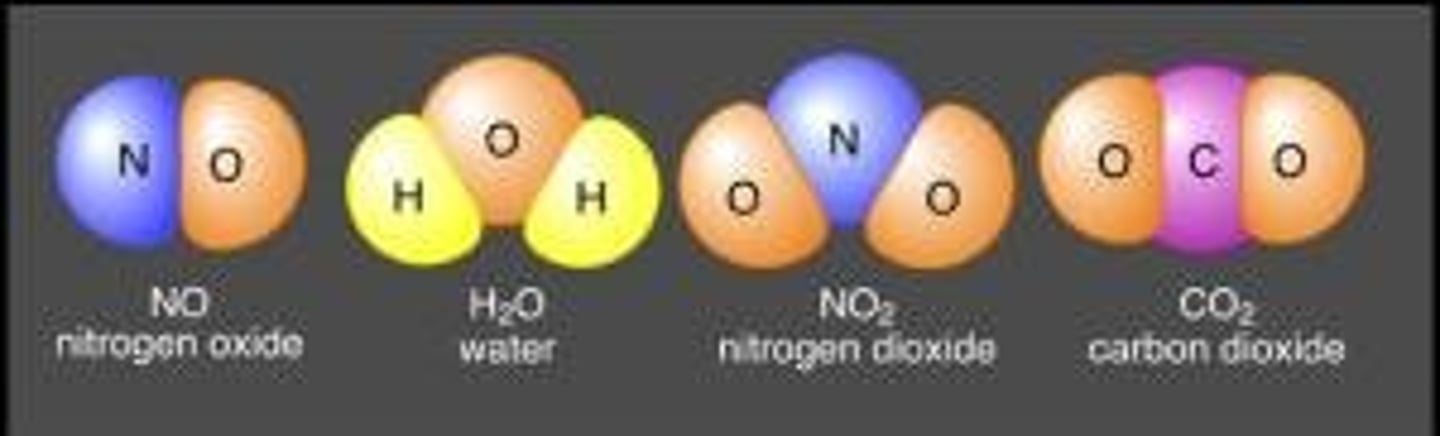
Compounds
-Combination of two or more elements in a definite reproducible way
-EX: Water (H2O)
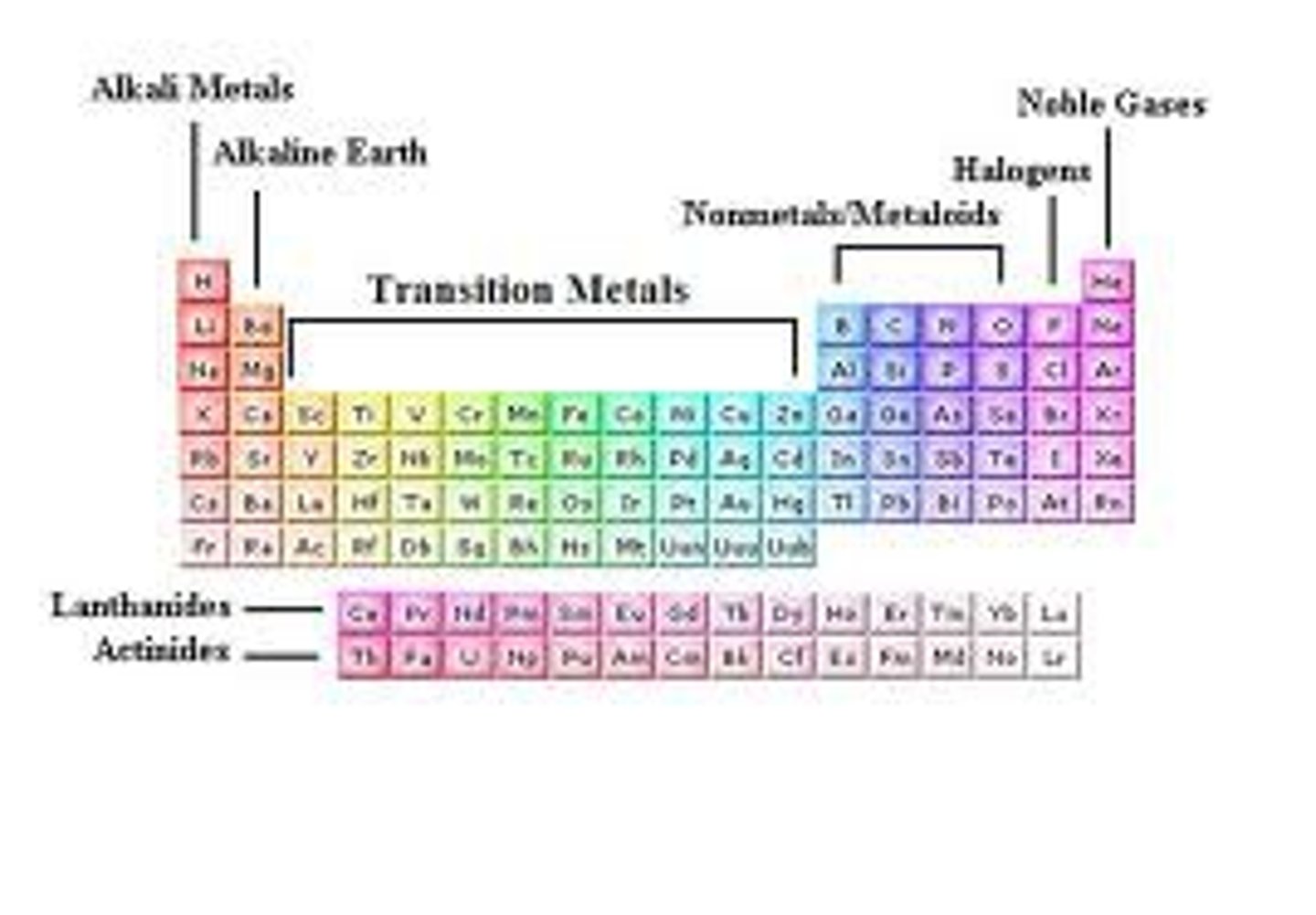
Periodic Table
A table that shows the elements, their atomic number, symbol, and average atomic mass; elements with similar chemical properties are grouped together.
-118 recorded elements at this time
-Originally arranged by increasing atomic mass. 1869 Mendeleev
H
Hydrogen
Li
Lithium
Na
Sodium
K
Potassium
Rb
Rubidium
Cs
Cesium
Be
Beryllium
Mg
Magnesium
Ca
Calcium
Sr
Strontium
Ba
Barium
Ra
Radium
Ti
Titanium
4+ charge
Cu
Copper
+1 or +2 charge
Cd
Cadmium
+2 charge
Pb
Lead
2+ charge
Bi
Bismuth
+3 charge
Fe
Iron
+2 or +3 charge
B
Boron
C
Carbon
N
Nitrogen
O
Oxygen
F
Fluorine
Al
Aluminum
Si
Silicon
P
Phosphorus
S
Sulfur
Cl
Chlorine
Ne
Neon
He
Helium
Ar
Argon
Kr
Krypton
Br
Bromine
I
Iodine
Xe
Xenon
Rn
Radon
At
Astatine
Pb
Lead
Cu
Copper
Ag
Silver
+1 charge
Au
Gold
Hg
Mercury
2+ charge
Plutonium
Pu
Technetium
Tc
Tellurium
Te
Sn
Tin
2+ charge
Kr
Krypton
Electronic Current is measured by what?
Ampere (A)
Alkali Metals
Group 1 on Periodic Table
-1 electron in outer level, very reactive, soft, silver, shiny, low density
-Lithium, Sodium, Potassium, Rubidium, Cesium, Francium
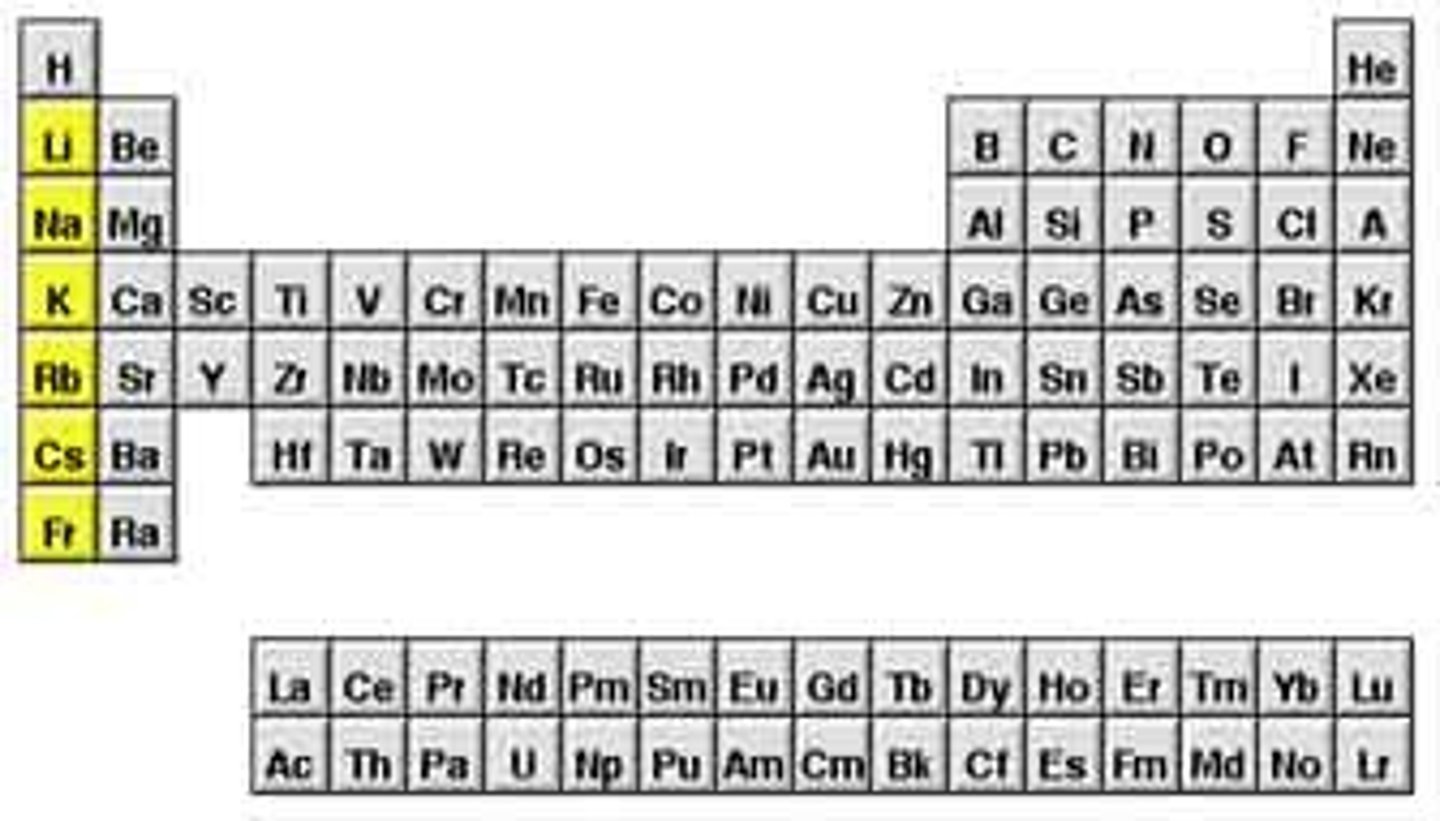
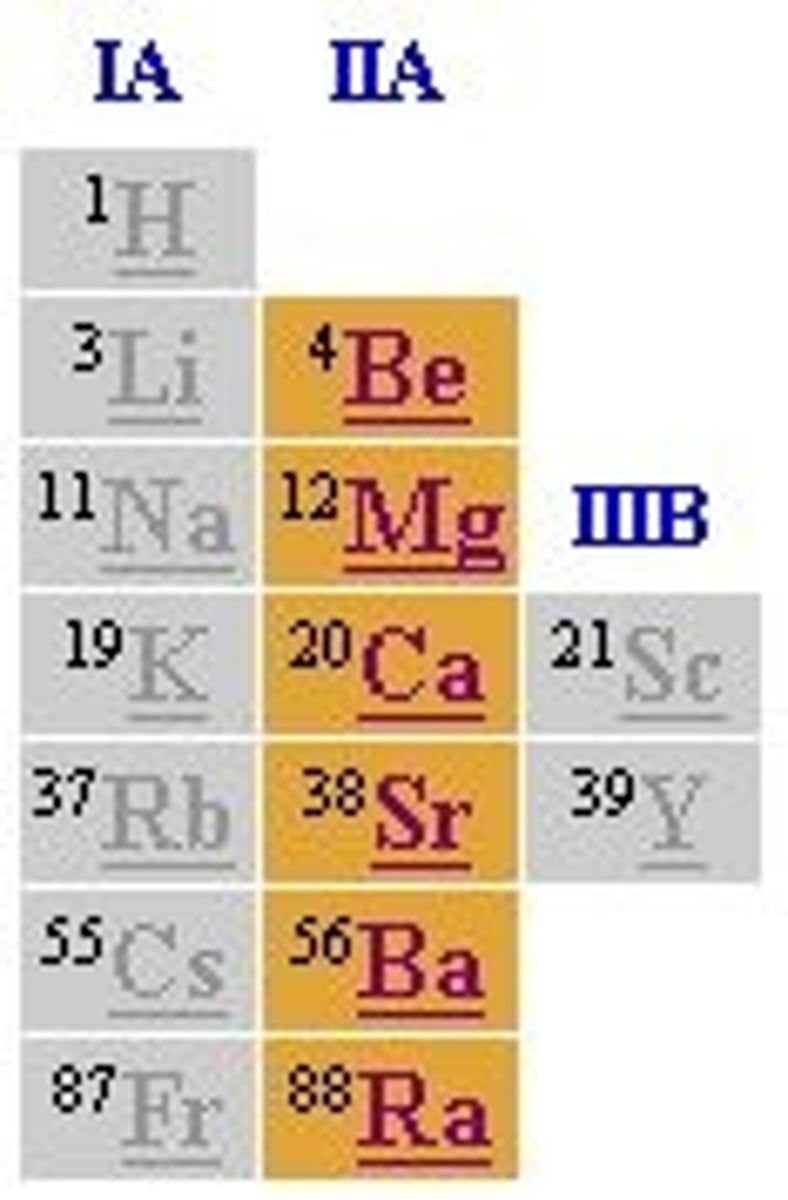
Alkaline Earth Metals
-Metallic elements in group 2 of the periodic table which are harder than the alkali metals and are also less reactive
Halogens
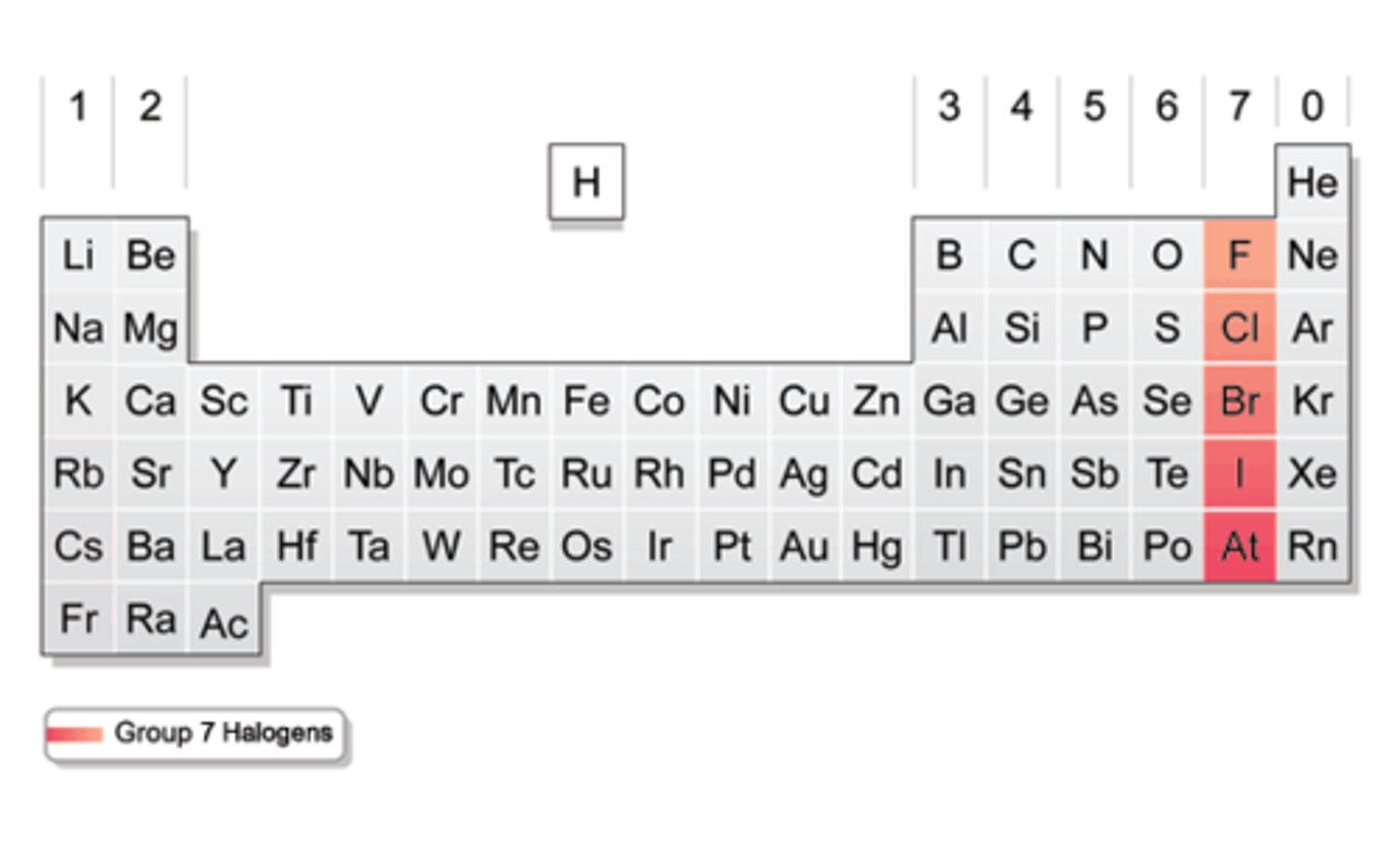
Contains nonmetals, 7 valence electrons in it's outermost energy level. Very reactive
Noble Gases
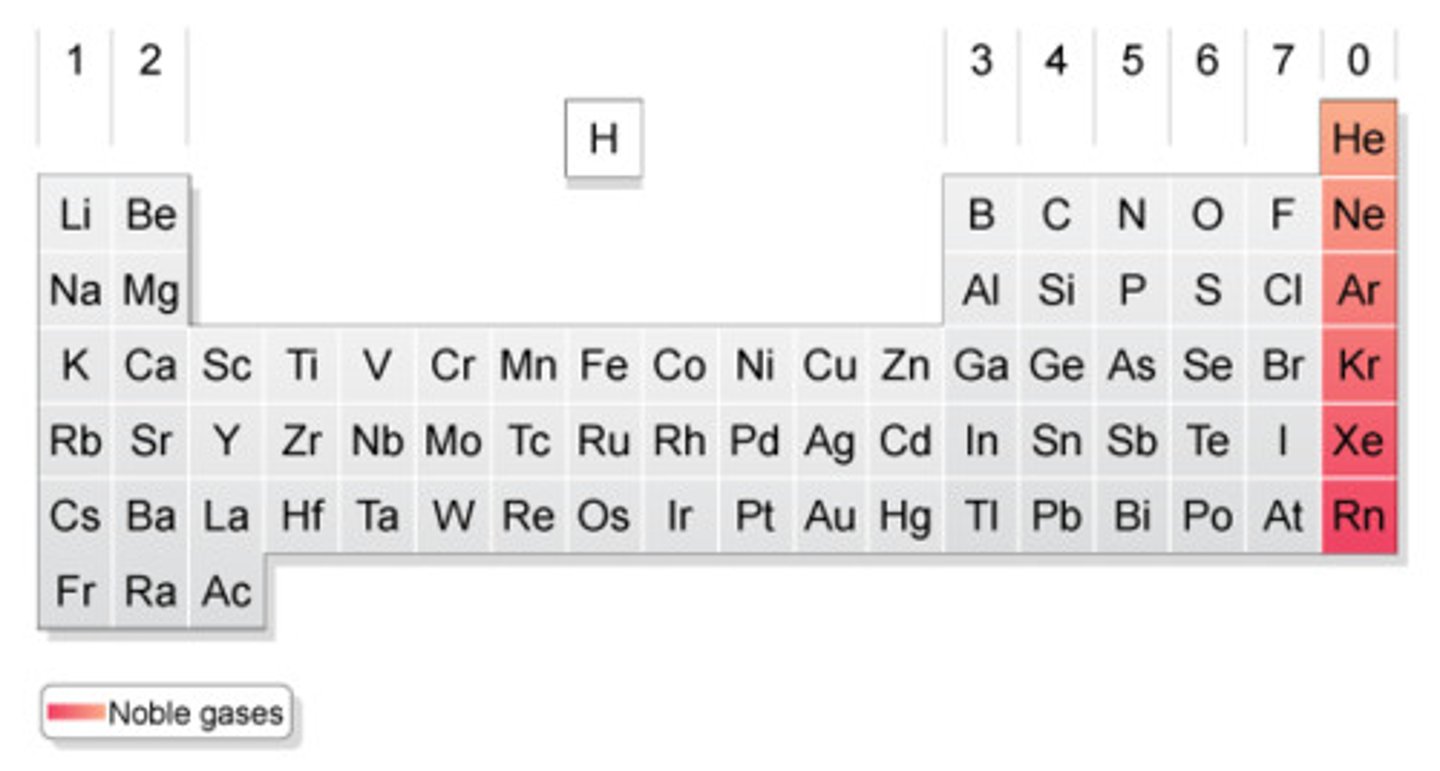
Elements in group 8A of the periodic table
-Have no charge and are gases under normal conditions.
-Helium, Neon, Argon, Krypton, Xenon, Radon
Mixtures
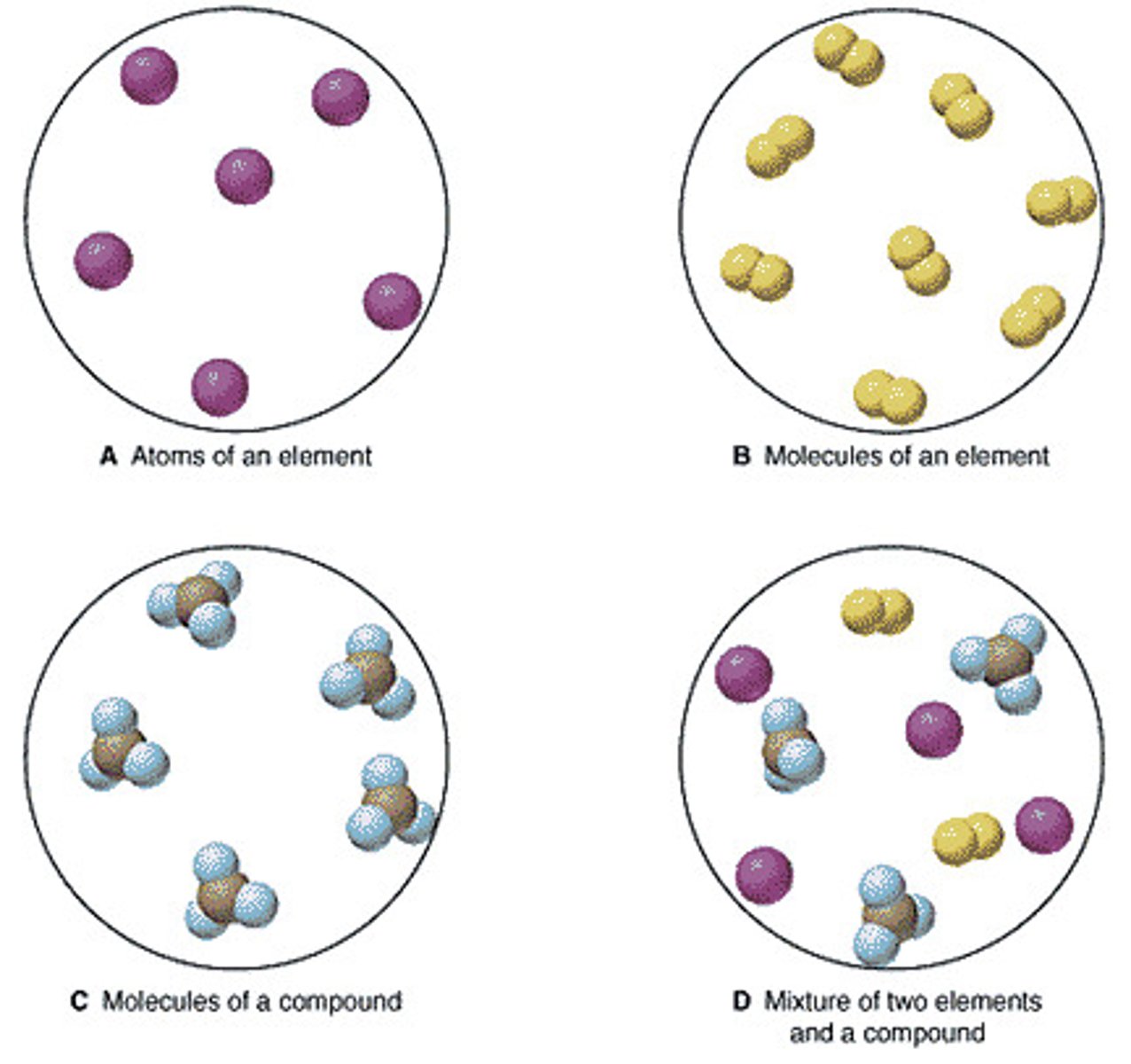
A combination of two or more pure substances
1. Homogeneous
2. Heterogeneous
-When separated, the components of both types of mixtures yields pure substance

Pure Substance
A sample of matter, either a single element or a single compound, that has definite chemical and physical properties and cannot be further purified
-Compounds and elements
Which of the following is not characteristic of a pure substance?
1 Has uniform composition throughout
2 Has a fixed melting temperature
3 Can be separated into two other pure substances
Can be separated into two other pure substances
Solutions
A mixture where substances are distributed evenly (homogeneous).
-Has a solvent & solute
-Solid/Liquid (sugar in water)
-Liquid/liquid (gasoline)
-Solid/solid (Brass)
-Composition can vary: Amount of solute in solvent!! There is no fixed ratio
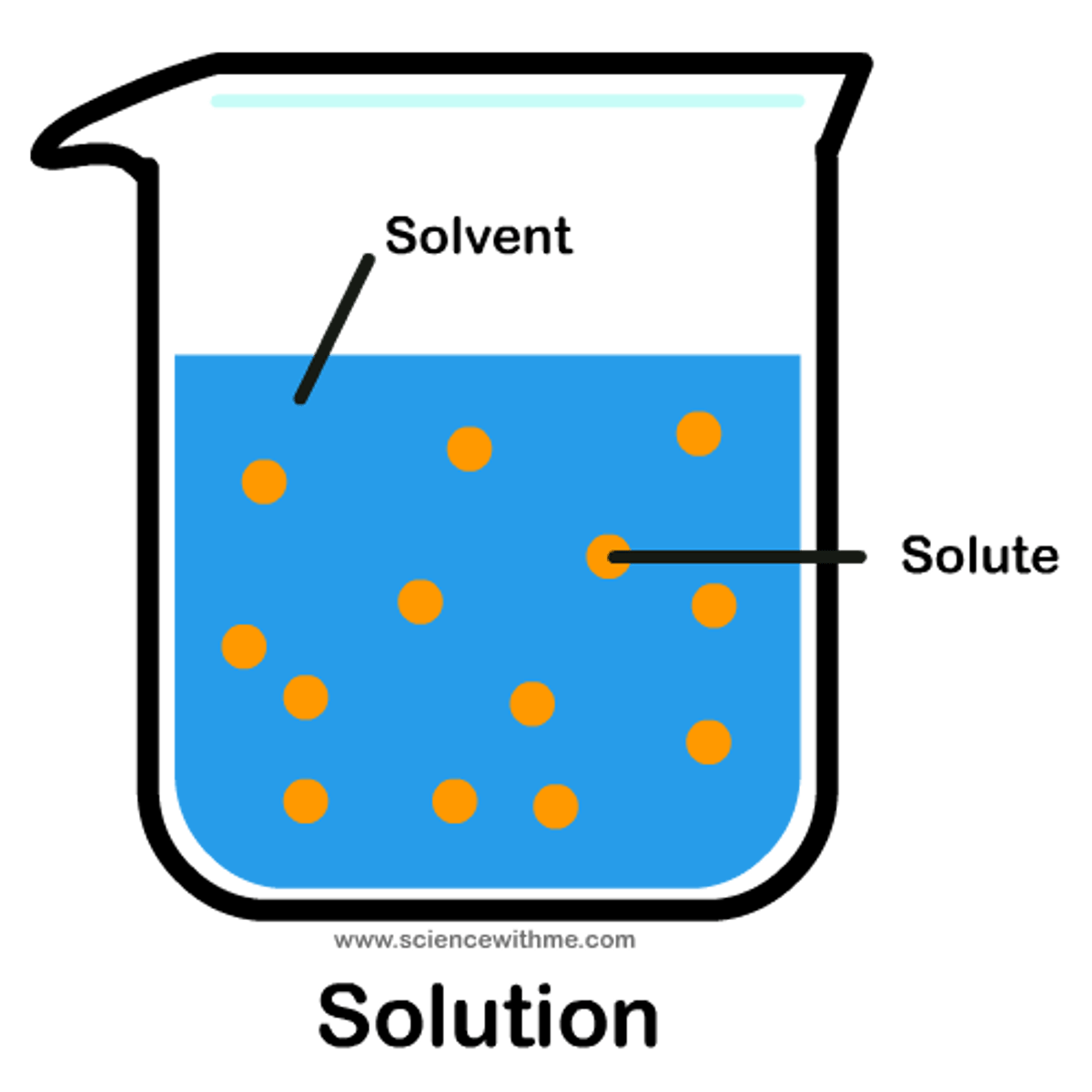
Solute
Minor component of a solution
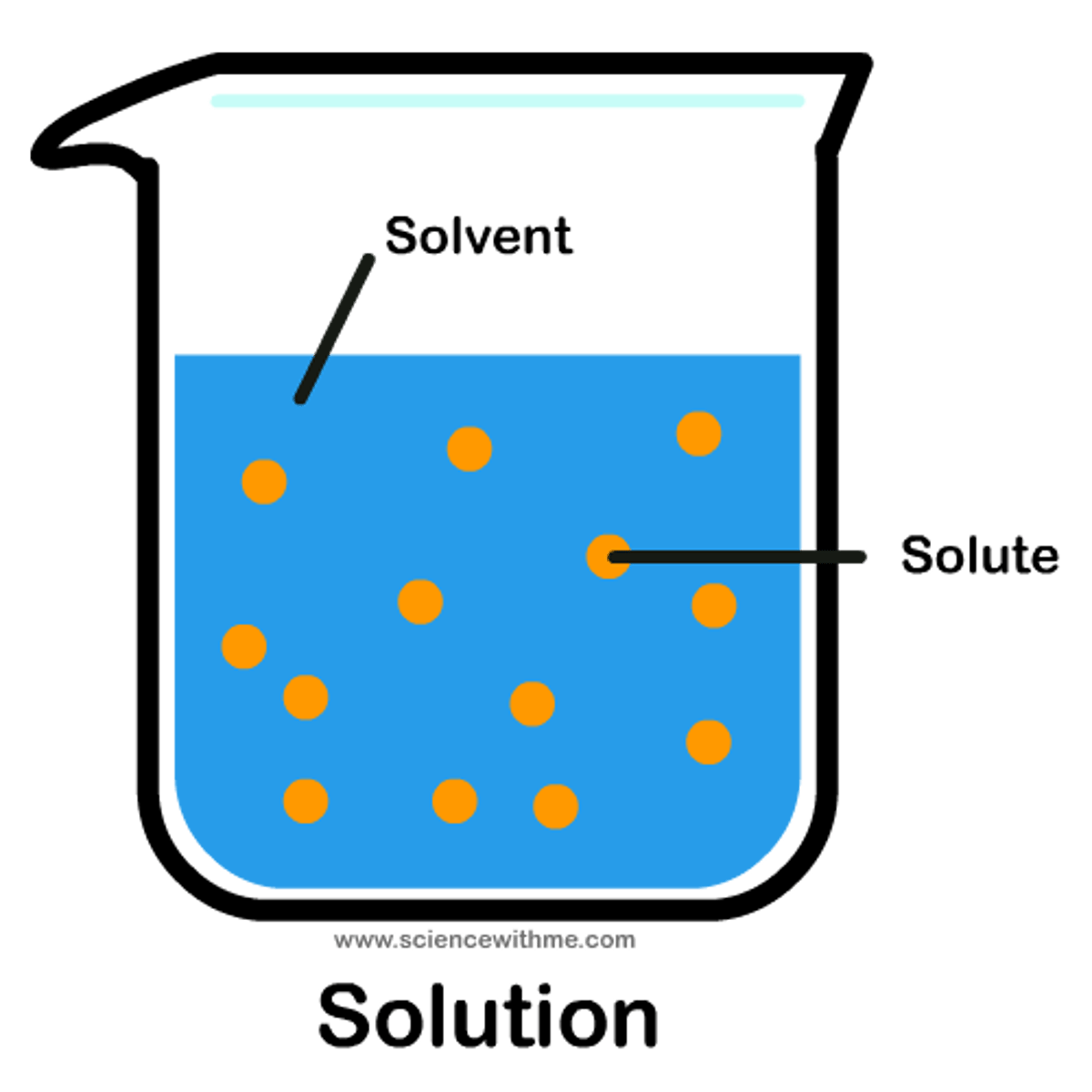
Solvent
Substance that contains solutes
Chemical Compounds
Composed of two or more elements
-All are made up of molecules or ions
1. Ionic: Sodium Chloride
2. Molecules: Water, Carbon dioxide, Octane, Sugar, etc.
-There is a fixed ratio with the compositions!!

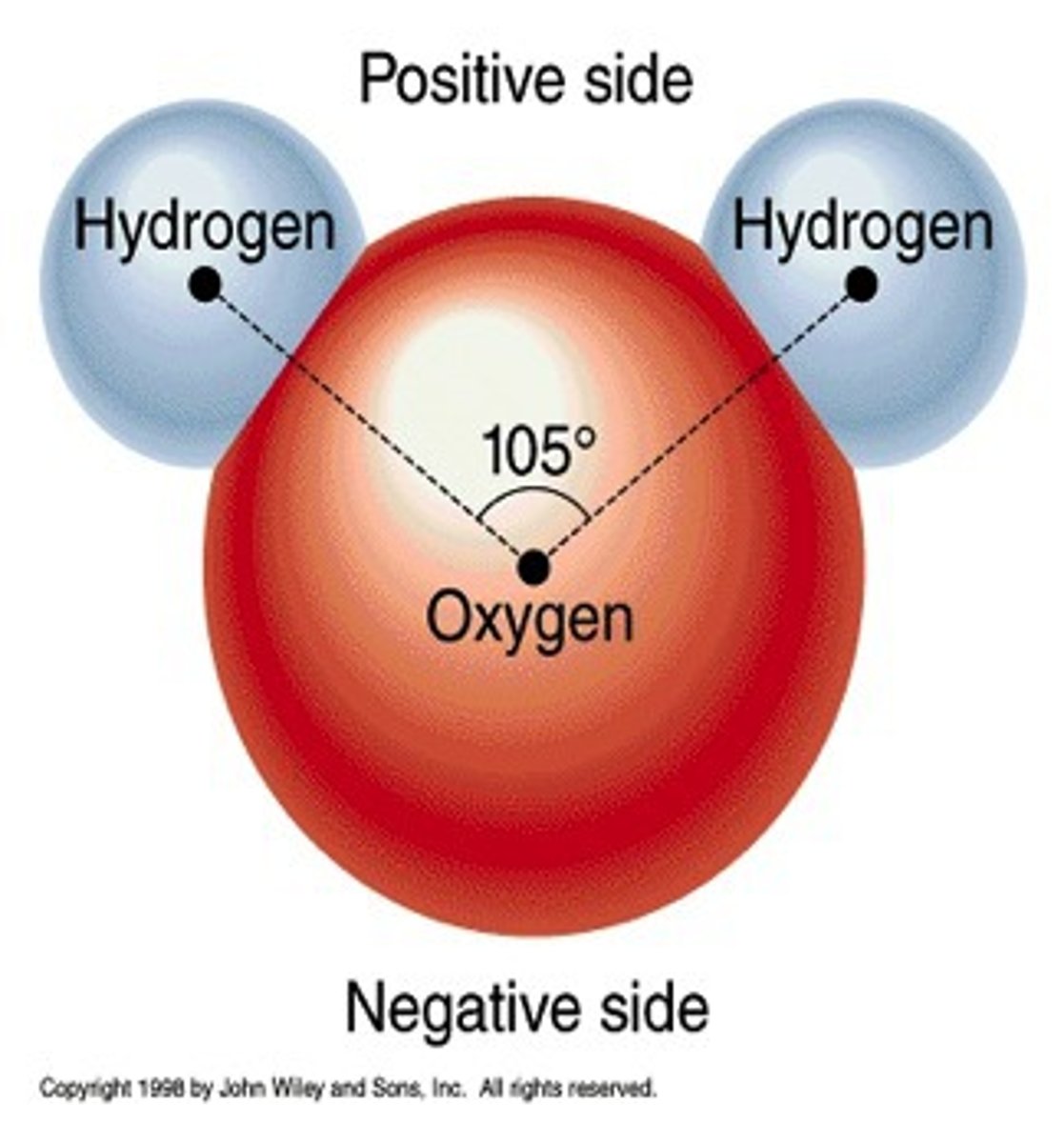
Water
H2O
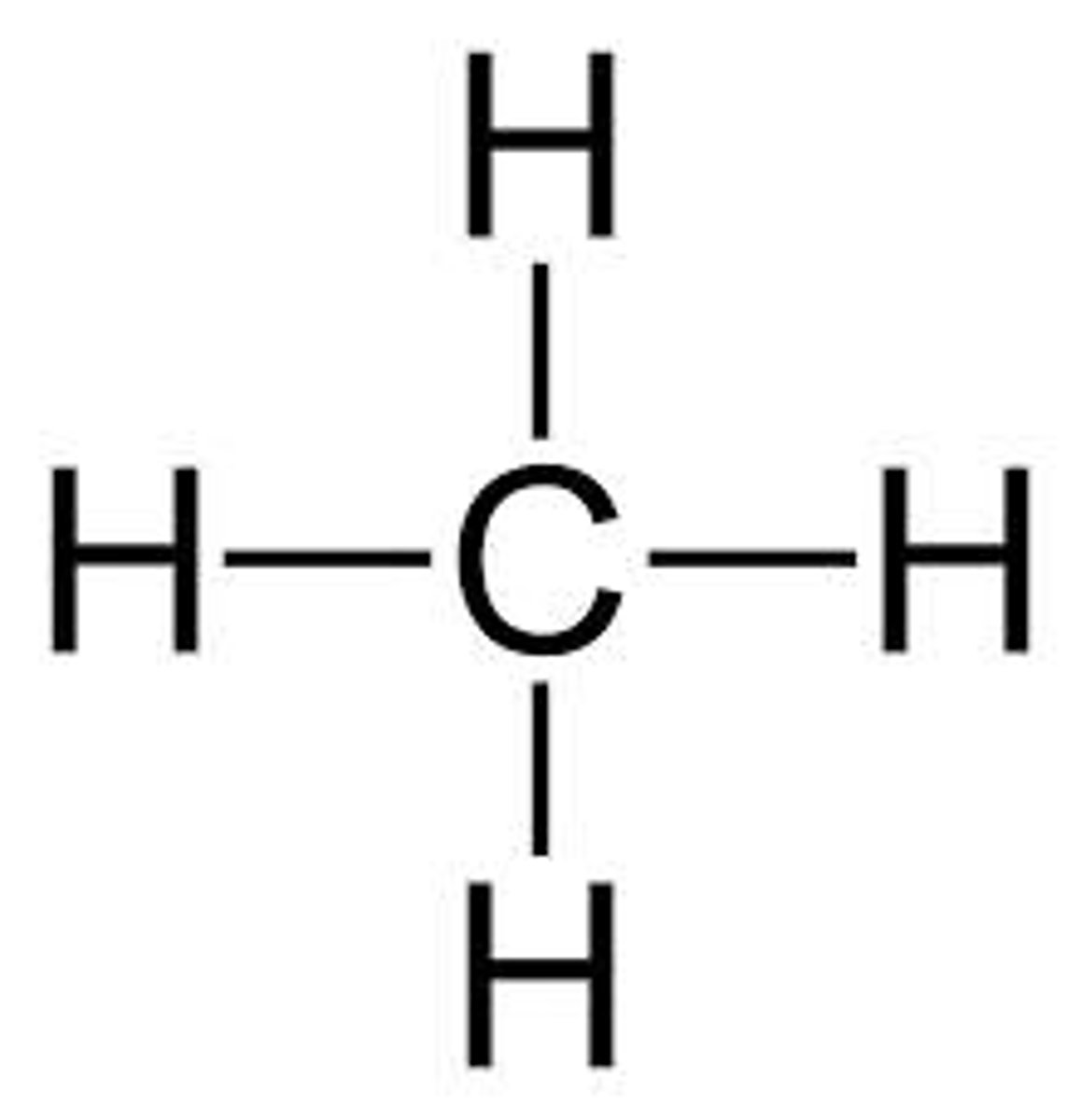
Methane
CH4
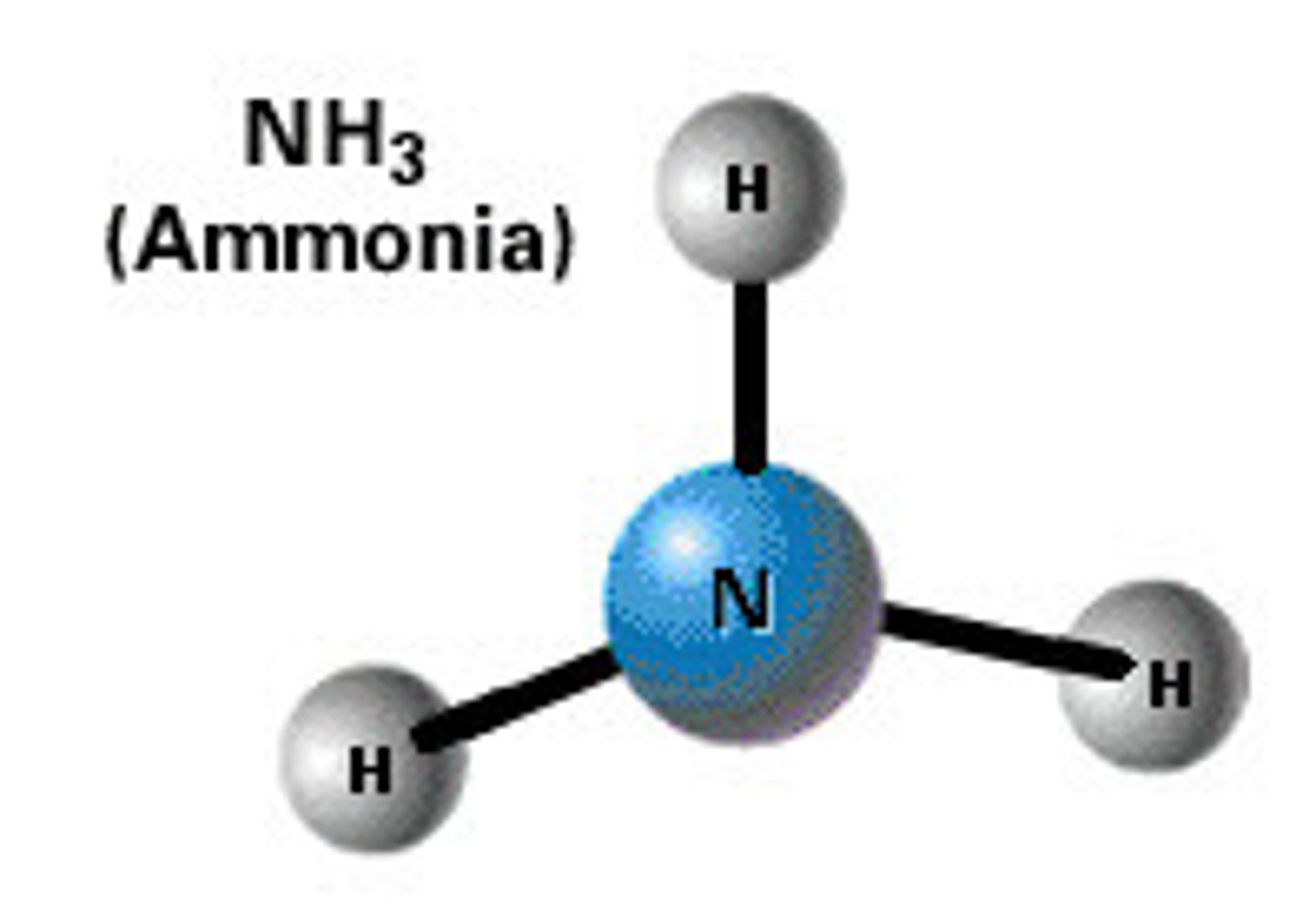
Ammonia
NH3
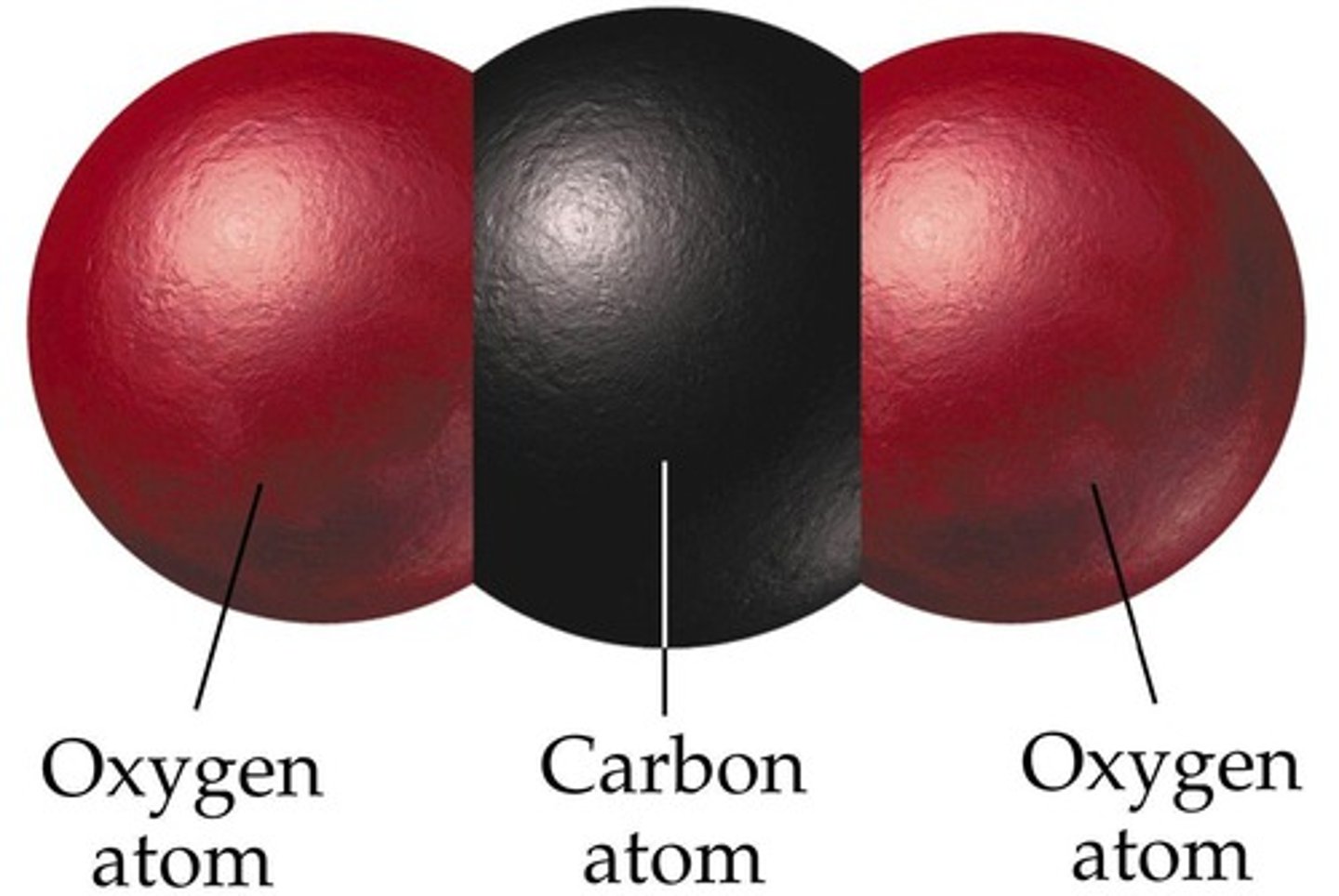
Carbon dioxide
CO2
Are compounds just mixtures of elements?
1. Compounds have different properties than elements
2. Fixed composition ratio (definite proportions): definite % of composition by mass
EX: Iron Pyrite FeS2 ------> 46.55 % iron and 53.45% sulfur
FeS2---> 1 Fe= 55.845
2 x S= 2 x 32.066 = 64.132
FeS2----> 119.977
What physical properties can be evaluated without changing the composition of the material?
Color, Odor, Density, Melting point, Thermal conductivity, Volume, Hardness
Extensive Properties
(Mass) Depends upon the amount of substance
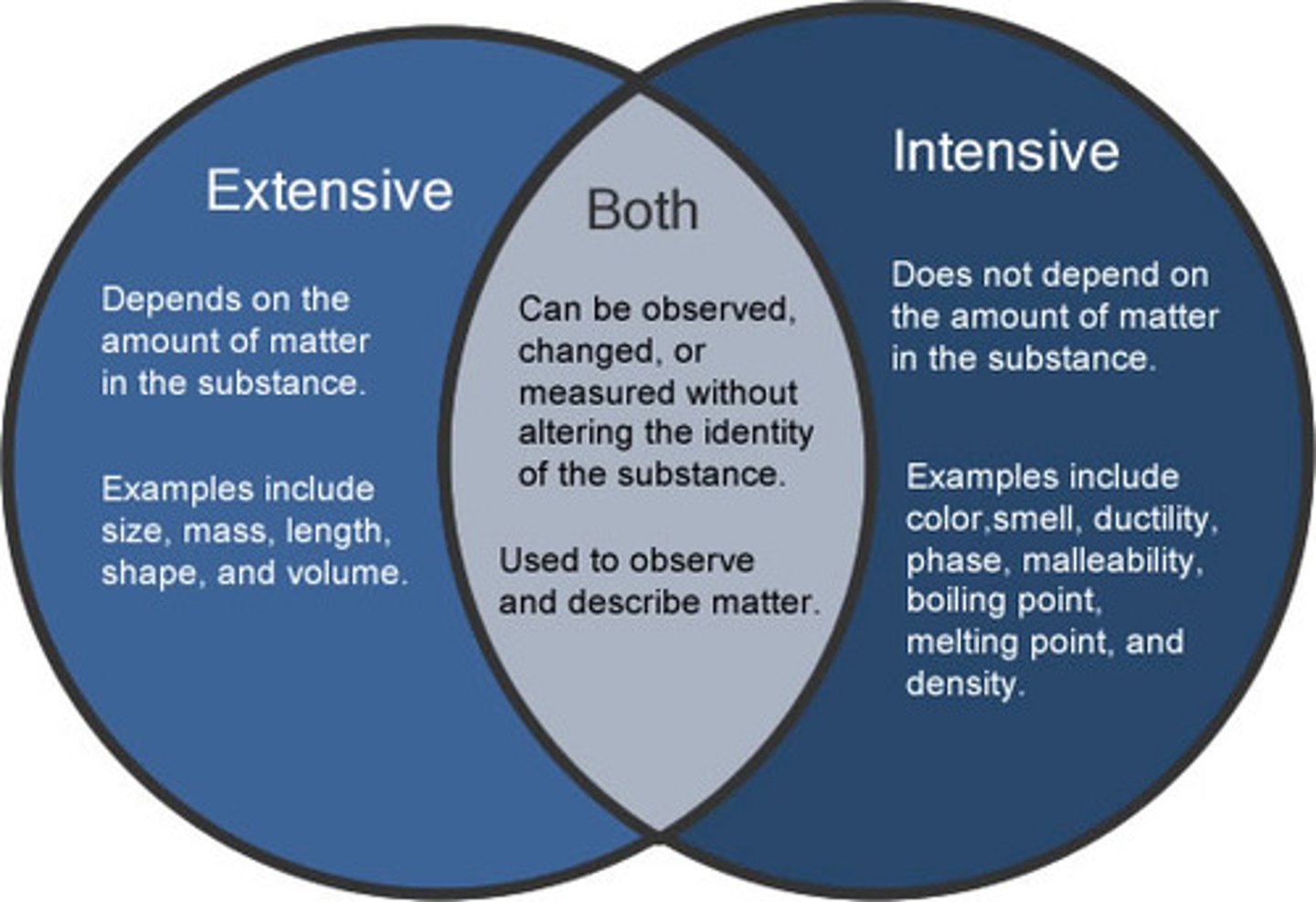
Intensive Properties
(Density) Does not depend on amount of substance
-Temp, boiling point, melting point,density, hardness
Density
D=M/V
-A measure of how much mass is contained in a given volume.
Object: mass=20.4558, V=2.13 cm3. Give the Density
d=9.60 g/cm3
Mercury density at 20 C is 13.570 g/mL. What is the mass of 107.3 mL of mercury?
d=m/V
m=d*V
m=(13.570 g/mL)*(107.3 mL)
m=1456 g
m=1.456 * 10^3 g
Density of acetic acid at 20 C is 1.05 g/mL. What volume do I need to have 275 g of acetic acid?
d=m/V
V=(275g)/(1.05 g/mL)
V=262 mL
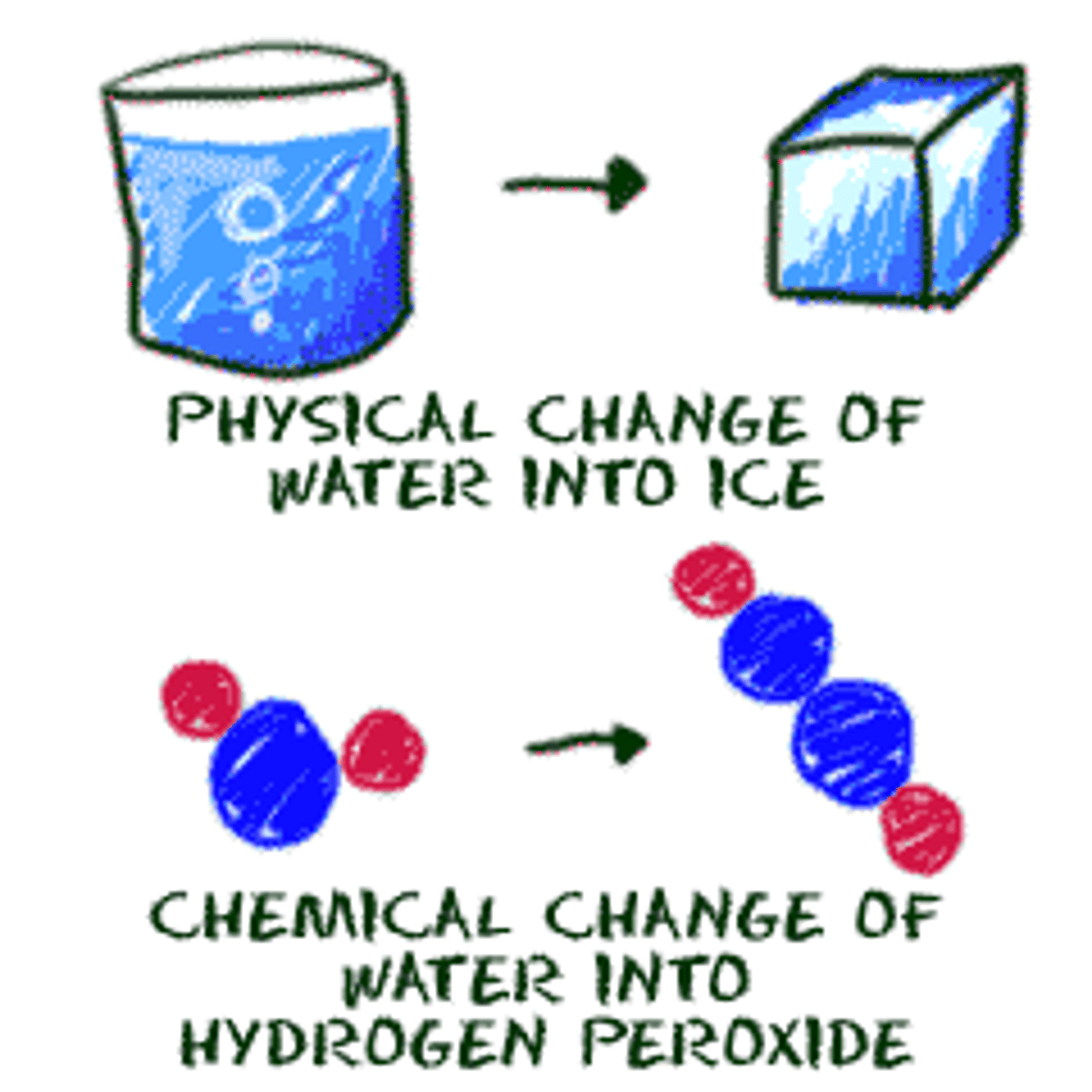
Chemical Changes
One substance or more are transformed into one or more new substances
-Involves a change in chemical composition
-Results in a change in composition or structure
-Reactants-------> Products
-2H2 (Hydrogen gas) + O2 (oxygen) --------> 2 H2O (water)
Energy
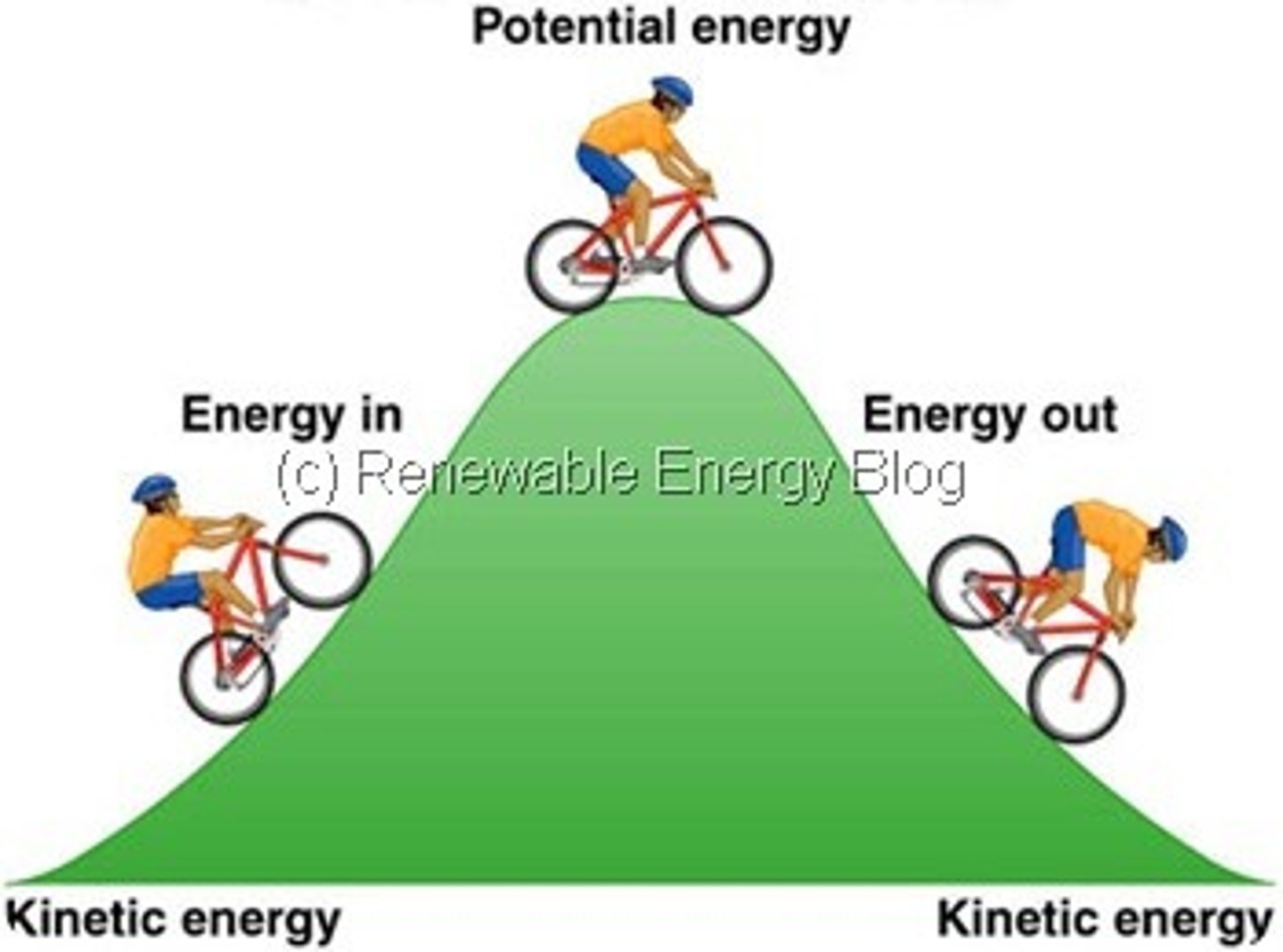
Capacity to do work
1. Kinetic: energy associated with motion
-EX: ball rolling down hill, movement of electrons in a conductor (electrical energy)
2. Potential: results from an object's position
-EX: Gravitational like a waterfall, ball being held at certain height; Energy stored in extended spring; Energy stored in molecules (chemical energy food); Nuclear fission
-SI unit: joule (J)
kJ= kilojoule= 1000 J
Conservation of Energy
-In a physical or chemical change, energy is conserved
-Total energy content is the same after an event as it was before
The Seven SI Base Units
Mass=kg
Length=M
Time=second
Temperature: Kelvin
Amount of substance: Mole
Electric Current: Ampere
The distance between an O and H atom in a water molecule is 95.8 pm. What is this distance in nanometers (nm)?
1 pm = 1 X 10^-12 m and 1 nm = 1 X 10^-9 m
95.8 pm X 1 X 10^-12/ 1 pm = 9.58 X10^-11 m
9.58 X 10^-11 m X 1 nm/1 X 10^-9 m = 9.58 X 10^-2
Giga-
10^9
Mega-
10^6
Kilo-
10^3
Deci-
10^-1
Centi-
10^-2
Mili-
10^-3
Micro-
u+q lookin thing
10^-6
Nano-
10^-9