ECE 192 - Time Value of Money
 Call Kai
 Learn
Learn Practice Test
 Spaced Repetition
 Match
Match Flashcards
 Knowt Play
1/16

There's no tags or description
Looks like no tags are added yet.
Name | Mastery | Learn | Test | Matching | Spaced | Call with Kai | Chat |
|---|
No analytics yet
Send a link to your students to track their progress
17 Terms
Interest =
difference between amount of money repaid later and money lent today
Principle Amount =
P, amount of money today
Future Amount =
F, money repaid later
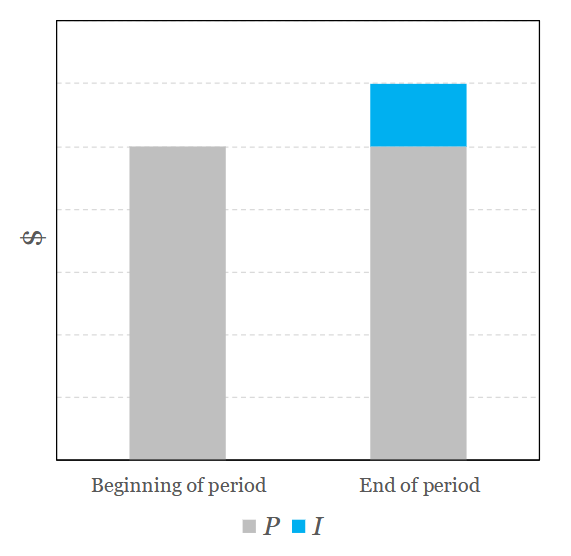
interest rate =
percent per time period
default = annual
interest period =
the time period interest is calculated
annual, weekly, daily, etc
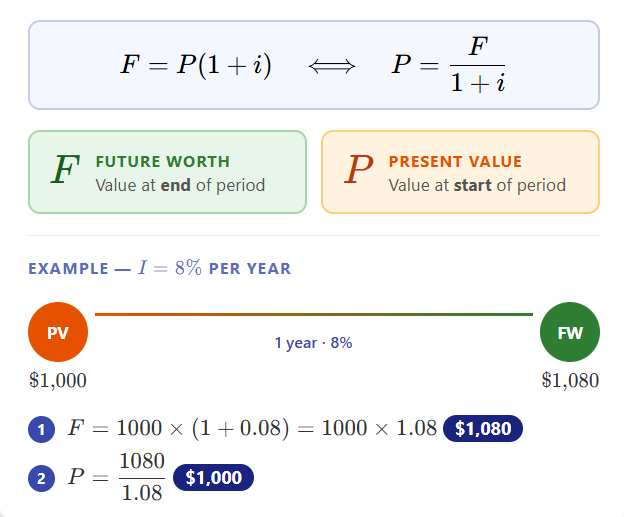
future worth and present value =
if P → F at the end of the period
P = present value of F
F = future value of P
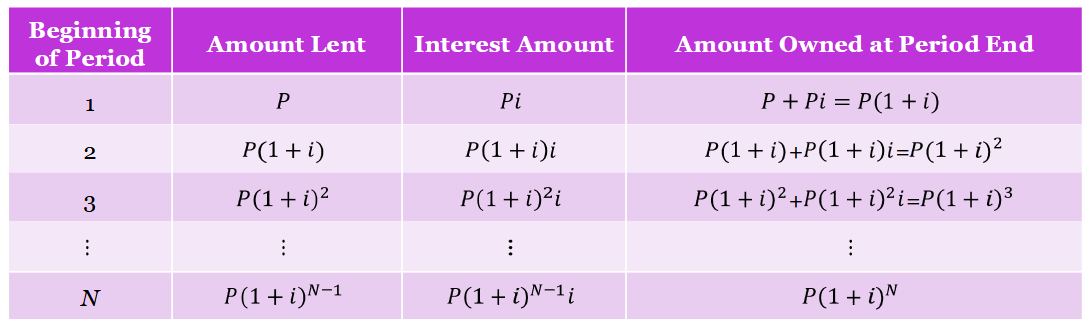
Compound Interest Method =
money earned at the end of a period IS reinvested
formula:
F = P(1 + i)N
N = # of periods
i = interest rate
Ic = F - P
Simple Interest Method =
money earned at the end of a period IS NOT reinvested
formula:
F = P(1 + iN)
N = # of periods
i = interest rate
Is = PiN
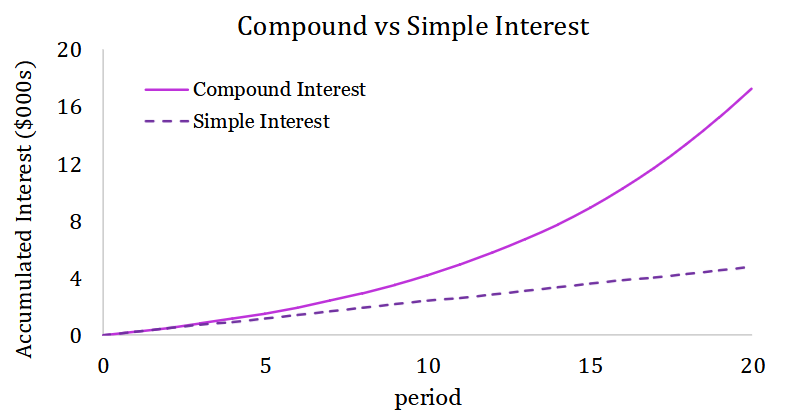
simple vs compound interest method =
compound:
increases exponentially
simple:
increases linearly
nominal interest rate =
annual interest rate from sub-period interest rate * # of periods
formula:
ir = is * m
ir = nominal interest rate
is = interest rate per sub-period m
m = # of sub periods in one year
future amount formula w/ nominal interest rate =
F = P(1 + is)mN = P(1 + ir/m)mN
ir = nominal interest rate
is = interest rate per sub-period m
m = # of sub periods
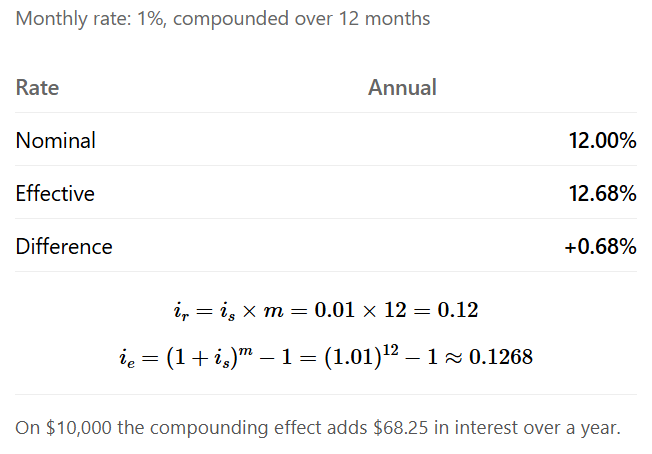
effective interest rate =
the actual interest rate if converted to a one year compounding period
formula
ie = (1 + ir/m)m - 1 = (1 + is)m - 1
ir = nominal interest rate
is = interest rate per sub-period m
m = # of sub periods
nominal vs effective interest rate =
if m > 1:
effective > nominal
if m = 1:
effective = nominal
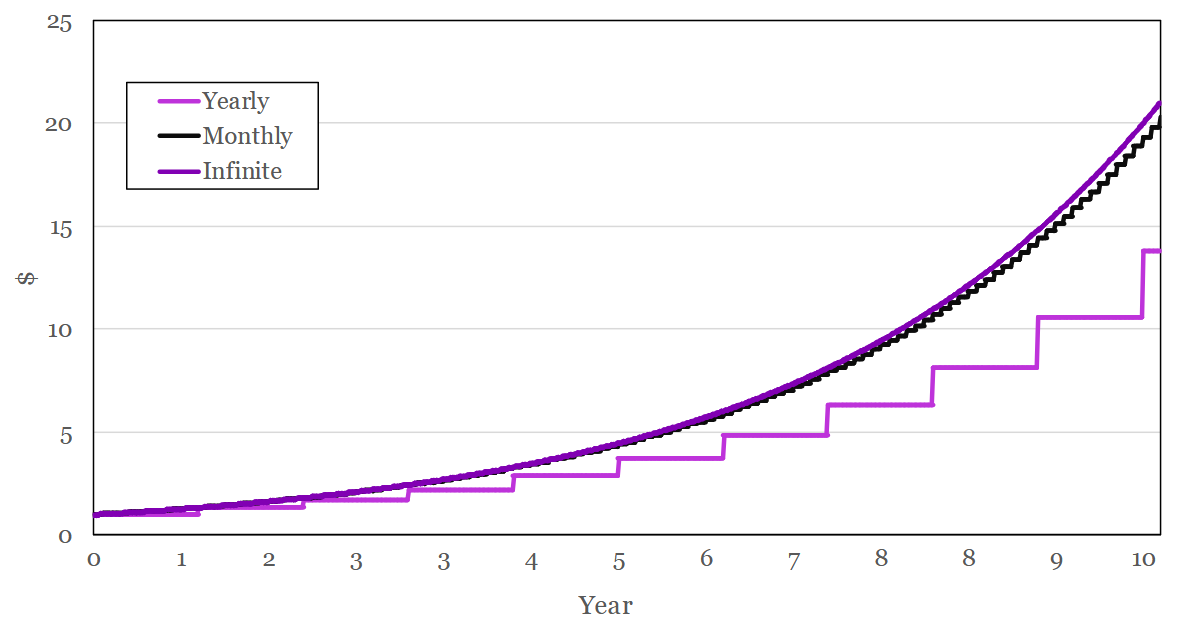
continuous compounding effective interest rate =
ie = eir - 1
if sub-periods are infinitesimally small
what interest period grows fastest =
continuous > daily > monthly > …
cash flow diagrams =
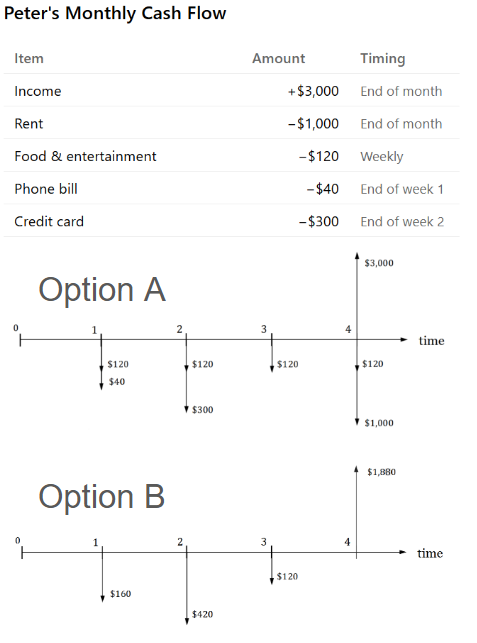
graph to show cash flows magnitude and when it occurs
axis:
horizontal = time
vertical = size/direction
up = positive
down = negative
numbers = magnitude of cash flow
cash flows can be added or subtracted if they occur at the same period
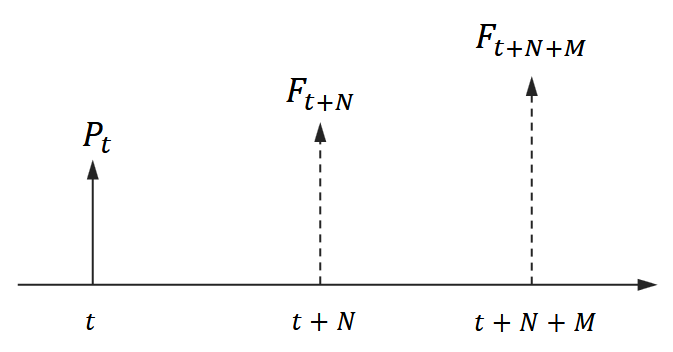
equivalence =
two cash flows, Ft+N and Pt, are equivalent w/ respect to i if
Ft+N = Pt(1 + i)N
Ft+N+M = Pt(1+i)N+M = Ft+N(1+i)M