L16 - Introduction to Nitrogen Metabolism
 Call Kai
 Learn
Learn Practice Test
 Spaced Repetition
 Match
Match Flashcards
 Knowt Play
1/10

There's no tags or description
Looks like no tags are added yet.
Name | Mastery | Learn | Test | Matching | Spaced | Call with Kai | Chat |
|---|
No analytics yet
Send a link to your students to track their progress
11 Terms
Sources of Amino Acids
3 Types:
Intracellular proteolysis: Clears misfolded/old, and damaged proteins; Supplies essential AAs when dietary intake is insufficient; Controls cell-cycle transitions and cell disjunction
Digestion: Supplies both nutritionally essential and nutritionally nonessential AAs
de novo synthesis (Anabolic processes): Provides nutritionally nonessential AAs needed for protein synthesis; Adjusts AA pools in different tissues; Adjusts energy metabolism by controlling concentrations of central pathway metabolites, allowing cells to adapt to metabolic stress; Needed to make nucs, hemes, hormones, and neurotransmitters.

Essential AAs (Acronym); Conditional Essential AAs?
VH MILK WTF; Cannot be synthesized by mammals and must be acquired via dietary intake
R is a conditional essential AA; can be synthesized but is required in higher amounts during unimpaired growth (Childhood/pregnancy)
Y is another conditionally essential AA because it is synthesized from F
C is another conditionally essential AA because it is synthesized from M

Protein turnover; Mention the three associated mechanisms
Several processes that help maintain protein homeostasis or proteostasis
Ensures functional proteins are maintained at the correct concentration and location
Also clears cells of misfolded/aged/damaged proteins
Three proteolytic machineries:
Lysosome: Vessicles that engulf other vesicles filled with proteins that needs to be degraded and recycled (autophagy)
Ubiquitin proteasome system: Tags protein for degradation, smaller stuff (Proteins) go to the proteosome while larger stuff (Organelles) go to the lysosome
Autophagic pathway: Bulk delivery system to the lysosome, works for proteins up to organelles

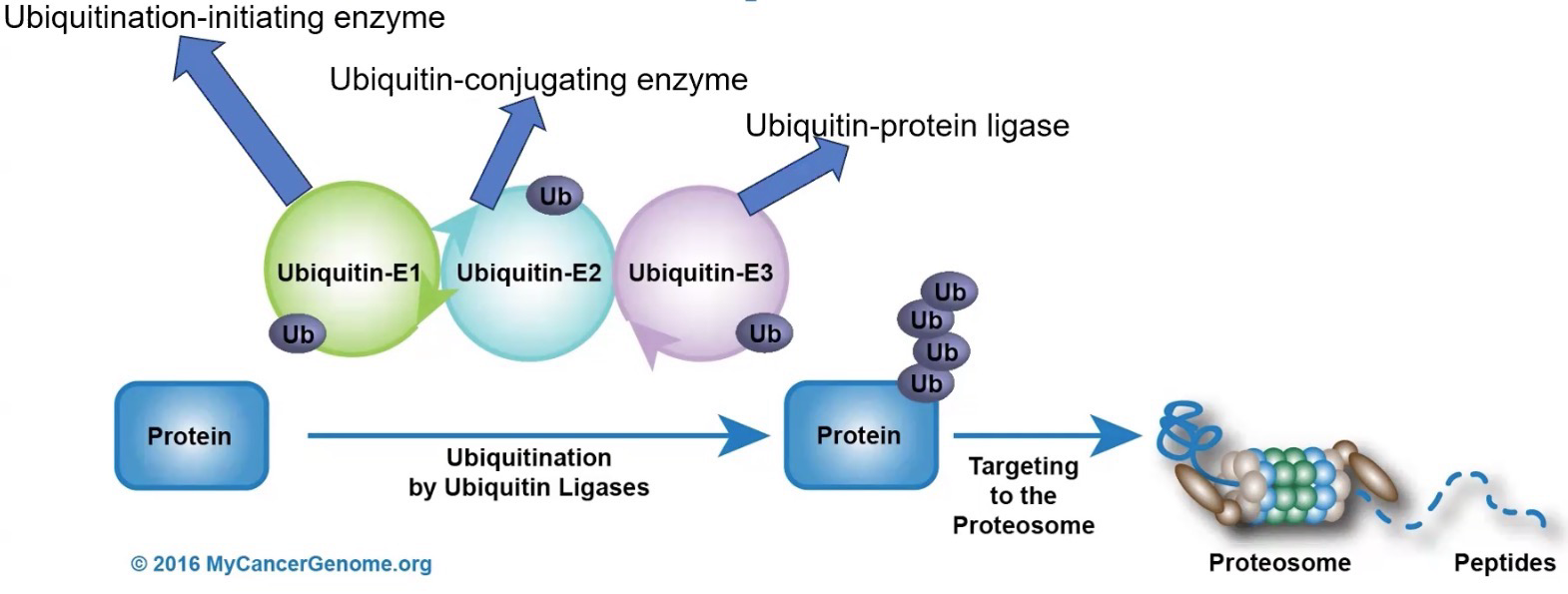
Ubiquitination Pathway/Important Info
Post-translational modification, cellular tag of ubiquitin, three enzymes, E1, E2, and E3; Marks for proteasome but can also be used for signaling, DNA repair, or trafficking.
Attaches ubiquitin proteins to lysine residues
Proteosomes are barrel-shaped to ensure only the inner contents are digested
Enzyme roles:
E1: Ubiquitination-initiating enzyme: Activates the reaction by binding ubiquitin via ATP
E2: Ubiquitin-conjugating enzyme: Takes the activated ubiquitin and delivers it to E3
E3: Ubiquitin-protein ligase: Recognizes specific targets, and puts the activated ubiquitin tag on lysine residue
Monoubiquitination: Typically for protein function or localization
Polyubiquitination: For degradation
Digestion Overall Pathway/Process
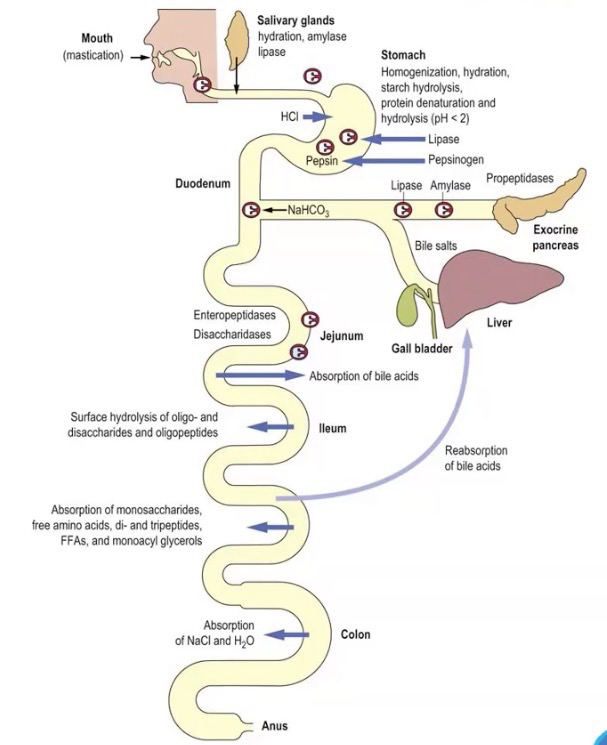
Digestion: Breaking down food mechanically/enzymatically
Biopolymers must be hydrolyzed into monomeric units; Catalyzed by soluble enzymes
Protein digestion occurs in lumen of stomach and small intestine
Digestive enzymes are secreted by salivary glands, stomach and pancreas
Pancreatic enzymes and bile acids are poured into lumen of 2nd part of duodenum and the bulk of intraluminal digestion occurs distally
Digestion enzymes basics
When food enters, stomach mucosa releases gastrin, which tells stomach to release HCL and pepsinogen (zymogen) which in acidic env turns into pepsin (enzyme). When Acidic dietary contents enter duodenum, secretin is released, causing bicarb to release and neutralized acidity. At the same time Cholecystokinin makes pancreas produce zymogens for digestion.
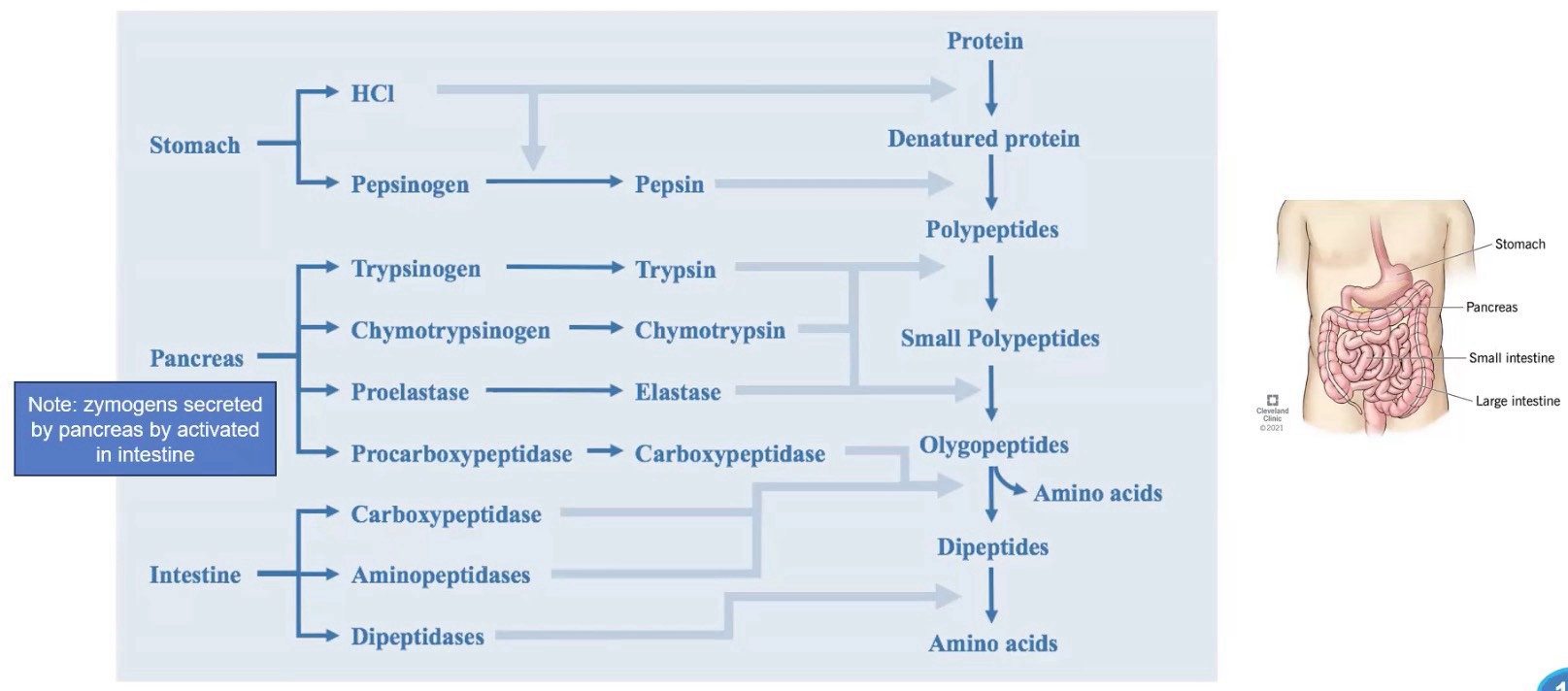
Enzymes from pancreas
Trypsin: Cleaves carboxy of K & R
Chymotrypsin: Cleaves carboxyl of aromatic
Carboxypeptidase: Cleaves one AA at a time from C-term of a protein.
Pepsin Activation
Catalyzed by low pH, pepsinogen goes through autocatalytic activation and releases its masking sequence, turning into pepsin

Trypsin and Chymotrypsin Activation
Made and stored in pancreas; secreted into small intestines
Trypsinogen contains a trypsin inhibitor, which is removed by enteropeptidase
Chymotrypsinogen is cleaved by trypsin to active π-Chymotrypsin
π-Chymotrypsin cleaves itself into a better version of itself called α-Chymotrypsin

What absorbs the final products of digestion
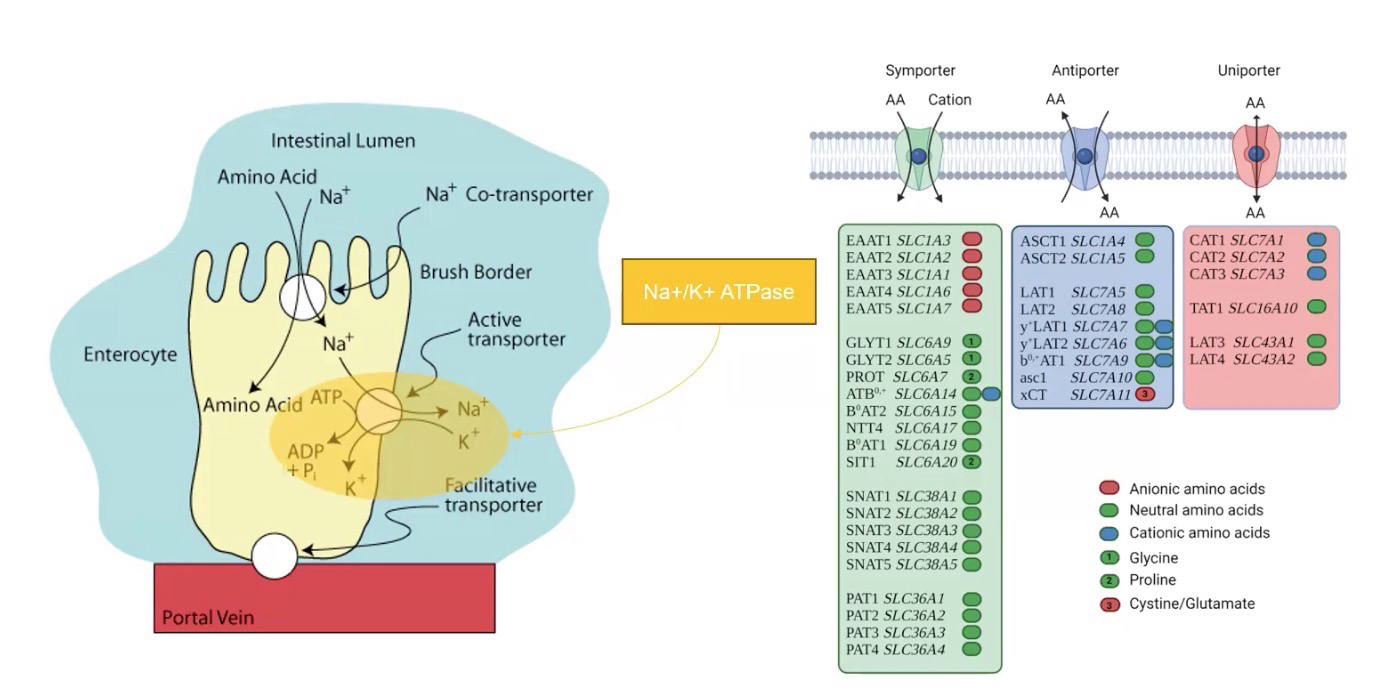
Final products are absorbed by epithelial cells lining the small intestines called the Villus (Villi), which contains intestinal mucosa that absorbed the AA.
What transporter types are associated with AA absorbtion
Many types of symporters, antiporters, and uniporters take in AA
This is typically facilitated via a gradient that is produced, for example, by NA+/K+ and ATPase
Active transport takes in AA from the intestines
Gradient-based diffusion (Facilitative transporters) takes AA from epithelial cells and transfers it to bloodstream
Amino Acid Oxidation basics
AAs undergo oxidation degradation when:
AAs released during protein turnover are not needed for anabolism
Ingested AA exceeds body’s need for protein synthesis
Cellular proteins are used as fuel because carbs are unavailable/not properly utilized
AAs like A and N rise when intracellular proteolysis increases to meet metabolic demands, independent of dietary digestion.
Unless reused, amino groups are channeled into a single excretory end product (NH4+)
