Microbial Metabolism
 Call Kai
 Learn
Learn Practice Test
 Spaced Repetition
 Match
Match Flashcards
 Knowt Play
1/68

There's no tags or description
Looks like no tags are added yet.
Name | Mastery | Learn | Test | Matching | Spaced | Call with Kai | Chat |
|---|
No analytics yet
Send a link to your students to track their progress
69 Terms
Catabolism
Breaks down complex molecules and releases energy (exergonic)
Exergonic
Releases more energy than they use (catabolic)
Endergonic
Uses more energy than they release (anabolic)
Anabolism
Uses energy and building blocks (monomers) to build complex molecules (endergonic)
Main difference between catabolism and anabolism
Catabolism provides energy and building blocks for anabolism by breaking down complex molecules
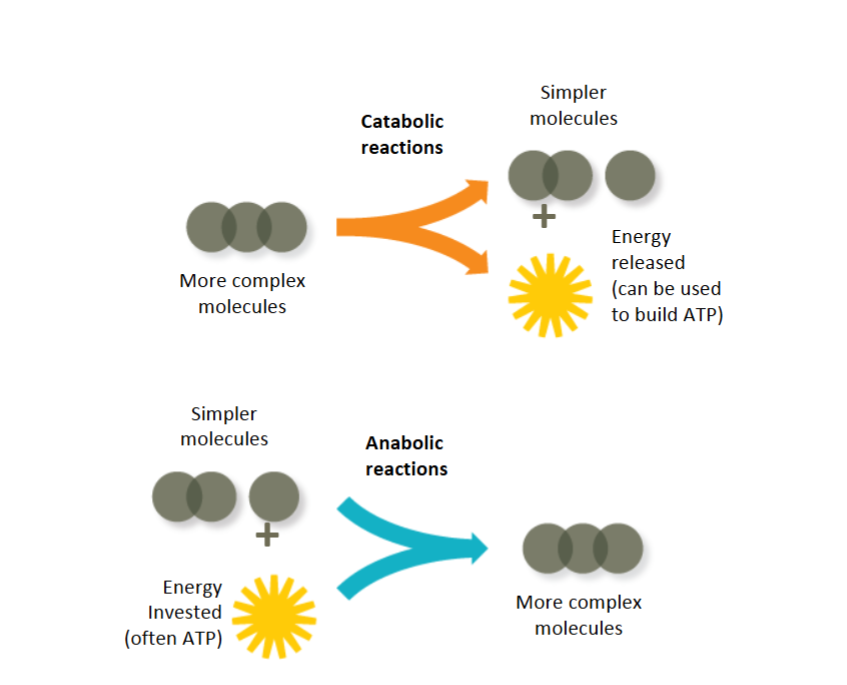
How does ATP couple catabolic and anabolic reactions
ATP is the product of catabolic reactions
It is used as energy for anabolic reactions in the process of making more complex molecules.
ATP is what helps balance both reactions
Fun fact
If a cell loses its ability to make ATP, it will die. ATP is more abundant in lipids than carbohydrates
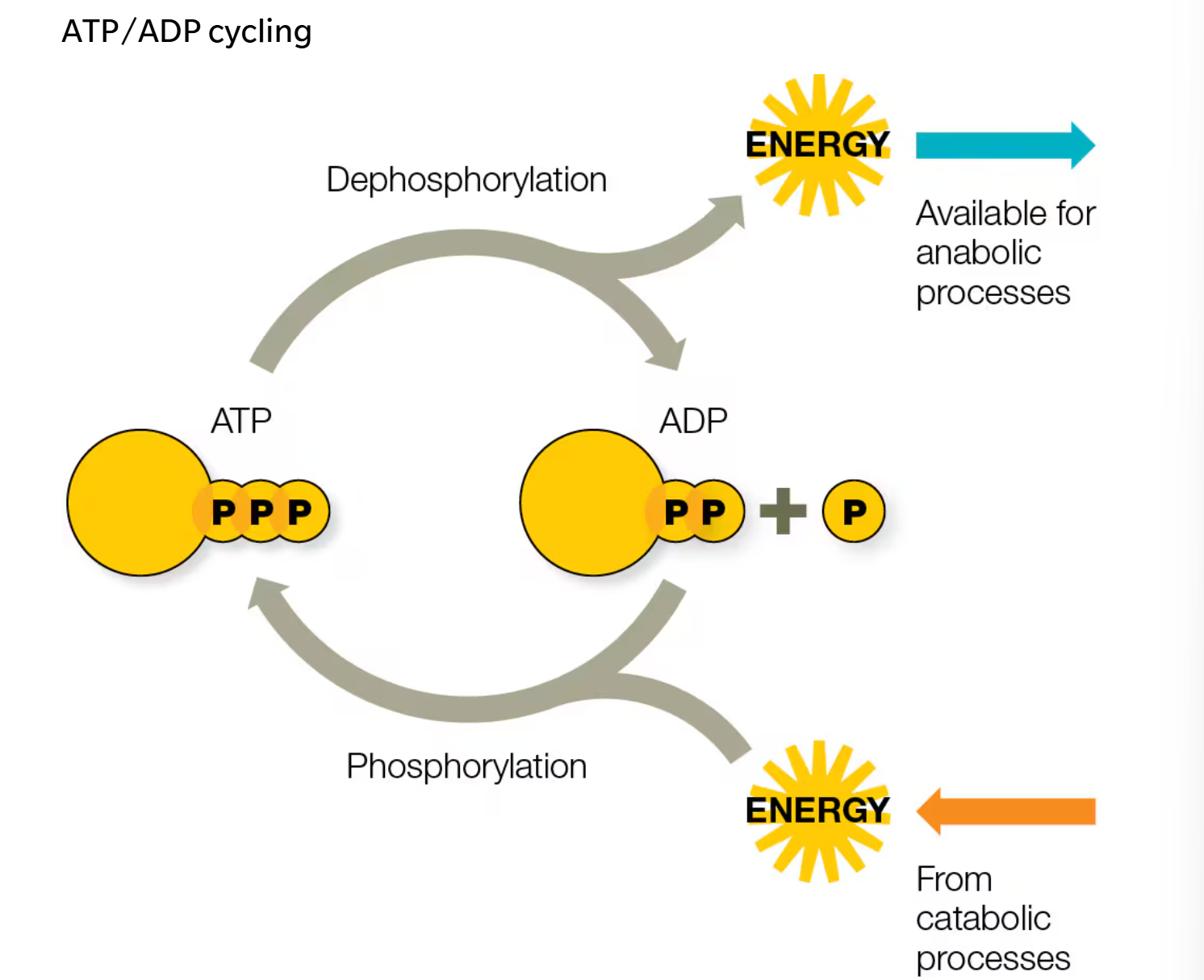
ATP-ADP cycle
ADP uses energy from catabolic reactions to make ATP (phosphorylation)
ATP is broken down into ADP by anabolic reactions (dephosphorylation)
Enzymes
Protein catalysts that help chemical reactions occur under cellular conditions
General characteristics of enzymes
Biological catalysts
Effective in small amounts
Act on specific substrates to generate specific products
Increase the rate of reaction
Provide a route from reactants to products w/lower activation energy
Not consumed/permanently changed
Some require cofactors to activate
Genetically determined
What do enzymes increase
Reaction rate (speed at which reaction occurs)
How are enzymes named
They are named after their substrate and/or the type of reaction it performs
Their name often ends in “ase”
- Oxidoreductase: Assist in oxidation-reduction reactions
- Transferase: Transfer of functional groups
- Hydrolase: Hydrolysis
- Lyase: Removal of atoms w/o hydrolysis
- Isomerase: Rearrangement of atoms
- Ligase: Joining of molecules, uses ATP
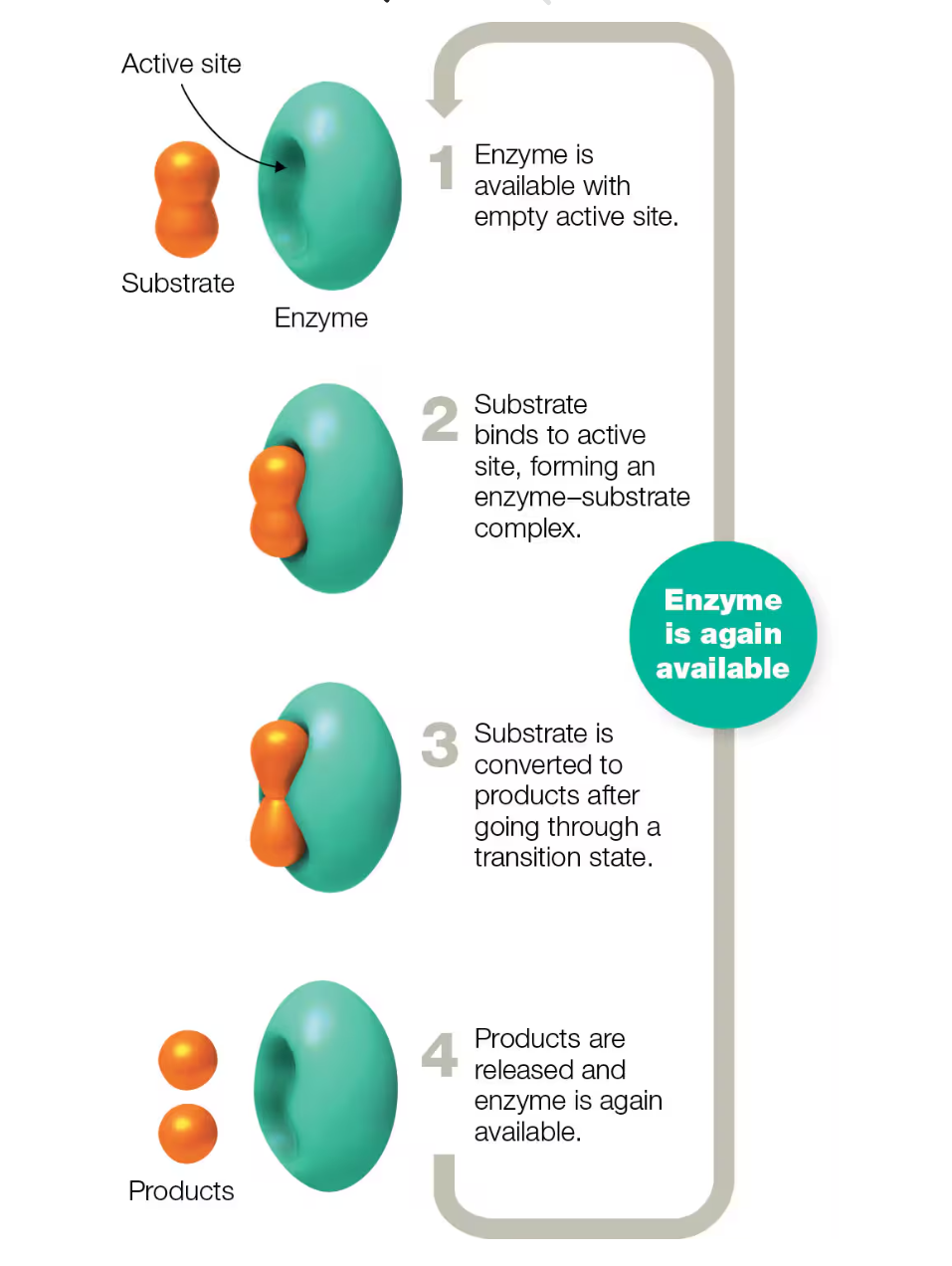
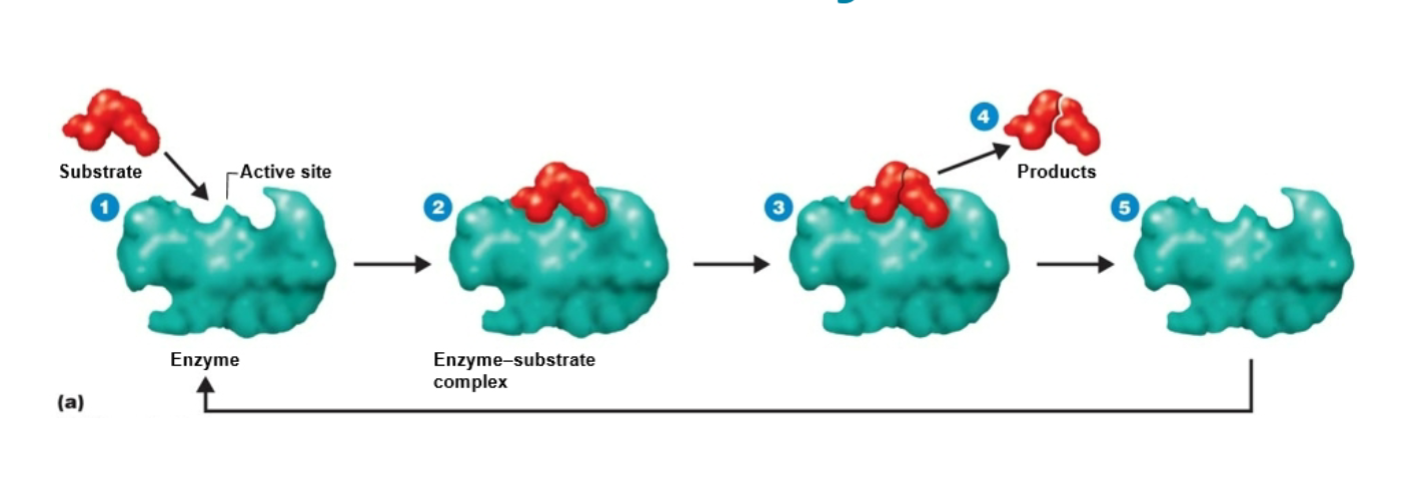
How do enzymes catalyze reactions
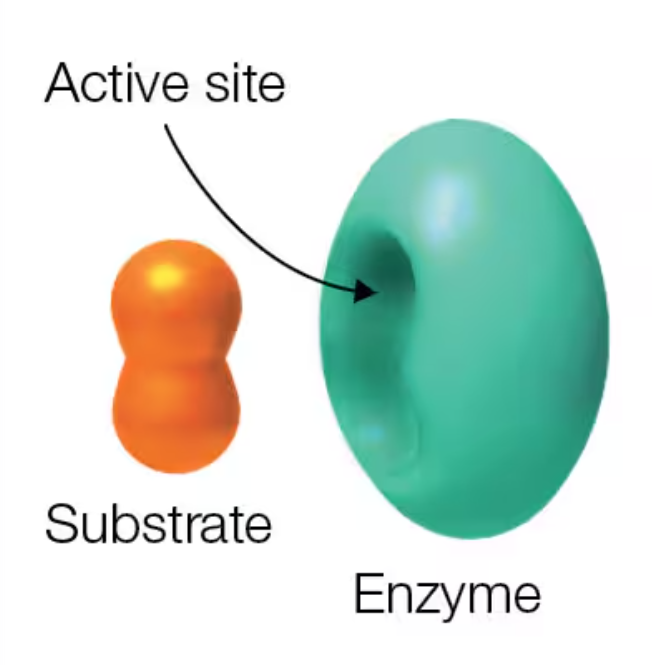
The substrate contacts the enzyme’s active site to form an “enzyme-substrate complex”
The substrate is transformed into products, which are then released from the enzyme
The enzyme is unchanged and interacts w/other substrates
Coenzymes
ORGANIC nonprotein cofactors that range from free molecules that can move about to factors anchored to the enzyme they assist
Cofactors
Non-protein components used by enzymes
Can be inorganic (metal ions like zinc and iron) or organic (coenzymes like vitamins)
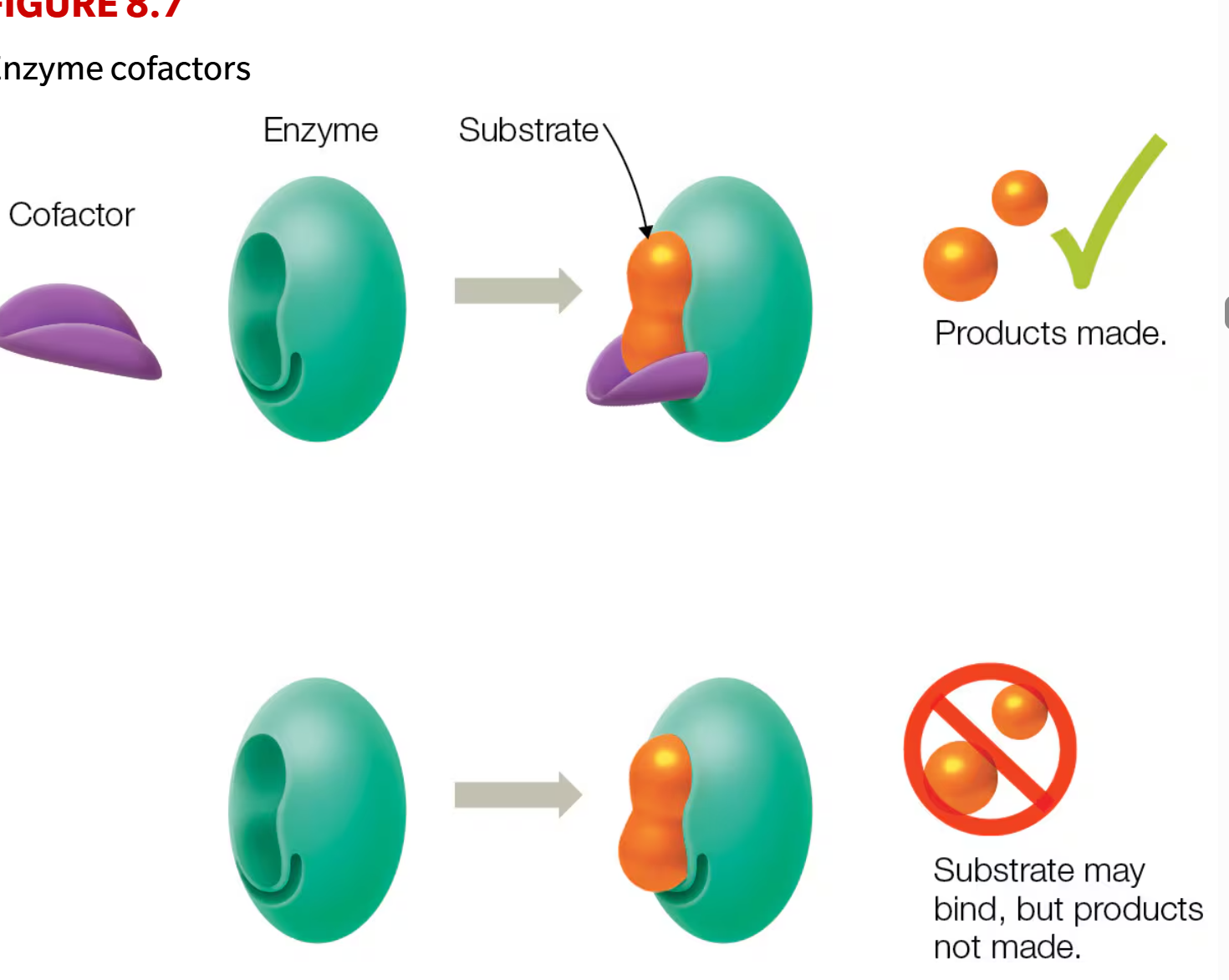
Apoenzyme
Enzyme without its necessary cofactor (inactive form)
Holoenzyme
Enzyme w/its necessary cofactor (active form)
3 important coenzymes
NAD
NADP
FAD
CoA
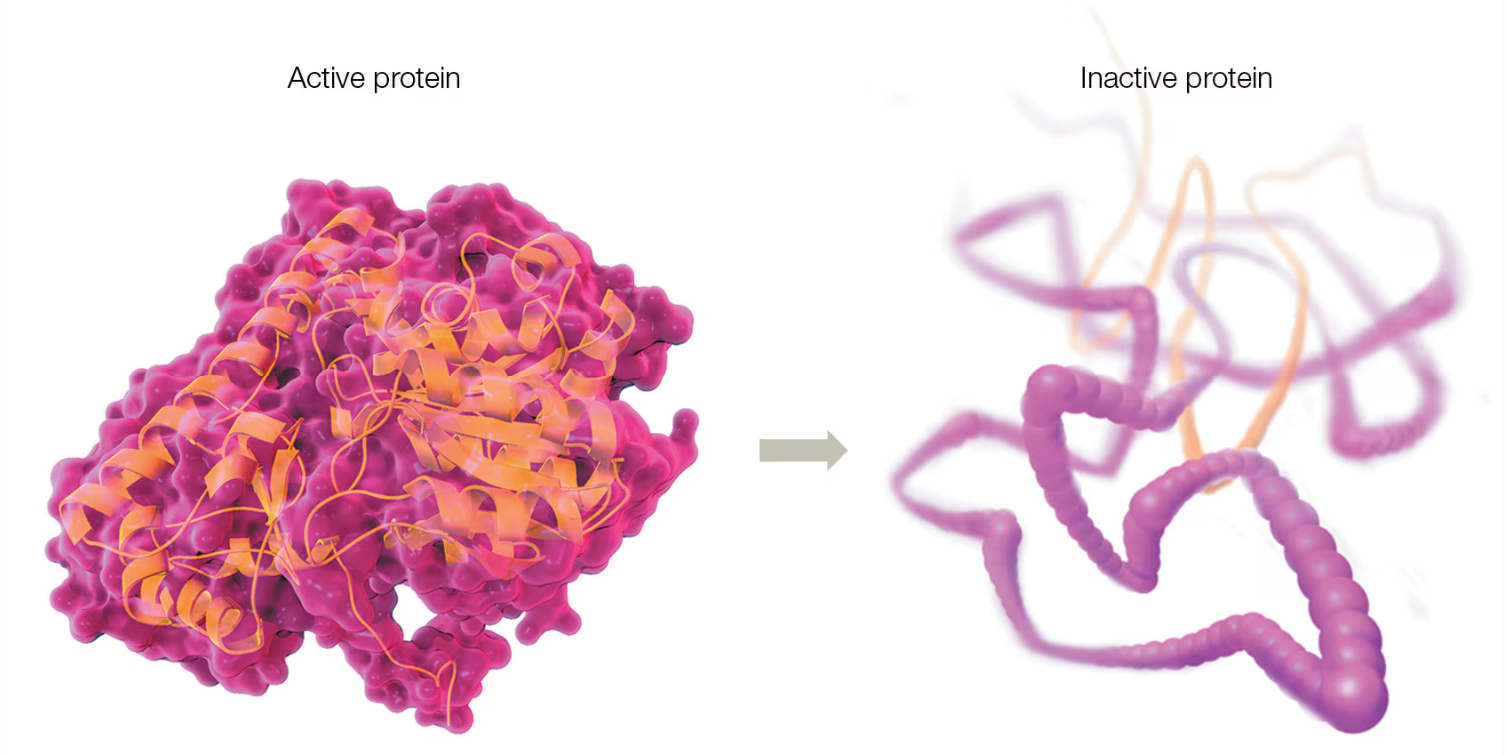
What is denaturation of a protein (an enzyme)
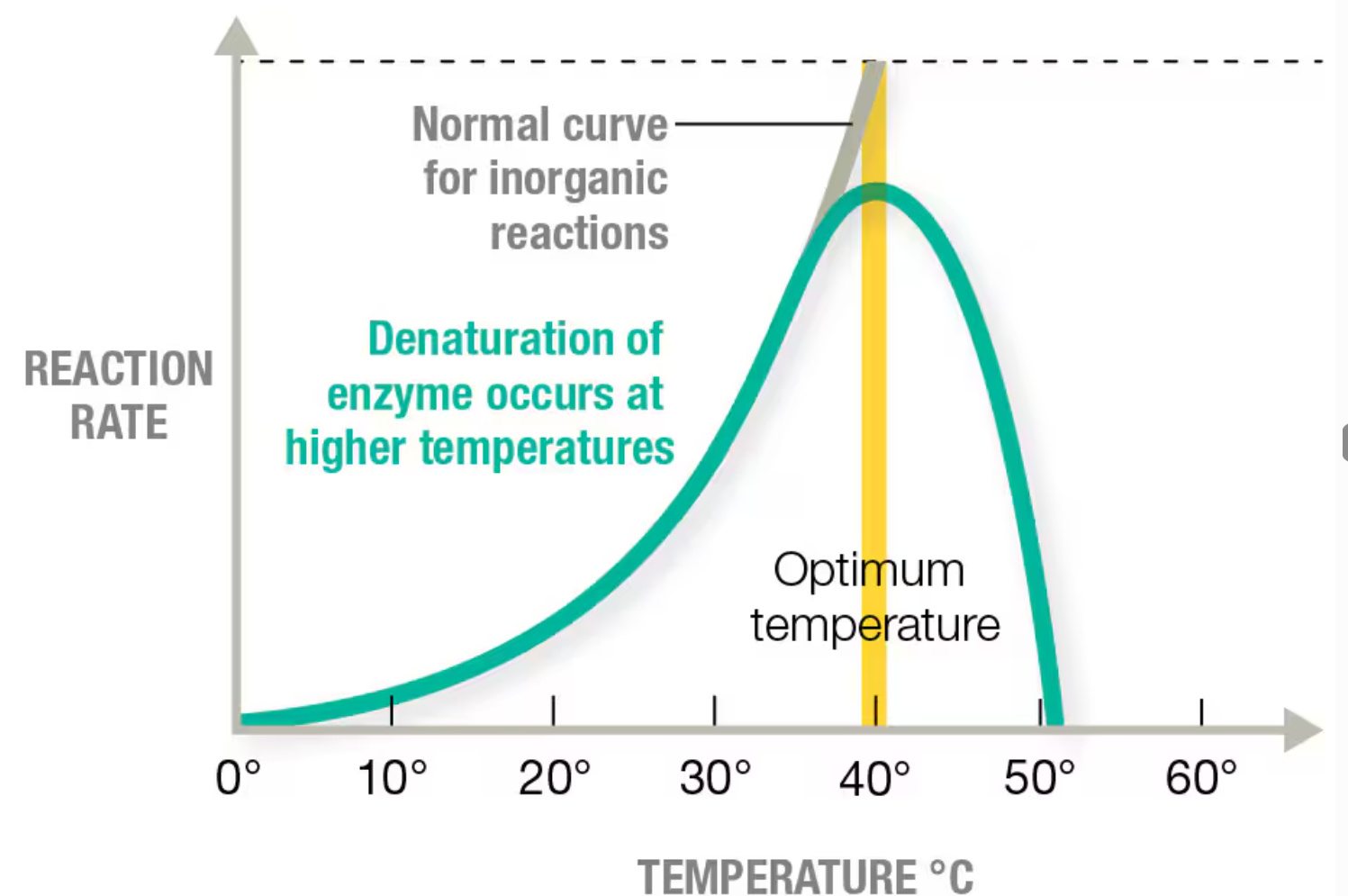
Loss of their 3D structure due to temperatures above the optimal temperature or extreme changes in pH
Can be reversible or irreversible
What is the site where substrate and enzyme interact to generate a chemical reaction
An enzyme’s active site
Temperature
Lower temperatures cause cells to grow more slowly
Higher temperatures cause enzymes to grow faster, but too high a temperature can cause denaturation of the enzyme
pH
pH above or below the optimal can reduce the reaction rate or the speed at which a reaction occurs
pH alters H+ (acid) and OH-(base), affecting hydrogen and ionic bonds supporting the 3D structure of protein
E.g. Amylase (enzyme in human saliva) denatures when it reaches the lower pH levels (acidic) in the stomach
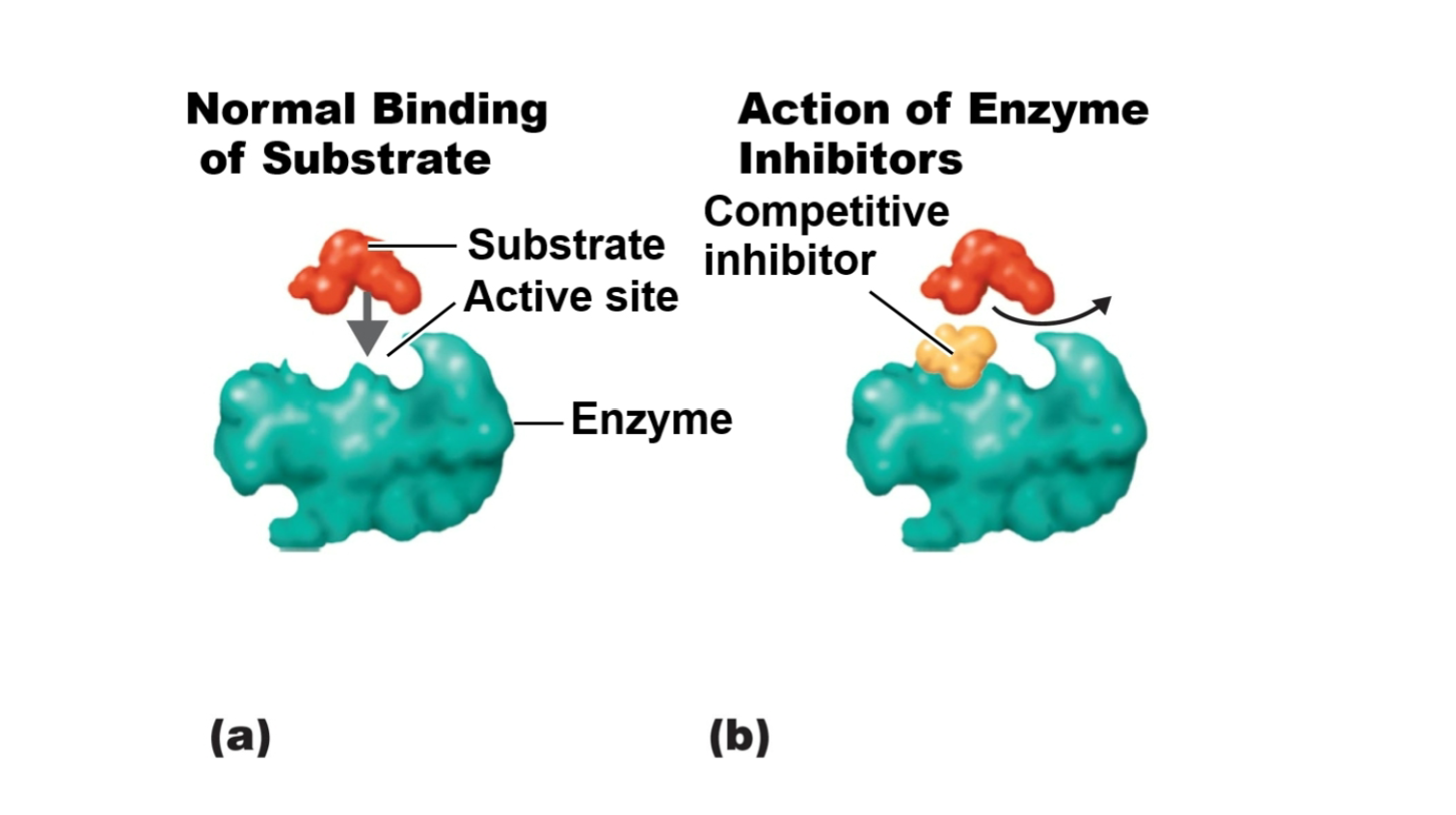
Competitive inhibitor
Slows reaction due to inhibitor competing against substrates for the target enzyme’s active site
Noncompetitive inhibitor
Slows reaction due to a noncompetitive inhibitor binding to the allosteric site of the target enzyme in a process called allosteric inhibition
How do competitive and noncompetitive inhibitors affect the works of an enzyme
Noncompetitive: Decreases enzyme activity when binding to the enzyme at a site other than the active site
Competitive: Decreases enzyme activity when binding to the active site of the enzyme
Competitive inhibitor example
Sulfa drugs compete against PABA, the enzyme’s normal substrate, for the active site
If they bind to the active site, folic acid production decreases, and the bacteria soon stop growing and die
Safe for humans bc we obtain folic acid from our diet, and unlike bacterial cells, our cells do not make it
Noncompetitive inhibitor example
Enzyme poisons (e.g. mercury) and Cyanide
Cyanide inhibits enzymes in the electron transport chain, the pathway that makes ATP
Lead and mercury are generalized and do not bind to a specific allosteric site, causing heavy metal poisoning
Noncompetitive reversible ones are important in allosteric inhibition
Ribozyme
Made w/nucleic acid RNA
Not made w/protein
Limited range of substrates
Only act on other RNA molecules
Redox reactions
Term used for oxidation and reduction reactions as they always occur as partners
Oxidation
A molecule loses an electron.
Oxidizing agents carry out oxidation reactions
E.g. Oxygen
Reduction
A molecule gains an electron
Reducing agents carry out reduction reactions
E.g. Hydrogen
How do cells recharge ADP to ATP
Cells use oxidation and reduction reactions to extract energy from nutrients to recharge ADP to ATP
What is “oil” and “rig”
OIL → Oxidation Is Loss of electrons
RIG → Reduction is Gain of electrons
What role do coenzymes (NAD and FAD) play in oxidation/reduction
These coenzymes act as electron sponges
FADH₂ = reduced form of FAD
NADH = reduced form of NAD+
Hydrogen is a reducing agent, so when they bind to these coenzymes, they actually gain an electron in the form of a hydrogen
Phosphorylation
Process of adding a phosphoryl group or phosphate group to a molecule.
Can be used for the ATP-ADP cycle:
Direct (substrate-level)
Electron transport chain (oxidative phosphorylation, photophosphorylation)
Enzyme regulation
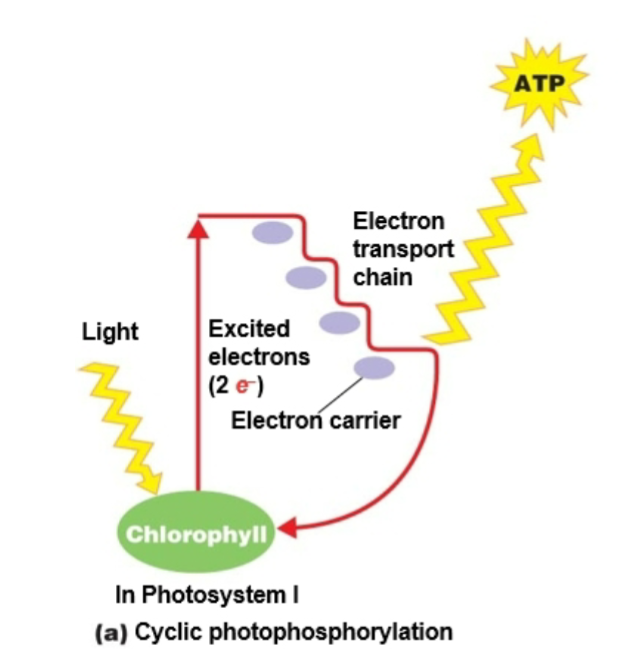
Photophosphorylation
Only in light-trapping photosynthetic cells
Light energy is used to activate electrons and is converted to ATP when electrons (oxidation) are transferred from chlorophyll through a system of carrier cells
3 ways to generate ATP from ADP
Substrate-level phosphorylation
Oxidative phosphorylation
Photophosphorylation
Substrate-level phosphorylation
An enzyme transfers a high-energy phosphoryl group (PO4-) from a donor substrate directly to ADP to make ATP

Oxidative phosphorylation
When a collection of redox reactions strip electrons from food and hand them off to the electron transport chain on a membrane to release energy and generate ATP
Glycolysis
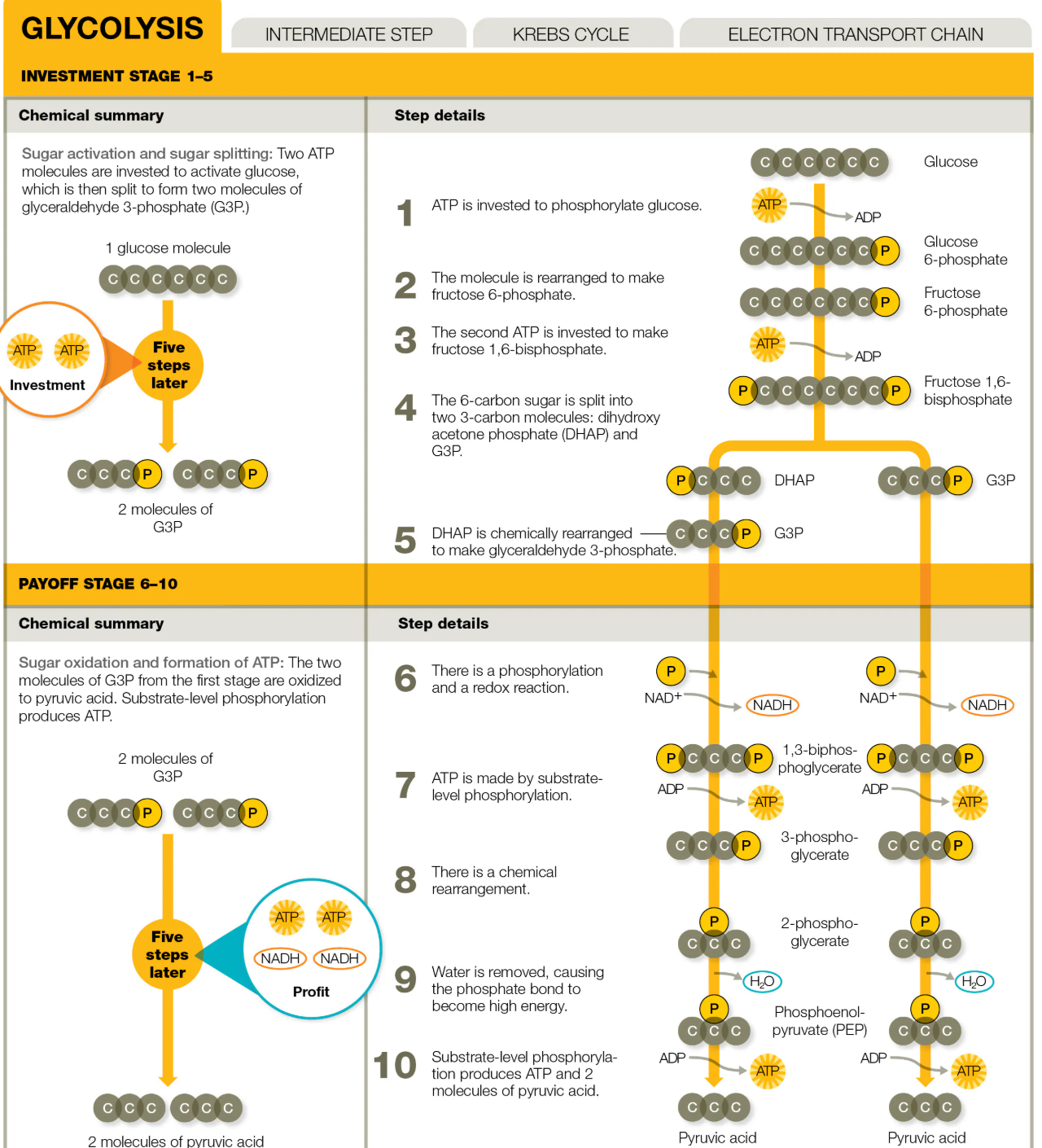
Oxidation of glucose to pyruvic acid produces ATP and NADH
2 ATPs are used to split glucose into 2 glyceraldehyde 3-phosphate (G3P)
The two G3P are oxidized by NAD and converted to 2 pyruvic acids
4 ATPs and 2 NADHs are produced
End product of glycolysis
2 pyruvic acids, 4 ATPs, 2 NADHs, and 2H gained
The overall net gain was of 2 ATP for each molecule of glucose oxidized
How many ATP are invested in the glycolysis process
2 in the beginning
Is glycolysis an oxidation or a reduction process?
It is an oxidation process as it takes out electrons throughout its process.
NAD coenzymes come in and take the electrons out of G3P and convert it to pyruvic acid, while NAD converts to its reduced version, NADH
Decarboxylation of pyruvic acid
It is the process used in cellular respiration to make acetyl-CoA by removing Carbon Dioxide (CO2) from a molecule
Pyruvic acid is taken from glycolysis
CO2 is removed from pyruvic acid
2-carbon acetyl groups are formed
Acetyl groups bond to coenzyme A
Acetyl-CoA is formed and delivered to Krebs cycle
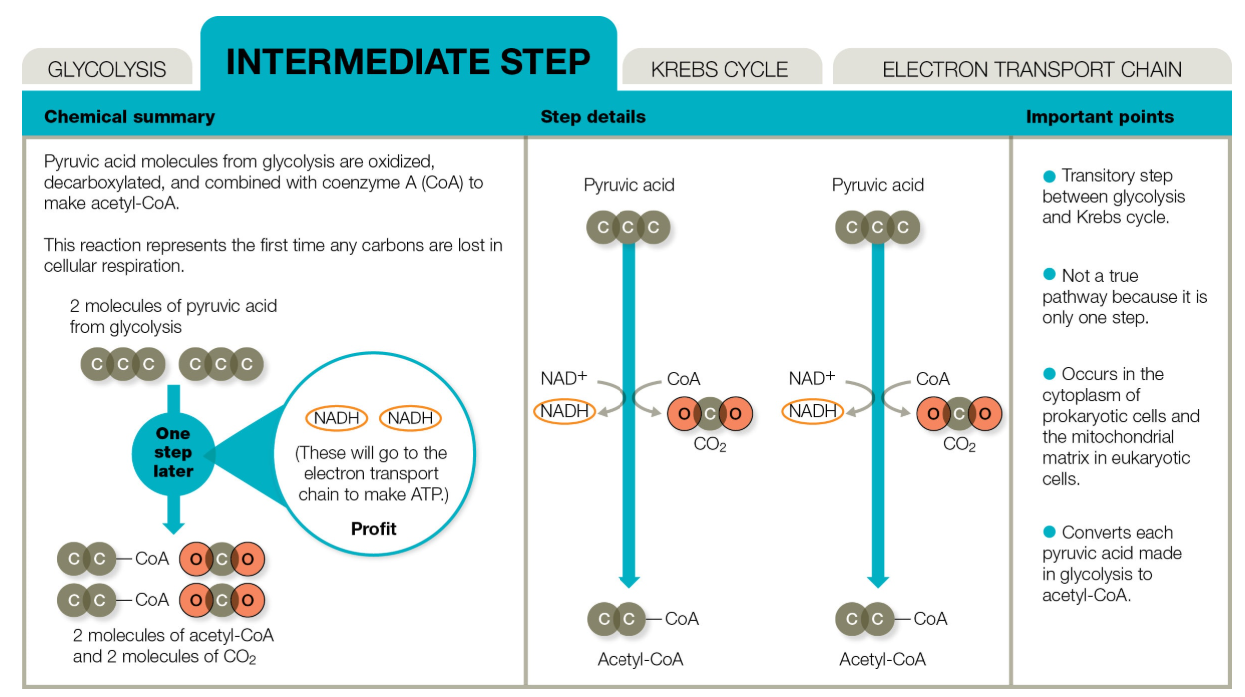
Starting materials for Krebs cycle
Acetyl-CoA and Oxaloacetic acid (form Citric Acid) and NADH
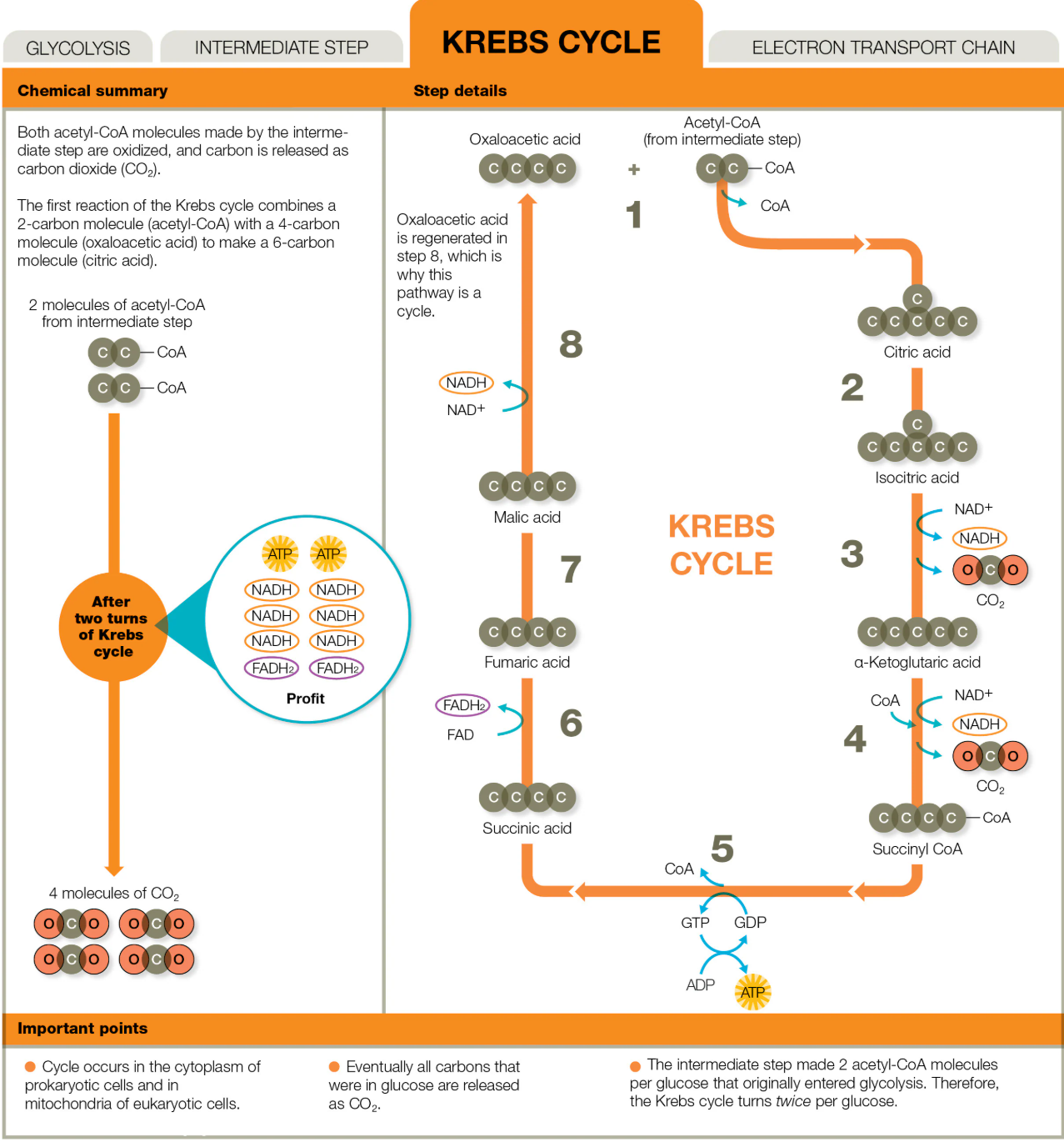
First intermediate product of Krebs cycle
After Acetyl-CoA and Oxaloacetic acid form citric acid, they are oxidized and produce
NADH (4)
FADH2 (2)
ATP (2)
CO2 (4)
What products are formed for each acetyl-CoA that enters the Krebs cycle
CO2, NADH, FADH2, ATP
Where does Krebs Cycle occur
Prokaryotes: Cytoplasm
Eukaryotes: Matrix of mitochondria
Importance of Kreb’s Cycle
Its mass production of reduced cofactors NADH and FADH2, which are then delivered to the electron transport chain
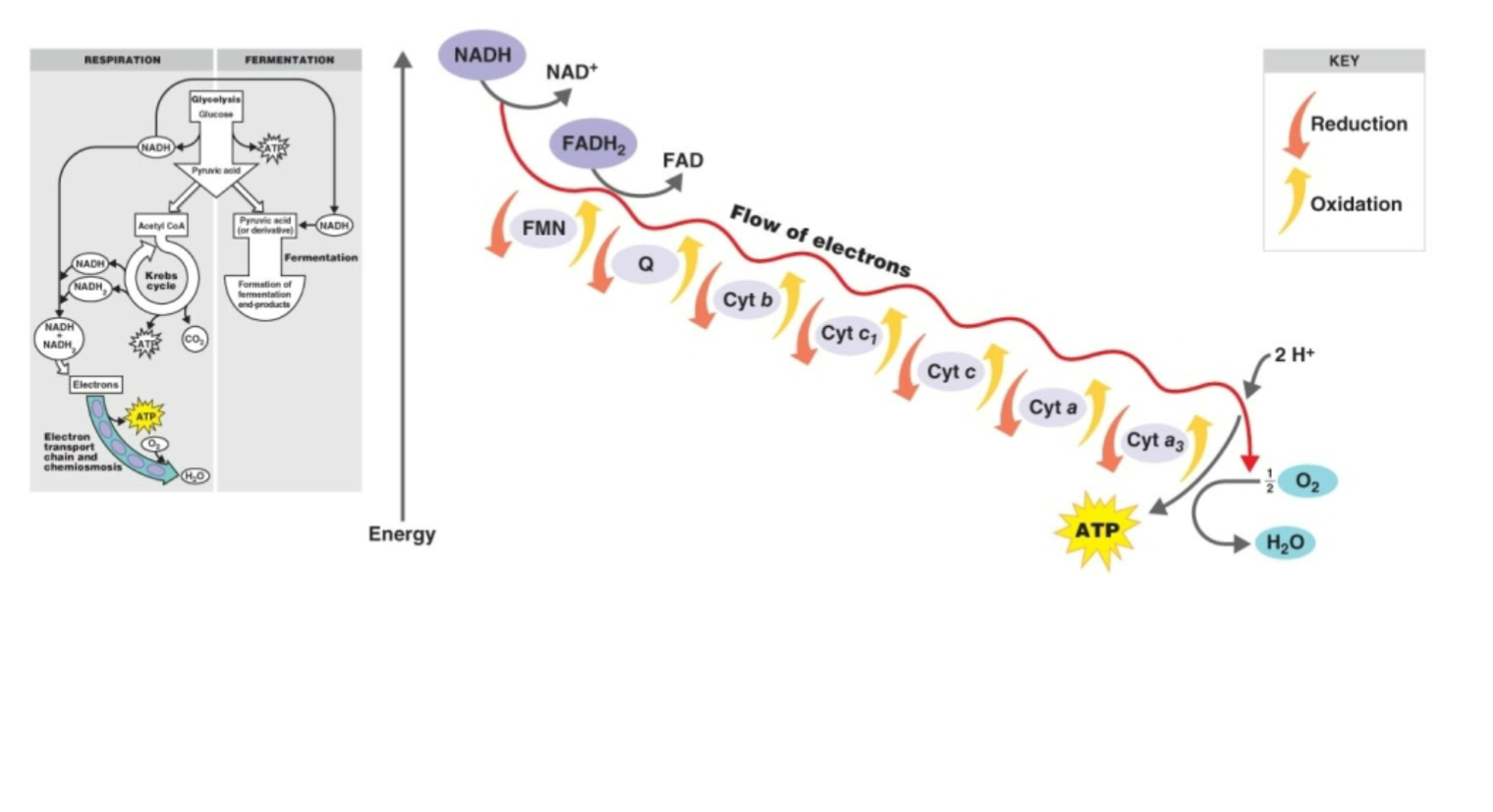
Electron transport chain
A series of carrier molecules that have collected electrons are oxidized and reduced as electrons are passed down the chain.
Energy released is used to produce ATP by chemiosmosis
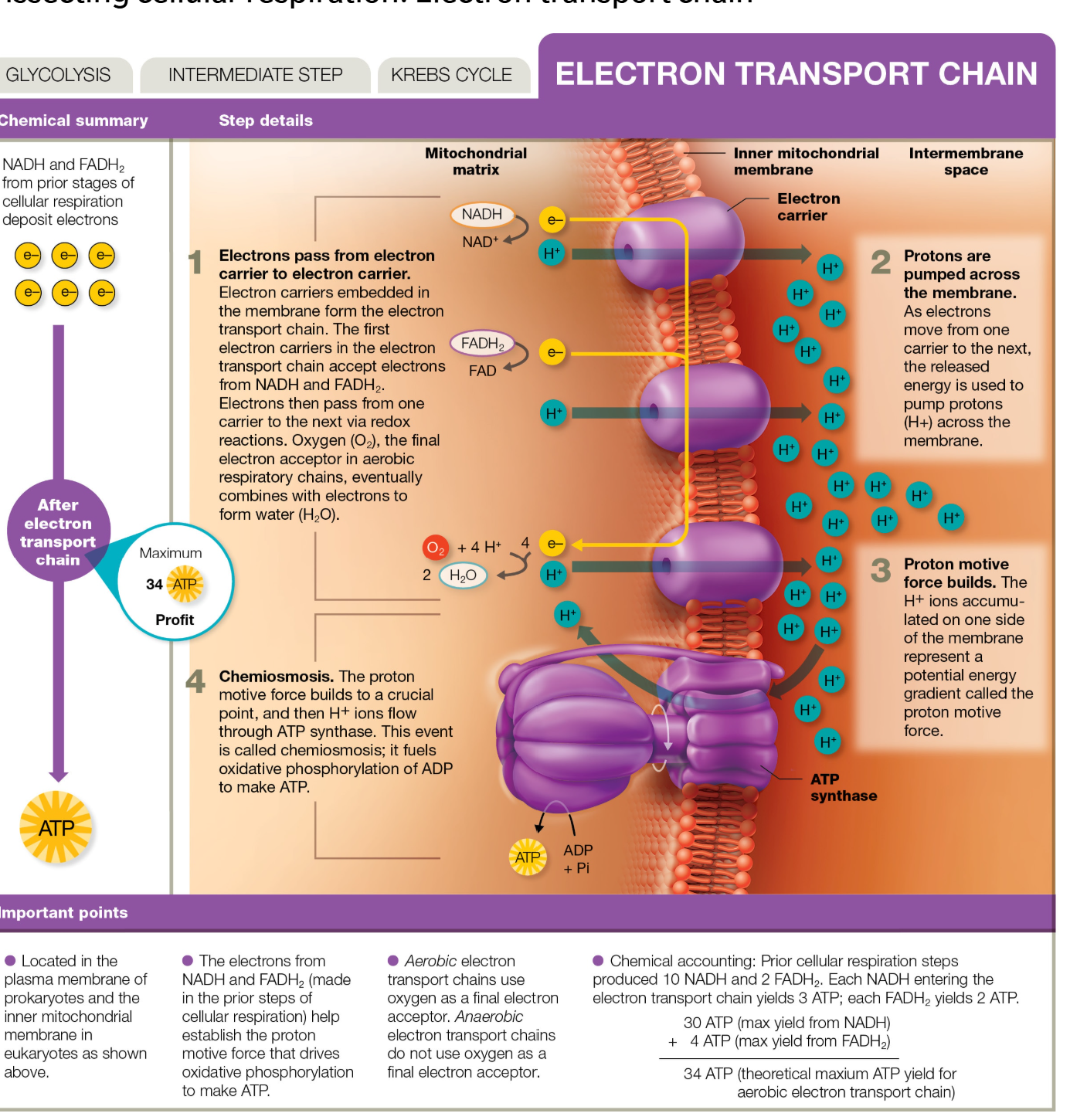
What 2 mechanisms does electron transport chain drive
Oxidative phosphorylation and photophosphorylation
Chemiosmosis (oxidative phosphorylation)
Electrons from NADH pass through the transport chain while protons are pumped out (a proton gradient is established)
Protons diffuse through ATP synthase
What does ATP synthase do
Releases energy to synthesize ATP (recharge ADP)
Where does chemiosmosis take place
Bacteria: Plasma membrane
Eukaryotic cell: Inner mitochondrial membrane
Last electron acceptor for aerobic cellular respiration
Oxygen is the last electron acceptor
Each NADH can be oxidized (made positive) in the ETC to produce 3 molecules of ATP
DDEach FADH produces 2 molecules of ATP
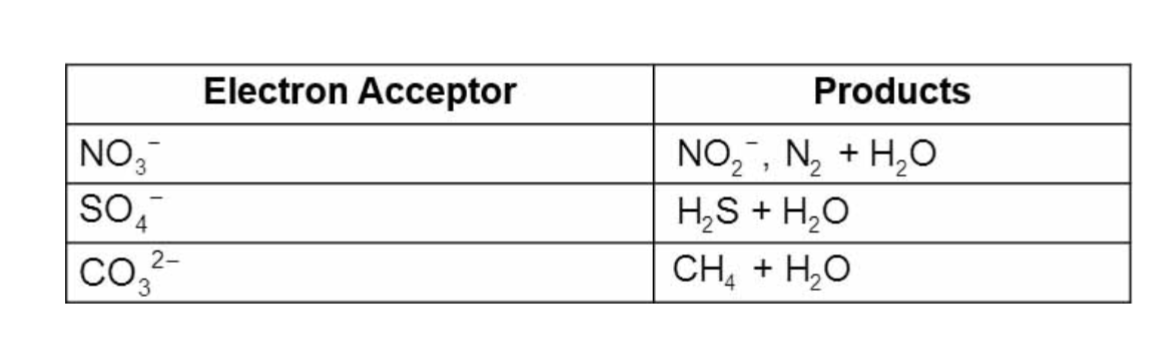
Last electron acceptor for anaerobic respiratory chains
Inorganic substance other than oxygen is the final electron acceptor
Yields less energy than aerobic respiration
How many ATP molecules are formed from
1 NADH? 3 molecules of ATP
what about 1 FADH2? 2 molecules of ATP
Final electron acceptors for anaerobic respiration
NO3, SO4, CO3
How many ATP are formed from the complete oxidation of glucose in bacteria
34 from the ETC, 2 from krebs, and 2 from glycolysis= 38 ATPs per 1 glucose in bacteria
Fermentation
Releases energy from oxidation of organic molecules
How is fermentation different from cellular respiration?
Does not need oxygen
No use of Krebs cycle or ETC
Uses organic molecules as final electron acceptors
Produces small amount of ATP
How is lactic acid fermentation different from alcohol fermentation?
4 fermentation products and the organisms that produced these products
What is beta oxidation?
With beta oxidation, lipids generate more energy than carbohydrates
Why is this the case? Explain?
Chemoheterotrophs
Chemoautotrophs
Photoautotrophs
Bacteria that carry out photosynthesis
Photoautotrophs. Explain.