EBME 202 Lecture 1 Part 2: Language of Anatomy
0.0(0)
Studied by 1 person Call Kai
 Learn
Learn Practice Test
 Spaced Repetition
 Match
Match Flashcards
 Knowt Play
Card Sorting
1/34

Earn XP
Last updated 6:44 PM on 1/21/23
Name | Mastery | Learn | Test | Matching | Spaced | Call with Kai | Chat |
|---|
No analytics yet
Send a link to your students to track their progress
35 Terms
1
New cards
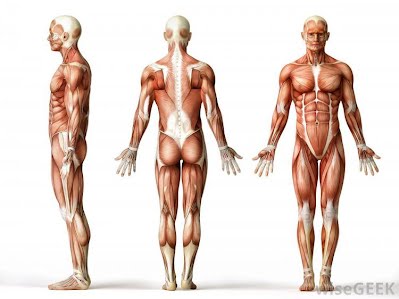
Anatomical Position
“Standard point of reference commonly used in human anatomy and physiology when describing certain anatomical terms and positions.”
“The body is standing with feet together, arms to the side, and head, eyes, and palms facing forward.”
“The body is standing with feet together, arms to the side, and head, eyes, and palms facing forward.”
2
New cards
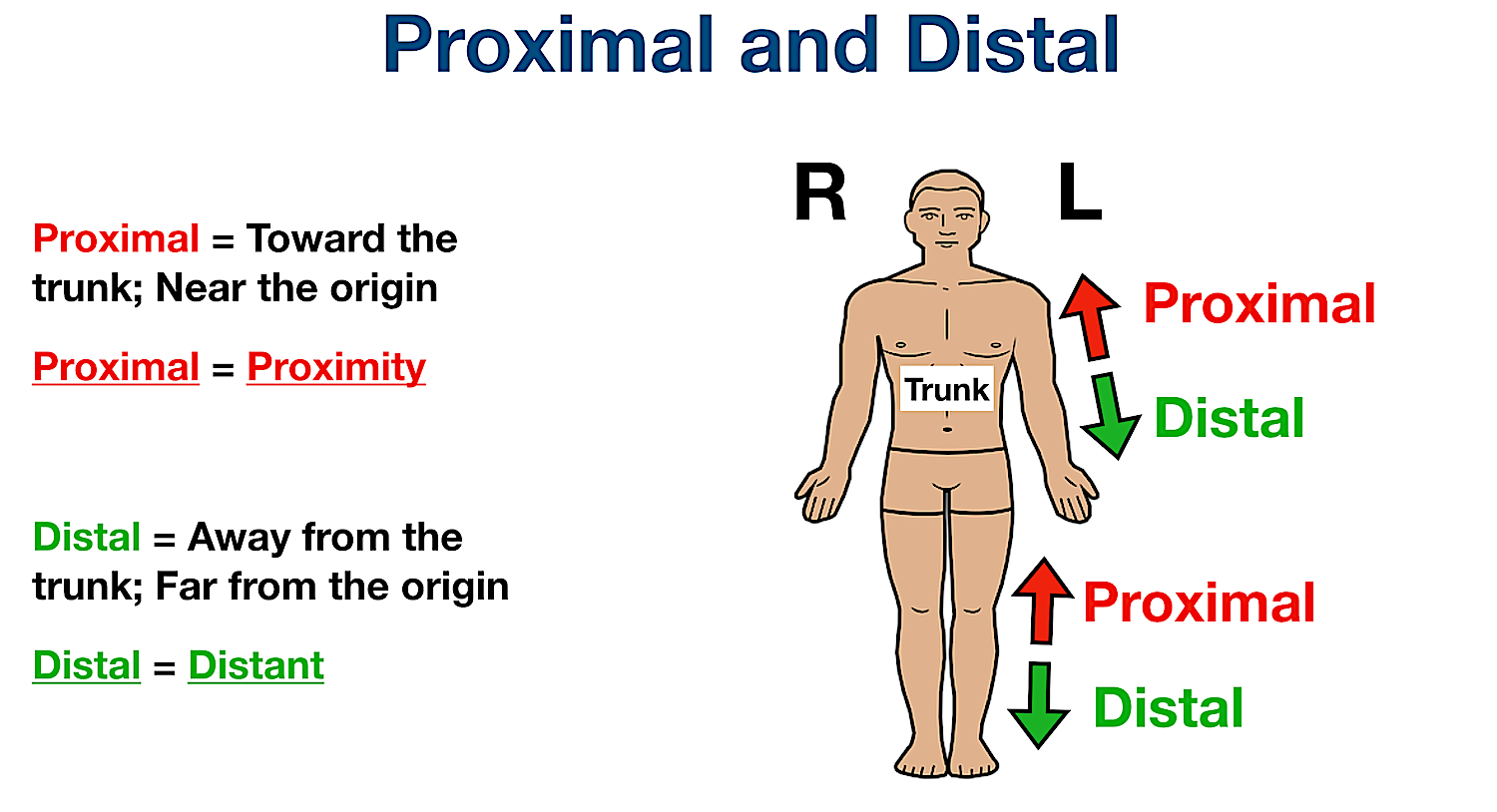
Proximal vs. Distal
Proximal: towards body center
Distal: away from body center
Distal: away from body center
3
New cards
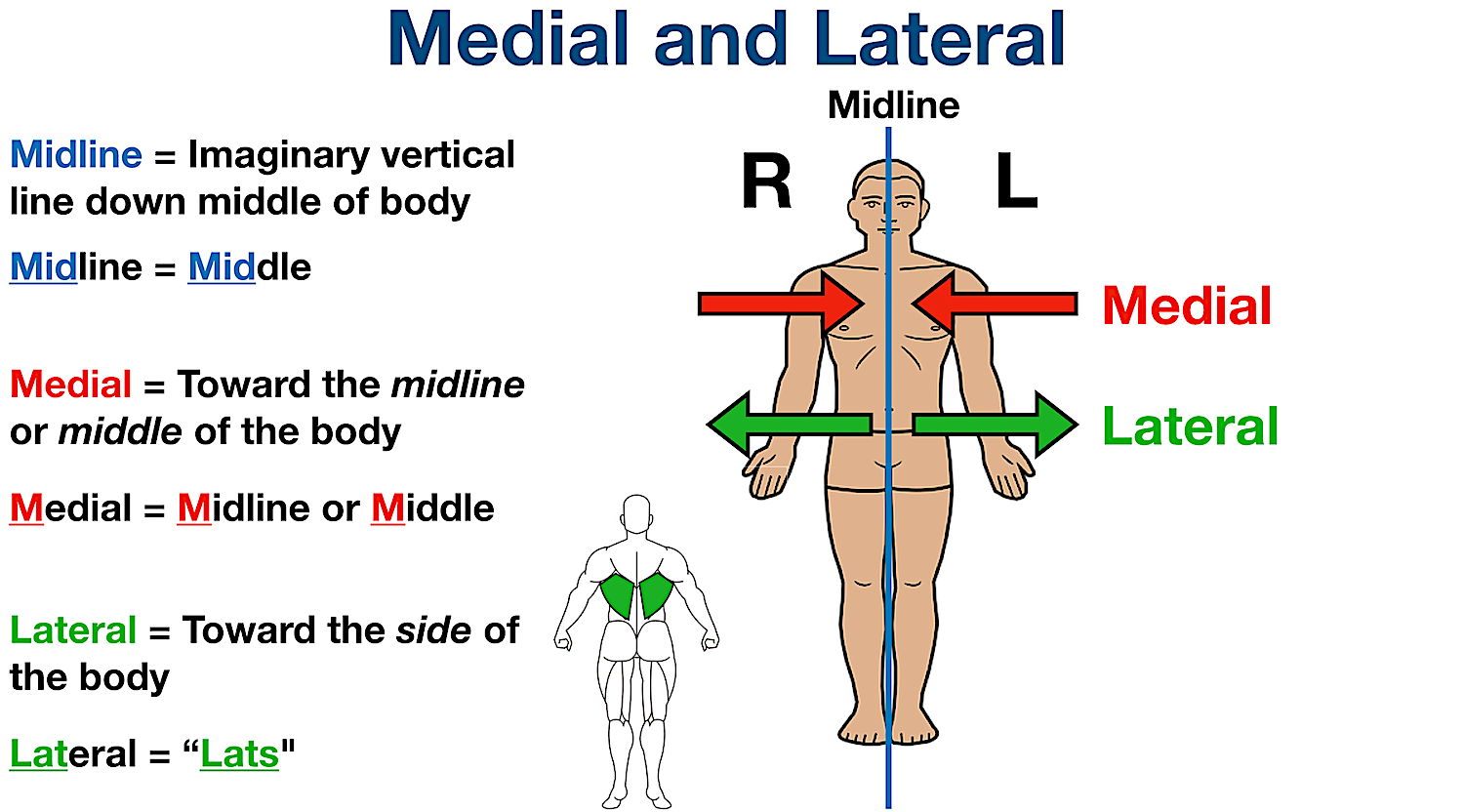
Medial vs. Lateral
Medial: towards midline
Lateral: away from midline
Lateral: away from midline
4
New cards
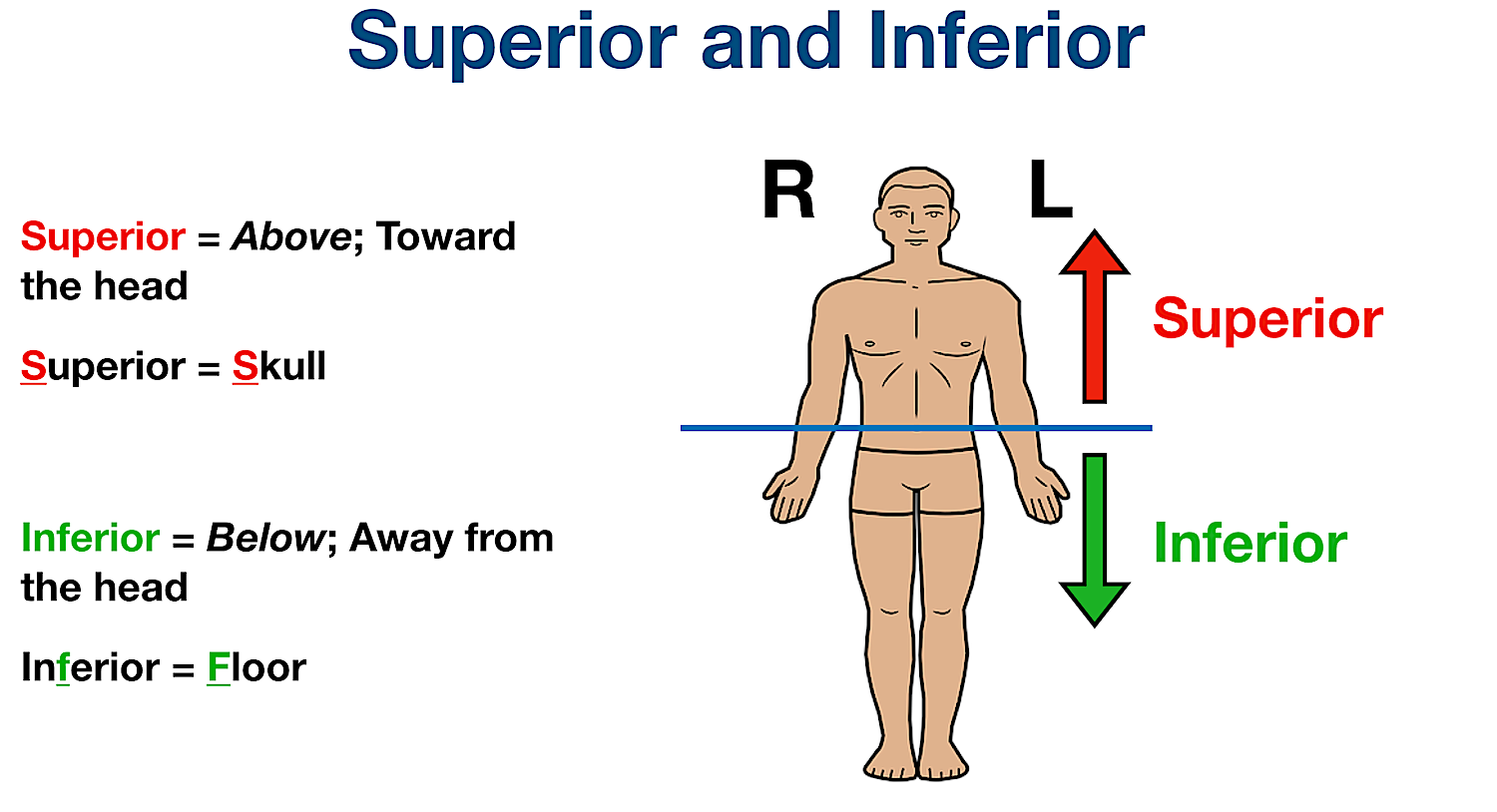
Superior vs. Inferior
Superior: above, towards the head
Inferior: below, away from the head
Inferior: below, away from the head
5
New cards
Synonyms for superior
Rostral, cranial, and cephalic
6
New cards
Synonym for inferior
Caudal (but ONLY to the end of the spine)
7
New cards
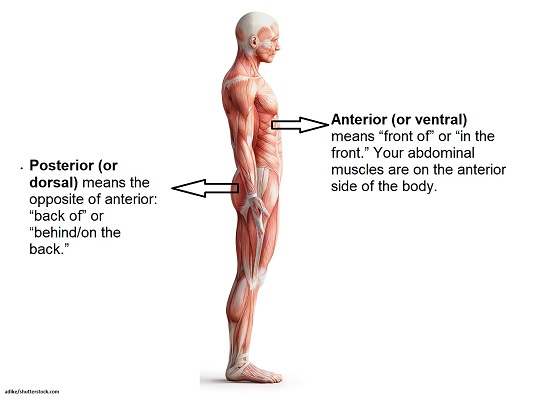
Anterior (Ventral) vs. Posterior (Dorsal)
Anterior: towards the front
Posteriors: towards the back
Posteriors: towards the back
8
New cards
Cephalic
head
9
New cards
Oral
mouth
10
New cards
Cervical
neck
11
New cards
Thoracic
chest/thorax
12
New cards
abdominal
abdomen/stomach area
13
New cards
pelvic
hip/pelvis
14
New cards
pubic
genital
15
New cards
brachial
arm
16
New cards
carpal
wrist
17
New cards
digital
fingers and toes
18
New cards
femoral
thigh
19
New cards
pedal
foot
20
New cards
tarsal
ankle
21
New cards
plantar
bottom of foot
22
New cards
Occipital
back of head
23
New cards
vertebral
spine
24
New cards
lumbar
lower back
25
New cards
sacral
base of spine
26
New cards
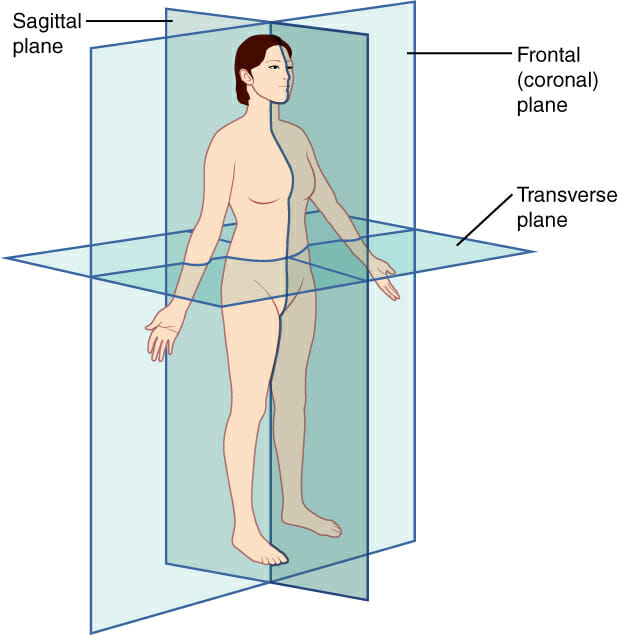
Median (midsagittal) plane
front to back
27
New cards
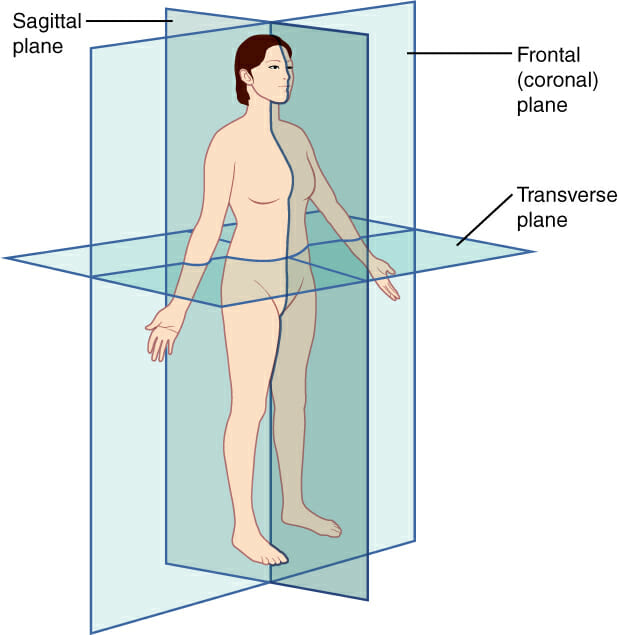
frontal (coronal) plane
side to side
28
New cards
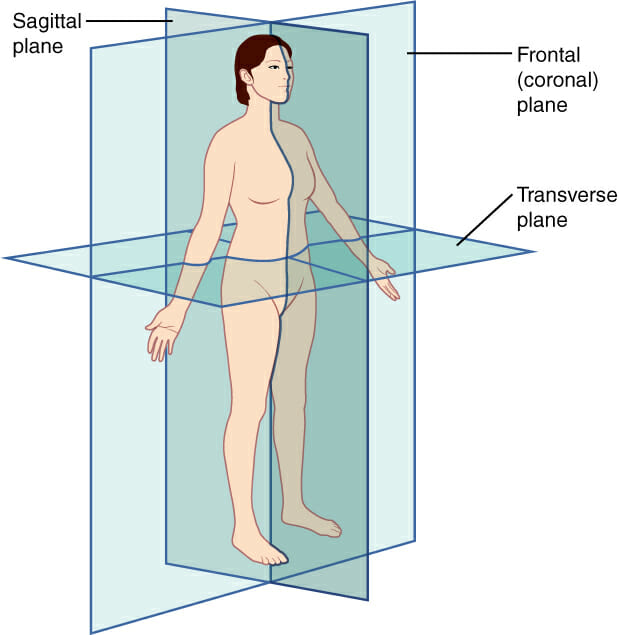
transverse plane
cross-section
29
New cards
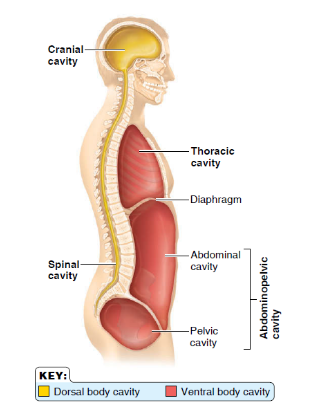
Dorsal body cavity
cranial and spinal cavity, protects nervous system
30
New cards
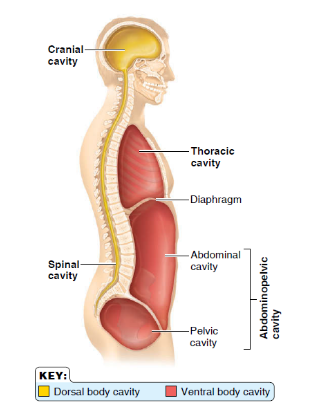
Ventral body cavity
thoracic cavity and abdominopelvic cavity (which is made up of the abdominal and pelvic cavity)
31
New cards
What’s in the thoracic cavity?
Lungs and heart, protected by ribs
32
New cards
What separates the thoracic and abdominopelvic cavity?
diaphragm
33
New cards
What needs to be maintained in homeostasis?
Blood pressure, body temperature, nutrient and oxygen levels, and waste removal.
34
New cards
Homeostasis
Body’s ability to stay in dynamic equilibrium, maintain internal conditions necessary to sustain life while subjected to changes in external world
35
New cards
Components of homeostatic control system
Receptors, control centers, and effectors