M2C Exam 1
 Call Kai
 Learn
Learn Practice Test
 Spaced Repetition
 Match
Match Flashcards
 Knowt Play
1/171

There's no tags or description
Looks like no tags are added yet.
Name | Mastery | Learn | Test | Matching | Spaced | Call with Kai | Chat |
|---|
No analytics yet
Send a link to your students to track their progress
172 Terms
Genotype
The genetic constitution of an individual organism
phenotype
set of observable characteristics of an individual resulting from the interaction of its genotype with the environment
-includes disease states (cancer, heart disease)
dysmorphology
study of human birth defects, particularly those affecting the morphology of the individual
minor malformations
- do not impact function
- common in population
-most people have 1-2
- presence of 3+ may indicate syndrome or presence of major malformation
major malformations
- impacts function/health
-more indicated of genetic, but not always (ex: if they have a cleft palate but nothing else)
karyotype
the number and visual appearance of the chromosomes in the cell nuclei of an organism
- confirms diagnosis in something like down syndrome
Exome sequencing
A strategy of sequencing only the coding regions of a genome
- genotype leads to clarified phenotype and prognosis information
allele
one of two or more alternative forms of a gene that arise by mutation and are found at the same place on a chromosome
compound heterozygous (in trans)
-two different variants in the same gene.
-The two variants are on opposite copies of the chromosome—one inherited from mom and one from dad.
compound heterozygous (in cis)
-two different variants in the same gene.
-The two variants are on the same copy of the chromosome—both inherited from either mom OR dad
-more rare
pleiotropy
The ability of a single variant to cause many different traits
Epistasis
the interaction of genes that are not alleles, in particular the suppression of the effect of one such gene by another.
-ex: baldness masks hair color
Locus heterogeneity
mutations at different loci can produce the same phenotype
allelic heterogeneity
Different mutations in the same locus produce the same phenotype
polygenic/ multifactorial
traits that are influenced by a combination of multiple genes/alleles as well as environmental factors
Narrow expressivity
When there is only a small range of possible phenotypes for a particular genotype
variable expressivity
individuals with the same genotype have related phenotypes that vary in intensity
complete penetrance
All people with the allele display the disease phenotype
incomplete penetrance
Not all individuals with a mutant genotype show the mutant phenotype
nuclear DNA
-found in nucleus
- makes up chromosomes
- two copies of each gene
-inherited from both parents
Mitochondrial DNA
DNA found in the mitochondria that is inherited only through mothers
- only contains genes for mitochondrial function
pseudogenes
resemble functional genes but are nonfunctional
- may lack sequences needed for transcription or translation start
-may be due to frameshift variants, splicing variants, nonsense variants
human karyotype
46 chromosomes, 23 pairs
-22 the same between male and female (autosomes)
- arranged by size and by location of the centromere
-21 is actually smaller than 22
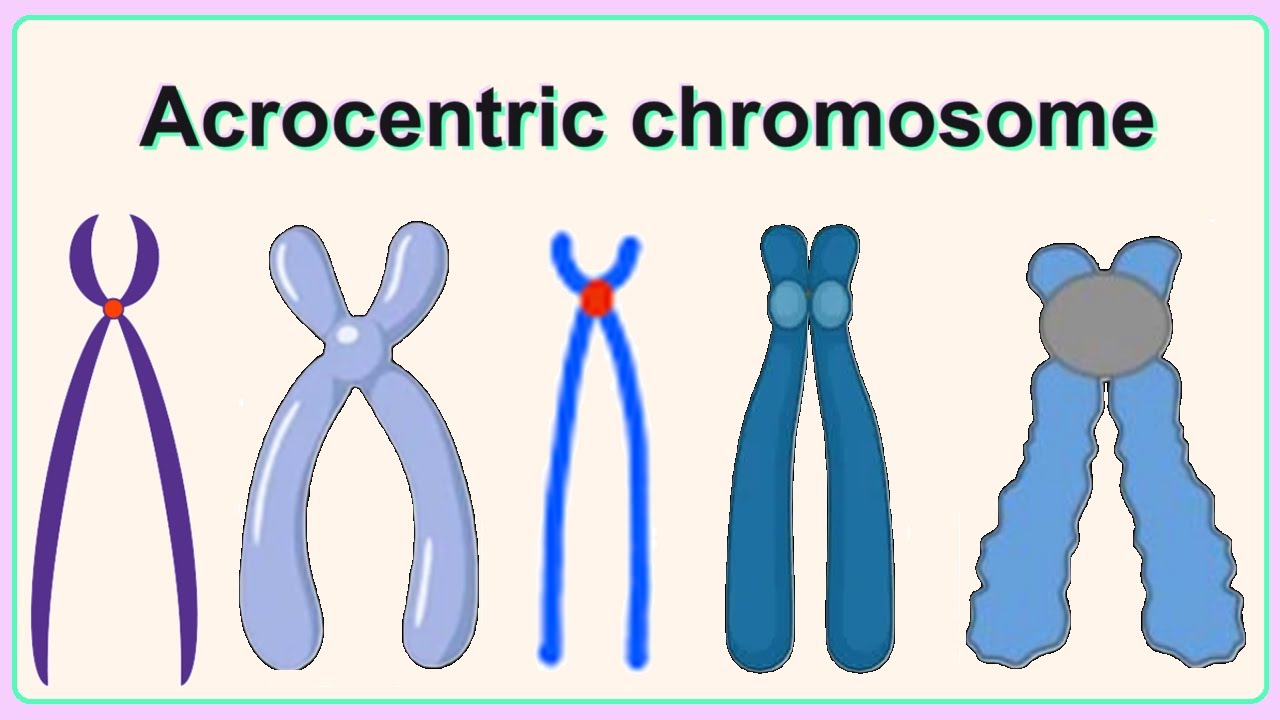
what are the acrocentric chromosomes?
13, 14, 15, 21, 22
What is required for transcription?
A promoter and multiple transcription factors
RNA polymerase II does what?
uses DNA as a template to create mRNA
▪ Reads along the anti-sense/non-coding/template strand to create an RNA copy of the sense/coding strand; mRNA synthesized from 5' to 3' (reads the template from 3' to 5').
what is a transcript?
Parts/sequence of a gene that will end up being translated into a protein
genes can produce more than one transcript, due to alternative splicing
different transcripts can be influenced due to time in development, tissue type, and environmental factors
Canonical transcript
predominant/common transcript in the body
alternate transcripts
alternatively spliced RNA sequences that are less common, expressed in specific tissues, or at specific timepoints in development
what transcript is used for genetic testing reports?
canonical transcript. They will report variants where the patient’s DNA sequence varies from the canonical RNA transcript
SHANK3: PHELAN-MCDERMID SYNDROME
caused by a point variant or deletion of SHANK3
intellectual developmental disorder
significant behavior phenotypes
autism w/ regression
poor speech
dysmorphic features
less commonly: seizures and birth defects
4 potentially protein-coding transcripts of different lengths (1 canonical, 3 alternate)

GC role with transcripts and variants
not responsible for determining the appropriate way to look a gene’s sequence
need to know that different transcripts exist and have changed over time
need to know that theoretical possibilities exist where a pt may have a variant in a gene that the lab can miss
need to know to use a lab you trust to navigate these nuances
point mutations
silent
nonsense
missense

insertion-deletions
can be out-of-frame (involving any number of bases other than 3
causes frameshift
usually causes a premature stop codon
can be in-frame
What do you think the most deleterious (disease-causing/damaging) types of variants are?
GENERALLY nonsense and frameshift
When may a nonsense or frameshift variant be benign?
if they happen at the end
Is there ever a time a silent mutation can cause disease?
yes, can destroy a splice site
effects of variants in transcription factors
lack of transcription
excess transcription
multi-system disease
incompatibility with life if responsible for enough gene expression
conditions associated with them: congenital heart disease, DiGeorge syndrome (TBX1), Holt-Oram syndrome (TBX5), PAX6-related disorders, pituitary hypoplasia
CONGENITAL HEART DEFECTS
most common birth defect
my by isolated or syndromic
multifactorial (mostly)
HOLT-ORAM SYNDROME (TBX5)
congenital heart defect
atrial septal defect is most common
cardiac arrhythmias
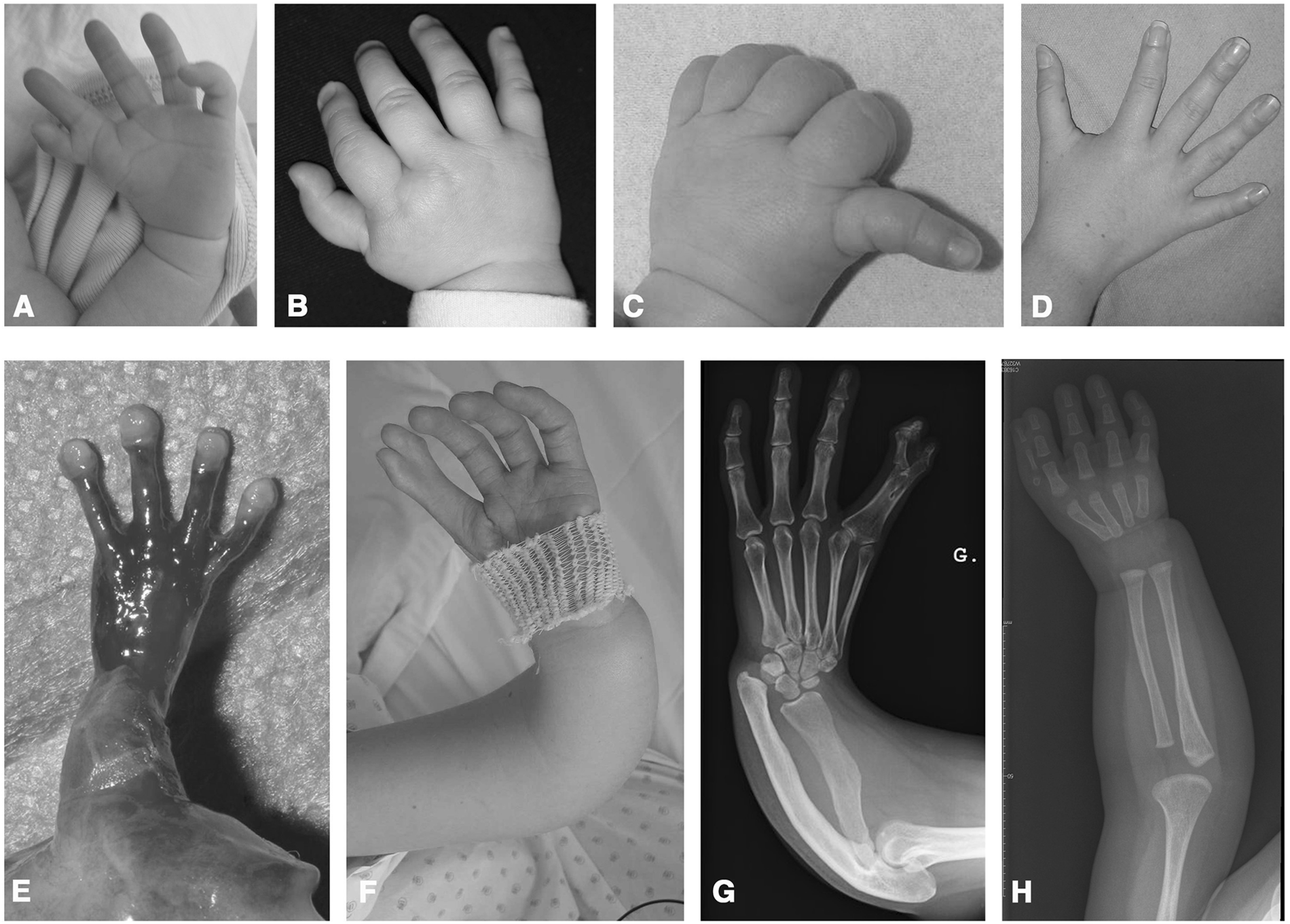
limb anomalies
asymmetrical, absent thumb or bifid thumb, radius/ulna abnormalities
may have other skeletal abnormalities
TBX5 INTERACTIONS - "THE INTERACTOME"
GATA4 and NKX2.5 - associated with cardiac formation
NKX2.5 and Id2 – formation of cardiac conduction system
SHOX2 and BMP4 - cardiac conduction system
EMT - associated with limb development and differentiation
SALL4 - upper limb and heart defects
SCN5A – cardiac conduction defects
Classes of Amino Acids
Neutral and non-polar (hydrophobic)
neutrals and polar (hydrophilic)
charged (also hydrophilic)
what are the branched amino acids
leucine, isoleucine, valine (nonpolar)
which amino acid is the only one capable of making strong disuldfide bonds
cysteine
which amino acid is a common target for post-translational modifications
serine, due to free hydroxyl group
True or false: if one amino acid is substituted for another, it is less likely to be problematic if the amino acids have similar properties
true
Protein Structures
Primary Structure – sequence of amino acids
Secondary structure – local structure of amino acids arranged in a repeating pattern, formed by hydrogen bonds (alpha helix, beta sheets)
Tertiary structure – three-dimensional folding, due to interactions of the different amino acid side chains
Quaternary structure (if applicable) - multiple chains of amino acids/subunits interacting with each other
What else affects protein folding?
bonds (disulfide stronger than ionic)
allosteric effects (how bulky are side chains?)
environment: acidic, basic, hot, cold?
binding of co-factors
chaperone proteins
collagen amino make up
combination of glycine, and a larger molecule such as proline or hydroxyproline
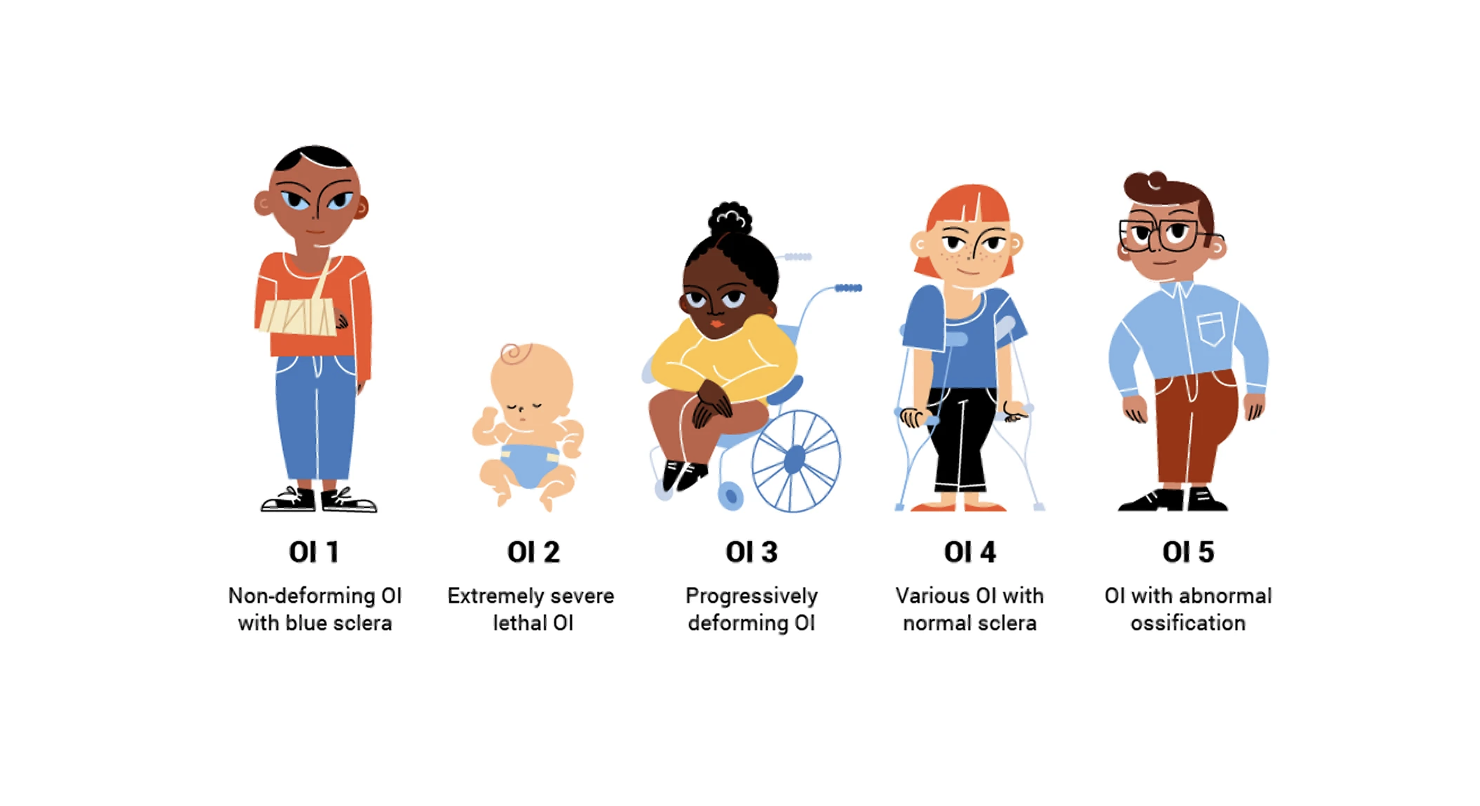
osteogenesis imperfecta (OI)
brittle bone disease
dominant condition
most commonly due to variants in COL1A1 or COL1A2 (collagen making genes)
can range from mild to neonatally lethal
besides easy fractures, can cause hearing loss, blue sclera, brittle teeth, short stature
genotype-phenotype correlation of OI
depends on type of variant
missense variant= 100% of chains made, 50% made incorrectly
nonsense variant= 50% of chains made, 100% made correctly
MISSENSE IS WORSE
dominant negative variants
a variant in one allele (and its resulting protein) can interfere with the function of the healthy copy
OI missense variant
mechanisms of disease
complete loss of protein or loss of its normal function (recessive disorders, X-linked)
loss of half the amount of protein/half of its normal function (dominant disorder, haploinsufficiency)
abnormal protein poisoning the function of the normal copy (dominant negative)
a new function of the protein (gain of function, hyperactivity)
Nonsense, whole-gene deletions, frameshifts, and indels are almost always going to be more deleterious than missense variants. HOWEVER, what are the exceptions?
dominant negative
gain-of-function
triplosensitivity (having too much protein product)- duplications of genes
domain rules
genetic variants in domains lead to a higher chance that the primary function of the protein is compromised
outside of domains may disrupt overall protein shape or regulatory interactions, which may stop domains from interacting with their targets
motifs
recurring tertiary structure of a protein
proteins of differing functions can have the same motif
a single protein can have multiple motifs
not stable on their own
common: barrels, zinc-fingers

what are domains?
conserved sequences in tertiary structure
G0 phase
cells are at rest, not dividing
G1 phase
cells increase in size, synthesis of RNA and proteins takes place to prepare for replication
S phase
DNA synthesis replicates the genetic material
each chromosome consists of two sister chromatids
G2 phase
further cell growth, some DNA repair, metabolic changes assemble the cytoplasmic materials necessary for mitosis and cytokinesis
M phase
nuclear division (mitosis) followed by a cell division (cytokinesis)

how is the cell cycle regulated?
proto-oncogenes
tumor suppressor genes
proto-oncogenes
promotes cells growth and survival
inhibits apoptosis
growth factors
tumor suppressor genes
prevent uncontrolled cell growth
restricts cell division
repairs DNA errors
activates apoptosis
Cell Cycle Regulation: Check points
cell size
DNA replication
DNA damage mitotic check points
Cell Cycle Regulation: proteins
cyclins
cyclin-dependent kinases (CDKs)
p53
mosaicism
the presence of two or more cell lineages with different genotypes arising from a single zygote in a single individual
random, hard to predict which parts of body will be affected
earlier on in development mutation occurs, the greater percentage of the body that will be affects
due to mutation during DNA replication or aneuploidy during cell division
sister chromatids
two identical copies of one chromosome produced during DNA replication

euploid
containing the normal entire set of chromosomes for an organism
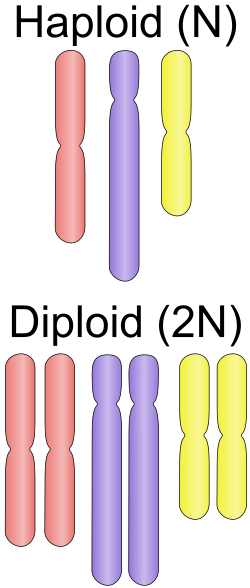
diploid
two sets of every chromosome (default state for somatic cells)

haploid
having one set of every chromosome (default for germline cells/gametes)
hallmarks of cancer
sustaining proliferative signaling
genome instability & mutation
resisting cell death
evading growth suppressors
avoiding immune destruction
True or false: all cancer is genetic
true.
but not all cancers are due to inherited mutations… but all are due to mutations in cell cycle
when does meiosis occur
occurs continuously in males in testes
in females, begins as a fetus, but eggs are frozen after meiosis 1 until puberty
each month after, one egg resumes meiosis and goes through meiosis 2 to create an egg that is ovulated
survivable aneuploidy
trisomy: 13, 18, 21, X, Y
monosomy: X
what is aneuploidy caused by?
nondisjunction
the failure of one or more pairs of homologous chromosomes or sister chromatids to separate normally during nuclear division, usually resulting in an abnormal distribution of chromosomes in the daughter nuclei (mitosis→ mosaicism)
Germline/Gonadal Mosaicism
variants occur at a higher number in the sperm or egg cells but not in the rest of the body (parent’s blood sample is negative)
results in higher risk of having multiple children with a “de novo” condition
this is the reason that we can never give a 0% recurrence risk
not really possible to test for
mosaicism in families
in a parent= risk for constitutional (present in every cell) condition in the child
in child= implies variant occurred after conception and is not present in the parent
Turner syndrome
short stature, skeletal difference
heart problems
learning disabilities
delayed or absent puberty, infertility
horseshoe kidney, webbed neck, lymphedema
increased risk for autoimmune disease
Causes
• 45, X – 50%
• 45,X/46,XX or 45,X/46,XY or 45,X/47, XXX – 20-30%
• Structural abnormalities of the X chromosome (ring, Xq, etc) – 20-30%

Mosaicism in Turner syndrome
can be as severely affected as those who are fully monosomy X
myth that boys cannot have Turner syndrome
no way of telling which organs carry a high or low burden
recombination
“genetic shuffling”
pairs of homologous chromosomes exchange info
important in maintaining genetic diversity

recombination rates
a cross over typically happens at least once per chromosome
more frequent in females
hotspots in the genome where crossing over is more likely
frequency of recombination between two genes is used to determine how close they are to each other (the closer, the less likely crossing over will occur between them)
Chromosome deletions and duplications – aka Copy Number Variants (CNVs)
occurs due to wrong alignment between homologous regions of chromosomes
ranges in size
recurrent/hotspot areas prone to deletions and duplications
may be at the end of chromosome (terminal) or in the middle (interstitial)
we all have benign CNVs
syndromes of CNVs
22q11.2 deletion syndrome, Smith Magenis syndrome (deletion of 17p11.2), 1p36 syndrome, Williams syndrome (deletion of 7q11.23), Wolf-Hirschhorn syndrome
developmental delays, autism, birth defects, congenital anomalies
behavioral differences, poor growth, endocrine abnormalities, dysmorphic features
why are CNVs inherited in a dominant manner?
because whole chromosomes are passed from parent to child, or X-linked
balanced translocation
occurs between two non-homologous chromosomes
usually do not have health consequences
occurs in about 0.18% people
at risk of having children with unbalanced translocations

unbalanced translocations
when you see a duplication of the terminal END of a chromosome and a deletion of the END of another is a big red flag
oftentimes results in large genetic imbalances
usually unique

robertsonian translocations
results in the q arms of 2 acrocentric chromosomes joining at the centromere
p arms lost
balanced, 45 chromosomes

Uniparental Disomy (UPD)
both copies of a chromosome come from the same parents (2 from egg or 2 from sperm)
UPD: heterodisomy
child inherits both chromosome copies from the same parent, but they are different homologs

UPD: isodisomy
child inherits both chromosome copies from the same parent, and they are the sister chromatids

UPD consequences
imprinting disorders (prader-willi, angelman, beckwith-weidemann)
sometimes you need a copy from egg AND sperm in order for genes to function correctly. even if there are no variants in the gene sequence themselves
increased risk for recessive disorders
how does UPD occur?
Monosomy rescue: results in isodisomy
initially, only had one copy of a chromosome and the cell copies its one copy
trisomy rescue: results in isodisomy or heterodisomy
initially, had three copies of a chromosome and the cell kicked out one copy out at random
paracentric inversion
does not include centromere
crossover occurs between one normal homolog and one inverted one
recombinant chromosomes contain both a deletion and duplication
may have no centromere or may have two centromeres

pericentric inversions
involves centromere
crossover occurs between one normal homolog and one inverted homolog
recombinant chromosomes contain both a deletion and duplication
each recombinant contains one centromere

What type of inversion has a higher chance of a child with a birth defect?
Pericentric inversions
paracentric are more likely to miscarry and not be brought to term
exogenous agents
DNA damage caused by external exposures
ionizing radiation
ultraviolet radiation
pollutants in air, water, and food
chemical carcinogens in tobacco products, pesticides, and toxic metals
endogenous agents
DNA damage caused by internal reactions during oxidative stress, metabolic processes, and the inflammatory response
reactive oxygen species (ROS)
reactive nitrogen species (RNS)
depurination, depyrimidination, deamination
DNA damage response (DDR)
ALERT: DNA damage sensor proteins
RESPOND: proteins act as signal transducers and mediators to the repair machinery
RESULT: effector pathways include DNA repair, cell cycle arrest, senescence, apoptosis