A&P Lecture Chapter 4
 Call Kai
 Learn
Learn Practice Test
 Spaced Repetition
 Match
Match Flashcards
 Knowt Play
1/62

Earn XP
Description and Tags
Vocabulary flashcards covering the basic tissue types, epithelial arrangements and shapes, and connective tissue classifications from Chapter 4.
Name | Mastery | Learn | Test | Matching | Spaced | Call with Kai | Chat |
|---|
No analytics yet
Send a link to your students to track their progress
63 Terms
Epithelial tissue
A basic tissue type that covers and lines body surfaces and cavities, consists of thin cellular tissue lying on a basement membrane, is avascular, and forms modified structures like glands.
Connective tissue
The most abundant and diverse basic tissue type, characterized by having few cells and being dominated by an Extracellular Matrix (ECM).
Muscular tissue
A basic tissue type that is electrically excitable and possesses the ability to exert force to cause movement.
Nervous tissue
An electrically excitable tissue type that forms the structural and functional basis of the nervous system.
Apical Surface
The free surface of epithelial tissue that is open to the outside environment or exposed to a hollow, fluid-filled cavity.
Avascular
A characteristic of epithelial tissue indicating a lack of blood vessels, requiring nutrients and O2 to diffuse across the basement membrane from underlying connective tissue.
Simple Epithelium
An epithelial arrangement characterized by a single layer of cells extending between the basement membrane and the free surface.
Stratified Epithelium
An epithelial arrangement characterized by two or more layers of cells situated between the basement membrane and the free surface.
Pseudostratified Epithelium
An epithelial tissue that appears stratified due to nuclei at different levels, but is technically simple because all cells touch the basement membrane.
Squamous cells
Flat epithelial cells that are much wider than they are tall, featuring a bulging nucleus that gives them a fried egg appearance.
Cuboidal cells
Cube-shaped epithelial cells with approximately equal height, width, and depth, featuring a large, round, centrally located nucleus.
Columnar cells
Epithelial cells that are tall like a column, being much taller than they are wide.
Transitional Epithelium
A stratified epithelial tissue made of several layers that can transition from cuboidal to squamous to allow for stretching (distention) in the urinary tract.
Transitional Epithelium located ?
in the lining of the urinary bladder, ureters, and part of the urethra, allowing for expansion and contraction.
Simple Squamous Epithelium
A single layer of flat cells functioning in gas exchange, filtration, and friction reduction; located in blood vessels, lung alveoli, kidney glomeruli, and body cavities.
Simple Squamous Epithelium located where ?
blood vessels, lung alveoli, kidney glomeruli, and body cavities.
Simple Cuboidal Epithelium
A single layer of cube-shaped cells functioning in absorption and secretion, located in kidney tubules and the thyroid gland.
Microvilli
Small, stationary, finger-like structures on the apical surface of columnar cells that facilitate absorption by increasing surface area.
Cilia
Small, finger-like structures on the apical surface of cells that move in a wavelike motion to transport substances across the cell surface.
Goblet cells
Unicellular glands found in columnar and pseudostratified epithelia that specialize in secreting mucus.
Keratinized Stratified Squamous Epithelium
A drier, tougher variant of stratified squamous epithelium located on the skin.
Non-Keratinized Stratified Squamous Epithelium
Also known as mucosal epithelium; a moist form of stratified squamous tissue located in the oral cavity, pharynx, esophagus, and vagina.
Pseudostratified Columnar Epithelium
Tissue consisting of tall cells on a basement membrane with staggered nuclei that functions in secreting and moving mucus across the respiratory tract.
Mucociliary escalator
A respiratory clearing mechanism damaged by cold viruses, leading to a buildup of mucus and bacteria in the lungs and an increased risk of pneumonia.
Fibroblasts
Connective tissue cells responsible for secreting fibers and ground substance into the extracellular matrix.
Adipocytes
Fat cells in connective tissue that store energy in the form of triglycerides.
Collagen fibers
Thick, rope-like connective tissue fibers that form bundles and resist pulling forces (tension).
Elastic fibers
Connective tissue fibers that possess the ability to stretch and recoil, storing force like a spring.
Reticular fibers
Type III collagen fibers that form three-dimensional meshes to support soft organ stroma.
Mesenchyme
Embryonic connective tissue containing mesenchymal stem cells from which all other connective tissues are derived.
Areolar Connective Tissue
A loose connective tissue with a tic-tac-toe appearance containing all three fiber types that anchors epithelia, provides nutrients, and fills gaps.
Adipose Tissue
A loose connective tissue dominated by adipocytes with a marshmallow appearance that stores triglycerides in the hypodermis and medullary cavity of adult long bones.
Reticular Connective Tissue
A loose connective tissue featuring dark branching reticular fibers with a cherry blossom appearance that forms the stroma of the liver, lymph nodes, and spleen.
Dense Regular Connective Tissue
An avascular tissue with thick parallel collagen bundles resembling ramen noodles or bacon, which resists single-direction tension in tendons.
Dense Irregular Connective Tissue
A connective tissue with densely packed collagen bundles running in multiple directions, appearing like raw meat and resisting tension in multiple directions.
Hyaline Cartilage
The weakest and most abundant cartilage, consisting of chondrocytes in lacunae with a glassy ECM; found in the fetal skeleton, joint ends, growth plates, ribs, nose, trachea, and larynx.
Elastic Cartilage
Flexible cartilage featuring dark, branching elastic fibers in the ECM, located in the ears and epiglottis.
Fibrocartilage
The strongest cartilage type, composed of stacks of chondrocytes in thick collagen bundles, located in high-stress areas like intervertebral disks and the pubic symphysis.
Simple Squamous Epithelium located where?
Blood vessels, lung alveoli, kidney glomeruli, and body cavities.
Simple Cuboidal Epithelium located where?
Kidney tubules and the thyroid gland.
Keratinized Stratified Squamous Epithelium located where?
On the skin surface.
Non-Keratinized Stratified Squamous Epithelium located where?
In the oral cavity, pharynx, esophagus, and vagina.
Transitional Epithelium located where?
In the lining of the urinary bladder, ureters, and part of the urethra.
Pseudostratified Columnar Epithelium located where?
In the respiratory tract, particularly the trachea and bronchi.
Functions of Simple Squamous Epithelium
Facilitates gas exchange, filtration, and reduces friction between surfaces.
Functions of Simple Cuboidal Epithelium
Specializes in absorption and secretion, often found in glandular tissues.
Functions of Keratinized Stratified Squamous Epithelium
Provides a protective barrier against mechanical stress, pathogens, and dehydration.
Functions of Non-Keratinized Stratified Squamous Epithelium
Offers protection while remaining moist; found in areas subject to abrasion.
Functions of Transitional Epithelium
Allows for stretching and recoiling within the urinary bladder and other organs.
Functions of Pseudostratified Columnar Epithelium
Secretes mucus and moves it via cilia; important in trapping and clearing debris in the respiratory tract.

What type of Epithelium Tissue is this ?
Simple Squamous Epithelium

Looks like this
Simple Cubodial Epithelium

What type of Epithelium Tissue is this ?
Non-Ciliated Simple Columnar Epithelium
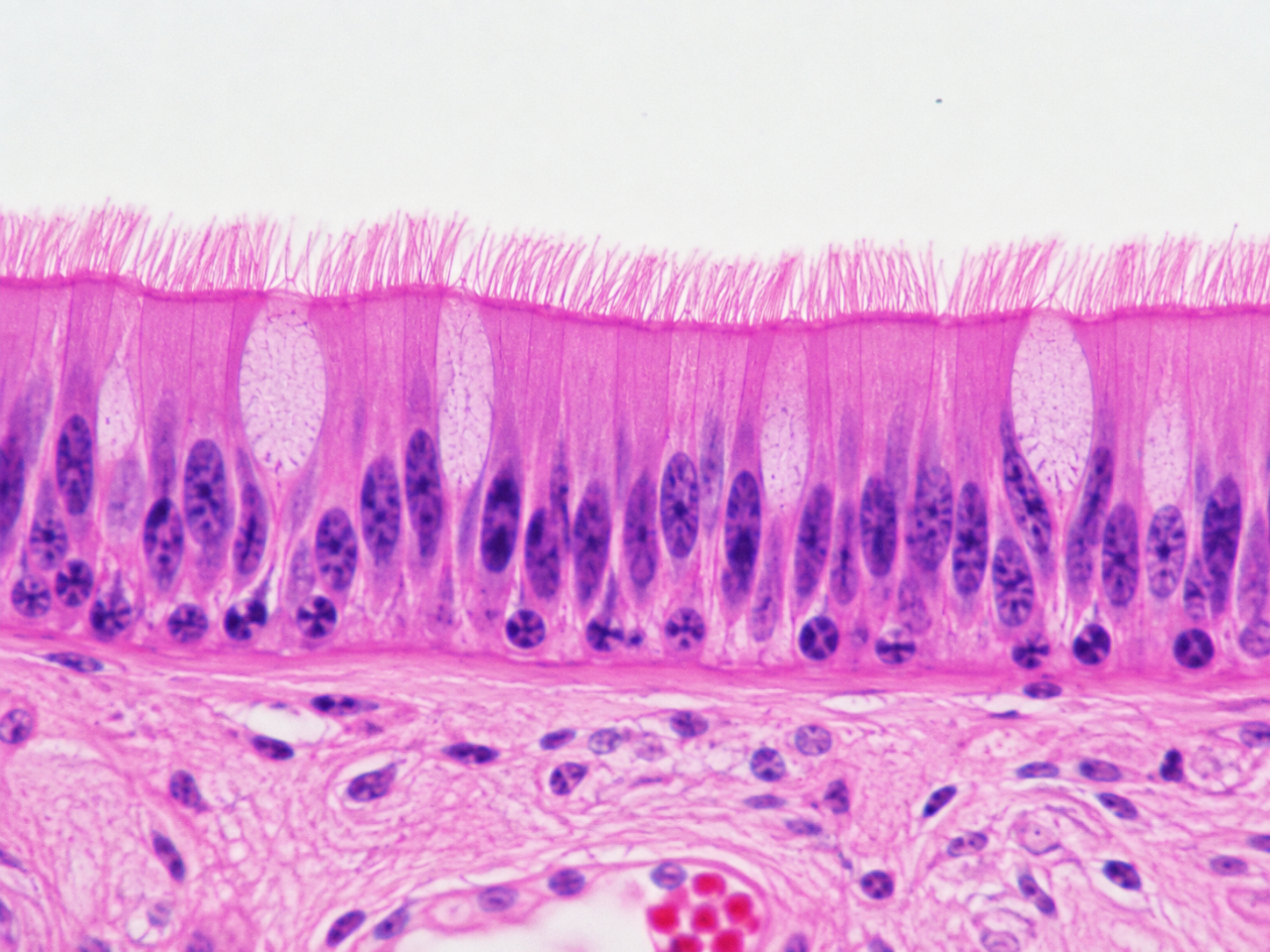
What type of Epithelium Tissue is this ?
Ciliated Simple Columnar Epithelium

What unicelluar cell is the pointer pointing at?
Goblet cell
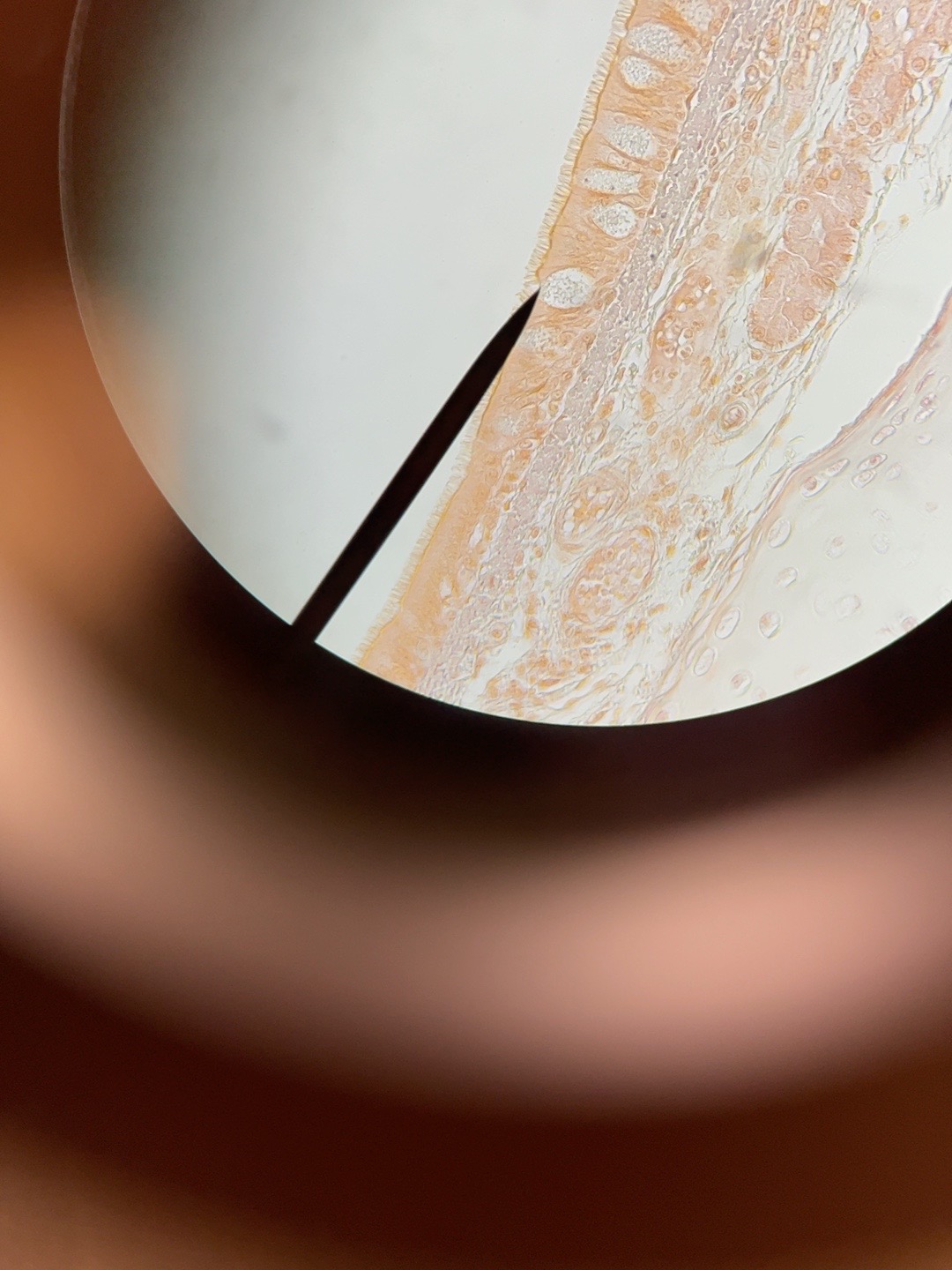
What type of Epithelium Tissue is this ?
Ciliated Pseudostratified Columnar Epithelium
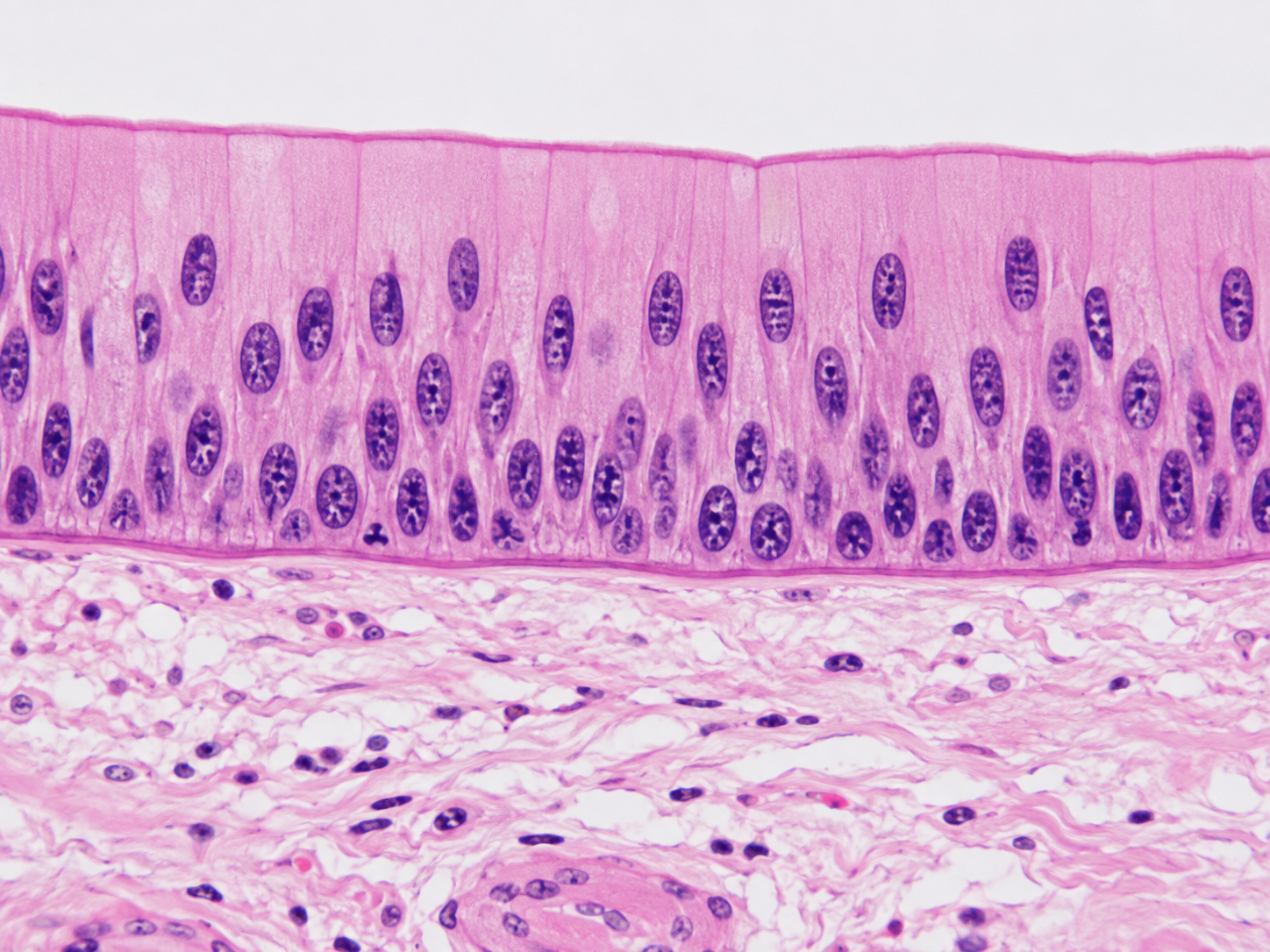
What type of Epithelial Tissue is this?
Nonciliated Pseudostratified Columnar Epithelium
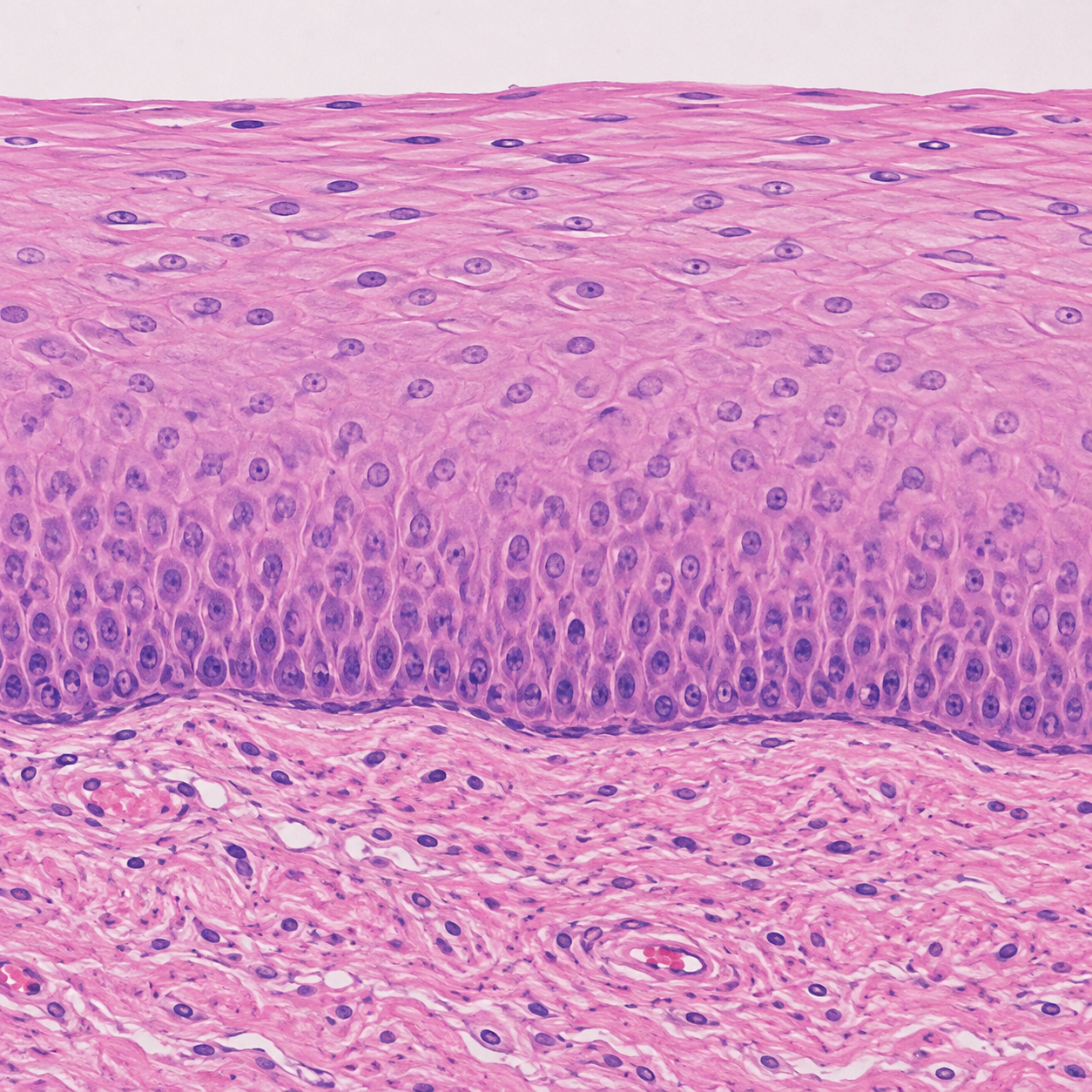
What type of Epithelial Tissue is this?
Non-keratinized Stratified Squamous Epithelium
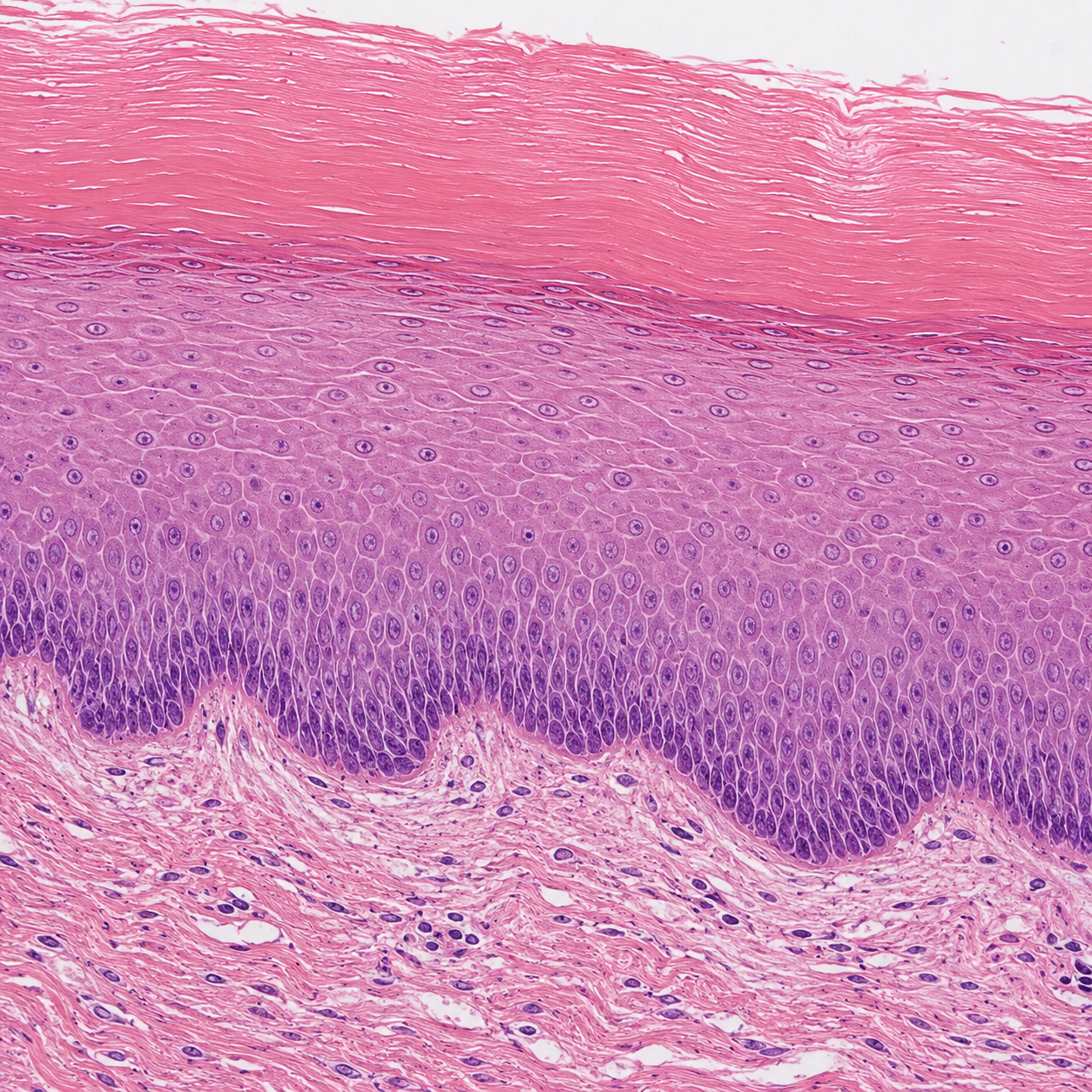
What type of Epithelial Tissue is this?
Keratinized Stratified Squamous Epithelium.
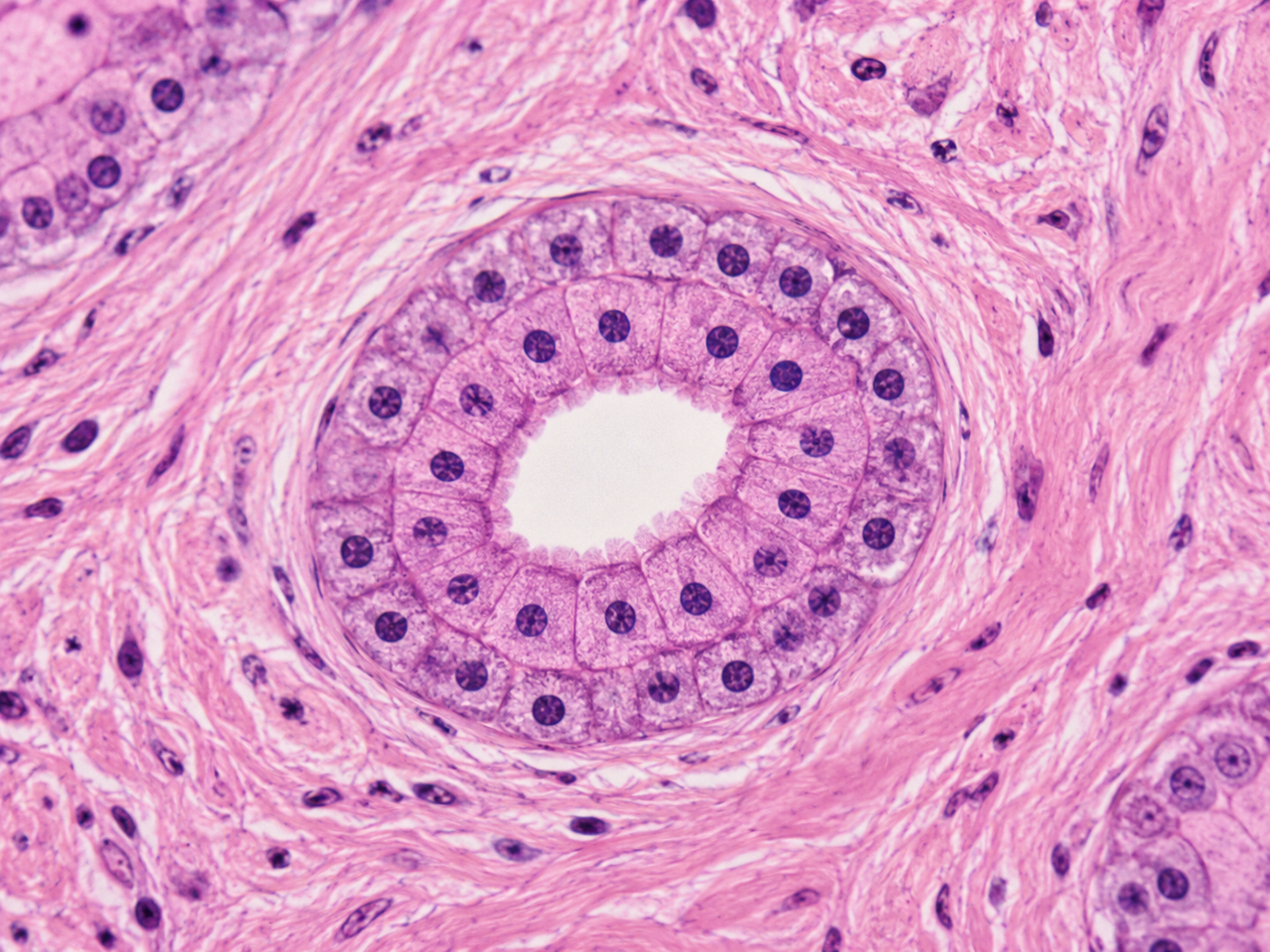
What type of Epithelial Tissue is this?
Stratified Cubodial Epithelium
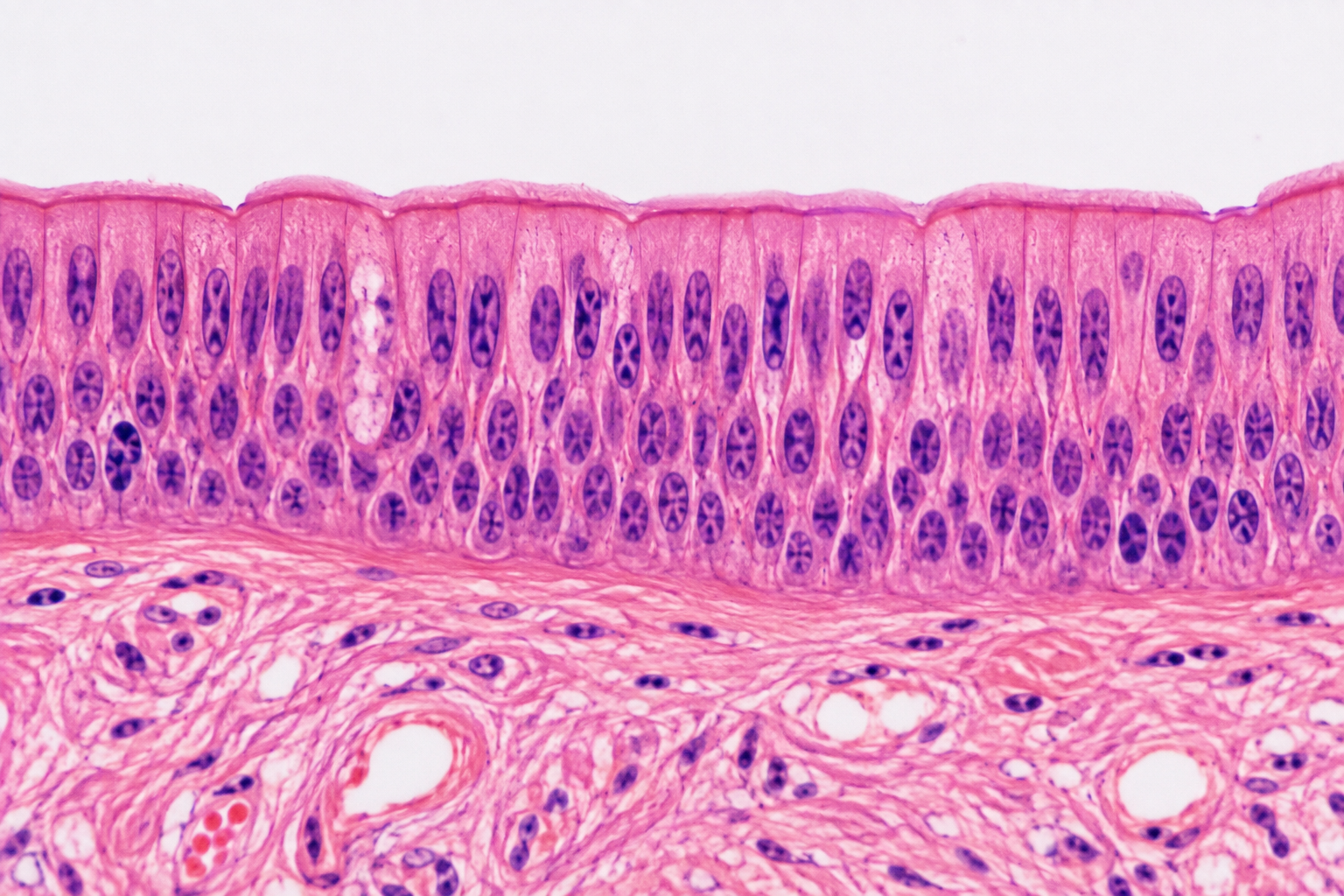
What type of Epithelial Tissue is this?
Stratified Columnar Epithelium

What type of Epithelial Tissue is this?
Urothelium Epithelium Tissue and the bladder is (empty)
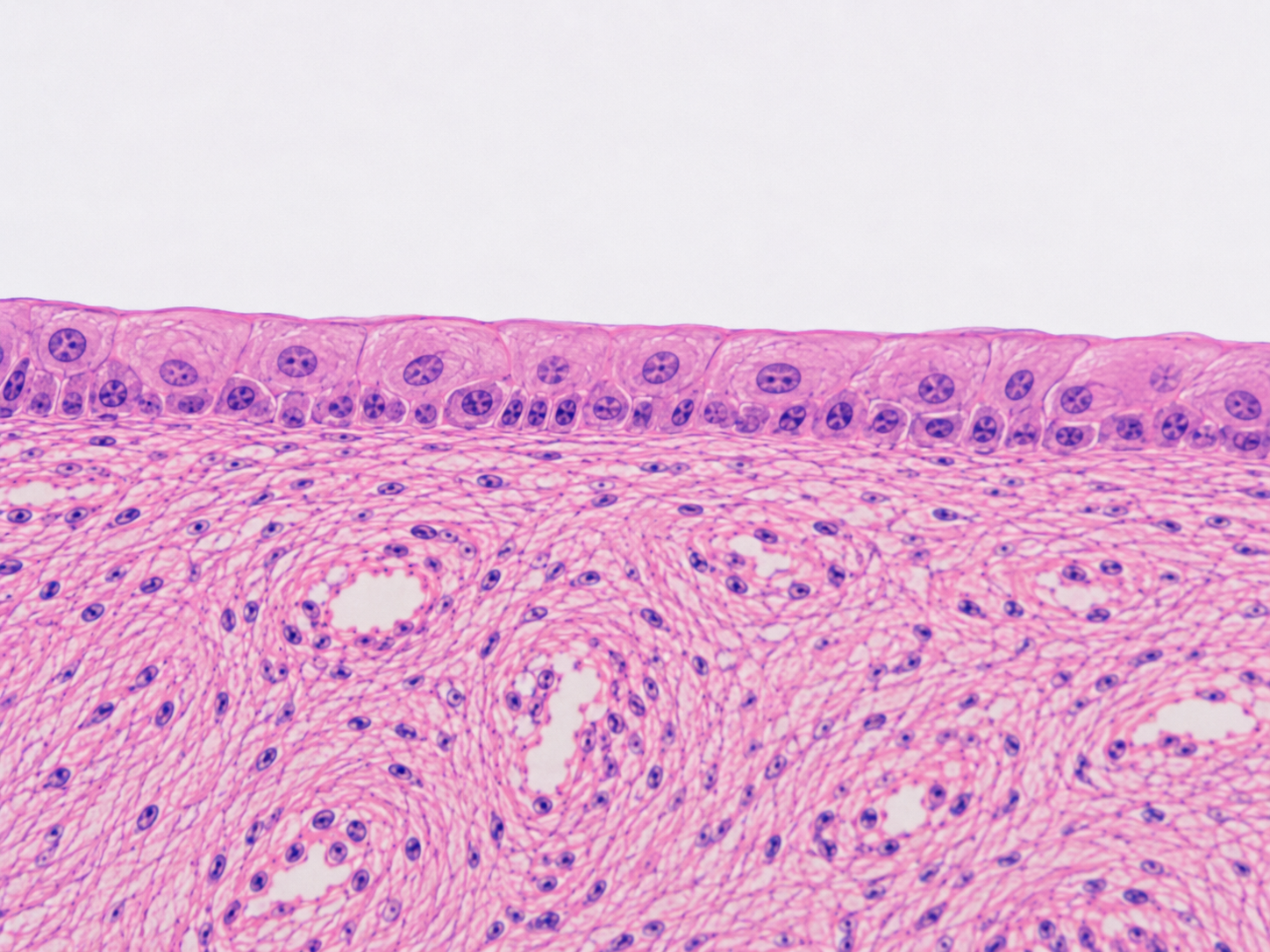
What type of Epithelial Tissue is this?
Urothelium Epithelium Tissue bladder is full