Group Dynamics L2: group structure (roles, norms, and status)
 Call Kai
 Learn
Learn Practice Test
 Spaced Repetition
 Match
Match Flashcards
 Knowt Play
1/65

There's no tags or description
Looks like no tags are added yet.
Name | Mastery | Learn | Test | Matching | Spaced | Call with Kai | Chat |
|---|
No analytics yet
Send a link to your students to track their progress
66 Terms
triad of group structure
every group is being dictated by these 3 pillars:
left: status
middle: roles
right: norms
important to be able to balance these 3
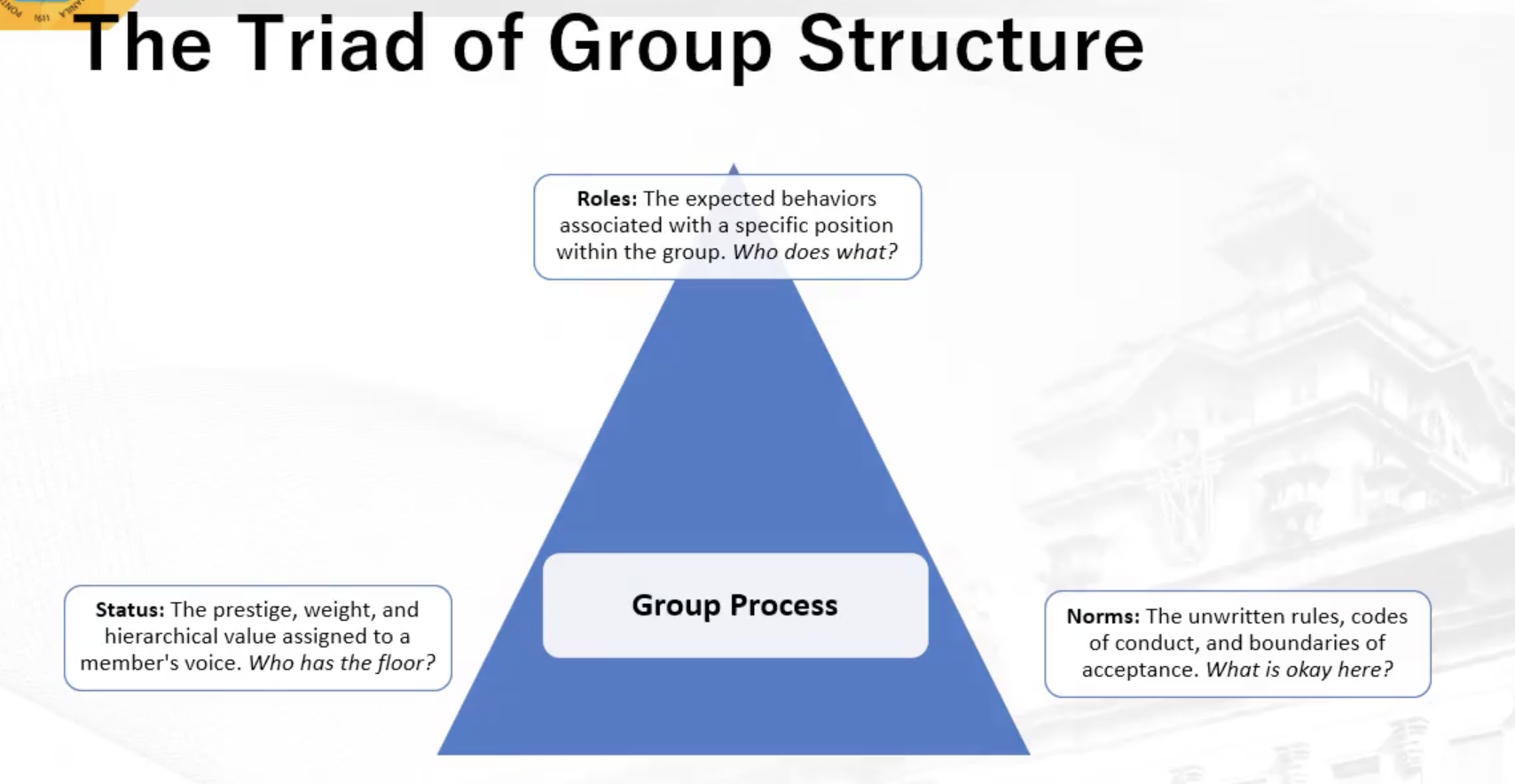
roles
expected behaviors associated with a specific position within the group
who does that?
focuses on performance
norms
unwritten rules, codes of conduct and boundaries of acceptance
what is okay and what is not okay here?
focuses on behavior
status
the prestige, weight, and hierarchical value assigned to a member’s voice?
who has the floor?
it focuses on who’s being looked up to in the group
3 pillars of group roles
introduced by Kenneth Benne and Paul Sheats where they believe that people take on 3 types of roles which include:
task roles
maintenance roles
self-oriented dysfunctional roles
task roles
drive the group toward goal achievement
it is the engine of the group
behaviors that get the job done
different types of task roles
information seeker
information giver
opinion seeker
opinion giver
elaborator
coordinator
orienter
evaluator critic
energizer
procedural technician
recorder
note: these roles are not usually assigned, they come in as natural depending on a person’s skill and preference. but will eventually will be assigned in a more formal level.
information seeker
asks for clarification, factual data and authoritative evidence
very important role in a group since without information you wouldn’t be able to work in a task objectively
information giver
if someone seeks, someone has to give. OBJECTIVELY
offers authoratative facts, statistics, and personal expertise
the member who is knowledgeable
opinion seeker
clarifies values and feelings underlying group suggestions
it overall values what each one has to say
you ensure that other people understand
opinion giver
states beliefs or values regarding what the group should do subjectively
elaborator
expand suggestions with examples, rationale or future implications
ex: someone provided an information that members don’t understand, the elaborator expands this idea by providing examples to help members understand better
coordinator
clarifies relationships with ideas, impluse and suggestions together
his the one who looks ate the common denominator, similarities, etc.
ex
orienter
summarizes progress
questions the direction if the group wanders off topic
ex
evaluator critic
measures group decisions against standards of logic and practicality
ex
energizer
prompts the group into action or higher level of effort when energy dips
ensures that the group members are still engage
ex:
procedural technician
handles logistics and routine tasks
ex: submitting paper, creating seating arrangments, handling the materials
recorder
writes down ideas, decisions, and meeting minutes to serve as group memory
maintenance roles
social emotional behaviors focus on group cohesions, managing relationships and maintaining positive psychological climate
provide the oil to prevents the engine from overheating
types of maintenance roles
encourager
harmonizer
compromiser
gatekeeper / expediter
standard setter
group observer
follower
encourager
praises, agrees with, and accepts contributions of others
harmonizer
if there are 2 or more people, you expect conflict
mediate intergroup differences and reconciles interpersonal conflicts
compromiser
offers to yield status and modify a position to maintain group harmony
to settle something / differences in a group
gatekeeper / expediter
regulates communication flow as they ensure that members have a turn to speak
standard setter
expresses idealized standards for a group to achieve or apply
to keep the group successful and morale, you need someone to remind everyone of the group standard
group observer
tracks the psychosocial dynamics and interprets them constructively to the group
follower
goes along with the movement of the group
acts as a passive audience
“we do as other say”
self oriented dysfunctional roles
disruptive behaviors that fulfill individual needs at the expense of the group
a facilitator should be able to identify it as a functional deficit in the group structure. therefore, they should adjust the project to neutralize it
types of self oriented dysfunctional roles
aggressor
blocker
recognition seeker
self confessor
playboy / playgirl
dominator
help seeker
special interest pleader
aggressor
deflates others status, attacks ideas or aggresively jokes of others expense
basically a bully
blocker
opposes and rejects every idea
remains stubborn about almost everything and resist any consensus
would always find something to disagree with
recognition seeker
poses and acts in unusual ways
struggles to remain the center of attention
self confessor
uses group setting to express personal non group related feelings and insights
someone to emotional and too focus on their own emotions
making it appear as if it’s the most important thing
playboy / playgirl
place total lack of involvement through cynicism, course place or nonchalance
prefers to do other things than the task at hand
denominator
assorts authority by manipulating members
monopolizing members and discussion time
help sekeer
looks for sympathy by expressing insecurity and self depreciation
special interest pleader
speaks for hidden bias agenda
cloaking all needs in a representative mask
would use information / circumstances to achieve their hidden agenda
can a member play different roles?
yes they can
but it can be difficult if a member play several roles
status hierarchies and expectations states theory
Status hierarchy
expectations states theory
status generalization
status hierarchy
internal ranking system that dictates influence, deference, and communication priority
basically unspoken ranking system that decides which people are seen as important or not
affects who gets listened to, respected, etc.
this is calculated by these 2 types:
specific status characteristics
diffuse status characteristics
specific status characteristics
skills, talents, or attributes directly relevant to the group
what are you good at that helps the group with the current task
ex: may group video project and one member is good at editing
diffuse status characteristics
general social categories that carry widely shared cultural stereotypes regarding competence even when they have zero functional relevance to the task at hand
ex: gender, race, physical attractiveness, socio economic status
expectations states theory
groups assign status immediately based on perceived competence to solve the task
when a group works toward a goal, members look around the room and implicitly / rapidly rank each other
this ranking dictates who gets to speak, who’s ideas are valued, and who ultimately leads the group.
explains how status hierarchy emerge organically within a small task oriented group
developed by Joseph Burger
ex: during the first week of school, you already notice who has the potential to be the class president
status generalization
the mistake of assuming someone’s external traits (age, wealth, job title) make them competent at an unrelated group tasks
ex:
ginagawang leader yung oldest member or the one with the highest grade
when a high status member talks, they are given attention. pag hindi, no one pays attention
how does expectation states theory (EST) apply to virtual / remote teams where physical cues are hidden?
it still happens through and can be measure through the migration of diffuse status cues:
video call artifacts: high quality
demographic surfacing
geography and time zones