Critical Care Summary Slides HL
 Call Kai
 Learn
Learn Practice Test
 Spaced Repetition
 Match
Match Flashcards
 Knowt Play
1/141

There's no tags or description
Looks like no tags are added yet.
Name | Mastery | Learn | Test | Matching | Spaced | Call with Kai | Chat |
|---|
No analytics yet
Send a link to your students to track their progress
142 Terms
What are the types of IV lines?
peripheral, central, PICC
What is a risk of IV lines and urinary catheters?
infection
True or False: medications may vary the type of IV line that can be used
True
What are the types of urinary catheters?
foley, suprapubic, external (i.e., condom, purewick)
What are benefits of urinary catheters?
monitor urine output
What are types of feeding tubes?
nasogastric (NG), orogastric (OG), gastrostomy (G)
True or False: the size of NG tubes can vary in diameter, but not flexibility
False: they vary in both diameter and flexibility
What can be administered in an NG or OG tube?
liquid or crushable meds
What can be administered in a G tube?
liquid medications
Which feeding tube must be placed surgically?
G tube
Which feeding tube should avoid medication administration?
G tube
What are the labs in a fishbone?
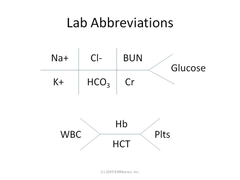
What are the pharmacokinetics of an ideal pain medication for crit care?
rapid onset + rapid offset + titratable
Should we clarify pain medication allergies?
yes
What are S/S of morphine allergy?
itching bc H2 release
What is the alternative medication when there is a morphine allergy?
hydromorphone
What adjunct therapies should be used with pain medications?
bowel regimen (laxatives) + naloxone prn + antiemetics prn
Which can cause withdrawal
A. Laxatives
B. Naloxone
C. Antiemetics
B
What are examples of antiemetics used with pain management?
Prochlorperazine (Compazine)
Ondansetron (Zofran)
Promethazine (Phenergan)
PRO POPers
Which medications should we consider for mild pain or as antipyretics?
NSAIDs + APAP
What dosage forms are used for NSAIDs in crit care?
IV or PO
What are pros of NSAIDs and APAP?
limits opioid use
What are ADRs of NSAIDs?
GI bleed and renal risk
Which NSAID can only be used for 5 days?
ketorolac
What dosage forms of APAP are used in crit care?
IV, PO, PR
True or False: APAP has a max daily dose
True
What medications are used to treat neuropathic pain in crit care?
gabapentin or pregabalin
What is the MOA of ketamine?
NMDA receptor antagonist
When is ketamine used?
after surgery for opioid sparing
What dose of ketamine should be used?
LOW
What are the opioids often used in crit care pain management?
fentanyl, morphine, hydromorphone
When is fentanyl indicated?
hemodynamic instability or renal failure
What is a precaution of morphine?
renal failure due to metabolites
Things to consider with sedation in ICU:
metabolism (hepatic, renal)
PK
hemodynamics (HR, RR, BP)
Risks
$
What are risks of sedation?
harm from over-sedation
delirium
worsens outcomes when there are no sedation holidays
potential for harm to self (i.e., pulling lines, tachycardia)
ADRs
True or False: sedatives have no analgesic properties
True except precedex
What are sedation holidays?
daily interruptions
What are benefits to sedation holidays?
decreases time on ventilator and length of stay (LOS) in ICU
True or False: sedation does not need to be tapered
False taper when sedation is used for many days
What should we balance when it comes to sedation?
minimal sedation + patient comfort
continuously assess need for sedation and use non-pharm therapy when possible
What RASS score is goal?
-2 to +1
What is the benefit of maintaining a RASS score within goal range?
decreases time on vent, decreases delirium, and decreases long-term cognitive dysfunction
What medications can be used for sedation in the ICU?
benzos (i.e., lorazepam), propofol, dexmedetomidine (precedex)
When is lorazepam indicated for sedation?
useful if risk of alcohol withdrawal or seizures, but LAST choice
What are precautions of lorazepam for sedation?
Accumulation/prolonged sedation and liver dysfunction may limit use
Prolonged dependence on mechanical ventilation
Increased risk of delirium
Increased ICU stay?
What are benefits of lorazepam for sedation?
cheap and long hx of use
What is the onset and duration of propofol?
rapid + short
When is propofol indicated for sedation?
Beneficial for head injury (rapid and frequent monitoring)
Evaluated intracranial pressures
Which sedative is made in lipid emulsion and must be accounted for in total nutrition for patient?
propofol
What are precautions of propofol?
increase TGs or induce pancreatitis
What are ADRs of propofol?
PRIS (rare)
hypotension (add vasopressors)
hyperTGs
infection
What are S/S of PRIS?
high mortality
dysrhythmia
HF
metabolic acidosis
renal failure
What is the most expensive sedative?
precedex
When is precedex indicated?
short term (< 24 hour) use
delirium
extubation
What are ADRs of precedex?
hypotension or HTN (esp if bolus dose)
Which sedatives may be used together as adjunct therapy?
precedex + benzos
When is therapeutic paralysis indicated?
Certain cases of acute respiratory distress syndrome (ARDS)
REFRACTORY agitation/combativeness
"Fighting the vent"
Increased intracranial pressure
Therapeutic hypothermia
What agents are used for therapeutic paralysis?
nondepolarizing agents: cisatracurium (Nimbex) >>>> or pancuronium or atracurium
True or False: sensory neurons are not affected during therapeutics paralysis
True can still hear, smell, feel pain, but CANNOT express themselves
What must be used prior to paralytics?
sedatives + analgesics
What are possible complications of paralytics?
corneal ulcers (unable to blink, treat with artificial tears or close eyes)
prolonged weakness/atrophy
pneumonia
DVT
How long can we use paralytics for?
idk but shortest duration as possible
Who is at risk for VTE?
most ICU patients
Would you want to use non pharm or pharm therapy for VTE PPX?
pharm therapy is preferred
What should we adjust for with VTE PPX?
renal dysfunction
What are C/Is of VTE PPX?
thrombocytopenia (< 100K) or an active bleed
What can we use for VTE PPX?
UFH, lovenox, fondaparinux
When do we use UFH?
renal failure
What is the dose of UFH?
2-3x QD
What is the ADR of UFH?
risk of HIT
What is the precaution of lovenox and fondaparinux?
adjust/monitor in renal dysfxn
What is the dose of lovenox and fondaparinux?
QD
What is the ADR of fondaparinux?
thrombocytopenia (NOT HIT)
When do we use non pharm VTE PPX?
use SCDs when C/I to other therapies
How long are SCDs worn daily?
20+ hours
What are precautions of SCDs?
poor adherence and fall risk
What causes stress ulcers?
physiological stress
→ mucosal ischemia
→ lack of homeostasis in gastric mucous
→ SRMD
→ bleeding
What are S/S of stress ulcers?
Vomiting blood (hematemesis)
Blood in stool (occult blood, frank melena)
Decrease in hemoglobin > 2 g Or require transfusion
Decrease in SBP > 20 mmHg
HR increase > 20 bpm
What are RF of stress ulcers?
coagulapthy
shock
CLD
neuro-critical care (i.e., head injury)
True or False: stress ulcers are rarely in the ICU, mostly in acute care
False other way around
When do we stop stress ulcer PPX?
when risk decreases
What medications are used for stress ulcer PPX?
PPIs and H2RAs
Which stress ulcer PPX medication increases risk of c. diff?
PPIs
What are limitations of H2RAs?
CrCl, confusion, thrombocytopenia
What is delirium?
disturbed level of consciousness and cognition or perception, reduced focus/attention
Is delirium considered hypo or hyperactive?
it can be either
What are RF for delirium?
Elderly
Dementia
Prior coma
Emergency surgery/trauma
Higher Acute Physiology and Chronic Health Evaluation (APACHE) score
Benzos
Blood transfusion
How can we prevent delirium?
Reorientation
Sleep hygiene
Early mobilization
Light sedation
How can we treat delirium?
there is only symptom management, NO treatment
What medications treat delirium symptoms?
Atypical Antipsychotics
Haloperidol
Dexmedetomidine
When do we use precedex for delirium?
when agitation is preventing extubation
How long should medications be used for delirium symptom management?
minimal duration + maximize safety
What are pathophys components of hemodynamics?
preload, cardiac contractility (CI), and afterload
What is preload?
amount of fluid entering the heart
What is CI?
heart strength
What is afterload?
pressure the heart must pump against to force fluid through the system
What measures hemodynamics in ICU?
pulmonary artery catheter
What are the types of shock?
cardiogenic, hypovolemic, septic, and anaphylactic
What causes cardiogenic shock?
massive MI or severe CHF
What are the hemodynamic characteristics of cardiogenic shock?
LOW CI
high preload + normal or high afterload