Intro to Gastroenterology and Hepatology
 Call Kai
 Learn
Learn Practice Test
 Spaced Repetition
 Match
Match Flashcards
 Knowt Play
1/15

There's no tags or description
Looks like no tags are added yet.
Name | Mastery | Learn | Test | Matching | Spaced | Call with Kai | Chat |
|---|
No analytics yet
Send a link to your students to track their progress
16 Terms
Course of food from mouth to anus
Mouth → Pharynx → Esophagus → Stomach → Small intestine (duodenum, jejunum, ileum) → Colon → Rectum → Anus.
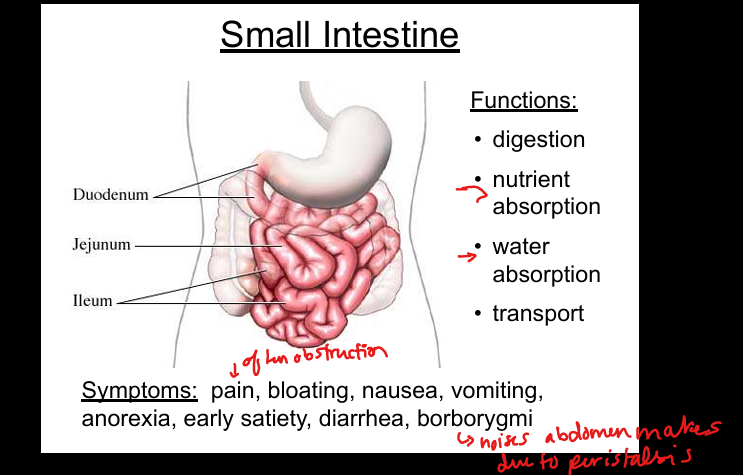
Main function of the small intestine
Digestion, nutrient absorption, water absorption, transport.
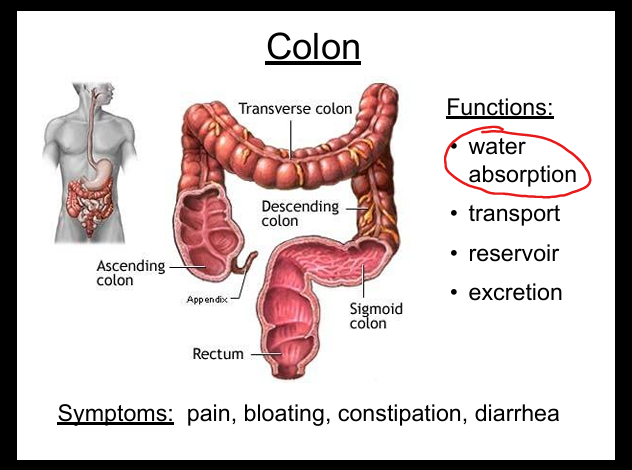
Main function of the colon
Water absorption, transport, reservoir, feces formation.
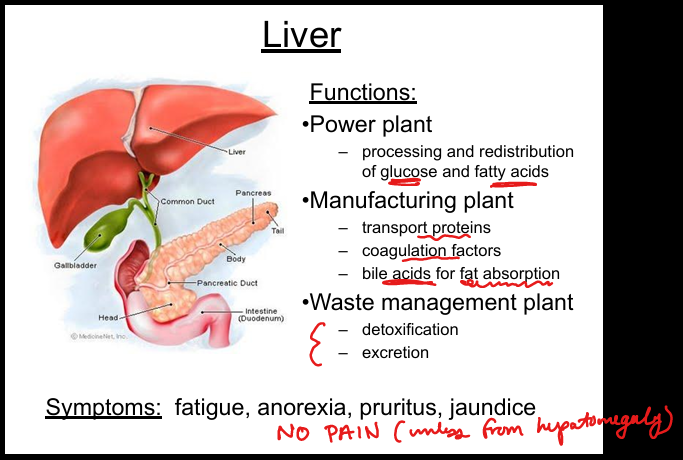
Main function of the liver
Metabolism, detoxification, bile production, protein synthesis (albumin, clotting factors).
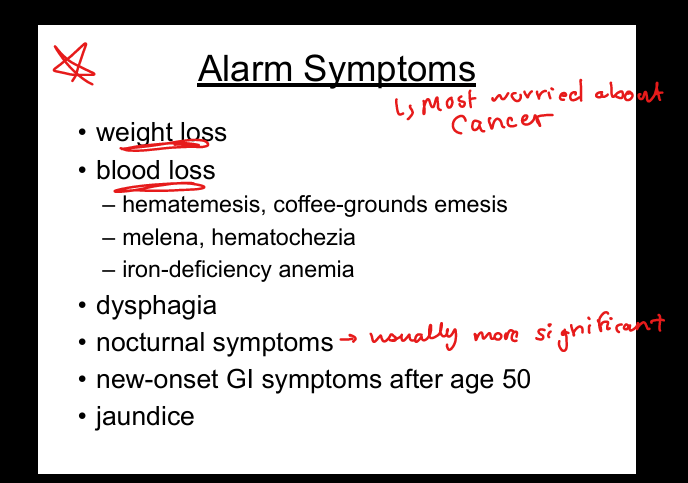
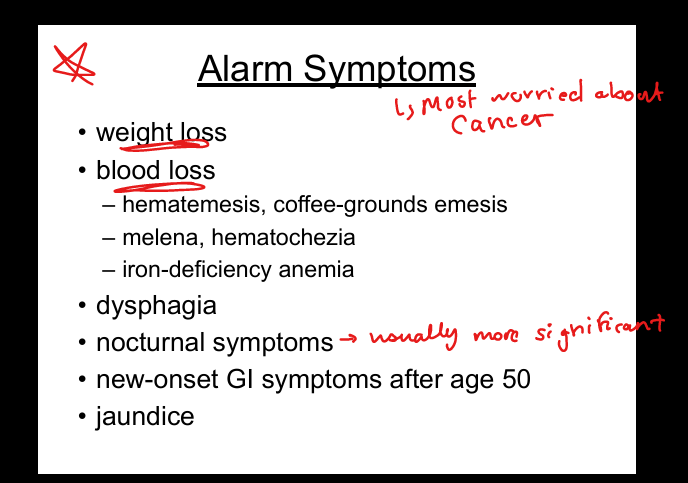
Alarm symptoms: weight loss
Unintentional weight loss suggests malignancy or severe disease.
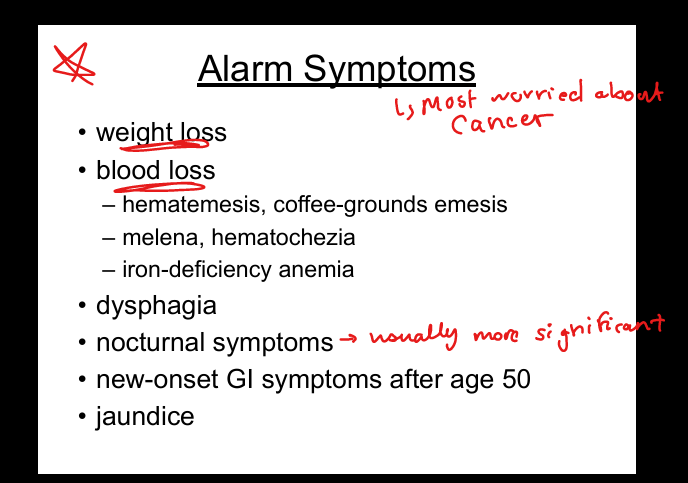
Alarm symptoms: GI bleeding
Hematemesis, coffee‑ground emesis, melena, hematochezia, iron‑deficiency anemia.
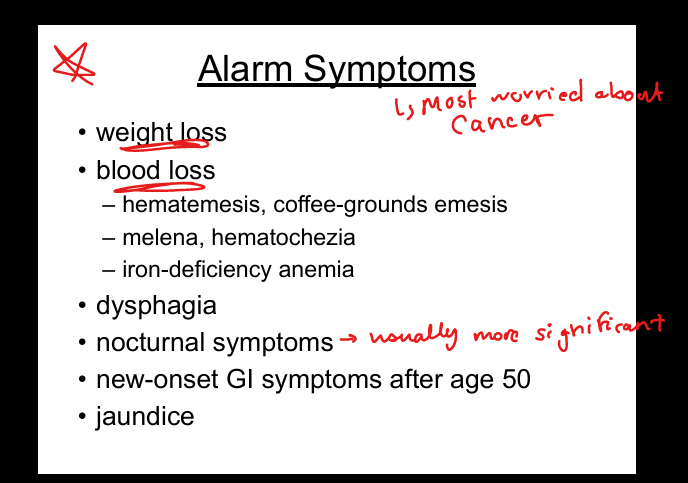
Alarm symptoms: dysphagia
Progressive or painful swallowing suggests obstruction or cancer.
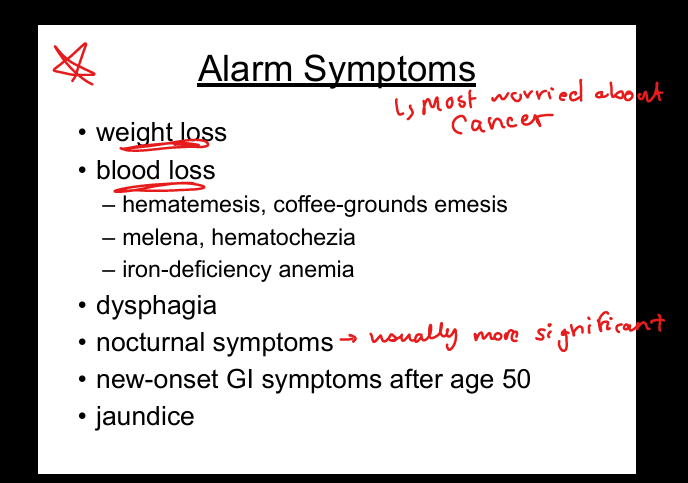
Alarm symptoms: nocturnal symptoms
Nocturnal pain or diarrhea suggests organic disease.
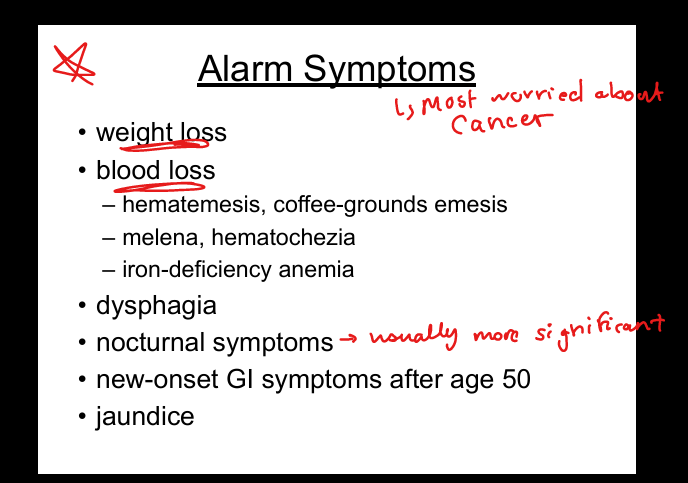
Alarm symptoms: new symptoms after age 50
New onset GI symptoms in older adults raise concern for malignancy.
Alarm symptoms: jaundice
Indicates biliary obstruction or liver disease.
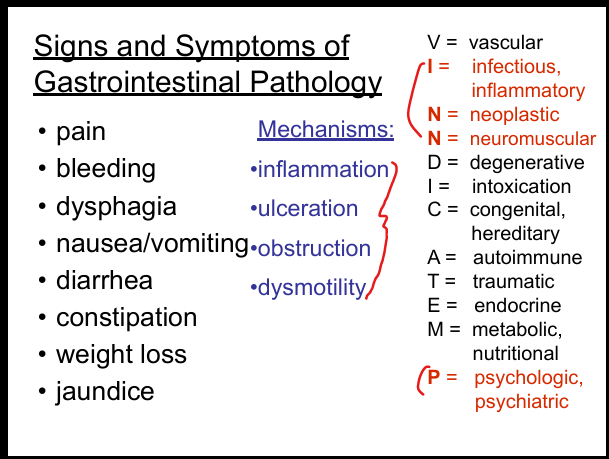
GI symptom mechanism: pain
Inflammation, obstruction, ischemia, ulceration.
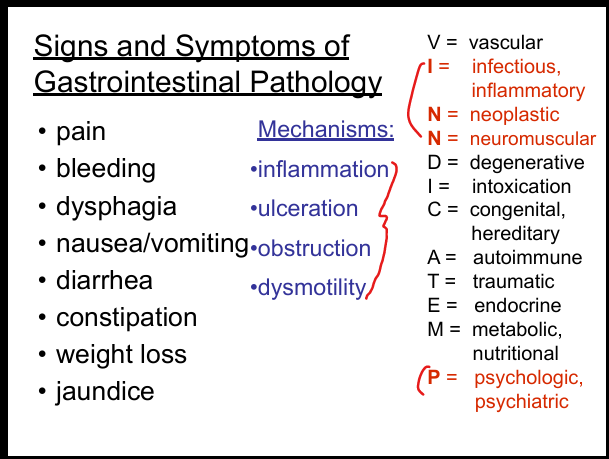
GI symptom mechanism: bleeding
Ulcers, varices, malignancy, IBD.
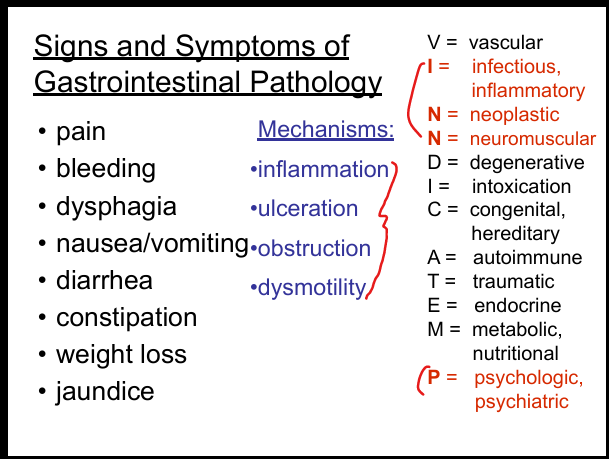
GI symptom mechanism: nausea/vomiting
Obstruction, dysmotility, inflammation.
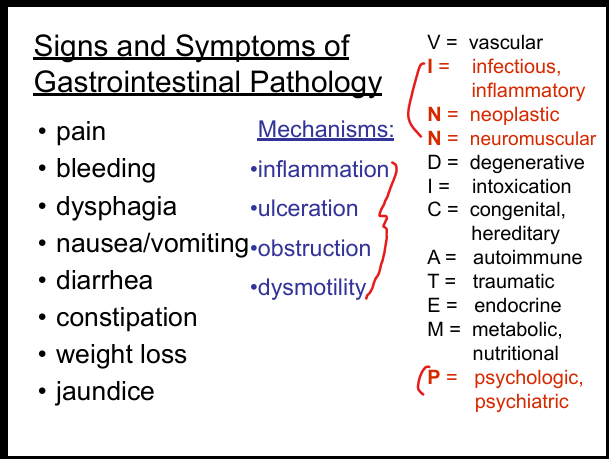
GI symptom mechanism: diarrhea
Infection, malabsorption, inflammation, hypermotility.
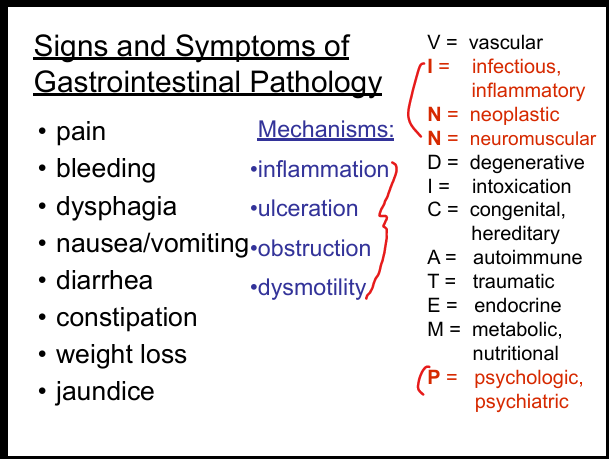
GI symptom mechanism: constipation
Dysmotility, obstruction, dehydration.
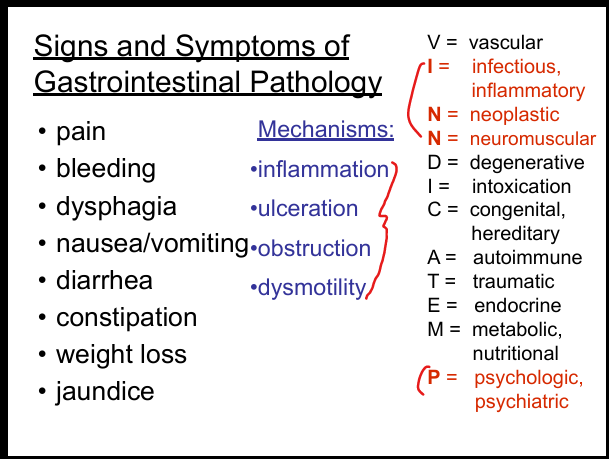
GI symptom mechanism: jaundice
Biliary obstruction, hepatocellular injury.