Nutrition & Radiation Therapy
 Call Kai
 Learn
Learn Practice Test
 Spaced Repetition
 Match
Match Flashcards
 Knowt Play
1/25

There's no tags or description
Looks like no tags are added yet.
Name | Mastery | Learn | Test | Matching | Spaced | Call with Kai | Chat |
|---|
No analytics yet
Send a link to your students to track their progress
26 Terms
Why is Nutrition important?
A patients nutritional status is critical in fighting disease, cell building and tolerance of therapy
Terminology
Pharyngitis – inflammation of the pharynx, causing symptoms of a sore throat
Mucositis – inflammation of a mucus membrane such as the lining of the mouth and throat
Stomatitis – inflammatory condition of the mouth
Anorexia – loss of appetite resulting in weight loss
Cachexia – state of general ill health with early satiety, electrolyte and water imbalances, and progressive loss of body weight, fat and muscle – a general ‘wasting away’. Affects ½-2/3 of patients with cancer.
Marasmus – calorie malnutrition. Common in slender of slightly underweight patients. Weight loss of 7%-10% and fat and muscle depletion
Kwashiorkor – protein malnutrition. It is seen in patients with adequate intake of carbs and fats, but not protein. It is often overlooked because patients appear well-nourished. Characterized by muscle wasting, depigmentation of hair and skin, edema
Xerostomia – dry mouth
Dysphagia – pain or difficulty swallowing
Early Satiety – early feeling of fullness after eating
Nausea and Vomiting
Constipation
The science of nutrition
The study of nutrients in foods and how these nutrients are processed by the body
2 types of Nutrients
Macronutrients
Carbohydrates
Fats
Protein
Water
Micronutrients
Vitamins
Minerals
Carbohydrates
Primary energy source for body
Basic unit: glucose
4 calories/gram
Sugar, Starch, Fiber
Glucose, fructose, lactose, and sucrose; polysaccharides
Protein
Growth, repair tissue
Enzymes, hormones
Basic unit: amino acids
4 calories/gram
Meat, Dairy, Nuts
Fat
Protects, insulates organs, cell membranes
Alternate energy source
9 kcal/gram
Saturated (Butter)
Unsaturated Fats (Oils)
Water
Largest component of the body
Adult body is 75% - 80% water
Maintains temperature
Solvent for pro, cho, fat, vit, minerals
Medium for chemical reactions
Lubricant, shock absorber
Vitamins and Minerals
Fat Soluble Water Soluble
A, D, E, K B’s, C
Macrominerals Microminerals (Trace)
Ca, Mg, P, K, Na, Cl Fe, Zn, Cu, Se
Essential for physiological processes
Deficiency leads to disease state
Nutrition Basics (MyPlate)
Balancing Calories
Enjoy your food, but eat less.
Avoid oversized portions.
Foods to Increase
Make half your plate fruits and vegetables.
Make at least half your grains whole grains.
Switch to fat-free or low-fat (1%) milk.
Foods to Reduce
Compare sodium in foods like soup, bread, and frozen meals ― and choose the foods with lower numbers.
Drink water instead of sugary drinks.
Healthy diet vs “scientific diet”
Healthy Diet
Provides adequate nutrients
Fruits, vegetables, whole grains, lean meats
Portion control
Limited processed foods, sugar, saturated, trans fat
Limit alcohol
“Scientific Healthy Diet”
50-60% carb, 25-35% fat, 10-15% protein; RDA’s
25-30 kcal/kg body weight
Causes of cancer
External
Tobacco, Chemicals, Radiation
Internal (Unhealthy diet may allow expression of internal factors
Inherited mutations
Hormones
Immune conditions
What is the main goal of why ideal nutrition is needed for cancer patients?
To prevent or correct nutritional deficiencies and to minimize weight loss.
Nutrition in Cancer Prevention
Healthy Weight (BMI < 25)
Moderate fat intake
Fruits and vegetables, plant foods
antioxidants
Limit red meat
Limit consumption of alcohol
Physically active lifestyle
What are Cancer’s effect on nutritional status?
In other words, Why is nutritional status altered when a patient has cancer?
Altered metabolism of carb, protein, and fat
Increased metabolic rate
Altered GI function and nutrient absorption
Psychological changes
Early Satiety, food aversions, not enjoying food leads to social isolation
Anorexia
Loss of appetite resulting in weight loss
The causes of anorexia in a patient can occur because of
Fatigue
Dry mouth, Esophagitis, nausea, vomiting
Pain
Presence of an infection
Presence of stress, anxiety, depression
Change in usual life style patterns
Cachexia
Loss of lipid (fat) and protein stores induces: weight loss, muscle wasting, lethargy, chronic nausea, weakness, immunosuppression.
STRONG relationship between nutrition status, weight loss, and cancer survival. This condition needs lots of care, increased food intake alone cannot reverse Cachexia
Cancer
Altered Taste, Smell
N/V
Swallowing Problems
Early Satiety
Altered Metabolism
Increased energy expenditure
Depression/Anxiety
↓
Anorexia
↑↓
Cachexia
Screening/assessment
Assess the current nutrition status. Id factors that could complicate optimal nutrition in the future (ex: impending esophageal surgery)
Nutrition Screening
Identify patients at risk
by nursing staff (inpatient)
by dietitian (outpatient)
Nutrition Assessment
In depth assessment of nutritional status
Nutrition assessment
Ht, Wt, BMI
Subjective Global Assessment
Weight, Food Intake, Symptoms, Fncl Status, Cancer, Metabolic Stress, Physical Exam
Diet History
Supplement use, Medications
Medical History
Labs
Treatment of Symptoms
Goals of nutrition therapy
Interventions include counseling patient, providing supplements, or providing enteral or parenteral nutrition
Intervention Goals
Correct nutritional deficiencies
Minimize weight loss
Maintain protein status
support immune system
Maintain fluid status
Maintain QOL (strength, energy, ↓pain)
Reduce nutrition related side effects treatment & “symptoms” of cancer
Radiation Treatment & Nutritional Status
Effects of Radiation on Nutritional Status
Altered transit, digestion, absorption
Side effects that cause fatigue, pain, and ↓appetite – all of which affect oral intake
Double Whammy
Increased complications and decreased survival
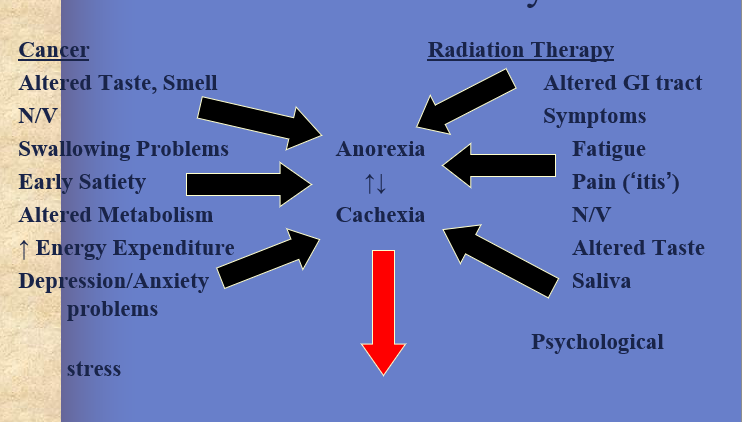
Effects of Radiation Therapy
Side effects depend on
Area irradiated
Total dose
Duration of treatment
What can we do for: ??
Anorexia (lack of appetite resulting in wt loss)
Altered Taste
Xerostomia (dry mouth)
Weight Loss
Anorexia (lack of appetite)
Sere food attractively and in a pleasant environment
Small, frequent high pro/cal meals
Avoid liquids with meals
Add extra calories to meals (butter, powdered protein)
Liquid supplements
Eat favorite foods
Increase fluid intake
Altered Taste
No Taste: Spices
Tart foods
Strong tasting foods (choc vs vanilla)
Bad Taste:
Use plastic utensils
Cold temperature foods
Chew gum, use lemon drops
Rinse mouth with tea, ginger ale, salt water
Xerostomia (dry mouth)
Salt or soda mouthwash before eating
Use sauces and gravies; eat moist foods
Sour foods to increase salivation
Sip water often
No smoking, alcohol
Weight Loss
Small frequent meals
High calorie/high protein low volume foods
Liquid supplements
What can we do for: ??
Dysphagia (difficulty swallowing)
Sore Mouth/Throat (‘itis’)
Nausea
Diarrhea