Week 8: Work, Health and Wellbeing
 Studied by 0 people
 Call Kai
 Learn
Learn Practice Test
 Spaced Repetition
 Match
Match Flashcards
 Knowt Play
1/11

There's no tags or description
Looks like no tags are added yet.
Name | Mastery | Learn | Test | Matching | Spaced |
|---|
No study sessions yet.
12 Terms
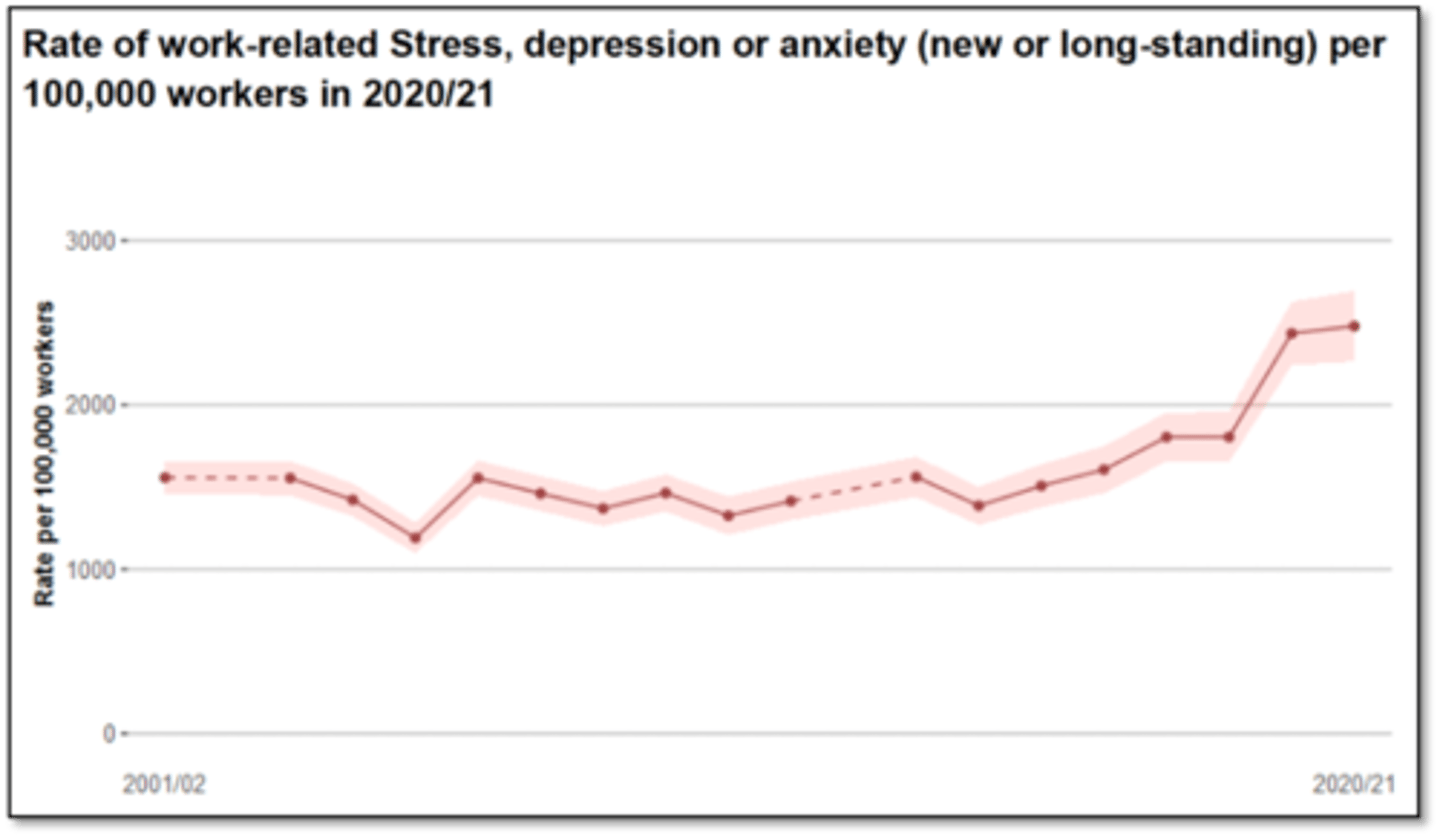
What are the most prevalent causes of work-related ill health cases?
- 50% of cases in 20/21 were due to depression and anxiety.
- 28% MSK disorders
- Rest were others.
Is work good for health and wellbeing?
Yes it is generally good for physical + mental health/wellbeing, whilst not working is associated w/ opposite.
Work can reverse adverse health effects.
What is the proviso behind work being good for health?
The nature, quality of work and social context needs to be considered.
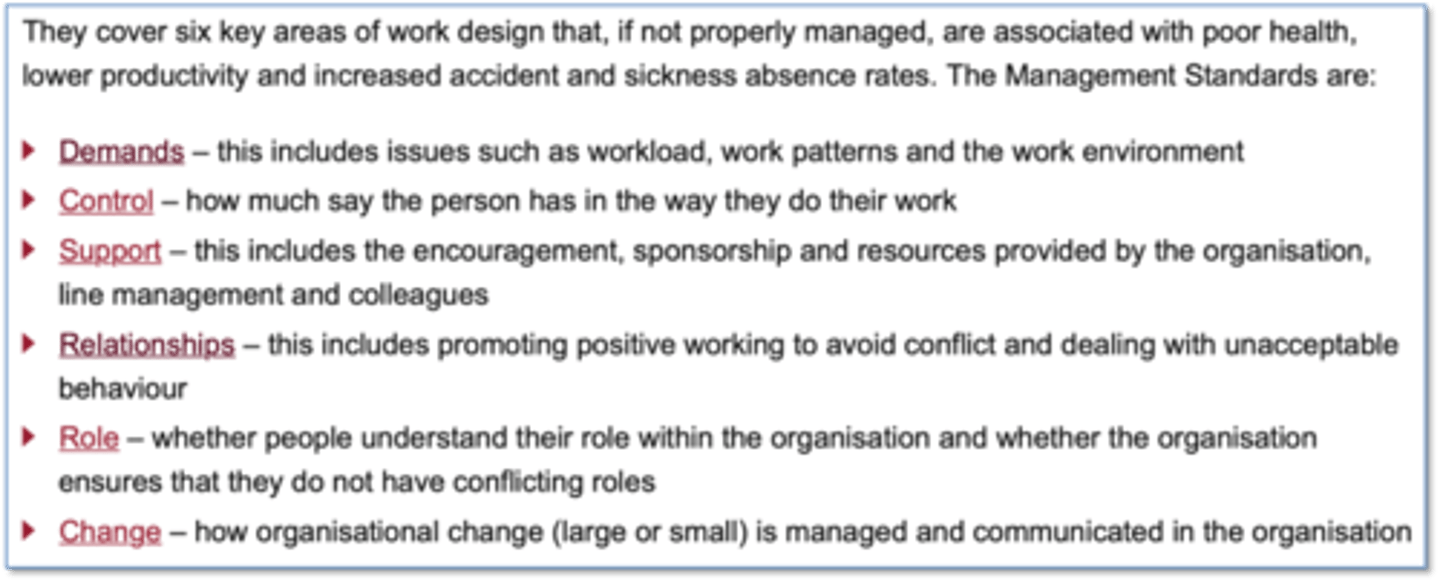
What does quality of work and its social context mean?
Not too high demands (workload and environment), have good control and support, good relationships, understanding of own role and good organisation of change.
To what extent is work good for health and wellbeing?
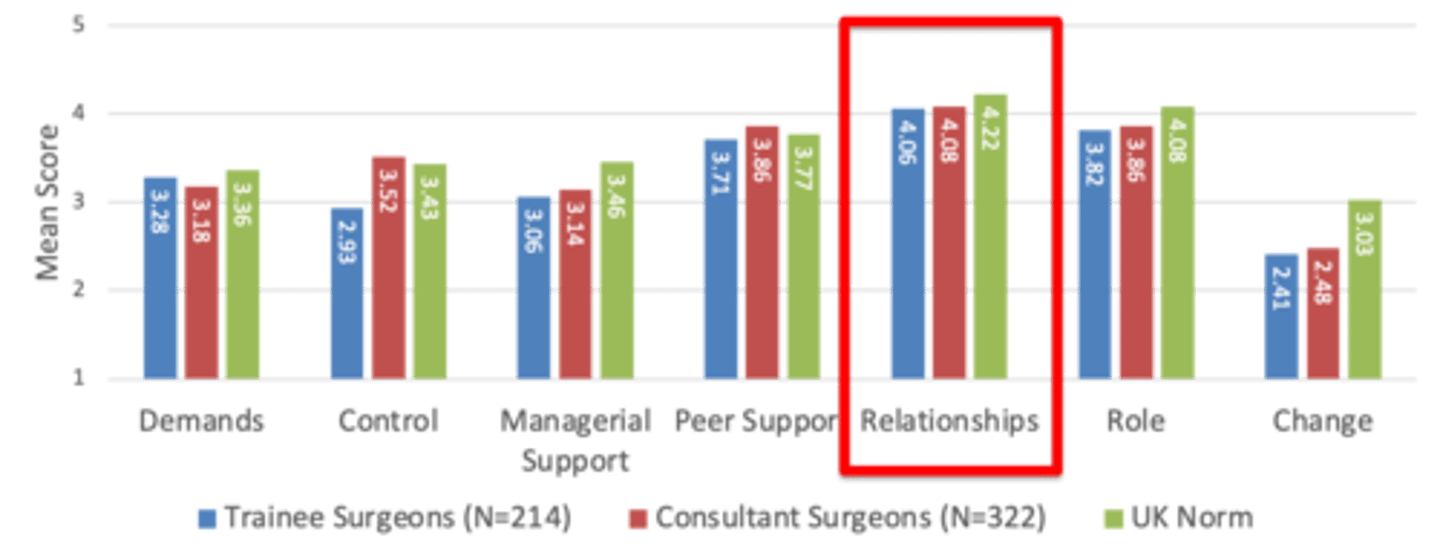
For eg. with consultants -
Relationships (bullying + harassment) were nearest to achieving the standard (5 = being met).
What else does management of work standards relate to?
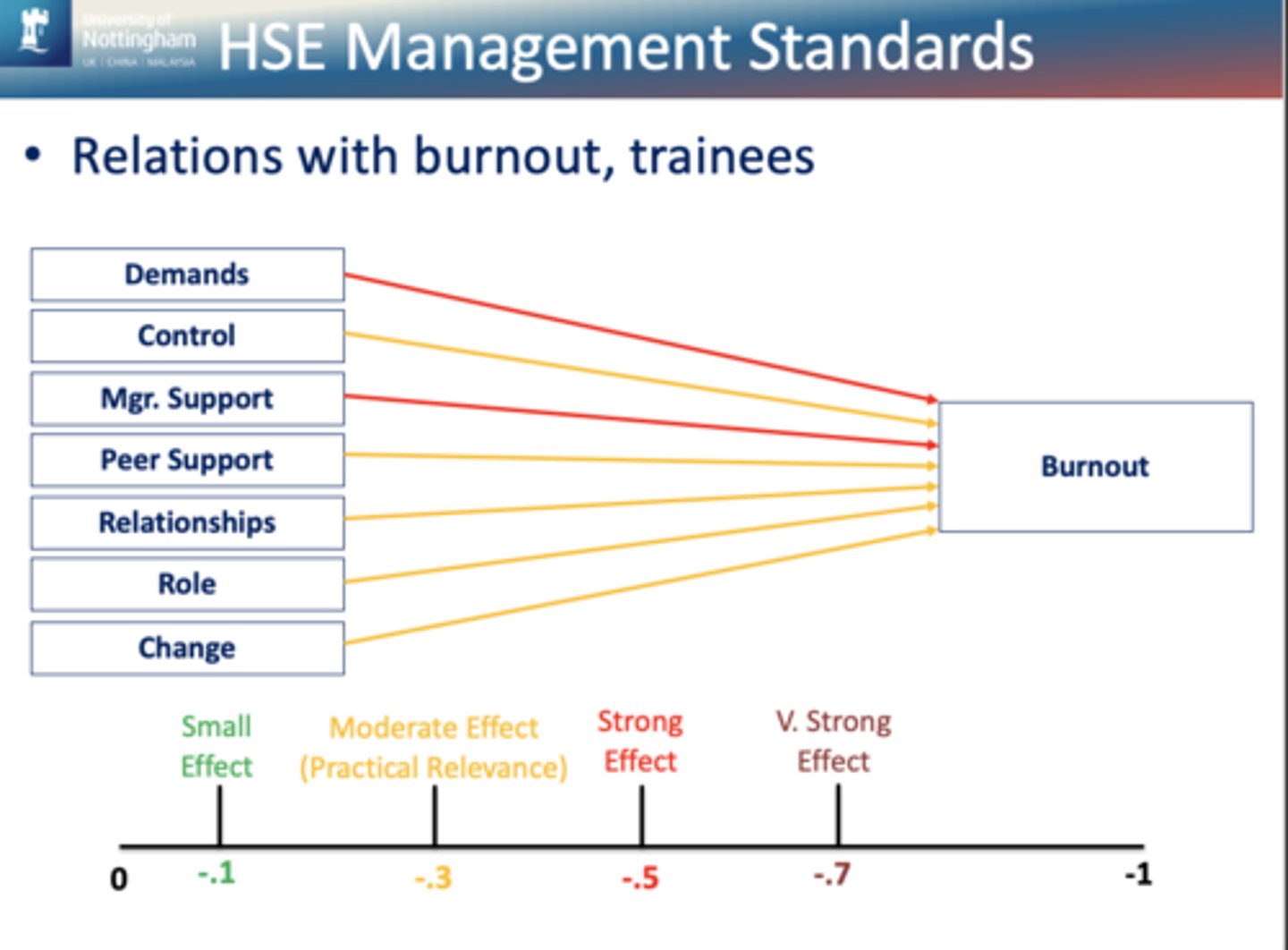
Burnout is taken into consideration. Trainees tend to have more demands and less manager supports so more likely to burnout than consultants.
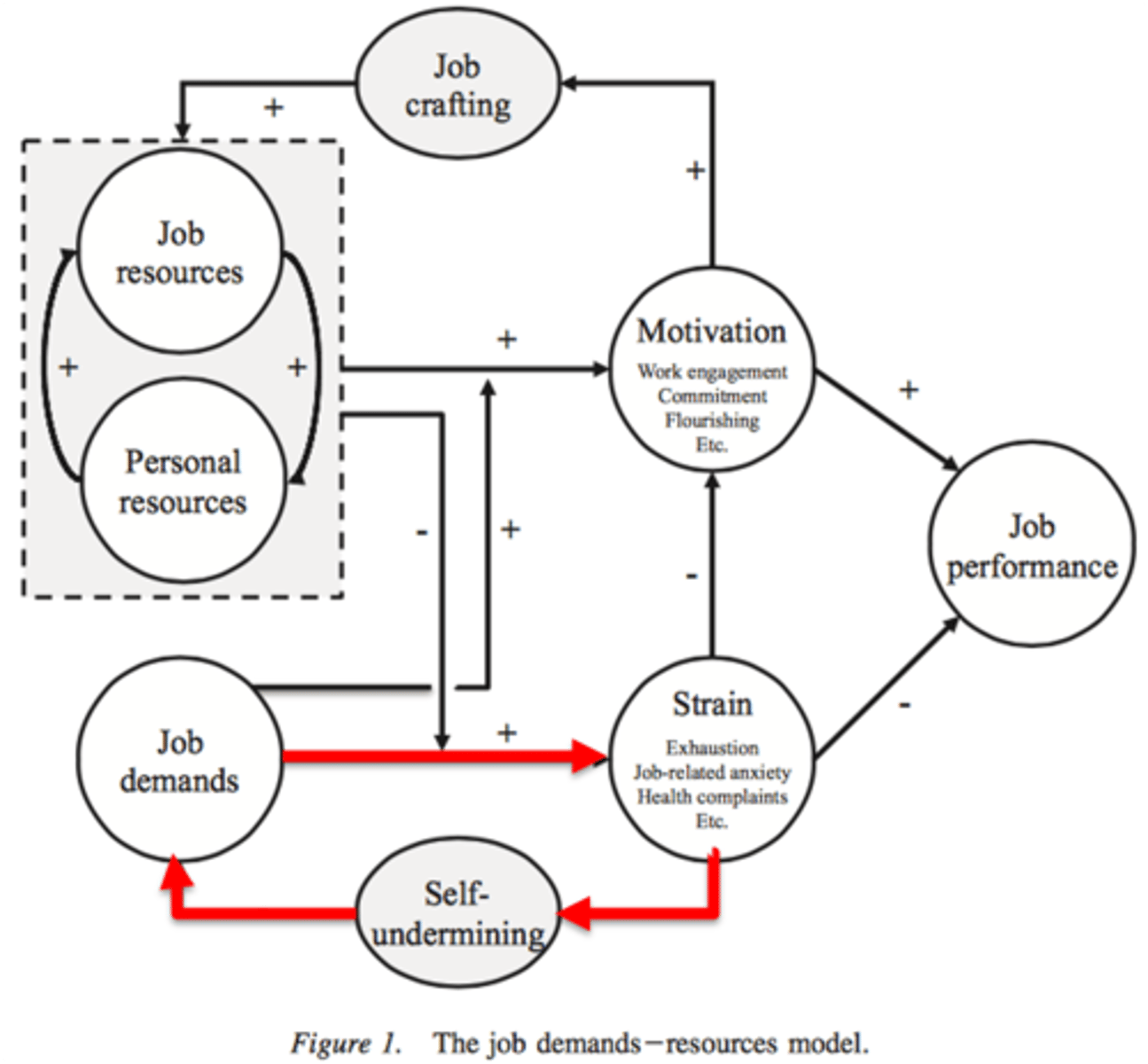
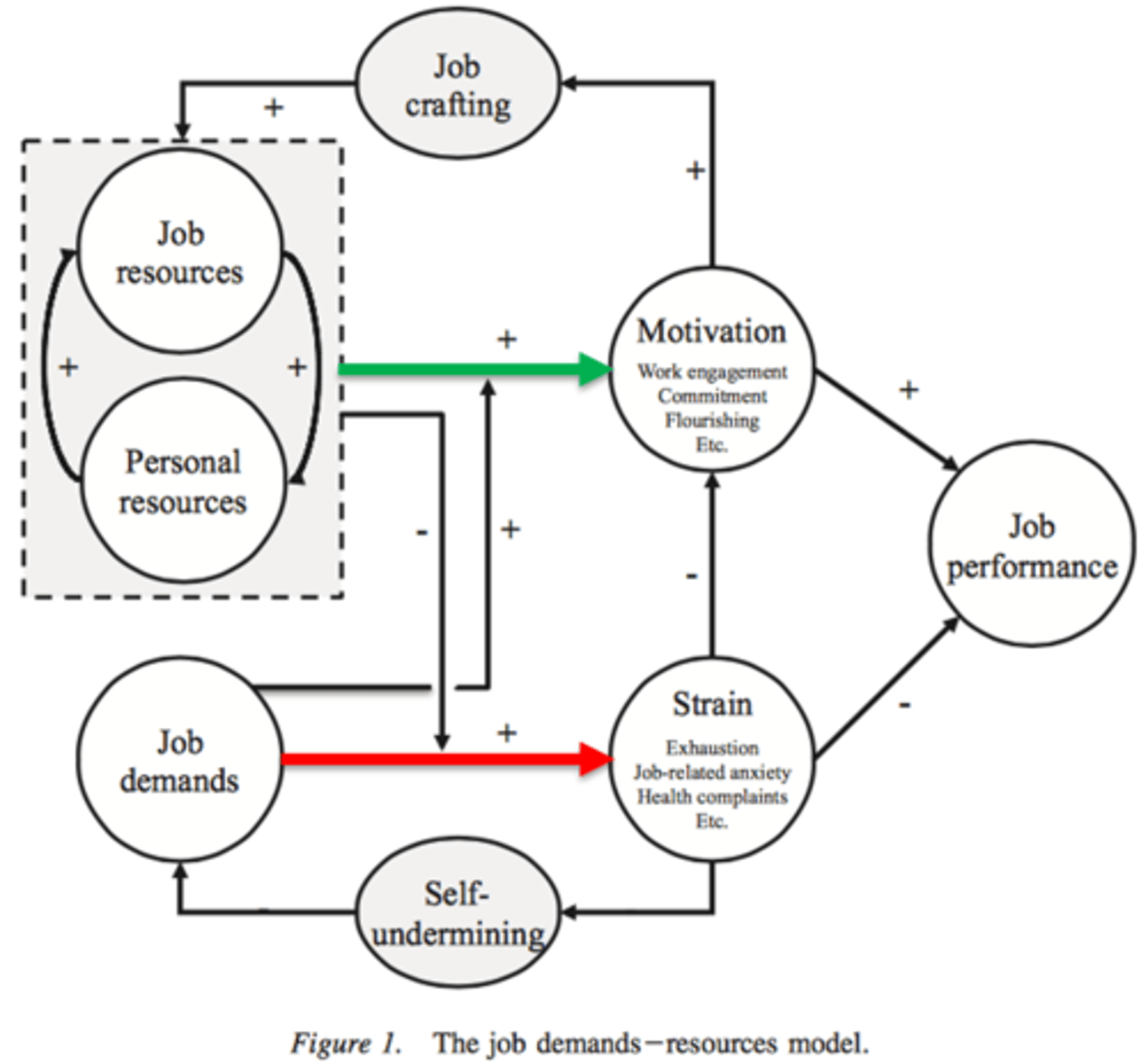
What are the 2 categories job characteristics are classified into and how is this linked to the Job Demands-Resources model?
1. Demands - physical/pysch/social or organisational eg. work pressure + emotional interactions. Instigate health impairment.
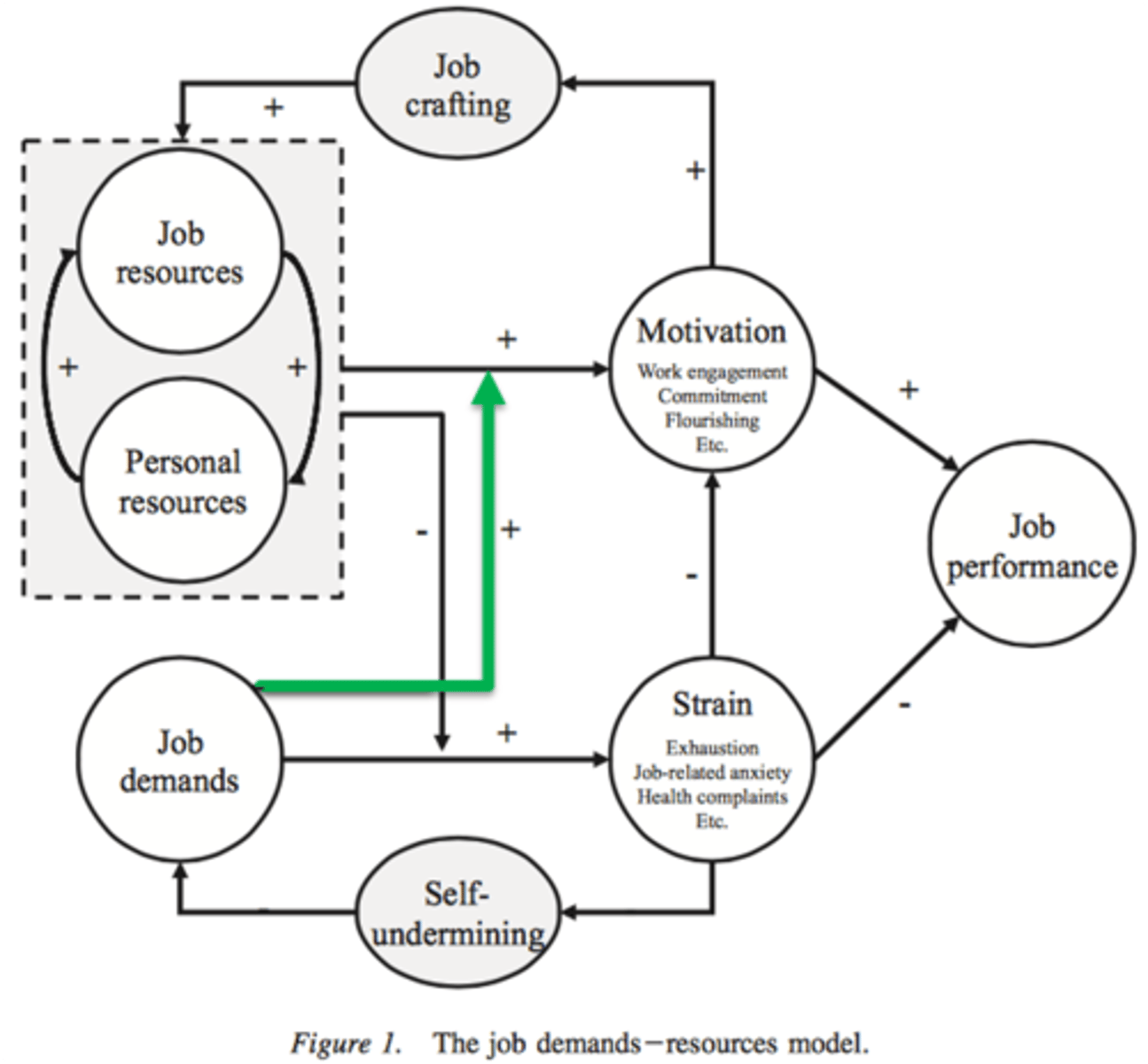
2. Resources - needed to achieve goals, reduce job demands and allow personal growth eg. performance feedback, autonomy, skill variety. Instigate motivational process and buffer (moderate) impact of demand on strain.
What is the framework of job resources? (3)
1. Group level - team climate (horizontal resources)
2. Leader level - leadership quality (vertical resources).
3. Organisational level - support (vertical resources).
When do job resources particularly influence motivation?
When demands are high i.e. resources become motivating and useful when they're needed.
What are personal resources?
Optimism and self-efficacy, play a similar role as job resources in buffering strain. Motivation has +ve impact, strain has -ve impact.
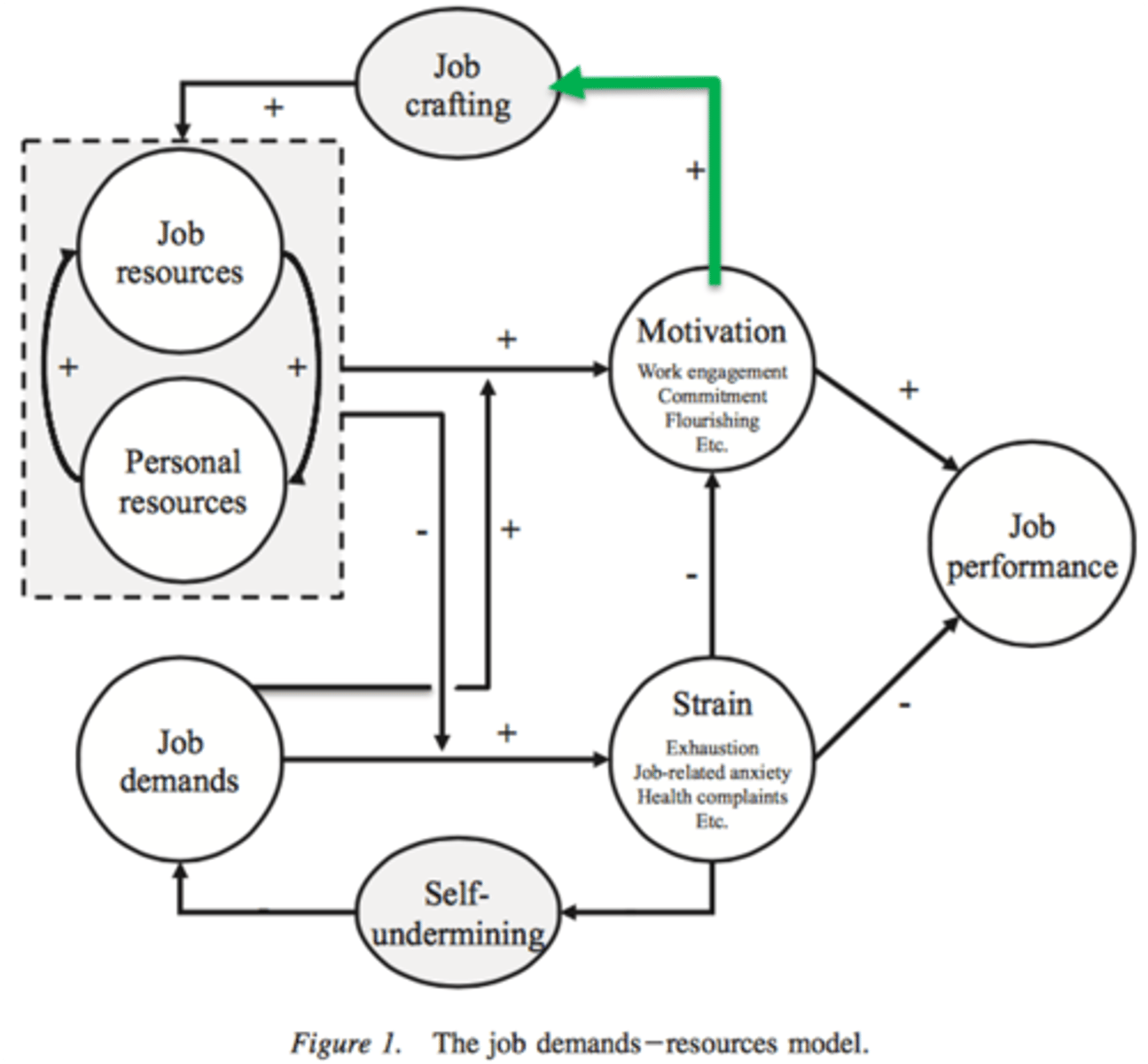
What are motivated employees more likely to use?
Job crafting behaviours - leads to more resources and more motivation.
What kind of behaviours are strained employees more likely to show?
Self-undermining behaviours, lead to more demand and strain eg. poor comms, mistakes and conflict.