Bio180Physio - Lec1 Protein Interactions
 Call Kai
 Learn
Learn Practice Test
 Spaced Repetition
 Match
Match Flashcards
 Knowt Play
1/18

There's no tags or description
Looks like no tags are added yet.
Name | Mastery | Learn | Test | Matching | Spaced | Call with Kai | Chat |
|---|
No analytics yet
Send a link to your students to track their progress
19 Terms
name 4 common organic molecules in the body
carbohydrates, lipids, proteins, nucleic acids
draw an amino acid and list the three side chain variants
carbon w/ amine, R side chain, carboxylic acid, and H
polar, nonpolar, and ionized R groups
explain how amino acids connect
peptide bond; the H in amine and HO in carboxylic acid → -H20 so that the N and C bind
explain primary structure
long but plain sequence of amino acids
explain secondary structure
proteins start folding into alpha helix or beta-pleated sheets, connected by hydrogen bonding
explain tertiary structure
driven by interactions between the R groups, actually becomes functional because the folding makes active sites
structurally solid enough to stay stable, but flexible enough to function
quaternary structure
separate chains within quaternary structure called “subunit” w/ its own primary/secondary/tertiary status, bound by noncovalent bonds
ligand
ion or molecule that binds to protein by electric or hydrophobic interactions
binding is generally weak → easy to break
Brownian motion - definition and its application
random movement of molecules → natural and random binding/unbinding
protein binding depends on two things
conformation and charge
name 3 properties of binding sites & explain them
specificity = how restrictive binding site is, higher specificity → more picky
affinity = how strongly protein binds to ligand, eg. more charged → higher affinity
saturation= % of binding sites used up
explain functional and regulatory binding sites
functional - triggers the physiological function
regulatory - presence changes the functional binding sites, inhibition or activation
explain the two types of regulation
covalent binding and allosteric binding
define catabolism and anabolism
catabolism - breakdown of organic molecules
anabolism - synthesis of organic molecules
explain and draw a diagram on how catalysts work
lower activation energy, not consumed in reaction
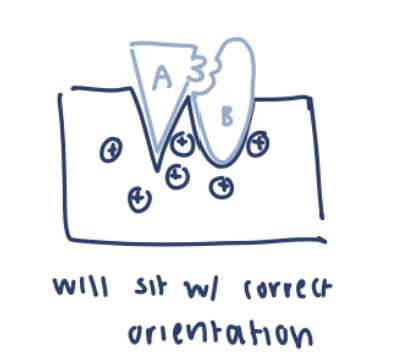
explain cofactor and coenzymes
cofactor - inorganic elements, simple bit necessary for enzyme to be functional
coenzyme - complex organic molecules acting as a mobile carrier, helps enyme run
explain how regulating enzymes → regulates reactions
concentration of enzymes regulates the reaction
explain the energy output and equilibrium of REVERSIBLE reactions in the body
reversible → release little energy
in EQ, products slightly more than reactants
explain the energy output and equilibrium of IRREVERSIBLE reactions in the body
release high energy
at EQ → ALL reactants turn into products