APUSH Exam Review - TP 2 (COLONIZATION)
 Multiple Choice & FRQ
 Call Kai
1/41

Earn XP
Description and Tags
1608-1754; includes english colonization and the beginning of American society
Name | Mastery | Learn | Test | Matching | Spaced | Call with Kai | Chat |
|---|
No analytics yet
Send a link to your students to track their progress
42 Terms
What is the span of the “colonization” period (TP 2)?
1607-1754
Virginia Company
Private company that sponsored the voyage that carried settlers to Jamestown that was supported by the queen
Reformation in England
Henry the eighth created the Anglican church when he broke away from the Catholic Church to divorce, his wife; his descendants continued to persecute Catholics
Roanoke
The first attempt at settling Roanoke failed because all of them returned to England
The second time, 100 more settlers try again, but the entire colony disappeared without a trace
Motivations for English colonization
-Gaining influence by expanding their territory (glory)
-colonize and convert the natives before the Catholic Spanish could (God)
-get the rich resource resources (gold)
-too many people, but not enough space
Indentured servants
People who couldn’t pay exchanged a few years of their freedom for passage to America
Had very few rights and were often physically mistreated
After their sentence ended, they were free, but most didn’t survive and those who did did not get the life they expected
Colony types
Corporate colony - stockholders granted a charter from the English throne, and have a sale on governance
Royal colony - under the direct authority and rule of the King’s government
Proprietary colony - a grant of land and governmental authority to a single individual
Jamestown
Had a rocky start and was almost abandoned
-run by John Smith, who was a strict governor and forced labor
-had to abandon search for gold in lie farming
Headright system
50 acres awarded to anyone paying for themselves or others
-people would get more land for bringing indentured servants
House of Burgesses
First elected assembly in colonial America in Virginia in 1619 but only wealthy people could vote
Mayflower Compact
Document signed in 1620 stating a majority rules government and was signed by working class men. This is the beginning of democracy in the United States.
Pilgrims vs Puritans vs Separatists
-Pilgrims were just people who moved over
-separatists wanted to completely separated from the Church of England
-Puritan/ just wanted to reform or purify the church of England
Massachusetts Bay Colony
Formed by merchants, hoping to trade with Indians
Major population boost
The Great Migration
migration of 21,000 English Puritans to the Massachusetts Bay colony
-a quarter where the servants; the rest were families
-had a healthy population growth and equal gender ratio
Quakers
Religious group who believed all people possessed the spirit of God
Abolitionist and believed in equal rights for women and religious freedom
Mercantilism
Policy made by imperial powers that regulates the economy to benefit the imperial power
-completely controls trade
-Encourages manufacturing and commerce with bounties and monopolies
-EXPORTS EXCEED IMPORTS
Navigation Acts
Law passed by Parliament control trade
Colonial products had to be exported on English ships and imports had to be imported on English ships.
Increase the shipbuilding industry, and everyone profited, but especially English merchants
Dominion of New England
Combined New England, New York and New Jersey to reduce colony independence
Rolled over by the New York governor, who didn’t have to answer to an elected assembly
Eventually, the colonies rebelled and reverted to individual governments
Later Maryland’s religious toleration ended, New York was divided, and Massachusetts became a royal colony
Salem Witch Trials
Women were belief to have made a deal with the devil magic and blamed for town problems
Usually older women that didn’t meet gender norms and were accused by younger girls who had nightmare nightmares. Many blamed others to save their own necks.
Were executed (usually hanged)
Revealed holes in justice system, and encouraged science instead
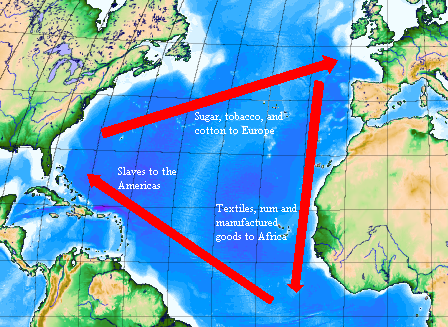
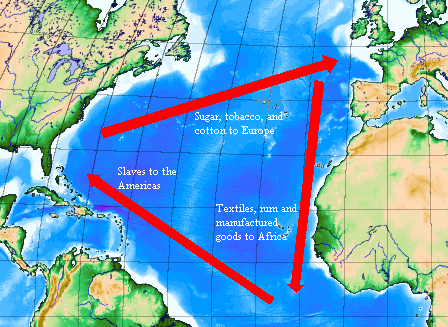
Atlantic (triangular) trade
The focus was the Caribbean
Major cities were New York City, Charleston, and Savannah
Caused an increase in Port cities, banking, insurance, shipbuilding and eventually the industrial revolution
Spanish Colonial efforts
Wanted to extract wealth from the land
Led them to develop institutions based on subjugating native populations, converting them to Christianity and incorporating them into Spanish colonial society
French and Dutch colonial efforts
Focused on trade alliances and intermarriage with Native Americans to build economic and diplomatic relationships, and acquire furs and other products for export
English colonial efforts
Attracted a lot of migrants who sought social mobility, economic, prosperity, religious freedom, and improved living conditions
Focused on agriculture and settled on land taken from natives
Chesapeake colonies
exported tobacco, a labor intensive product
First cultivated by white male, indentured servants, and later by enslaved Africans
New England colonies
initially settled by Puritans
Developed around small towns with family farms
Achieved a thriving mixed economy of agriculture and commerce
Middle Colonies
Flourishing expert economy based on cereal crops
Attracted abroad range of European immigrants leading to societies with greater diversity and tolerance
South and West Indies
Used long growing seasons to develop plantation economies based on exporting staple crops
Depended on labor of enslaved Africans, who were the majority of the population and developed cultural and religious autonomy
King Phillip’s war/ Metacom’s war
Indian leader, Metacom a.k.a. King Philip led an uprising against the colonist
The Iroquois aided the colonists and that alliance ended the Indian attacks
The colonist gained freedoms
Bacon’s Rebellion
Rebellion led by Nathaniel Bacon in 1676 against governor Berkeley of Virginia
Berkeley would not let the settlers take native land
Mainly conflict of Virginia elite
Bacon wanted to remove all Native Americans from Virginia
Slaves vs Indentured Servants
African slaves couldn’t claim English rights
Slaves terms never ended
They couldn’t escape and hide in the population because of their skin color
Slaves were accustomed to the harsh labor
They already had immunity to European diseases
Atlantic slave trade/Middle Passage
Importation of slaves from Africa because they needed slaves to grow rice sugar etc; most went to Brazil and the West Indies
Weakened Africa’s economy
Really cramped ships brought over the slaves; sometimes epidemics would break out within the ships
Transported 12 million slaves and killed even more
Anne Hutchinson
Midwife and daughter of clergyman who was clever, witty, and believed salvation, was given, not earned
She blamed the priest for raising up saints for good deeds
Put on trial for antinomianism and sedition and was banished
antinomianism
Putting one’s own judgment before church; considered a crime against the
Salutary neglect
Britain ignored the colonies for the first few decades of the 1700s and gave the colonist a lot of freedom over the economy and government
Zenger Trial
German immigrant who was financed by the government’s opponents, attacked the government in his paper and was arrested in charged with sedition
He was acquitted and inspired more freedom of the press
Benjamin Franklin
Self educated and established a newspaper library and almanac
One of the most famous Americans of the time
Large part of the revolution
Great Awakening
Religious revivals across the world that offered a more personal Christianity in response to the enlightenment
Encouraged increased liberties and criticism of society and believed religious freedom was a right
Told colonists to trust themselves
Jonathan Edwards
Great Awakening preacher and Massachussets congregationalist minister who described sinners as “insects” and declared that only begging for mercy would save them.
George Whitefield
Great Awakening preacher who preached that God was merciful and people could save themselves by repenting
Very popular
Democratic aspects of the colonies
Elected assemblies, and governors (House of Burgess)
Non-democratic aspects of the colonies
Slavery, forced religion, mercantilism, and Dominion of New England
Interactions with the Native Americans
There was both accommodation and conflict; both allies and enemies
British conflict with American Indians, overland resources and political boundaries led to military confrontations
American Indian resistance to the Spanish colonizing led to Spanish accommodations of some aspects of native culture