P3.4 Sound
 Call Kai
 Learn
Learn Practice Test
 Spaced Repetition
 Match
Match Flashcards
 Knowt Play
1/5

There's no tags or description
Looks like no tags are added yet.
Name | Mastery | Learn | Test | Matching | Spaced | Call with Kai | Chat |
|---|
No analytics yet
Send a link to your students to track their progress
6 Terms
What type of waves are sound waves?
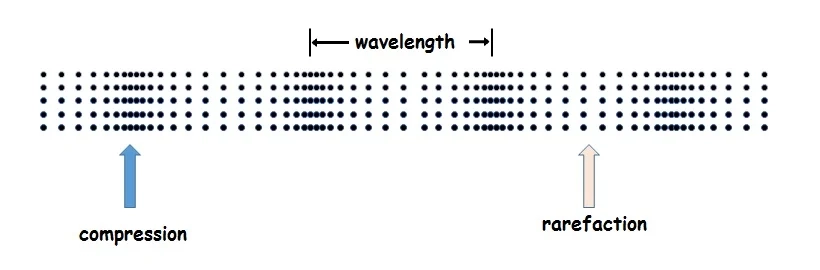
Sound waves are longitudinal waves, meaning that they require a medium to be transmitted
Sound waves produce regions where air particles are closer (compressions) and further away (rarefactions)
How does changing amplitude affect sound?
Changing amplitude = changes how loud the sound is
How does changing frequency affect sound?
Changing frequency = changes pitch of sound
What is an echo?
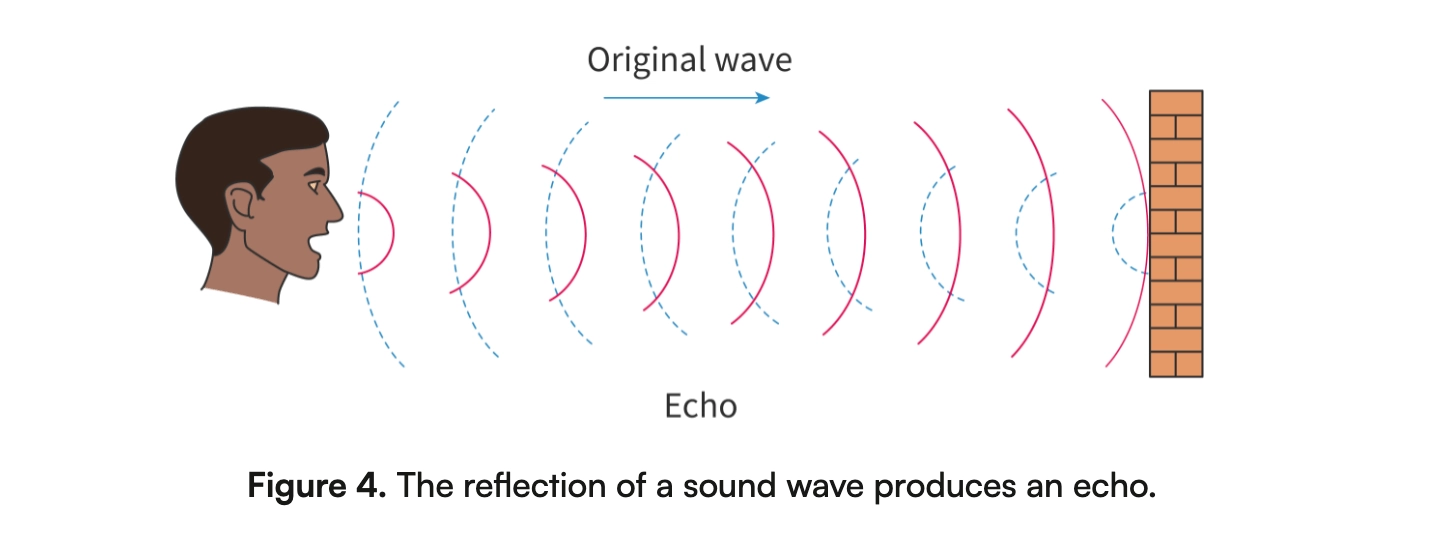
Sound waves can reflect when they reach a boundary between materials
A reflected sound wave is called an echo
What is an ultrasound?
Our ears can detect frequencies between 20 Hz (20 vibrations per sec) and 20 kHz (20,000 vibrations per sec)
Sounds above 20 kHz are known as ultrasound
State the speed of sound in different states of matter from fastest to slowest
Solids
Liquids
Gases