art history test 1
 Call Kai
 Learn
Learn Practice Test
 Spaced Repetition
 Match
Match Flashcards
 Knowt Play
1/23

There's no tags or description
Looks like no tags are added yet.
Name | Mastery | Learn | Test | Matching | Spaced | Call with Kai | Chat |
|---|
No analytics yet
Send a link to your students to track their progress
24 Terms

Jackson Pollock, Number 1A 1948, 1948
Did not use a brush and typically did not not touch the canvas with the painting implement → part of Pollock’s “drip paintings,” paints directly on the floor, on large, expansive, untreated canvas
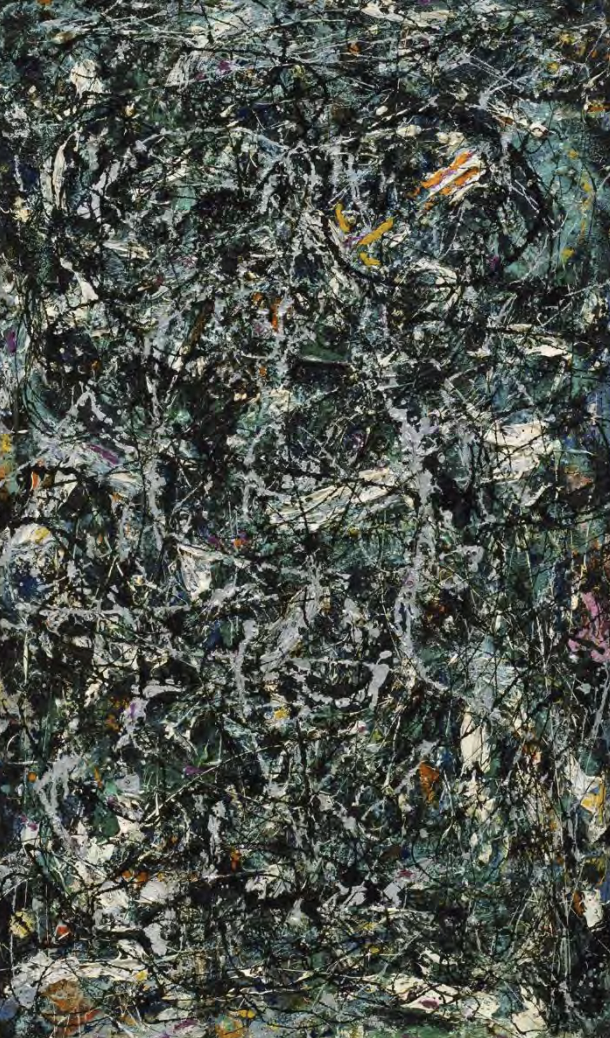
Jackson Pollock, Full Fathom Five, 1947

Hans Namuth, Jackson Pollock at work in his studio, 1950 (photograph)

André Masson, Automatic Drawing, 1924
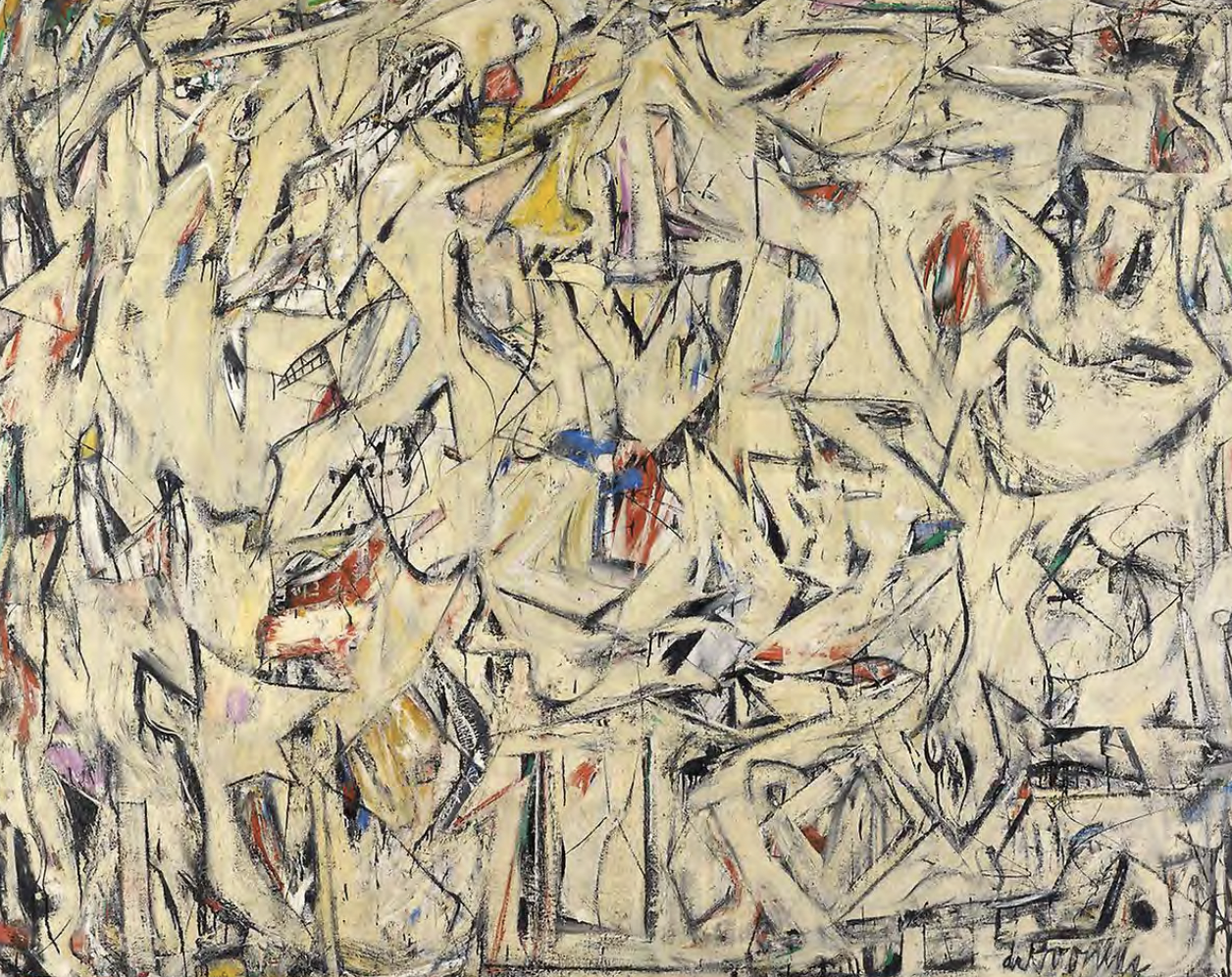
Willem de Kooning, Excavation, 1950

Lee Krasner, Noon, 1947

Barnett Newman, Onement I, 1948

Barnett Newman, Vir heroicus sublimis, 1950-51

Jackson Pollock, Number 1, 1950 (Lavender Mist), 1950
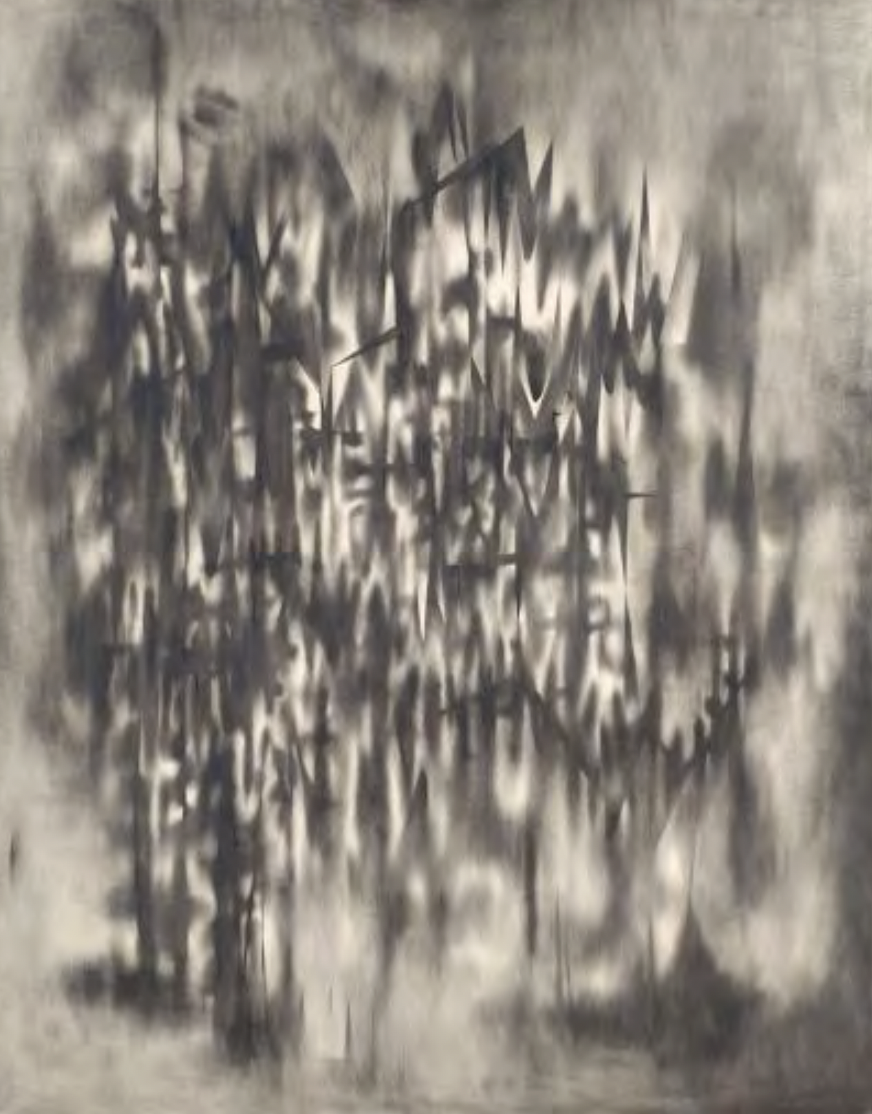
Norman Lewis, Blending, 1951
Figure-ground oscillations / perception → relates to the relationship between the mark and the surface it lies upon (creating the illusion of three-dimensionality), Campbell proposes that themes are represented in Lewis’ abstraction works in subtle, implied way → investing in the city as a site of potential racial integration

Helen Frankenthaler, Mountains and Sea, 1952
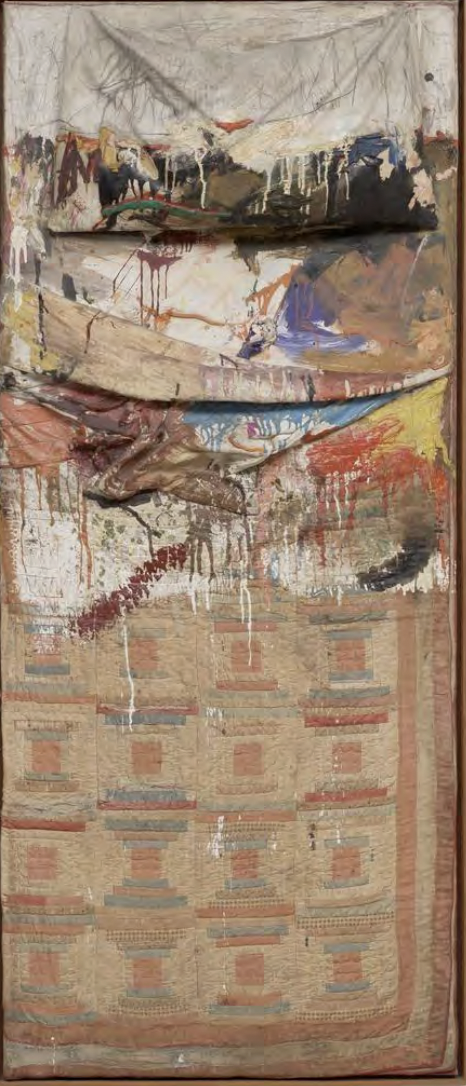
Robert Rauschenberg, Bed, 1955
Rejects Greenberg’s medium specificity in its volume, thickness, and position of paint, and rejects automatism with the pre-existing quilt

Robert Rauschenberg, Gloria, 1956

Jasper Johns, Flag, 1955
Completely opposite model of the autonomous model, as Johns has an exact template to work from, forestalls the notions of spontaneity and fluency that Rosenberg and Greenberg uphold

Robert Rauschenberg, Automobile Tire Print, 1953
Rauschenberg convinces Cage to let him borrow his car and collaborate with him on this work. This piece articulates a renewed interest in the “index,” or the way language is put together → the symbol, icon, and index
Index as a type of sign that is traceable to a physical cause (ie. footprint in sand)
The indexical as a rebuttal to the ideas of flatness and opticality
Re-reading of Pollock as an indexical process → about the physical movements of creation and their trace
Greenberg’s model of autonomy → the automobile refutes this sense of autonomy of the self, individuality, and replication

Niki de Saint Phalle, Homage to Bob Rauschenberg (Shot by Rauschenberg), 1961
an artist is pursuing the index by slightly different means, utilizes a gun as a mediated, industrialized instrument that comes between the self and the canvas, thus pronouncing the displacement of mark-making

Kazuo Shiraga, Challenging Mud, 1955 (Performance documentation)
The context of ritual as a frame of reference → these artists are not interested in the product, but care about the event / process / performance itself → photography is necessary to the capturing of the event

Saburo Murakami, At One Moment Six Holes, 1955 (Performance documentation)
Capturing the movement of creation through photography both instantaneously and overtime

Allan Kaprow, 18 Happenings in 6 Parts, 1959 (Performance documentation)
event-based artworks that has no narrative, plot, or characters, utilizing non-traditional materials of art-making to pivot from traditional art to performance-based work