Hellenistic World: Term 2 Week 4: Hellenistic Coinage
 Call Kai
 Learn
Learn Practice Test
 Spaced Repetition
 Match
Match Flashcards
 Knowt Play
1/87

There's no tags or description
Looks like no tags are added yet.
Name | Mastery | Learn | Test | Matching | Spaced | Call with Kai | Chat |
|---|
No analytics yet
Send a link to your students to track their progress
88 Terms
Give the terminology of coins
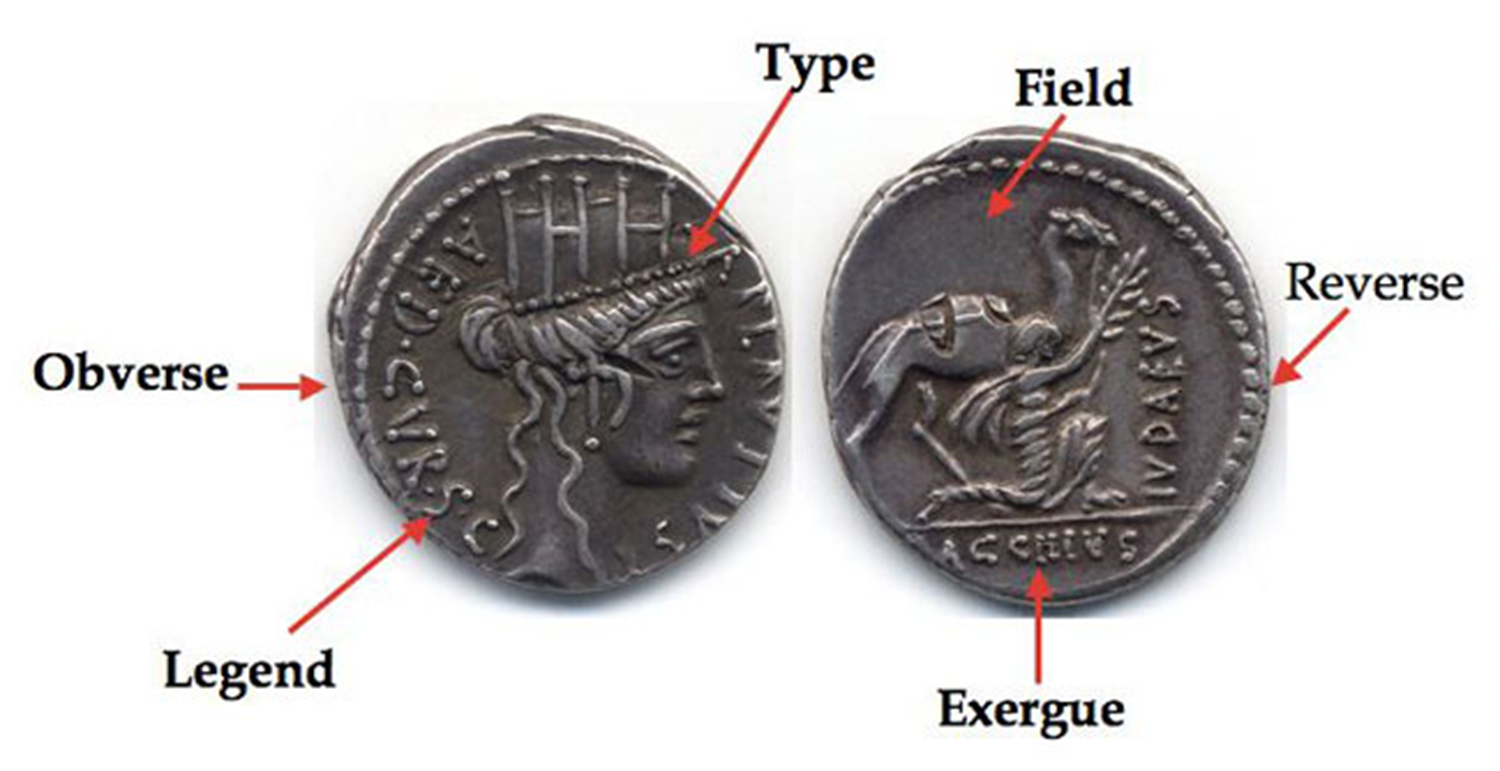
What is typically on the obverse side of the coin?
Obverse is typically the side with he face on it, there is also typically writing around the edge of it
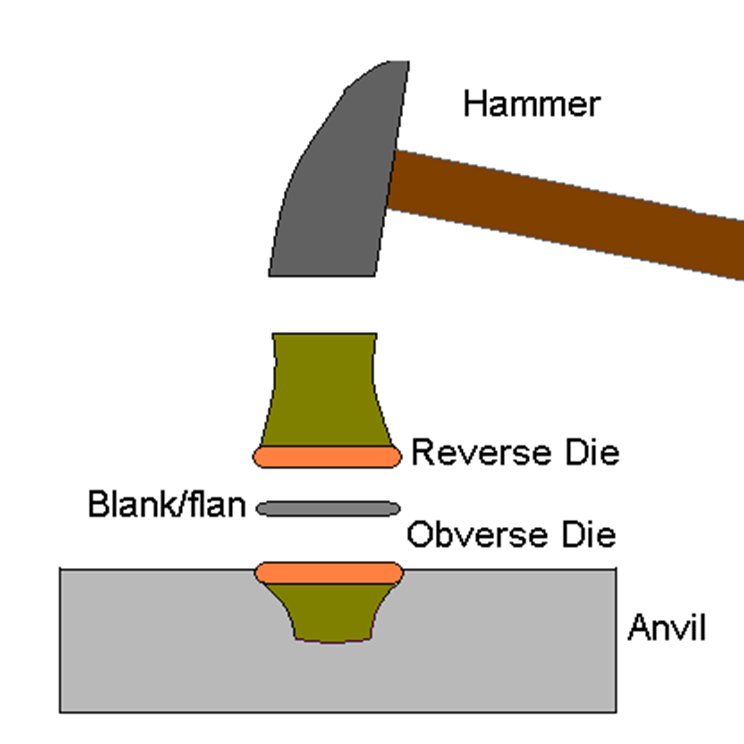
How were coins mostly made back then?
Coin striking by two people:
Describe the coinage of Philip II
He was monumental in creating his own coins, and had an impact on later Hellenistic coins
His coins were heavy and very numerous- found 500 obverse dies in a reign period of 30 years- far more than any Macedonian king before him
Identify this coin:
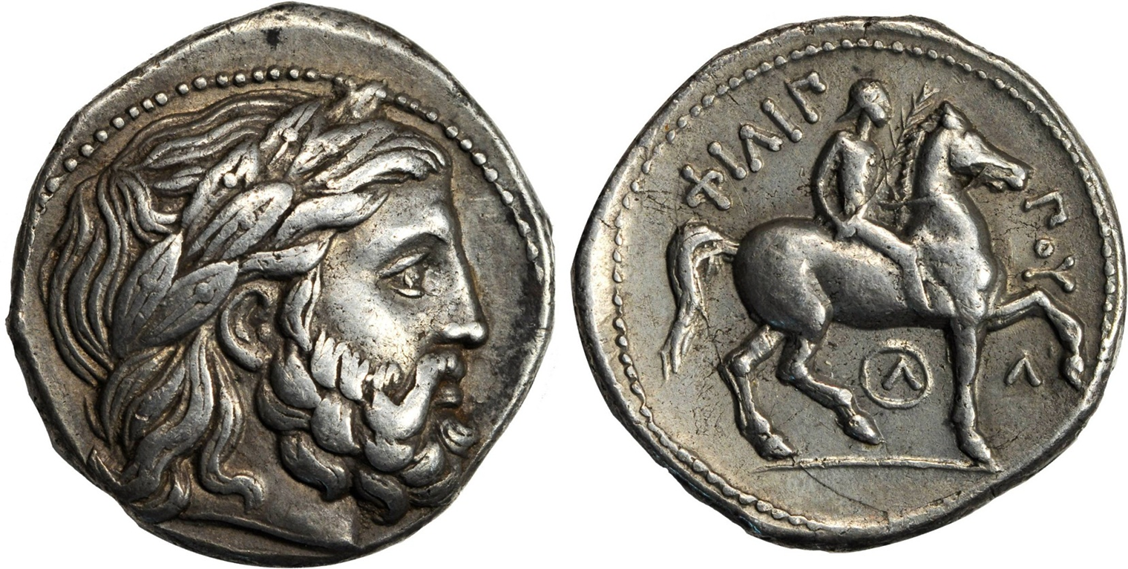
Kingdom of Macedon, Philip II, AR Tetradrachm, 14.23g, 359-336 BC; Le Rider pl. 45, 11.
what was on the obverse and reverse of the coin?
Obv: laureate head of Zeus, right
Rev: Youth with palm branch on horseback, ΦΙΛΙΠΠΟΥ; underneath horse, lambda within circle, and lambda beneath front leg.
What is Diodorus writing about in this passage:
Diodorus Siculus 16.8.6-7
‘...and he increased the output of the small and insignificant gold mines in the area so much by his improvements that they were able to bring him a revenue of more than a thousand talents. He soon amassed a fortune from them and began continually raising the Macedonian kingdom to a great position of superiority by means of this plentiful supply of wealth; for when he had struck the gold coinage which was called ‘Phillipic’ after him, he put together an impressive force of mercenaries and by means of this induced many of the Greeks to become traitors to their country’.
Diodorus wrote about how many coins he had created (Slide 7)- very clear from the text that there was a massive output of coinage and that it was an intentional thing that he did.
What coin was named after Phillip?
A coin was named after Phillip- Philippeioi (a big heavy coin)
What was a new thing with coinage that phillip did?
To strike gold in as high quantities as phillip did was a new thing, that was specific to him. These coins became popular outside of Macedonia as well.
Identify this coin:
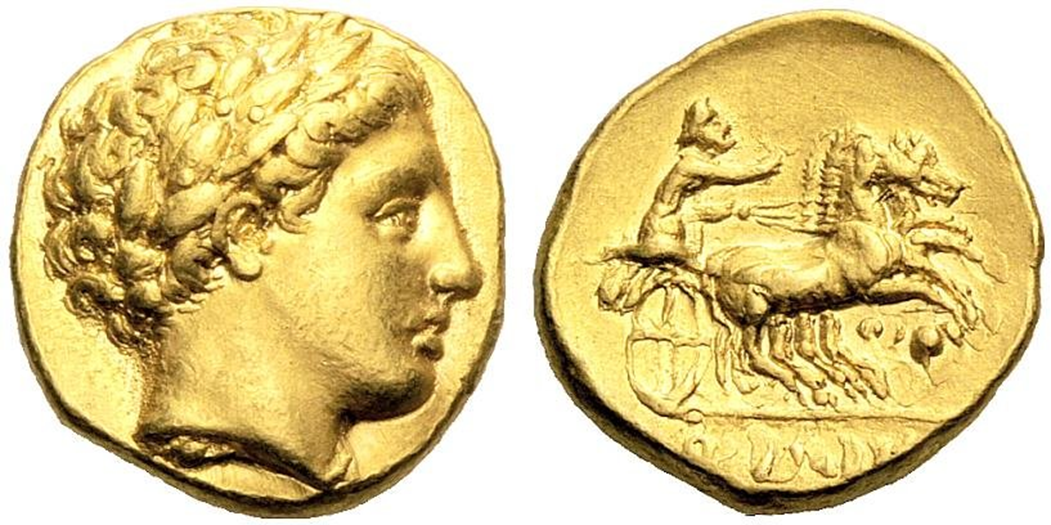
Macedonia, Philip II, Mint of Pella, AV stater, 8.57g, 345-336 BC, Le Rider 30.
AV Coinage of Philip II: “Philippeioi”
What is on the obverse and reverse of the coin?
Obv: Laureate head of Apollo
Rev: Charioteer driving galloping biga right ΦΙΛΙΠΠΟΥ
On the obverse there is a head of Apollo on the reverse there is a charioteer with horses (if we are to assume phillip is displaying himself as the charioteer that would be a big thing as he was allowed to play in the Olympic games- exclusive to Greek people and he was not Greek)
Identify this coin and whats on the obverse and reverse:
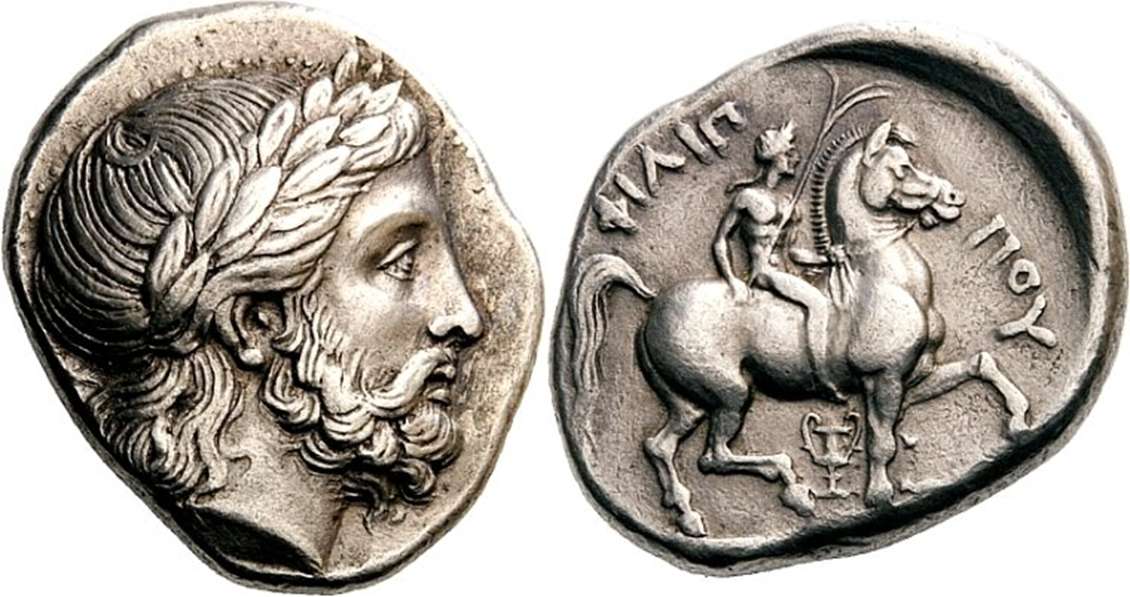
Alexander the Great, in the name of Philip II, Pella mint, AR tetradrachm, 14.37g, 335-323 BC, Le Rider pl. 15, no. 347.
Obv: Laureate head of Zeus, right.
Rev: Youth with palm branch on horseback, ΦΙΛΙΠΠΟΥ. Kantharos below horse.
Were Phillips coins famous in the Hellenistic world?
Phillips coins were so famous that it inspired many coins from around the world to be created in the same style
Give examples of coins that imitate Phillips
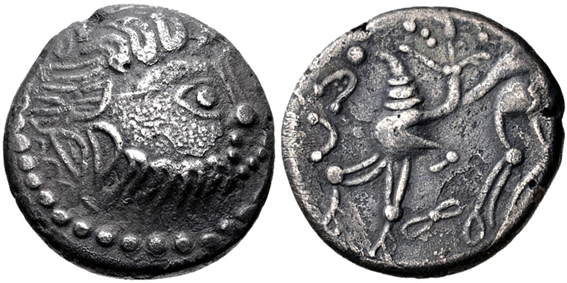
Eastern Europe, Imitation of Philip II.
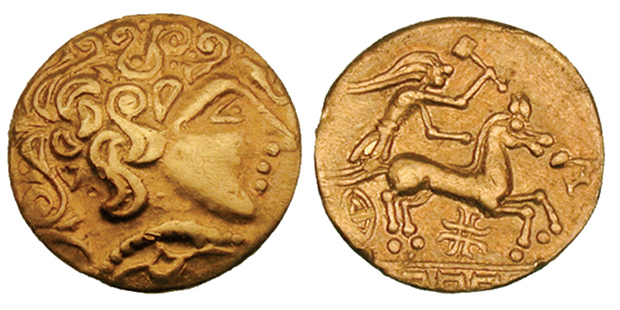
The Ambiani (?), Northern Gaul. Early second century BC.
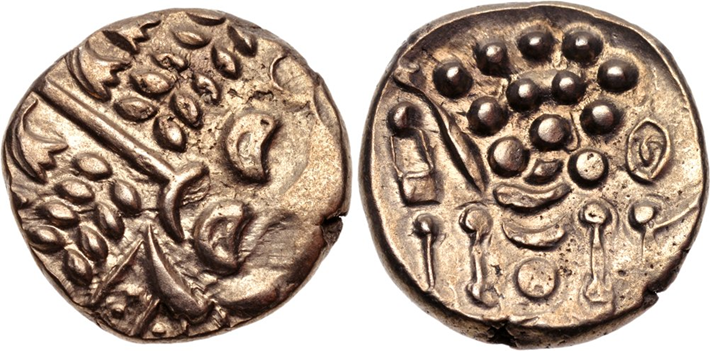
Celtic Britain, the Durotriges, 30-10 BC
Identify this coin:
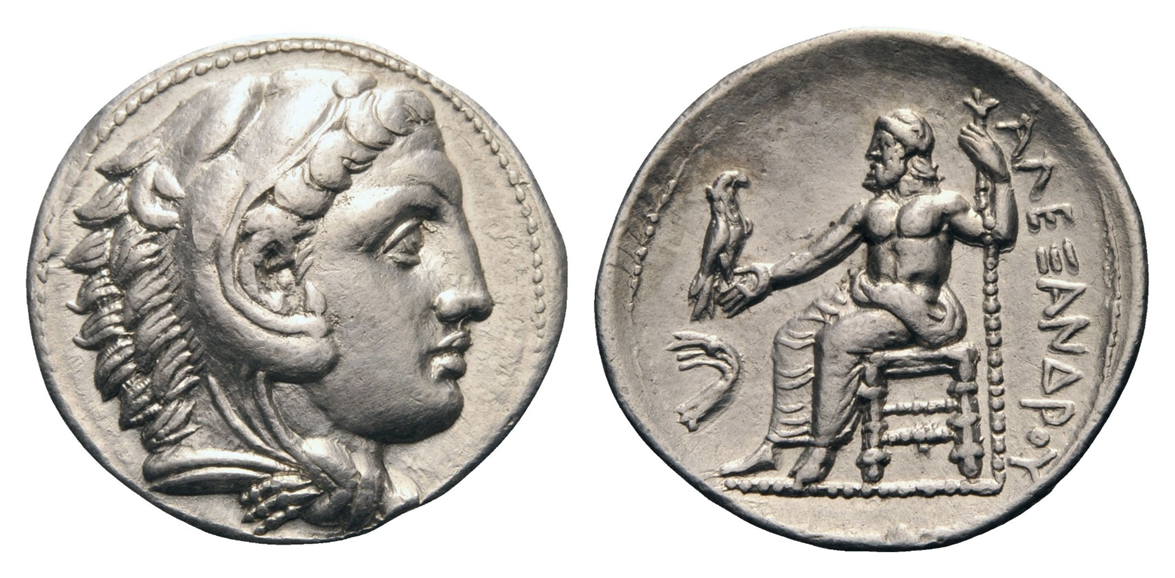
Whats on the obverse and reverse?
Alexander the Great, Amphipolis mint, AR Tetradrachm, 17.15g, 336-323 BC, Price 5
Obv: head of Herakles wearing lion’s scalp
Rev: Zeus seated left, holding eagle and sceptre, aplustre l. ΑΛΕΞΑΝΔΡΟΥ.
How widespread did this coin become?
This coins took up 50% of the circulating coins in ancient Greece.
When did production of this coin start?
Production of this coin started near tot he end of the reign, possibly used these coins to pay soldiers back. The bulk of these were produced after his death (makes sense they needed funds after the wars which occurred after he died).
Who was commonly depicted on the coins of ‘leaders’?
Heracles was also common on being depicted on other ‘leaders’ coins- however there are differences in the representations Amyntas depicted Heracles with a beard (while Alexander didn’t)
Who did Alexander claim he was descended from?
Alexander claimed that he descended from Heracles (thats why he was on the coins?)
How could Alexander afford to produce this large amount of coins?
At Susiane:
‘After capturing the city and the contents of the royal treasuries Alexander found more than 40 000 talents of unminted gold and silver. Their kings had guarded this without touching it over a period of many years, leaving it as a refuge for themselves against the uncertainties of fortune. Besides this there were nine thousand talents of gold bearing the Daric stamp.’
Diodorus Siculus 17.46.1-2
He seems to have found a large amount of coins, struck and unstruck
What kind of coins did Alexander produce?
Alexander produced silver and gold coins.
Identify this coin:
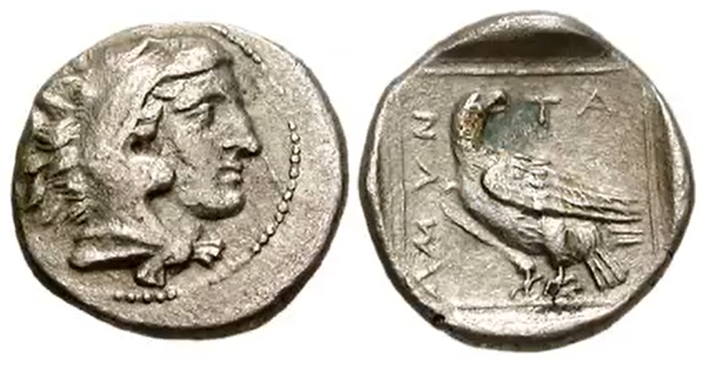
Amyntas III. (389-369 BC)
identify this coin:
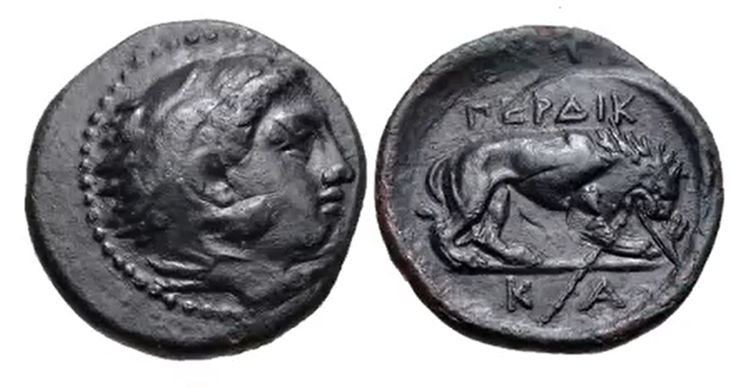
Perdiccas III. (365-359 BC)
Identify this coin:
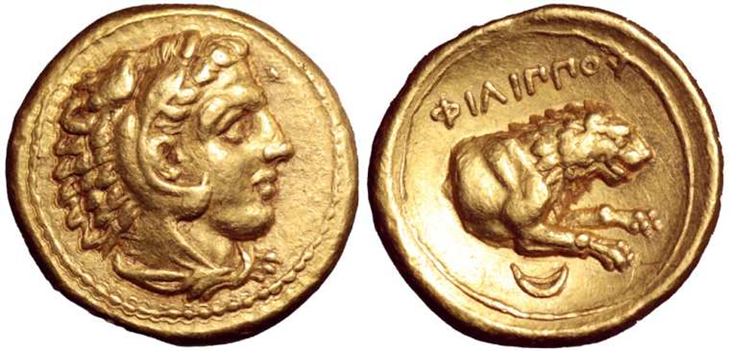
Philipp II. (359-336 BC)
Identify this coin:
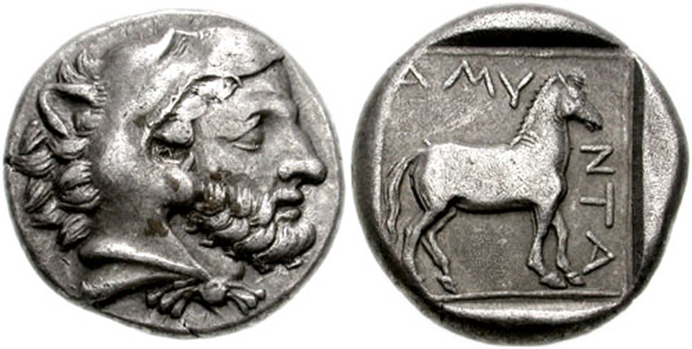
Amyntas III. (389-369 BC)
Identify this coin:
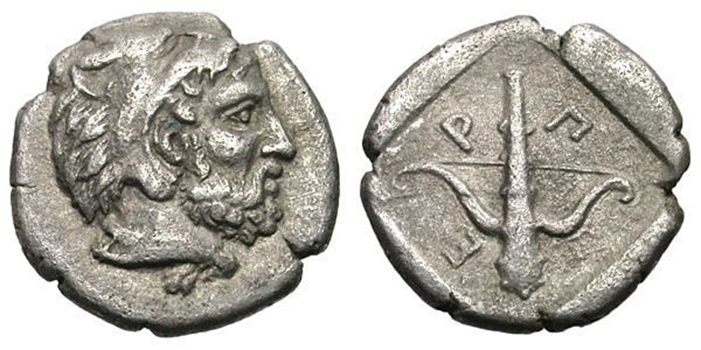
Perdiccas III. (365-359 BC)
How could coins be produced?
Not all coins were introduced on a royal decree- they can be produced by independent cities.
Identify this coin:
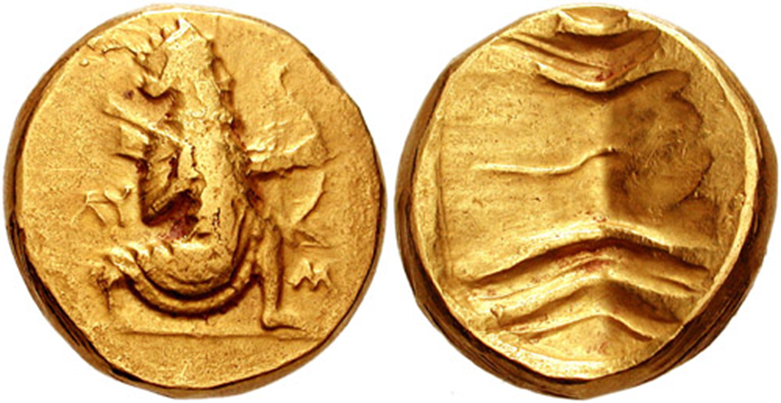
AV double daric, 322-315 BC
Babylon mint
Obv: Persian king or hero in kneeling/running stance holding transverse spear and bow. ΛΥ behind, Μ before.
Rev: patterned incuse punch
Identify this coin:
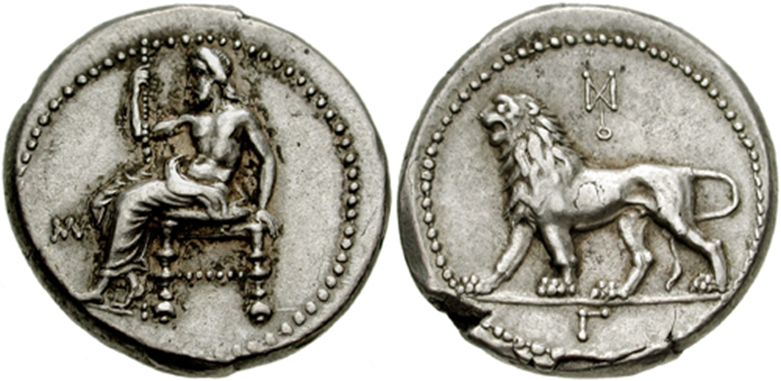
AR double shekel, 322-312 BC
Babylon mint
Obv: Baal seated left holding sceptre in right hand
Rev: lion walking left, monogram above, Γ in exergue.
Identify this coin:
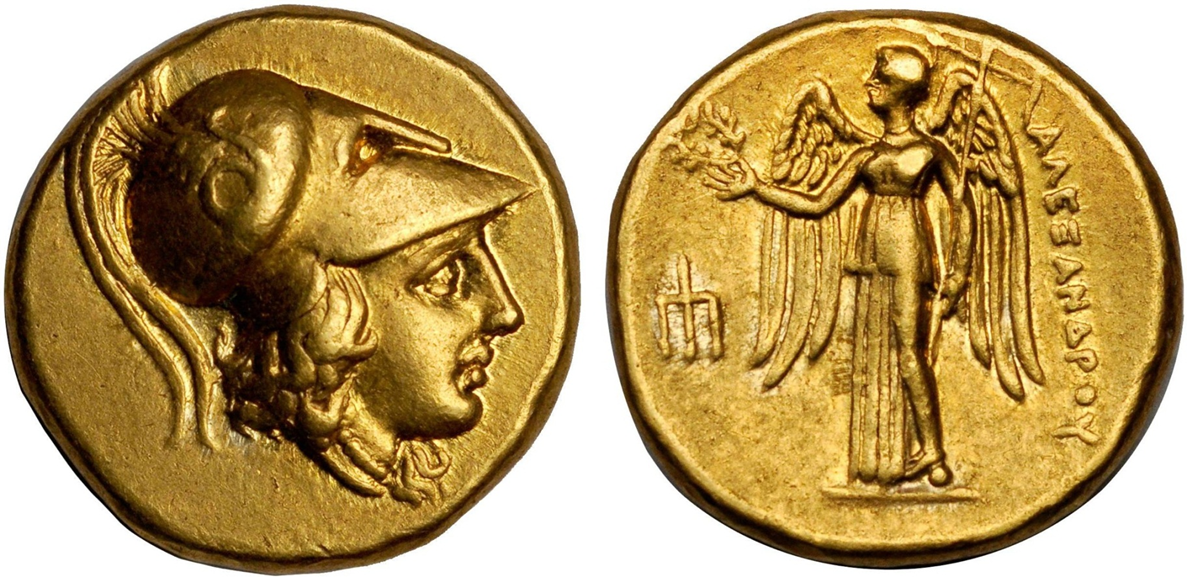
Alexander the Great, Tarsos Mint, AV Stater, 8.58g, 333-327 BC, Price 3006
Obv: head of Athena facing right with Corinthian helmet
Rev: Nike standing left holding wreath and stylis , head of trident at left. ΑΛΕΞΑΝΔΡΟΥ.
How was this coin issued and why is it interesting?:
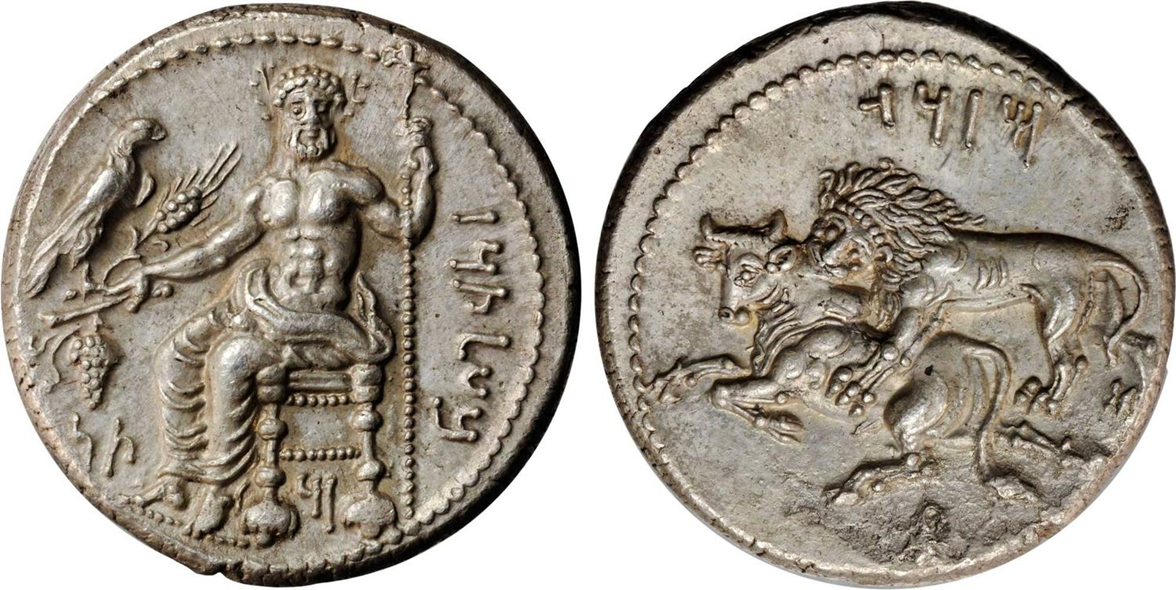
Not all coins were introduced on a royal decree- they can be produced by independent cities. One coin produced by Mazaios (depicting Baal and a lion attack a bull on the reverse), this is interesting as Mazaios issued coins under Alexander but also issued coins under his own name, his inscriptions are written in aramaic not in Greek
Identify this coin:
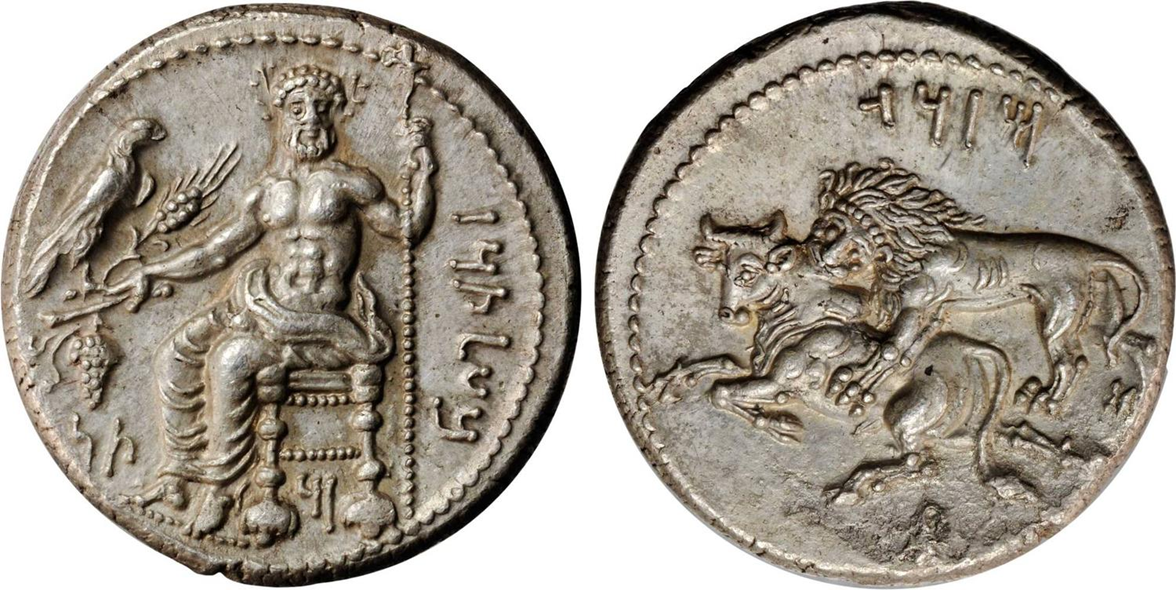
Mazaios, Satrap of Cilicia, 361/0 – 334 BC. AR stater (10.64g), mint of Tarsus.
Obv: Baalters (Baal of Tarsus) seated on throne holding sceptre, ear of grain, and eagle. B'LTRZ in Aramaic.
Rev: Lion attacking bull. MZDY in Aramaic.
Were coins popular before Alexander?
(Alexander conquered a world that wasn’t all using coins yet, many places were still trading)
What are common iconographical elements on coinage after Alexander?
Heads all facing the same wear
Horns on the mens head on the bottom two?
Men wearing some form of headware (helmet, lionskin, diadem- the bottom two are wearing diadems)
On the reverse on three of them people are sat down- appear to be divinities- the two bottom ones are Athena
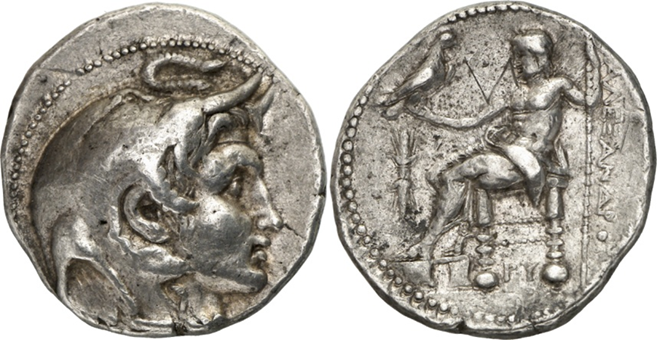
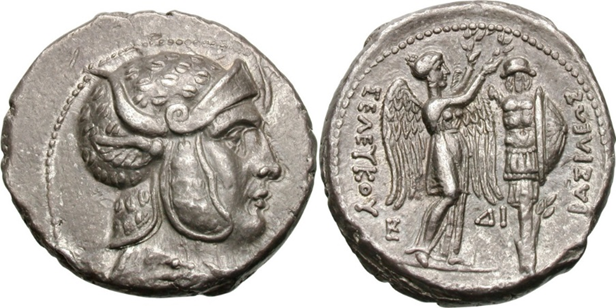
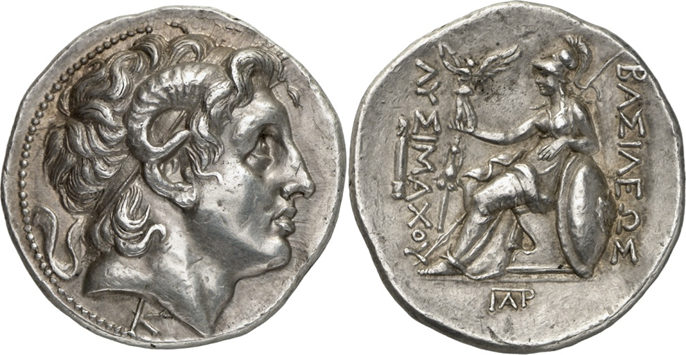
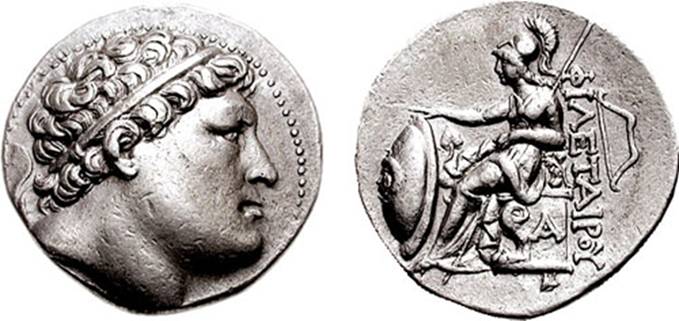
When were horns popular on coinage?
They seem to pop up a lot after Alexander
Very very popular in the second century and then they disappeared
All over the Hellenistic kingdom people were being displayed with horns
Identify this coin:
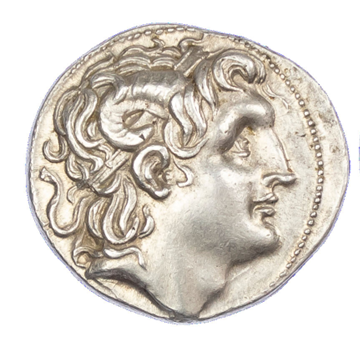
Lysimachos (306-281 BC) AR
Tetradrachm, Amphipolis, c. 323-281 BC
Identify this coin:
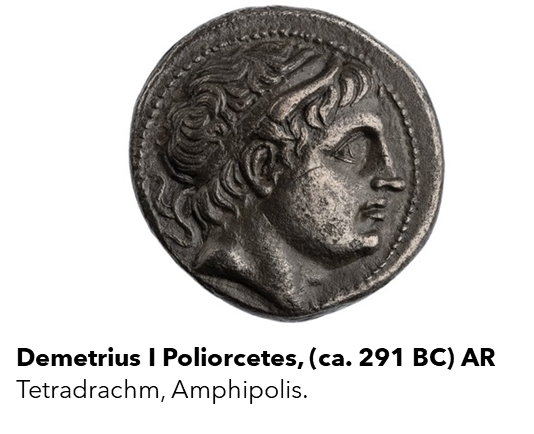
Identify this coin:
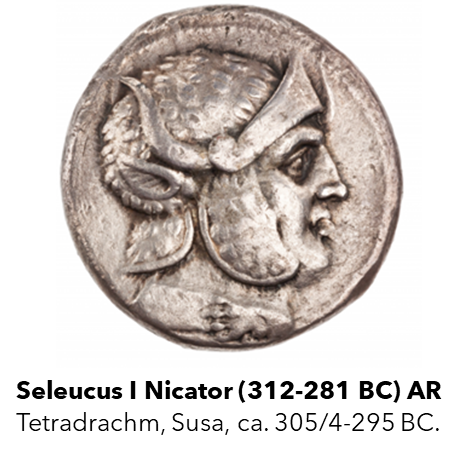
Identify this coin:
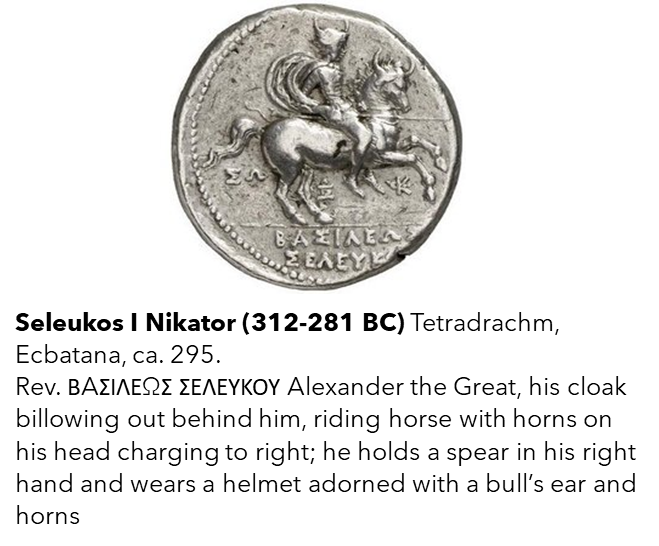
Bulls horns are seen on the reverse, figure is supposed to be Alexander, he is wearing a helmet with horns and his horse seems to have horns
Why were horns featured on Hellenistic coins?
Hellenistic coins featured horns—specifically ram's horns—primarily to symbolize divine legitimacy, power, and the deification of rulers, most notably Alexander the Great. These horns, associated with the Egyptian god Ammon (or Zeus-Ammon), signaled Alexander's claimed descent from the deity and were used by his successors to legitimize their rule, portraying themselves as divine or as authorized successors
What are these horns then replaced by in depiction?
These horns are then quickly replaced by the crowns
What was a crucial element of presenting oneself as kingship during the Hellenistic period
Wearing a diadem on coinage
Who is Lysimachus?
Lysimachus was a Thessalian officer and successor of Alexander the Great who became king of Thrace in 306 BC, western Asia Minor in 301 BC and Macedon in 288 BC
Who did Lysimachus portray on his coins?
He never really showed himself on his coins, he mostly portrayed Alexander on his coins
Identify this coin:
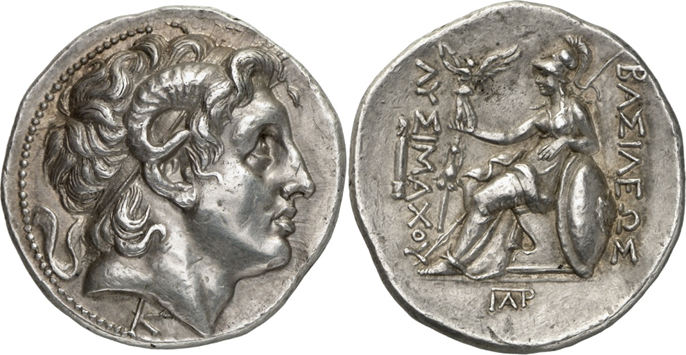
Lysimachus, Thrace, Pergamum Mint, AR Tetradrachm, 17.12g, 287-282 BC, Thompson 222.
Obv: diademed head of Alexander with horn of Ammon, K below
Rev: Athena enthroned, holding Nike in r. Hand and resting l. elbow in shield,. Monogram in exergue. ΒΑΣΙΛΕΩΣ ΛΥΣΙΜΑΧΟΥ
Identify this coin:
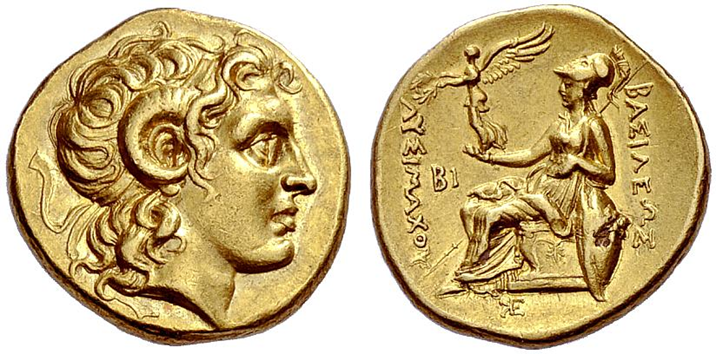
Lysimachus, Thrace, uncertain mint in Western Asia Minor, AV Stater, 8.47g, Thompson p. 176
Obv: diademed head of Alexander with the horn of Ammon
Rev: Athena enthroned, holding Nike in r. Hand and resting l. elbow in shield,. In field, l. BI, monogram in exergue. ΒΑΣΙΛΕΩΣ ΛΥΣΙΜΑΧΟΥ
Identify this coin and give the obverse and reverse:
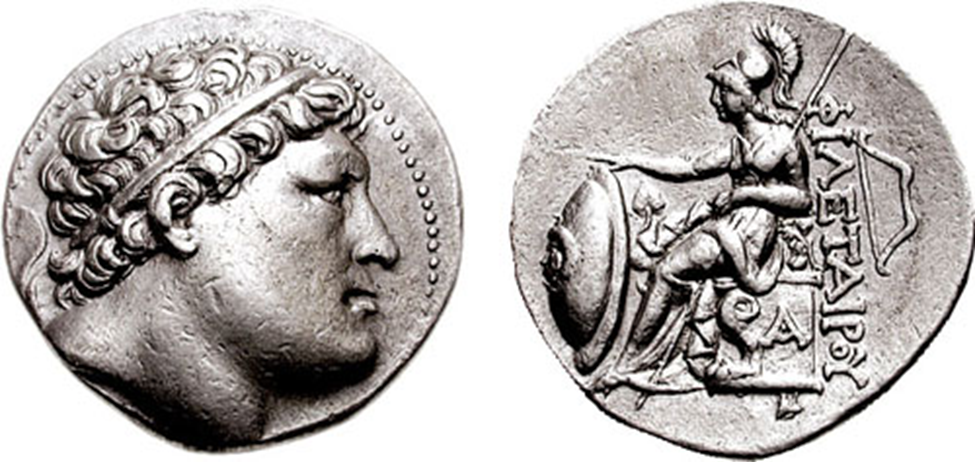
Philetairos, Kingdom of Pergamum, 269-263 BC, AR tetradrachm, 16.9g, SNG France 1604
Obv: diademed head of Philetairos, r.
Rev: Athena seated r.; ivy leaf above knee, A on throne, bow to outer right.
Did this style of coin change for the attalids?
These types int he attalid kingdom would be struck for a long time, these coins never really change (a few successors never really changed the idea of this coin- long reign of attalid kings not changing the formula of their coins)
Was there a large output of these coins?
2 obverse dies a year (meagre output in comparison to some mentioned before)
What is the cistophori?
The cistophorus (Ancient Greek: κιστοφόρος, kistophoros) was a coin of ancient Pergamum
When was this coin introduced?
Introduced somewhere between 180-160 (AD?)
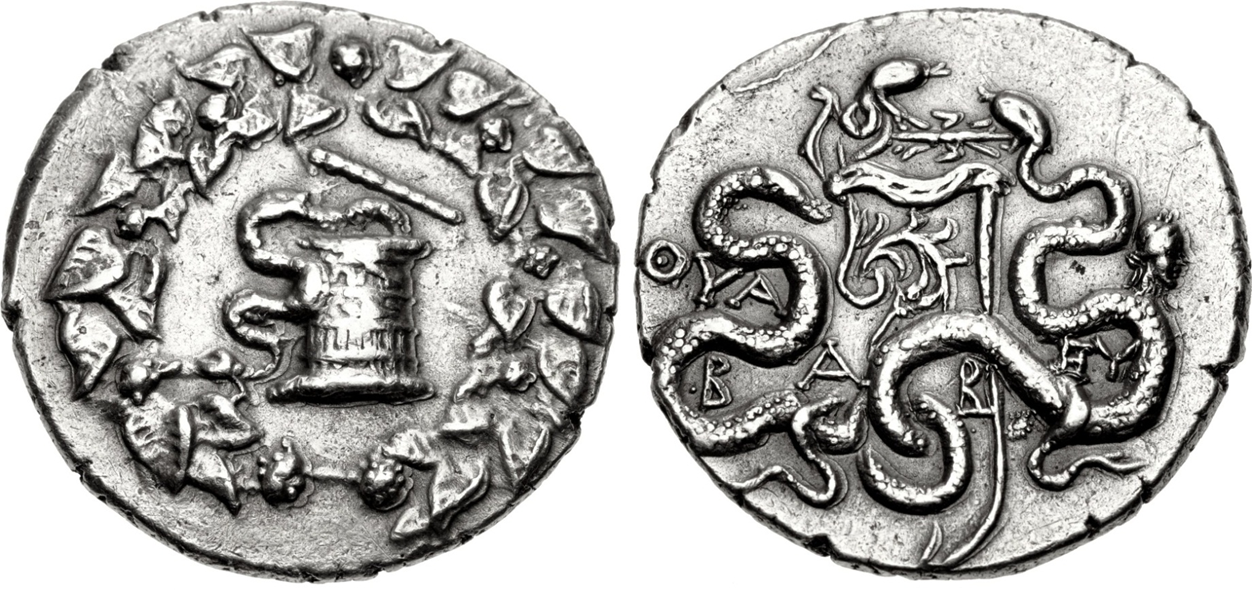
Describe the iconography shown on this coin
Laurel wreath on the obverse, in the middle is a box with a snake coming out of it. The reverse we see another snake iconography, the snakes are very prominent on these coins
What was the weight of a cistophori?
Was three quarters of a normal tetrachdram, ergo not worth the same- so if people wanted to trade they would have to change their money
What is a stephanophoroi?
In the context of ancient history and numismatics (the study of coins), it refers to a specific, highly artistic series of silver tetradrachms (large silver coins) popular in the 2nd century B.C., particularly in Western Asia Minor- Used thin flat pieces of metal, these coins became very popular especially in Asia minor:
What type of coin is this:
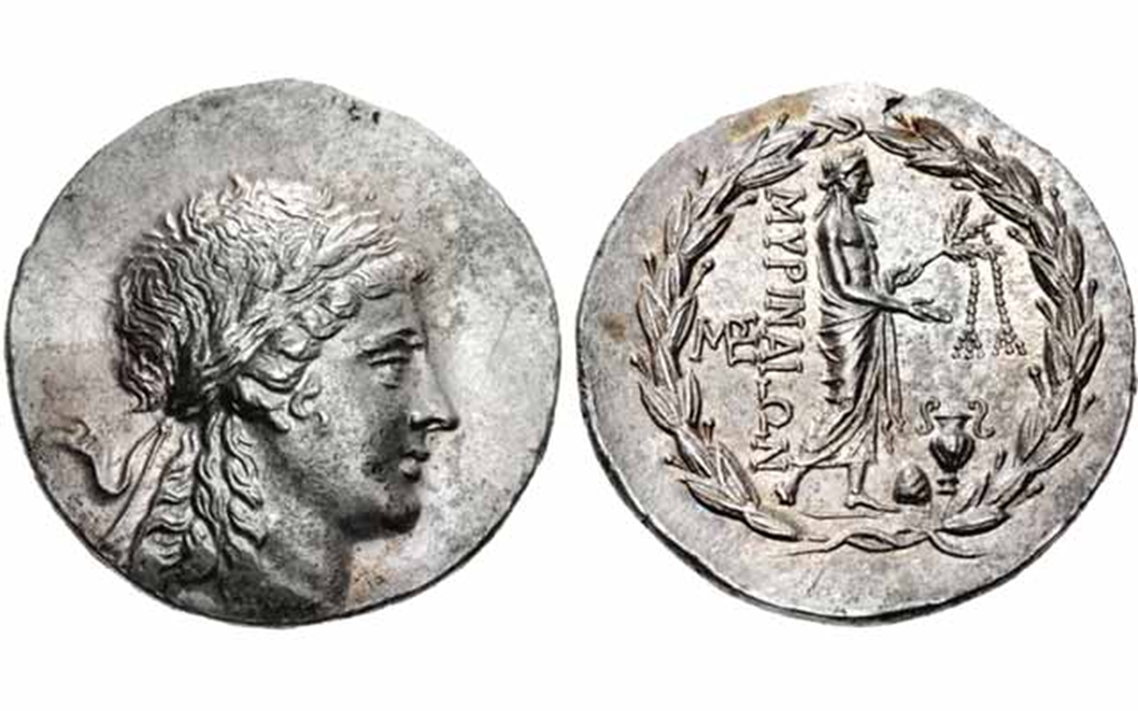
a stephanophoroi
Did the ptolemaic kingdom have coinage?
They didn’t have coins or the ideal of paying with money as much in their history in comparison to other areas
Identify this coin:
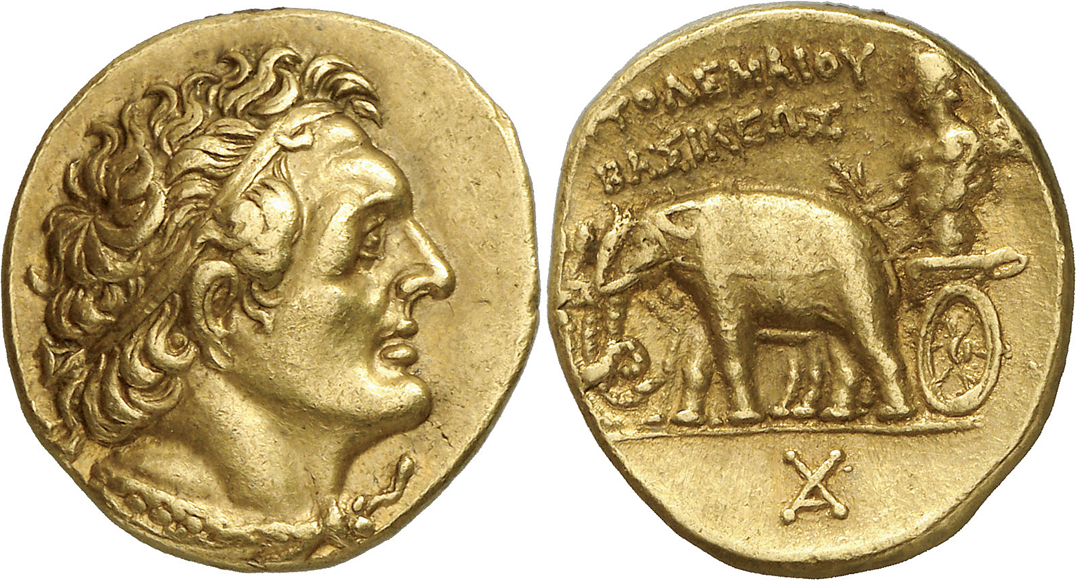
Ptolemy I Soter, Egypt, Alexandria Mint, AV Stater, 7.11g, 298-294 BC. Svoronos 111.
What is on the obverse and reverse of the coin?
Obv: Head of Ptolemy r., wearing diadem and aegis.
Rev: Charioteer (Alexander the Great?) in a quadriga of elephant holding thunderbolt and reins. Monogram in exergue. ΠΤΟΛΕΜΑΙΟΥ ΒΑΣΙΛΕΩΣ.
Strange iconography of an elephant- but it makes sense as we know elephants were used in a procession, the ‘man’ being pulled by the elephant is actually a cult statue
Identify this coin and the obverse and reverse:
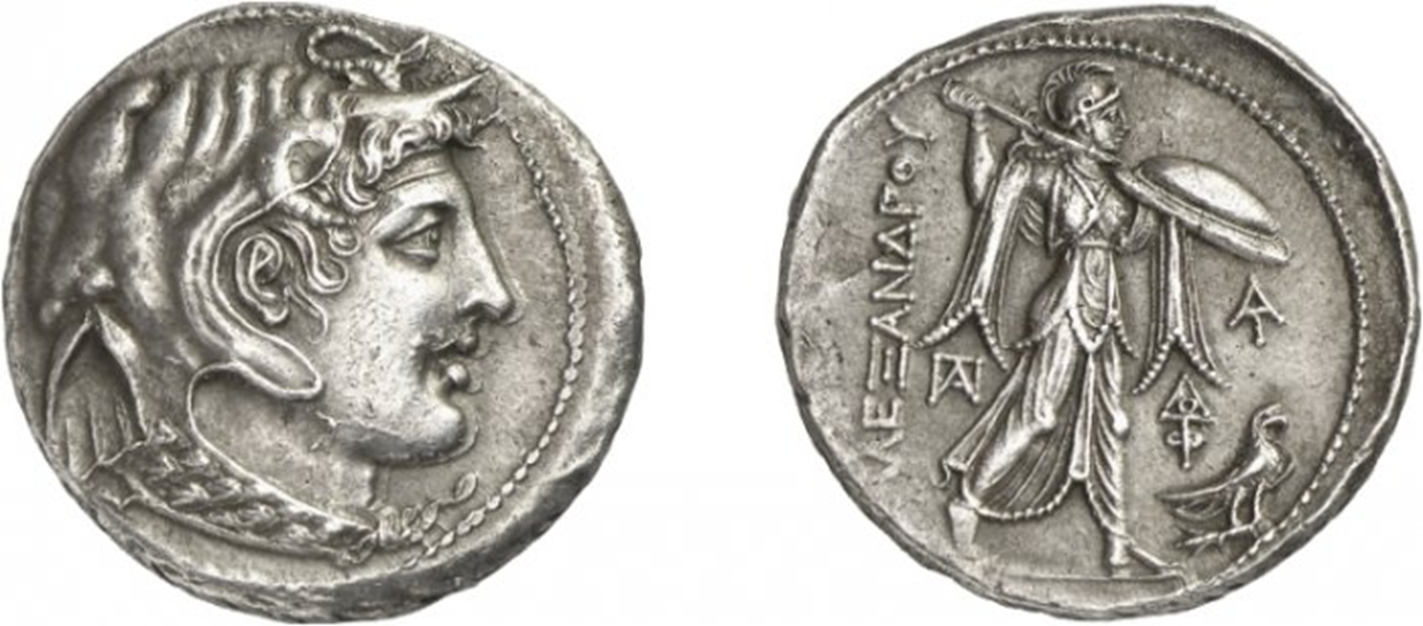
Ptolemy I Soter, in the name of Alexander the Great, Alexandria Mint, AR Tetradrachm, 310-305 BC.
Obv: head of Alexander the Great wearing elephant skin, diadem and horn of Ammon, r.
Rev: Athena Alkidemos advancing r. To r., monograms, and eagle standing on thunderbolt. ΑΛΕΞΑΝΔΡΟΥ.
Identify this coin and the obverse and reverse:
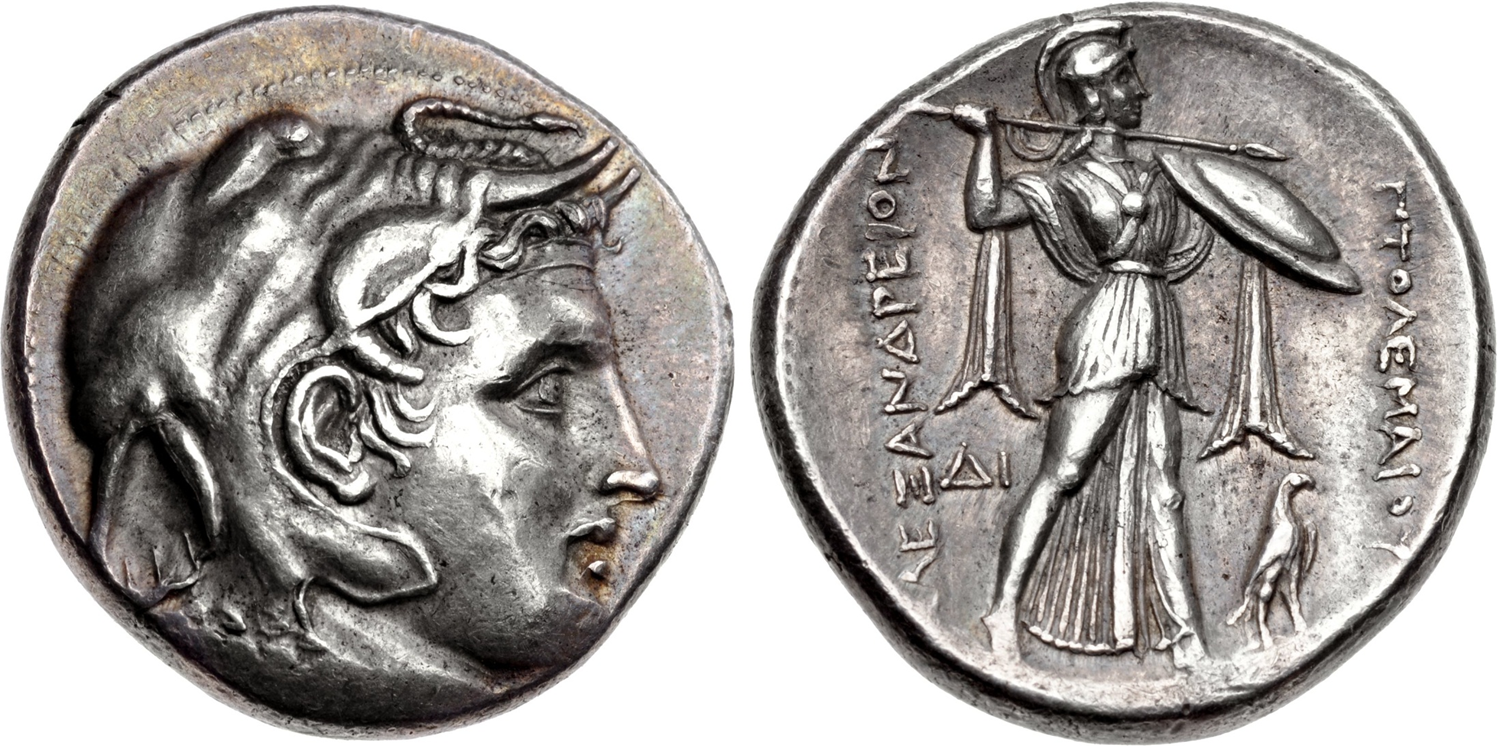
Ptolemy I Soter as satrap, 316-311 BC, Alexandria, AR Tetradrachm
Obv: head of Alexander the Great wearing elephant skin, diadem and horn of Ammon, r. / ΠTOΛEMAIOY AΛEΞANΔPEION, Athena Alkidemos, wearing crested helmet and chiton, striding right, preparing to cast spear held in right hand, shield on left arm; ΔI to inner left; to inner right, eagle standing right. (Svoronos 32)
How did Ptolemy create a closed economy by introducing his lightweight coins?
Foreign coin forbidden to be used in Ptolemaic possessions (Egypt, Cyrene, Cyprus and Coele Syria)
Ptolemy made it so the value of a coin was decided by the issuing authority, not by the weight and actual worth of the silver or gold the coin was made of
A closed economy system can be manipulated- they can say how much coins are worth compared to each other
1.5g silver per tetradrachm exchanged
Closed economy = manipulations possible
Tetradrachms later reduced again to 14.27g (Phoenician standard)
Money to rebuild fleet, and implement other programmes
What was the Phacous hoard?
c. 2400 AR coins
Jar 1: foreign coins, Alexander tetradrachms struck in Egypt, 3 reduced- weight Athena tetradrachms
Jar 2: coins of the Ptolemy/eagle type
The fact there were two jars for the coins (one for outside one for new) is interesting
What does having your own coin system in the economy mean you will need?
If you have your own coin system in this economy you will need a lot of people to be involved (to check the worth to change the coins etc)
How did people now have to pay taxes in the Ptolemaic kingdom?
People now had to pay taxes using money, before they could pay with grain, but now they have to pay with bronze coinage- heightened demand for bronze coinage (particularly in Egyptian countryside)
Tax and documentary evidence of this:
Hibeh, receipt for brewing tax (P.Hibeh 106)
(c. 246/5 BC. )
Year 2, Athur 30. There has been paid to the office at Phebichis of the Koïte to the money changer Pason and to Stotoëtis the certifier, from Harendotes on behalf of Taëmbes from Talaë, for he brewing tax, for Athur, twenty drachmas in bronze at 24 (?1/4). In the presence of Dorion.
Identify this coin and give the obverse and reverse:
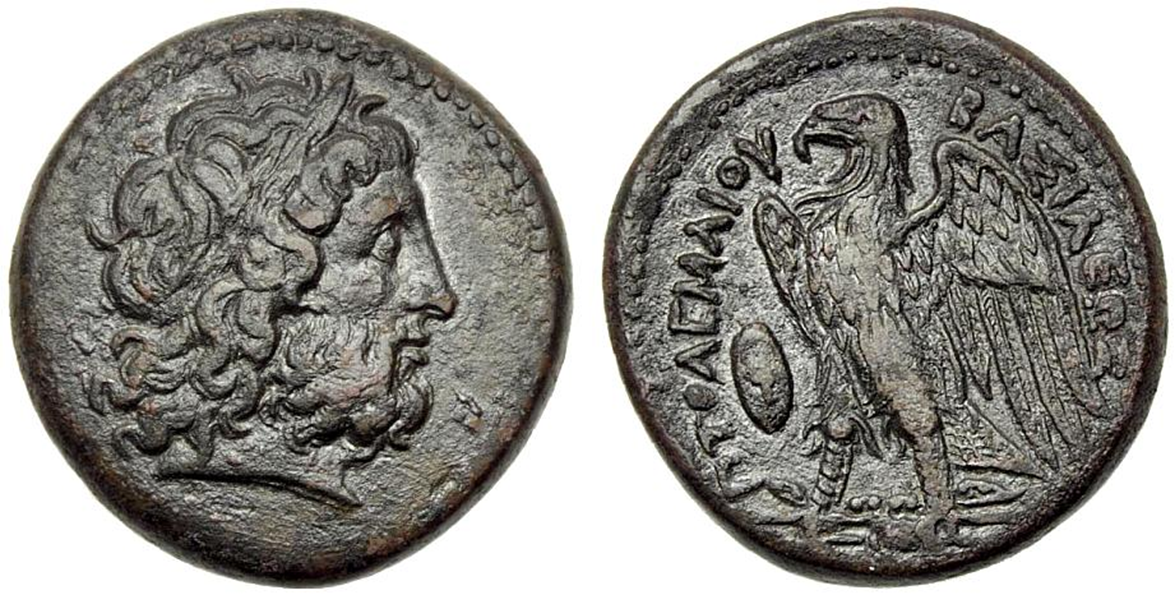
Bronze coinage: Ptolemy II, Egypt, Alexandria Mint, AE Obol, 285-246 BC, 27mm, 17.18g. SNG Cop 114.
Obv: Laureate head of Zeus, r.
Rev: ΠTOΛEMAIOY BAΣIΛEΩΣ, Eagle on thunderbolt r., at l. shield.
Why did Ptolemy have to increase the size of the coins?
He had to increase the size of the coins (some became very big), they had to do this due to the higher demand and the higher price.
What is there evidence of with these bronze coins?
By 220 BC there is evidence where Egyptians have to pay subsides to Rome in bronze (didn’t even use silver coinage)
What did bronze coinage become equal to at some point?
Bronze coinage at one point became equal in worth to silver coins
Identify this coin and give the obverse and reverse:
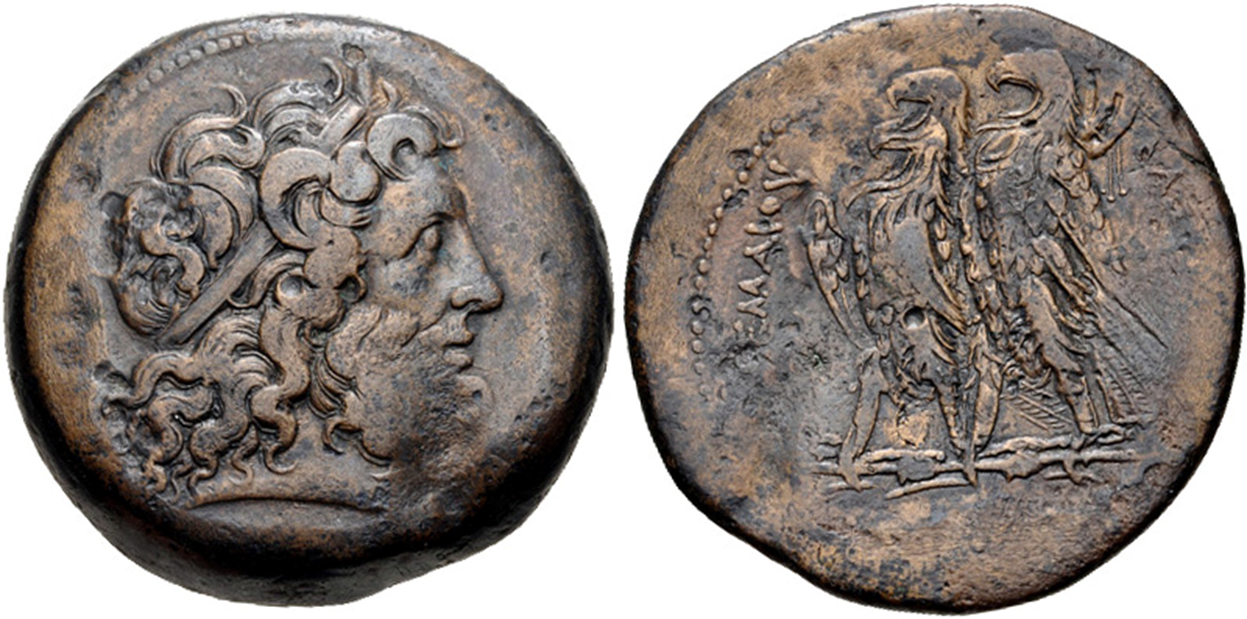
Ptolemy II Philadelphos, Egypt, Alexandria Mint, 261-246 BC. AE triobol, 43mm, 73.71g, 12h. Svoronos 463.
Obv: head of Zeus Ammon, r.
Rev: two eagles with closed wings standing l. in thunderbolt, filleted cornucopia over wing of r. eagle. Θ between legs of l. eagle. ΠΤΟΛΕΜΑΙΟΥ ΒΑΣΙΛΕΩΣ.
Why could Ptolemy just introduce a whole new system of coinage?:
The main point is that Egypt was a grain haven, they were the biggest exporters of grain, so people had to essentially deal with it?
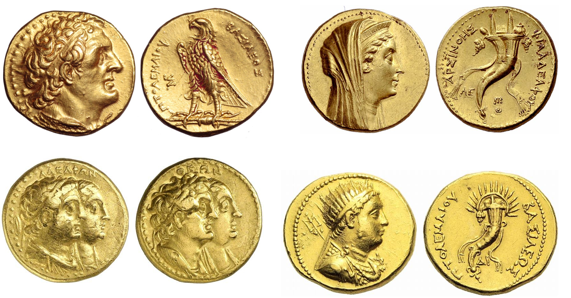
What is different on the iconography of gold coins compared to bronze coins?
No deities depicted on them, just people and eagle and cornucopias- bronze coins have a lot of deities and symbols of religion but there arent as many people on them (the reasonf ro this is that coins were gauged towards their users, the bronze coins were the currency of the countryside- for them it wasn’t a thing to worship their pharohs and kings on coins). The gold coins had a very high value, used by people in banks etc- used by people who may even know the people depicted on the coins (due to how high class they were)
Identify this coin:
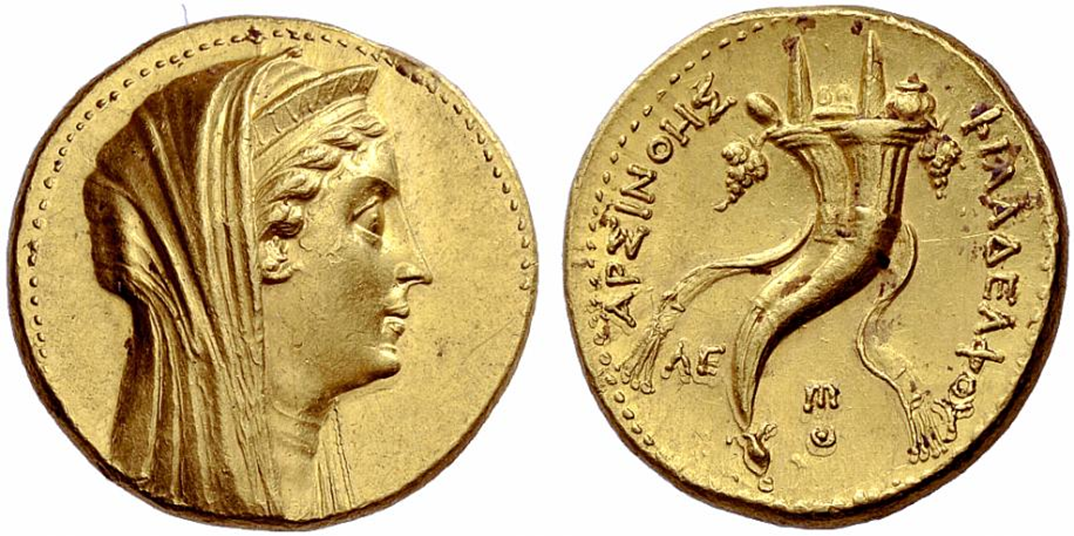
The mnaeion
28.87g (100 AR drachms), 261/0 BC – 242/1 BC (multiple mints)
Would the mnaeion be used often?
This coin wouldn’t be used in a day to day basis
These coins were predominantly dound in the delta region of Egypt
What is the seleucid kingdom like with their coins?
Very inventive with their coins, new elements that they introduced
Their mints are very concentrated to certain parts of the region
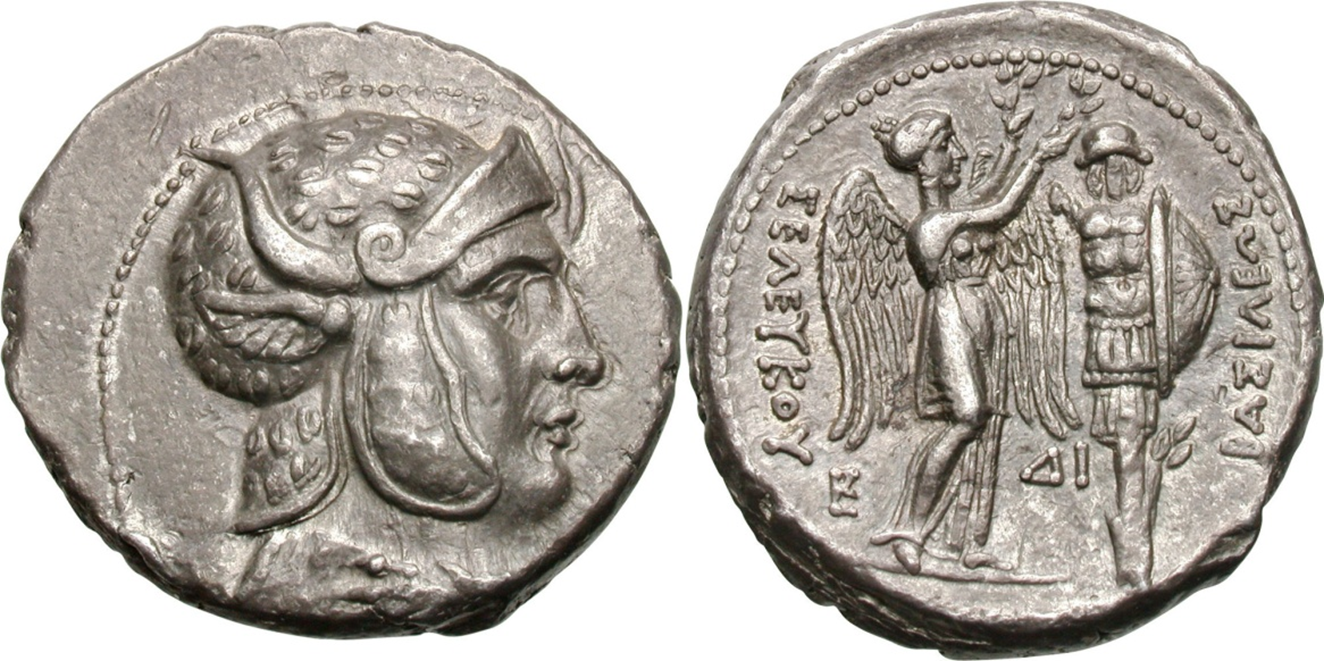
Give info on this coin
Seleucus I:
On the obverse of the coin, possibly Seleucus but he is not 100% identified. Dots all over his helmet- possibly made out of leopard skin, people believe this skin is connected to Dionysus
On the reverse- winged victory figure (Nike) placing a laurel on a tropeion (a victory monument)
In this time selecus I mints his coins on a Persian standard
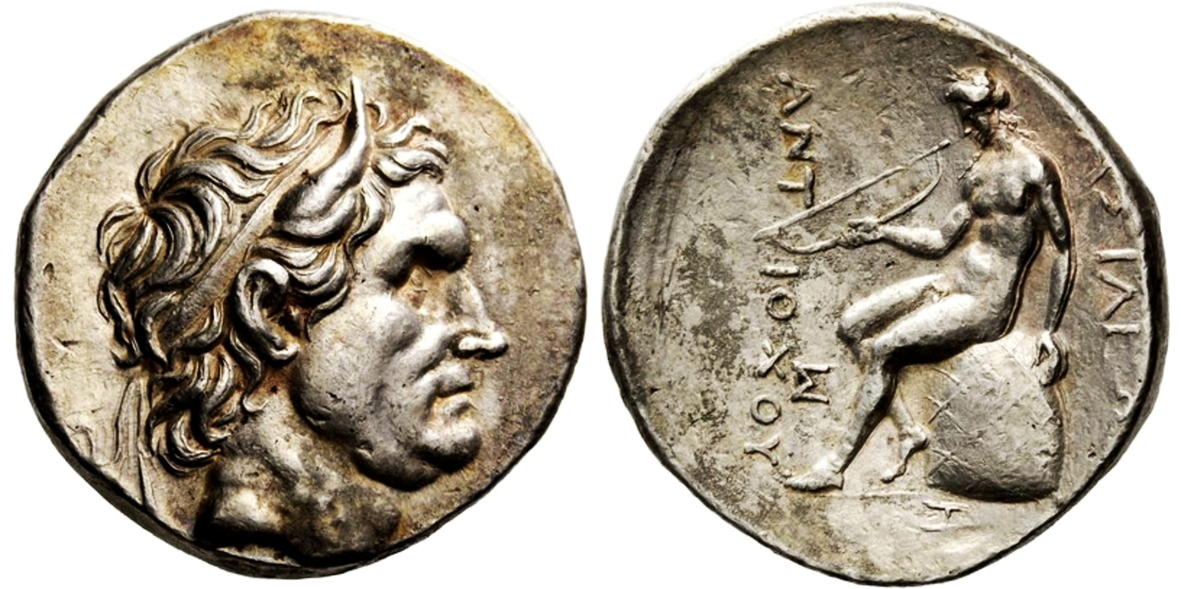
Identify this coin and give info on the obverse and reverse
Antiochos I Soter, depicting Seleucus I, (281 BC - 261 BC), AV Tetradrachm
Obv:
Diademed and horned head of the deified Seleukos I to right
Rev:
Apollo, nude but for his laurel wreath, seated on omphalos to left, holding bow with his right hand and resting his left on the omphalo. To left and below, monogram. ΒΑΣΙΛΕΩΣ ΑΝΤΙΟΧΟ
Presents Seleucus the first on his coins
Naked apollo on the reverse, he is holding a bow
Identify and analyse this coin:
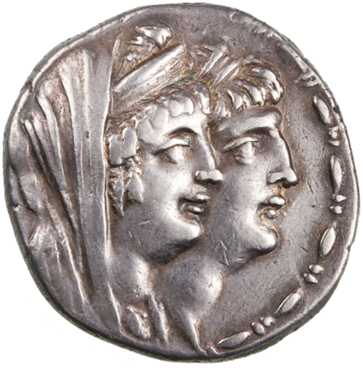
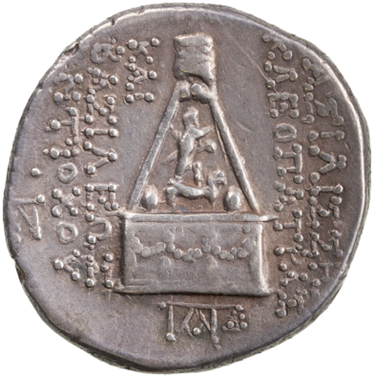
Cleopatra Thea, AR, Tetradrachm, Tarsus, Civic Workshop, 125 BC–121 BC.
(Bottom right coin) Also see an anchor (tell-tale sign of seleucid coinage), text all around the central image, this coin is from 125 BC, near the end of the Seleucid kingdom- this is slightly shown as the words seemed slightly blurred not very clear. What is depicted in the middle is a garland going around an altar, in the middle of it there is someone standing on a winged and horned lion (this is very specific imagery in many places in the east)
The one on the bottom left is very highly individualised
Identify and analyse this coin:
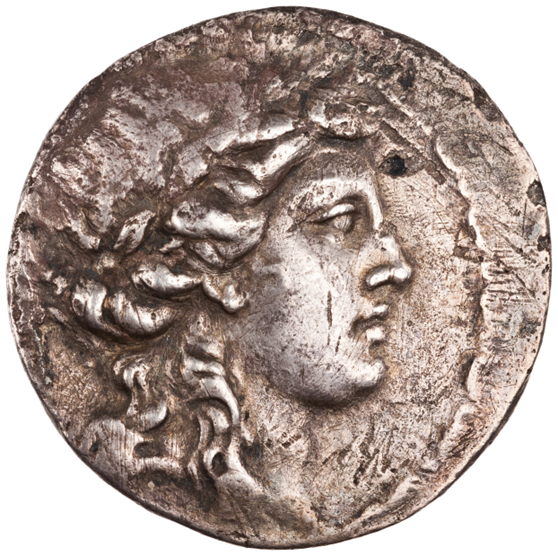
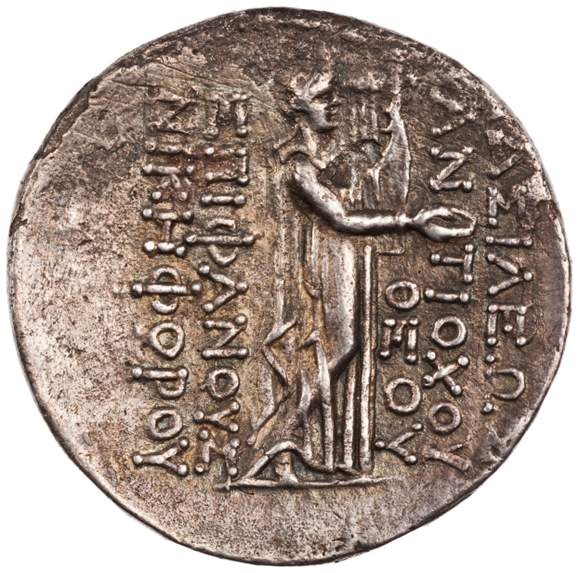
Antiochus IV Epiphanes, AR, Tetradrachm, Antioch, Syria, 167 BCE–164 BCE.
Obv. Head of Apollo r.
Rev. ΒΑΣΙΛΕΩΣ ΑΝΤΙΟΧΟΥ ΘΕΟΥ ΕΠΙΦΑΝΟΥΣ ΝΙΚΗΦΟΡΟΥ - Apollo standing r. holding lyre
Apollo on the back, standing in a way that a statue would stand, he is holding a pahele in his hands
Possibly a depiction of a cult statue of Apollo from Daphne
What can coins do/provide us with evidence of?
of pieces of art/statues/structures that no longer exist
Identify this coin and explain the obverse and reverse:
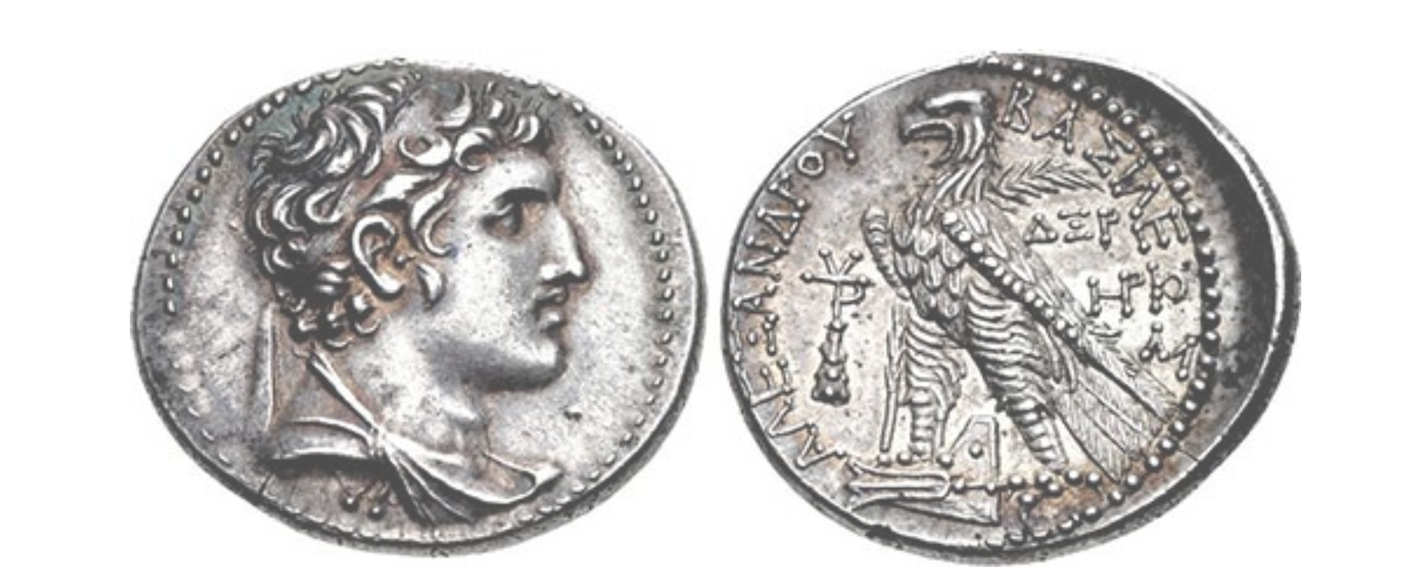
Alexander I Balas (150 BC - 145 BC), AR Tetradrachm.
Obv: Diademed and draped bust of Alexander Balas, r.
Rev: Eagle standing left on prow left; palm frond behind; to left, club surmounted by Tyre monogram; r.
Explain the dating on that coin
Three letters on the reverse of the coin is the dating of the coin, the Greeks used their alphabet to date their coins
This coin dates from 148 BC (says 149 on Powerpoint but thetas not right)
This dating system of theirs was so popular that even after the Seleucids were gone others were using their system
What was the Graeco-Bactrian kingdom?
Their kingdom was initally part of the seleucid kingdom, breaking away around 225 BC
Identify this coin:
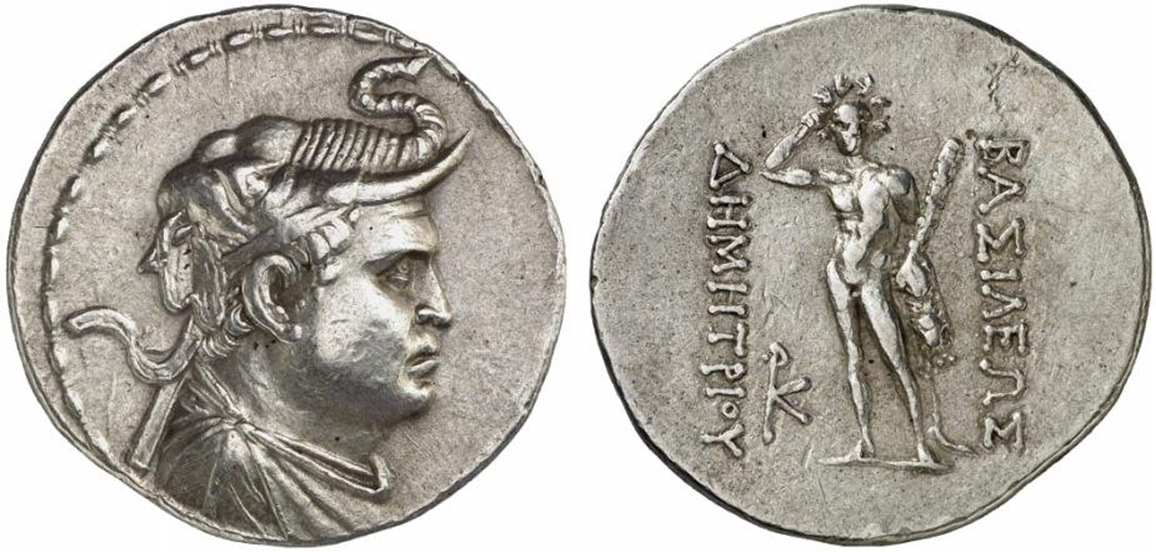
Demetrios I, Kingdom of Bactria, 200-185 BC, AR tetradrachm, 16.83g, SNG ANS 187
Describe the obverse and reverse of the coin
Obv: draped bust of the king with elephant scalp
Rev: Herakles standing with lion-skin and club, crowning himself. In field, l., monogram. ΒΑΣΙΛΕΩΣ ΔΗΜΗΤΡΙΟΥ.
Man with an elephant skin and diadem (Hellenistic imagery)
On reverse there is a heracle with a club and lionskin, he is crowning himself- telling as the Bactrians broke off (crowning themselves in a way?)
Cultural contact:
Bactrians had a hard time with a lot of cultural clashes, essentially surrounded by other tribes and cultures.
Identify this coin and the obverse and reverse:
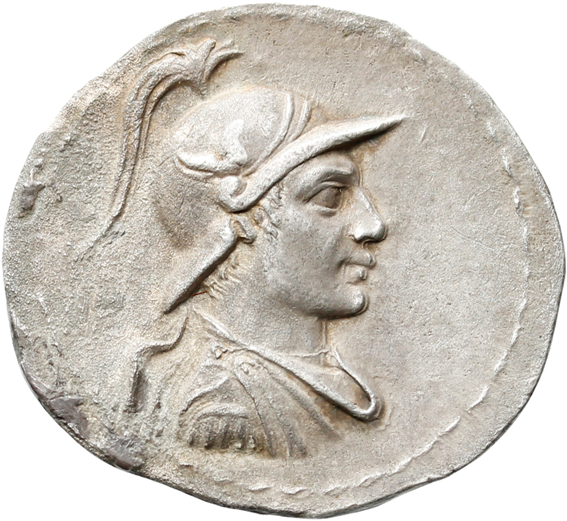
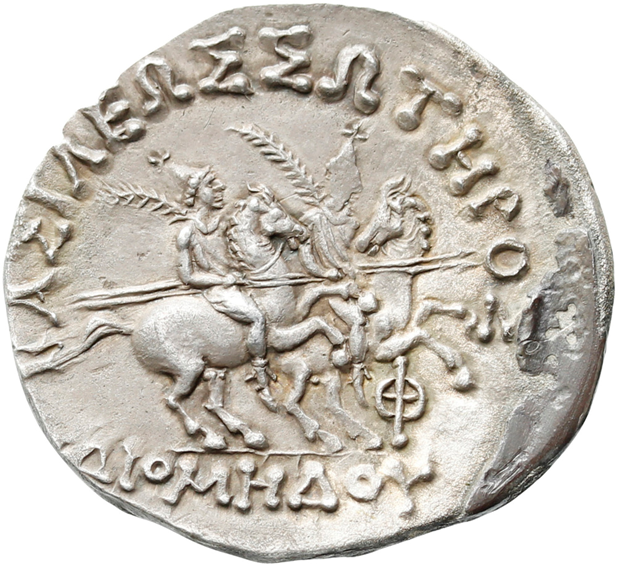
Diomedes of Bactria (ca. 150-100 BC), AR, Tetradrachm.
Obv: Bust of Diomedes, diademed and draped, wearing Boeotian helmet adorned with bull's horn and ear right; bead and reel border
Rev: ΒΑΣΙΛΕΩΣ ΣΩΤΗΡΟΣ ΔΙΟΜΗΔΟY, Dioscuri on horseback galloping right, wearing pilei and cuirasses holding spears in right hands and palms in left
Identify this coin and the obverse and rverse, what does the coin show?:
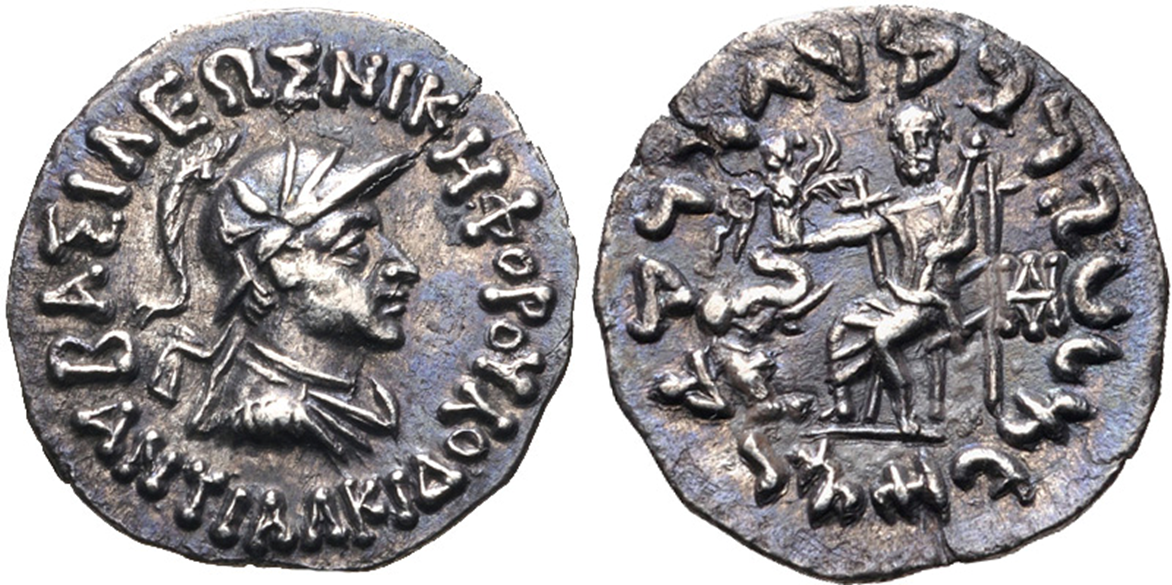
Antialkidos Nikephoros, Indo-Greek Kingdom, Bactria, 130-120 BC, AR drachm, 2.24g, SNG ANS 1078-84
Obv: draped bust wearing helmet
Rev: Zeus Nikephoros seated holding Victory and sceptre; monogram to r., forepart of elephant to l.
The coin shows a mixture of scriptures
Identify this coin and the obverse and reverse:
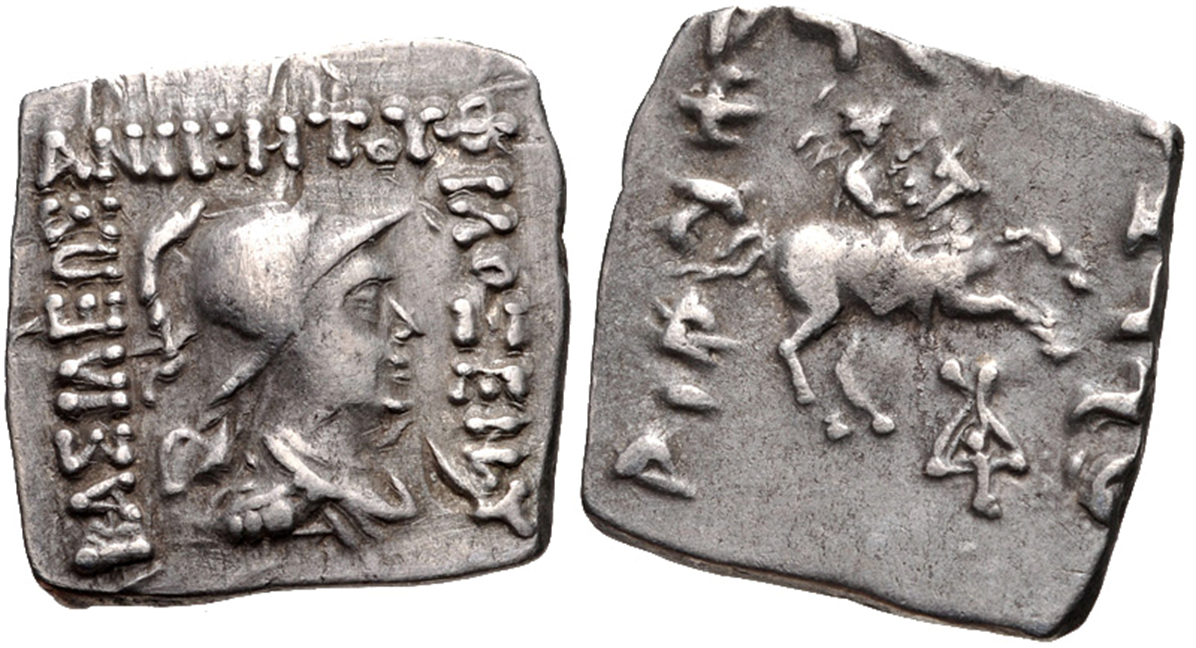
Philoxenos Aniketos, Indo-Greek Kingdom, c. 125-110 BC, AR drachm, 2.4g, SNG ANS 1188
Obv: diademed, draped and cuirassed bust wearing helmet.
Rev: King on horseback; monogram to lower r.
Made square coins (prominent in the indian region)
Greek iconography on the obverse, on an indian shaped coin and a different cultures language on the back (clash of three cultures)
What are they key important points of coinage?
when Kingdoms are in crises, when they prosper
how ancient kings wanted to be perceived
local imagery
identify lost artworks (?)
cultural contact
trade networks
every-day life