Hon Bio Unit 6: Circle of Life
 Call Kai
 Learn
Learn Practice Test
 Spaced Repetition
 Match
Match Flashcards
1/31

There's no tags or description
Looks like no tags are added yet.
Name | Mastery | Learn | Test | Matching | Spaced | Call with Kai | Chat |
|---|
No analytics yet
Send a link to your students to track their progress
32 Terms
Population
A group of individuals that belong to the same species and live in the same area
Community
All the different populations that live together in an area
Ecosystem
A community of organisms and their abiotic environment
Autotroph
An organism that makes its own food (general term)
Heterotroph
organism that obtains energy from the foods it consumes; also called a consumer
Producer
An organism that can make its own food. (trophic level)
primary consumer
An organism that eats producers
secondary consumer
An organism that eats primary consumers
tertiary consumer
An organism that eats secondary consumers
Herbivore
organism that obtains energy by eating only plants. aka primary consumer
Omnivore
organism that obtains energy by eating both plants and animals
Carnivore
organism that obtains energy by eating animals
Decomposer
organism that breaks down and obtains energy from dead organic matter
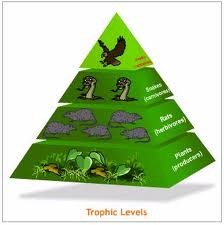
trophic level
each of several hierarchical levels in an ecosystem, comprising organisms that share the same function in the food chain and the same nutritional relationship to the primary sources of energy.
biotic factors
living parts of an ecosystem
abiotic factors
nonliving parts of an ecosystem
limiting factor
Any biotic or abiotic factor that restricts the existence, numbers, reproduction, or distribution of organisms.
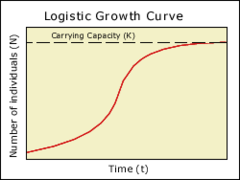
carrying capacity
Largest number of individuals of a population that a environment can support
Matter
Anything that has mass and takes up space
Biodiversity
The amount of biological or living diversity per unit area. It includes the concepts of species diversity, habitat diversity and genetic diversity.
Extinction
A term that typically describes a species that no longer has any known living individuals.
habitat destruction
Damage done to a habitat that results in the loss of resources that organisms need to survive, like food, water, and shelter
invasive species
species that enter new ecosystems and multiply, harming native species and their habitats
pollution
the presence in or introduction into the environment of a substance or thing that has harmful or poisonous effects.
Overexploitation
Practice of harvesting or hunting to such a degree that remaining individuals may not be able to replenish the population
climate change (global warming)
A rise in the average temperature of Earth's atmosphere and oceans. It is caused by increased concentrations of greenhouse gases in the atmosphere, resulting from human activities such as deforestation and burning of fossil fuels.
ecological footprint
the impact of a person or community on the environment, expressed as the amount of land required to sustain their use of natural resources.
carbon footprint
measure of the impact human activities have on the environment in terms of the amount of greenhouse gases produced, measured in units of carbon dioxide
logistic growth
Population growth that is controlled by limited resources. Usually Carrying Capacity has been reached
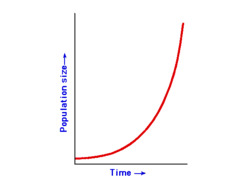
Exponential growth
growth whose rate becomes ever more rapid in proportion to the growing total number or size.
density-dependent limiting factor
limiting factor that depends on population density
Density-independent limiting factor
limiting factor that affects all populations in similar ways, regardless of population size or density