Cardiology W2: Lipid Disorders
 Call Kai
 Learn
Learn Practice Test
 Spaced Repetition
 Match
Match Flashcards
 Knowt Play
1/198

There's no tags or description
Looks like no tags are added yet.
Name | Mastery | Learn | Test | Matching | Spaced | Call with Kai | Chat |
|---|
No analytics yet
Send a link to your students to track their progress
199 Terms
USPSTF Lipid Screening
- all adults 40-75yr screen for dyslipidemia
- 21-39yr insufficient evidence to recommend for or against routine lipid screening. Use clinical judgement (I)
- >76yo insufficient evidence to assess the balance of benefits and harm of screening (I)
USPSTF Lipid Screening and Use of Statins for prevention
- adults w/o a hx of CVD use a low-moderate dose statin if age 40-75, have 1+ CVD factors or calculated 10yr risk of CV event of ≥10% (B)
- clinicians selectively offer a statin for the primary prevention of CVD is age 40-75yo, have 1+ CVD factors or calculated 10yr risk of CV event of 7.5%-10% (C)
- 76yo+ to prevent CVD (I)
How does atherosclerosis develop
When excess LDL cholesterol enters the arterial wall, leading to plaque formation and increasing the risk of ASCVD
LDL-C and risk of ASCVD
higher the level of LDL-C, the greater the risk of ASCVD
HDL-C and risk of ASCVD
higher the level of HDL-C, the lower the risk of ASCVD
Lipoproteins
- subfractions of LDL
- elevated levels considered risk factors for ASCVD
- largely genetically determined
What is a Lipoprotein?
A biochemical compound made up of lipids and proteins that allows fats to travel through the bloodstream
Lipoprotein Function
Transport lipids to and from tissues throughout the body
Apoproteins
part of the outer shell of the lipoprotein and help "guide" it
Types of Lipoproteins (5)
- Chylomicrons
- VLDL
- IDL
- LDL
- HDL
Chylomicrons
transport dietary triglycerides
VLDL
- very low density
- takes triglycerides from the liver to the body
LDL
- low density
- delivers cholesterol to cells
HDL
- high density
- removes excess cholesterol from tissues for excretion
HDL Role
- produced in liver and intestine
- reverse cholesterol transport
- transfers cholesterol to other lipoproteins or directly to the liver
Lipoprotein Metabolism
1. liver packages triglycerides into VLDL
2. VLDL delivers triglycerides to muscles/fat for energy or storage
3. VLDL loses triglycerides and becomes LDL
4. LDL delivers cholesterol to body tissue
5. liver removes excess LDL from the blood and eliminated cholesterol in bile
Lipid Panel Componenets
- total cholesterol
- LDL-C
- HDL-C
- triglycerides
- Non-HDL-C
When should you obtain a fasting lipid panel?
- non fasting triglycerides ≥ 400
- suspected genetic dyslipidemia
- FHx of premature ASCVD
- suspected triglyceride metabolism disorder
Fasting Lipid panel: Fasting time
8-12hr prior to draw
What 2 measurements are recommended to measure along side a lipid panel?
- Lipoprotein A (Lp(a))
- Apolipoproetin B (ApoB)
Lp(a) measurement
- once in a lifetime
- identifies a unique inherited risk factor
- mc in African or South Asian ancestry
- Independent of LDL-C and ApoB
- helps identify hidden inherited risk
Elevated Lp(a)
≥ 125 nmol/L
Do you need to fast before drawing a Lp(a)?
No fasting required
elevated Lp(a) risk for
- premature CAD
- stroke
- calcific aortic stenosis
When do you suspect an elevated Lp(a)?
- strong family history of early ASCVD
- recurrent cardiovascular events despite normal LDL-C
What does an Elevated Lp(a) identify?
Identifies patients who may benefit from more aggressive LDL lowering therapy
Is Lp(a) affected by diet and exercise?
No, largely unaffected
ApoB measurement
- monitored overtime to assess therapy response
- measures total atherogenic particle burden
- reflects total number of plaque-forming particles
- better treatment target than LDL-C alone
- helps guide intensity of lipid-lowering therapy
ApoB measure
the number of atherogenic lipoprotein particles and is associated with increased ASCVD risk
elevated ApoB increased risk
- premature CAD
- MI/ischemic stroke
- residual CVD risk despite normal LDL-C
When to suspect elevated ApoB
- elevated triglycerides
- DM/metabolic syndrome/obesity
- familial combined hyperlipidemia
When should you use an ApoB test?
- ASCVD
- CKM syndrome
- DM 2
- elevated triglycerides
- LDL-C/non-HDL tx goals reached but residual risk remains
- characterizing inherited lipid disorders
Hyperlipidemia
elevated LDL, total cholesterol, triglycerides, lipoprotein levels, or low HDL
Hyperlipidemia Etiology
1. primary (familial): polygenic inheritance pattern
2. secondary (acquired): central obesity, saturated fat intake, dietary cholesterol
Hypercholesterolemia
elevated LDL-C
When should you suspect a secondary cause of elevated LDL-C?
When LDL-C is newly elevated, rapidly worsening, or inconsistent with the patient's age or family history
Secondary Causes of Elevated LDL-C (8)
- hypothyroidism (mc)
- DM
- nephrotic syndrome
- CKD
- cholestatic liver disease
- obesity/metabolic syndrome
- diet high in saturated fats
- medications
What tests should you perform to evaluate for secondary causes?
- HbA1c
- urine albumin-to-creatinine ratio
- TSH
- liver and renal function testing
Familial Hypercholesterolemia
- Genetic disorder causing markedly elevated LDL-C from birth
- Significant increased risk of early heart disease and stroke if untreated
Familial Hypercholesterolemia Causes (3)
- defective/absent LDL receptors
- pathogenic variants in ApoB
- increased-function in PCSK9
Familial Hypercholesterolemia Two Types
1. Heterozygous FH (HeFH)
2. Homozygous FH (HoFH)
Which type of Familial Hypercholesterolemia is more common?
HeFH
Familial Hypercholesterolemia Types
Amount of defective genes
- HeFH: 1 defective gene
- HoFH: 2 defective genes
Familial Hypercholesterolemia Types
LDL-C amount
- HeFH: 2-3x normal (≥190)
- HoFH: 4-8x normal (>400-500)
Familial Hypercholesterolemia Types
ASCVD Risk age if untreated
- HeFH: 30s-502
- HoFH: childhood
Familial Hypercholesterolemia HeFH Tx
High intensity static + ezetimibe +/- PCSK9 inhibitor
Familial Hypercholesterolemia HoFH Tx
- multiple agents + LDL apheresis
- occasional liver transplant
Familial Hypercholesterolemia: Lipoprotein Lipase Deficiency
- causes extremely high levels of triglycerides due to disruption of normal fat breakdown
- rare, autosomal recessive mutation of LPL gene
- presents in childhood/adolescence
Familial Hypercholesterolemia: Lipoprotein Lipase Deficiency sx
- recurrent pancreatitis
- abdominal pain
- hepatospenomagaly
- eruptive xanthomas
Familial Hypercholesterolemia: Lipoprotein Lipase Deficiency tx
very low fat diet (no more than 20g/day) for all ages
Familial Hypercholesterolemia
Other Genetics/Lipid Diseases
- familial combined hyperlipidemia
- familial defective apo-100
- familial dysbetalipoproteinemia
familial combined hyperlipidemia
- high total cholesterol, LDL, triglycerides, and low HDL
- hepatic overproduction of LDL and VLDL
familial combined hyperlipidemia clinical manifestations
obesity, premature CVD, xanthelasmas
familial defective apo-100
- autosomal dominant; mutations in the APOB gene
- reduces binding affinity of LDL-C to receptor
- slows clearance of LDL from blood
familial defective apo-100 clinical manifestation
elevated serum cholesterol levels
familial dysbetalipoproteinemia
high total cholesterol and high triglycerides (300-1000)
familial dysbetalipoproteinemia clinical manifestations
premature CHD, xanthomata of palmar creases, tuboeruptive xanthoma
Mixed Hyperlipidemia
elevated triglycerides and LDL-C
Dyslipidemia
imbalance of lipids
When to Refer Lipid related disease
- known genetic lipid disorder
- striking FH of hyperlipidemia or premature ASCVD
- extremely high serum LDL, triglycerides, lipoprotein(a) and extremly low HDL
Clinical Manifestations of Hyperlipidemias (4)
No specific signs but high levels associated with:
- xanthelasma
- xanthomas
- tendinous xanthomas
- eruptive xanthoma
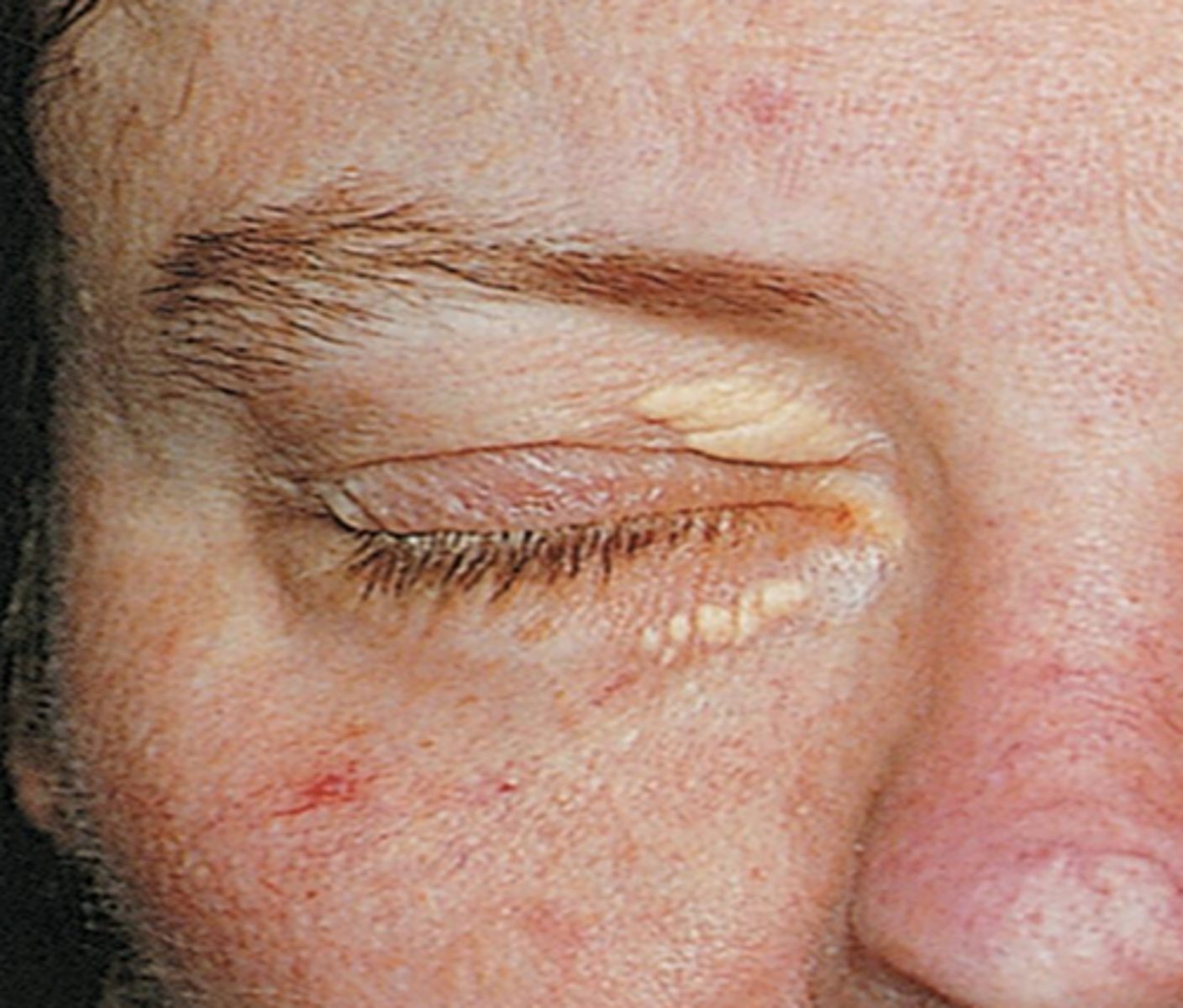
Xanthelasma
localized lipid deposition on the eyelids
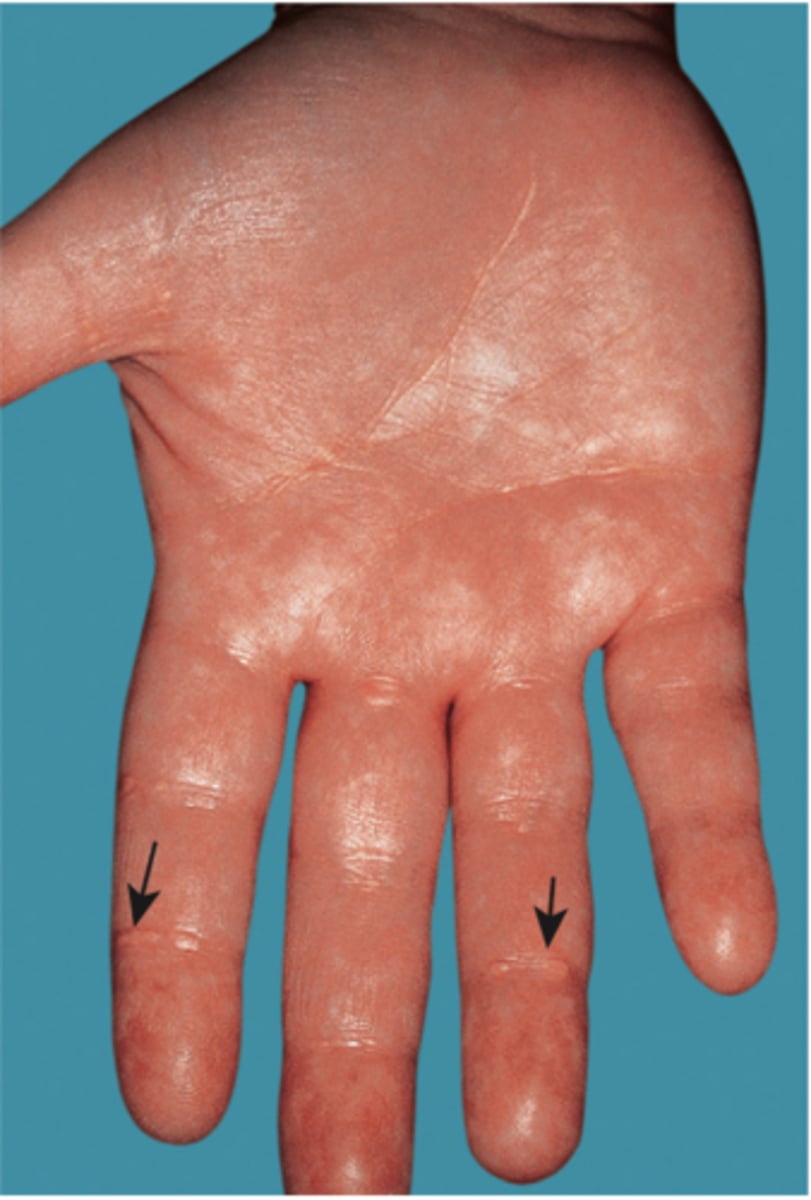
Xanthomas
fatty deposits under the surface of the skin
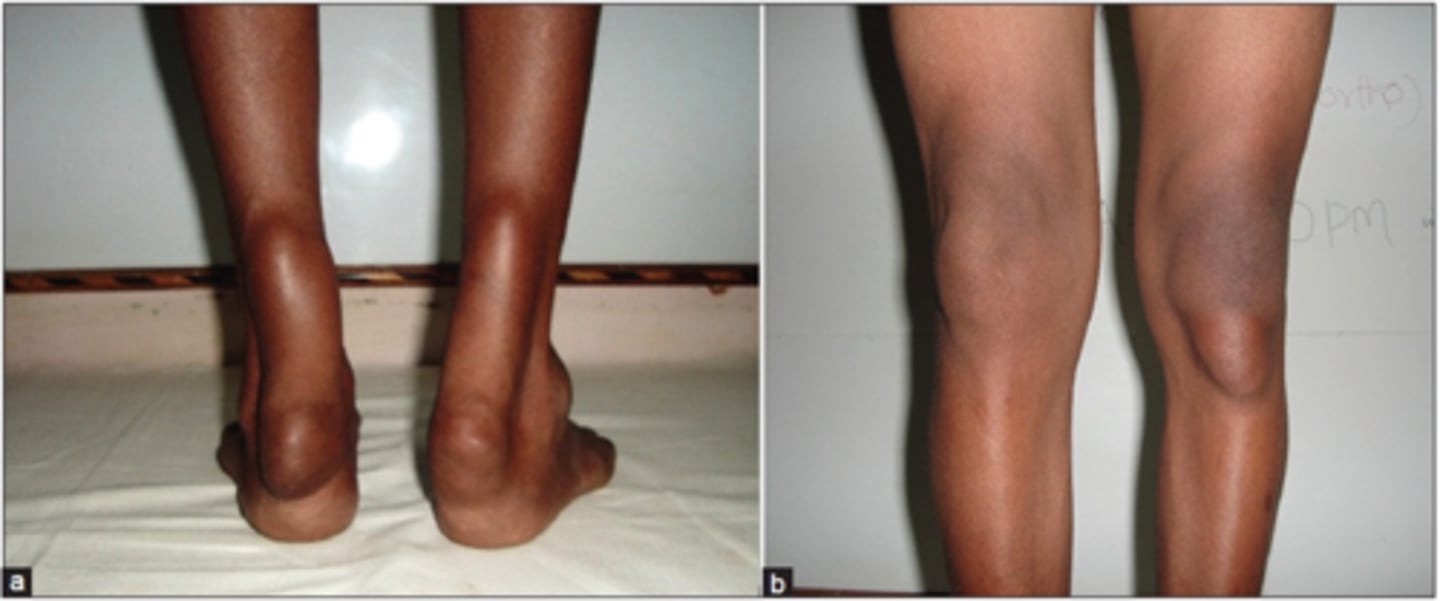
Tendinous xanthomas
may be seen on radiograph
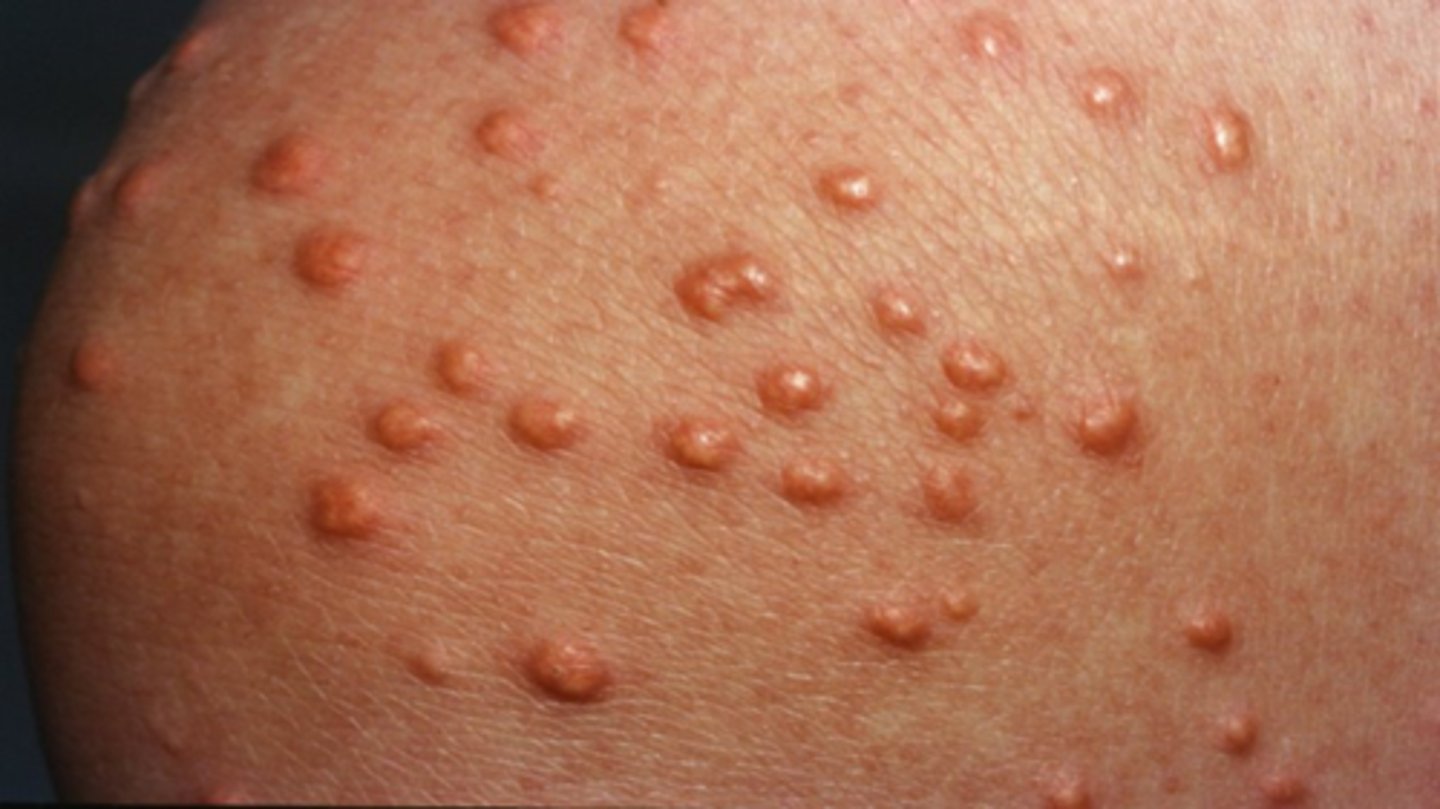
Eruptive Xanthoma
red-yellow papules
Total Cholesteral:
normal female
normal male
- normal female: <200
- normal male < 200
Triglycerides
normal female
normal male
optimal
normal female: 35-135
normal male: 40-160
optimal: <150
LDL
normal female
normal male
optimal
normal female: <130
normal male: <130
optimal: <100
HDL
normal female
normal male
optimal
normal female: >50-55
normal male: >40-45
optimal: >60
Non-HDL
normal female
normal male
optimal
normal female: <159
normal male: <159
optimal: <130
What is the strongest predictor of ASCVD
LDL-C
What medication to target LDL-C?
Statin Therapy
Boarderline/Intermediate CVD risk LDL-C level goal
<100 mg/dL
High CVD risk LDL-C level goal
<70 mg/dL
Very high CVD risk LDL-C level goal
<55 mg/dL
LDL-C <100
- goal for most adults
- continue lifestyle and monitor
LDL-C 130-189
- risk enhancing factor
- consider statin based on PREVENT risk and shared decision making
LDL-C ≥ 190
- severe hypercholesterolemia
- start high intensity statin regardless of calculated PREVENT risk
Clinical ASCVD (prior MI, stroke, PAD)
- secondary prevention
- high intensity statin regardless of LDL level
- goal LDL < 70
Very high risk ASCVD
- highest risk
- goal LDL <55
- add ezetimibe or PCSK9 inhibitor if not at goal
Hypertriglyceridemia
elevated triglycerides
Triglycerides
- carried by VLDL particles
- reflect metabolic dysfunction (insulin resistance, obesity, DM)
Normal Triglycerides
<150
Borderline Triglycerides
150-199
High Triglycerides
200-499
Very High Triglycerides
≥ 500
A patient with very high Triglycerides is at risk for what?
Pancreatitis
Elevated Triglycerides is what?
A marker of atherogenic remnant lipoproteins
What are the advanced risk markers for hyperlipidemia?
Non-HDL and ApoB
Non-HDL
- represents all atherogenic lipoproteins (LDL; VLDL; remnants)
- better predictor than LDL when triglycerides are elevated
When to use Non-HDL-C and ApoB
- high risk patients
- triglycerides ≥200
Risk factors that favor LDL lowering therapy (10)
- FHx of premature ASCVD
- chronic inflammatory disease
- lopoprotein(a)
- CRP ≥ 2
- persistently elevated triglycerides
- CKM syndrome
- elevated atherogenic lipids
- reproductive risk markers
- higher risk ancestry (Sough Asion/Filipino)
- high polygenic risk score
What CRP level supports more intensive lipid lowering therapy?
≥ 2 mg/L on two separate occasions
Coronary Calcium Score (CAC)
- non contrast cardiac CT
- detects calcified coronary plaque
- best test for refining ASCVD risk
When should you use Coronary Calcium Score (CAC)?
- borderline/intermediate risk
- uncertain statin decision
- LDL doesn't match risk
CAC Score: 0
- very low risk
- consider deferring statin
If a patient has a CAC score of 0, when should you still treat with a statin?
If they have DM, smoke, or a strong FHx
CAC Score: 1-99
- mild plaque
- favors statin, especially ≥ 55yrs
CAC Score: ≥100 or 75th percentile
- significant plaque
- statin recommended
1st Line pharmacologic therapy for all lipid disorders
Statins