Edexcel A-level Business Theme 4
 Call Kai
 Learn
Learn Practice Test
 Spaced Repetition
 Match
Match Flashcards
 Knowt Play
1/124

There's no tags or description
Looks like no tags are added yet.
Name | Mastery | Learn | Test | Matching | Spaced | Call with Kai | Chat |
|---|
No analytics yet
Send a link to your students to track their progress
125 Terms
growth rate of UK economy compared to emerging economies
mature, slow growth
emerging economy
a market where there is a lot of growth but also a lot of risk
BRICS
Brazil, Russia, India, China, South Africa
MINT
Mexico, Indonesia, Nigeria, Turkey
GDP
volume of spending of final goods
indicators of growth
1. GDP
2. Literacy
3. Health
4. Human Development Index
scores to expect from research
between zero and one (0-1) the higher the figure the greater the level of development
human development index
a measure of living conditions using factors such as life expectancy, education, and income
international trade
the exchange of goods and services among nations
import
to bring into the country
export
to carry out of the country
division of labour
specialisation of workers on specific tasks in the production process
specialisation
businesses concentrate on what they are best at
competitive advantage
an advantage over competitors gained by offering greater customer value
link between business specialisation and competitive advantage
specialisation allows businesses to focus on specific areas of production, leading to increased efficiency, lower costs, and the ability to offer unique products or services that differentiate them from competitors which intern leads to competitive advantage
foreign direct investment (FDI)
a company invests into a country
impact of FDI
+ reduce unemployment
+ transfer skills/technology
- domestic investment
- complex bureaucratic procedures
FDI link to business growth
foreign Direct Investment (FDI) links to business growth by offering benefits like access to new markets, increased job opportunities, and access to knowledge and expertise from foreign investors
reduction of international trade barriers/trade liberalisation
lowering tariffs and other trade restrictions to facilitate international trade
political change
changes in laws, taxes, and regulations can affect a businesses operational costs, market access, and overall business strategy
reduced cost of transport and communication
lower production costs, improved customer service, and increased profitability
Increased significance of global TNCs
transnational corporations (TNCs), impact businesses by driving globalisation by establishing global production networks, encouraging trade, and creating jobs. TNCs also influence local markets through globalisation, adapting products to suit diverse needs and preferences investing in infrastructure, contribute to tax revenues, and often introduce new technologies.
increased investment flows (FDI)
increased investment flows, particularly Foreign Direct Investment (FDI) boost growth, creates jobs, and drives exports
migration within and between economies
surge in migration as people seek better economic and social opportunities
growth of global labour force
the growth of the global labour force significantly contributes to the increase of globalisation due to the influx of new workers into the global market, increasing global demand, and potentially lowering labor costs
structural change
structural change, particularly the shift from traditional sectors like agriculture to modern ones like manufacturing and services, is a major factor driving the increase in globalisation
private finance initiative (PFI)
investment by private sector organisations in public sector projects
protectionism
the theory or practice of shielding a country's domestic industries from foreign competition by taxing imports
tariff
tax on imports
import quotas
a restriction placed on the amount of a product allowed to enter or leave a country
why are tariffs imposed
1. raise tax revenue
2. protectionism
3. environmental reasons
trade blocs
agreement between states, regions, or countries, to reduce barriers to trade between the participating regions
government legislation
laws made by the government
domestic subsidies
government financial assistance provided to local industries and businesses to help them compete with foreign imports
reasons for trading blocs
1. protecting economic interest
2. makes international trade harder
3. agreeing to trade with new tariffs
impact of trading blocs
+ free trade within bloc
+ free movement of labour
+ foster strong relationships
- expensive
- only part of one bloc
- loose ability to trade outside bloc
examples of trading blocs
1. EU
2. NAFTA
3. ASEAN
disposable income
amount that a consumer has to spend after all their bills have been paid
EU and the single market
allows EU citizens to study, live, shop, work, and retire in any EU country, and for businesses to operate across borders without tariffs or other trade barriers
ASEAN
Association of Southeast Asian Nations
NAFTA
a trade agreement between Canada, Mexico, and the United States that created a free-trade zone in North America
push factors
something that happens in an existing market that forces a business to look elsewhere for survival/success
saturated markets
volume of a product or service that has been maximised meaning the business has to look elsewhere to succeed/survive.
comepetition
high level of competition in the domestic market may force a business to sell abroad
pull factor
something that happens in another market that attracts a business towards it
examples of pull factors
1. ability to spread risk
2. opportunities in overseas markets
3. ability to gain economies of scale
economies of scale
cost advantages that businesses gain from increasing their scale of production
risk spreading
the distribution of risks across multiple entities or locations to minimise the impact of a single event
off-shoring
the relocation of business processes
impact of off-shoring
+ lower cost
+ different skills
+ closer to demand
- longer wait
- management
- communication
outsourcing
hiring workers in other countries to do a set of jobs
impact of outsourcing
+ improved focus on main business aims
+ improves efficiency
+ outsourced company will be more efficient at a lower cost
- lack of control
- difficult to manage
examples of outsourcing
1. HR
2. delivery
3. labour
extending the product life cycle by selling in multiple markets
expanding into new geographic areas to reach a wider audience and maintain product demand after it reaches maturity in its original market
assessment of a county as a market

levels and growth of disposable income
dependent on current economy
ease of doing business index
index created by the world bank group
infrastructure
basic physical and organisational structures and facilities e.g. buildings, roads, power, supplies and telecommunication)
political stability
1. government change
2. conflict
3. law and order
exchange rate
the value of one currency for the purpose of conversion to another
assessment of a country as a production location
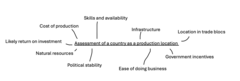
cost of production
1. labour
2. producing goods
3. land cost
4. high levels of regulation
5. minimal natural resources
location in trading bloc
offers access to a larger, integrated market with reduced trade barriers leading to lower costs and higher profits
government incentives
finance provided to a business to help when incise business to locate in a particular area e.g. tax breaks, land subsidies and low corporation tax
ease of doing business
how smoothly a business can navigate regulations, infrastructure, and other factors that impact its ability to operate and produce goods or services
natural resources
raw materials supplied by nature
likely return on investment
businesses will choose countries with higher potential ROI to maximise profits and minimise financial risk
global school ranking
a business may need a skilled labour force and one of the ways to access this is through viewing the school rankings
expense of production in another country
1. moving operations
2. hiring staff
3. setting up new production
4. buying machinery
global merger
two businesses join together permanently
impact of global merger
+ access to skills and technology
+ strengthen position in international market
- communication
- permanent
reasons for global mergers
1. spreading risk
2. entering new markets/trade blocs
3. securing resources/suppliers
4. maintaining/increasing global competitiveness
5. securing resources
the impact of movements in exchange rates
a weaker currency makes imports more expensive, while stimulating exports by making them cheaper for overseas customers to buy
joint venture
join together for a temporary agreement/project
impact of joint venture
+ skills
+ reduce competition
+ access to materials
- uneven division of work and resources
- increased liability
takeover
a business takes control of a company by buying most of its shares
SPICED
Strong Pound Imports Cheaper Exports Dearer
appreciation
an increase in currency value
competitive advantage diagram
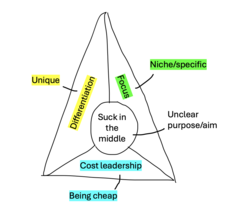
cost leadership
strategy to become the lowest-cost producer
impact of cost leadership
+ competitive advantage
+ wide range of consumers
+ wide range of consumers
- better quality elsewhere
- consumer perception
- limited product diversification
- thin profit margins
Porters generic matrix
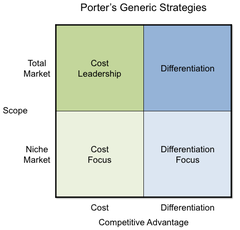
limitations of Porters generic matrix
- not relevant in a dynamic market
- not useful in a crisis situation
- over simplifies market structure
- companies may have a vast product range and appeal to a large range of customers e.g. Tesco
globalisation
conducting business according to both local and global consideration
global marketing strategy
setting plans that aim to achieve a specific marketing objective
globalisation
the process by which businesses or other organisations develop international influence or start operating on an international scale
3 marketing approaches
1. ethnocentric
2. geocentric
3. polycentric
ethnocentric
little to no attempt to adapt their product or service to the country they aim to sell in
polycentric
adaption to product or service to meet the needs of the country they aim to sell in
geocentric
using a combination of ethnocentric and polycentric approach
ansoff matrix
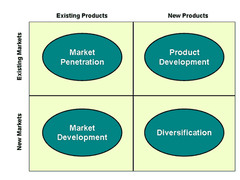
examples of cultural diversity
1. values
2. demographics
3. history
features of global niche markets
1. Clear understanding of needs of the market segment
2. Focus on quality
3. Excellent customer service
4. Expertise in the product area
5. Prioritises profit rather than market share
innovation
application and adaption of the marketing mix to suit global niches
product: global niche products often place an emphasise on quality e.g. luxury cars, watches and perfume
price: the point of niche marketing is to change higher prices by providing a product not intended for the mass market
place: businesses serving niche market are often more carful when selecting distribution channels for their product. particularly if the company is an exclusive brand. networks of exclusive dealers are a common method of selling products to global customers
promotions: strategies to promote products to global niches are often bored around the brand name and reinforcing the exclusivity of the brand and need to be more targeted than in mass market promotion
features of global niche markets
1. focused customer base
2. often defined by specific needs interests, or values, which are not fully catered to by mainstream markets
culture/social factors
1. differing tastes
2. unintended meaning
3. cultural differences
4. language
5. appropriate branding and promotion
multinational corporation
businesses that is registered in one country but has manufacturing operations/aspects in a different country
transfer pricing
shorthand for multinational corporation shifting profits to tax havens to avoid tax in developed countries
ethics
moral principles that determine how business decisions are made. considered the right thing to do
examples of ethical practices
1. ethically sourced materials
2. staff treatment
3. fair pay
4. consideration of the community
5. recycling