Sleep Physiology Exam 1
 Studied by 0 people
 Call Kai
 Learn
Learn Practice Test
 Spaced Repetition
 Match
Match Flashcards
 Knowt Play
1/184

There's no tags or description
Looks like no tags are added yet.
Name | Mastery | Learn | Test | Matching | Spaced |
|---|
No study sessions yet.
185 Terms
Who published The Anatomy of the Brain in 1664 and why is it significant?
A: Thomas Willis; it marked an early attempt to link brain anatomy to sleep and neurological processes.
Q: Who first demonstrated endogenous circadian rhythms in plants?
A: de Mairan (1729).
Q: What was the significance of Robert Macnish’s 1830 book The Philosophy of Sleep?
A: It was the first book dedicated entirely to sleep, establishing sleep as a field for systematic study.
Q: What was Wilhelm Griesinger’s 1868 observation about sleep?
A: He noted eyelid fluttering during dreaming, an early description of REM-like phenomena.
Q: What was the signifigance of the galvanometer?
A: Became First EEG as it was the first time electrical activity was associated with the brain
Q: What did Maria Manasseina’s 1894 studies on puppies show?
A: Sleep is essential for survival; puppies deprived of sleep died.
Q: What was the contribution of Patrick & Gilbert in 1896?
A: They conducted the first human studies of sleep deprivation, showing that lack of sleep impairs performance.
Q: What was significant about Ishimori’s 1909 discovery?
A: He proposed a “hypnogenic substance” that builds during wakefulness and induces sleep.
Q: What did Constantin von Economo’s 1917 studies reveal?
A: Lesions in the anterior hypothalamus cause insomnia; lesions in the posterior hypothalamus cause hypersomnolence.
Q: Who made the first human EEG recording?
A: Hans Berger in 1924.
Q: Who discovered REM sleep?
A: Aserinsky & Kleitman
Q: What is sleep homeostasis?
A: The regulation of sleep pressure: sleep drive builds during wakefulness and dissipates during sleep, maintaining balance in sleep-wake states.
Q: How does sleep deprivation affect Process S?
A: It increases Process S, leading to higher SWA and sleep intensity during recovery sleep.
Q: What does polysomnography (PSG) measure?
A: EEG, EOG, EMG, ECG, respiration, and pulse oximetry.
Q: What does an EOG measure?
A: Measuring eye movements to assist in sleep staging
What does an EMG measure?
Muscle Atonia during REM
What does an EKG measure?
Measures cardiac activity and respiratory channels
Q: What characterizes Stage 1 sleep on EEG?
A: Low-amplitude, high-frequency waveforms (light sleep).
Q: What characterizes Stage 2 sleep on EEG?
Sleep spindles and K-complexes
Q: What are K-complexes and when do they occur?
A: Large, high-voltage waves in Stage 2 (N2); thought to suppress arousal and aid memory consolidation.
Q: What are sleep spindles and when do they occur?
A: Bursts of 12–15 Hz activity in Stage 2 (N2); linked to sensory processing, memory consolidation, time of NREM sleep
Q: What defines Stage 3/4 (slow-wave sleep)?
A: SWS with High-amplitude, low-frequency (delta) waves, with deep unconsciousness.
Q: What does delta power (SWA) indicate?
A: Sleep depth and homeostatic sleep pressure.
Q: How does SWA change across a normal night’s sleep?
A: SWA is highest early in the night and decreases as sleep continues.
Q: How does sleep deprivation affect SWA?
A: Recovery sleep shows elevated SWA compared to baseline.
What is a hypnogram?
Shows sleep stages overtime (Form of PSG)
Q: What is the Multiple Sleep Latency Test (MSLT) used for?
A: Uses PSG to time how long it takes for you to fall asleep
Q: What is the Maintenance of Wakefulness Test (MWT)?
Objective Measure for sleepiness by using attempts to stay awake (15, 20, 40 minutes..)
Q: What is the Karolinska Sleepiness Scale (KSS)? (Survey)
A: A subjective scale from 1 (very alert) to 9 (very sleepy, fighting sleep).
Q: What is the Epworth Sleepiness Scale (ESS)?
A: A questionnaire rating chance of dozing in 8 scenarios, total score 0–24.
Q: How do subjective and objective measures of sleepiness differ in use?
A: Subjective scales capture perceived sleepiness; objective tests like MSLT and MWT assess physiological sleepiness for clinical/diagnostic use.
Q: What does RU-SATED stand for? (Bigger pic survey for more data)
A: Regularity, Satisfaction, Alertness, Timing, Efficiency, Duration.

Q: What does gamma frequency represent in EEG?
A: >30 Hz; associated with high-level cognitive processing and consciousness.

Q: What does beta frequency represent in EEG?
A: 13–30 Hz; linked to alert wakefulness and active thinking.
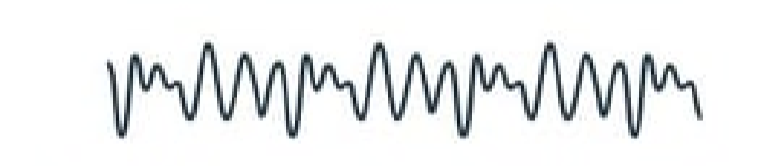
Q: What does alpha frequency represent in EEG?
Relaxed, calm and light mediation “Resting eyes”
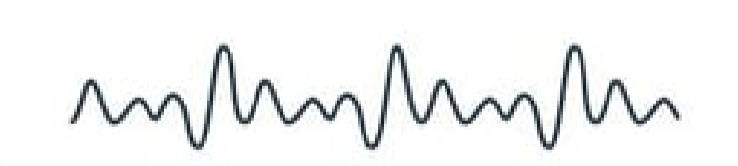
Q: What does theta frequency represent in EEG?
A: 4–8 Hz; common in light sleep (N1, REM).

Q: What does delta frequency represent in EEG?
A: 0.5–4 Hz; dominant in deep sleep (slow-wave sleep, N3).
Q: What are circadian rhythms? (Our biological ro
A: Physical, mental, and behavioral changes that follow an ~24h cycle, responding primarily to light/dark cues, regulated by biological clocks in nearly every tissue and organ
Q: What did Nathaniel Kleitman’s Mammoth Cave study show? (REM sleep)
A: That humans continue to show rhythmic cycles without external time cues, providing the first strong evidence for endogenous circadian rhythms
Q: What were the findings of Aschoff’s 1960s bunker studies?
A: In constant environments, human rhythms drifted with a period >24h, confirming an intrinsic biological clock
Q: What is entrainment?
A: The process by which external cues synchronize an organism’s internal circadian rhythm to the 24h day
Q: What is a zeitgeber?
A: An environmental cue (e.g., light, temperature, feeding, exercise) that synchronizes circadian rhythms
Q: What does free-running mean?
A: When an organism’s circadian rhythm occurs without external time cues, drifting at its intrinsic period
Q: What is tau (τ) in circadian rhythms?
A: The intrinsic free-running period, ~24.2–24.5h in humans
Q: What is T (Zeitgeber period)?
A: The length of the external environmental cycle (e.g., Earth’s 24h day-night cycle)
Q: What is amplitude in circadian rhythms?
A: The strength or height of the oscillation
Q: What is phase in circadian rhythms?
A: The timing of a key point in the cycle (e.g., peak or trough)
What is a clock?
24h timing mechanism that is compsoed of molecular oscillators (Genes)
What is an oscillator?
SCN neurons that produce rhythm firing
What is a pacemaker?
SCN that synchorizes peripheral clocks
Whar is the SCN?
Suprachiasmatic nucleus, the central pacemaker of the circacdian timing system
Q: How does light affect melatonin secretion?
A: Light inhibits melatonin; darkness stimulates it via the retina → SCN → superior cervical ganglion → pineal gland pathway
Q: How can blind individuals still regulate circadian rhythms?
A: Intrinsically photosensitive retinal ganglion cells (ipRGCs) can detect light and synchronize the SCN even if rods and cones are nonfunctional
Q: What are circadian rhythm sleep disorders?
Delayed Sleep-Wake Phase Disorder (DSWPD).
Advanced Sleep-Wake Phase Disorder (ASWPD).
Non-24-Hour Sleep-Wake Disorder (common in blind individuals)
Q: What causes Non-24-Hour Sleep-Wake Disorder (N24SWD)?
A: Failure to entrain to 24h cycle, common in blind individuals unable to perceive light
Q: What factors influence chronotypes?
A: Genetics (PER, CLOCK), melatonin timing, light exposure, lifestyle
Q: What is the bear chronotype?
A: Most common; aligned with daylight; mid-morning productivity; afternoon slump; melatonin follows light-dark cycle
Q: What is the lion chronotype?
A: Early bird; early energy and productivity; early melatonin onset and bedtime
Q: What is the wolf chronotype?
A: Night owl; delayed sleep/wake; peak energy in evening; delayed melatonin secretion
Q: What is the dolphin chronotype?
A: Light sleeper; irregular sleep; difficulty falling/staying asleep; dysregulated melatonin
Q: What is chronotherapy?
A: The strategic timing of treatments to align with circadian rhythms to maximize benefits and minimize side effects
Q: What is phylogeny?
A: The evolutionary history and relationships among species, often represented as a phylogenetic tree
Q: How do phylogeny and evolution differ?
A: Evolution = the process of change; phylogeny = the branching history of relationships
Q: What is true of sleep across mammals?
A: All studied mammals sleep, cycling between NREM and REM; total sleep time ranges from <3h to >20h/day; REM ranges from 0–8h
Q: Does mammalian sleep duration strongly correlate with phylogenetic order?
A: No, sleep duration varies widely across species and is not tightly linked to order
Q: What ecological factors influence mammalian sleep duration?
A: Trophic position, food availability, environment, body mass, and metabolism all contribute
Q: Does cortex size correlate with sleep amount?
A: No, large cortex size does not predict sleep amount
Q: What is unihemispheric slow wave sleep (USWS)?
A: Sleep where one brain hemisphere shows SWS while the other remains awake; seen in dolphins and seals
Q: How do walruses sleep?
A: Bilateral SWS with asymmetry, more REM on land, and can stay awake >3 days without rebound
Q: How do fur seals sleep on land vs. in water?
A: On land: both SWS and REM (~80 min cycles); In water: ~94% USWS, <3 min REM/day
Q: How does REM differ between terrestrial and marine mammals?
A: REM is universal in land mammals but reduced/absent in many marine species
Q: How do sleep, torpor, and hibernation compare?
A: All are distinct but overlap physiologically; torpor and hibernation involve lower temperatures/metabolism, but animals arouse and sleep in between
Q: What happens to SWA after hibernation?
A: SWA is high after arousal from hibernation, resembling recovery from sleep deprivation
Q: How is torpor different from sleep?
A: Torpor is a daily state with lowered metabolism and temp; sleep is distinct but both show rebound in SWA
Q: Do birds have NREM and REM sleep?
A: Yes, but both episodes are very short (NREM ~2.5 min; REM ~9 sec)
Q: What unique sleep behaviors are seen in birds?
A: Waterfowl can sleep while swimming; some birds can sleep while flying; parrots sleep while hanging
Q: How do migrating birds adjust sleep?
A: Total sleep is reduced during migration, but NREM:REM proportions remain constant
Q: How does sleep affect reproduction in sandpipers?
A: Males that sleep less interact more with females and reproduce more, showing reduced sleep can be adaptive
Q: Do reptiles, fish, and invertebrates sleep?
A: They lack EEG criteria for sleep but show behavioral signs: immobility, posture, reduced responsiveness, reversibility
Q: Why are organisms like worms, flies, and zebrafish used in sleep studies?
A: They have fewer genes, simpler nervous systems, and are easier to manipulate genetically
Q: How does sleep change with age in zebrafish?
A: Young zebrafish sleep more; total sleep decreases with age
Q: What behaviors show zebrafish exhibit sleep?
A: Quiescence, circadian rhythm, increased arousal threshold, rebound after deprivation, age-related changes
remove
A: Drosophila Activity Monitoring System (infrared beam)
Q: What sleep traits do flies show?
A: Developmental decline in sleep with aging, sex differences (males sleep more), rebound after deprivation, sleep deprivation effects on learning and inflammation
Q: When do worms show sleep-like behavior?
A: At the end of each larval stage before molting; important for growth and development
Q: Do jellyfish exhibit sleep?
A: Yes, they show reduced responsiveness at night, reversibility, and rebound after deprivation despite lacking a brain
Q: What does Cassiopea sleep suggest about the origins of sleep?
A: Sleep-like states evolved very early and are deeply conserved across phylogeny
Q: What is the adaptive (time-filling) hypothesis of sleep?
A: Sleep suppresses motor activity to avoid predators and align activity with ecological needs, reducing vulnerability
Q: How does sleep conserve energy?
A: Body and brain temperature drop; NREM reduces cerebral energy consumption by ~30% relative to quiet waking
Q: How can conserved energy during sleep be redirected?
A: To other processes like immune function
Q: What did Everson, Bergmann & Rechtschaffen (1989) show in rats?
A: Sleep deprivation increased energy expenditure
Q: What does the Ontogenetic Hypothesis of Sleep propose?
A: REM sleep is critical for brain development, synaptogenesis, and refinement of circuits in early life
What happens to the total number of neurons in the brain as you age?
The total number does not increase dramatically with age, but the number of connections between neurons(synapses) do change
What is synaptogenesis?
Formation of Synapses
What is paradoxical sleep (active sleep)?
Looks like the brainwaves of someone who is awake
What effect does sleep have on brain glycogen?
It allows for the resynthesis of brain glycogen
Q: What restorative functions occur during sleep?
A: Neurotransmitter replenishment, protein synthesis, hormone release, glycogen resynthesis, and reduction of oxidative stress
Q: What happens to glycogen granules during wakefulness vs. sleep?
A: Wake → granule number increases but size decreases; Sleep → replenishes glycogen
Q: How does sleep affect reactive oxygen species (ROS)?
A: Sleep reduces ROS accumulation and oxidative stress
What does PAP stand for?
Perisynaptic (Around the synapse) Astrocytic processes