Economics: Chapter 1
 Call Kai
 Learn
Learn Practice Test
 Spaced Repetition
 Match
Match Flashcards
 Knowt Play
1/34

There's no tags or description
Looks like no tags are added yet.
Name | Mastery | Learn | Test | Matching | Spaced | Call with Kai | Chat |
|---|
No analytics yet
Send a link to your students to track their progress
35 Terms
Chapter 1 Page 1
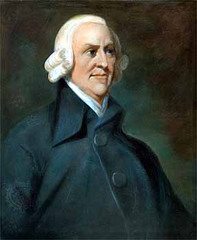
Adam Smith and The Wealth of Nations
Def: The "father of economics" who published "The Wealth of Nations." His book explains his view on free markets, division of labors, and decrease in interference from the government and how they work together to create a stronger society.
Chapter 1 Page 1
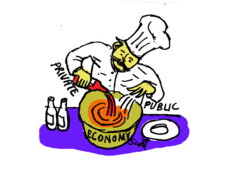
Economy
Def: A system used to manage limited resources for the production, distribution, and consumption of goods and services.
Chapter 1 Page 1
Economics
Def: The study of how people choose to use their limited resources to satisfy their unlimited wants.

Chapter 1 Page 1
Positive Economics
Def: The branch of economics that uses objective analysis to find out how the world works. The goal is to describe how things are.

Chapter 1 Page 1
Normative Economics
Def: The branch of economics that applies value judgments to data in order to recommend actions or policies. The goal is to advise how things ought to be done.

Chapter 1 Page 1
Scarcity
Def: The condition that results because people have limited resources but unlimited wants.

Chapter 1 Page 1
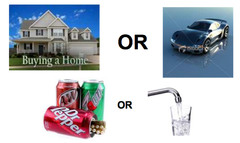
Tradeoff
Def: The exchange of one benefit or advantage for another that is thought to be better.
Chapter 1 Page 1
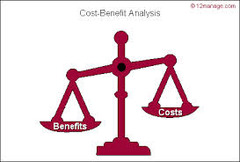
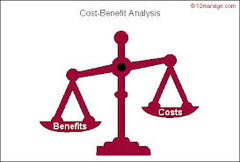
Cost-benefit Analysis
Def: A way to compare the cost of an action with the benefits of that action. If benefits exceed costs, then the action is worth taking.
Chapter 1 Page 1
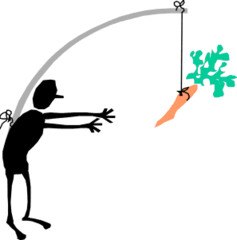
Incentive
Def: Any factor that encourages or motivates a person to do something. Prices, taxes, and laws create incentives that influence how people behave.
Chapter 1 Page 2
Economic Enigmas
Def: Puzzles or riddles that might be explained through an economic analysis.

Chapter 1 Page 3
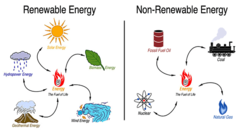
Resource
Def: Anything used to produce an economic good or service
Chapter 1 Page 3
Microeconomics
Def: Economic decision making by individuals, households, and businesses.

Chapter 1 Page 3
Macroeconomics
Def: Workings of an economy as a whole.

Chapter 1 Page 4
Scarcity-Forces-Tradeoff Principle
Def: Limited resources force people to make choices and face tradeoffs when they choose.

Chapter 1 Page 4
No-Free-Lunch Principle
Def: Every choice involves tradeoffs (another name for scarcity-forces-tradeoff principle).

Chapter 1, Page 5
Costs
Def: What you spend in money, time, effort, or other sacrifices to get something.

Chapter 1, Page 5
Benefits
Def: What you gain from something in terms of money, time, experiences, or other improvements in your situation.

Chapter 1, Page 5
Costs-Versus-Benefits Principle
Def: People choose something when the benefits of doing so are greater than the cost.
Chapter 1, Page 6
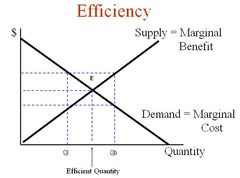
Thinking-At-The-Margin Principle
Def: Most of the decisions that we make each day involve choices a little more or a little less of something rather than making a wholesale change.

Chapter 1, Page 6
Marginal Cost
Def: What you give to add one unit to an activity.

Chapter 1, Page 6
Marginal Benefit
Def: What you gain by adding one more unit.
Chapter 1, Page 6
Incentives Matter Principle
Def: People respond to incentives in generally predictable ways.

Chapter 1, Page 7
Trade-Makes-People-Better-Off Principle
Def: We will end up with more and better choices than by trying to do everything for ourselves if we focus on what we do well and then trading with others.
Chapter 1, Page 7
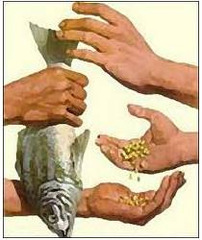
Market
Def: Any arrangement that brings buyers and sellers together to do business with each other.
Chapter 1, Page 8
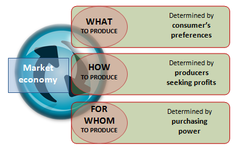
Markets-Coordinate-Trade Principle
Def: Markets usually do better than anyone or anything else at coordinating exchanges between buyers and sellers.

Chapter 1, Page 8
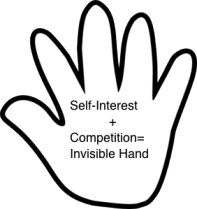
Invisible Hand
Def: A metaphor to explain how an individual's pursuit of economic self-interest can promote the well-being of society as a whole.
Chapter 1, Page 8
Future-Consequences-Count Principle
Def: Decisions made today have consequences not only for today but for the future.
Chapter 1, Page 8
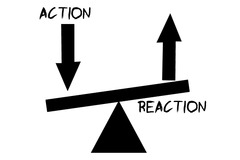
Law of Unintended Consequences
Def: Actions of people and governments always have effects that are not only expected, or that are "unintended."

Chapter 1, Page 9
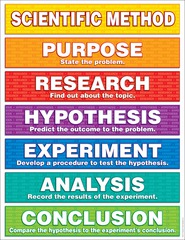
Scientific Method
Def: Posing a question, researching the question, developing a hypothesis, conducting studies, and collecting information, analyzing the information, and evaluating the hypothesis.
Chapter 1, Page 9
Graph
Def: Visual representation of the relationship between 2 given sets of data.

Chapter 1, Page 9
Variable
Def: Quantity that can vary or change.

Chapter 1, Page 12
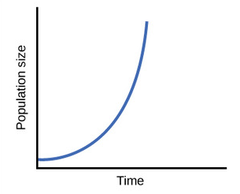
Curve
Def: Any line representing data points plotted on a graph.
Chapter 1, Page 12
Rational Behavior Model
Def: Tool for understanding the mystery of human behavior.

Chapter 1, Page 12
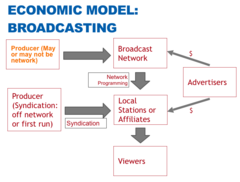
Economic Model
Def: A simplified representation of reality that often allows economists to focus on the effects of one change at a time.
Chapter 1, Page 12
Ceteris Paribus
Def: An economist's way of saying, "Let's focus on the understanding what happens if we change one aspect of the mystery and keep all other aspects the same."
