Current, Potential Difference and Resistance (2a)
 Call Kai
 Learn
Learn Practice Test
 Spaced Repetition
 Match
Match Flashcards
 Knowt Play
1/18

Earn XP
Description and Tags
Name | Mastery | Learn | Test | Matching | Spaced | Call with Kai | Chat |
|---|
No analytics yet
Send a link to your students to track their progress
19 Terms
Electric Current
Rate of flow of electric charge
size of an electric current is amount of current passing through a component each second
Current Unit
measured in amperes or amps
1A = 1C/s
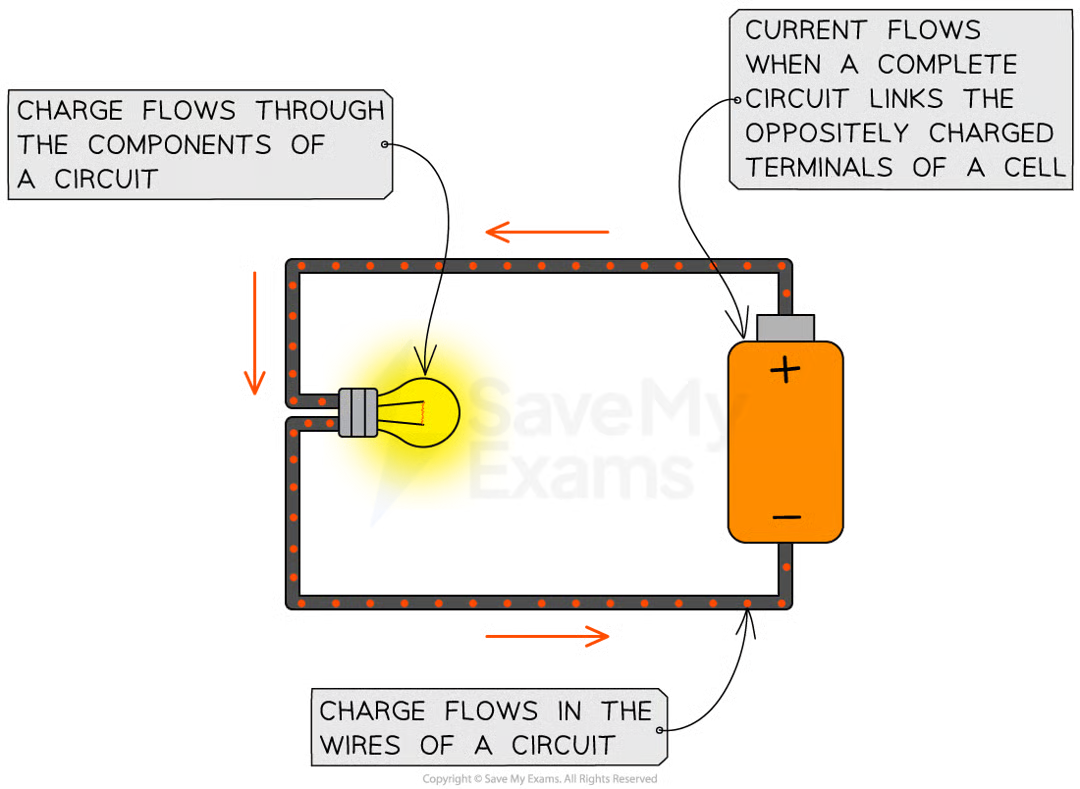
Current Flows:
when a circuit is formed (wire connects two oppositely charged terminals of a cell)
from positive to negative terminal of a cell
Measuring Current
measured with ammeter
ammeter must be connected in series with component to measure
Wire made of metal because:
metal is a good conductor of electricity
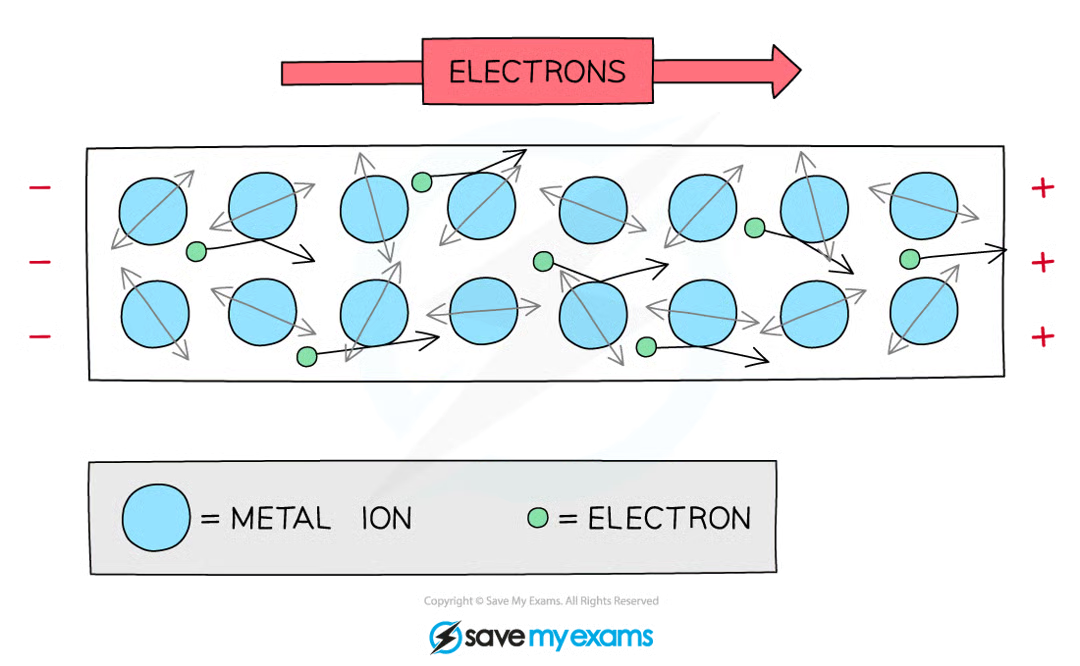
Current
flow of negatively charged electrons
Current Equation
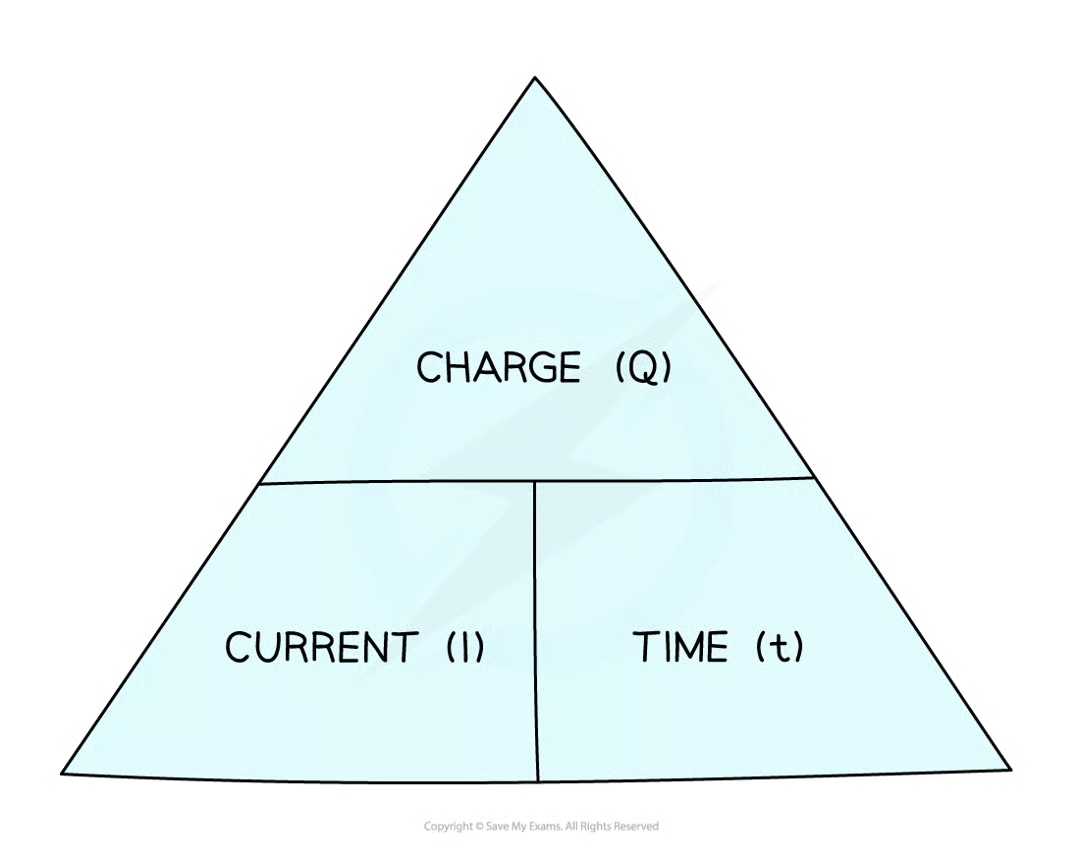
Q = I x t
Q : charge in coulombs (C)
I: current in amps (A)
t: time in secs (s)
Voltage
energy transferred per unit charge passing between two points
Voltage Unit
measured in volts
1V = 1J/C
Electrons’ energy loss and gain
flowing through a cell: gaining energy
flowing through a cell: losing energy
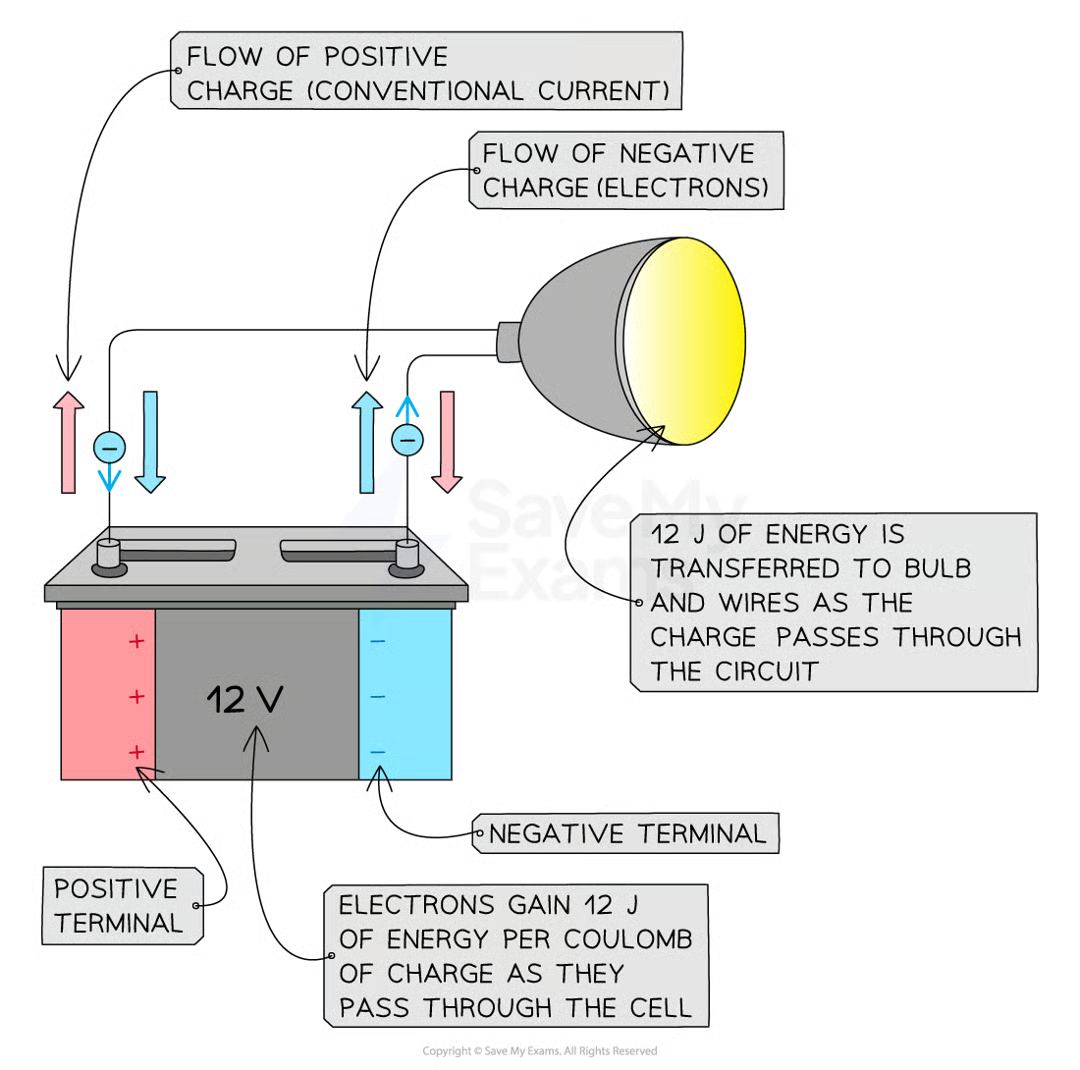
Measuring Voltage
measured with a voltmeter
voltmeters must be set up in parallel with component to measure

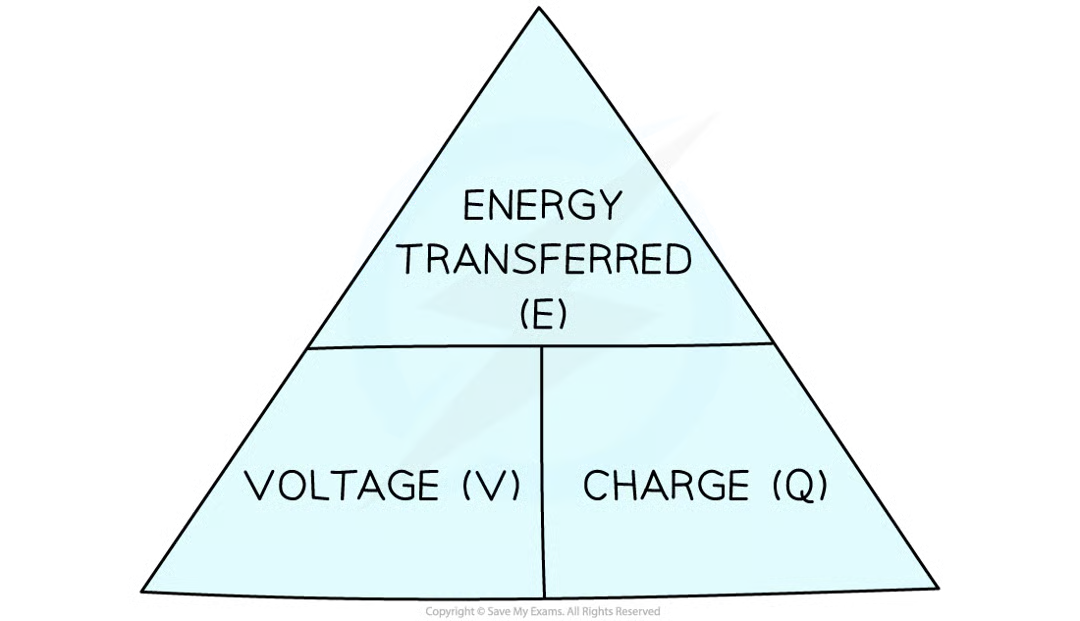
Voltage Equation
E = Q x V
E: energy in joules (J)
Q: charge in coulombs (C)
V: voltage in volts (V)
Resistance
opposition of a component through the flow of electric current through it
Resistance Unit
measured in ohms (Ω)
1Ω = 1V/ 1A
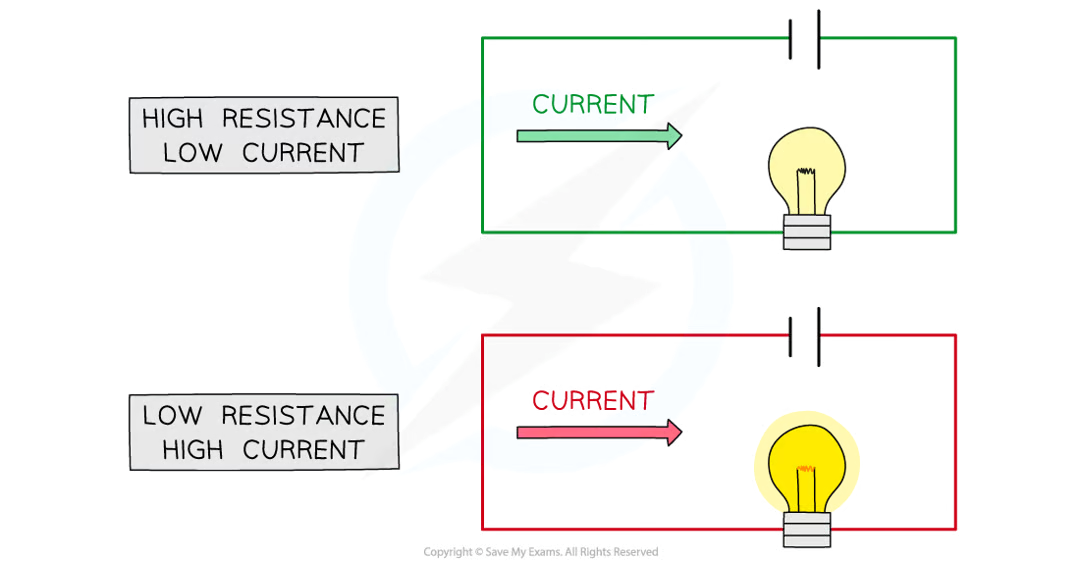
Current and Resistance (for same Voltage)
high resistance = lower current
low resistance = higher current
Wires made of Copper because:
low resistance, so good conductor
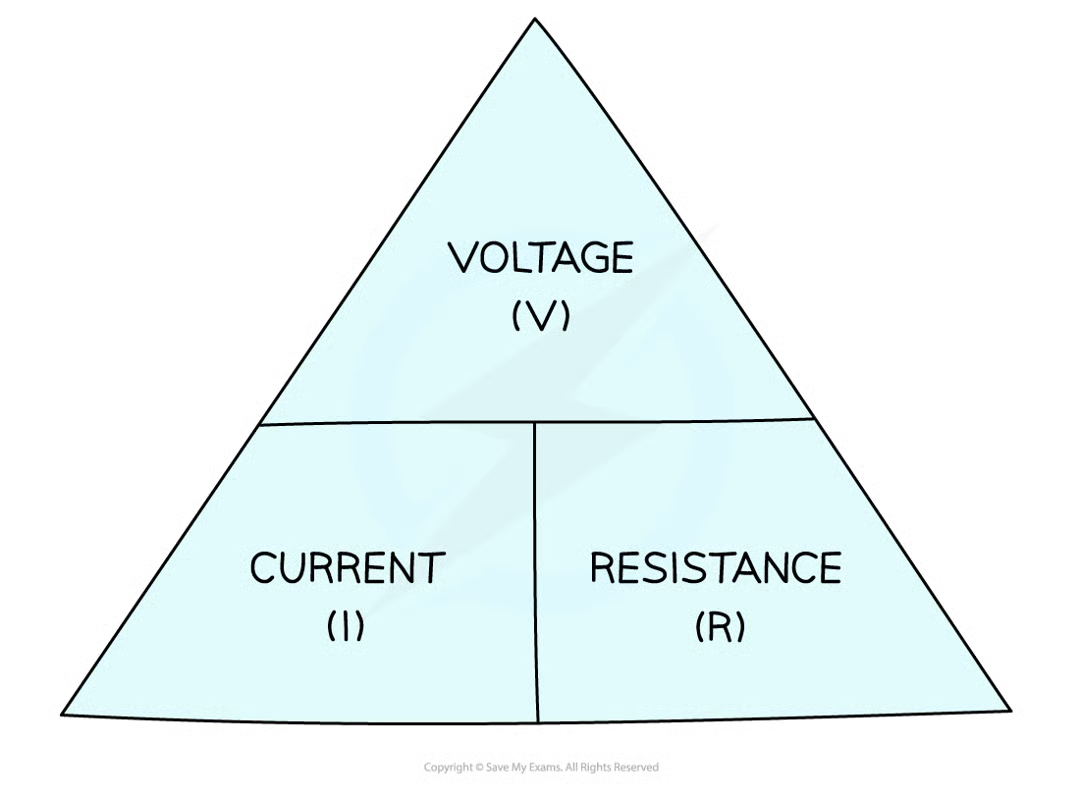
Voltage Equation
V = I x R
V: voltage in volts (V)
I: current in amps (A)
R: resistance in ohms (Ω)