Organic Electrophilic Additions
 Call Kai
 Learn
Learn Practice Test
 Spaced Repetition
 Match
Match Flashcards
 Knowt Play
1/39

There's no tags or description
Looks like no tags are added yet.
Name | Mastery | Learn | Test | Matching | Spaced | Call with Kai |
|---|
No analytics yet
Send a link to your students to track their progress
40 Terms

identify the mechanism
electrophilic addition
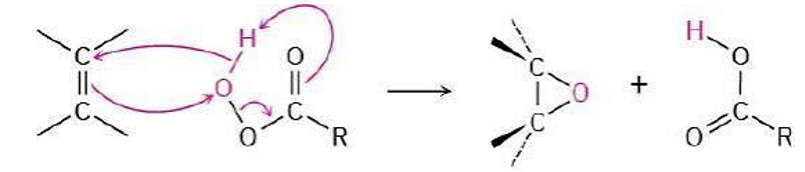
identify the mechanism
epoxidation
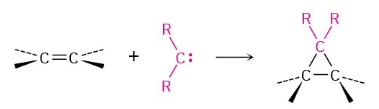
identify the mechanism
carbene addition
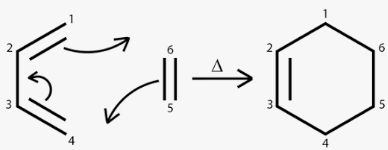
identify the mechanism
diels-alder
C=C are BLANK which makes them attractive to BLANK
electron rich, electrophiles
conjugated dienes allow both BLANK and BLANK addition
1,2-, 1,4-
how does 1,2 and 1,4 addition occur on dienes?
via an allylic carbocation
the product of 1,2 or 1,4 addition of a diene is usually a
mixture of both
1,2 products are referred to as
kinetic
1,4 products are referred to as
thermodynamic
1,2 products form BLANK than 1,4
faster
if a diene addition reaction ends prior to equilibrium, which product is in abundance
1,2
if diene addition reaches equilibrium, which product is in abundance
1,4
1,4 products are more BLANK than 1,2 products
stable
epoxidation, carbene addition, and diels-alder are similar in that they
do not involve the formation of an intermediate
Hydroboration oxidation of alkenes almost always results in
anti-Markovnikov regioselectivity (often via syn-addition)
when does hydroboration-oxidation of alkenes not results in anti-markovnikov regioselectivity
symmetrical alkenes, internal alkynes
attempting electrophilic addition of alkenes under acidic conditions causes what to happen to the product
free carbocations that rearrange so rapidly that a singular regioselectivity is not able to be achieved
Oxymercuration-demercuration results in BLANK for unhindered alkenes, by avoiding BLANK
markovnikov regioselectivity (often via anti addition), free carbocations
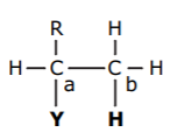
Identify the orientation
Markovnikov orientation
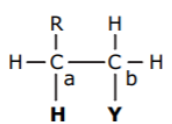
identify the orientation
anti-markovnikov
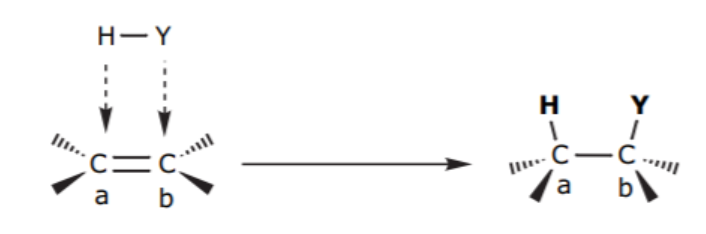
identify the mechanism
syn-addition
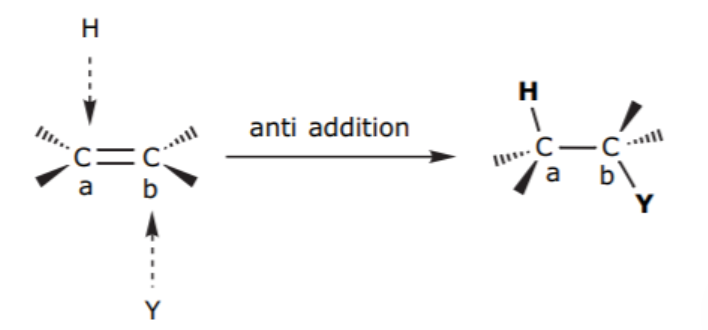
identify the mechanism
anti-addition
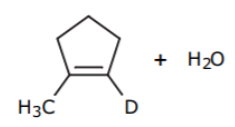
what would a product resulting from syn addition with markovnikov orientation look like for the reaction
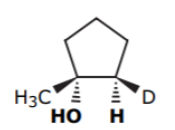
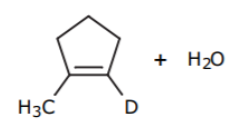
what would a product resulting from anti addition with markovnikov orientation look like for the reaction
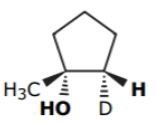
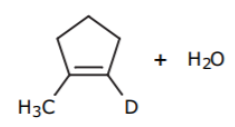
what would a product resulting from syn addition with anti-markovnikov orientation look like for the reaction
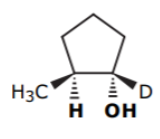
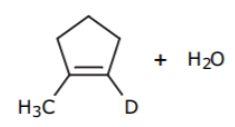
what would a product resulting from anti addition with anti-markovnikov orientation look like for the reaction
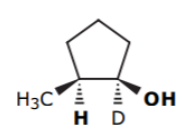
according to markovnikov’s rules, the nucleophile will add to the carbon that can form the
most stable carbocation intermediate
the addition of bromine to an alkene occurs via BLANK forming at BLANK
anti-addition, either the top or the bottom of the double bond
the stereochemistry of the alkene in an epoxidation reaction
is maintained in the epoxide
the oxymercuration-demercuration of alkynes will always result in a
ketone (enol intermediate)
the stereochemistry of an alkene in a diels alder reaction
is maintained in the resulting 6 membered ring
the preferred transition state of diels alder reaction leads to a stereoisomer in which the unsaturated substituent is BLANK
endo (trans to the carbon bridge)
exo orientation in a diels alder reaction is BLANK but its transition state energy is BLANK so it is BLANK to form than endo
more stable, higher, slower
bromine addition to alkenes proceeds thorugh an
intermediate bromonium ion
when a solvent is not nucleophilic in bromine addition to alkene, what nucleophile(s) is present
the bromide counter ion
when the solvent is nucleophilic in bromine addition to alkene, the solvent nucleophile can
attack the bromonium ion to form a beta-bromoether
in bromine addition to an alkene, since the solvent is in large excess over the bromide ion the nucleophilic attack by the solvent
predominates
alpha-carbons
carbon directly next to the functional group
beta-carbons
the carbon one carbon seperated from the functional group