RCA Midterm Review Study Guide
 Call Kai
 Learn
Learn Practice Test
 Spaced Repetition
 Match
Match Flashcards
 Knowt Play
1/107

There's no tags or description
Looks like no tags are added yet.
Name | Mastery | Learn | Test | Matching | Spaced | Call with Kai |
|---|
No analytics yet
Send a link to your students to track their progress
108 Terms
What is the kVp range for a chest x-ray?
100-140 kVp
What are the TWO standard views of a chest x-ray?
PA; lateral
What are the THREE accessory views of chest x-rays?
Lateral decubitus; apical lordotic; expiration
What are the FIVE emergency indications for chest CT?
Chest trauma; aortic dissection; aneurysm; pulmonary embolism; post-surgical complications
What's the main indication for a V/Q Scan?
Pulmonary embolism
What's the radionuclide for PET?
F-18 fluorodeoxyglucose (FDG)
What are FIVE indications of lung diagnostic ultrasound?
Pleural Effusion; pneumothorax; pneumonia; pulmonary edema; asthma/ COPD
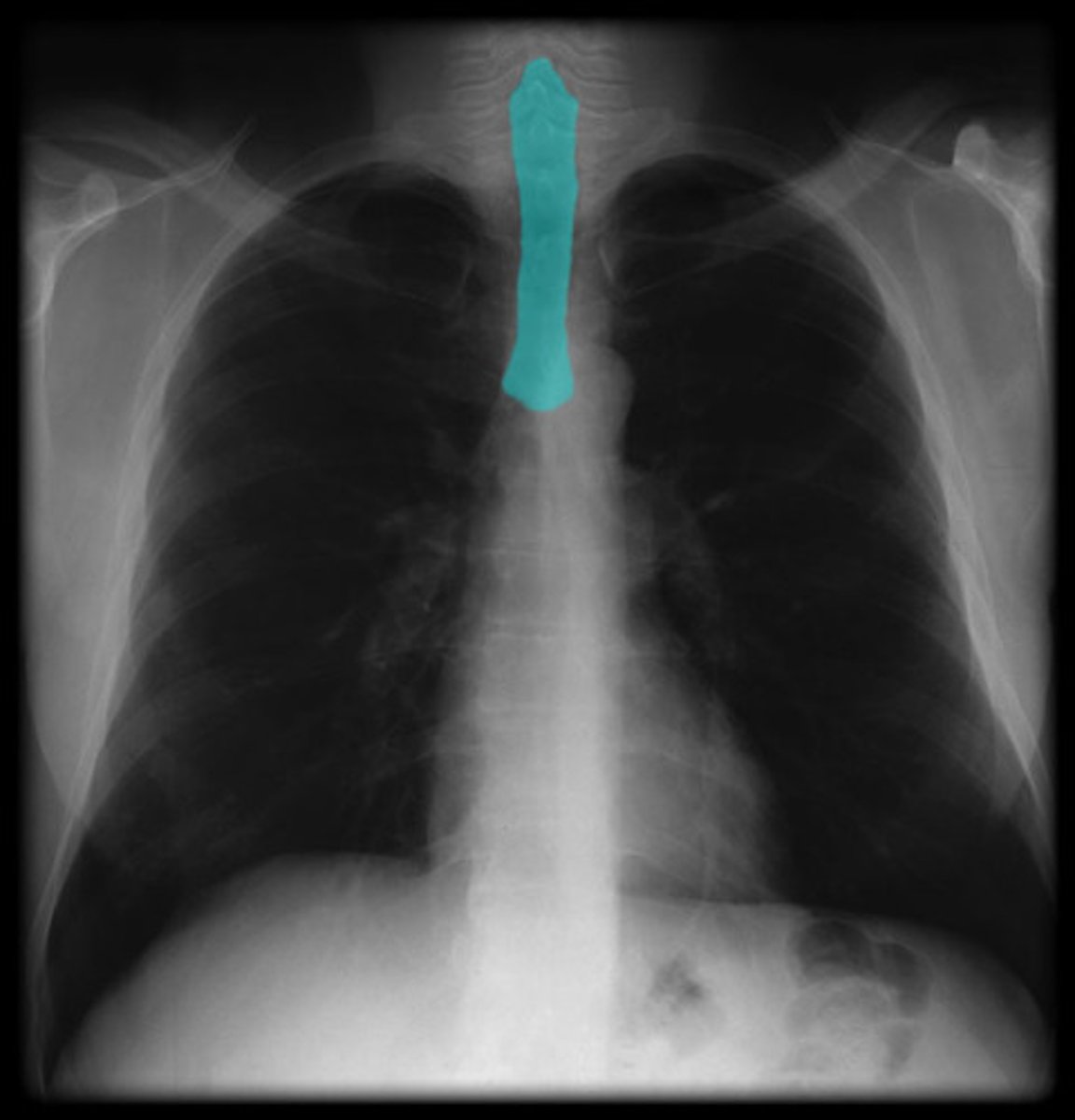
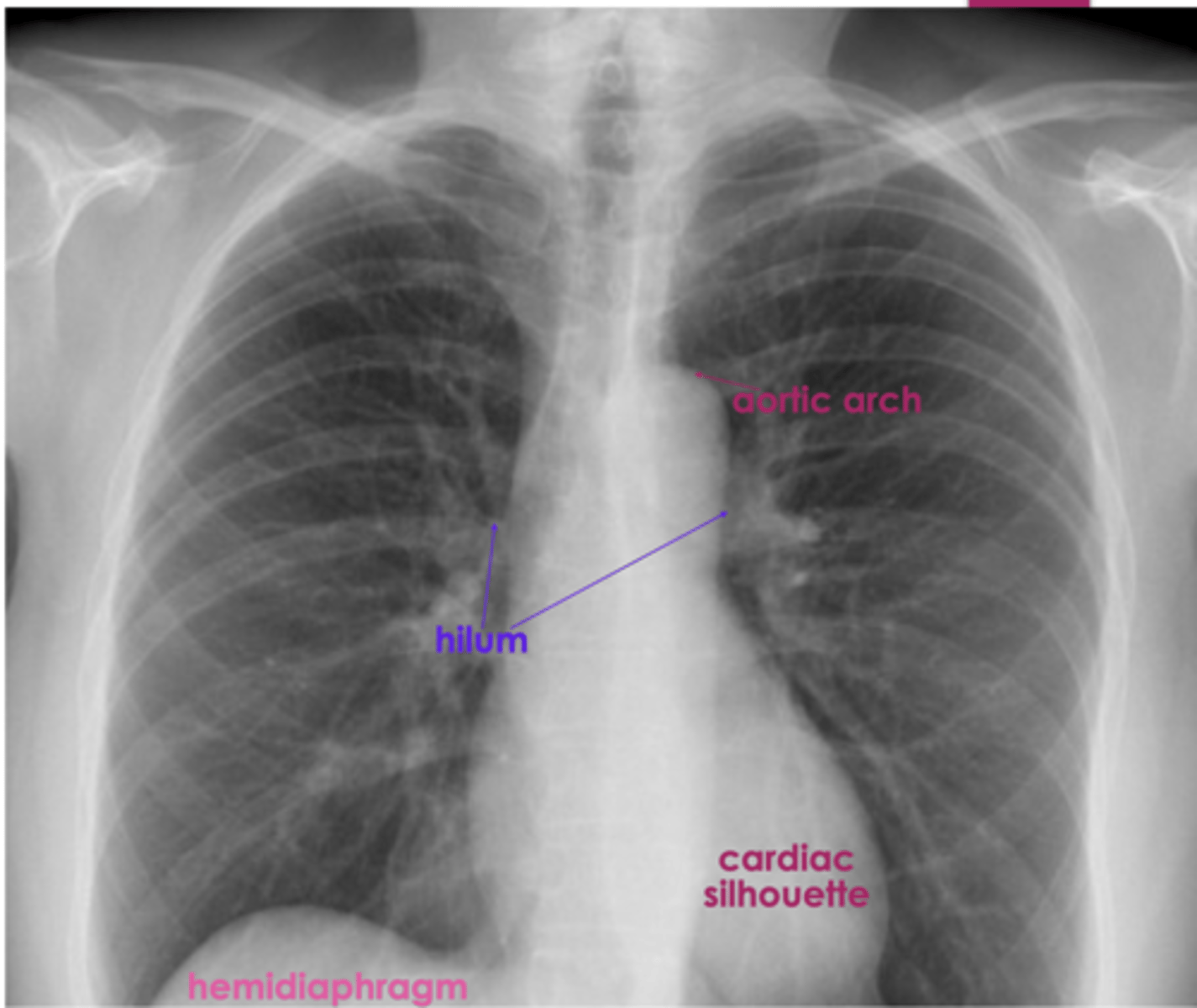
Trachea x-ray
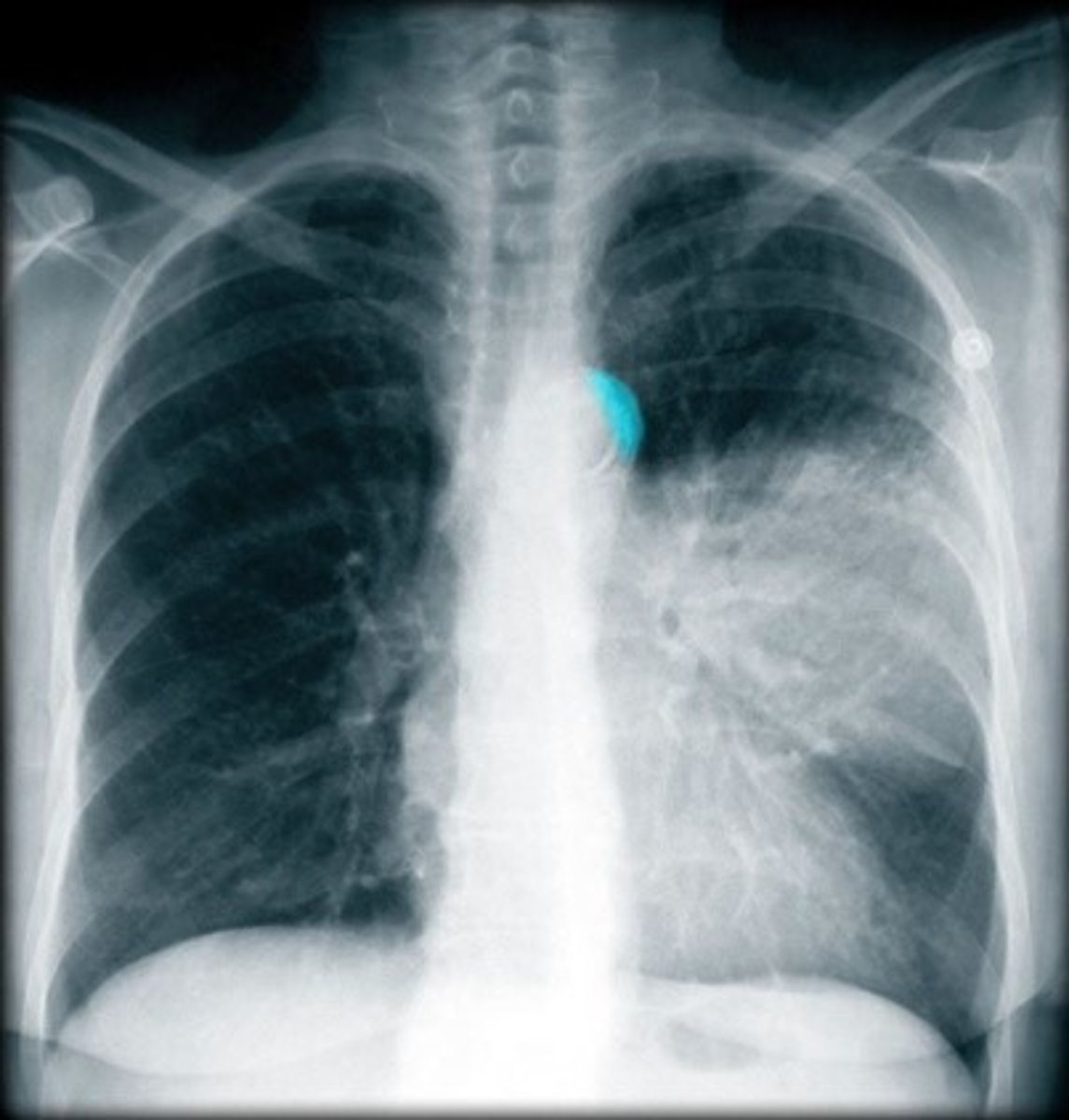
Aortic knob x-ray
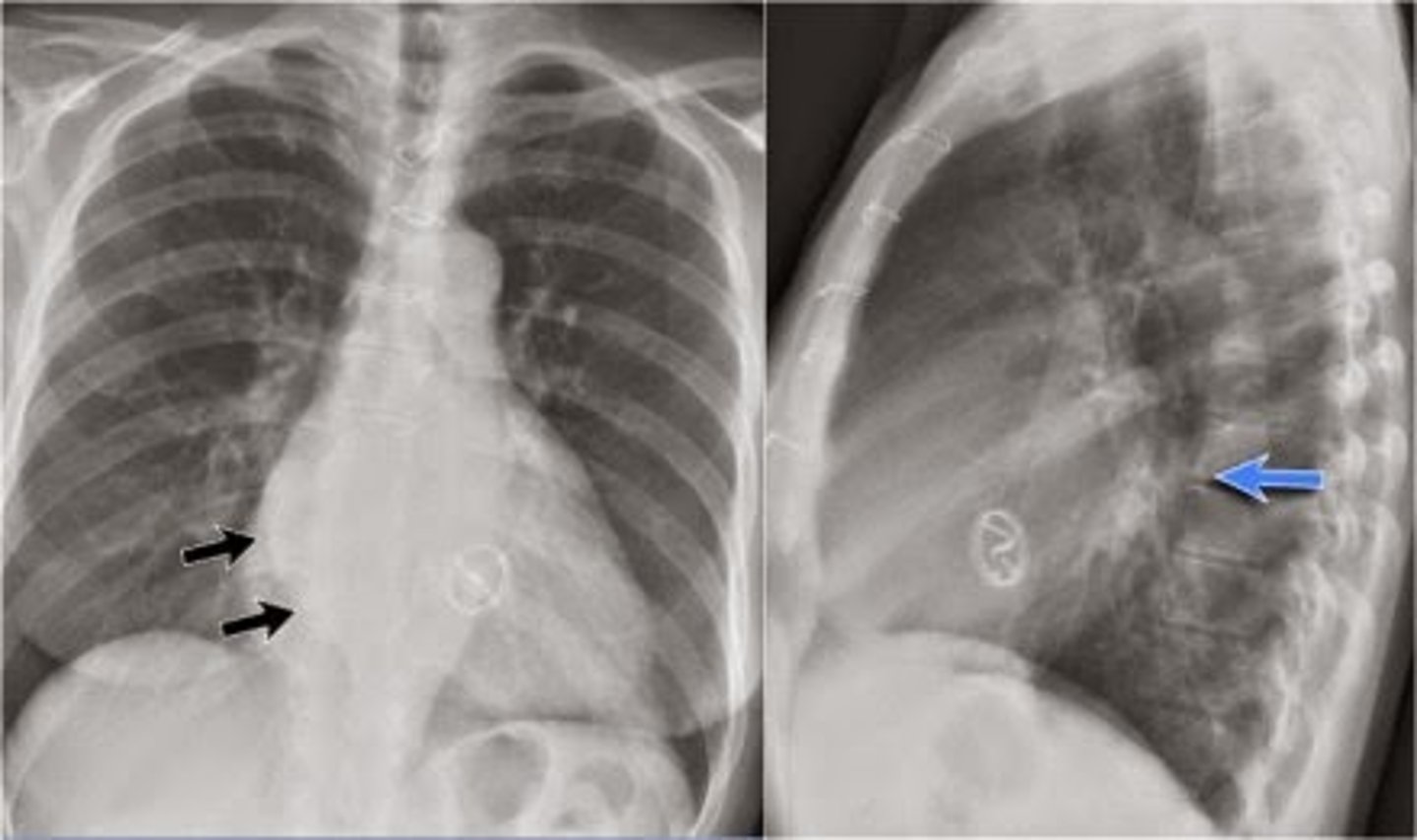
Right atrium x-ray
Left ventricle x-ray
Right & Left pulmonary arteries x-ray
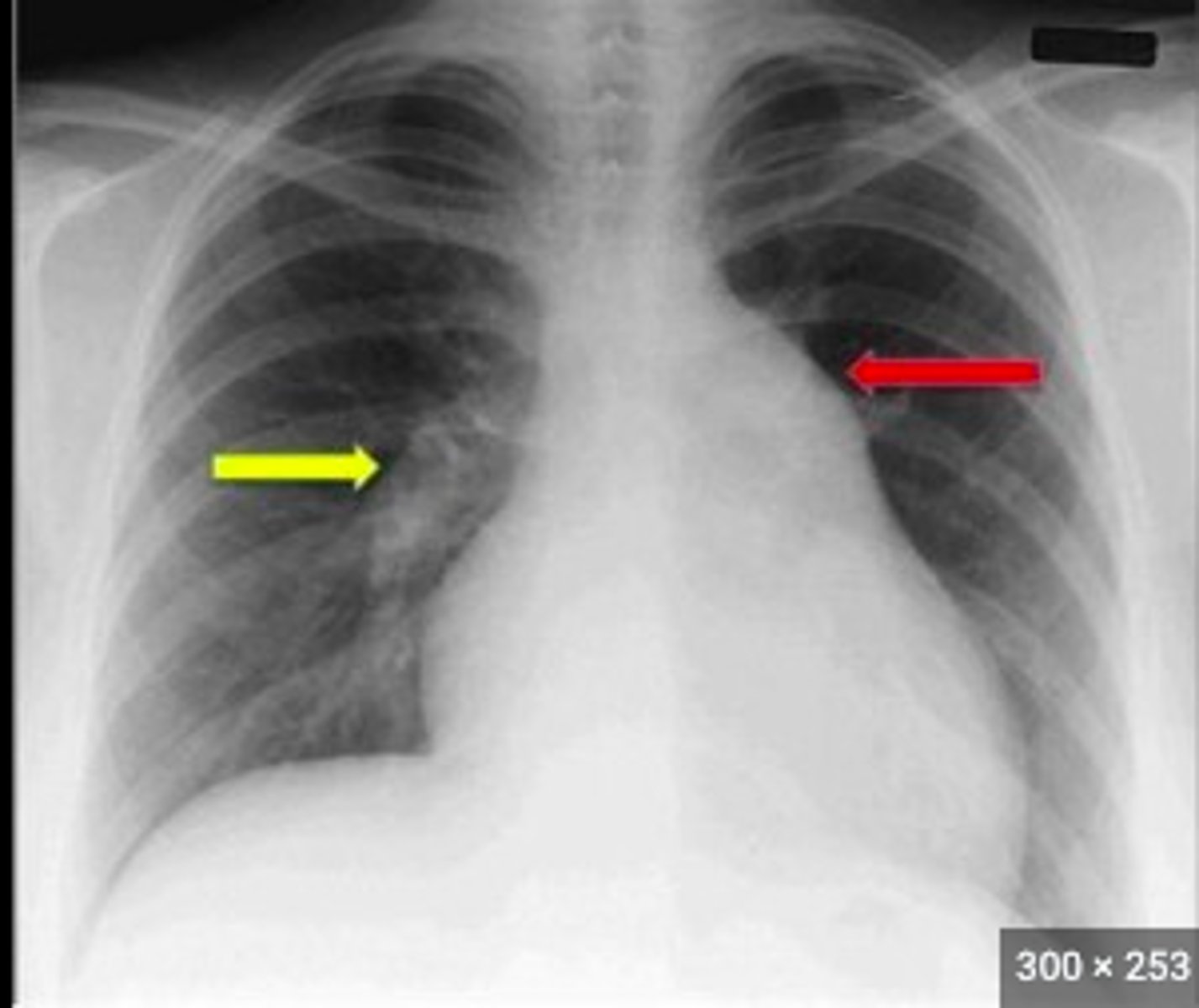
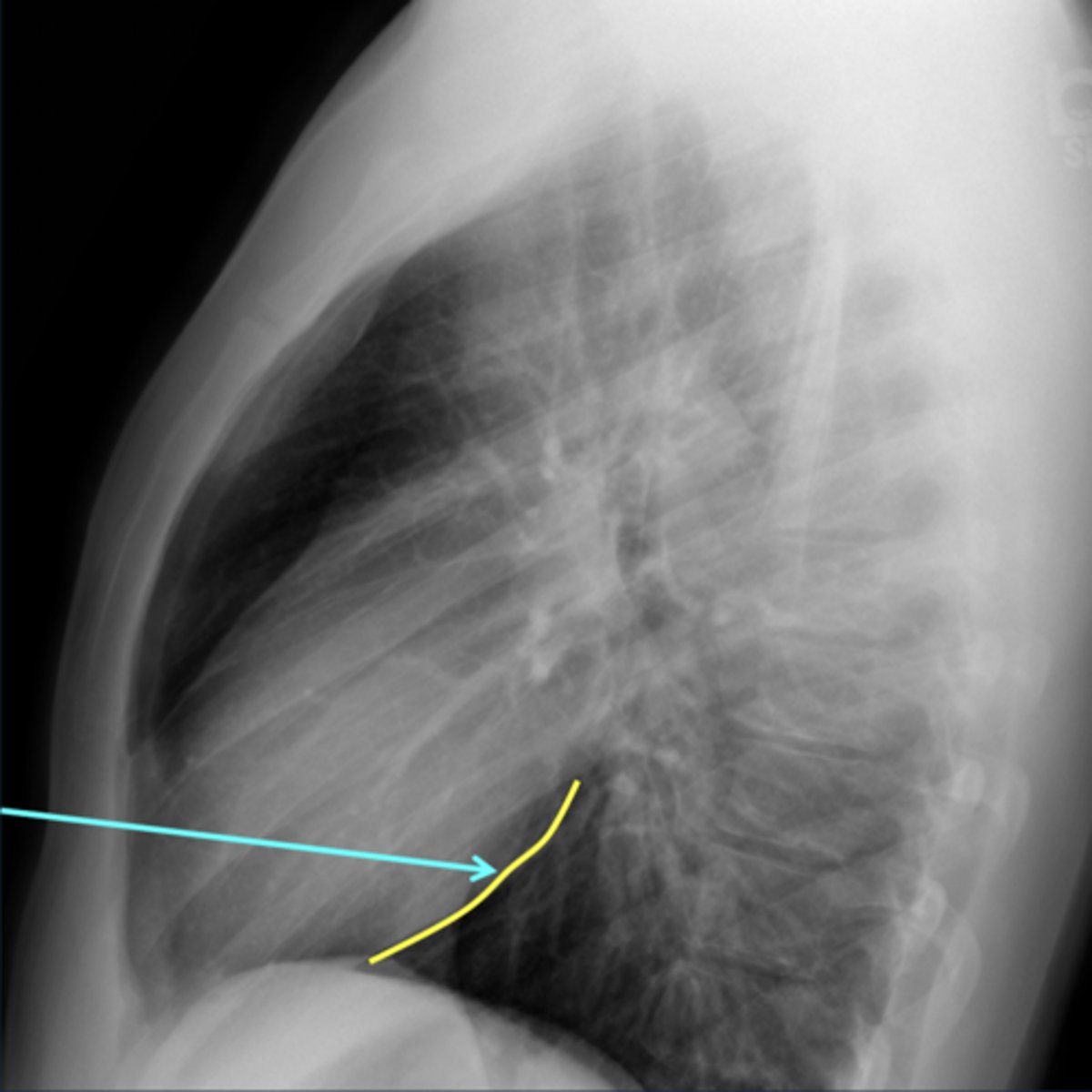
Hemidiaphragm x-ray
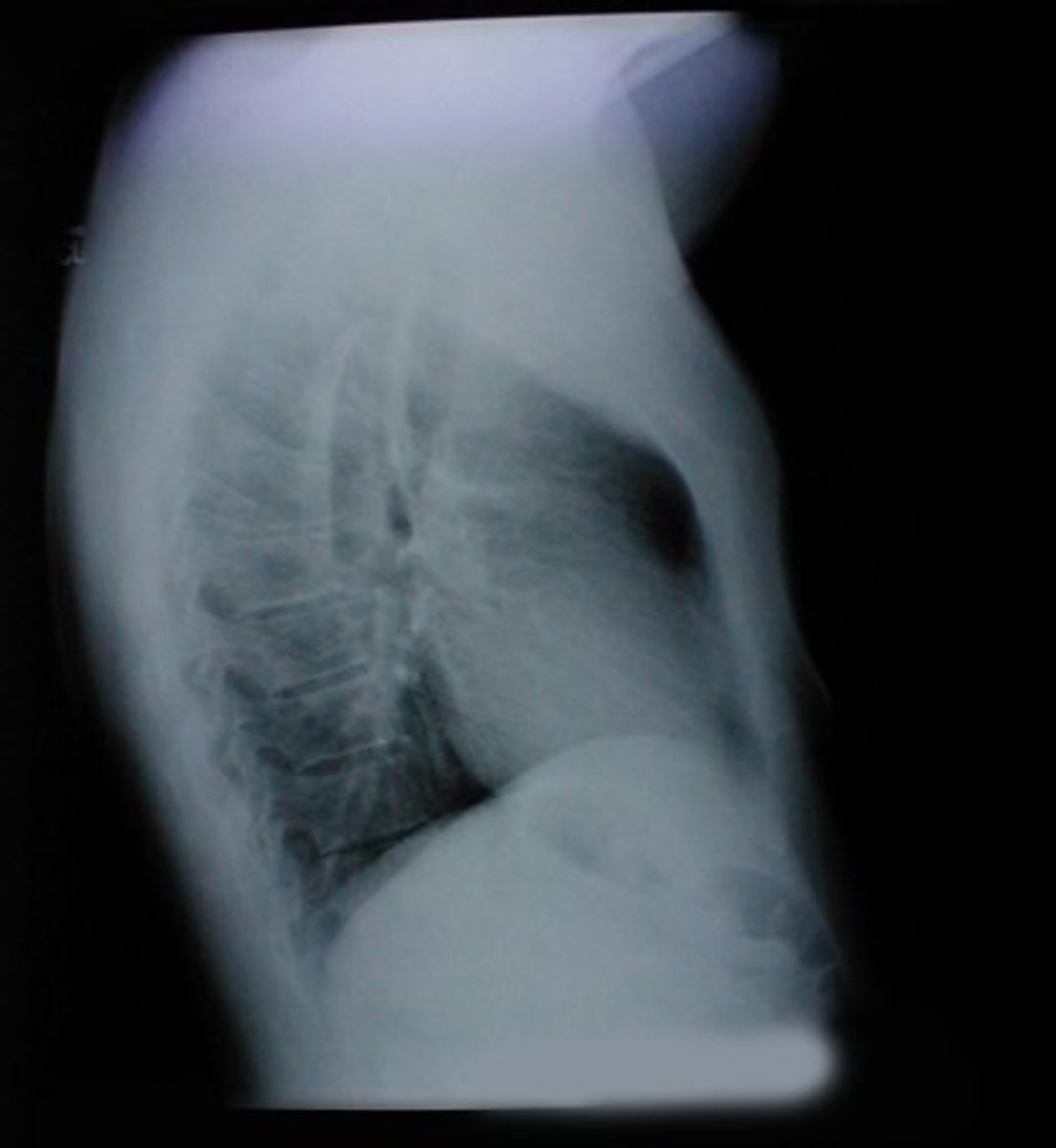
Pectus excavatum
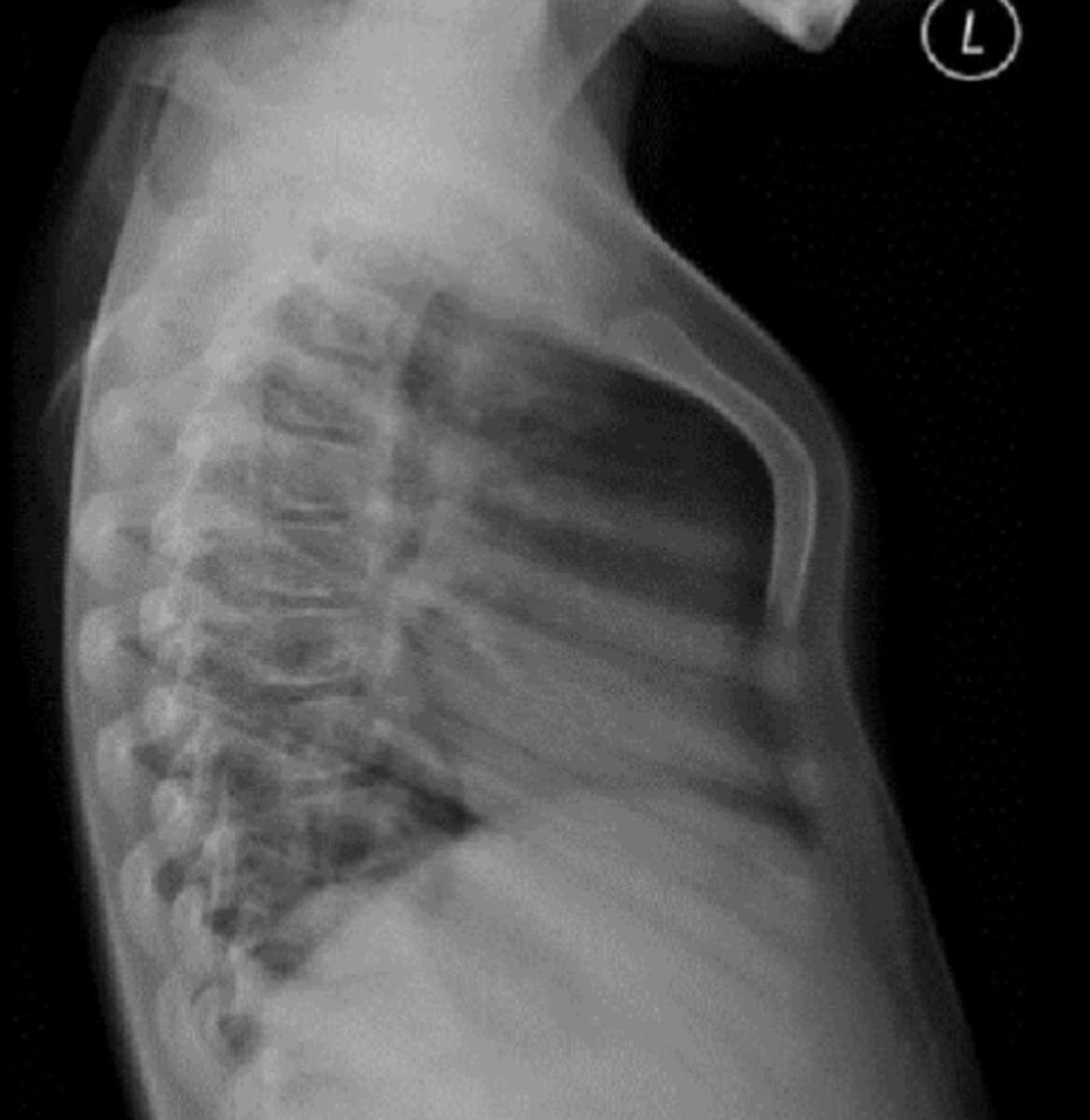
Pectus carinatum
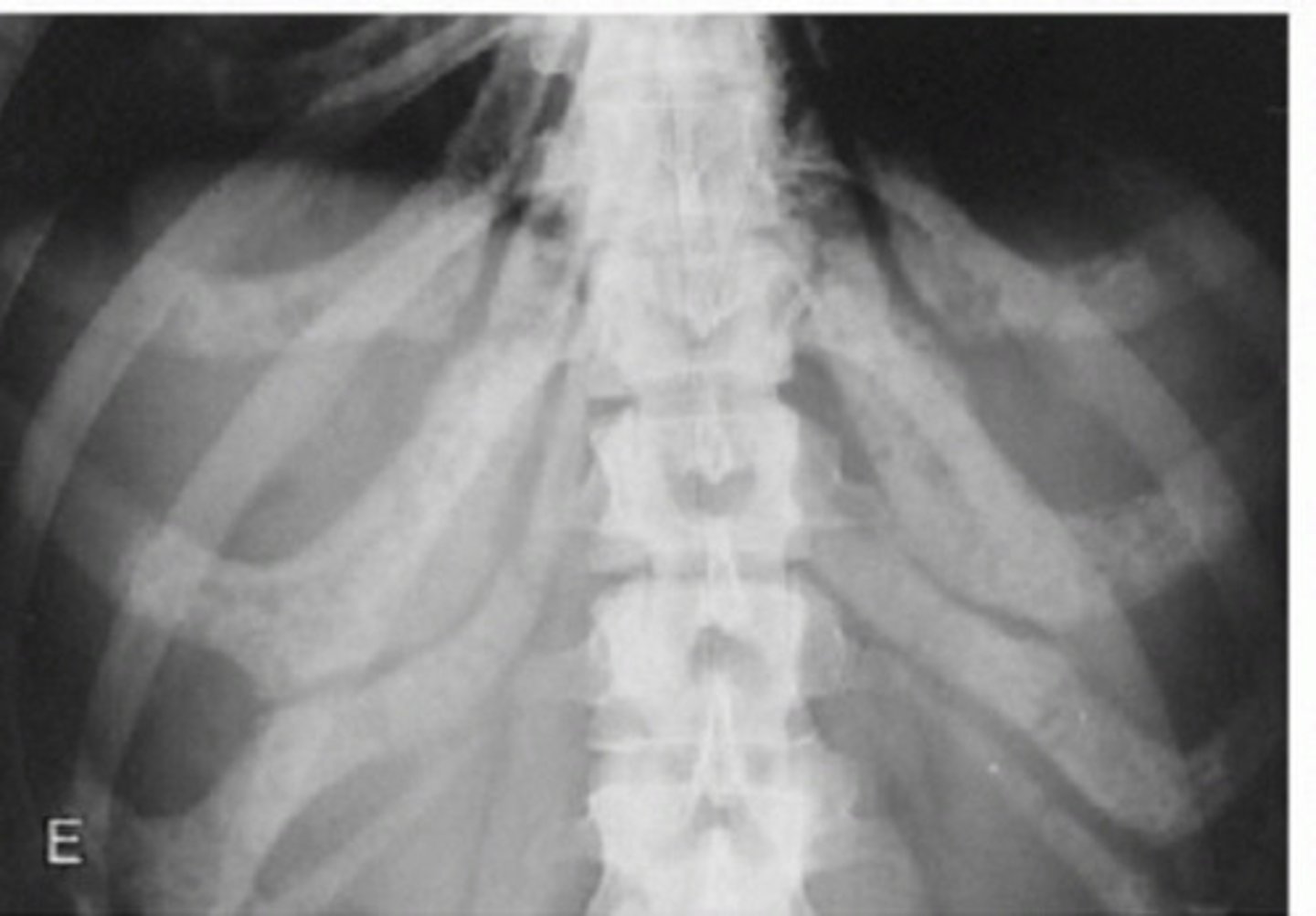
Costochondral calcification
Right sided aortic arch
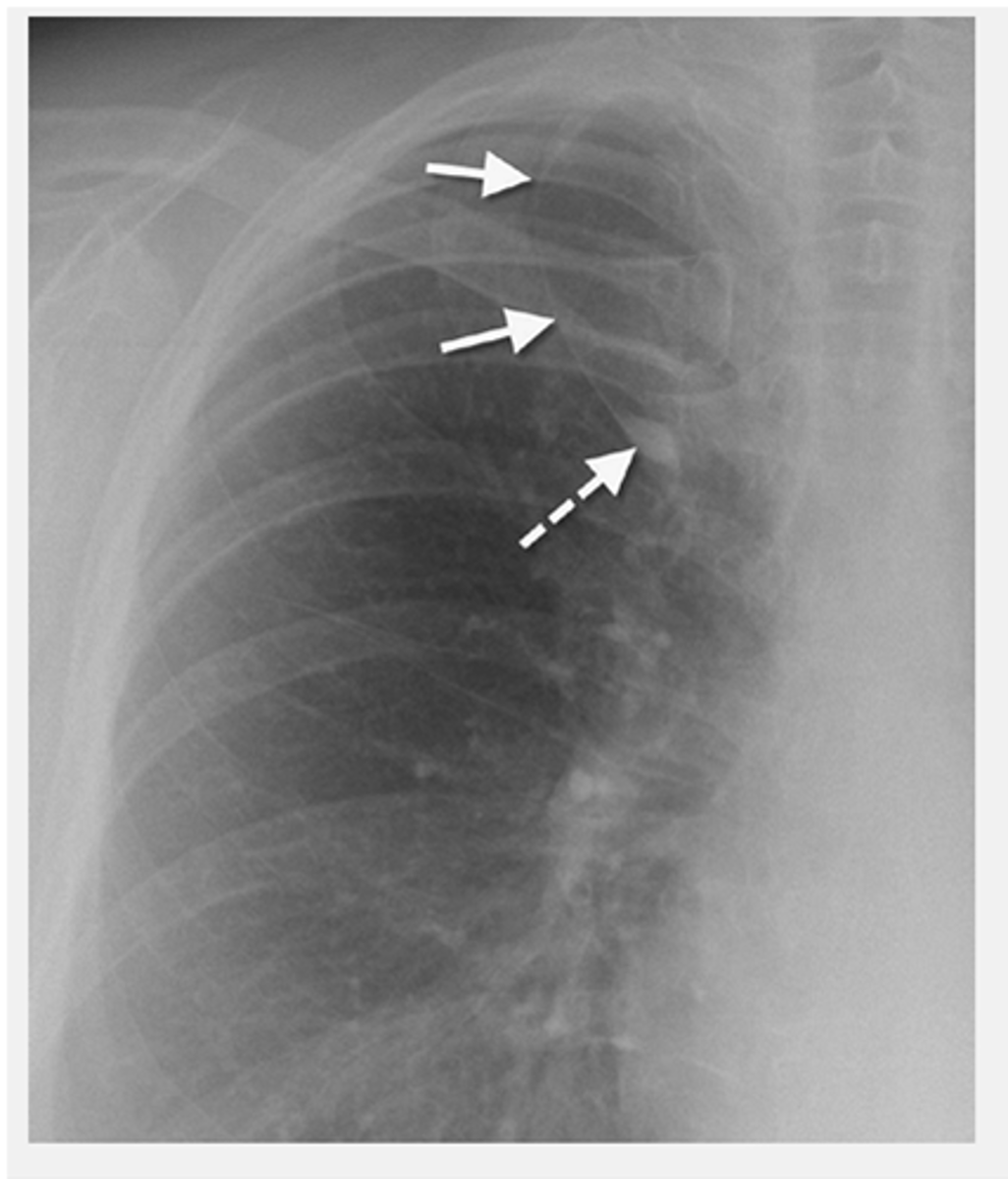
Azygos fissure
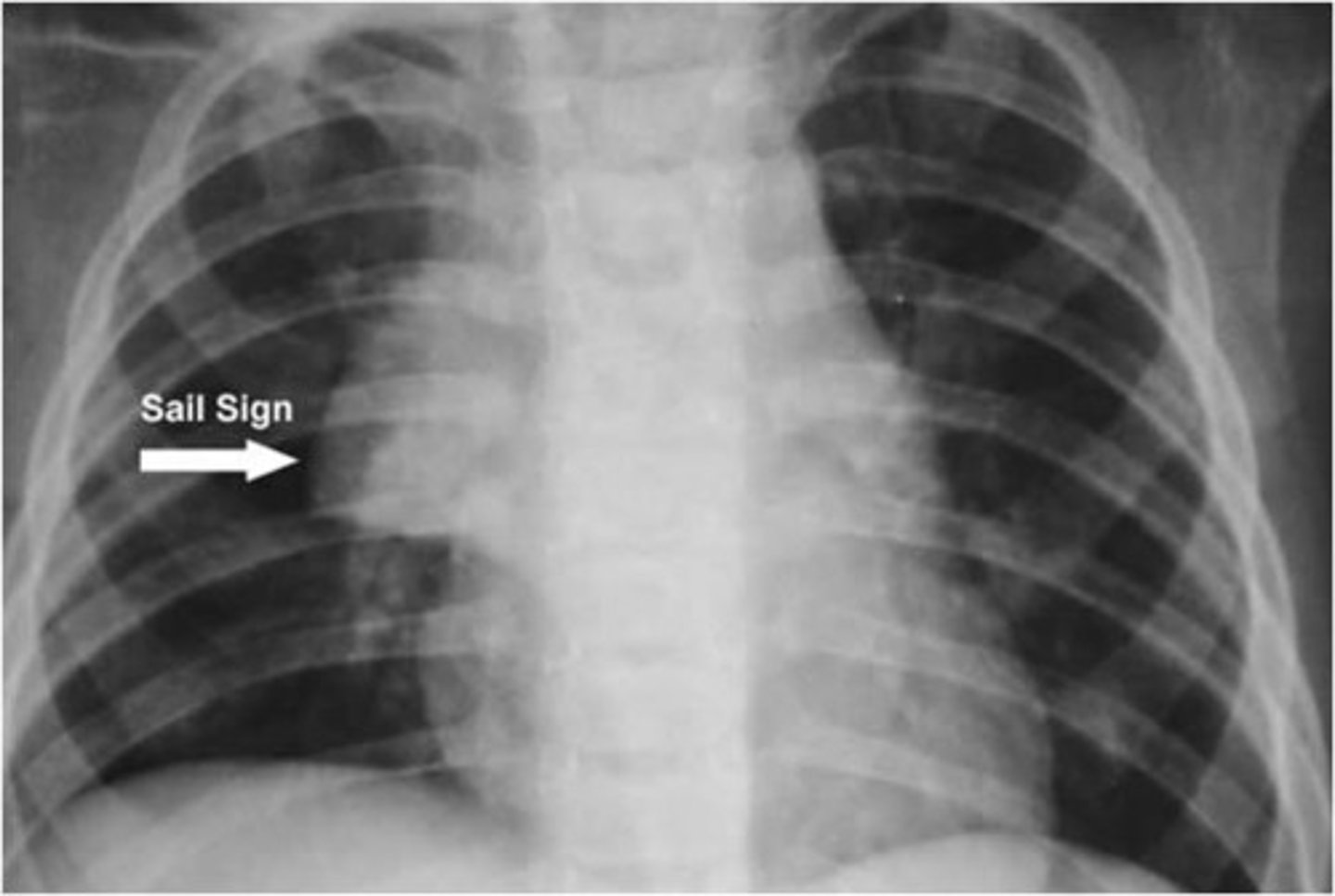
Thymus gland
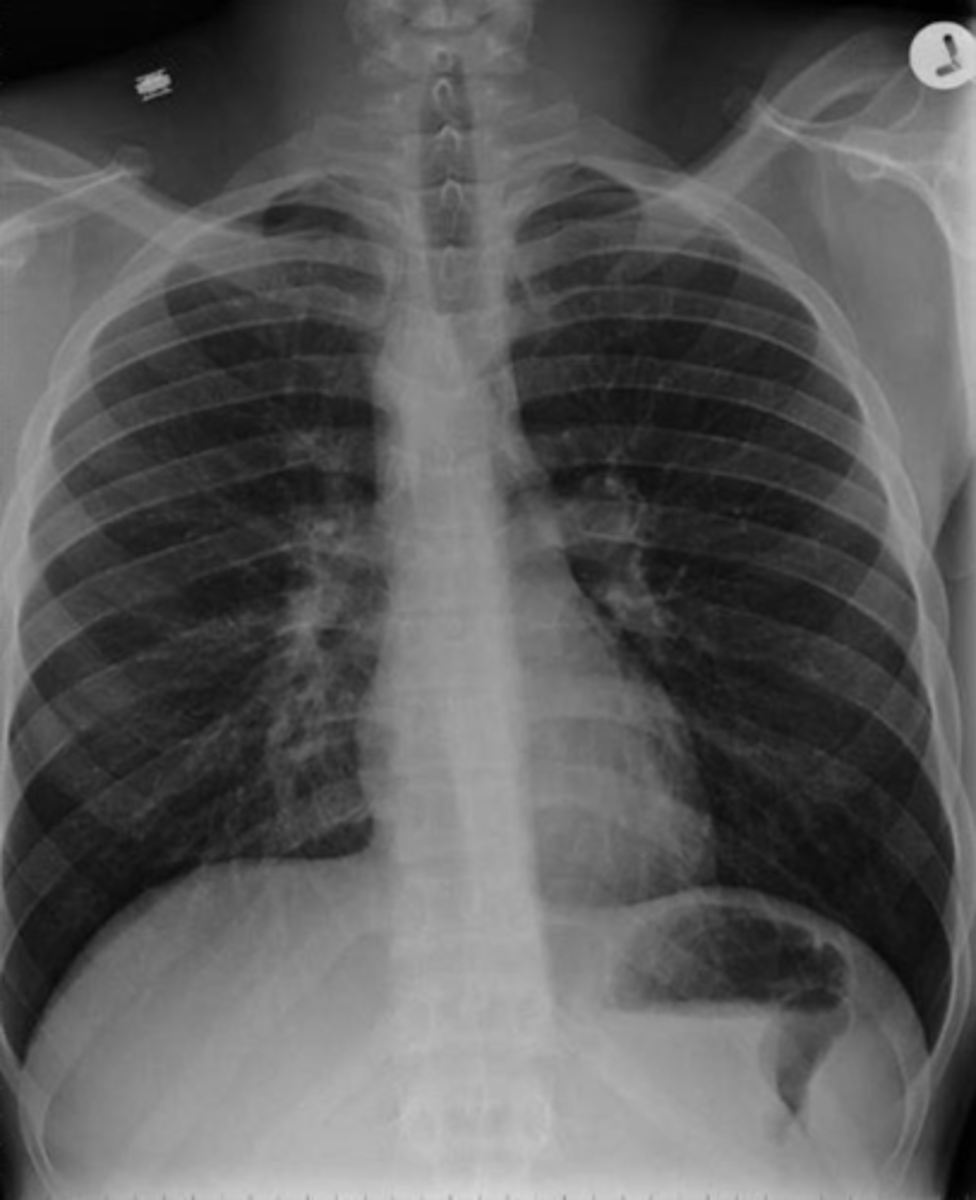
Eventration
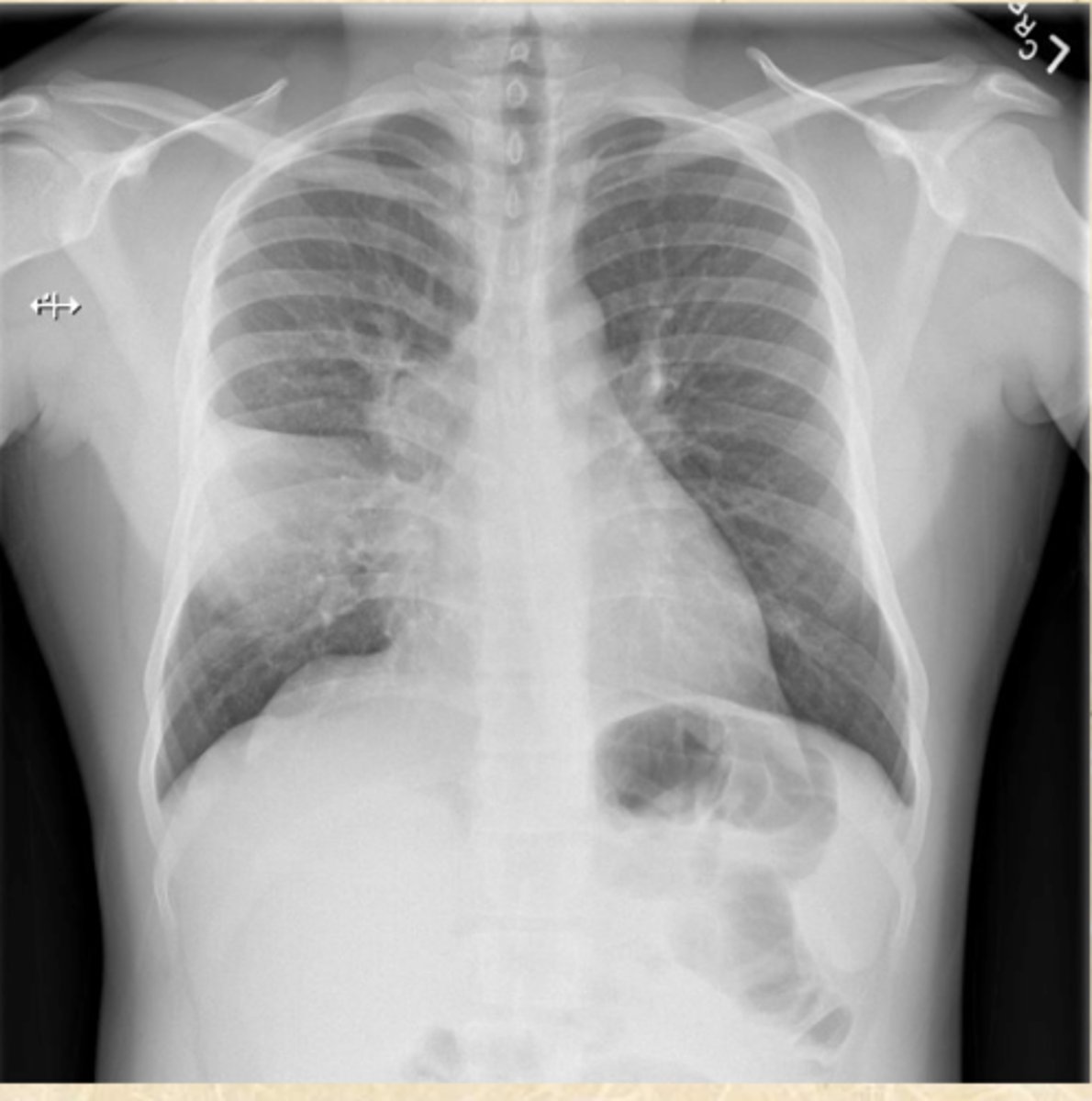
Most common congenital sternal abnormality?
Pectus excavatum
What is the normal Haller Index?
<2.0
How do you calculate the Haller Index?
Maximum transverse diameter / Minimum AP distance
What is the most common form of pulmonary sequestration?
Intralobar
What kind of shunt is created by an arteriovenous malformation?
R —> L shunt
Which side is more common in eventration? _____________
Right
What is the diferential diagnosis for total eventration? (Hint: PEAS)
Phrenic nerve palsy; eventration; atelectasis; subpulmonic effusion
Which TWO pathologies are most commonly seen with air bronchogram sign?
Pneumonia; pulmonary edema
What is the Humpton Hump sign?
Lung infarction
What is the most common pathology associated with a butterly (bat wing) opacification?
Pulmonary edema
What issure is classically afected by a bulging fissure sign?
Horizontal (minor)
What pathology is most commonly seen with a reverse halo (atoll) sign?
Crytogenic organizing pneumonia
What forms a gloved inger sign on chest CT?
Dilated bronchi filled with mucus (mucoid impaction)
Definition of crazy paving sign
Scattered or diffuse ground glass attenuation with superimposed interlobular septal septal thickening and intralobular lines
Definition of tree-in-bud sign.
Small centrilobular nodules connected to multiple branching linear structures of similar caliber orginating from a single stalk
What's in a consolidation?
fluid; pus; blood; cells; protein
What's the most common lung infection in the western world?
pneumonia
What's the leading lethal chest infection worldwide?
Tuberculosis
What are the THREE types of Tuberculosis?
Primary; post-primary (reactivation); miliary
TWO categories of pulmonary edema.
Cardiogenic; non-cardiogenic
T or F : Radiation-induced lung disease respects anatomical boundaries.
False
What is the associated lymphadenopathy sign with sarcoidosis?
1-2-3 sign
What is the skin rash that is associated with sarcoidosis and coccidioidomycosis?
Erythema nodosum
Which inflammatory arthritis demonstrates interstitial thickening and nodules with or without cavitation?
Rheumatoid arthritis
Which inlammatory arthritis can develop apical ibrosis?
ankylosing fibrosis
What THREE lung diseases can develop chronic obstructive pulmonary disease (COPD)?
Emphysema; chronic bronchitis; chronic asthma
What is the most common underlying etiology of COPD/Emphysema?
Smoking
What are the THREE structural types of emphysema?
Centrilobular; Panlobular; paraseptal
Which one of the structural types of emphysema is most common?
Centrilobular
What chest etiology can be associated with a history of an atopic disorder, such as eczema?
Asthma
What is the most common genetic disorder of the chest and abdomen affecting the European population?
Cystic fibrosis
What are the THREE structural types of bronchiectasis?
Cylindrical; varicose; cystic
What are the FIVE types of atelectasis?
Resorptive (obstructive); passive (relaxation); compressive; cicatrisation; adhesive
What are the TWO DIRECT signs of atelectasis?
fissures displacement; crowding of pulmonary vasculature or air bronchogram signs
The issure is PULLED TOWARD / PUSHED AWAY the afected lobe in atelectasis.
PULLED TOWARD
5. What are the FIVE INDIRECT signs of atelectasis?
opacification; compensatory expansion of contralateral lung; displacement of heart, medistinum, trachea, and hilum toward affected side; elevation of ipsilateral hemidiaphragm; rib crowding on affected side
What is the most common reason for a Golden's S Sign?
Bronchogenic carcinoma with atelectasis
What lobe and fissure are involved in Golden's S sign?
Upper right lobe and horizontal fissure
What are the FOUR etiologies of pneumothoraces?
spontaneous (primary and secondary); post-traumatic; post- infectious; iatrogenic
What is the diference between primary and secondary spontaneous pneumothorax?
Primary = no underlying lung disease and secondary = underlying lung disease
The mediastinum and trachea are PUSHED AWAY / PULLED TOWARD the afected side in a TENSION pneumothorax.
PUSHED AWAY
What sign is associated with a pneumothorax on imaging?
White pleural line
What TWO features are the most reliable indications of benignancy on imaging?
calcification; growth
When comparing size of a SPN, what should you always do (if available)?
Compare with previous imaging, if available
A newly discovered SPN should undergo a _________
CT
Most malignancies will double in size in less than ______ days.
500
The growth rate in most benign lesions are ____________ days.
>500
What size diferentiates a nodule from a mass?
30 mm
What are the FIVE granulomatous diseases that were covered in this class?
tuberculosis; sarcoidosis; histoplasmosis; blastomycosis; coccidiodomycosis
Where is histoplasmosis endemic?
Mississippi and Ohio River valleys
Where is coccidioidomycosis endemic?
Southwestern US and Mexico
What is the most common organism to cause round pneumonia in pediatric patients?
Streptococcus pneumoniae
What is the most common benign lung neoplasm?
Hamatoma
What are the pathologic types of bronchogenic carcinoma?
Adenocarcinoma; Squamous cell; small cell (oat cell); large cell
Which pathological type of bronchogenic carcinoma is most common?
adenocarcinoma
What TWO syndromes are associated with apical lung tumors?
pancoast; horners
. What are the THREE features of Horner syndrome?
Ptosis; miosis; anhidrosis
What primary carcinoma is most common to metastasize to the lungs?
lung
What are the TWO patterns of pulmonary metastasis?
cannonball; snowstorm
DDx for anterior mediastinum
5 Ts (teratoma, thyroid goiter (substernal), thymoma, ascending aortic aneurysm, lymphoma)
DDx for middle mediastinum
aortic arch aneurysm, lymphadenopathy, hiatal hernias, psudomediastinum
DDx for posterior mediastinum
Descending AAA, paraspinal abscess, neurogenic tumor, bone tumor/ infection, lymphadenopathy
What is the hilum overlay sign?
A mediastinal mass will silhouette the hilar vessels at the level of the hila
What is the cervicothoracic sign?
Lesion above clavicle lies posterior; lesion at or below clavicle lies anterior
What anterior compartment mass has teeth?
Teratoma
What anterior compartment mass is associated with myasthenia gravis?
Thymoma
What anterior compartment mass is associated with a goiter?
Substernal thyroid goiter
What TWO pathologies can be found in any or all the mediastinal compartments?
aortic aneurysm; lymphadenopathy
What type of hiatal hernia is most common?
Sliding
What is pneumomediastinum?
Air in the mediastinum from various etiologies
What is the most common neurogenic tumor in the posterior mediastinum?
Schwannoma
What malignancy is associated with asbestos exposure?
Malignant mesothelioma
What is the most common primary carcinoma metastasize to the pleura?
Lung
What radiologic inding is the most frequent manifestation of pleural metastases?
pleural effusion
What is the most common location of a vanishing tumor?
horizontal fissure
What extrapleural mass is associated with a rib fracture?
Hematoma
What TWO pathologies most commonly form pleural effusions?
congestive heart failure; malignancy
What sign is associated with pleural effusions?
meniscus sign (blunting of the costophrenic angles)
What is the most common underlying etiology of atherosclerosis?
Hypertension
What is the most common segment of the aorta affected in an aneurysm?
Ascending aorta