Series 1 Form B Part 2
 Call Kai
 Learn
Learn Practice Test
 Spaced Repetition
 Match
Match Flashcards
 Knowt Play
1/44

There's no tags or description
Looks like no tags are added yet.
Name | Mastery | Learn | Test | Matching | Spaced | Call with Kai | Chat |
|---|
No analytics yet
Send a link to your students to track their progress
45 Terms
When working with a patient who has tuberculosis, which of the following options BEST describes the appropriate location for treatment and type of personal protective equipment that a physical therapist should wear?
1.Therapy gym, N-95 respirator
2.Patient's room, N-95 respirator
3.Therapy gym, standard mask
4.Patient's room, standard mask
4,2
1. The patient should not be treated in the physical therapy gym because patients and others in the environment will be exposed to tuberculosis. Airborne precautions specify that the patient should stay in an airborne-infection-isolation room to prevent the spread of tuberculosis.
2. Because of the nature if its transmission, tuberculosis necessitates airborne precautions. Airborne precautions require the health professional to wear an N-95 respirator. Airborne precautions also specify that the patient should stay in an airborne-infection-isolation room to prevent the spread of tuberculosis through the facility's ventilation system. If a patient who has tuberculosis is treated in the physical therapy gym, others in the environment will be exposed to tuberculosis.
3. Because of the nature of its transmission, the presence of tuberculosis necessitates airborne precautions. The patient should not be treated in the physical therapy gym because patients and others in the environment will be exposed to tuberculosis. Airborne precautions specify that patients with tuberculosis should stay in airborne-infection-isolation rooms to prevent the spread of tuberculosis. Airborne precautions also require the health professional to wear an N-95 respirator. A standard mask will not protect the therapist from inhaling evaporated droplets containing tuberculosis.
4. Airborne precautions, necessitated by the presence of tuberculosis, require the health professional to wear an N-95 respirator. A standard mask will not protect the therapist from inhaling evaporated droplets containing tuberculosis.
During gait evaluation, a physical therapist notes that a patient demonstrates a shorter left step length and excessive left knee flexion during the left midstance phase. Which of the following problems is the MOST likely the cause of the gait dysfunction?
1.Left hamstrings contracture
2.Right iliopsoas weakness
3.Left hip flexion contracture
4.Right quadriceps weakness
1,1
1. Left hamstrings contracture is a fixed, mechanical limitation. It is the most likely cause of the gait impairment, because it directly affects both the knee joint during the midstance phase and the step length. It is the only option that can contribute to both of the gait impairments.
2. Hip flexor weakness is more likely to result in a posterior lurch to facilitate right limb swing
3. A left hip flexor contracture would result in decreased step length on the right limb due to limited left hip extension
4. Quadriceps weakness would be more likely to result in an anterior lurch at midstance to create a knee extension moment
According to the convex-concave rule, which of the following glenohumeral joint mobilization techniques is MOST appropriate for increasing the motion required to scratch the back at the T9 level?
1.Distraction with inferior glide
2.Anterior glide with abduction
3.Superior glide with approximation
4.Distraction with posterior glide
4,4
1. An inferior glide will increase abduction.
2. An anterior glide will increase lateral (external) rotation.
3. A superior glide with approximation would not increase joint range of motion.
4. To scratch the back at the T9 level requires a person to reach behind the back, with the shoulder moving into medial (internal) rotation. Posterior glide of the humerus will increase medial (internal) rotation.
A physical therapist is examining a patient who has emphysema and no acute symptoms. During auscultation of the lungs, the therapist will MOST likely observe which of the following findings?
1.Wet crackles (rales)
2.Friction rub
3.Low-pitched wheezes (rhonchi)
4.Diminished breath sounds
4,4
1. Crackles are present with secretions in peripheral airways.
2. A friction rub is associated with a large pleural effusion rather than with emphysema
3. Low-pitched wheezes are associated with obstruction, such as bronchospasm.
4. Diminished breath or absent breath sounds are present with emphysema
An adult patient requests feedback on his health and wellness exercise program. The patient reports a weekly weight loss of 4.4 lb (2 kg)/week for the last 2 months and is utilizing a dietary intake of 900 kcal/day over the same time period. The BEST advice for the physical therapist to provide to this patient is to:
1.decrease dietary intake further to improve ability for greater weight loss.
2.keep intake and weight loss targets the same.
3.increase dietary intake and target a weight loss of no more than 2.2 lb (1 kg)/week.
4.increase dietary intake and exercise to preserve weight loss at 4.4 lb (2 kg)/week.
3,3
1. Reducing the patient's intake further would result in daily caloric intake below the minimal required daily caloric intake and would, therefore, be detrimental to overall health.
2. The patient's current rate of weight loss is more than recommended, and the current caloric intake is lower than recommended.
3. Dietary intake should be adequate to allow weight loss of no more than 1 kg/week.
4. Weight loss of 2 kg/week is greater than recommended.
During a gait training session, a patient who has Parkinson disease exhibits freezing episodes when attempting to negotiate turns. Which of the following training methods would be MOST beneficial for the patient?
1.Visual cue on the floor
2.Video of correct turning
3.Feedback at the end of the session
4.Blocked practice of turns
1,1
1. Visual stimuli have been shown to be effective in overcoming freezing episodes in patients who have Parkinson disease. Parkinson disease causes a deficit in proprioception for which visual cues may compensate.
2. Use of a video is not appropriate because patients who have Parkinson disease have difficulty in shifting attention and have selective attention due to a deficit of the frontal lobe
3. Feedback at the end of the session is not appropriate because patients who have Parkinson disease are unable to quickly access working memory due to a deficit of the frontal lobe.
4. Blocked practice enforces procedural learning, which is impaired due to dysfunction of the basal ganglia in patients who have Parkinson disease.
Following insertion of a chest tube, a patient displays scapular winging. The physical therapist should expect the patient to have the MOST difficulty:
1.scratching the low back area.
2.turning a doorknob.
3.holding a briefcase.
4.reaching forward for an object.
4,4
1. Winging of the scapula is caused by weakness of the serratus anterior. Ability to scratch the low back area would not be affected by serratus anterior weakness; it would be affected by weakness of the medial rotators
2. Winging of the scapula is caused by weakness of the serratus anterior. Turning a doorknob would be most affected by weakness of the biceps and supinator
3. Winging of the scapula is caused by weakness of the serratus anterior. Holding a briefcase would be affected by weakness of the flexor digitorum profundus, not by weakness of the serratus anterior.
4. Winging of the scapula is caused by weakness of the serratus anterior. The serratus anterior abducts the scapula and rotates the inferior angle laterally. Weakness in this area would cause difficulty reaching forward for an object.
Rate pressure product is MOST indicative of which of the following cardiac factors?
1.Stroke volume
2.Cardiac output
3.Pulse amplitude
4.Myocardial oxygen demand
4,4
1. Stroke volume is the amount of blood ejected from the left ventricle during each heartbeat. Stroke volume (SV) and heart rate (HR) are components of cardiac output (CO) (CO=SV x HR).
2. Cardiac output is calculated by multiplying heart rate by stroke volume and is representative of the amount of blood pumped by the heart in 1 minute.
3. Pulse amplitude is an assessment of the quality of the pulse determined by the pulse taker. The quality of the pulse being taken is classified as absent, diminished, normal, moderately increased, or markedly increased.
4. Rate pressure product is calculated by multiplying heart rate by systolic blood pressure. It is an indication of myocardial oxygen demand.
A patient underwent a prostatectomy, removal of four lymph nodes, and a 6-week course of radiation. The patient is observed to have unilateral swelling throughout one lower extremity. Pitting edema is present, and swelling increases with activity and humidity. The swelling is reversible with elevation, and the patient's lower extremity is normal size upon waking. Which of the following diagnoses is MOST appropriate?
1.Stage 1 primary lymphedema
2.Stage 1 secondary lymphedema
3.Stage 2 primary lymphedema
4.Stage 2 secondary lymphedema
4,2
1. Primary lymphedema is present from birth and/or related to specific genetic abnormalities. The patient described in the item has acquired lymphedema, which is secondary.
2. The patient described in the item has acquired lymphedema, which is secondary. The characteristics of Stage 1 lymphedema include accumulation of protein-rich pitting edema, edema that is reversible with elevation, and limbs that are normal size upon waking. The swelling can increase with activity, heat, and humidity.
3. Primary lymphedema is present from birth and/or related to specific genetic abnormalities. The patient described in the item has acquired lymphedema, which is secondary. Characteristics of Stage 2 lymphedema include edema that is nonpitting or difficult to pit, irreversible, and does not resolve overnight. Additionally, fibrosis may emerge.
4. Characteristics of Stage 2 lymphedema include edema that is nonpitting or difficult to pit, irreversible, and does not resolve overnight. Additionally, fibrosis may emerge.
A physical therapist is teaching a patient who has hemiplegia to perform overhead reaching activities. Which of the following teaching methods is MOST likely to encourage retention of the skill?
1.Provide instructions while demonstrating the activity.
2.Have the patient perform multiple repetitions of the activity.
3.Demonstrate movements that should be avoided during the activity.
4.Passively move the patient's limb through multiple repetitions of the activity.
2,2
1. Instructions and demonstration assist the patient in learning what to do.
2. When active movement is the desired outcome, active limb movement should be practiced repeatedly. This is the preferred strategy for better learning and retention in the associative stage of learning.
3. Practicing incorrect movement patterns can lead to negative learning.
4. Continued guidance may result in the patient becoming dependent on the physical therapist
Which of the following examination findings MOST likely indicates a favorable prognosis for a patient who has a posterior lumbar disc herniation?
1.Centralization and ability to restore extension mobility
2.Proximal symptoms and ability to restore flexion mobility
3.Peripheralization with flexion and a positive straight leg raise result
4.Leg pain with extension and a negative crossed straight leg raise result
2,1
1. Individuals who have centralization of symptoms and have the ability to restore extension of the spine demonstrate a good prognosis.
2. Proximal symptoms are suggestive of a good prognosis; however, flexion mobility is not a predictor of a good prognosis for patients who have a disc herniation.
3. Neither of these options have been found to have a predictive value in the prognosis of patients who have a disc herniation.
4. Although a negative result on the crossed straight leg raise is favorable, leg pain reproduced with extension is predictive of a poor prognosis.
A physical therapist notes an increase in an athlete's heart rate when the athlete runs on a treadmill. This increase will directly cause:
1.a decrease in stroke volume.
2.a decrease in cardiac output.
3.an increase in stroke volume.
4.an increase in cardiac output.
4,4
1. Stroke volume is determined by preload, contractility, and afterload, not directly by heart rate.
2. Cardiac output is determined by stroke volume multiplied by heart rate. Therefore, an increase in heart rate is associated with an increase cardiac output, not decrease.
3. Stroke volume is determined by preload, contractility, and afterload, not directly by heart rate.
4. Cardiac output is determined by stroke volume multiplied by heart rate. Therefore, an increase in heart rate is associated with an increase in cardiac output.
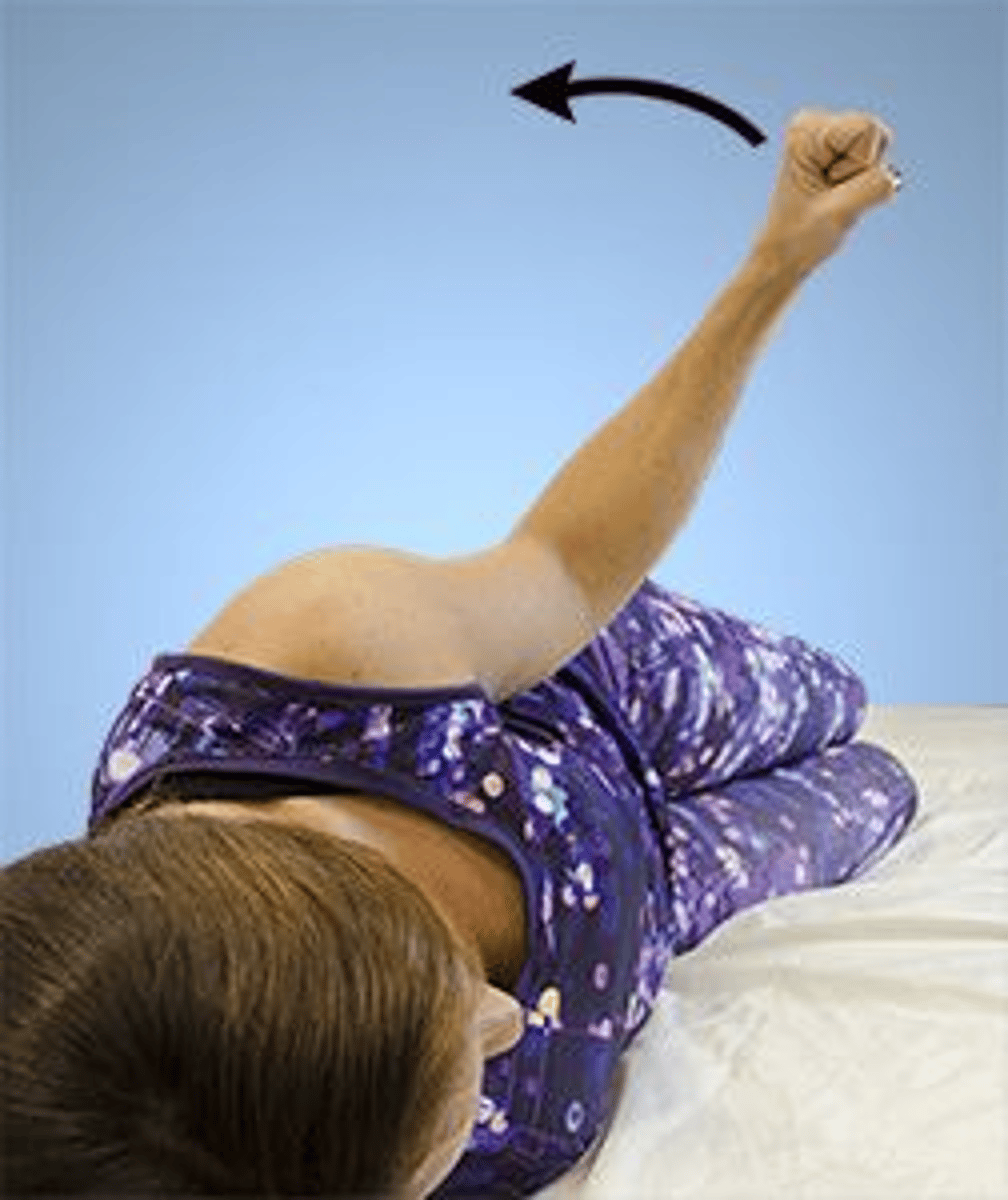
Which of the following muscles is MOST active during the exercise shown in the photograph?
1.Infraspinatus
2.Supraspinatus
3.Teres major
4.Rhomboid minor
1,1
1. The primary muscles that laterally (externally) rotate the glenohumeral joint are the infraspinatus, teres minor, and posterior deltoid.
2. The action of the supraspinatus is primarily abduction of the arm, which is not shown in the photograph.
3. The action of the teres major is medial (internal) rotation of the arm, which is not shown in the photograph.
4. The rhomboid minor controls scapular positioning during extension of the shoulder
A physical therapist is reviewing study findings summarized as follows: Patients with patellofemoral pain who received an experimental strengthening program plus a standard exercise program achieved improved outcomes, compared to patients who received only the standard exercise program (p = .001). The researchers had set the alpha level to .05 before the study began. Which of the following statements MOST accurately characterizes the results?
1.A statistically significant difference exists between the two interventions.
2.A small difference exists between the two interventions.
3.A large difference exists between the two interventions.
4.No difference exists between the two interventions.
1,1
1. When the p value is less than the alpha level, a statement can only be made that a significant difference exists. No statement can be made as to the magnitude of the difference.
2. When the p value is less than the alpha level, a statement can only be made that a significant difference exists. No statement can be made as to the magnitude of the difference.
3. When the p value is less than the alpha level, a statement can only be made that a significant difference exists. No statement can be made as to the magnitude of the difference.
4. The p value obtained is less than the alpha level, thus a statistical difference exists.
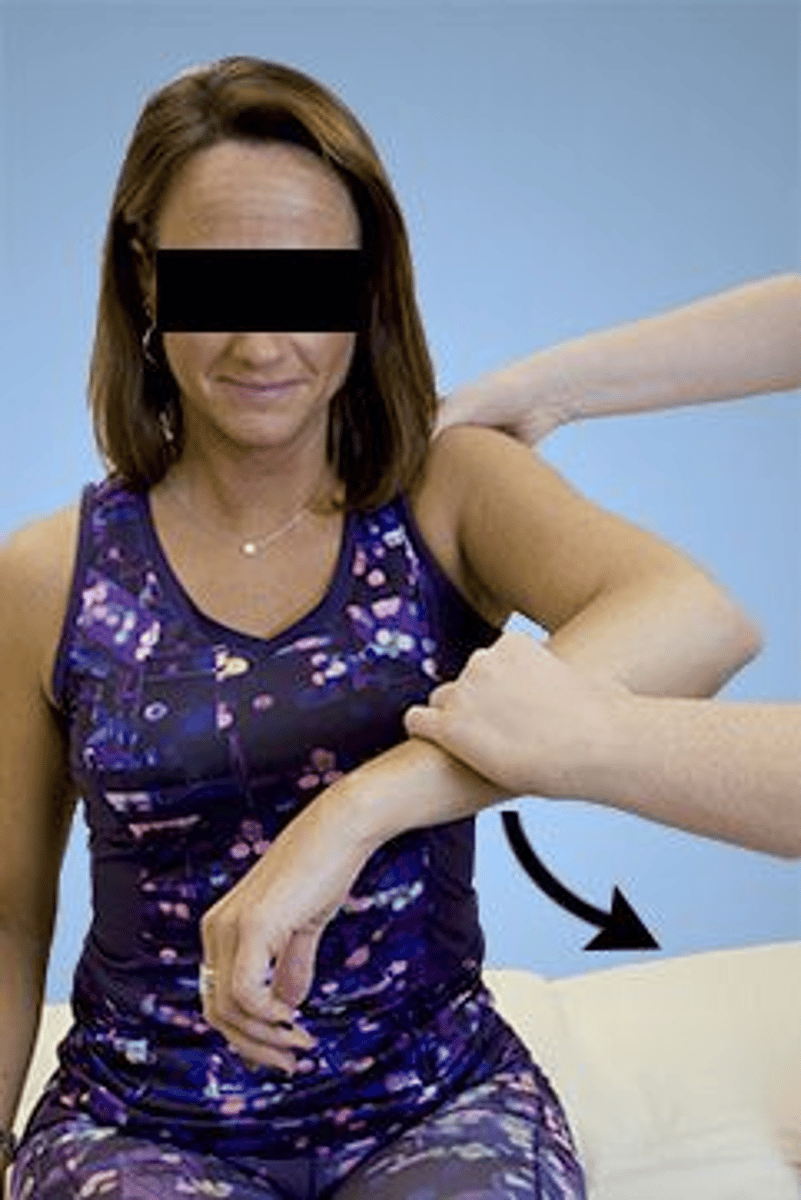
When the test shown in the photograph is performed, the patient reports reproduction of pain. Which of the following functional activities is LEAST likely to cause pain in this patient?
1.Turning a doorknob
2.Reaching away from the side
3.Lifting overhead
4.Putting on a jacket
2,1
1. The image depicts the Hawkins-Kennedy Test, a test for shoulder impingement (subacromial). Symptoms can be elicited by the combined movements of elevation, abduction, and medial (internal) rotation. Among all activities described, turning a doorknob is the activity that least requires these motions.
2. Reaching away from the side requires shoulder abduction, which can trigger impingement symptoms.
3. Lifting overhead requires shoulder elevation, which can trigger impingement symptoms.
4. Putting on a jacket requires abduction and medial (internal) rotation, which can trigger impingement symptoms.
A patient sustained a C6 spinal cord injury (ASIA Impairment Scale B) 2 weeks ago. Which of the following techniques would be MOST effective to reduce the risk of deep venous thrombosis in the lower extremities?
1.Ankle pumps
2.Compressive stockings
3.Standing in a standing frame
4.Gastrocnemius-soleus stretch
1,2
1. Ankle pumps are an effective technique for reducing venous stasis and blood clots, but a patient with an ASIA Impairment Scale B injury would have sensory, but not motor function preserved below the neurological level and would be unable to actively perform active ankle pumps due to paraplegia
2. Compressive stockings are the most effective device to use for a patient with a cervical spinal cord injury who is unable to move the lower extremities and will have venous stasis due to the lack of "muscle pumping" action. The compressive stockings decrease the venous stasis and blood pooling and reduce the risk of blood clotting.
3. A standing frame would be useful for the prevention of osteoporosis and bone density loss. It is also useful for improving respiratory function but would not be the best method for preventing the development of deep venous thrombosis.
4. Gastrocnemius-soleus stretch may aide in some movement of blood in the lower extremities but is not the most effective means of reducing deep venous thrombosis formation
Which of the following changes in cardiopulmonary function is MOST likely to occur in a pregnant woman in her third trimester of pregnancy?
1.Increase in oxygen consumption
2.Decrease in respiratory rate
3.Decrease in cardiac output
4.Decrease in heart rate
1,1
1. Cardiac output increases 30% to 60%, and oxygen consumption increases 15% to 20% during pregnancy.
2. Respiratory rate does not change during pregnancy.
3. Cardiac output increases 30% to 60%, and oxygen consumption increases 15% to 20% during pregnancy.
4. Heart rate increases during pregnancy.
A patient has impaired sensory and motor function of the left limbs and the left side of the face. The patient is unable to sit independently. In which of the following regions of the nervous system is the lesion MOST likely located?
1.Cerebrum
2.Brainstem
3.Spinal cord
4.Peripheral nerve
1,1
1. Damage to the cerebral cortex is likely to result in hemiparesis and hemisensory loss.
2. A lesion in most areas of the brainstem would have facial signs contralateral to the limb signs.
3. A spinal cord lesion would not affect the face.
4. Peripheral nerve lesion signs and symptoms are specific to the nerve injured and would not encompass entire limbs and the face. The peripheral nervous system nerve root corresponds with specific myotomes and dermatomes, not the hemibody.
A physical therapist is designing a rehabilitation program for a patient who has a recent diagnosis of ankylosing spondylitis. The therapist should anticipate that as the disease progresses, the patient is MOST likely to require:
1.special precautions for osteoporosis.
2.a wheelchair for community mobility.
3.spinal surgery.
4.bilateral ankle-foot orthoses.
1,1
1. Osteoporosis is a skeletal complication associated with long-standing ankylosing spondylitis.
2. Requiring a wheelchair is incorrect because the patient should still be able to walk, even with advanced stages of ankylosing spondylitis.
3. Spinal surgery has a very limited role in the treatment of ankylosing spondylitis.
4. Peripheral nerve dysfunction is not characteristic of ankylosing spondylitis. Orthoses to manage foot drop would not be expected in the plan of care for a patient who has ankylosing spondylitis
During auscultation of the chest wall, a physical therapist notes an area of decreased breath sounds. Which of the following additional findings would support the suspicion of consolidation?
1.Tympanic sound with percussion
2.Increased fremitus
3.Hypertrophy of accessory muscles
4.High-pitched wheezes
2,2
1. A tympanic sound with percussion may be heard over a hyperinflated chest.
2. Increased fremitus is palpated in the presence of an increase in secretions.
3. A person with chronic obstructive pulmonary disease might exhibit increased muscle activity in the respiratory accessory muscles. This would not typically be observed in a person with an increase in secretions.
4. The adventitious sound associated with consolidation would be crackles, not wheezing
A patient with diabetes had a right transtibial amputation 5 days ago. An advantage of a rigid removable dressing versus bandaging is that the rigid dressing:
1.allows for early weight bearing.
2.requires less monitoring.
3.allows applied pressure to be varied.
4.is less costly.
1,1
1. A rigid dressing allows for early fitting of a prosthesis and weight-bearing and helps alleviate edema and pain, which is an advantage.
2. A rigid dressing requires more (not less) supervision because there is no access available to the incisions and the dressing is fabricated by the surgeon or prosthetist. As the residual limb heals, sutures are removed, and the limb changes shape, a new cast must be made.
3. Pressure cannot be varied when using a rigid dressing, unlike bandaging with an elastic wrap or shrinker.
4. A rigid dressing requires careful application by a skilled individual and, therefore, may be more costly. An elastic shrinker is a less expensive option.
A patient is seen in physical therapy after an arthroscopic debridement of the knee. Which of the following describes the optimal parameters for electrical stimulation to address an extensor lag noted during the examination?
1.Duty cycle of 50%; current intensity high enough to produce 40% of maximal voluntary isometric contraction; 20 minute total treatment time
2.Duty cycle of 20%; current intensity high enough to produce 40% of maximal voluntary isometric contraction; 20 minute total treatment time
3.Duty cycle of 20%; current intensity high enough to produce 60% of maximal voluntary isometric contraction; 10 minute total treatment time
4.Duty cycle of 50%; current intensity high enough to produce 60% of maximal voluntary isometric contraction; 10 minute total treatment time
3,3
1. A duty cycle of 50% is too high and the current intensity is not optimal.
2. The current intensity is not optimal. Greater than or equal to 50% is recommended for strengthening.
3. For strengthening with electrical stimulation the current intensity should be maximal, so 60% is the better answer when compared with 40% of maximal voluntary contraction. Also, the duty cycle should allow for the rest period to be 5 times as long as the hold cycle, so a 20% duty cycle is best. One treatment session should include at least 10 contractions, so a 10 minute treatment time is appropriate.
4. The duty cycle is too high in this example; more rest time is needed for muscle recovery.
A patient has a comminuted femoral fracture with an external fixator. There is no sign of quadriceps contraction with neuromuscular electrical stimulation. Which of the following is the MOST likely cause?
1.A lesion in the femoral nerve
2.A contusion of the quadriceps muscle
3.An unstable fracture site
4.A lesion in the L4-L5 nerve roots
1,1
1. If a muscle becomes denervated, a contraction cannot be produced by neuromuscular electrical stimulation
2. A contusion is a bruise, which is characterized by swelling, discoloration, and pain. Innervation of the muscle is typically intact, and, therefore, electrical stimulation would produce a contraction in the quadriceps.
3. If the nerve is intact at the fracture site, a muscle contraction may be produced by neuromuscular electrical stimulation
4. The quadriceps are innervated by the femoral nerve, which is derived from spinal nerves L2-L4. A lesion in the L4-L5 nerve roots would still leave innervation in the quadriceps, and, therefore, electrical stimulation would produce a contraction in the quadriceps.
A patient reports a burning sensation along the medial aspect of the knee and lower leg. The sensation is increased during resisted hip adduction and knee flexion. The patient MOST likely has which of the following conditions?
1.Meralgia paresthetica
2.Neuropathy of the obturator nerve
3.Complex regional pain syndrome
4.Neuropathy of the saphenous nerve
1,4
1. Meralgia paresthetica is described as burning pain along the anterolateral aspect of the thigh that increases with hip extension (not hip adduction as described in the stem) .
2. The obturator nerve has no cutaneous innervation to the lower leg. Pain would reside in the adductor thigh compartment
3. Complex regional pain syndrome of the lower extremity typically involves the foot and ankle. There are multiple characteristics present, such as pain, allodynia, hyperalgesia, abnormal vasomotor response, and abnormal sudomotor (sympathetic nervous system) activity.
4. The saphenous nerve is cutaneous and supplies skin on medial aspect of leg and foot. Entrapment can cause pain at the medial side of knee. The pain is described as burning pain that increases with knee flexion and hip adduction.
A patient is referred to physical therapy with a diagnosis of adhesive capsulitis. During the initial evaluation, the patient is found to have limited shoulder range of motion, decreased tolerance to weight-bearing, recurrent night pain, and increased deep tendon reflexes. Which of the following courses of action is BEST for the physical therapist?
1.Contact the patient's referring physician.
2.Initiate small-amplitude oscillations performed at the beginning of the range of motion.
3.Perform pulsed ultrasound to the anterior aspect of the shoulder.
4.Delay therapy for 1-2 weeks until the pain decreases.
1,1
1. These measures do not fit with the diagnosis of adhesive capsulitis and might indicate a more serious pathological condition. Signs and symptoms of metastases include decreased tolerance to weight-bearing, change in deep tendon reflexes, and change in sleep habits.
2. Pain control mobilizations are not contraindicated, but it is more important to get the patient back to the physician for reevaluation.
3. Ultrasound should not be performed until a definitive diagnosis can be determined.
4. The physical therapist should take action to refer the patient the physician for reevaluation as soon as possible.
A patient reports audible clicking in the temporomandibular joint while chewing food. When a physical therapist is palpating the joint, which of the following pairs of active mandible motions would be MOST informative to confirm temporomandibular dysfunction?
1.Elevation and protrusion
2.Elevation and retrusion
3.Protrusion and retrusion
4.Depression and elevation
1,4
1. Reciprocal clicking with mouth opening and closing has good diagnostic utility in diagnosing temporomandibular conditions and in particular anterior disc displacement. Opening of the mouth, which is depression of the mandible, is the most revealing and diagnostic movement for temporomandibular dysfunction. Elevation of the mandible is mouth closing and primarily assesses the primary muscles that perform mouth closure. Protrusion of the mandible is used to assess tongue thrust conditions and for deviations during protrusion, which can be caused by muscle or disc problems; therefore, it is not a strongly discriminatory test.
4. Reciprocal clicking with mouth opening and closing has good diagnostic utility in diagnosing temporomandibular conditions and in particular anterior disc displacement. Opening of the mouth, which is depression of the mandible, is the most revealing and diagnostic movement for temporomandibular dysfunction. Elevation of the mandible is mouth closing and primarily assesses the primary muscles that perform mouth closure
Which of the following manual muscle testing grades should be assigned to the test result shown in the video?
1.Poor (2/5)
2.Fair (3/5)
3.Good (4/5)
4.Normal (5/5)
4,2
1. The patient is supine, has the arms extended, and is able to clear the scapula from the table; this is the procedure and method to obtain a Fair (3/5) manual muscle test grade (p. 56). A grade of Poor (2/5) would be assigned if the patient was supine with the arms at the side and only lifted the head.
2. The patient is in supine position, has the arms extended, and is able to clear the scapula from the table. This is the procedure and method to obtain a Fair (3/5) manual muscle test grade.
3. The patient is supine, has the arms extended, and is able to clear the scapula from the table; this is the procedure and method to obtain a Fair (3/5) manual muscle test grade (p. 56). A grade of Good (4/5) would be assigned if the patient was supine but had the hands clasped across the chest.
4. The patient is supine, has the arms extended, and is able to clear the scapula from the table; this is the procedure and method to obtain a Fair (3/5) manual muscle test grade (p. 56). A grade of Normal (5/5) would be assigned if the patient was supine but had the hands behind the head
A patient has difficulty with knee control while descending stairs. Which of the following exercises is MOST appropriate to improve function in this task?
1.Wall squats
2.Quadriceps setting exercises
3.Long arc knee extension with free weights
4.Concentric knee extension using an isokinetic dynamometer
3,1
1. Wall squats are a closed chain exercise that requires eccentric contraction of the quadriceps muscles in a pattern closely related to that used in descending stairs, making it the exercise most likely to lead to functional carry-over.
2. Quadriceps sets are isometric exercises that will strengthen the muscle but not in the same way needed to descend stairs.
3. Long arc knee extension exercises are an open chain exercise that will strengthen the muscle but not in the same way needed to descend stairs.
4. Exercises performed on an isokinetic dynamometer are open chain exercises that will strengthen the muscle but not in the same way needed to descend stairs.
Which of the following patient activities will BEST facilitate the goal of the mobilization being performed in the photograph?
1.Performing heel raises while seated
2.Walking on tiptoes on level surfaces
3.Performing single limb stance activities
4.Ascending and descending stairs with a reciprocal pattern
4,4
1. Heel raises would augment plantar flexion, bringing the ankle only to neutral dorsiflexion.
2. Walking on tiptoes would emphasize plantar flexion motion rather than dorsiflexion.
3. Single limb stance activities would not require dorsiflexion.
4. The photograph illustrates a posterior glide mobilization of the talus. This mobilization is intended to improve dorsiflexion at the ankle. Therefore, the mobilization would be best augmented by exercises emphasizing active/passive dorsiflexion. Stair climbing requires at least 20° of dorsiflexion.
Which of the following findings is MOST likely a negative prognostic indicator for surgical wound healing?
1.Bloody discharge on postoperative day 1
2.Clear and watery discharge on postoperative day 3
3.Purulent discharge on postoperative day 5
4.No discharge and a raised suture line on postoperative day 10
3,3
1. With full thickness wounds such as surgical incisions, bleeding is part of the normal process of hemostasis in the acute phase of healing
2. Clear and watery discharge on postoperative day 3 is a normal response for a healing surgical wound.
3. A purulent exudate from a surgical wound site is an indication of infection and is a negative prognostic indicator for healing
4. No discharge and a raised suture line on postoperative day 10 are consistent with a normal response for a healing surgical wound
A patient who walks with an antalgic gait reports hip pain, loss of appetite, and night sweats. The patient has a low-grade fever. Which of the following tests is MOST important to perform to confirm the diagnosis?
1.Squat Test
2.Patrick Test
3.McBurney Test
4.Iliopsoas Muscle Test
3,4
1. The Squat Test is used to screen for a MSK source of hip pain, such as a fracture, however does not take into account the patient's constitutional symptoms that may reflect pain of systemic origin.
2. The Patrick Test assesses hip pain of MSK origin but does not take into account the patient's constitutional symptoms that may reflect pain of systemic origin.
3. The McBurney Test is a test for appendicitis. Pain resulting from appendicitis usually begins in the umbilical region and may be localized to the right lower quadrant but is less likely to refer pain to the hip.
4. The Iliopsoas Muscle Test is a screening test for psoas abscess. A patient who has a psoas abscess will most likely have hip pain, a low-grade fever, antalgic gait, and night sweats
A physical therapist should anticipate that an abnormal lymph node will feel:
1.soft and nonmobile and have an increased skin temperature.
2.firm and nontender and have an increased skin temperature.
3.firm, mobile, and tender or nontender.
4.soft, mobile, and tender or nontender.
3,3
1. An abnormal lymph node would not feel soft, and an elevated skin temperature is not expected.
2. An abnormal lymph node may feel firm and nontender, but an elevated skin temperature is not an expected accompanying feature of an abnormal lymph node.
3. An abnormal lymph node can range in feeling from firm to hard, be mobile or nonmobile, and be tender or nontender.
4. An abnormal lymph node would not feel soft.
Which of the following clinical features is a CONTRAINDICATION to intermittent compression?
1.Past history of deep vein thrombosis
2.Impaired sensation
3.Local infection
4.Peripheral neuropathy
3,3
1. Recent or acute deep vein thrombosis is a contraindication, but a past history or having a predisposition to deep vein thrombosis is not.
2. Impaired sensation is a precaution.
3. Infection may spread as a result of compression, and, therefore, infection is a clear contraindication.
4. Peripheral neuropathy is not a contraindication; it is a precaution.
Which of the following patient positions would be the MOST appropriate treatment for atelectasis of the lower lobes, lateral basal segment?
1.Prone position with the bed flat
2.Long-sitting position, leaning back 30°
3.Supine position with the head down 15°
4.One-quarter turn from prone position with the head down 30°
4,4
1. Prone with bed flat is best used to drain the superior segments of the lower lobes.
2. Long sitting, leaning back 30° is best used for involvement in the upper lobes, apical segments.
3. Supine with head down and the patient rotated one-quarter backward is best used to drain the lingula.
4. Atelectasis can result from secretion retention in which postural drainage is beneficial. Lower lobe (lateral basal segment) atelectasis may be cleared with the patient positioned on the uninvolved side, one-quarter turn from prone with the head down 30°.
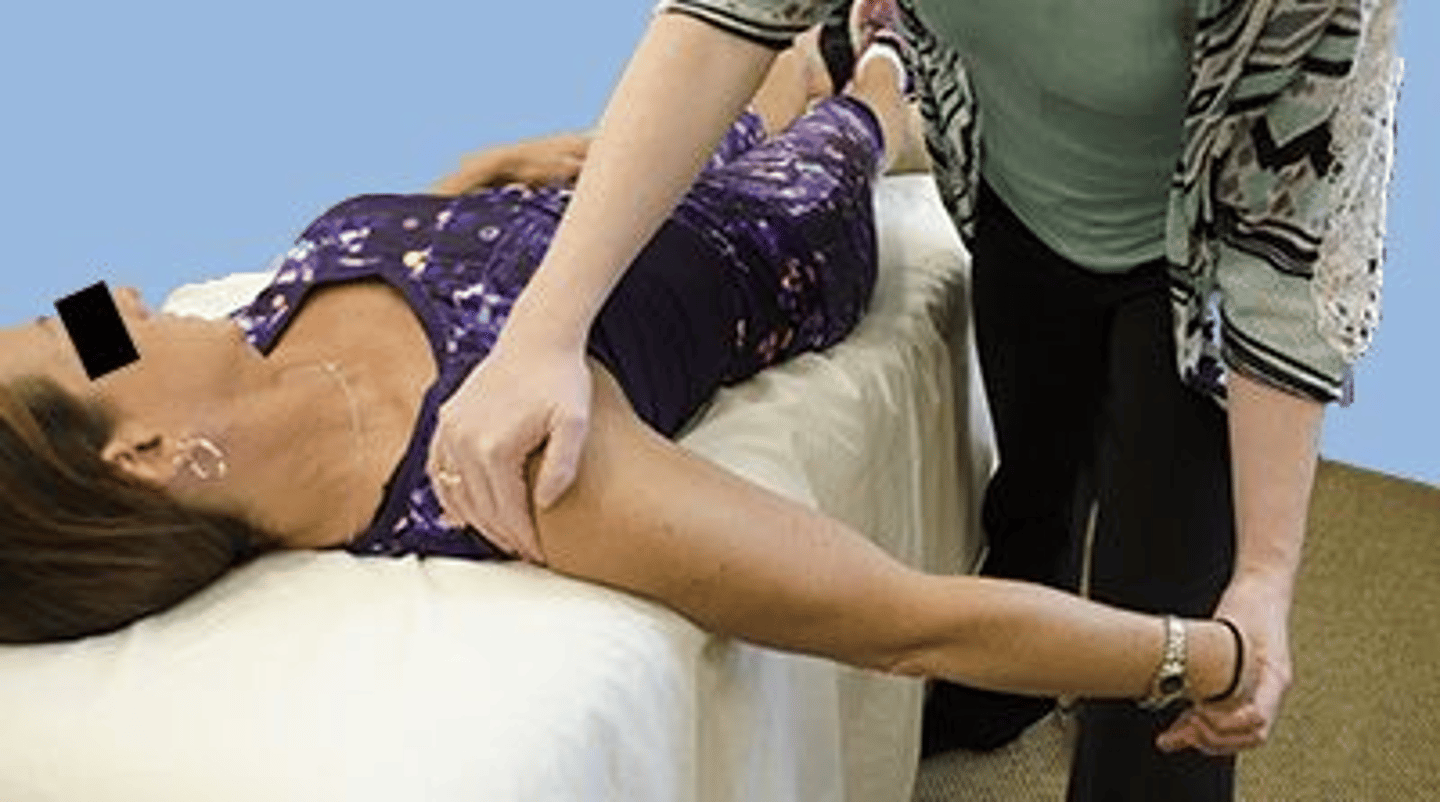
A physical therapist is performing a manual muscle test as shown in the photograph. If the patient is unable to achieve at least a grade of Fair (3/5), which of the following positions would be the BEST modification for the test?
1.Sitting against a wall for support
2.Lying sidelying
3.Lying supine
4.Lying prone
3,3
1. Upright sitting position does not eliminate the effects of gravity. If testing results in a grade below Fair (3/5), gravity should be eliminated.
2. Sidelying is not a standard testing procedure for the deltoid/supraspinatus. Gravity will still be involved. If testing results in a grade below Fair (3/5), gravity should be eliminated.
3. Supine position allows the patient to slide the arm on the table. Gravity is eliminated in this position. This is the standard position to test the deltoid/supraspinatus for a grade of Poor (2/5).
4. Although prone position does minimize gravity, it is not the position of choice for the muscle group being tested.
A physical therapist plans to use autolytic debridement to treat a patient's shallow, dry, partly necrotic leg wound. Which of the following dressings is MOST appropriate for this wound?
1.Hydrofiber dressing
2.Transparent film
3.Enzymatic agent
4.Foam dressing
2,2
1. Hydrofiber dressings are alginate-like in appearance and are activated by moisture in the wound. They are used for wounds with heavy exudate. The wound described is dry.
2. A dry wound will be best autolytically debrided by using a transparent film dressing
3. Topical enzymes are not used in autolytic debridement
4. A foam dressing is best used for a moist, draining wound
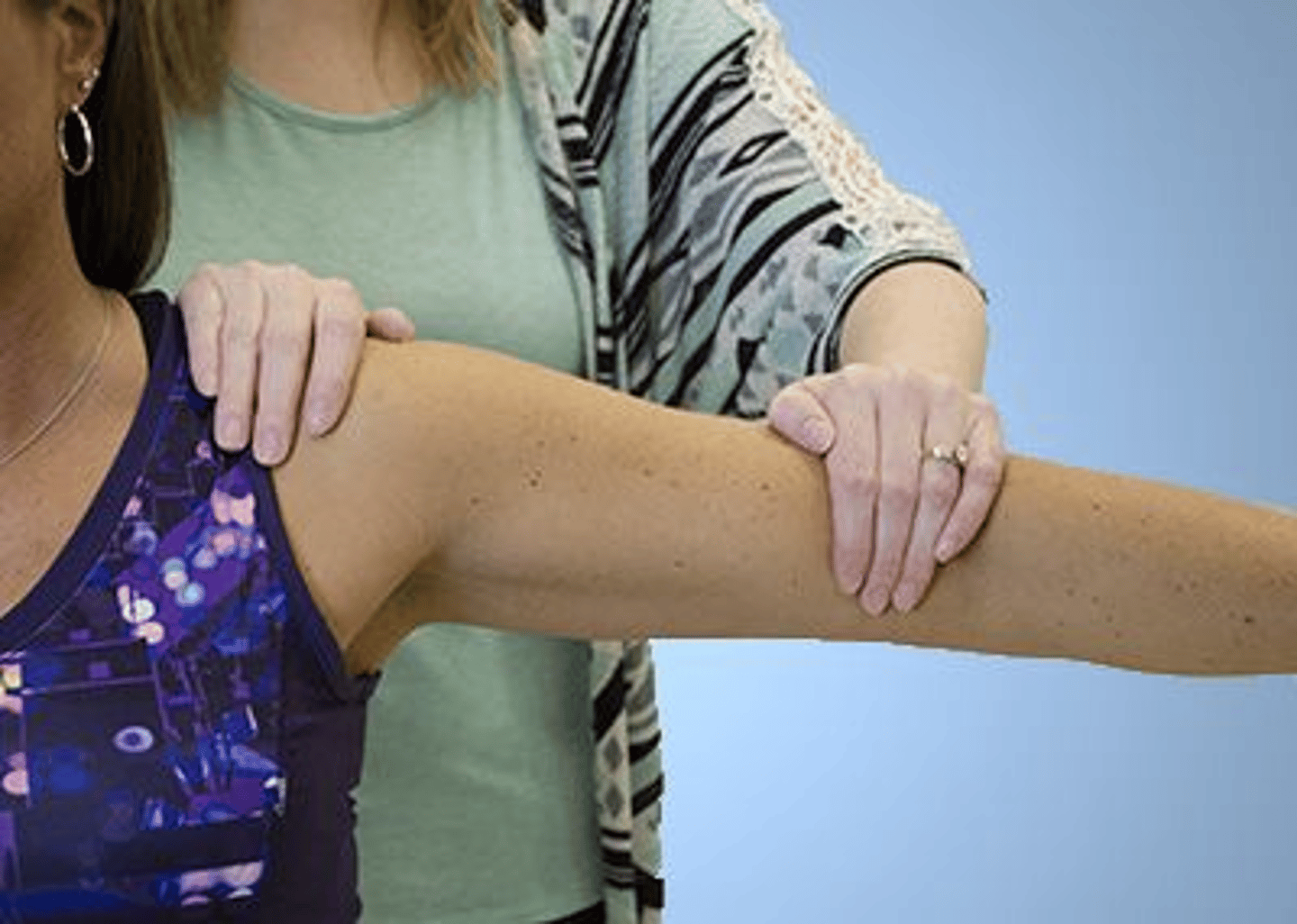
If the test shown in the photograph has positive findings, which of the following muscles is MOST likely affected?
1.Pronator teres
2.Adductor pollicis
3.Pronator quadratus
4.Abductor pollicis longus
1,4
1. The pronator teres is innervated by the median nerve. The nerve being stretched in the photograph is the radial nerve.
2. The adductor pollicis is innervated by the ulnar nerve. The nerve being stretched in the photograph is the radial nerve.
3. The pronator quadratus is innervated by the median nerve. The nerve being stretched in the photograph is the radial nerve.
4. The nerve being stretched in the photograph is the radial nerve. The abductor pollicis longus is innervated by the radial nerve (nerve roots C5-C8, T1). When the abductor pollicis longus is affected, loss of thumb (1st digit) abduction could result
A patient who has an L1 spinal cord injury (ASIA Impairment Scale A) is working toward independent walking with knee-ankle orthoses and forearm crutches. When walking with crutches, the patient is unable to achieve neutral hip extension. Which of the following interventions would BEST address this problem?
1.Strengthening the hip extensors
2.Strengthening the back extensors
3.Stretching the hamstrings
4.Stretching the hip flexors
4,4
1. The gluteus maximus is innervated below L1 and could not be strengthened.
2. Strengthening the back extensors would not contribute to increased hip extension.
3. Stretching the hamstrings could contribute to increased hip flexion with knee extension, not increased hip extension.
4. Stretching the hip flexors will promote hip extension range of motion, which is necessary in order to ambulate over even surfaces.
The parent of a 2-year-old child reports that while holding the child's hand when walking down a street, the child fell down. The parent tried to hold the child up while the child regained balance. The child now holds the arm at the side with the palm facing down. Which of the following conditions is MOST likely present?
1.Radial tunnel syndrome
2.Necrosis of the capitellum
3.Valgus extension overload syndrome
4.Partial slippage of the annular ligament
4,4
1. In radial tunnel syndrome, there is pain over the extensor muscle mass of the forearm distal to the lateral epicondyle. In addition, long finger extension testing would produce pain, and there could be weakness of finger and thumb (1st digit) extensors and the extensor carpi ulnaris. Typically, this syndrome results from overuse and not from a traumatic event.
2. Necrosis of the capitellum typically affects the dominant elbow of children, mainly boys, between the ages of 5 and 10 years. It is a diagnosis that is often associated with throwing in a young child (i.e., little-league elbow).
3. It is highly unlikely that a 2-year-old child would have valgus extension overload syndrome, because it typically is seen in throwing athletes in whom the repetitive stresses of throwing lead to progressive changes within the elbow joint, which cause pain and athletic impairment. Findings include pain and tenderness around the tip of the olecranon, pain with forced passive elbow extension, and increased valgus laxity.
4. A diagnosis of partial slippage of the annular ligament is made from the history of longitudinal traction on an extended elbow, as with a child whose arm is pulled by a parent when walking. This injury typically occurs in children age 2-3 years.
During the examination of a patient who went on a hiking trip 1 week ago, a physical therapist notes neck stiffness and notices a red rash with partial central clearing on the patient's upper extremity. The therapist should suspect that the patient has which of the following conditions?
1.Meningitis
2.Herpes zoster
3.Lyme disease
4.Retropharyngeal abscess
3,3
1. The history of the patient is inconsistent with the classic history of meningitis (pre-existing respiratory infection).
2. Herpes zoster (shingles) occurs in a dermatologic distribution and is characterized by burning pain
3. The history of this patient (hiking trip), symptoms (neck stiffness), and findings (rash) are consistent with Lyme disease.
4. Retropharyngeal abscess usually occurs in children younger than 4 years old or is the result of trauma or dental infection
A patient with an excessive anterior pelvic tilt will usually have which of the following associated conditions?
1.Weak lumbar extensors
2.Weak hip flexors
3.Piriformis flexibility deficits
4.Iliacus flexibility deficits
2,4
1. Low back extensors are typically short and strong in a patient who has an excessive anterior pelvic tilt.
2. Hip flexor muscles are typically short and strong in a patient who has an excessive anterior pelvic tilt.
3. The piriformis attaches from the pelvis to the greater trochanter. Therefore, an excessive anterior pelvic tilt would not be associated with a tight piriformis; the sacral-femoral position is more likely to be related to piriformis flexibility deficits.
4. Hip flexor muscles (iliacus/iliopsoas) are short and strong in a patient who has an excessive anterior pelvic tilt.
6 y/o male
-Clumsiness, awkward running pattern, difficulty following directions
-Born full-term w/o complications
-Attained developmental milestones within typical ranges
-fatigues quickly during outdoor play
Poor interactive play skills
PT Exam
Poor breath control, with short shallow breaths and weak cough
Joint hypermobility in UE/LE during PROM
Increased lumbar lordosis and knee hyperextension in standing
Slight winging of scapula
Low muscle tone throughout trunk and extremities
Walks with a wide BOS and arms abducted and externally rotated
Runs with a forward trunk and arms extended behind trunk
Unable to catch a ball thrown or bounced to him
Which of the following measures is MOST appropriate to confirm the suspected diagnosis?
1.School Function Assessment (SFA)
2.Gross Motor Function Measure (GMFM)
3.Hawaii Early Learning Profile (HELP)
4.Movement Assessment Battery for Children (M-ABC-2)
2,4
1. The School Function Assessment is not a normed-reference measure. It determines the child's participation in all aspects of the school environment thus, does not specifically address the signs and symptoms of developmental coordination disorder.
2. The Gross Motor Function Measure is not a normed-reference measure. It was specifically designed for children 5 months - 16 years with cerebral palsy and Down syndrome.
3. The Hawaii Early Learning Profile (HELP) is not a normed-reference measure. It assesses regulatory/sensory organization, cognition, language, gross motor, fine motor, social-emotional, and self-help areas thus, does not specifically address the signs and symptoms of developmental coordination disorder.
4. The child in the scenario demonstrates signs and symptoms most consistent with developmental coordination disorder. The Movement Assessment Battery for Children (M-ABC-2) is a norm-referenced, multi-item test for children 3 to 13 years of age suspected of developmental coordination disorder
Which of the following pulmonary interventions is MOST appropriate?
1.Percussion
2.Diaphragmatic breathing
3.Pursed-lip breathing
4.Upper chest inhibiting technique
2,2
1. The child in the scenario demonstrates signs and symptoms most consistent with developmental coordination disorder (DCD) including low muscle tone. Percussion is especially important for patients who have chronic, copious, or thick pulmonary secretions, which are unrelated to the diagnosis of DCD
2. The child in the scenario demonstrates signs and symptoms most consistent with DCD. DCD is characterized by slow, awkward movements; coordination difficulties; fatigue; decreased strength, power, and endurance; and motor control and motor learning deficits. Poor coordination of respiratory musculature could result in short shallow breaths and a weak cough. Diaphragmatic breathing may improve the strength, awareness, and coordination of the diaphragm muscle and is thus an appropriate intervention for DCD
3. The child in the scenario demonstrates signs and symptoms most consistent with DCD. DCD is characterized by slow, awkward movements; coordination difficulties; fatigue; decreased strength, power, and endurance; and motor control and motor learning deficits. Poor coordination of respiratory musculature could result in short shallow breaths and a weak cough. Pursed-lip breathing is indicated for dyspnea at rest or with exertion and wheezing
4. The child in the scenario demonstrates signs and symptoms most consistent with DCD including low muscle tone. Poor coordination of respiratory musculature could result in short shallow breaths and a weak cough. Upper chest inhibiting technique is indicated for excessive use of accessory muscles during breathing is designed to reduce the use of accessory muscles during breathing
Which of the following strategies should be utilized when the child is first acquiring a new skill?
1.Blocked practice with focus on knowledge of results
2.Blocked practice with focus on knowledge of performance
3.Mixed practice with focus on knowledge of results
4.Mixed practice with focus on knowledge of performance
2,1
1. The child in the scenario demonstrates signs and symptoms most consistent with developmental coordination disorder. Research suggests that for skill acquisition, blocked practice may be preferable, this is particularly true for individuals with DCD who have deficits in motor control and motor learning. It may also be easier for children with DCD to process the activity outcome (knowledge of results) than the pattern used (knowledge of performance) since they have difficulty predicting movements
2. The child in the scenario demonstrates signs and symptoms most consistent with DCD. It may also be easier for children with DCD to process the activity outcome (knowledge of results) than the pattern used (knowledge of performance) since they have difficulty predicting movements
3. The child in the scenario demonstrates signs and symptoms most consistent with developmental coordination disorder. Research suggests that for skill acquisition, blocked practice may be preferable, this is particularly true for individuals with DCD who have deficits in motor control and motor learning
4. The child in the scenario demonstrates signs and symptoms most consistent with developmental coordination disorder. Research suggests that for skill acquisition, blocked practice may be preferable, this is particularly true for individuals with DCD who have deficits in motor control and motor learning. It may also be easier for children with DCD to process the activity outcome (knowledge of results) than the pattern used (knowledge of performance) since they have difficulty predicting movements
Based on the child's presentation, a literature search including which of the following topics would yield the BEST results for supporting evidence-based interventions for the child?
1.Task-specific approach; muscular dystrophy
2.Task-specific approach; developmental coordination disorder
3.Applied behavior analysis; muscular dystrophy
4.Applied behavior analysis; developmental coordination disorder
3,2
1. The child in the scenario demonstrates more signs and symptoms consistent with developmental coordination disorder than muscular dystrophy.
2. The child in the scenario demonstrates signs and symptoms most consistent with DCD. Research demonstrates that task-specific intervention is an effective way to teach children with DCD gross motor skills.
3. The child in the scenario demonstrates more signs and symptoms consistent with developmental coordination disorder than muscular dystrophy.
4. The child in the scenario demonstrates signs and symptoms most consistent with DCD. However, applied behavioral analysis is an effective intervention for children over the age of 3 with autism spectrum disorders. It is not the most appropriate intervention for DCD