unit seven exam
 Call Kai
 Learn
Learn Practice Test
 Spaced Repetition
 Match
Match Flashcards
 Knowt Play
1/207

Earn XP
Description and Tags
ch 6 - toes, foot, and ankle
Name | Mastery | Learn | Test | Matching | Spaced | Call with Kai | Chat |
|---|
No analytics yet
Send a link to your students to track their progress
208 Terms
T or F: the distal portion of the fifth metatarsal is a common fracture site
F
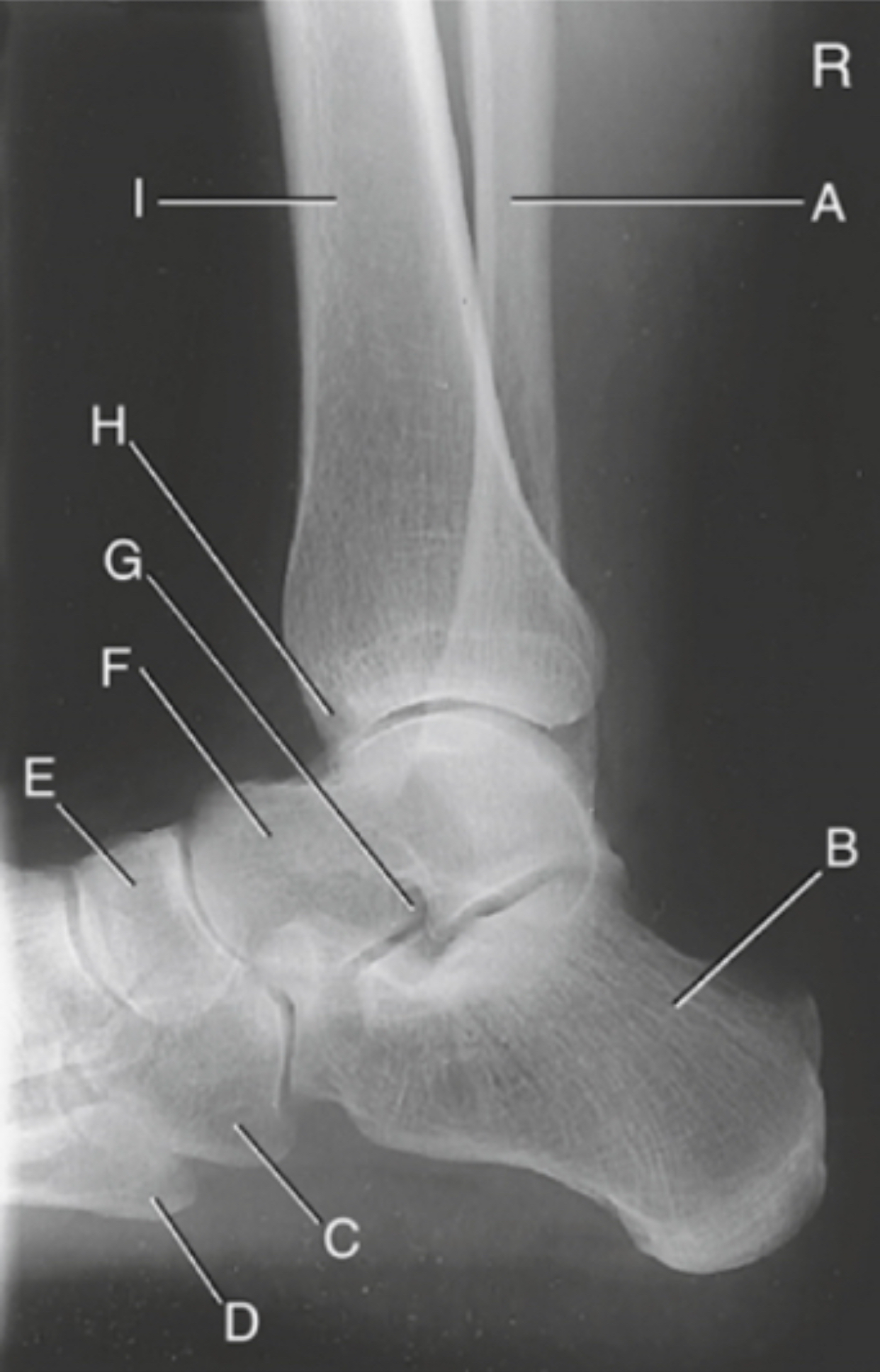
A is:
fibula
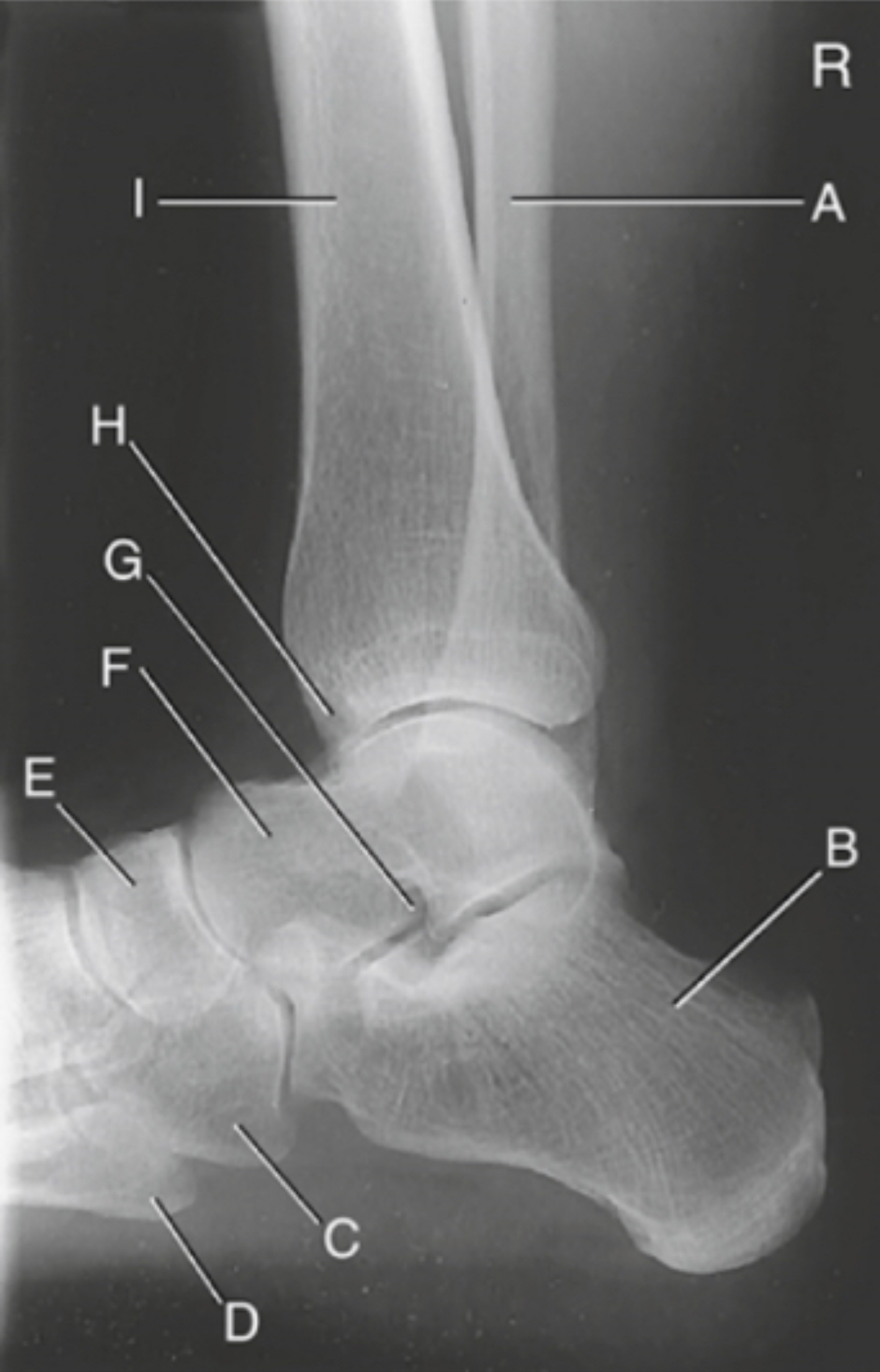
B is:
calcaneus
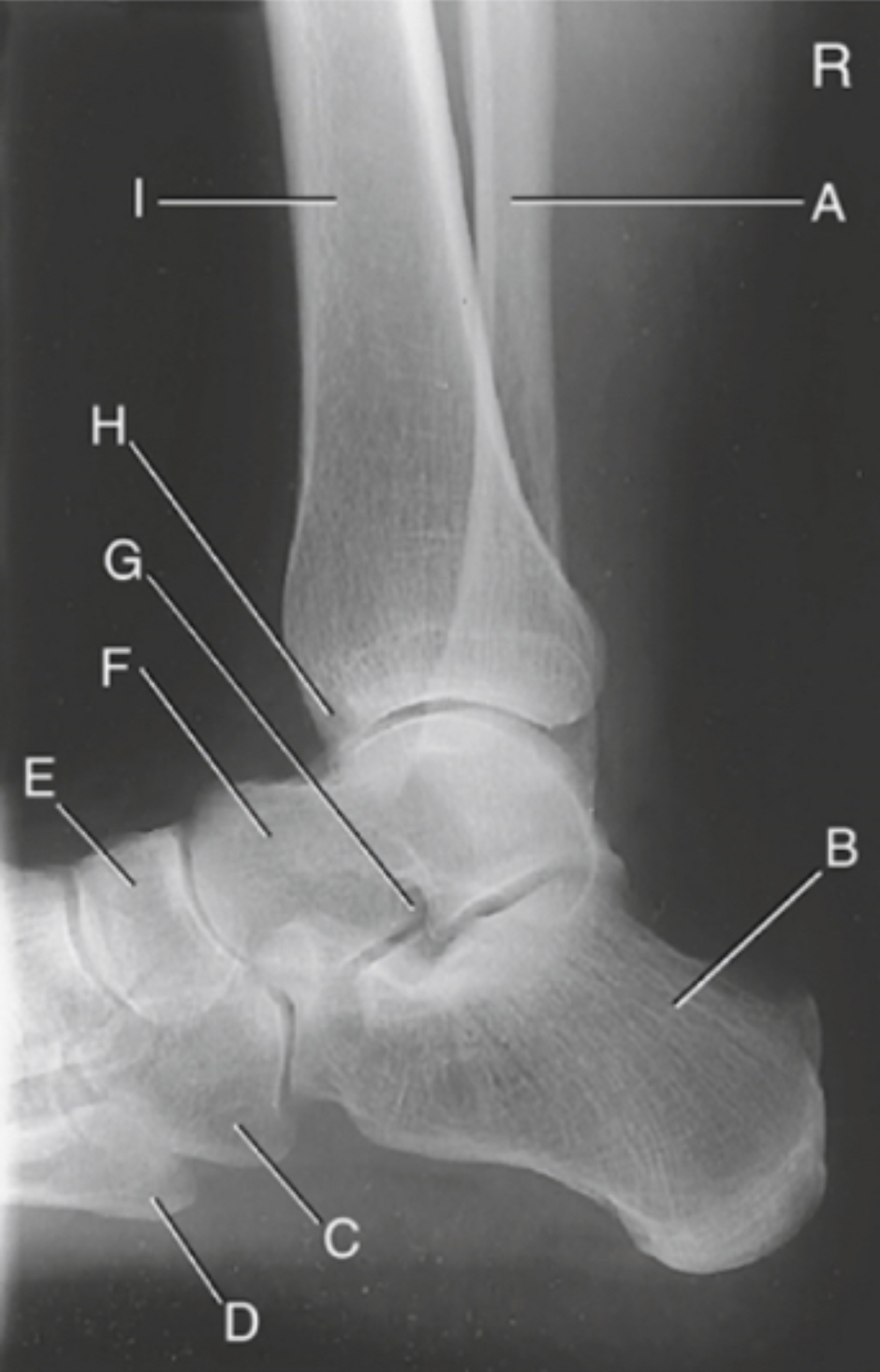
C is:
cuboid
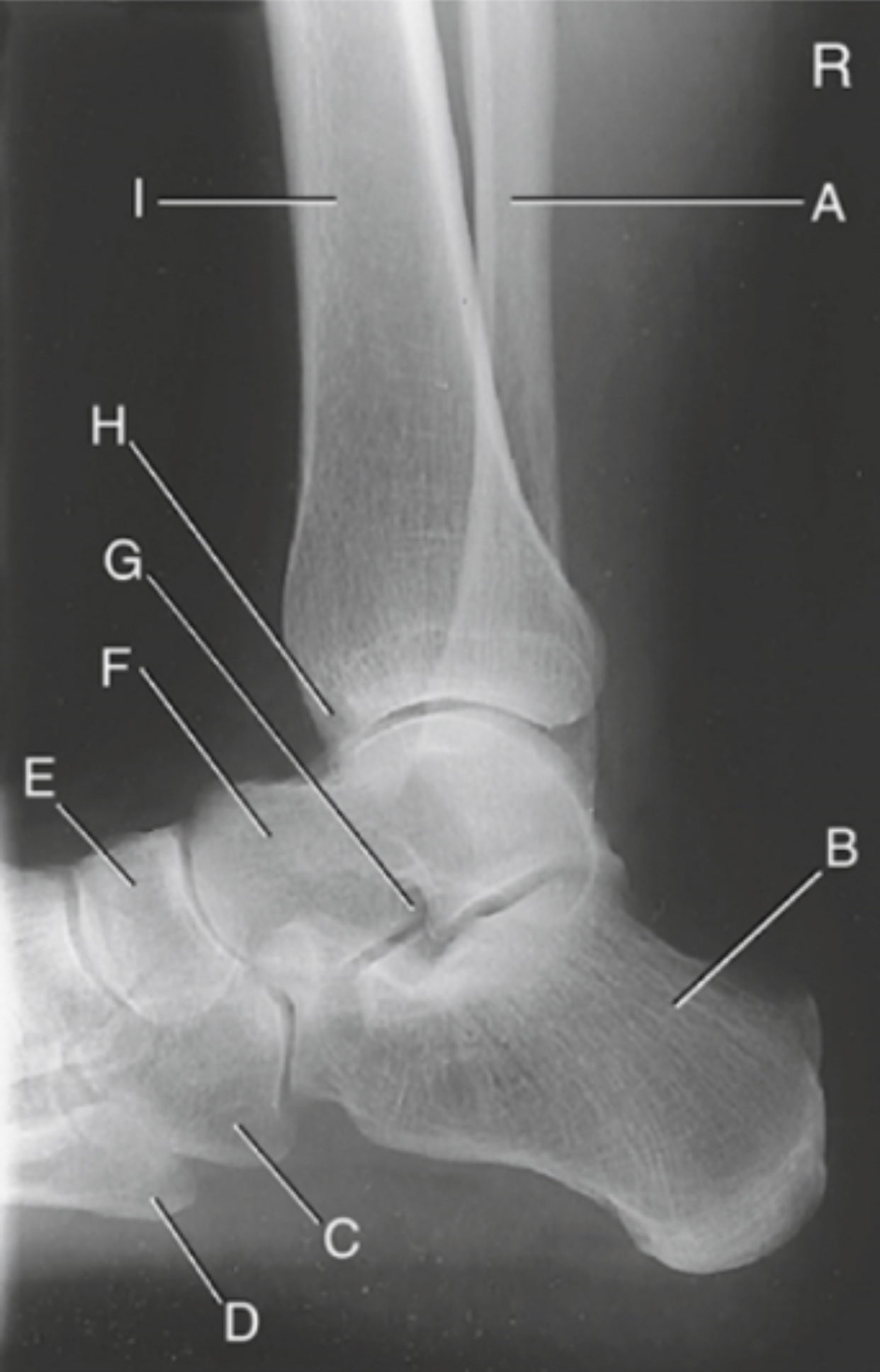
D is:
base of 5th MT tuberosity
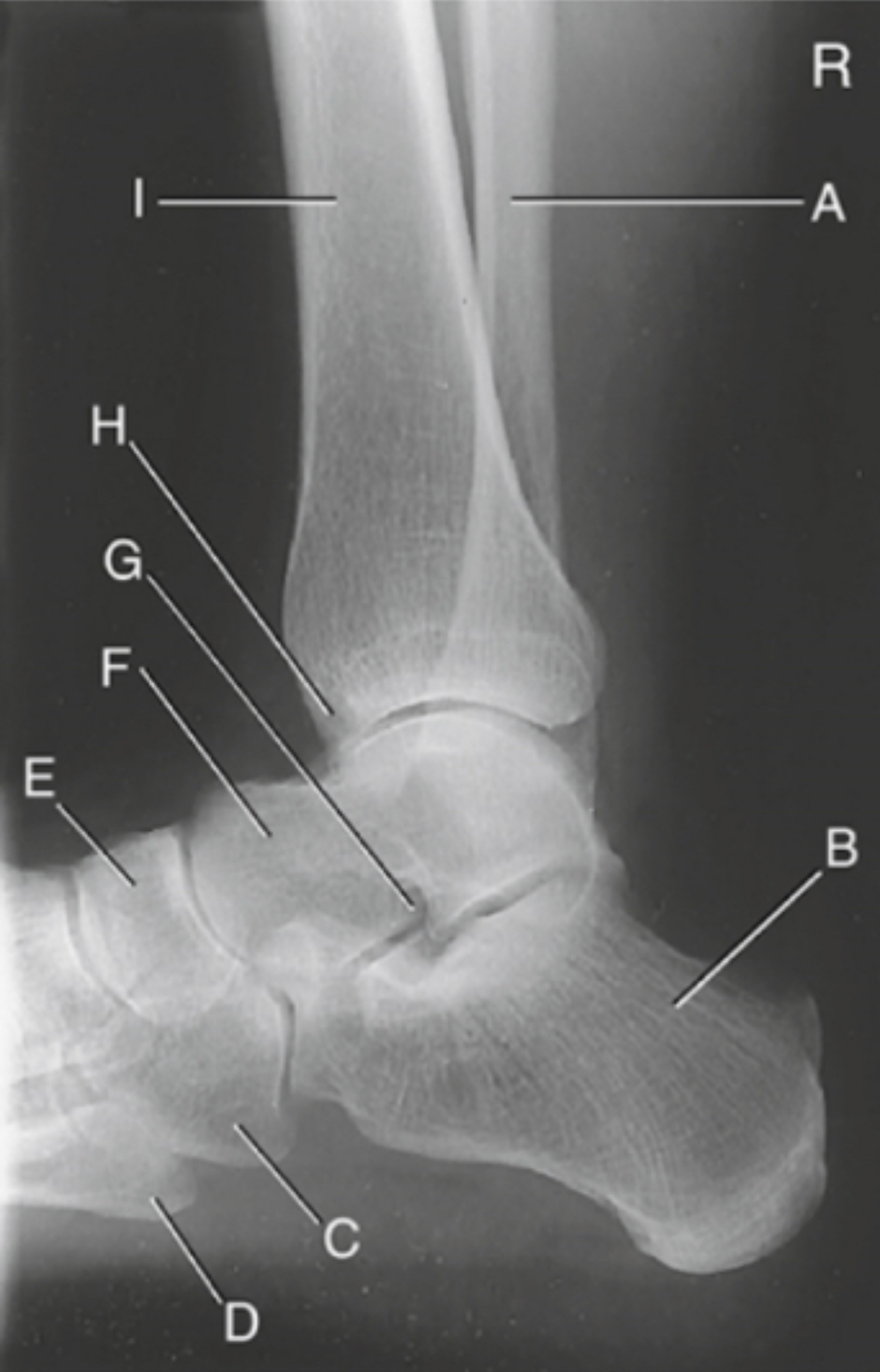
E is:
navicular
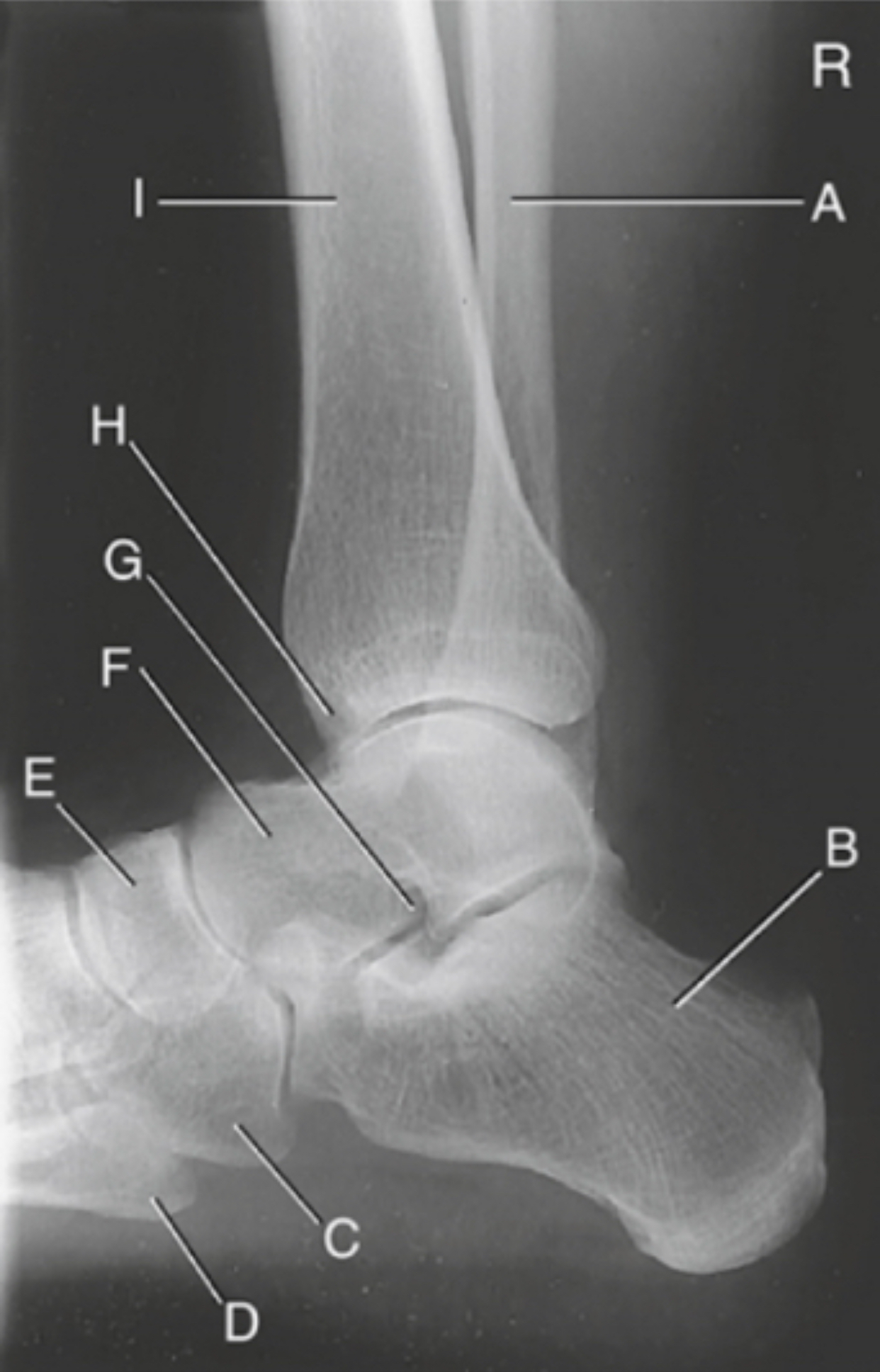
F is:
talus
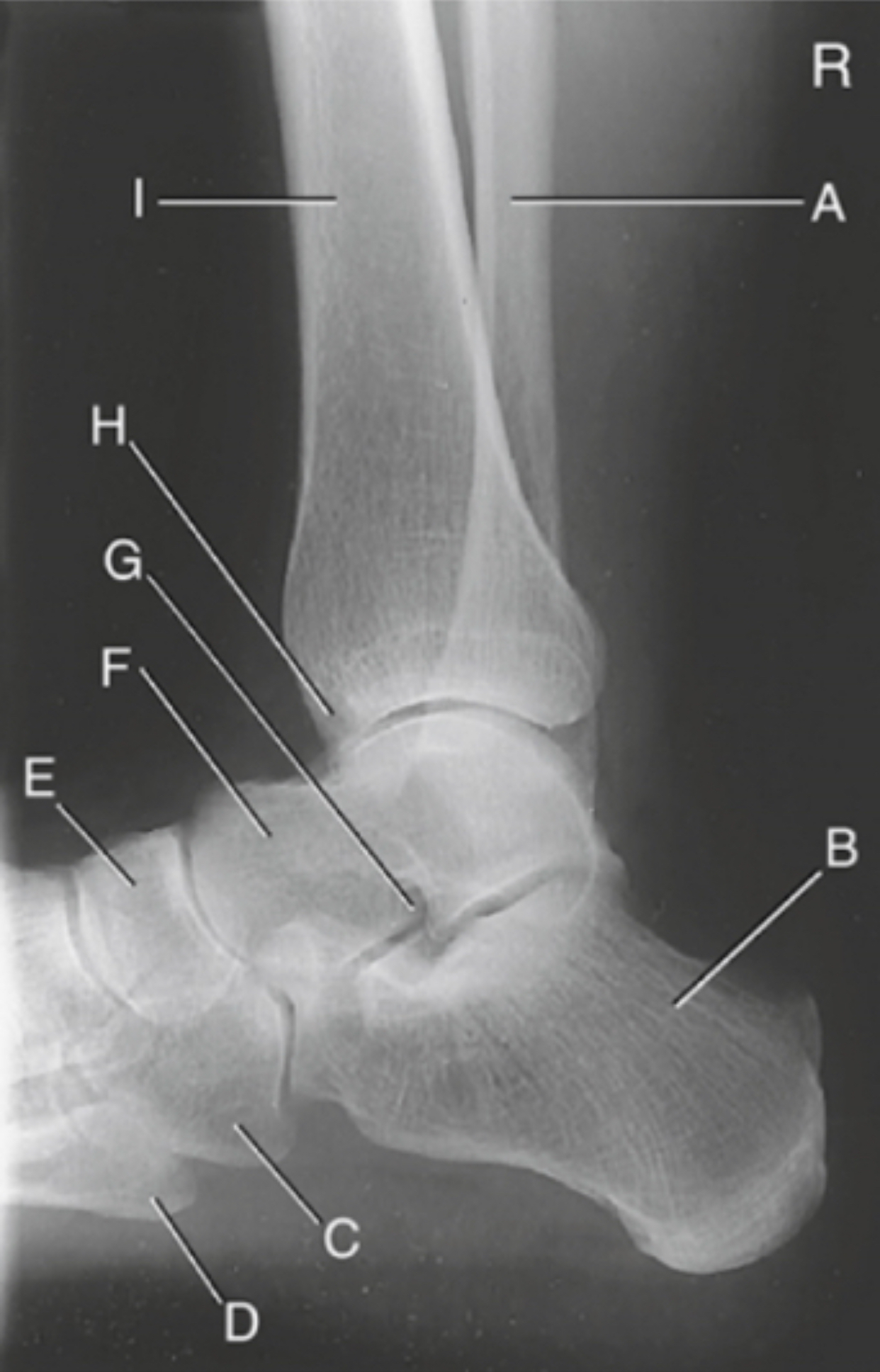
G is:
sinus tarsi
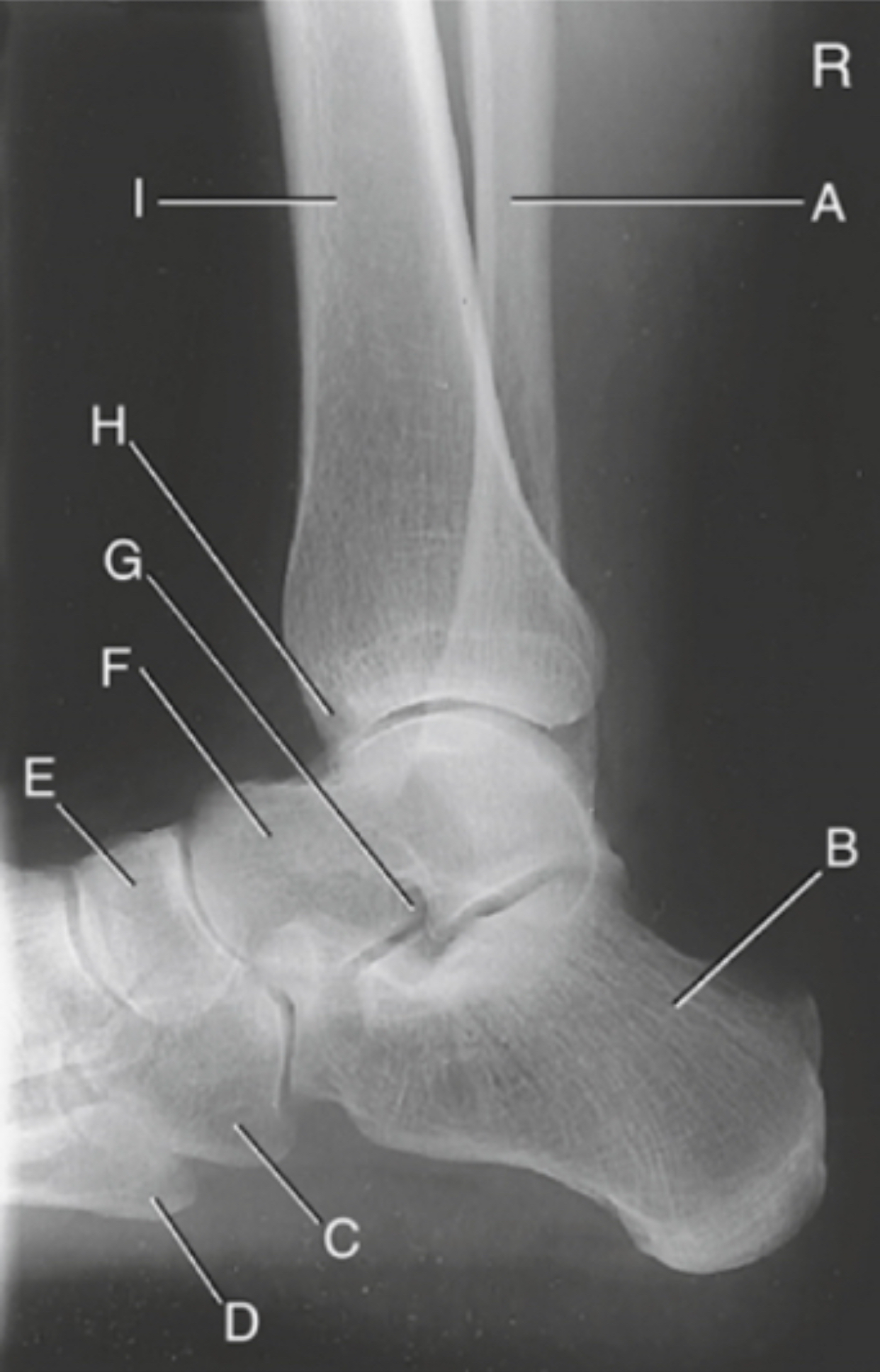
H is:
anterior tubercle
I is:
tibia
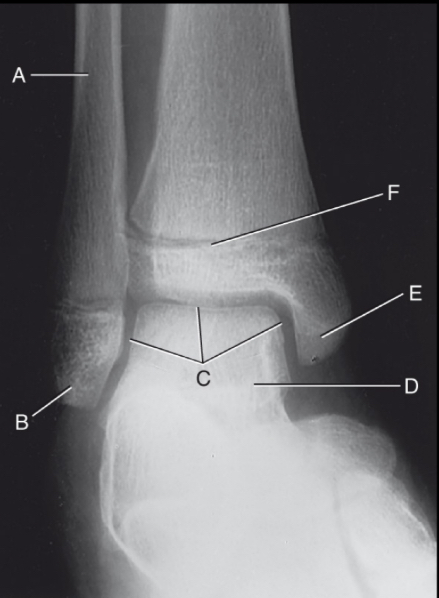
A is:
fibula
B is:
lateral malleolus
C is:
ankle mortise
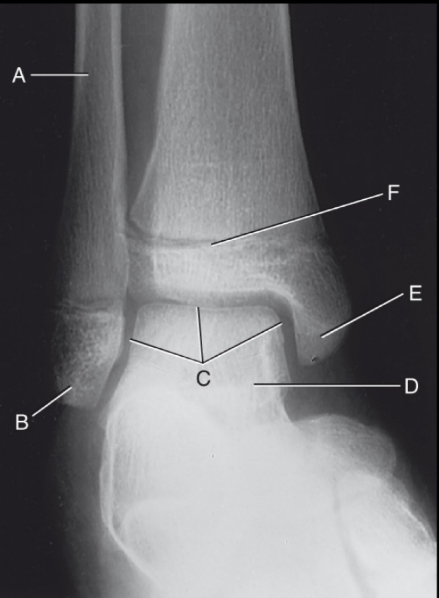
D is:
talus
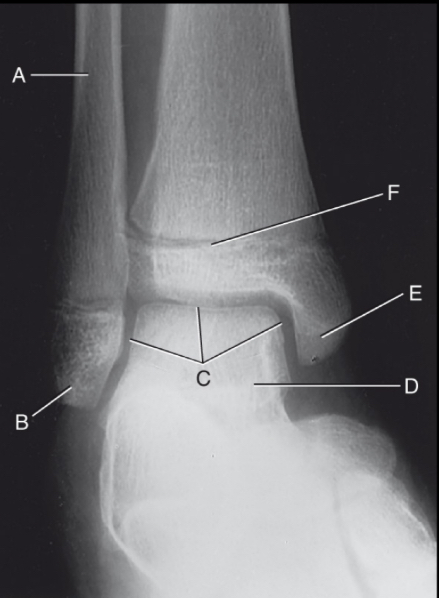
E is:
medial malleolus
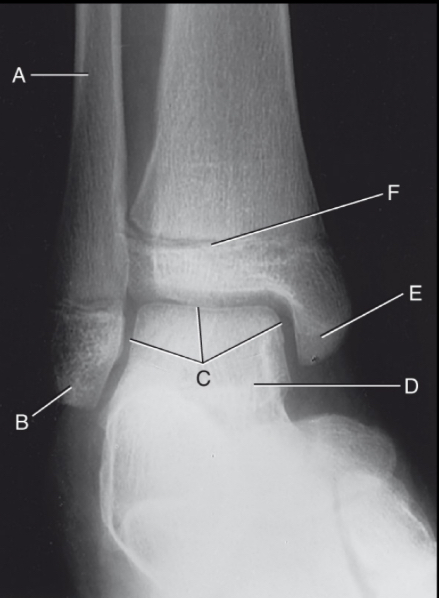
F is:
tibia epiphyseal plate
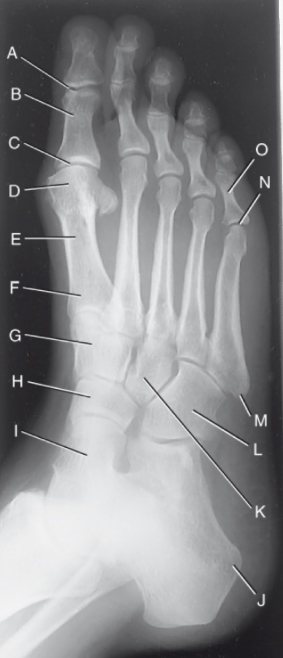
A is:
IP joint of 1st digit of right foot
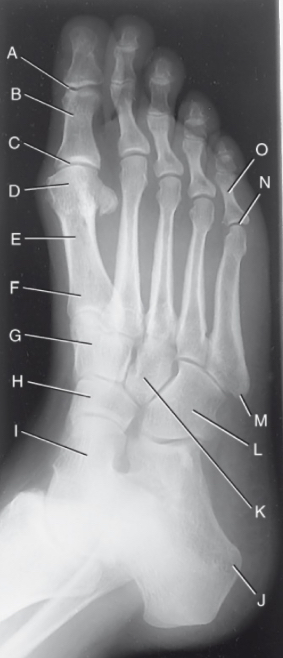
B is:
proximal phalanx of 1st digit of right foot
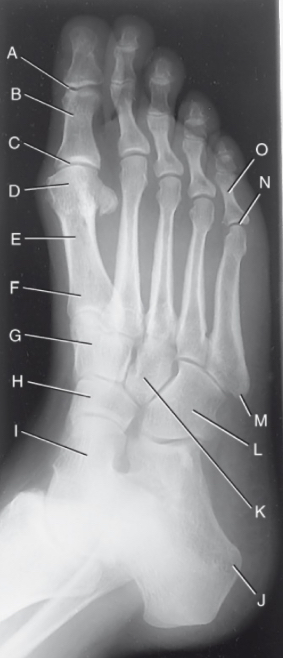
C is:
MTP joint of 1st digit of right foot
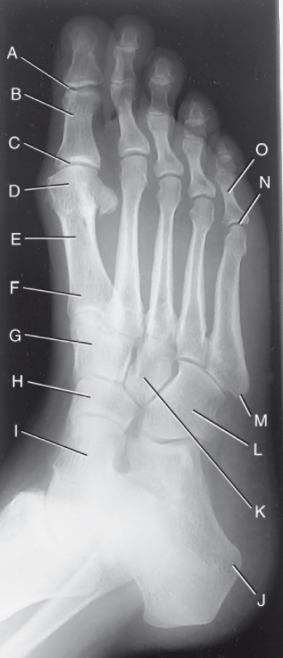
D is:
1st MT head
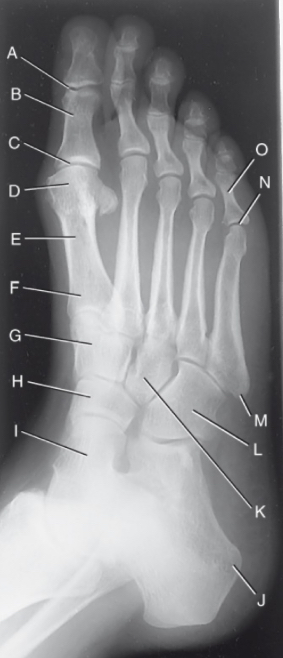
E is:
1st MT body/shaft
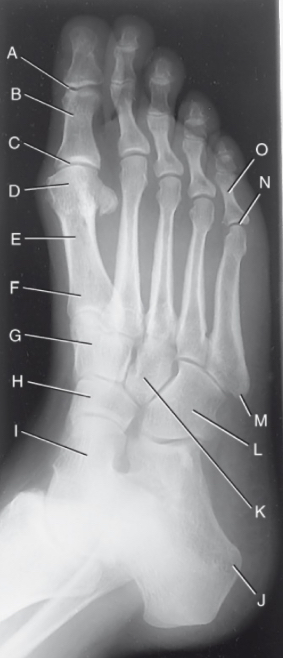
F is:
1st MT base
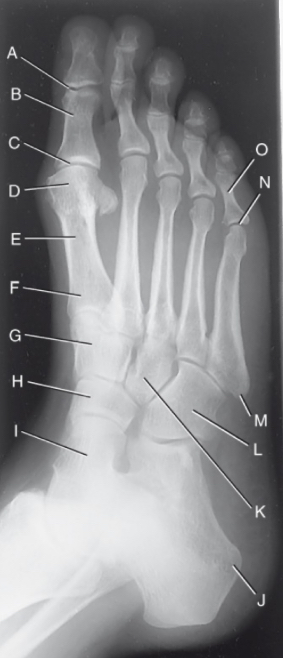
G is:
intermediate cuneiform (superimposed over medial cuneiform
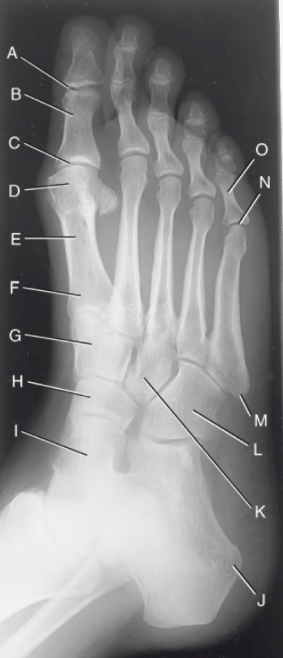
H is:
navicular
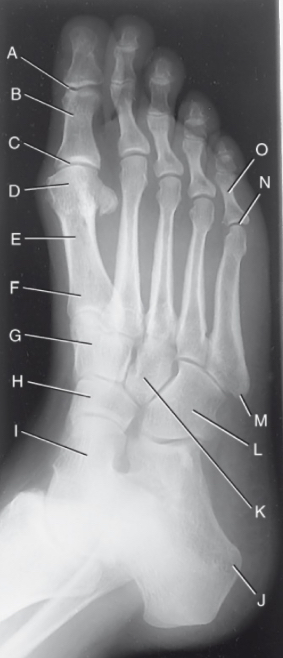
I is:
talus
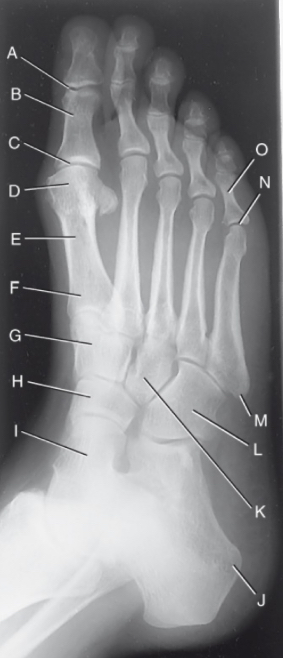
J is:
calcaneal tuberosity
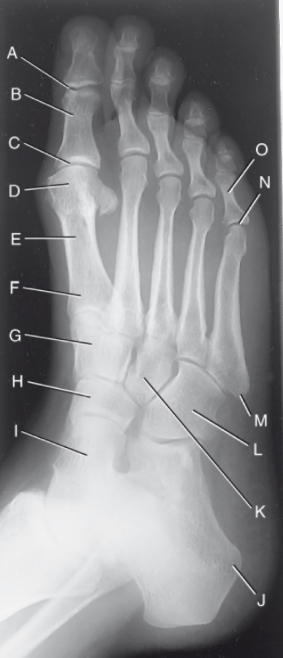
K is:
lateral cuneiform
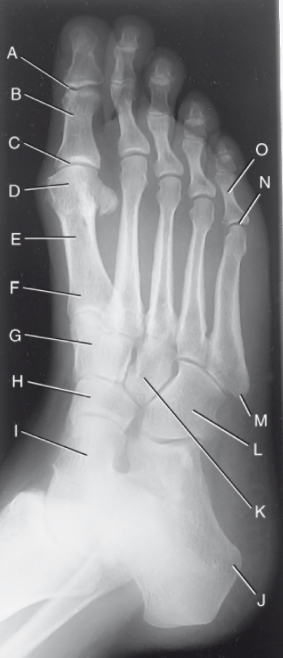
L is:
cuboid
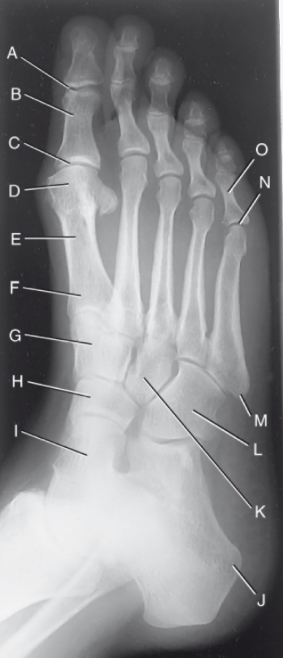
M is:
base of 5th MT
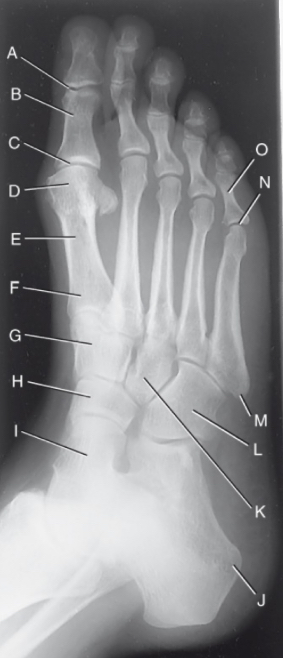
N is:
5th MTP joint of right foot
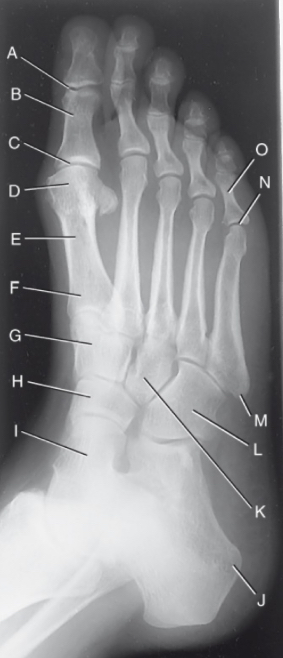
O is:
proximal phalanx of 5th digit of right foot
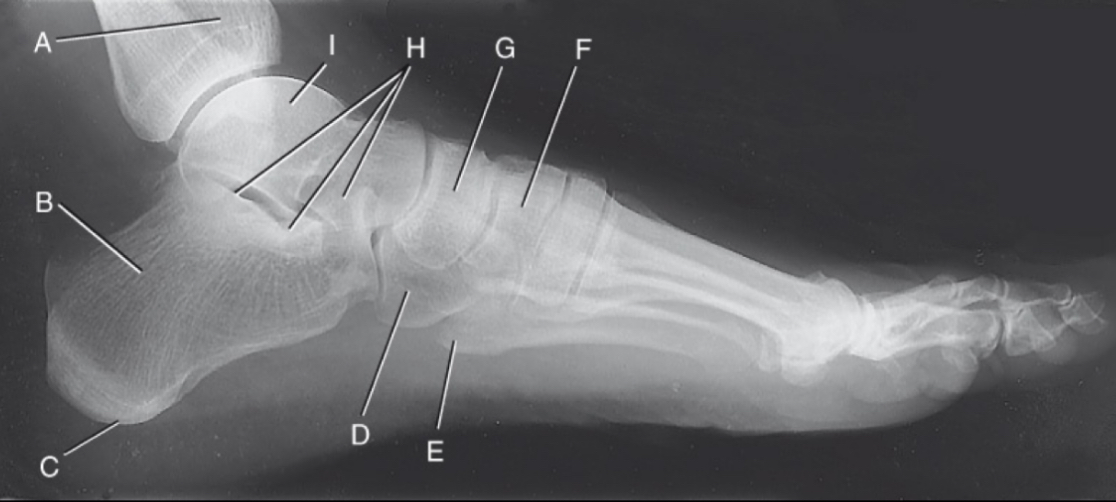
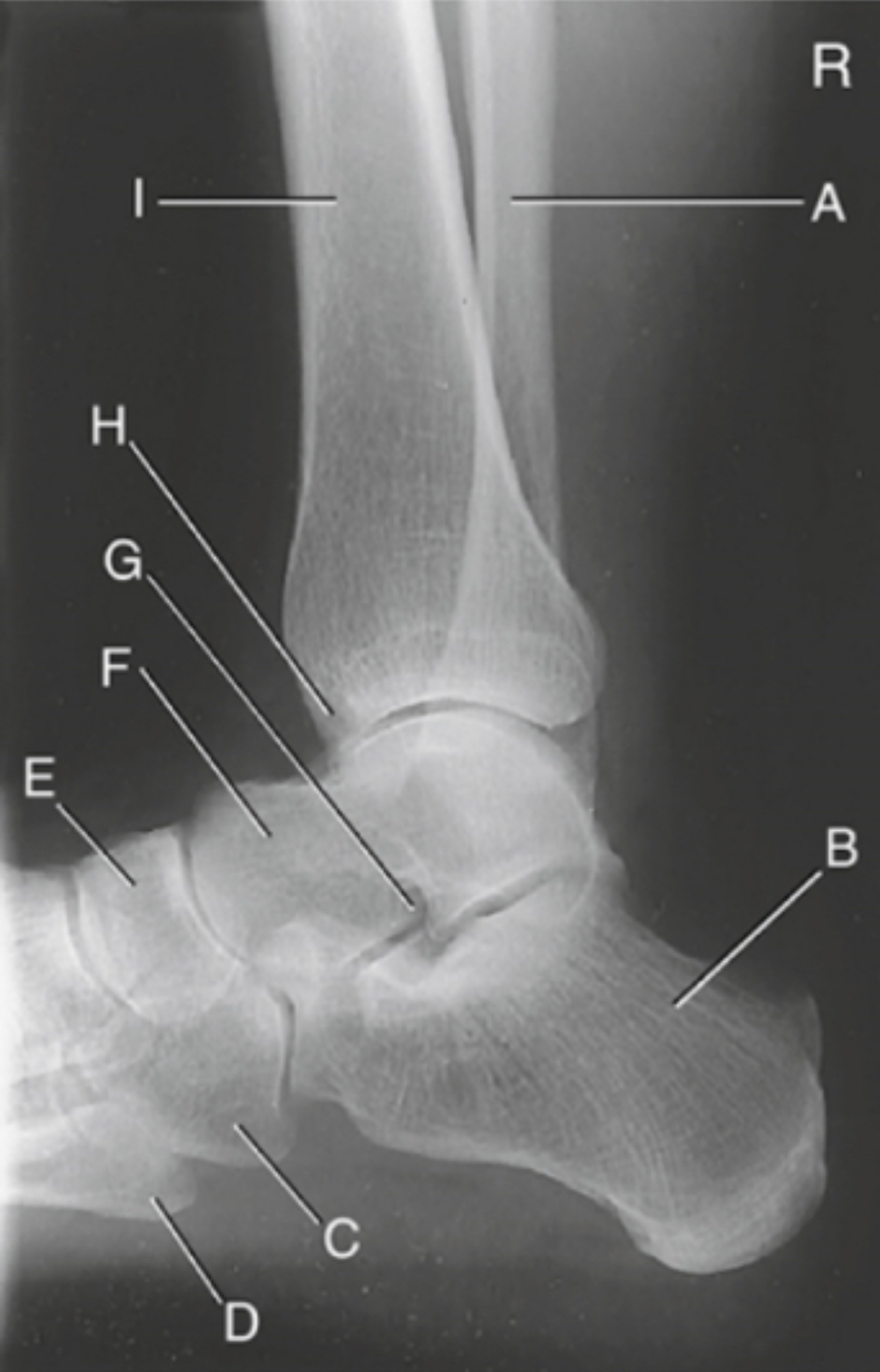
A is:
tibia
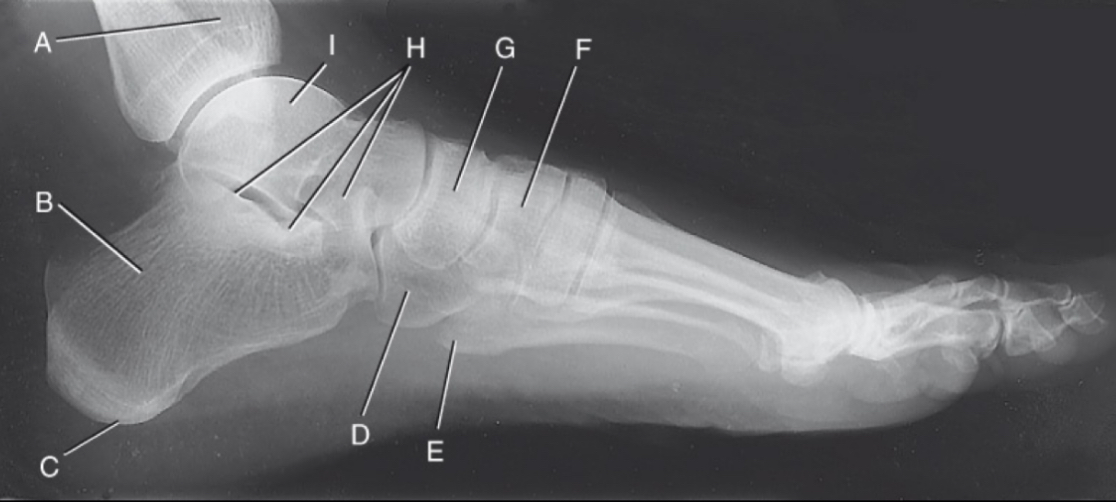
B is:
calcaneus
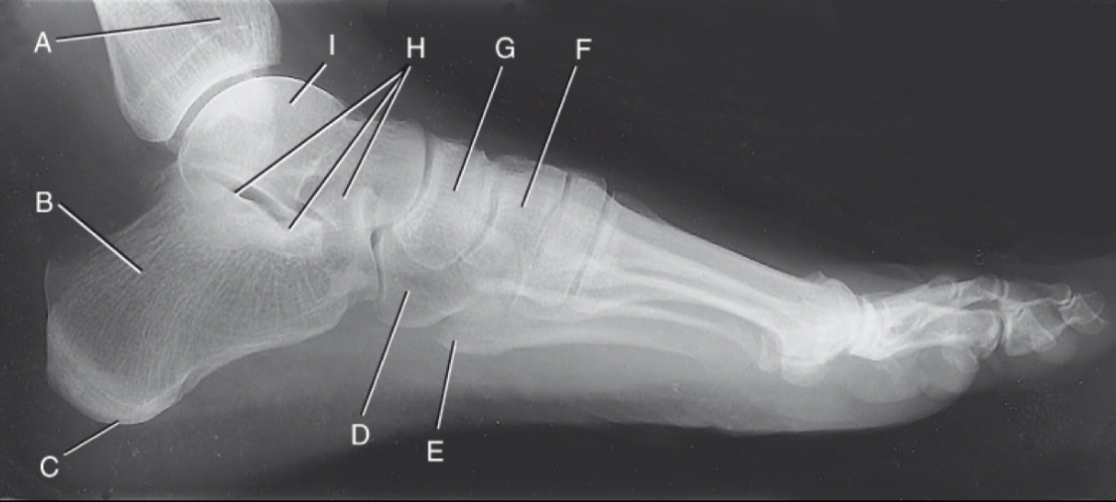
C is:
calcaneus tuberosity
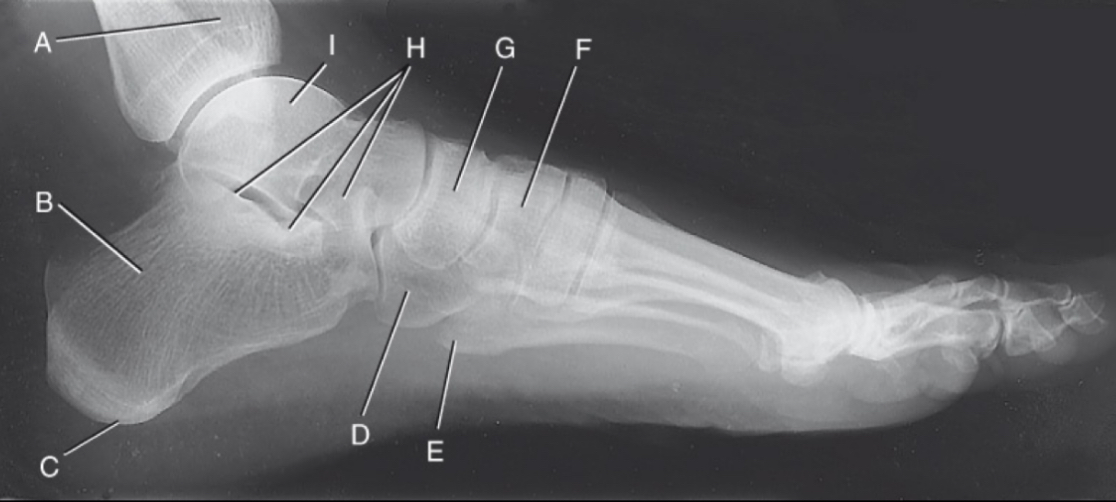
D is:
cuboid
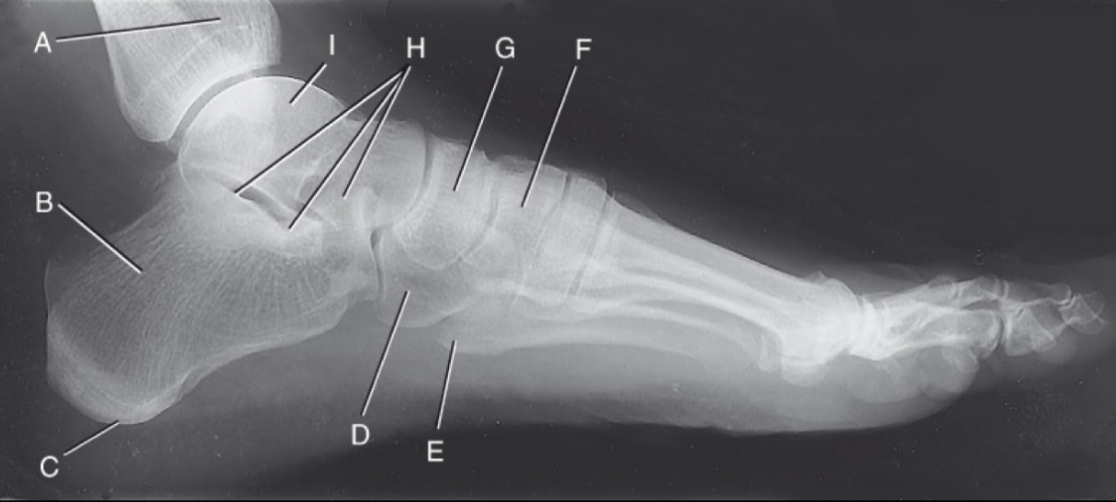
E is:
5th metatarsal tuberosity
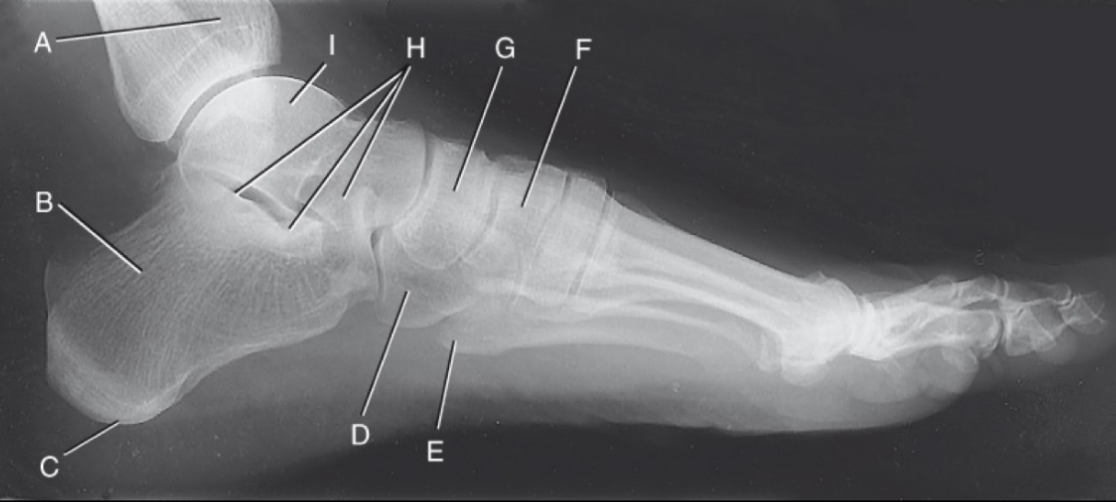
F is:
superimposed cuneiforms
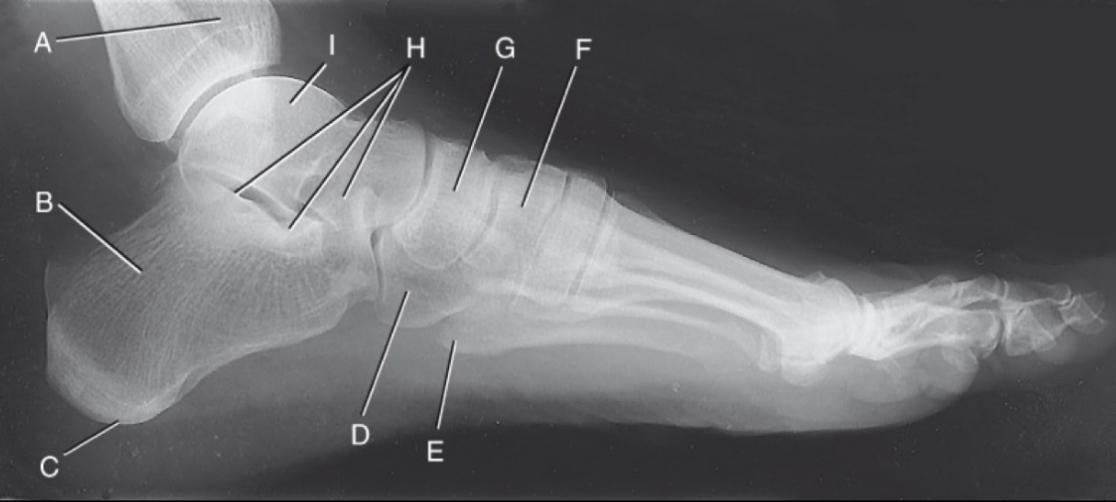
G is:
navicular
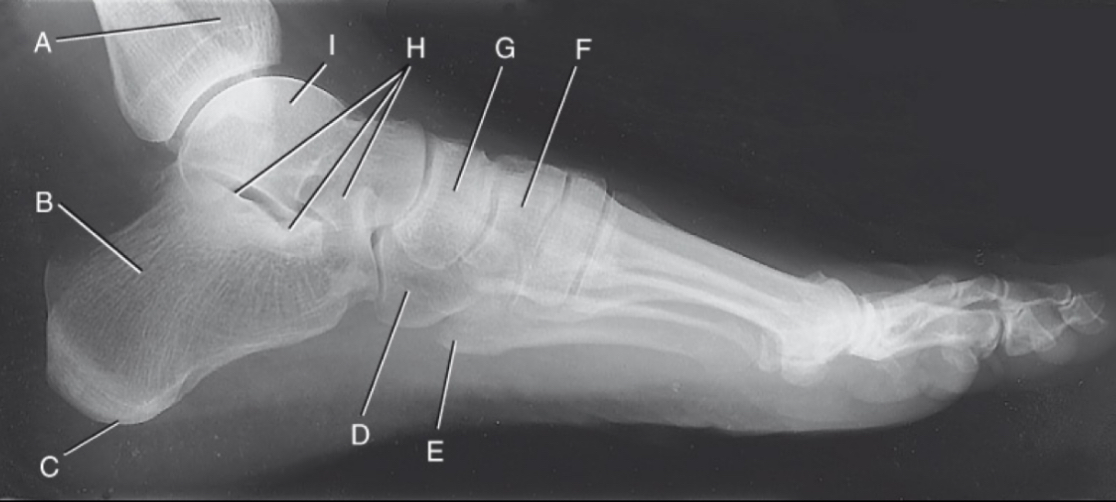
H is:
subtalar joint
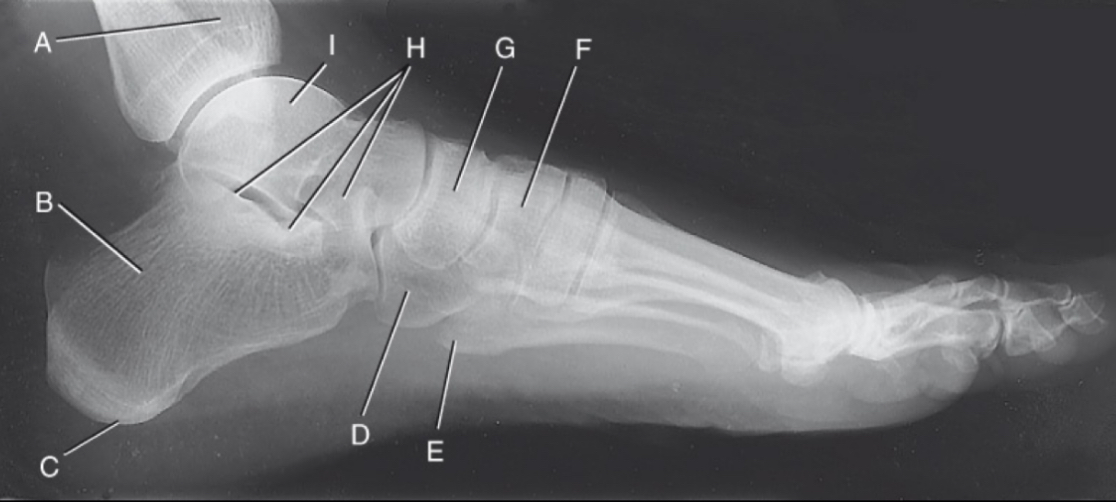
I is:
talus
where are the sesamoid bones of the foot most commonly located?
plantar surface near head of first metatarsal
what is the name of the tarsal bone found on the medial side of the foot between the talus and three cuneiforms?
navicular
which is considered the smallest tarsal bone?
intermediate cuneiform
what is another term for the talocalcaneal joint?
subtalar
T or F: the mortise of the ankle should be totally open and visible on a correctly positioned AP projection of the ankle
F
what is the correct central-ray centering placement for an AP projection of the toes?
affected metatarsophalangeal joint
which type of central-ray angle is required for an AP projection of the toes?
10- to 15-degree posterior
which projection is used for the sesamoid bones of the foot?
tangential
how much foot rotation is required for the AP oblique, medial rotation projection of the foot?
30-40 degrees
what is another term for the AP projection of the foot?
dorsoplantar projection
what CR angle is generally required for the AP projection of the foot?
10-degree posterior
which projection of the foot best demonstrates the cuboid?
AP oblique-medial rotation
which of the following pathologic conditions involves a large band ligament found in the forefoot?
lisfranc injury
which of the following conditions may produce the radiographic appearance of a destructive lesion with an irregular periosteal reaction?
osteogenic sarcoma
where is the central ray placed for a plantodorsal axial projection of the calcaneus?
base of third metatarsal
which ankle projection is best for demonstrating the mortise of the ankle?
AP oblique (15- to 20-degree medial rotation)
a radiograph of a plantodorsal (axial) projection of the calcaneus shows that the calcaneus is foreshortened. the following positioning factors were used: supine position, foot dorsiflexed perpendicular to IR, and central ray angled 30 degrees cephalad and centered to the base of the third metatarsal. which of the following should be done during the repeat exposure to produce a more diagnostic image?
increase central ray angulation to 40 degrees cephalad
a radiograph of an AP mortise projection of the ankle shows that the lateral joint space is not open with the lateral malleolus superimposed over the talus. the talus is distorted. what positioning error leads to this outcome?
excessive medial rotation
a patient is referred to radiology for a possible lisfranc injury. which of the following positioning routines best demonstrates this condition?
weight-bearing foot study
which of the following is the name of the surface of the top of the foot?
dorsal
what is the most distal part of a metatarsal?
head
how much foot rotation is required for the AP oblique, medial rotation projection of the foot?
30 to 40 degrees
what is another name for the AP projection of the foot?
dorsoplantar projection
the inferior aspect of the foot is termed:
the plantar surface
for the AP projection of the toes, the CR is directed to the:
3rd MTP joint
the most commonly performed oblique projection of the foot is the:
AP oblique with medial rotation
the central ray for an AP oblique projection of the foot is angled
0 degrees
for a lateral projection of the foot, the central ray is directed to the:
base of the third metatarsal
what is the CR angulation for the axial projection of the calcaneus?
40 degrees
to prevent lateral rotation of the ankle, how should a foot be positioned for a lateral rotation of the ankle?
in dorsiflexion
for a lateral projection of the ankle, the CR must enter the:
medial malleolus
to demonstrate the ankle mortise, the leg and foot should be rotated medially how many degrees?
15-20 degrees
how many degrees of angulation are required to open up the interphalangeal joint spaces of the toes on an AP projection?
15 degrees
how is the patient placed for a lateral projection of the great toe and second toe?
recumbent, on the medial side
T or F: the amount of obliquity for an internal oblique foot is 45 degrees
F
T or F: the amount of obliquity for an internal oblique ankle is 45 degrees
T
T or F: the two bony projections on the distal tibia and fibula are the medial and lateral epicondyles
F
T or F: when the patient is positioned for a lateral foot/ankle, the dorsal surface of the foot is perpendicular to the IR
T
T or F: the first metatarsal has a tuberosity that is prominent at its base
F
T or F: when the patient is positioned for a lateral foot/ankle, the foot forms a 90 degree with the tibia and fibula
T
which tarsal bone is the largest?
calcaneus
which tarsal bone articulates superiorly on the calcaneus?
talus
which tarsal bone is located between the calcaneus and the 4th and 5th metatarsals?
cuboid
which tarsal bone is lateral from the cuneiforms?
cuboid
which tarsal bone is located between the talus and cuneiforms?
navicular
which tarsal bones articulate with the metatarsals?
three cuneiforms, cuboid
which tarsal bone forms part of the ankle joint?
talus
name the two bones are the lower leg
tibia and fibula
name the lateral bone of the lower leg
fibula
name the smaller bone of the lower leg
fibula
give another name for the ankle joint
mortise
what forms the ankle joint?
lateral malleolus, medial malleolus, talus
the foot contains a total of _____ bones
26
the phalanges make up _____ of the bones
14
the metatarsals are made up of ___ bones
5
the tarsals are made up of ___ bones
7
the most distal bones of the foot are the:
phalanges, or toes
the five digits are labeled 1-5 starting on the ___________ side
medial or great toe
the first digit is similar to the thumb and contains just ______ phalanges
two
the great toe consists of a ____________ phalanx
proximal and distal