diencephalon, basal ganglia and nucleus accumbens
 Studied by 0 people
 Call Kai
 Learn
Learn Practice Test
 Spaced Repetition
 Match
Match Flashcards
 Knowt Play
1/40

There's no tags or description
Looks like no tags are added yet.
Name | Mastery | Learn | Test | Matching | Spaced |
|---|
No study sessions yet.
41 Terms
where is the diencephalon located
top of the brainstem but below cerebral cortex
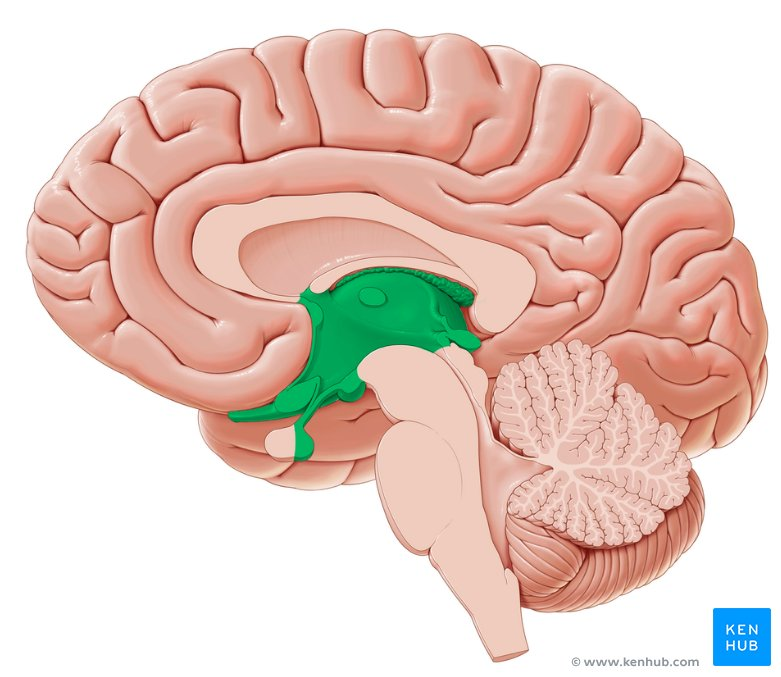
what are the 4 main regions of diencephalon
thalamus
subthalamus
hypothalamus
epithalamus
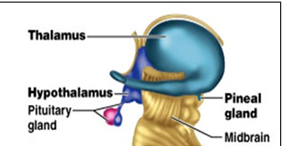
what is thalamus (structure and function)
2 large symmetrical lobes
acts as the brain's primary sensory relay station, directing nearly all sensory information (except smell) to the cerebral cortex for processing, while also crucially regulating consciousness, sleep, alertness, motor control, and integrating sensory and cognitive function
main function of thalamus
to relay and process sensory information (except smell) before sending it to the cerebral cortex
how does thalamus interact with sensory system
each sensory system (except olfactory) has a thalamic nucleus that receives signals and sends them to the corresponding cortical area
why is thalamus called ‘relay station’
because it receives, processes and forwards info between lower brain regions and cortex
what role does the thalamus play in sleep and consciousness
helps to regulate sleep and wakefulness through thalamo-cortico-thalamic circuits linked to consciousness
what forms the thalamo-cortico-thalamic circuits
thalamic nuclei have strong reciprocal connections with cerebral cortex
what happens if thalamus is damaged
can cause:
coma
amnesia
impaired sensation
movement
pain
dementia
sleepiness
which cognitive disorders are associated with thalamic dysfunction
bipolar disorder
ADHD
autism
depression
Alzheimer’s disease
what is hypothalamus and where is it located
small region below the thalamus that controls many unconscious bodily functions
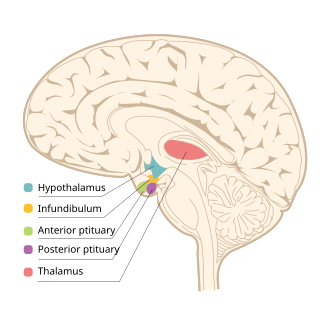
main function of hypothalamus
to maintain homeostasis — stable internal conditions such as temperature, hunger, thirst, and sleep
how does hypothalamus control hormones
regulates pituitary gland which controls most of hormones
key functions regulated by hypothalamus
body temp
hunger
thirst
fatigue
sleep
what happens when hypothalamus is damaged
can cause aggression, hypothermia, hypersomnia, weight changes, chronic stress, and lethargy
which disorders are linked to hypothalamic dysfunction
depression
bipolar disorder
schizoprenia
what is the epithalamus
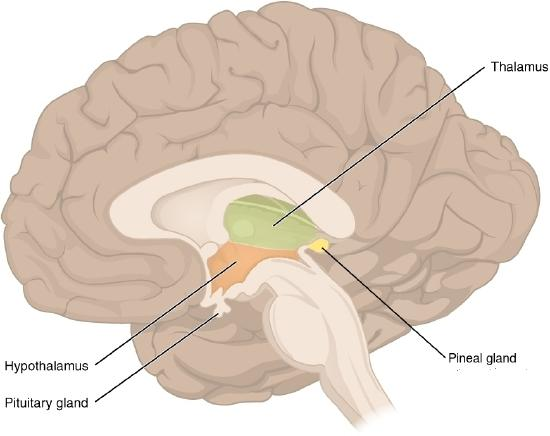
dorsal posterior part of the diencephalon that includes several small nuclei and the pineal gland
main function of epithalamus
to secrete melatonin via the pineal gland, regulating the circadian rhythm (sleep–wake cycle)
what brain systems is the epithalamus connected to
limbic system (emotion) and basal ganglia (movement)
what happens if the pineal gland is damaged
disruption of circadian rhythms, sleep problems, and altered hormone secretion
true or false: there are no known cognitive disorders linked to epithalamus
true
what is subthalamus
small ventral part of diencephalon containing subthalamic nucleus
function of subthalamic nucleus
connects functionally to the basal ganglia and helps regulate motor control
diagram of parts of diencephalon
what are the basal ganglia
group of nuclei located at base of forebrain that regulate voluntary movement, learning, behaviour and emotion
where are the basal ganglia located
at the base of the forebrain, deep within the cerebral hemispheres
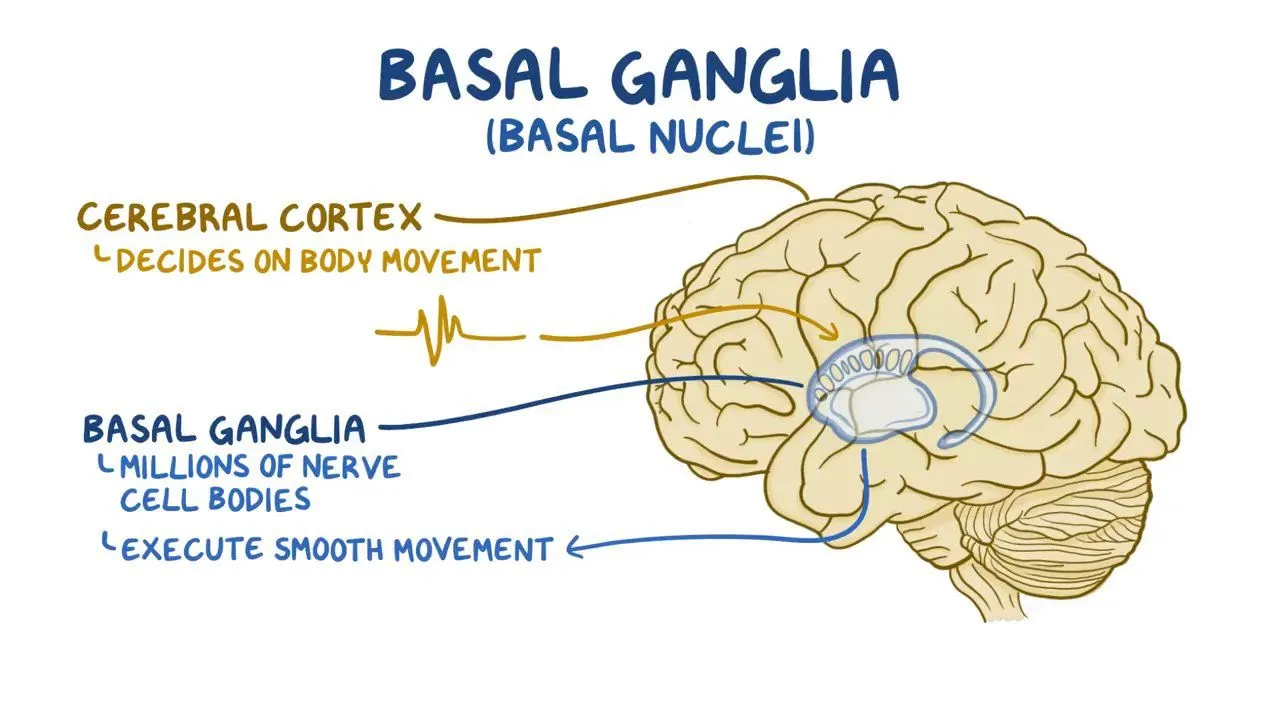
what are the main functions of basal ganglia
help control voluntary motor movements, routine behaviors, procedural learning, eye movements, and emotional processing
how do the basal ganglia communicate with other parts of the brain
they form loops with the cortex and thalamus—receiving input from the cortex, processing it, and sending feedback via the thalamus to guide movement selection
why are these loops between the cortex, basal ganglia, and thalamus important
they help the brain choose and execute the most appropriate voluntary movements while inhibiting unnecessary ones
what is the striatum, and what does it do
main input area of the basal ganglia that receives signals from the cortex and responds to rewarding, aversive, or novel stimuli
what are the main components of the basal ganglia
striatum
globus pallidus
substantia nigra
subthalamic nucleus
how are the structures of the basal ganglia connected
linked in highly specific pathways that together regulate motor control systems outside the basal ganglia
what happens when the basal ganglia are damaged
tremors
involuntary muscle movement
abnormal posture or muscle tone
which movement disorders are linked to basal ganglia damage
parkinson’s disease
huntington’s disease
dyskinesias
which cognitive disorders are associated with basal ganglia dysfunction
depression
schizophrenia
what is the nucleus accumbens
component of the basal ganglia involved in the brain’s reward system
main function of nucleus accumbens
to make you feel pleasure or reward from certain experiences and motivate you to repeat them
how does the nucleus accumbens relate to drugs and addiction
mediates the effects of many psychoactive and addictive drugs that activate the brain’s reward pathways
what happens if nucleus accumbens are damaged
can cause behavioral impairments and affect motivation and reward processing
which disorders are associated with nucleus accumbens dysfunction
addiction
depression
schizophrenia
why is nucleus accumbens important for behaviour
helps reinforce behaviors by linking actions to feelings of pleasure or satisfaction, driving learning and motivation