AP Physics 1 Review
 Call Kai
 Learn
Learn Practice Test
 Spaced Repetition
 Match
Match Flashcards
 Knowt Play
1/24

Earn XP
Description and Tags
General knowledge needed for the AP Physics 1 Exam
Name | Mastery | Learn | Test | Matching | Spaced | Call with Kai | Chat |
|---|
No analytics yet
Send a link to your students to track their progress
25 Terms
Displacement
How far an object ends up from its initial position, regardless of its total distance traveled.
Average velocity
Displacement divided by the time interval over which that displacement occured.
Instantaneous velocity
How fast an object is moving at a specific moment in time.
Distance from origin on a position-time graph
Vertical axis of position-time graph
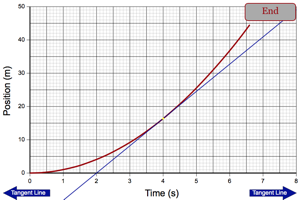
Instantaneous speed from a curved position-time graph
Slope of the tangent line at that point (derivative)
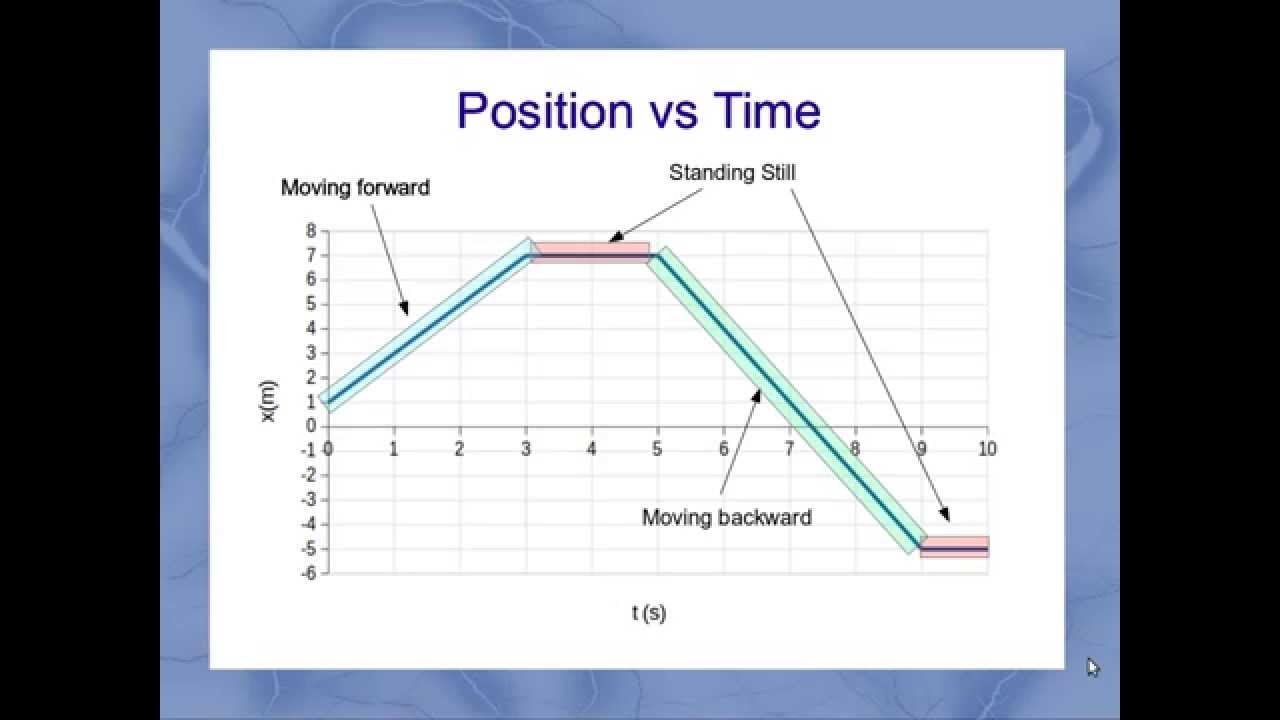
Direction of motion of the object on a position-time graph
Sign of the slope of the position-time graph
Positive slope: Forwards
Negative slope: Backwards
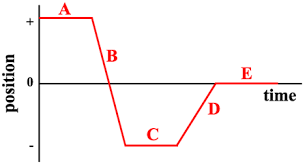
Relation of position and slope to direction of motion from origin on a position-time graph
Positive slope and positive position: away from origin
Negative slope and positive position: towards origin (B until it crosses origin)
Positive slope and negative position: towards origin (D)
Negative slope and negative position: away from origin (B after it crosses origin)
Zero slope: Object is at rest
*This is direction of motion in relation to the origin (where it started). A positive slope still means the object is moving forward, and a negative slope still means it is moving backward, but depending on where it is will change whether it is moving towards or from where it started.
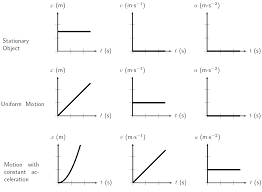
How fast an object is moving on a velocity-time graph
Vertical axis of velocity-time graph
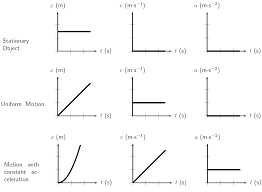
Direction of motion of the object on a velocity-time graph
Sign of the velocity
Above the horizontal axis: Forwards
Below the horizontal axis: Backwards
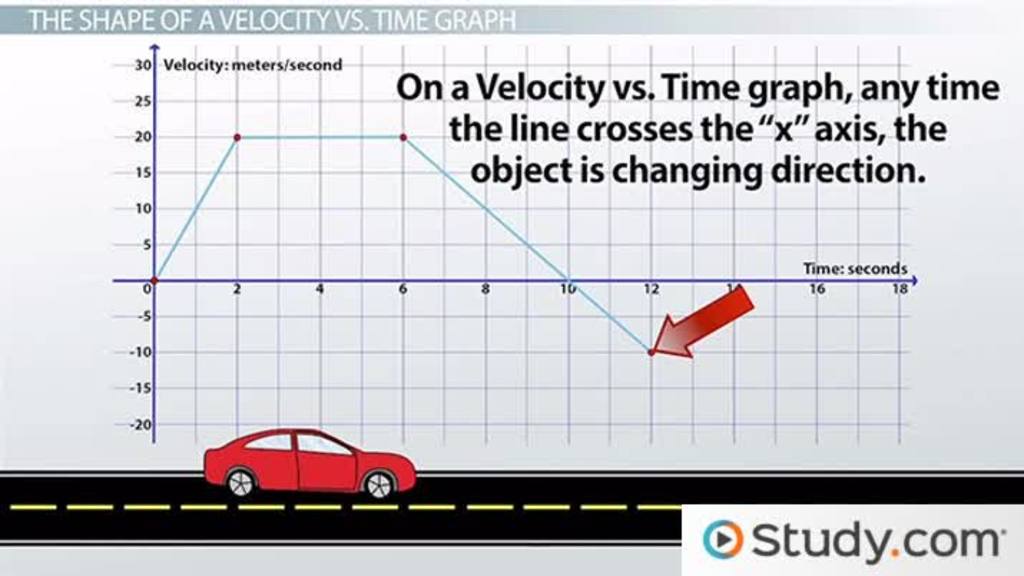
Relation of position and slope to direction of motion from origin on a velocity-time graph
Positive velocity and positive position: away from origin
Negative velocity and positive position: towards origin (B until it crosses origin)
Positive velocity and negative position: towards origin (D)
Negative velocity and negative position: away from origin (B after it crosses origin)
Zero velocity: Object is at rest
*Important to remember you cannot figure out whether or not the object is moving towards or away from the origin without also knowing its position, only which direction the object is traveling in. This also means it is impossible to figure out how far away from the origin the object is without knowing its initial position.
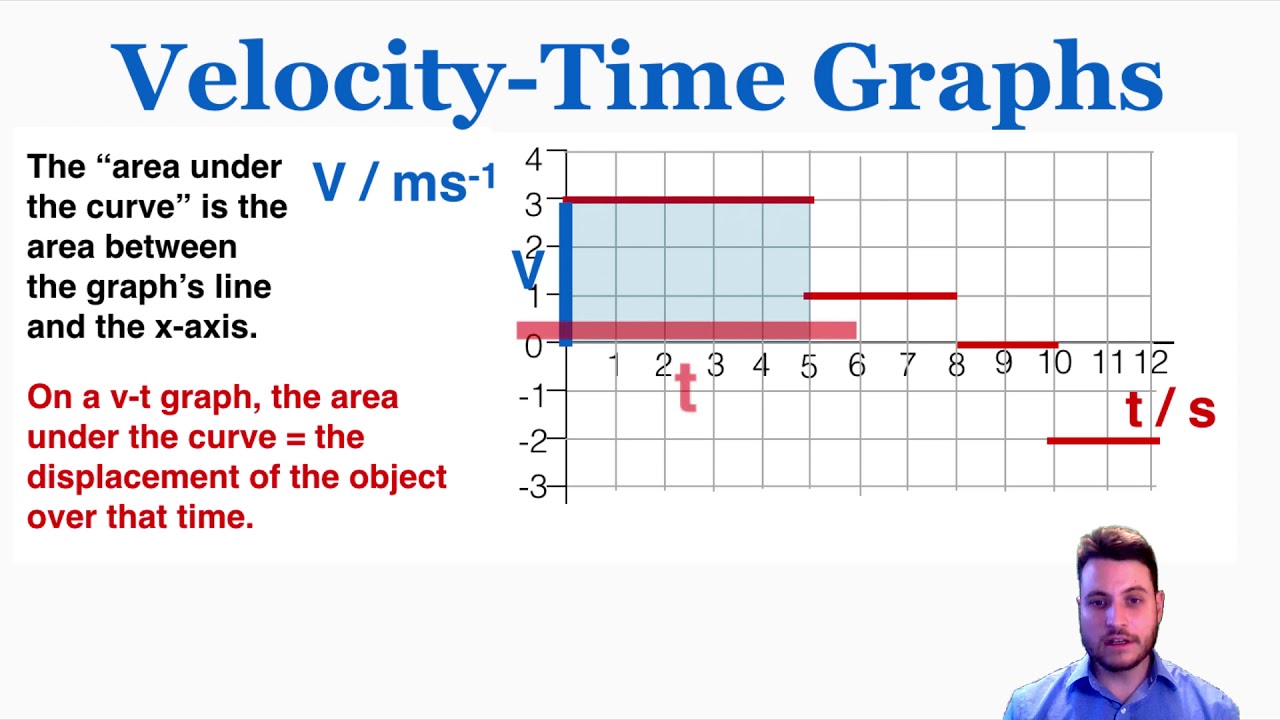
Change in displacement on a velocity-time graph
Area between the velocity-time graph and the horizontal axis
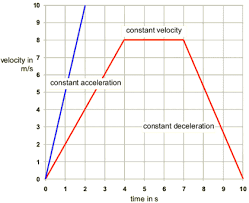
Acceleration on a velocity-time graph
Slope of the velocity-time graph
Acceleration
Vector, how much an object’s speed changes in one second; change in velocity over time; change in position over time² (m/s²)
Velocity
Vector, how much an object’s displacement changes in one second; change in displacement over time (m/s)
Displacement
Vector, how far away the object is from the origin (m)
Distance
Scalar, how far the object traveled (m)
Speed
Scalar, change in distance over time (m/s)
Speeding Up/Slowing Down
Speeding up: Acceleration is in the direction of motion
Slowing down: Acceleration is opposite the direction of motion
Free Fall
Vertical Acceleration: -9.8 m/s² (or 10 m/s²)
Horizontal Acceleration: 0 m/s²
Special Equations for Displacement
When an object is moving at a constant speed: ∆x = vt + x0
When an object starts at rest and speeds up, or when an object slows to a stop, its displacement is given by either:
∆x = ½ at²
∆x = v²/2a
Steps to solve an algebraic kinematics calculation
1) Define a positive direction, typically “away from the detector.” Label it and keep it consistent
2) Indicate what portion of the motion you are considering (start and end)
3) Fill out a chart including signs and units (motion chart)
a. Initial Velocity
b. Final Velocity
c. Displacement
d. Acceleration
e. Time
4) If three of the five variables are known, the problem is solvable; use the kinematics equations to solve.
a. vf = vo + at
b. ∆x = vot + ½ at²
c. vf² = vo² + 2a∆x
d. ∆x = ½ t(vo + vf)
Magnitude of an object’s velocity
Speed
Adding velocities in horizontal and vertical directions
Use the Pythagorean theorem to add perpendicular forces
Equilibrium
An object is in equilibrium if it is moving in a straight line at constant speed. This includes an object remaining at rest.
When an object is in equilibrium, forces on the object are balanced.
Newton’s Second Law
F=ma
An object’s acceleration is in the direction in which forces are unbalanced.
The net force is in the direction in which the forces are unbalanced.
The net force is in the direction of acceleration.