Chemistry - Atoms and the periodic table
 Call Kai
 Learn
Learn Practice Test
 Spaced Repetition
 Match
Match Flashcards
 Knowt Play
1/13

Earn XP
Description and Tags
lock in
Name | Mastery | Learn | Test | Matching | Spaced | Call with Kai | Chat |
|---|
No analytics yet
Send a link to your students to track their progress
14 Terms
Atom
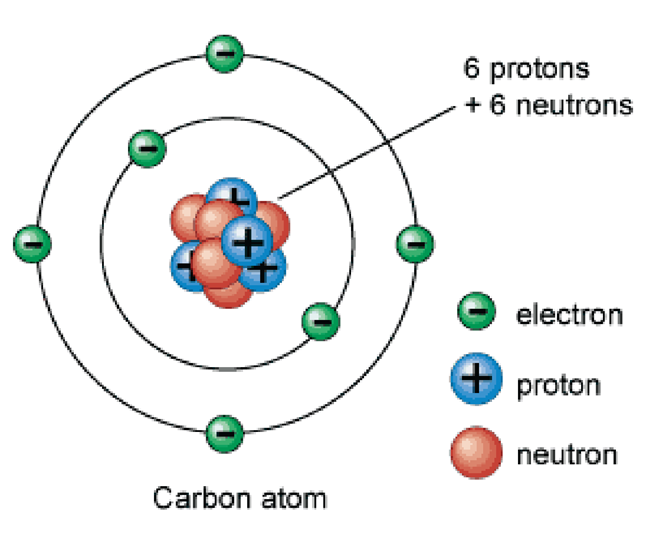
consists of a dense nucleus and cloud of electrons that move around the nucleus
Compounds
Two or more of the different atom
Molecules
Two or more of the same atom
Nucleus
a cluster of two sorts of particles
• Protons (positively charged)
• Neutrons (no charge charged)
What do the electrons do?
circle around the nucleus
Relationship of when an atom is in its neutral state
Number of Protons = Number of Electrons
Atom Diagram
>(mentally rehearse)
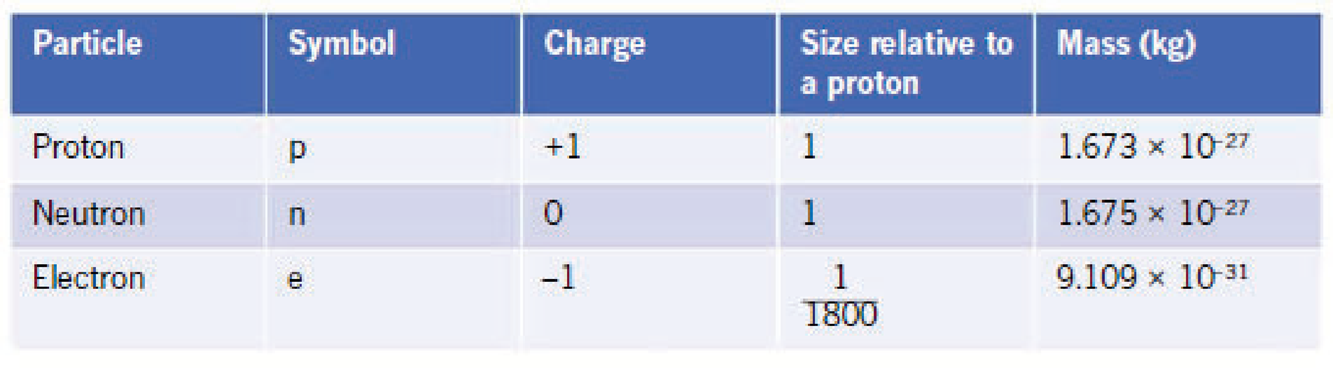
The symbols, charges, sizes relative to a proton, and mass (kg) of Protons, Neutrons, and Electrons
Electrons
Negatively charged
Held by electrostatic attraction
Protons (atomic number)
Positively charged
Determines the type of element through the atomic no. (no. of protons)
Hydrogen always has 1 proton
Helium always has 2 protons
Neutrons
No charge
Combined with the protons, they determine the atomic mass of an element
Each element can have the same protons but different no. of neutrons.
Element layout on the periodic table
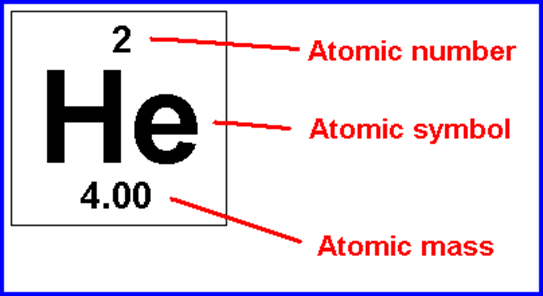
^(Helium)
Atomic number
The number of protons in an atom
Atoms are electrically neutral and so there must be the same number of electrons
as protons. In any atom:atomic number = number of protons = number of electrons
Mass number
The total number of particles in the nucleus (protons + neutrons together)
Neutrons do not add any charge to an atom, so there is no strict rule connecting them with protons or electrons.
mass number = number of protons + number of neutrons