Chapter 4: Cell Structure and Membranes
 Call Kai
 Learn
Learn Practice Test
 Spaced Repetition
 Match
Match Flashcards
 Knowt Play
1/79

Name | Mastery | Learn | Test | Matching | Spaced | Call with Kai | Chat |
|---|
No analytics yet
Send a link to your students to track their progress
80 Terms
Cell theory
The first unifying principle of biology, stating that all living organisms are composed of reproducing cells
Cytoplasm
What makes up most of the substance inside of a cell with thousands of substances
Cell membrane
A lipid bilayer separating the internal and external environment of a cell, with flexible, moving proteins interspersed

Fluid mosaic model
A description of the membrane’s structure based on its movement and separation of proteins and lipids
Phospholipids
The major lipid component of cell membranes, forming thin bilayers with hydrophilic heads and hydrophobic tails on the interior of the cell that prevent polar molecule traversal
Unsaturation
The number of double bonds in a fatty acid, which allow for less dense packing and more fluidity
Cholesterol
An abundant component of cell membranes in animals, with a hydrophilic hydroxyl group and nonpolar ring and hydrocarbon chain to be inserted within the membrane for fluidity modulation
Membrane fluidity
How easily a cell membrane and its components can move as a result of unsaturated lipid composition and temperature; this can be adjusted by the organism to optimal levels
Phytosterols
Similar molecules in structure to cholesterol that modifies membrane fluidity in plants
Protein membrane interactions
Determined by the arrangement of amino acids and their polarity, where polar regions interact with charged phospholipid heads and nonpolar regions interact with hydrophobic tails

Integral membrane proteins
Proteins that are at least partially embedded in the cell membrane with amphipathic tendencies

Anchored membrane proteins
Proteins that are associated with the membrane by covalent attachments to lipids, with hydrophobic regions present in the phospholipid bilayer in order to hold in association with the membrane

Peripheral membrane proteins
Proteins associated with but not embedded within the cell membrane, with polar regions interacting with exposed parts of integral membrane proteins or phospholipid molecules

Transmembrane protein
An integral membrane protein that extends through the phospholipid bilayer
Membrane carbohydrates
Includes glycolipids (attached to lipids), glycoproteins (a few attached to proteins), and proteoglycans (many attached to proteins) on the cell’s exterior for cell recognition and adhesion
Selective permeability
A membrane characteristic that allows only some substances to pass through
Passive transport
Transport that does not require an input of energy down the concentration gradient
Can use channel or carrier proteins as well for polar molecules
Active transport
Transport that requires an input of energy up the concentration gradient
Applied to larger, hydrophilic molecules; this requires proteins in most cases
Unidirectional, only moving according to specific protein function
Equilibrium
A state of solution concentration across a membrane where the distributions of solute are relatively uniform and equal, moving randomly
Cells combat this with their membrane
Diffusion
The process of random movement of particles towards equilibrium
Affected by surface area, temperature, and gradient severity
Simple diffusion
Diffusion without the need for a protein in a cell; this generally applies to small, non-polar molecules

Osmosis
The diffusion of water to places of higher solute concentration to disperse energy; this generally occurs in cell channels called aquaporins
Specifically changes as a result of nonpermeable solutes that cannot diffuse across a membrane
Osmotic pressure
The pressure needed to prevent the flow of water across a membrane
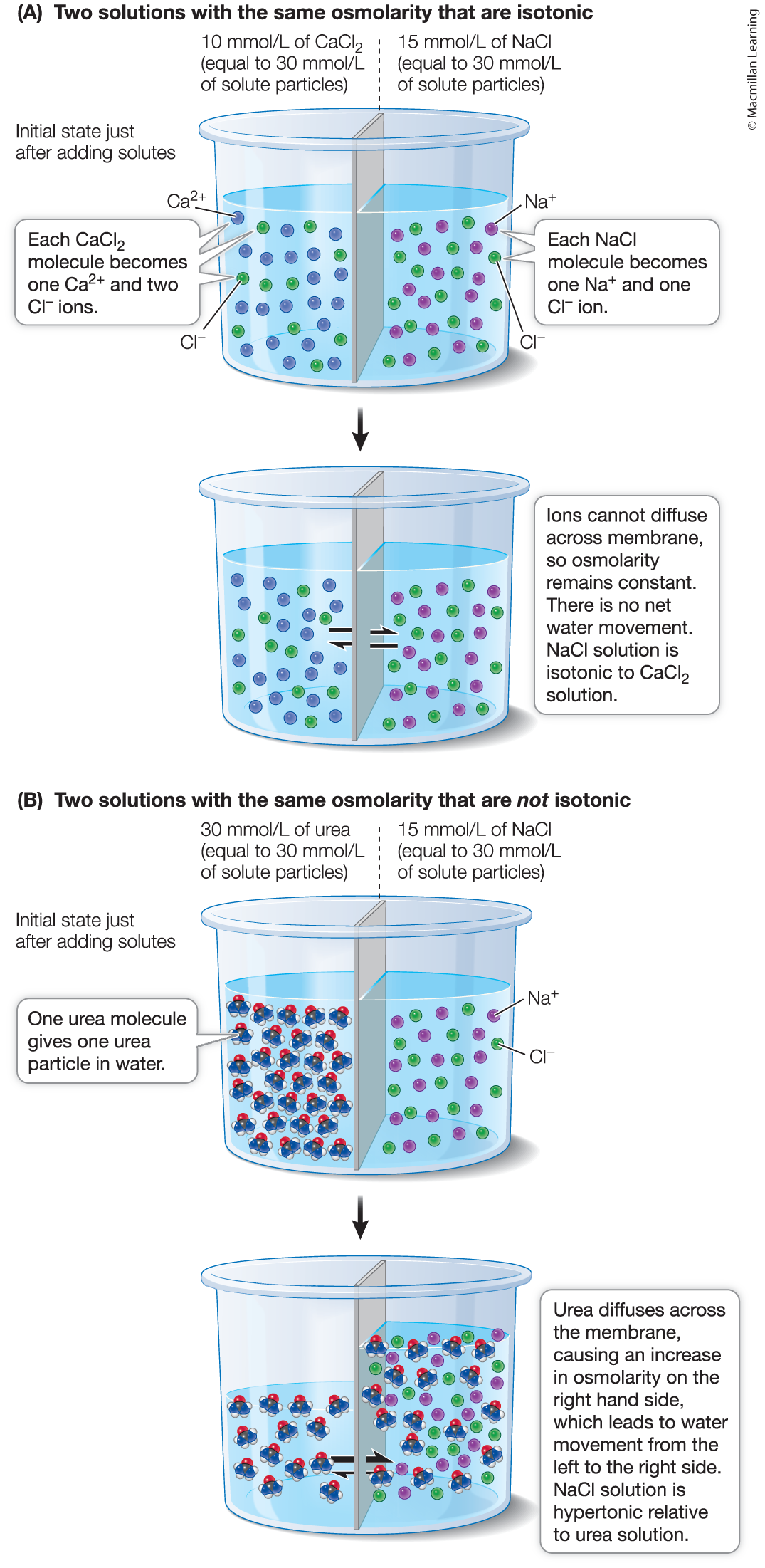
Osmolarity
The concentration of all solute particles; this is proportional to osmotic pressure
Affected by solutes that can cross the membrane that diffuse and thus attract more water

Tonicity
A measure of the relative concentration of solutes on either side of a membrane; can be higher (hyper-), lower (hypo-), or the same (iso-) to determine where water will flow
Important in some cells to avoid bursting or shriveling
Affected solely by solutes that cannot cross the membrane
Turgor pressure
Pressure against the cell wall that prevents water from entering, seen mostly in plant growth
Facilitated diffusion
Passive transport done with the help of a channel or carrier protein, seen with polar molecules
Relies on hydrophilic interiors for passage

Ion channels
Protein channels created for the passage of certain ions like Na+
Can aid in the transport of water alongside aquaporins
Gated channel
An ion channel that requires a stimulus, like a chemical signal, electrical difference, or ligand, to operate

Carrier protein
A protein that transports polar molecules by binding with them for passage through to the other side
Seen with glucose and its transporters to create an energetically favorable passage
Transport saturation
Occurs when all available transporters are in use; this sets a maximum transfer rate compared to simple diffusion

Primary active transport
A type of active transport that requires the use of energy to move substances against their concentration gradient
Seen with the sodium-potassium pump allowing sodium to be pumped out with ATP and potassium to use dephosphorylation to enter

Secondary active transport
A type of active transport that uses a concentration gradient created by primary active transport to move substances to higher concentrations with the aid of another substance
Seen with the sodium-glucose co-transporter using the energy of sodium diffusion to move glucose inside
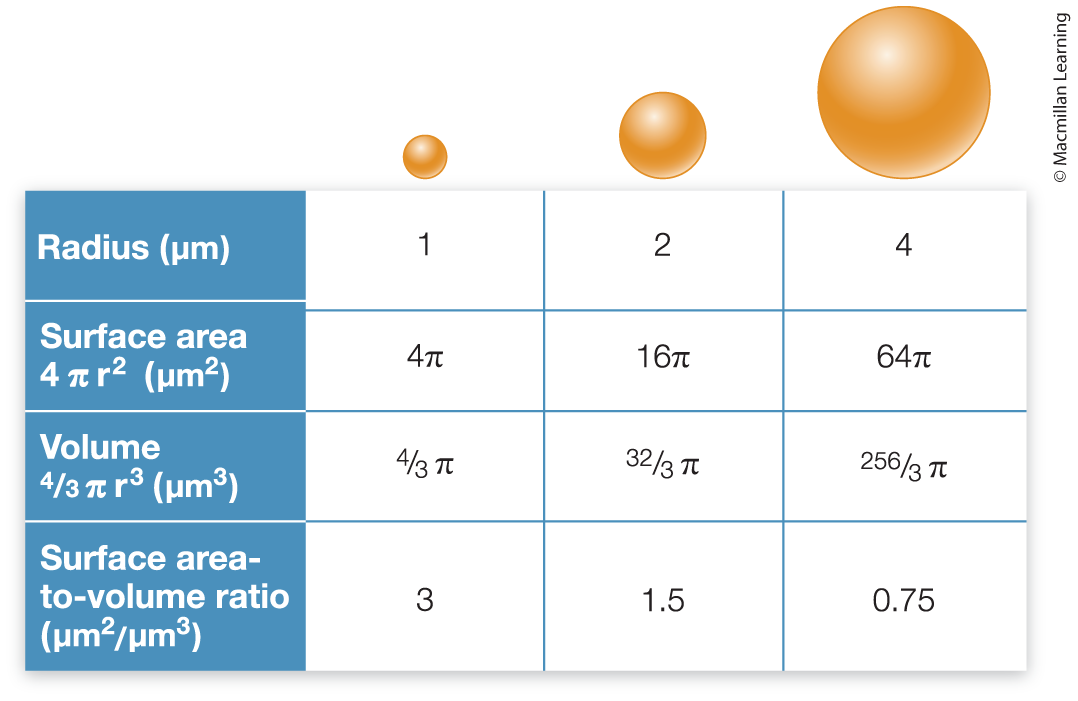
Surface area-to-volume ratio
This constrains cell size due to larger cells requiring greater surface area for materials to enter and exit the cell, if the cell remains in the same shape
Cells can change their shape or increase absorption rate to counter this
Volume
How big a cell is; movement and absorption of nutrients is aided by lower values of this
Cytoskeleton
This provides the interior structure, position, movement, and anchoring of a cell through the use of protein polymers, which generally include:
Microfilaments (smallest, made of actin)
Intermediate filaments (larger, made of variety)
Microtubules (largest, made of tubulin)


Microfilaments
The smallest protein polymer found in the cytoskeleton with potentially variable length due to continuous assembly and disassembly as a result of regulation
Important in shape changes, cytoplasm flow, and contractions such as those in amoeba pseudopodia and muscle cells

Intermediate filaments
A diverse family of cytoskeleton protein polymers with tough assemblages and a lack of dynamic instability
These act to anchor cell structures and maintain rigidity, found in skin and between tissues
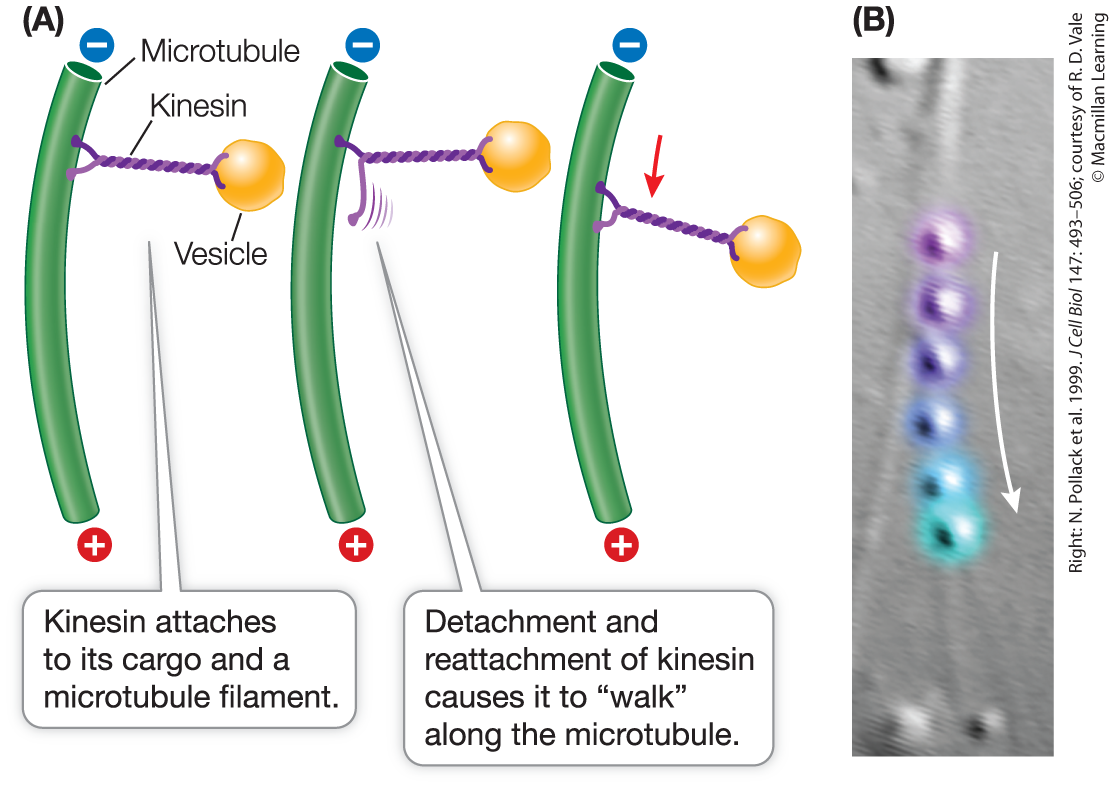
Microtubules
The longest and largest cytoskeleton protein polymer made of the protein tubulin arranged to form a hollow center
Also shows dynamic instability, but only from one side and in phases
Form the skeleton and allow movement of substances with motor proteins (powered by ATP)
Cilia
Short microtubule variants, divided into single primary or numerous motile families
Motile variants contain the protein dynein, allowing for sliding movements with a fused center pair
Primary variants are involved in cell signaling, and lack the center pair
Flagella
Long microtubule variants which (alongside motile cilia) aid movement of the cell or its fluids

Cell wall
A rigid extracellular structure that forms a tough barrier for support and protection from damage
Also allows for hypertonicity due to maintained structure

Extracellular matrix
The extracellular structure in animals, consisting of collagen and proteoglycans; it holds cells together, filters materials, and orients cell movements

Integrin
A protein that can connect the cell membrane to the extracellular matrix, holding to collagen fibers but also allowing for movement if a change is needed
Biofilm
A large aggregation of bacteria connected through an extracellular matrix; these can act in coordinated manners and contribute to antibiotic resistance

Tight junction
A cell junction that prevents substances from moving in between cells
Seen in the urinary bladder

Desmosomes
A cell junction that holds adjacent cells together for stability, but also allows for some materials to move around

Gap junctions
Channels that run between membrane pores in adjacent cells, allowing for the rapid spread of materials like ions in the heart
Plasmodesmata
A structure similar to gap junctions found in plants; these allow larger molecules like sugars and hormones to be passed around cells
Catabolism
The breaking down of complex molecules into simpler ones, releasing energy
Anabolism
The building up of complex molecules from simpler ones, requiring energy
Organelles
Membrane-enclosed compartments in the cytoplasm that separate cellular chemical reactions

Prokaryotes
Organisms in the domains Archaea and Bacteria, which are generally small, single-celled, and lack a nucleus or membrane-enclosed components, separating reactions via protein structures

Eukaryotes
Organisms including plants, fungi, protists, and animals, which are much larger and have membrane-enclosed organelles

Carboxysomes
Microcompartments in prokaryotes that convert CO2 into carbohydrates
Metabolosomes
Compartments in prokaryotes that collect and break down toxic molecules
Encapsulin
A protein comprising prokaryotic structures that contain compartmentalized proteins, like peroxidase, which breaks down toxic molecules
Gas vesicle
Another prokaryotic compartment which adjusts buoyancy for optimal nutrient aquisition
Nucleoid
A region of the prokaryotic cell that contains the circular bacterial chromosome
Ribosomes
Large structures that comprise numerous proteins and RNAs for protein synthesis
Cyanobacteria
A unique group of prokaryotes that possesses membrane-enclosed structures for photosynthesis
Nucleus
The largest organelle, holding the cell’s DNA for replication and transcription; this is enclosed in the nuclear envelope with nuclear pores
Nucleolus
A region in the nucleus where ribosomes are formed
Chromosomes
These are made up of threads of DNA and protein, called chromatin
Endomembrane system
A system of membrane-enclosed compartments that modify and exchange material, including:
The nuclear envelope
Endoplasmic reticulum
Golgi apparatus
Lysosomes
Endoplasmic reticulum (ER)
A part of the endomembrane system with a distinct interior and high surface area, divided into rough and smooth variants depending on a cell’s function
Rough endoplasmic reticulum (RER)
A section of the endoplasmic reticulum with ribosomes for modification and transport
This process can produce glycoproteins, for cell signaling
Smooth endoplasmic reticulum (SER)
A section of the endoplasmic reticulum that lacks ribosomes and has a more tubular shape, functioning for lipid synthesis, chemical detoxification, and calcium ion storage

Golgi apparatus
A stack of flattened membranous sacs called cisternae that further modifies proteins, which enter and exit on designated sides for sequential modification before being released elsewhere
Primary lysosomes
Organelles that originate from the Golgi apparatus and contain hydrolases for macromolecule digestion
Secondary lysosome
The product of a primary lysosome and a vesicle with nutrients after phagocytosis, allowing for digestion and waste production
Autophagy
The programmed destruction of cell components, carried out by lysosomes, in order to maintain homeostasis
Mitochondria
These break down energy-rich molecules in eukaryotic cells to produce ATP, and have their own autonomously dividing DNA to adjust to the needs of the cell
Cristae
The folds on the inner side of a mitochondria for greater surface area to perform energy metabolism
Chloroplast
A plastid in plants that has circular, autonomously dividing DNA like mitochondria, serving as the site of photosynthesis
Thylakoids
Flat, hollow discs inside chloroplasts that convert light energy to chemical bond energy
Stroma
The aqueous fluid inside a chloroplast surrounding the thylakoids that synthesize carbohydrates
Peroxisomes
Small organelles in eukaryotes that accumulate and break down toxic peroxides
Glyoxysomes
Organelles that convert lipids to carbohydrates in plants
Vacuole
A space in eukaryotic (particularly plant and fungi) cells that serves as waste product and pigment storage, structural support, and hydrolyzing centers
May be contractile, forcefully expelling excess water through a pore structure